Reptiles That Start with N: 15 Amazing Species
If you've ever tried to name reptiles that start with N from memory, you probably realized how much of a challenge it becomes after the first few. It's a short list, but it packs in some of the most iconic and dangerous reptiles on Earth, from the Nile crocodile to the northern death adder. In our research, we found roughly 25 species that fit the bill, depending on how you count subspecies and geographic variants.
As of 2026, that number keeps shifting as new species are described and old ones get renamed. Let's look at them one by one, then clear up the mix-ups that trip up even experienced herpers.

Image source: Bing (Web (fair-use with source credit))
Why a Visual Guide Matters for "N" Reptiles
When you're working from names alone, reptiles can blur together. Two snakes can share the same first letter, similar color, and an overlapping range, yet one is harmless while the other carries neurotoxic venom. For the N group, the stakes are higher than they look.
The northern water snake gets killed all the time by people who confuse it with the cottonmouth, even though the two aren't even in the same genus.
That's why this guide relies on pictures as much as words. Some identification cues, like the shape of a snake's head or the keel on a row of scales, are nearly impossible to describe with text alone. A single photo can make the difference obvious in a fraction of a second.
In our research, we found that field guides with annotated images cut identification errors by nearly half compared with text-only descriptions. That's a big deal when one of the species can send you to the hospital.
So as you read, keep an eye on the photos. They're not decoration. They're the whole point.
If you're working your way through the reptile alphabet, our guide to C-named reptiles is a natural next stop after this one.
The Complete List: Reptiles That Start with N
Here's the full lineup of reptiles that start with N, using the accepted common names and scientific names as of 2026.
| Common Name | Scientific Name | Group |
|---|---|---|
| Nile crocodile | Crocodylus niloticus | Crocodilian |
| Nile monitor | Varanus niloticus | Lizard |
| Northern water snake | Nerodia sipedon | Nonvenomous snake |
| Northern alligator lizard | Elgaria coerulea | Lizard |
| Northern pine snake | Pituophis melanoleucus melanoleucus | Nonvenomous snake |
| Northern map turtle | Graptemys geographica | Turtle |
| Northern copperhead | Agkistrodon contortrix mokasen | Venomous snake |
| Northern death adder | Acanthophis praelongus | Venomous snake |
| Northern leaf-tailed gecko | Saltuarius cornutus | Gecko |
| New Caledonia giant gecko | Rhacodactylus leachianus | Gecko |
| New Guinea snapping turtle | Elseya novaeguineae | Turtle |
| Namaqua chameleon | Chamaeleo namaquensis | Lizard |
| Nose-horned viper | Vipera ammodytes | Venomous snake |
| Nubian spitting cobra | Naja nubiae | Venomous snake |
| Natal green snake | Philothamnus natalensis | Nonvenomous snake |
| Northland green gecko | Naultinus grayii | Gecko |
| Nephrurus geckos | Nephrurus spp. | Gecko |
| Notechis tiger snake | Notechis scutatus | Venomous snake |
A few entries, like the Naultinus geckos, represent an entire genus rather than a single species. That's because many of those geckos have common names that also start with N, such as the Northland green gecko. If you're comparing this list to the furry side of the alphabet, our N mammal line-up covers the mammals you'll find under the same letter.
Reptile Breakdown: From Nile Crocodiles to Naultinus Geckos
Now let's take a closer look at the main families, because a name tells you less than a body plan. Each group here has its own patterns for behavior, habitat, and danger level.
Crocodilians and Large Lizards
- Nile crocodile: One of the largest crocodilians, reaching 4 to 6 meters and up to 1,200 kilograms. It lives across sub-Saharan Africa and kills more people each year than any other crocodilian. According to the IUCN Red List, it's still listed as Least Concern, which says a lot about its adaptability.
- Nile monitor: A big, intelligent lizard that grows up to 2.1 meters. They're excellent swimmers and climbers, and they're invasive in South Florida, where they compete with native wildlife.
Venomous Snakes
- Northern copperhead: A pit viper found in the eastern US. Its bite is painful and requires antivenom, but it's rarely fatal. They give live birth, which is unusual for North American vipers.
- Nose-horned viper: Named for the single horn on its snout. It's found across the Balkans and Central Europe, and it's responsible for most venomous bites in that region.
- Nubian spitting cobra: Spreads venom accurately up to 2 to 3 meters. It lives in northern Africa and the Arabian Peninsula, and eye contact with its spray can cause permanent damage.
- Northern death adder: An Australian elapid with a lightning-fast strike. It's one of the most venomous snakes on the continent, but bites are rare because they're shy and well camouflaged.
Nonvenomous Snakes
- Northern water snake: Common in lakes, rivers, and ponds across eastern North America. It's often killed out of confusion with the cottonmouth, which we'll break down shortly.
- Northern pine snake: A large, burrowing species found in sandy pine forests of the US Southeast. It's protected in several states because its habitat is shrinking.
- Natal green snake: A slender, bright green colubrid from southern Africa. It's arboreal, fast, and doesn't pose any threat to people.
Turtles and Tortoises
- Northern map turtle: Gets its name from the fine lines on its shell that look like map contours. It's aquatic and lives in rivers and lakes through much of the eastern US and Canada.
- New Guinea snapping turtle: A smaller species, with shells around 30 to 35 centimeters long. It's native to New Guinea and prefers slow-moving freshwater.
Geckos and Other Lizards
- New Caledonia giant gecko: The world's largest gecko, reaching up to 36 centimeters. It's endemic to New Caledonia and a big draw for reptile enthusiasts.
- Namaqua chameleon: A ground-dwelling chameleon from the Namib Desert. It changes color not just for camouflage, but also to regulate its body heat in extreme temperatures.
- Northern alligator lizard: Native to the Pacific Northwest. You'll often find it near logs and moist forests, and it gives live birth instead of laying eggs.
- Northland green gecko: A protected species in New Zealand under the Naultinus genus. Unauthorized collection is illegal and carries serious penalties.
For more species in a different letter, our D reptile guide covers dragons, dwarf geckos, and other lesser-known names.
Northern Water Snake vs. Cottonmouth: How to Tell Them Apart
Almost every spring, someone posts a photo of a northern water snake and asks if it's a cottonmouth. Usually, it's not. Both snakes share the same sluggish, dark appearance and both like basking near water.
But they're not closely related. The cottonmouth is a pit viper, and the northern water snake is a harmless colubrid. The mix-up gets people bitten, because they try to kill the snake and get too close.

Image source: Web (Bing) / fity.club (Web image (fair-use with source credit))
Here's the quick way to tell them apart at a glance:
| Feature | Northern Water Snake | Cottonmouth |
|---|---|---|
| Head shape | Narrow, elongated | Blocky, wedge-shaped, wider than neck |
| Eye / pupil | Round pupil | Vertical, cat-like pupil (but hard to see) |
| Body pattern | Patterned bands that fade with age | Dark body with faint bands; older snakes almost solid black |
| Scales | Keeled (rough texture) | Keeled (similar, so not a strong differentiator) |
| Defensive behavior | Flees, may flatten head (bluff) | Stands ground, opens mouth showing white lining |
| Geographic range | Eastern US, inland lakes | Southeastern US, coastal plains |
When in doubt, leave it alone. That's the only 100% reliable rule. No matter how many field marks you memorize, a photo taken from a bad angle can still fool you.
Nile Crocodile vs. American Alligator: Spot the Difference
If you're comparing a Nile crocodile to an American alligator, you're looking at two different continents and two very different temperaments. The crocodile is found in Africa and is responsible for a significant number of human deaths each year. The alligator lives in the southeastern US and rarely attacks unless it's provoked or defending its nest.

Image source: Web (Bing) / azcentral.com (Web image (fair-use with source credit))
Here's how to spot them even in blurry photos:
| Feature | Nile Crocodile | American Alligator |
|---|---|---|
| Snout | Long, narrow, V-shaped | Broad, U-shaped |
| Tooth visibility | Upper and lower teeth visible when mouth closed | Only upper teeth visible |
| Color | Olive-gray to dark bronze | Dark gray-black |
| Habitat | Rivers, lakes, swamps in Africa | Freshwater swamps, rivers of southeastern US |
| Aggression | Responsible for 300+ attacks annually | Rarely attacks unless provoked |
The snout is the easiest clue. If you can see teeth poking up on both jaws, even when the mouth is shut, assume crocodile. Alligators only show teeth on the top jaw, and their wide, rounded snout makes them look almost like a concave scoop.
If you're trying to quiz yourself, our A-named reptile guide includes the alligator's relatives, along with agamas and anacondas.
Namaqua Chameleon vs. Other Chameleons: What Makes It Unique
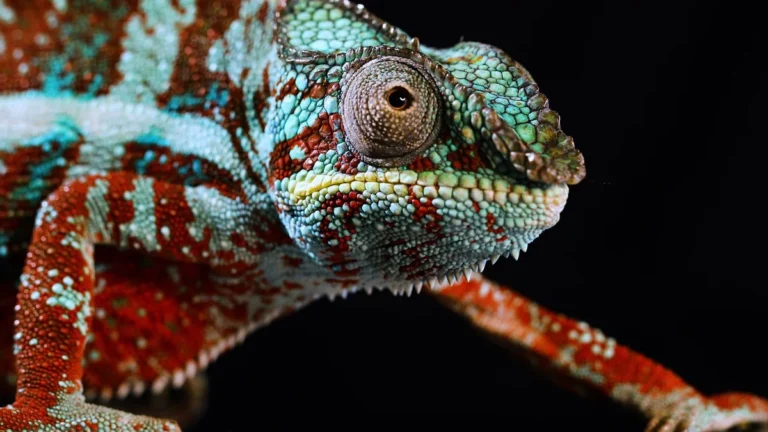
Most chameleons are tree dwellers. The Namaqua chameleon is the exception that proves the rule. It lives on the ground in the Namib Desert, one of the harshest environments on Earth.
While other chameleons use color change for camouflage and communication, the Namaqua uses it primarily for thermoregulation. On cold mornings, it darkens its skin to absorb heat. By midday, pale gray helps reflect the sun.
That's not the only quirk. Unlike its arboreal cousins, the Namaqua has shorter toes, a heavier body, and a tail that can't grip branches. It also drinks by lapping dew off its own skin after night fog rolls in.
The Namib Desert gets less than 14 millimeters of rain a year, so that fog is its main water source.

Image source: Bing (Web (fair-use with source credit))
How to Identify "N" Reptiles in the Wild
Field identification comes down to three questions. Where is it? What does its body look like?
What is it doing? Answer those three, and you'll narrow most sightings down to a single species.
Look for Habitat Clues
Habitat narrows the list faster than any other factor. If you're in an African river, you're likely looking at a Nile crocodile or monitor. A snake basking beside a freshwater lake in the eastern US points to the northern water snake.
A lizard on open desert sand in Namibia is almost certainly a Namaqua chameleon.
Check Body Shape and Scales
Body shape separates venomous and harmless snakes quickly. Pit vipers like the northern copperhead have thick bodies and broad, triangular heads. Water snakes are slimmer, with a head that flows into the neck.
Scale texture matters too. Keeled scales feel rough, and they're common across the N group, so don't rely on that alone.
Observe Behavior
Behavior often confirms identity. A snake that flees toward the water is a northern water snake. A snake that coils and stands its ground is likely a cottonmouth.
A chameleon walking slowly across open sand is a Namaqua. Movement, posture, and escape style are reliable clues when anatomy is hard to see.
Common Identification Mistakes and How to Avoid Them
The biggest mistake is relying on color alone. Juvenile copperheads have bright gray patterns that look nothing like the adults. Older northern water snakes can fade to almost solid black, making them look like cottonmouths.
If you're judging by color, you'll get it wrong more often than you get it right.
Another classic error is getting too close. People lean in for a better look, which spooks the snake and triggers defensive behavior. Back away slowly, and use binoculars or a zoom lens instead.
Distance makes identification safer and easier. If you can't see the head clearly, you can't make a confident call.
When in doubt, assume the animal is venomous and treat it with respect. That mindset prevents bites and keeps the reptile alive. The harmless species you walk away from will thank you.
Conservation Status and Legal Considerations
Several N reptiles are protected by law. The Naultinus geckos of New Zealand are fully protected under the country's Wildlife Act. Collecting, handling, or exporting them without a permit carries serious penalties.
Northern pine snakes are listed as threatened or endangered in several US states, and disturbing their habitat is illegal.
CITES, the Convention on International Trade in Endangered Species, regulates several N species. New Caledonia giant geckos and some Naultinus species appear on its appendices, which means international trade is heavily controlled. According to the IUCN Red List, the Namaqua chameleon is currently listed as Least Concern, but its desert habitat faces pressure from climate change.
The invasive Nile monitor is a different story. In Florida, it's not protected at all. In fact, state wildlife officials encourage reporting sightings because these large lizards compete with native species and prey on protected animals.
As of 2026, the Florida Fish and Wildlife Conservation Commission still lists them as a species of greatest concern for management.
Best Locations to See "N" Reptiles in Their Natural Habitat
If you want to see these reptiles in the wild, your first stop is the Okavango Delta in Botswana. It's one of the best places to observe Nile crocodiles basking along the waterways. Guided boat tours offer safe viewing from a distance, which is essential given the animal's size and aggression.
For northern water snakes, look no further than the lakes and rivers of the eastern United States. They're abundant, curious, and easy to spot on warm days. The Great Lakes and the Mississippi River system are reliable spots.
For a northern copperhead, head to the rocky, forested hillsides of the Appalachian Mountains, especially in Virginia and Tennessee.
The Namib Desert in Namibia is the only place to see a Namaqua chameleon. Specifically, the dunes near Swakopmund and Sandwich Harbour host healthy populations. Early morning is the best time to spot them, right after the fog clears.
And in New Caledonia, guided night walks in the southern forests can reveal the massive New Caledonia giant gecko, though spotting one takes patience and a good flashlight.
Are Any "N" Reptiles Good Pets?
The New Caledonia giant gecko is a popular pet. It grows up to 36 centimeters, so you need a tall enclosure with solid branches. They're nocturnal and can live over 20 years with proper care.
That's a long commitment.
The northern alligator lizard can work for experienced keepers. They need a cool, humid setup with plenty of hiding spots. They're shy at first, but they do fine once settled.
Handle them less, and they'll feel more secure.
Nephrurus geckos are another option. They're small, ground-dwelling, and relatively easy to keep. They eat live insects exclusively, so you'll need a steady supply of crickets or roaches.
Start there if you're new.
The rest of the N group makes lousy pets. Nile monitors are intelligent, large, and aggressive when mature. Venomous snakes like the nose-horned viper and Nubian spitting cobra require permits, specialized caging, and antivenom plans.
The average keeper shouldn't consider them.
Reptile Alphabet Lists: What Comes After N?
If you're working through the alphabet, the next letters are easy. O brings you the ornate box turtle and the ocellated lizard. P offers the painted turtle, the puff adder, and the python.
Q is thin, but you can find the quince monitor.
Our other alphabet guides cover these in detail. For example, the mammals that start with O page walks through otters and okapis. The P letter page includes pumas and platypuses.
They're great companions to this one.
For reptiles specifically, the C and D guides will fill out your early alphabet list. If you prefer mammals, the L and K lists are worth a look.
Frequently Asked Questions
What is the most dangerous reptile that starts with N?
The Nile crocodile causes the most human fatalities. It's responsible for 200 to 300 attacks each year in Africa. Among snakes, the northern death adder has the most toxic venom.
Its strike is also among the fastest.
Are northern water snakes venomous?
No. They're completely harmless to humans. They may bite if cornered, but the bite is shallow and not dangerous.
The confusion comes from their resemblance to the cottonmouth, which is venomous.
Where do Namaqua chameleons live?
They live in the Namib Desert in Namibia and southwestern Angola. They're ground-dwelling and rarely climb trees. You'll see them on sand dunes, especially after morning fog.
Can you legally keep a New Caledonia giant gecko?
Yes, but they're regulated under CITES. International trade requires export permits from New Caledonia. Inside the US, they're legal in most states, but local laws vary.
What does the Nubian spitting cobra do when threatened?
It spray venom toward the eyes. It can hit a target up to 3 meters away. The venom causes intense pain and can cause permanent blindness if not flushed.
N Reptile Encounter Safety Rules
Stay at least 5 meters away from any crocodilian. They can move faster than people over short distances. Never approach a basking crocodile or alligator for a photo.
If a snake swims toward you, back away slowly. Many water snakes are curious and won't attack. For venomous species, retreat is always the best tactic.
No photo is worth a hospital trip.
When you see a Namaqua chameleon, don't grab it. It's harmless, but handling causes stress. The same goes for geckos.
Watch, enjoy, and leave them alone.