Cat Breeds That Start with T: Complete List
If you've ever looked for cat breeds that start with t, you probably expected a short list and a quick answer. Instead, you found yourself comparing swimming cats, mini tigers, and a breed most people have never heard of. That's because the T-breeds span an enormous range of temperaments, grooming needs, and energy levels.
In our research across major registries like the Cat Fanciers' Association (CFA) and The International Cat Association (TICA), we found that five main breeds fit this letter as of 2026. But here's the thing: picking the right one has almost nothing to do with the alphabet and everything to do with your lifestyle. This guide walks you through each breed so you can match the cat to your home, not just your curiosity.

Image source: Bing (Web (fair-use with source credit))
Quick Answer
The main cat breeds that start with t are the Turkish Angora, Turkish Van, Tonkinese, Toyger, and Tiffanie. Each has distinct grooming needs, energy levels, and personalities. Turkish Vans love water and need space.
Tonkinese crave constant companionship. Toygers need hours of daily activity. Tiffanies stay calm and quiet.
Match the breed to your home, not just its looks.
Which T-Breed Matches Your Lifestyle?
Choosing between these breeds gets easier when you ask the right questions first. Forget the photos for a moment. Think about your daily routine, your living space, and how much time you can honestly dedicate to grooming and play.
If you live in an apartment
The Tonkinese tops our list for smaller spaces. These cats stay active but manage fine indoors. They need vertical space, so invest in cat trees.
The Tiffanie also adapts well to apartments because of their calm, undemanding nature. Both breeds do fine without outdoor access.
If you want an active, playful companion
The Toyger demands engagement. These intelligent cats need puzzle toys, interactive play sessions, and space to run. The Turkish Van also brings high energy and a love for climbing.
If you cannot commit 30 to 60 minutes of active play daily, skip both breeds.
If allergies are a concern
No cat is fully hypoallergenic, but the Tonkinese and Toyger produce lower levels of the Fel d 1 protein. That said, individual reactions vary. Spend time with the breed before committing.
A breeder can also provide a fur or saliva sample for testing.
If you want a calm lap cat
The Turkish Angora balances playfulness with affection. They bond closely with their people. The Tiffanie offers an even quieter presence.
Both thrive in homes that value companionship over constant activity.
If you can handle grooming
Long-haired breeds like the Turkish Angora and Turkish Van need daily brushing during shedding season. The Tonkinese and Toyger accept weekly grooming. Be honest about your tolerance for fur on furniture.
| Breed | Energy Level | Grooming Need | Good for Apartments | Good for First-Timers |
|---|---|---|---|---|
| Turkish Angora | Moderate | Daily | Yes | Yes |
| Turkish Van | High | Daily | No | No |
| Tonkinese | Moderate | Weekly | Yes | Yes |
| Toyger | Very High | Weekly | Yes (with effort) | No |
| Tiffanie | Low | 2–3x weekly | Yes | Yes |
For a deeper look at how different animals adapt to unique habitats and traits, see our guide to animals starting with S.
Turkish Angora vs. Turkish Van: The Turkey Duo
These two breeds share a homeland but diverge dramatically in personality. The Turkish Angora comes from the Ankara region and the Turkish Van from the Lake Van area. Both are ancient, natural breeds with distinct standards.
Physical differences
Turkish Angoras have fine-boned, elegant frames and silky medium-long coats. They come in many colors, though the classic white with blue or amber eyes remains most famous. Turkish Vans are larger and more muscular with a cashmere-like undercoat.
Their signature pattern involves a white body with colored markings on the head and tail.
The water thing
Here is where things get interesting. Turkish Vans genuinely love swimming. Our research confirms they have water-repellent coats and a fascination with running water.
Owners report finding them in sinks, bathtubs, and even pools. Turkish Angoras avoid water and prefer to stay dry.
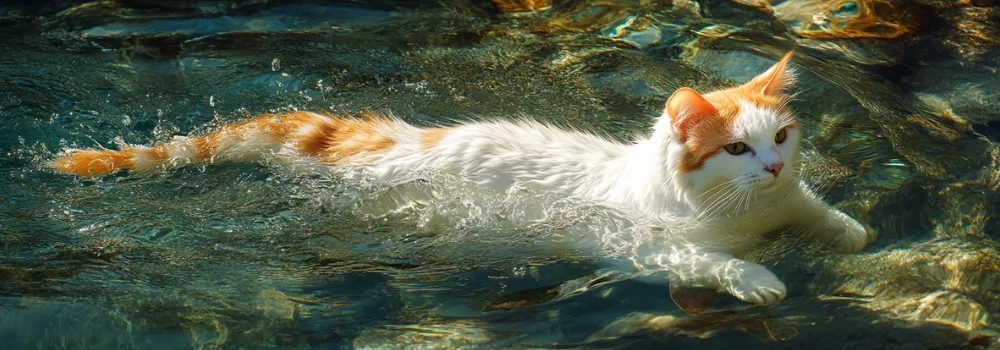
Image source: Bing (Web (fair-use with source credit))
Health concerns
White Turkish Angoras with blue eyes face a significantly higher risk of congenital deafness. The gene responsible for their white coat and blue eyes also affects inner ear development. A BAER test can confirm hearing status in kittens.
Breeders should screen for this before selling.
Turkish Vans carry a lower deafness risk because they are not uniformly white. However, both breeds can develop hypertrophic cardiomyopathy. Ask breeders for recent echocardiogram results on parent cats.
Personality breakdown
Turkish Angoras bond intensely with one person. They follow you from room to room and insert themselves into every activity. Turkish Vans maintain more independence.
They enjoy affection but on their terms. Both breeds are intelligent and can learn tricks.
Which is right for you?
The Turkish Angora suits owners who want a devoted companion and can handle daily grooming. The Turkish Van fits households with space, patience, and a sense of humor about wet paw prints everywhere. If you want a cat that stays away from water, pick the Angora.
Tonkinese: The Social Butterfly
The Tonkinese emerged from crossing Siamese and Burmese cats in the mid-20th century. They inherited the best of both parents, a balanced temperament without the extreme traits found in either.
The three coat patterns
Tonkinese come in mink, solid, and pointed variations. Mink coats show the most contrast, with darker points and a warm body color. Solid coats eliminate the point pattern entirely.
Pointed coats resemble a softer Siamese look. Eye color ranges from aqua to blue-green, depending on the pattern.
The velcro personality
This breed attaches itself to their humans. They follow you to the bathroom, supervise your cooking, and sleep on your pillow. Aggregated owner reviews frequently describe them as "dog-like" in their loyalty.
They also stay notably chatty, though softer and less piercing than a Siamese.
Ideal households
Tonkinese suit first-time cat owners. They are forgiving, adaptable, and eager to please. They get along with children, dogs, and other cats.
They also handle apartment living well, provided you give them attention. They do poorly in homes where they are left alone for long hours.
Health considerations
HCM appears in the breed's genetic background. Reputable breeders screen with echocardiograms. Gingivitis also shows up frequently.
Daily dental care and annual veterinary cleanings help manage this risk.
Training potential
Tonkinese learn quickly. They respond to clicker training and can master fetch, sit, and high-five. Puzzle feeders keep their minds busy.
They also walk on leash if you start early. This breed rewards investment in your shared time together.
If you enjoy discovering how different animals behave, our list of fascinating animals that start with H explores similar curiosity in the wild.
Toyger: The "Mini Tiger" Reality Check
The Toyger exists because Judy Sugden wanted a domestic cat that looked like a miniature tiger. She began breeding in the 1980s using striped domestic shorthairs crossed with Bengal cats. TICA granted full recognition in 2007, and the CFA followed in 2018.
What makes them unique
Their coats feature vertical, irregular stripes that wrap the body. The ground color ranges from orange to golden and the markings appear dark brown or black. Some lines carry the "glitter" gene, giving their fur a subtle shimmer in sunlight.
No two Toygers have identical patterns.
The energy reality
Toygers are not couch potatoes. They rank among the most active domestic breeds. They need daily interactive play, climbing structures, and opportunities to run.
Without stimulation, they will open cabinets, unroll toilet paper, or find other destructive outlets.
Are they hypoallergenic?
Claims vary. Some Toyger lines produce lower Fel d 1 protein levels, but this is not guaranteed. TICA does not classify them as hypoallergenic.
If allergies drive your decision, spend time with the actual cat first.

Image source: Web (Bing) / wayfair.com (Web image (fair-use with source credit))
The price question
Toygers remain expensive. Kittens from reputable breeders range from $1,500 to $5,000 or more. Early-generation cats cost the most because fewer exist.
The price also reflects extensive health screening. Budget for ongoing expenses like high-quality food, enrichment toys, and pet insurance.
Who should own one
Experienced cat owners who can commit substantial daily time to exercise and enrichment. They also suit people who enjoy training, as Toygers excel at clicker work and leash walking. They do not fit busy schedules or homes lacking vertical space.
Per TICA guidelines, this breed needs an engaged owner to thrive.
For more on exotic-looking animals and their real traits, check out our collection of amazing animals starting with F.