Sea Animals Starting with N: N is for Narwhal
You're staring at a nature doc reel or a tide pool guide and you spot something incredible, but you can't name it. Or worse, you're pretty sure you've got it, but you're mixing up your narwhals and your nurse sharks. The list of sea animals that start with n is short, but it's packed with some of the most visually distinctive creatures in the ocean.
Here's the catch. Most of these animals look nothing like each other, but they share one frustrating trait. They're easy to misidentify if you don't know the right visual cues.
A narwhal is not a beluga with a horn. A nudibranch is not a flatworm. A nautilus is not a snail.
We've pulled together the identification cheat sheet you actually need, covering habitat, physical markers, and the lookalikes that trip everyone up. As of 2026, this guide reflects the current species classifications and conservation statuses you'll want to know.
Quickly Find What You're Looking For
Here's the short, scannable answer. These are the sea animals that start with n you're most likely to encounter, whether you're diving, tide-pooling, or just browsing photos.
| Species | One-Line Identification Hook |
|---|---|
| Narwhal | Arctic whale with a long, spiral tusk (a modified tooth). |
| Nudibranch | Small, brightly colored sea slug with exposed gills. |
| Nurse Shark | Slow, bottom-dwelling shark with barbels near its mouth. |
| Nautilus | Cephalopod with a coiled, chambered spiral shell. |
| Needlefish | Long, slender fish with a narrow, beak-like jaw. |
| Northern Gannet | Large seabird that plunge-dives for fish, not a fish itself. |
| Norway Lobster | Small, orange-pink lobster often called langoustine. |
Why Visual Cues Matter More Than Written Descriptions
If you've ever tried to identify a sea animal from a text description alone, you know the pain. Words like "large," "colorful," and "elongated" don't help when everything in the ocean looks elongated or colorful in its own way. Written descriptions fail because they lack the spatial context of shape, proportion, and color placement.
Seeing the physical arrangement of features is the only reliable way to confirm what you're looking at.
Here's the thing. Two animals can share the same color and size range, but their morphology tells the real story. The position of a shark's fins, the texture of a nudibranch's back, the spiral direction of a shell.
These are visual facts you can't capture accurately with adjectives.
What to Actually Look For
- Shape: Is the body rounded, flattened, tubular, or torpedo-shaped?
- Proportion: How big is the fin, tentacle, or tusk relative to the body?
- Color and Pattern: Are markings uniform, banded, spotted, or blotchy?
- Behavior: Is the animal stationary, swimming, crawling, or resting on the bottom?
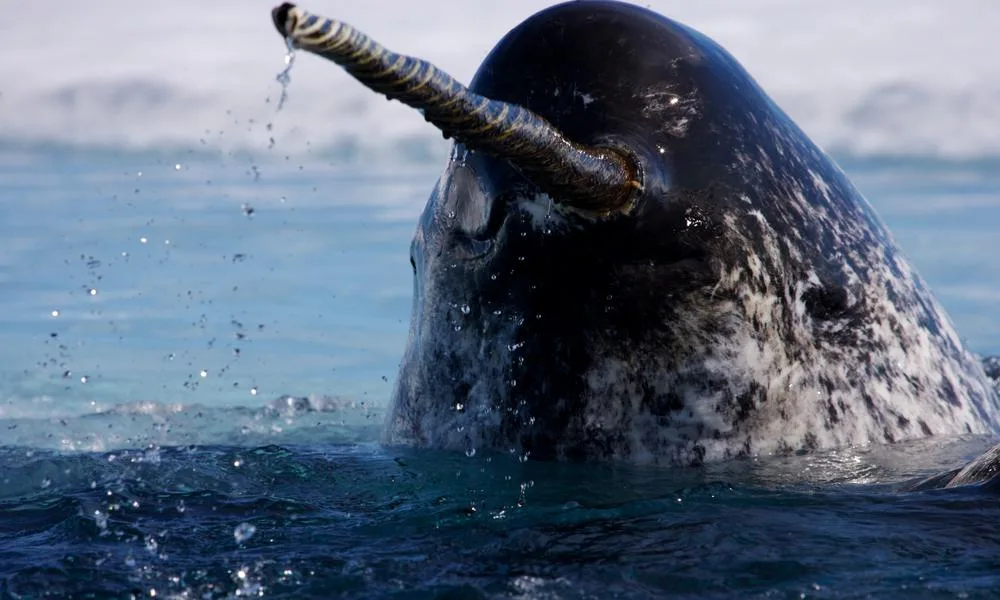
Image source: Web (Bing) / lazerhorse.org (Web image (fair-use with source credit))
These four variables, assessed visually, are what separate reliable identification from a lucky guess. Once you train your eye to scan for these traits first, everything else becomes easier, especially when you encounter species you've never seen before. If you're also exploring land-based creatures, you might find our rundown of animals that start with l useful for building a broader animal recognition toolkit.
Narwhal: The Arctic Unicorn
The narwhal is arguably the most famous animal on this list. It's also one of the most misunderstood. Its defining feature, the long spiral tusk, makes it instantly recognizable, but that tusk is actually a tooth that grows through the upper lip.
In adult males, it can reach lengths of up to 10 feet, which explains how a midsized whale can look so dramatic.
But you rarely get a clean, textbook view of a narwhal in the wild. From a boat, you're mostly seeing the back, the head, and maybe that tusk breaking the surface.
Visual Identification Checklist
- Body Coloration: Mottled gray, black, and white patches across the back and sides. This marbled pattern is unique among Arctic whales.
- Head Shape: Rounded and bulbous, with a pronounced melon. Not as flat or streamlined as a beluga.
- Dorsal Fin: Absent. Narwhals have a ridge along the spine, not a fin. This is a critical differentiator.
- Tusk: A long, spiraled, pointed tooth protruding up to 10 feet from the upper left canine tooth.
Narwhal vs. Beluga Whale
This is the classic mix-up. Both are Arctic whales that live in the same waters. But visually, they differ in obvious ways.
| Feature | Narwhal | Beluga |
|---|---|---|
| Tusk | Present in males, sometimes females | Never present |
| Coloration | Mottled gray-brown | Solid white (adults) |
| Head Shape | Rounded, small beak | Bulbous, almost square |
| Dorsal Fin | None | None |
If you see a white whale, it's a beluga. If you see a mottled gray whale with a spiral protrusion, it's a narwhal. The behavior also differs.
Narwhals use their tusks for feeding and possibly sensory perception, while belugas are more acrobatic at the surface. For more on related Arctic species and other amazing creatures, browsing our guide on amazing animals that start with m might give you broader context on marine mammals.
Nudibranch: The Reef's Living Neon Sign
If you're a diver, the nudibranch is the treasure hunt of the underwater world. These sea slugs come in an absurd array of colors, from electric purple to glowing orange. But color alone won't help you identify the species.
The key visual identifier is the external gills and the sensory organs called rhinophores. Nudibranchs are essentially slugs, and their gills are exposed on their backs. That's what makes them "naked gill" creatures, which is what the name translates to.
There are over 3,000 known species as of 2026, and spotting the difference between them requires careful observation.
What to Look For Close-Up
- Cerata: These are finger-like projections on the back of many species. They function as gills. Their arrangement and color vary by species.
- Rhinophores: A pair of sensory tentacles on the head. They are often shaped like small clubs or horns.
- Texture: Some are smooth. Others have a fuzzy or spiky appearance due to the cerata.
- Foot: The flat, crawling base visible from underneath.

Image source: Web (Bing) / animalia-life.club (Web image (fair-use with source credit))
Common Lookalikes: Flatworms
The most common identification error is confusing a nudibranch with a marine flatworm. Both are small, colorful, and live on reefs. But flatworms have a flattened, leaf-like body and move with a smooth, gliding motion.
Nudibranchs have a visible head with rhinophores, and their movement is a slower, more deliberate crawllike pace. If you see a distinct pair of antennae-like organs on the head, you are almost certainly looking at a nudibranch. If the body is perfectly flat with no visible appendages, it's likely a flatworm.
Nurse Shark: The Bottom-Dwelling Slowpoke
The nurse shark is a completely different visual experience. It's not sleek like a great white or tiger shark. Instead, it looks almost lazy, often resting motionless on the sandy seafloor.
Its body is thick and cylindrical, with a broad, flat head.
The first thing you'll notice is the barbels. These are small, whisker-like sensory organs that hang just above the mouth. They help the shark find prey in the sandy bottom.
Observing a nurse shark at rest is common in the Caribbean and the Gulf of Mexico, where they often pile together in groups of up to 40 individuals.
Key Identification Features
- Body Shape: Stout, cylindrical, and tapering toward the tail.
- Head: Wide and flat with a rounded snout.
- Fins: First dorsal fin is set far back on the body, closer to the pelvic fins than the pectoral fins.
- Mouth: Small, with fleshy barbels in front.
- Coloration: Brown, gray, or yellowish-brown, typically uniform without prominent markings.
Nurse Shark vs. Lemon Shark
These two species share similar habitats. The easiest way to tell them apart is the second dorsal fin shape. A lemon shark's second dorsal fin is nearly as large as its first.
A nurse shark's second dorsal fin is significantly smaller. Coloration also helps. Lemon sharks are a yellowish-tan color.
Nurse sharks are a duller, browner gray. If you're in shallow water and a shark is resting on the bottom, it's almost always a nurse shark. Lemon sharks tend to be more active and are often found swimming above the seafloor.