Insects That Start with R: Fascinating Species
You found a bug and you're not sure what it is. Maybe it's crawling across your patio, or you spotted something colorful on a hike. The letter "R" covers some of the most fascinating, frustrating, and flat-out impressive insects on the planet.
This guide breaks down the insects that start with R into clear categories, so you can figure out exactly what you're looking at and what to do about it.
In our research, we've sorted through identification guides, extension service records, and entomology databases to bring you the most practical information. As of 2026, the Red Imported Fire Ant alone accounts for over $6 billion in annual economic impact across the southern United States. Understanding which "R" bugs are friends, which are foes, and which are just fascinating is the first step.
Quick Answer
The most common insects that start with R include the Rhinoceros Beetle, Red Imported Fire Ant, Robber Fly, Red Admiral Butterfly, Rove Beetle, and Red Velvet Mite. Some are pests. Some are helpful predators.
Most are harmless. Your next step depends on which one you found and where you found it.
You Found an "R" Bug: What's Your Goal?
Before we dive into species profiles, ask yourself one simple question. Why are you here?
Are you dealing with a potential pest? If you spotted something in your garden or home that's causing damage, you'll want the pest branch. That's where we cover the Red Imported Fire Ant, Raspberry Cane Borer, and Red Lily Beetle.
Are you just curious? Maybe you saw something cool on a nature walk and want to know what it was. The curiosity branch covers the showstoppers like the Rhinoceros Beetle and Rosy Maple Moth.
Are you trying to identify something? The identification branch helps you narrow down the possibilities using visual clues. We'll walk through look-alikes and common confusions.
The good news is that most "R" insects are either harmless or genuinely beneficial. Only a handful cause real problems. The table below gives you a quick snapshot of the major players.
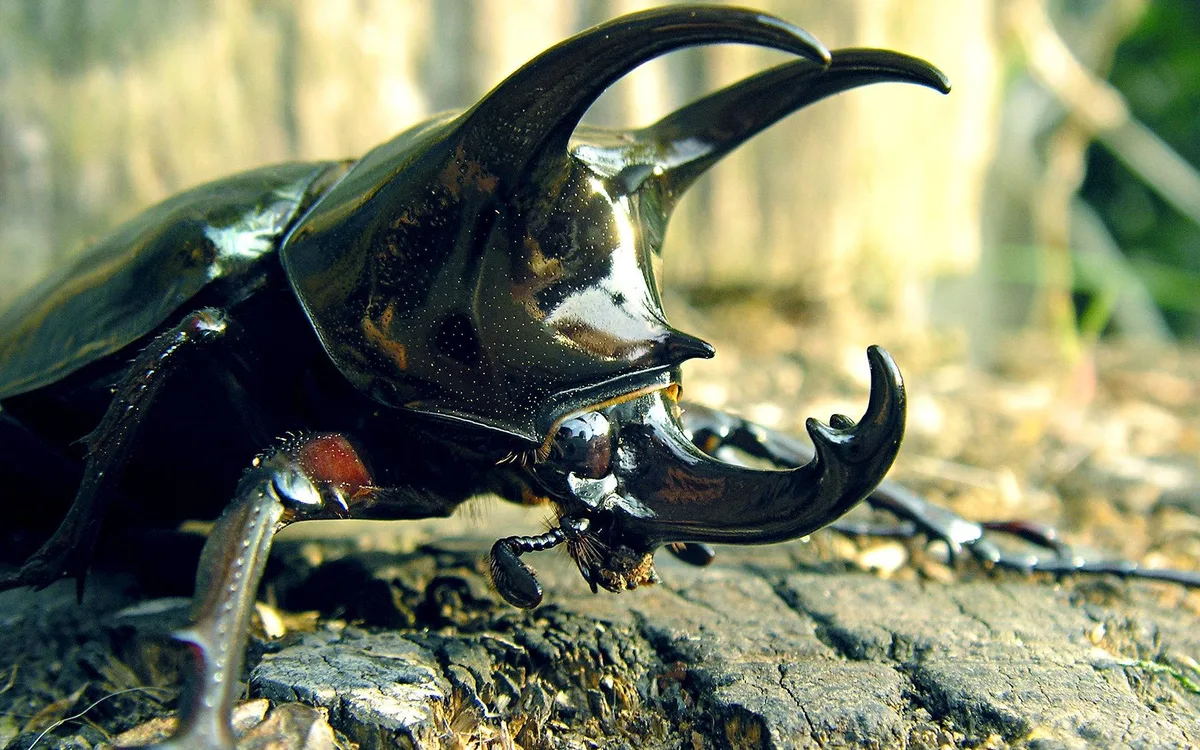
Image source: Web (Bing) / wallpapers.com (Web image (fair-use with source credit))
| Insect | Habitat | Friend or Foe? | Key Fact |
|---|---|---|---|
| Rhinoceros Beetle | Tropical regions worldwide | Beneficial | Lifts 850x its body weight |
| Red Imported Fire Ant | Southeastern US | Pest | Colony size up to 500,000 |
| Robber Fly | Meadows and fields globally | Beneficial | Hunts insects mid-air |
| Red Admiral Butterfly | North America, Europe | Beneficial | Migrates like monarchs |
| Rove Beetle | Leaf litter, soil | Beneficial | Eats garden pests |
| Rosy Maple Moth | Eastern North America | Harmless | Pink and yellow wings |
| Ringlet Butterfly | UK grasslands | Beneficial | Small eye-spots on wings |
The "Pest or Not?" Branch
If you're dealing with something that's damaging your plants, stinging you, or invading your space, you need the pest branch. Let's start with the big one.
Red Imported Fire Ant (Solenopsis invicta)
This is the insect everyone should recognize. The Red Imported Fire Ant arrived in the United States from South America in the 1930s through the port of Mobile, Alabama. Since then, it has spread across the Southeast and into parts of Texas, Oklahoma, and California.
How to identify it: Workers are reddish-brown with darker abdomens. They range from 1/8 to 1/4 inch long. You'll rarely see a single ant.
Fire ants are almost always in groups, and their colonies build distinctive dome-shaped mounds in open, sunny areas.
Why they're a problem: Their sting packs a punch. The Schmidt Sting Pain Index rates it at 1.2 out of 4, which sounds mild until you experience the burning sensation that follows. Worse, each ant can sting multiple times in a circular pattern around the initial bite.
Within 24 hours, those stings develop into white pustules that can scar if scratched.
What to do immediately: If you disturb a mound and get stung, move away quickly. Wash the affected area with soap and cold water. Apply a cold compress to reduce swelling.
Over-the-counter antihistamines like diphenhydramine help with itching. If you experience difficulty breathing, chest tightness, or swelling far from the sting site, seek emergency medical care. That's anaphylaxis, and it's life-threatening.
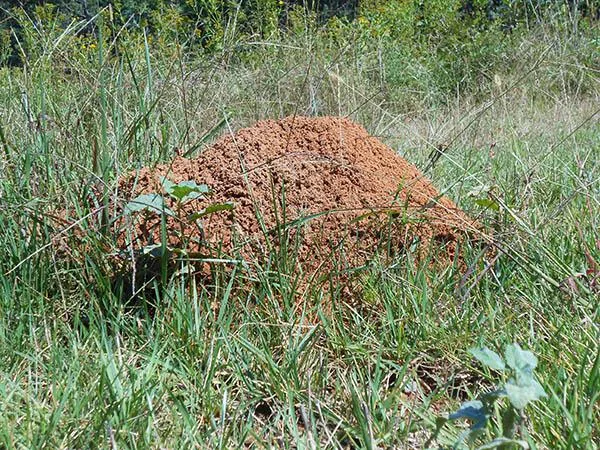
Image source: Web (Bing) / content.ces.ncsu.edu (Web image (fair-use with source credit))
Raspberry Cane Borer (Oberea bimaculata)
Gardeners growing raspberries and blackberries know this pest well. It's a slender, black beetle with a yellow thorax and two spots on its back. The female chews two rings around a young cane, about 4 to 6 inches below the tip.
Those rings cut off water flow.
Signs of damage: The tip of the cane wilts, droops, and eventually dies. If you see that pattern in late spring or early summer, snap the wilted cane off below the lower ring and dispose of it. That removes the larva inside before it tunnels further down.
Red Lily Beetle (Lilioceris lilii)
This one is a scourge for lily gardeners. The adult is a bright red beetle with black head, legs, and antennae. It feeds on true lilies and fritillaries, skeletonizing the leaves.
The larvae are less obvious. They cover themselves in their own dark excrement, which looks like black specks but keeps birds from eating them.
Control method: Hand-picking works best in the morning when they're slow. Drop them in soapy water. Inspect leaf undersides for orange eggs.
If you find them, crush them. For heavy infestations, a pyrethrin-based spray applied thoroughly will knock them down.
If you're dealing with any of these, treat it as an action item. Don't wait. Fire ant mounds triple in size within weeks. Borer larvae climb deeper into canes.
Early intervention saves your garden.
The Curiosity and Education Branch
Not every "R" bug is a nuisance. Some are genuinely spectacular. If you're here because you want to learn or you're helping a kid with a school project, this is the fun part.
The Showstoppers
Rhinoceros Beetle: These are the heavyweights of the beetle world. Males sport a prominent horn on their heads that they use in combat over territory and mates. They're found on every continent except Antarctica, mostly in tropical rainforests.
Adults can reach 6 inches long in some species, making them some of the largest beetles on Earth. Despite their intimidating appearance, they're completely harmless to humans. They can pinch with their mandibles if handled roughly, but they prefer to push and shove rather than bite.
Rosy Maple Moth: If you're in eastern North America, you might spot this one. It's impossible to miss. The body is bright yellow, while the wings are a striking mix of pink and cream.
It looks like a cotton candy dream. Adults don't eat. They live just a few days, mate, and die.
The Backyard Regulars
Red Admiral Butterfly: You've probably seen these without realizing it. They have black wings with red-orange bands crossing the forewings and white spots near the tips. They're common across North America, Europe, and Asia.
Unlike monarchs, they don't migrate hundreds of miles in huge groups. They do travel, but they move as individuals.
Ringlet Butterfly: This is a grass-loving butterfly found across Europe and Asia. It's brown with small black eye-spots ringed in yellow on the underwings. They fly in summer, usually June through August.
Look for them bouncing over damp grasslands and meadows.
The Weird and Wonderful
Red Velvet Mite: Technically an arachnid, but people always ask about it. These look like tiny, fuzzy red balls with legs. You'll find them on soil surfaces, patios, and sidewalks, especially after rain.
They're predatory as adults, eating small insects and eggs. As larvae, they parasitize other insects. They're completely harmless to people.
Restless Bush Cricket: The name says it all. This cricket never stops moving. It's found in the southeastern US and the Caribbean.
It's nocturnal, so you're most likely to hear it in late summer evenings.
Quick Reference: The "R" Bug ID Table
This table gives you the essentials at a glance. Use it to narrow down what you're looking at.
| Species | Size | Color | Where to Look | Threat Level |
|---|---|---|---|---|
| Rhinoceros Beetle | 2-6 inches | Dark brown/black | Tropical forests | Harmless |
| Red Imported Fire Ant | 1/8-1/4 inch | Reddish-brown | Open sunny lawns | Stings |
| Robber Fly | 3-20 mm | Varies, often bristly | Meadows, fields | Harmless to humans |
| Red Admiral Butterfly | 4.5-7.5 cm wingspan | Black with red bands | Gardens, edges | Harmless |
| Rove Beetle | 1-35 mm | Dark with short wings | Leaf litter, compost | Mild defensive spray |
| Red Velvet Mite | 2-5 mm | Bright red | Soil, sidewalks | Harmless |
| Red Lily Beetle | 6-8 mm | Bright red | True lilies, fritillaries | Plant pest |
| Raspberry Cane Borer | 12-15 mm | Black with yellow thorax | Raspberry canes | Plant pest |
| Restless Bush Cricket | 20-25 mm | Brown, long antennae | Deciduous trees | Harmless |
| Rosy Maple Moth | 3-4 cm wingspan | Pink and yellow | Maple forests | Harmless |
Spotting the Difference: Look-Alikes and Common Confusions
Here's where things get tricky. Several "R" insects look like other bugs, and misidentification leads to unnecessary worry or missed treatments.
Rove Beetle vs. Earwig
This is the most common mix-up. Rove beetles have short wing covers that make their abdomen look exposed. They move quickly and often curl their abdomens upward like a scorpion when threatened.
That's a bluff. They don't sting. Earwigs have prominent pincers at the rear, which rove beetles lack.
Earwigs also have longer, beaded antennae.
The confusion matters because rove beetles are beneficial. They eat soil-dwelling pests like mites and fly eggs. Earwigs, meanwhile, can damage seedlings, though they also eat other insects.
If you see a fast-moving dark beetle in your compost pile, it's almost certainly a rove beetle. Leave it alone.
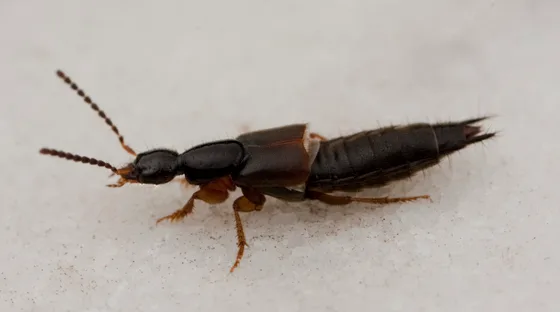
Image source: Web (Bing) / bugguide.net (Web image (fair-use with source credit))
Red Velvet Mite vs. Clover Mite
Both are tiny and red. That's where the similarity ends. Red velvet mites are rounded, velvety, and move through soil.
Clover mites are flatter, have longer legs, and crawl up house siding in spring. Clover mites feed on plants and can become indoor nuisances. Red velvet mites are predators and rarely enter homes.
If you see red specks on your window sill, those are clover mites.
Red Admiral vs. Painted Lady
These two butterflies look similar at a glance. The Red Admiral has a bold red-orange band across its forewings. The Painted Lady has orange and black mottled patterns with white spots on the forewing tips.
Red Admirals are slightly larger and hold their wings open when resting. Painted Ladies often keep them half-closed. Both are welcome garden visitors.
Robber Fly vs. Bee
Robber flies are often mistaken for bees or wasps. They're robust, hairy, and have large compound eyes. Some species even mimic bumblebees.
The key difference is the fly. Robber flies have one pair of wings. Bees and wasps have two pairs.
Robber flies also hover in mid-air, then dart to catch prey. That hunting behavior is unique.