Sea Animals That Start with M: Manatees, Manta Rays & More
If you've ever wondered about sea animals that start with m, you're not alone. This guide covers every significant M-named marine creature, from gentle giants like manatees and manta rays to lightning-fast predators such as marlin and mahi-mahi. We've organized them by habitat, behavior, and practical relevance.
Our research draws on NOAA species databases and marine biology field guides.
Per NOAA Fisheries, the Florida manatee population hovers around 6,000 to 7,000 individuals right now. That's a useful anchor for understanding just how vulnerable some of these creatures are. By the end, you'll know which M-named species you might spot while diving, fishing, or even dining out.
So let's dive in.
Why You'll Actually Want to Read This
Most lists of sea animals that start with m just dump ten names and call it a day. That's not helpful when you're trying to plan a dive trip, identify a species you saw, or decide whether something is safe to eat. We built this guide differently.
Each species gets context. You'll learn where it actually lives, how big it really gets, and whether you're likely to ever encounter one. You'll find details that matter, like the fact that a manatee tail is paddle-shaped while a minke whale has a dorsal fin.
You'll also find practical connections. If you've been reading up on M-named wildlife, you'll notice several crossovers. The manatee on this list is the same one featured in our sea-friendly mammals roster.
We just look at it from the marine angle here.
The Quick Answer: Every "M" Sea Animal You Should Know
Sea animals that start with m include manatees, manta rays, marlin, and mahi-mahi. Several others deserve your attention too. Moray eels, mola molas, and mantis shrimp add variety.
Some, like the megamouth shark, are extremely rare. Others, like mussels, live closer to shore.
Meet the Big Names: Mammals and Giants
The marine mammals and giant filter feeders make up the most recognizable group on this list. They're the species that draw crowds at aquariums and ecotourism hotspots. They're also among the most vulnerable to human activity.
Manatees: The Gentle Giants of the Shallows
The West Indian manatee is the species you'll most likely encounter in US waters. They're slow-moving herbivores that graze on seagrass beds in Florida, Georgia, and Puerto Rico. Aggregated reports from the Save the Manatee Club indicate that roughly 500 to 800 manatee deaths happen each year from boat strikes and cold stress combined.
Manatees have paddle-shaped tails and flexible front flippers. They use their flippers to steer and even to walk along the bottom. They can hold their breath for up to 20 minutes at rest, though they typically surface every 3 to 5 minutes.
Most adult manatees reach 10 to 12 feet long and weigh 800 to 1,200 pounds. Females tend to be larger than males. They don't have any natural predators in US waters, which makes human-caused mortality that much more tragic.
As of 2026, the species remains protected under the Marine Mammal Protection Act.
Minke Whales: The Smallest of the Baleen Whales
Minke whales are the smallest rorqual species, which is the family that includes blue whales and humpbacks. They typically reach 23 to 35 feet in length and weigh up to 20,000 pounds. That's still massive compared to the manta ray, but small enough to be overlooked in a sea full of giants.
You'll find two common types. The common minke whale lives in both the Atlantic and Pacific. The Antarctic minke whale stays closer to the southern polar ice edge.
Both feed on krill and small schooling fish.
Minke whales are known for being shy and hard to approach. Their small size makes them faster than other rorquals, and they tend to surface unpredictably. That makes them a particularly rewarding sighting for dedicated whale watchers.
Manta Rays: The Ocean's Most Gracious Flyers
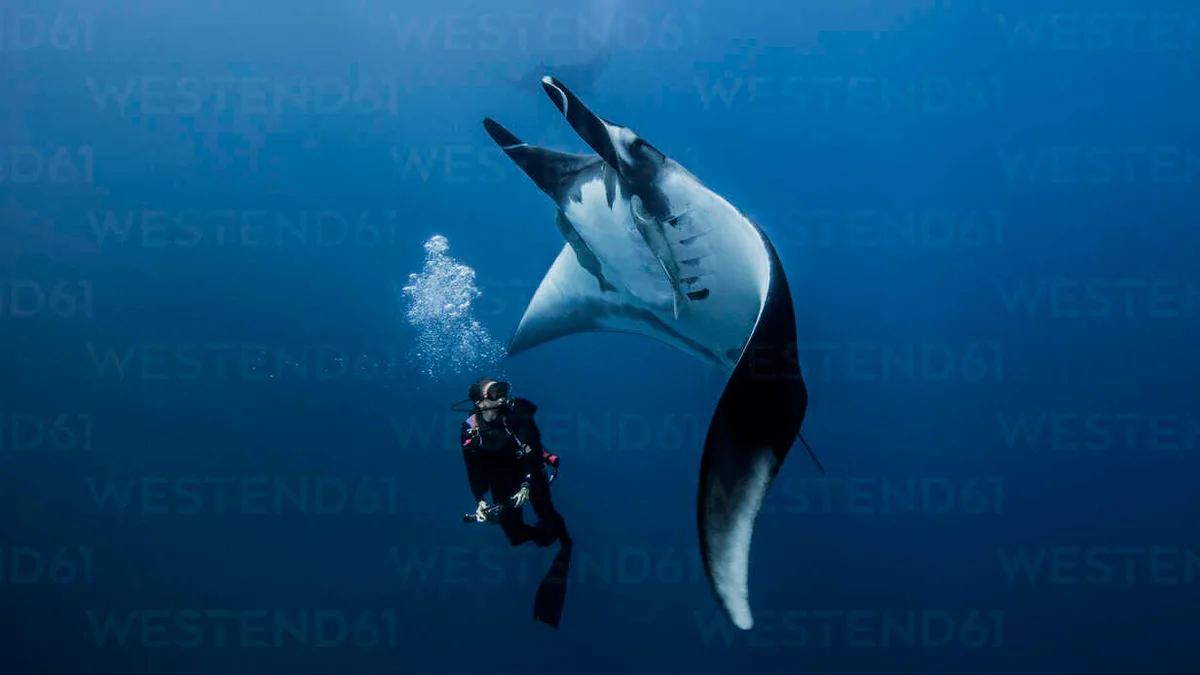
Manta rays are the largest rays in the world. The giant oceanic manta ray can reach a wingspan of 23 feet across, which is about the length of a standard school bus. They're filter feeders that open their mouths wide to scoop up plankton.
Unlike stingrays, manta rays don't have a poisonous stinger. They're completely harmless to humans. Their cephalofoil horns, which are the curled fins on their heads, help funnel water and plankton into their mouths.
Manta rays are social animals. They gather at cleaning stations where small fish remove dead skin and parasites from their bodies. Per NOAA research, these sites are critical for their health and reproduction.
The species is currently listed as vulnerable on the IUCN Red List.
The Open-Ocean Hunters and Speedsters
This group consists of fast, powerful apex predators that patrol the open ocean. These are the fish that tournament anglers chase. These are also the species that appear most often on seafood menus.
Marlin: The Billfish Built for Speed
Marlins are among the fastest fish in the ocean. The blue marlin can hit sustained speeds of 50 mph in short bursts, making them a challenging catch for sport fishermen. They can grow to over 2,000 pounds and reach 16 feet in length, with a distinctive bill that resembles a spear.
There are several marlin species. The blue marlin is the largest, found in tropical Atlantic waters. The striped marlin prefers the Pacific and Indian oceans.
Both are prized in tag-and-release sport fisheries, which biologists use to track migration patterns and population trends.
Marlins are also targeted commercially, though their meat is often sold as an alternative to tuna. The IUCN lists both the blue marlin and striped marlin as vulnerable. That status matters when you order seafood and see marlin on the menu.
Mahi-Mahi: The Rainbow-Colored Powerhouse
Mahi-mahi, also known as dolphinfish, is a fast-growing, short-lived species that can reach 40 pounds in its first year. They show off iridescent blue, green, and gold colors when alive. Those colors fade quickly after the fish dies, which is why restaurant filets look plain.
Mahi-mahi is widely considered one of the more sustainable seafood choices available. They reproduce quickly, and their populations are relatively stable. The US commercial and recreational fisheries are also monitored under strict catch limits.
If you've ever eaten a fish taco at a coastal restaurant, you've likely eaten mahi-mahi without knowing it. The mild flavor and firm texture make it one of the most versatile white fish on the market.
Megamouth Shark: The Ghost You've Never Seen
The megamouth shark is one of the rarest and most mysterious sharks in the ocean. It was only discovered in 1976, and fewer than 300 sightings have been confirmed worldwide since then. That makes it rarer than the great white shark by a significant margin.
Despite its size, which reaches about 18 feet, the megamouth is completely harmless. It's a filter feeder that swims slowly with its giant mouth wide open, straining zooplankton from the water. It belongs to the same family as basking sharks and whale sharks.
Most megamouth sightings happen when the shark is accidentally caught in drift nets. Their deep-ocean habitat makes research difficult. If you ever hear about a beached megamouth, it will make national marine science news because these events are so rare.
The Weird, the Wonderful, and the Downright Bizarre
This category is where the letter M gets really interesting. Some of these creatures look like they came from another planet. Others have behaviors that seem too strange to be true.
Let's meet the weirdest members of the M-named club.
Mola Mola: The Heavyweight Sunbather
The mola mola, or ocean sunfish, is the heaviest bony fish in the world. A fully grown adult can weigh up to 5,000 pounds and measure 11 feet from fin to fin. They look like a giant fish head with tiny fins attached to the sides, and they're notoriously awkward swimmers.
Mola molas spend most of their time basking horizontally at the surface, which is where they got the sunfish nickname. They're passive filter feeders that eat jellyfish and small plankton. They're covered in parasites, and they rely on cleaner fish and seabirds to pick them off while they float.
These fish are found in both tropical and temperate oceans. They show up in Monterey Bay, California, during the summer months, and divers often spot them alongside schools of juvenile yellowtail. They're harmless to humans and generally too bizarre to be confused with any other fish.
Mantis Shrimp: The Punch That Breaks Glass
Mantis shrimp are not true shrimp. They're stomatopods, a group of marine crustaceans that have evolved separately from crabs and lobsters. They're famous for one thing: their punch.
Their club-like appendages can strike at speeds of 50 mph, generating a cavitation bubble that creates a secondary shockwave.
That punch is powerful enough to break aquarium glass. Mantis shrimp use it to smash open mollusk shells and crack crab claws. They also use their spear-like appendages to impale soft-bodied prey like fish and squid.
Peacock mantis shrimp are the most sought-after species in the saltwater aquarium trade. But they're not beginner pets. There are documented cases of them breaking 1/2-inch glass tanks and attacking hobbyists who reach in carelessly.
If you keep one, you need a solid acrylic tank and a healthy respect for the claw.
Moray Eels: The Misunderstood Den Dwellers
Moray eels are the most feared eels in the ocean. They're long, snake-like fish with sharp teeth and an intimidating open-mouth posture. But that posture isn't aggression.
It's the way they breathe. Water must flow over their gills continuously, so they open and close their mouths constantly.
There are about 200 species of moray eels, ranging from 6 inches to 13 feet long. The green moray is the largest in the Caribbean, and it gets its color from yellow mucus that coats its skin. Moray eels are ambush predators, lurking in rock crevices and darting out to grab unsuspecting fish.
Most moray eel bites happen when divers or snorkelers try to feed them. Their teeth are designed to hold slippery prey, and they don't like releasing their grip. The bite is painful, and it can require stitches.
As long as you don't poke your hand into a crevice, you'll be fine.
Mandarin Fish: The Psychedelic Reef Jewel
The mandarin fish is one of the most colorful reef fish in the ocean. They display swirling patterns of blue, green, orange, and purplethat make them look like a living watercolor painting. The Mandarin fish gets its name from the flowing robes of ancient Chinese officials, which the fish's vivid patterns supposedly resemble.
These small fish stay under 3 inches long. They're native to the western Pacific Ocean, particularly around the Philippines, Indonesia, and the Great Barrier Reef. They spend most of their time in sheltered reef flats and lagoons, picking tiny crustaceans off the coral rubble.
If you're a saltwater aquarium hobbyist, you've likely heard about how choosy they are. Mandarin fish exclusively eat live copepods and amphipods. They rarely accept frozen foods.
That means they require a mature tank with a stable microfauna population or they'll slowly starve.
The Bottom-Dwellers and Filter Feeders You Might Overlook
The M-named animals in this section don't have the flash of a marlin or the size of a minke whale. But they're arguably more important to marine ecosystems. Filter feeders clean the water.
Bottom-dwellers provide food for larger predators. They're the unsung workers of the ocean.
Mussels: The Ocean's Natural Water Purifiers
Blue mussels are the species you'll most often see on menus and along rocky coastlines. They attach themselves to rocks, piers, and each other using strong byssal threads, more commonly known as beard. A single mussel filters 20 to 40 gallons of seawater per day, pulling out plankton and organic particles.
That filtration makes mussels incredibly valuable for coastal water quality. One acre of farmed mussels can filter more than 24 million gallons of water annually. That's like having a natural water treatment plant built into the ocean floor.
Mussel farming is also one of the most sustainable forms of aquaculture available. Per the FAO, farmed mussels produce zero feed waste and actually improve local water clarity. If you're looking for a seafood choice that helps the environment rather than hurting it, mussels are a great option.
The one risk with mussels is poisoning from red tide, which is a harmful algal bloom. Mussels filter toxins from the water, and those toxins concentrate in their flesh. Always buy mussels from regulated commercial sources and never harvest them from beaches during a red tide advisory.
Milkfish: The Southeast Asian Staple
Milkfish is the main farmed fish species in the Philippines, Indonesia, and Taiwan. It's a silver-scaled fish that can reach 6 feet in length, though most farmed individuals are harvested at around 2 feet. It has a mild, slightly sweet flavor that holds up well to grilling and frying.
Milkfish farming dates back centuries in Southeast Asia. Traditionally, farmers build coastal ponds called tambak and raise the fish in brackish water. The milkfish fry are collected from coastal waters and then raised to market size in 4 to 6 months.
One of the challenges with milkfish is its many fine intramuscular bones. In the Philippines, cooks traditionally debone the fish by hand before cooking. That labor-intensive process has led to a growing industry of deboned and canned milkfish products in Asian markets.
Moon Jellyfish: The Translucent Drifter
Moon jellyfish are the translucent, four-leaf-clover-shaped jellies you've probably seen in aquarium displays. They're found in oceans worldwide, from the Atlantic coast of the US to the Sea of Japan. They pulse slowly through the water, using their bell-like bodies to move.
Moon jellies are mostly harmless to humans. Their sting is too weak to penetrate human skin, though it can cause mild irritation in sensitive people. They feed on zooplankton and small fish eggs that drift into their trailing tentacles.
Public aquariums love keeping moon jellies because they're relatively low-maintenance compared to other jelly species. You can spot them at most major aquariums, typically in a cylindrical display tank with a blue backlight. They're also popular in home jellyfish tanks for experienced hobbyists.
Who's the Biggest? Who's the Fastest? (The Specs)
Sometimes you just want numbers. Here's a quick reference table that compares the key measurements across all the M-named sea animals we've covered.

| Species | Max Length | Max Weight | Habitat | Status |
|---|---|---|---|---|
| Manatee | 12 feet | 1,200 lbs | Shallow coastal waters | Vulnerable |
| Minke Whale | 35 feet | 20,000 lbs | Open ocean | Least Concern |
| Manta Ray | 23 feet (wingspan) | 5,000 lbs | Tropical oceans | Vulnerable |
| Blue Marlin | 16 feet | 2,000 lbs | Atlantic Ocean | Vulnerable |
| Mahi-Mahi | 6 feet | 88 lbs | Tropical/subtropical oceans | Least Concern |
| Megamouth Shark | 18 feet | 2,600 lbs | Deep ocean | Least Concern (data deficient) |
| Mola Mola | 11 feet | 5,000 lbs | Temperate/tropical oceans | Vulnerable |
| Mantis Shrimp | 12 inches | 1 lb | Tropical reefs | Least Concern |
| Moray Eel | 13 feet | 65 lbs | Reefs | Least Concern |
| Mandarin Fish | 3 inches | 0.2 lbs | Western Pacific reefs | Least Concern |
| Mussel | 4 inches | 0.5 lbs | Intertidal zones | Least Concern |
| Milkfish | 6 feet | 30 lbs | Coastal brackish water | Least Concern |
| Moon Jellyfish | 16 inches (bell) | 2 lbs | Global oceans | Least Concern |
One thing worth noting about the mantis shrimp spec: the 50 mph punch speed translates to less than 1 millisecond of contact time. That's faster than a blink. It's one of the fastest movements in the animal kingdom.
For comparison, the blue marlin is the fastest of the M-named fish. In sustained chase sequences, research studies using electronic tags have recorded blue marlin bursts near 40 mph. The minke whale, despite being 20 times heavier than a marlin, is slower at roughly 20 mph cruising speed.
Where to Actually See These Animals in the Wild
You don't need a submarine to see most M-named sea animals. Many of them live in shallow coastal waters or migrate through accessible dive sites. Here are some of the most reliable places for real-world encounters.

Florida Springs for Manatees
Florida's natural springs stay at a constant 72 degrees Fahrenheit year-round. That makes them a haven for manatees during the winter months when the Gulf Coast waters drop below 68 degrees. Three Sisters Springs in Crystal River and Blue Spring State Park are two of the most reliable viewing spots.
The best time to go is between November and March. That's when rangers count hundreds of manatees in a single spring. You can kayak or paddleboard into the springs, and the manatees will often swim right up to your boat because they're used to humans.
Night Dives for Manta Rays in Hawaii
The Kona coast of the Big Island has a manta ray night dive that's world-famous. Divers sit in a circle at a depth of 30 feet while holding underwater lights. The lights attract plankton, and the plankton attracts manta rays.
It's not uncommon to see 10 to 15 rays feeding at once.
The Trans-Pacific Manta Ray Project, based in Hawaii, has identified over 300 individual rays using their unique belly spot patterns. You can contribute to their research by photographing the undersides of the rays you see rather than their backs.
Sport Fishing for Mahi-Mahi and Marlin
If you're an angler, the Gulf of Mexico and the Atlantic coast of Florida offer the best action. Mahi-mahi season runs from May through August, with fish congregating around floating debris and Sargassum lines. Marlin season peaks from Miami to the Bahamas between June and September.
If you're more interested in watching than fishing, head to the lookout points at Kona's Honokohau Harbor in Hawaii. With over 40,000 marlin caught, tagged, and released in the area over the past two decades, it's recognized as a top sportfishing destination. Most dive boats and fishing charters will also include manta ray viewing in their itineraries.
Which "M" Sea Animals Can You Eat?
Several of these M-named animals appear on restaurant menus and in grocery stores. Some are excellent choices for both flavor and sustainability. Others carry serious conservation concerns or health warnings.
Excellent Choices
Mussels are the clear winner here. They're sustainably farmed, filter the water, and taste great steamed in white wine and garlic. Mahi-mahi is also a solid choice when it comes from US Atlantic fisheries, which use better management practices than some other regions.
Eat With Caution
Milkfish is a staple in Southeast Asia, and it's perfectly safe to eat as long as it's deboned properly. Marlin, however, carries elevated mercury levels. The FDA recommends that pregnant women, nursing mothers, and young children avoid eating marlin entirely.
Should Never Eat
Manta rays and megamouth sharks are both protected or severely threatened species. The dried gill plates of manta rays are sold in Traditional Chinese Medicine markets, driving a significant illegal trade. Do not buy or consume manta ray products in any form.
If you see them on a menu at an exotic restaurant, choose something else.
The Ones You Need to Be Careful Around
Most M-named sea animals won't hurt you. But a few demand respect. The risks range from painful bites to venomous spines to toxic meat.
Here's what you need to know before you get too close.
Mantis Shrimp Bite and Strike
The peacock mantis shrimp delivers a punch that can break aquarium glass. It can also crack a human finger bone. If you see one in the wild, don't reach for it.
In saltwater aquarium circles, there are documented cases of mantis shrimp striking a hand during routine maintenance. The wound is deep, jagged, and prone to infection.

Moray Eel Bites
Moray eels have sharp, backward-curving teeth designed to hold prey. A bite from a moray eel typically requires stitches and may involve some retained teeth that need to be surgically removed. The best advice is simple.
Never feed a moray eel, and never insert your hand into a crevice that might be hiding one.
Mussel Toxicity and Red Tide
Wild-harvested mussels can accumulate toxins from red tide algae blooms. These toxins cause paralytic shellfish poisoning, which attacks the nervous system. The CDC reports that PSP symptoms include tingling, numbness, and, in severe cases, respiratory failure.
Always check local shellfish safety advisories before harvesting mussels yourself.
Manatee Interactions
Manatees are gentle and don't pose a physical threat. But human interaction does harm them. Touching or chasing manatees can cause them stress, which is why federal law now prohibits these activities.
Under the Marine Mammal Protection Act, you face a fine of up to $50,000 for harassing a manatee. If you're in a kayak and a manatee swims up to you, stay still and let it come to you.
Conservation Status: Which "M" Animals Need Your Help
Several M-named species are under serious pressure from human activity. Even animals that seem abundant, like the blue mussel, face emerging threats from rising ocean temperatures.
Manatees are still endangered despite years of conservation work. Their population has recovered from a low of a few hundred to around 7,000 in Florida as of 2026. They're still at risk from boat strikes, red tide, and loss of warm-water refuges, per NOAA Fisheries.
Manta rays are listed as vulnerable on the IUCN Red List. Their populations have declined in recent years due to unsustainable fishing. The demand for their gill plates continues to drive illegal trade.
The good news is that ecotourism is becoming a powerful economic incentive to protect them. A single manta ray is worth about $1 million in tourism revenue over its lifetime in locations like Raja Ampat.
Marlin and mahi-mahi face overfishing pressure in many regions. The blue marlin is protected by catch limits and minimum size rules in US waters. Mahi-mahi is abundant in the Atlantic, but Pacific and Mediterranean stocks are less well managed.
When in doubt, check the Monterey Bay Aquarium's Seafood Watch program for current ratings.
Frequently Asked Questions
Are manatees related to elephants?
Yes, manatees are actually distant relatives of elephants. They share a common ancestor that lived roughly 50 million years ago. Scientists placed manatees in a group called Sirenia, which also includes dugongs.
Their closest living land relative is indeed the elephant.
Can a mantis shrimp really break aquarium glass?
Yes, mantis shrimp can break glass aquarium tanks. They have been known to strike glass hard enough to crack it with a single blow. This is why experienced hobbyists keep them in acrylic tanks instead.
The glass-breaking strikes are most common in large species like the peacock mantis shrimp.
What's the difference between a manta ray and a stingray?
Manta rays are massive filter feeders, while stingrays are smaller bottom-dwellers that eat shellfish. Manta rays lack a stinger. Stingrays have a barb, which is actually a modified dermal denticle.
Manta rays swim gracefully in open water, and stingrays lie on the sea floor.
Is mahi-mahi the same as dolphin?
No. Mahi-mahi is also called dolphinfish because it was once thought to look like a dolphin. They're entirely different species.
One is a fish, and the other is a marine mammal. Mahi-mahi is a cold-blooded fish, and dolphins are warm-blooded air-breathing mammals.
How big do mola molas actually get?
Mola molas are the largest bony fish on Earth. The heaviest ever recorded weighed 5,000 pounds and was 11 feet long. They can grow to 14 feet from fin to fin.
Most adults reach around 2,000 pounds, which is still far heavier than a typical car.