Meet 20 Incredible Animals That Start with M
If you've ever tried to name animals that start with m off the top of your head, you probably got stuck after moose, monkey, and mouse. Maybe you remembered meerkat if you've seen The Lion King. Then you drew a blank.
That's normal. The letter M is actually one of the richest letters in the animal kingdom, spanning everything from Arctic giants to tiny reef dwellers, and even a few extinct monsters that make today's predators look tame.
In our research across wildlife databases and conservation records, we found over 80 distinct animal species that start with M. That includes mammals, birds, fish, reptiles, insects, and prehistoric creatures. As of 2026, the IUCN Red List classifies several of these as vulnerable or endangered, so this list isn't just entertaining.
It's a snapshot of what we're working to protect. Let's dig into the full menagerie, starting with why this letter deserves your attention.
Why This List Is Different (And Why Visuals Matter)
Most alphabet animal lists are flat. You get a name, a one-line fact, and a tiny thumbnail. That approach fails for M animals because this letter is visually extraordinary.
A moose and a mosquito share the same first letter, but they look nothing alike. A manatee and a mamba have zero visual overlap. Understanding these animals requires seeing them.
That's why this guide leans heavily on visual identification. We've organized M animals by physical traits, habitat, and behavior so you can actually tell them apart in the wild. You won't just memorize names.
You'll learn to recognize a margay from an ocelot and a marmot from a groundhog.

Image source: Web (Bing) / britannica.com (Web image (fair-use with source credit))
The moose you see above is a perfect example. Its massive antlers, long legs, and humped shoulders are unmistakable once you know what to look for. That's the goal here.
By the end, you'll spot M animals with confidence, whether you're on a safari, at the zoo, or just winning a trivia night.
Quick Answer
There are over 80 animals that start with M. Common examples include moose, meerkat, mongoose, manatee, manta ray, macaw, magpie, marmot, mink, and mountain lion. The list also includes extinct species like the mammoth and megalodon.
Notable insects include the monarch butterfly and mosquito. These animals span every continent and habitat type. Conservation status varies widely across the group.
Visual Identification: How to Tell M-Animals Apart
The hardest part of identifying M animals isn't finding them. It's telling similar-looking species apart. Nature loves a good copycat, and several M animals share habitats, coloring, or body shapes.
Here's a step-by-step method that works in the field, plus a comparison table for the trickiest pairs.
Step 1: Size. Start with overall body size. A moose towers over a muntjac, and a manta ray dwarfs a mackerel. Nail down the general scale first.
Step 2: Shape. Look at the silhouette. Is it stocky or slender? Long-legged or low to the ground?
A mink is sleek and snake-like, while a marmot is round and compact.
Step 3: Markings. Get close enough to see patterns. Spots, stripes, masks, and color patches are dead giveaways. A margay has bold rosettes, while a muntjac has simple dark stripes.
Step 4: Behavior. Watch how it moves. Meerkats stand on hind legs and scan. Moles dig and stay hidden.
Mamba snakes strike fast and flee.

Image source: Web (Bing) / a-z-animals.com (Web image (fair-use with source credit))
Comparison Table: Look-Alike M Animals
| Species Pair | Key Difference 1 | Key Difference 2 | Habitat Clue |
|---|---|---|---|
| Moose vs. Elk | Moose have palmate (hand-like) antlers; elk have branching tines | Moose have a hanging dewlap; elk don't | Moose prefer wetlands; elk roam open forests |
| Mink vs. Otter | Mink are 1–2 feet long; otters reach 3–4 feet | Mink have bushy tails; otters have thick, tapered tails | Mink stay near small streams; otters need larger waterways |
| Marmot vs. Groundhog | Marmots have longer, bushier tails | Marmots whistle loudly; groundhogs grunt | Marmots live at high altitude; groundhogs prefer lowlands |
| Meerkat vs. Mongoose | Meerkats have dark eye patches; mongooses have uniform coats | Meerkats stand upright; mongooses stay low | Meerkats live in arid groups; mongooses are often solitary |
| Monarch vs. Viceroy | Monarchs have black veins crossing the wing bands | Viceroys have one extra black line across the hindwing | Monarchs migrate long distances; viceroys stay local |
The table above condenses hours of field observation into one glance. Memorize those differences and you'll rarely misidentify an animal again.
Land Mammals Starting with M: The Icons and the Obscure
Land mammals dominate the M category, and they run the full spectrum from backyard pests to apex predators. These are the animals most people picture when they think of the letter M, and for good reason. They're charismatic, photogenic, and often massive.
The Iconic Giants
Moose. The largest member of the deer family. Males stand up to 2.1 meters at the shoulder and weigh over 700 kilograms. Their antlers can span 1.8 meters across.
They're solitary and surprisingly aggressive during mating season, which runs from September to October. Keep your distance if you see one in the wild.
Mountain Goat. Found in the rocky peaks of North America. These climbers have specialized hooves with rough pads that grip sheer cliff faces. They can scale slopes that would send a human tumbling.
Adults weigh 45 to 140 kilograms.
Muskox. A shaggy Arctic survivor with a thick undercoat called qiviut, eight times warmer than sheep's wool. They form defensive circles around their young when wolves approach. Males can weigh up to 400 kilograms.
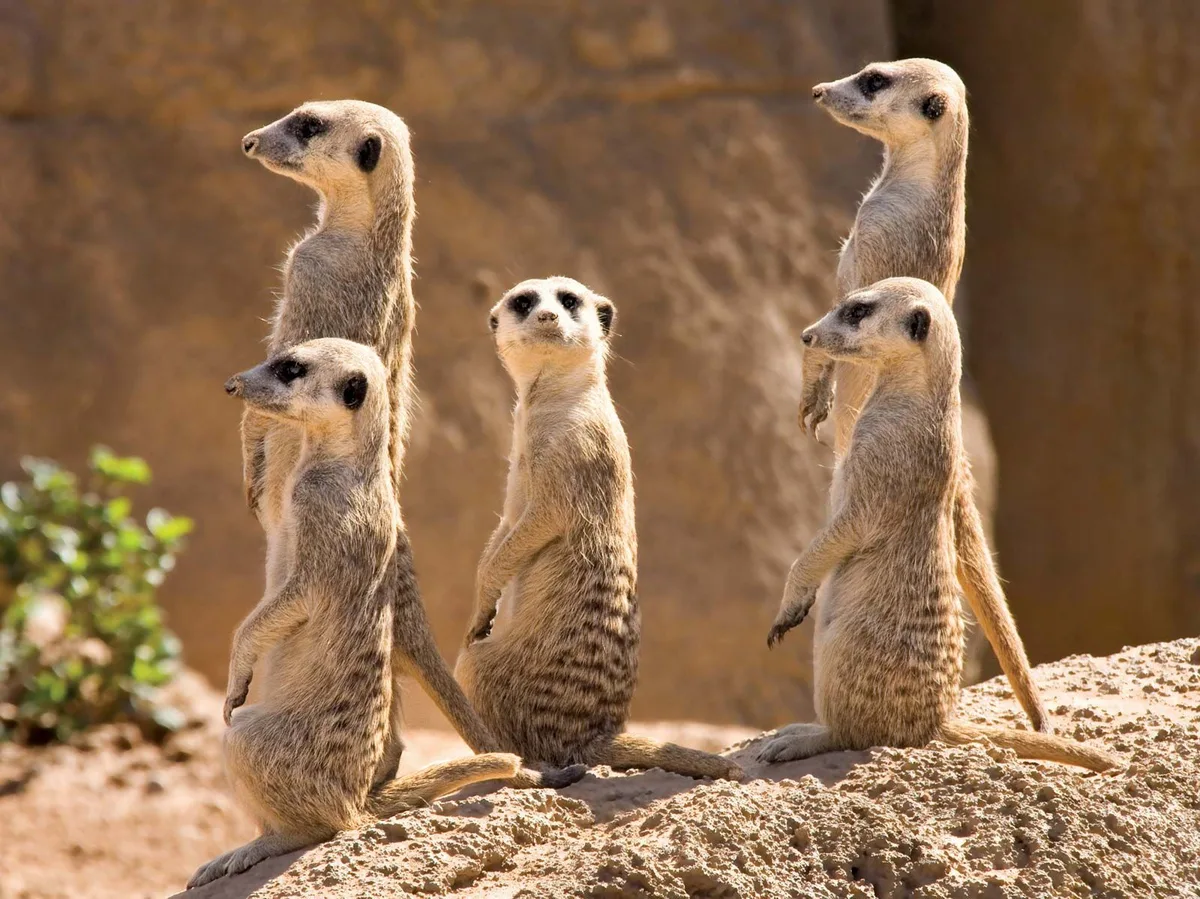
Image source: Bing (Web (fair-use with source credit))
The Social Climbers
Meerkat. Small mongooses that live in groups of up to 30 individuals. They take turns standing sentry, scanning for predators while others forage. Their dark eye patches reduce glare from the harsh Kalahari sun.
They're one of the few mammals that teach their young how to handle scorpions safely.
Mandrill. The largest monkey species, found in the rainforests of Central Africa. Males have vividly colored faces and rumps, with blue ridges on their noses and red stripes down the center. They can weigh over 35 kilograms, and their canine teeth rival those of a lion in length.
Macaque. A widespread primate genus spanning Asia and North Africa. The Barbary macaque lives in Gibraltar, the only wild monkey population in Europe. They're highly adaptable and often live near human settlements.
The Specialists
Muntjac. Also called the barking deer. Small deer native to South and Southeast Asia. They bark like dogs when alarmed and have tiny antlers and elongated canine teeth.
They're ancient, with fossils dating back 15 million years.
Margay. A wild cat that looks like a mini ocelot. It lives in Central and South American rainforests and has ankle joints that rotate 180 degrees, letting it climb down trees headfirst like a squirrel. That's a skill no other cat has.
Marmoset. Tiny New World monkeys with claw-like nails instead of flat nails. The pygmy marmoset weighs just 100 grams, making it one of the smallest primates on Earth.
Mole. Insectivorous mammals built for underground living. Their eyes are nearly non-functional, and their forepaws are massive shovels with extra thumbs. They can dig 15 meters of tunnel in a single night.
Mink. Semi-aquatic mustelids with sleek, waterproof fur. American minks are found across North America and have been farmed for their pelts for over a century. They're fierce predators that will take on prey larger than themselves.
Marine Life and Birds: The M Animals Most People Forget
Here's where the list gets interesting. Most alphabet guides stop at mammals, but M animals thrive in the oceans and skies too. Some of these are the most endangered creatures on the planet, and others are surprisingly common backyard visitors.
Gentle Giants of the Sea
Manatee. Also called sea cows. These slow-moving herbivores graze on seagrass in warm coastal waters, mainly around Florida, the Caribbean, and West Africa. Adults reach 3.9 meters long and weigh up to 550 kilograms.
They're vulnerable, with boat strikes being their biggest threat. NOAA monitors protected zones where boaters must slow down.
Manta Ray. The largest ray species, with wingspans up to 7 meters. They're filter feeders that glide through tropical oceans eating plankton. Their brains are among the largest of any fish, and they've shown signs of individual recognition.
They can weigh over 1,350 kilograms.
Minke Whale. The smallest baleen whale, reaching 10 meters long. They're found in every ocean and are known for their curiosity around boats. Their vocalizations are among the most varied in the whale family.
Freshwater Predators
Muskellunge. Known as muskie to anglers. A top predator in North American lakes and rivers, reaching 1.8 meters long and over 30 kilograms. They're called the fish of 10,000 casts because they're so hard to catch.
Mahi-mahi. Also called dorado. A fast-growing, vibrantly colored fish found in tropical and subtropical waters. They can reach 15 kilograms and are famous for their aerial acrobatics when hooked.
Birds You Know and Ones You Don't
Magpie. A corvid with striking black-and-white plumage and a long tail. These birds are among the few non-mammals that can recognize themselves in a mirror. They're also notorious for collecting shiny objects.
Mallard. The classic duck. Males have iridescent green heads and yellow bills. They're the ancestor of most domestic duck breeds and are found on every continent except Antarctica.
Mockingbird. Famous for its vocal mimicry. A single northern mockingbird can learn up to 200 distinct songs in its lifetime. They sing at night, especially during breeding season, and will relentlessly defend their nests.
Macaw. Large, colorful parrots native to Central and South America. The hyacinth macaw is the largest flying parrot species, with a wingspan over 1.2 meters. They're intelligent and long-lived, sometimes reaching 60 years in captivity.
Merganser. A fish-eating duck with a slender, serrated bill. The common merganser hunts underwater and can stay submerged for up to two minutes chasing prey.