The Only Cat Breed Starting with Y: Meet the York Chocolate
Ask anyone to name cat breeds that start with y, and you'll probably get a shrug. Most people draw a blank, and honestly, that's fair. Out of every breed recognized across the major cat registries, exactly one claims the letter Y.
That breed is the York Chocolate.
It's a rare, affectionate cat with a story that starts on a farm in upstate New York. As of 2026, the American Cat Fanciers Association and the Canadian Cat Association both recognize it, while the Cat Fanciers' Association and TICA don't. That registration gap shapes everything about its availability, its price, and its legitimacy in certain circles.
Let's sort out what's real, what's a lookalike, and whether this rare cat actually belongs on your shortlist.
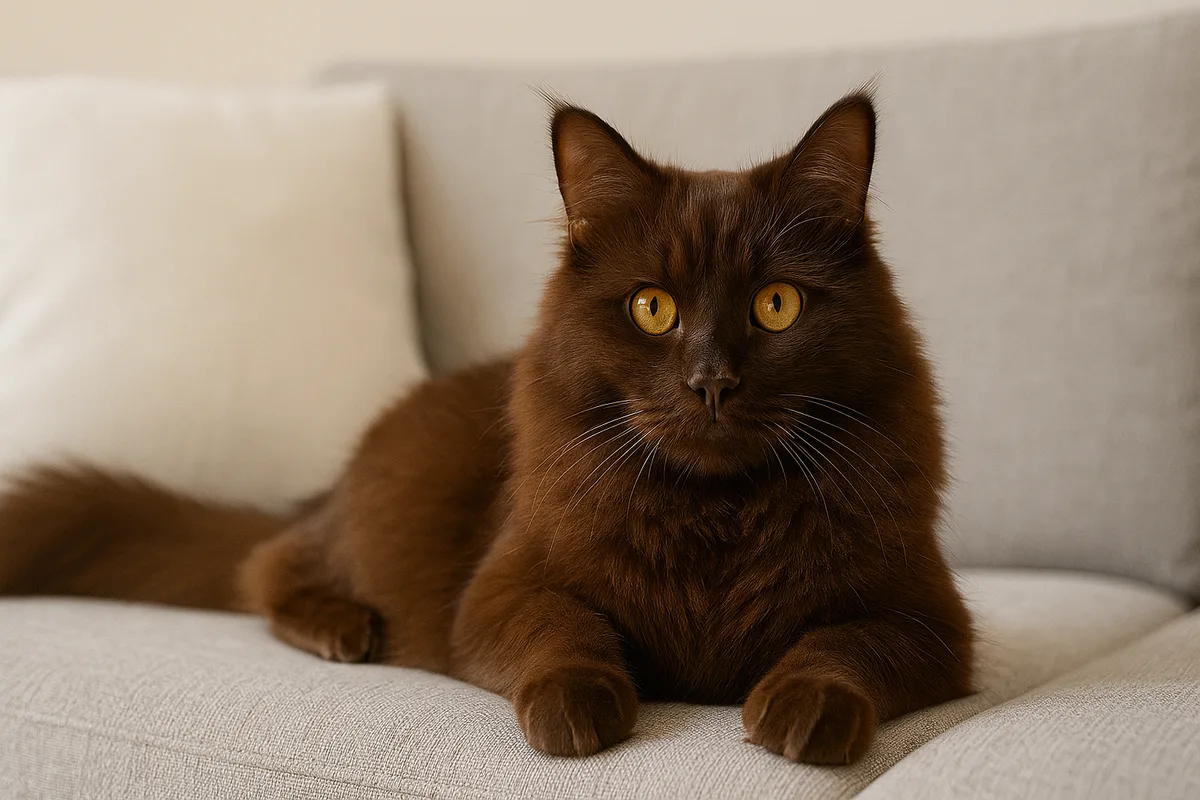
Image source: Bing (Web (fair-use with source credit))
Quick Answer: Yes, There's Exactly One
Only one cat breed starts with Y: the York Chocolate. It's a rare, semi-longhair breed created in New York in the 1980s. Major registries don't agree on it, so you'll see it in ACFA and CCA lists but not in CFA or TICA.
If you're chasing a Y-breed, this is it.
We cross-checked the official breed lists across all four major registries to confirm. The York Chocolate appears in two of them. The other two simply have no Y at all.
That's the entire letter Y in the modern cat fancy. If you like tracking down rare names, the letter Y pairs well with even sparser letters in other animal lists.
Meet the York Chocolate Cat
Breed history traces the York Chocolate back to a 1983 litter on a farm in upstate New York. Per ACFA records, a black-and-white longhair named Blackberry produced a chocolate-brown male kitten called Brownie. His owner, Janet Chiefari, liked the color so much she started a deliberate breeding program.
She named the breed after her home state, so the York in York Chocolate means New York, not the dog breed.

Image source: Web (Bing) / en.wikipedia.org (Web image (fair-use with source credit))
So what does this cat actually look like? The coat is semi-long, soft, and silky with a dense undercoat. The classic color is solid chocolate, and there's also a rarer lavender dilute version.
Eyes run from gold to green to amber, and the body is medium to large and muscular. This is a sturdy, athletic-looking cat, not a delicate showpiece.
Temperament is where the York Chocolate really shines. These cats are famously people-oriented and will follow you from room to room. They're playful without being destructive, and they usually get along well with kids and other pets.
The breed adapts well to indoor living and doesn't demand constant attention, though it does want to be near you. Talkative but not excessive, it will let you know when it's mealtime or when the lap is empty.
Why This Cat Isn't in Every Household
The biggest reason you've never met one is the recognition problem. The Cat Fanciers' Association, the largest registry in the world, doesn't include the York Chocolate in its official breed list. TICA doesn't either.
Only ACFA and CCA recognize it, which limits the cat's reach at shows, in breeding programs, and in the eyes of buyers.
Recognition matters more than prestige when you dig into it. Registries control studbooks, health testing requirements, standards, and breeder networks. A breed that lives only in smaller registries has a tiny breeder pool.
Some states and provinces have perhaps one or two active York Chocolate breeders, and in many regions, there are none at all.
The other issue is the small gene pool. With limited registered individuals, genetic diversity becomes a real concern. The breed is generally healthy, but it doesn't have the same safety net of widespread breeding that more common cats enjoy.
Genetic testing through institutions like UC Davis helps breeders manage the risk, but it doesn't erase it.
So if you're looking for a cat you can find in a week, this isn't it. Waitlists run long, and breeding stock is scarce. This breed is for people who are patient and willing to research seriously.
The Lookalike Problem: Domestic Longhairs and Fakes
Here's where things get tricky. Chocolate is a recessive color in cats, which means any random-bred domestic longhair can show the same mahogany coat. That makes mislabeling incredibly common, especially in photos and online sales listings.
Almost every "York Chocolate kitten" you'll see on social media is actually just a chocolate-colored domestic longhair.
The genuine article has pedigree paperwork backing it. ACFA and CCA registration documents tracing back to registered parents are the only reliable proof. Breeders who can't produce those papers are selling lookalikes, whether they know it or not.
Paying a premium for an unregistered "York Chocolate" is the single most common mistake in this niche.
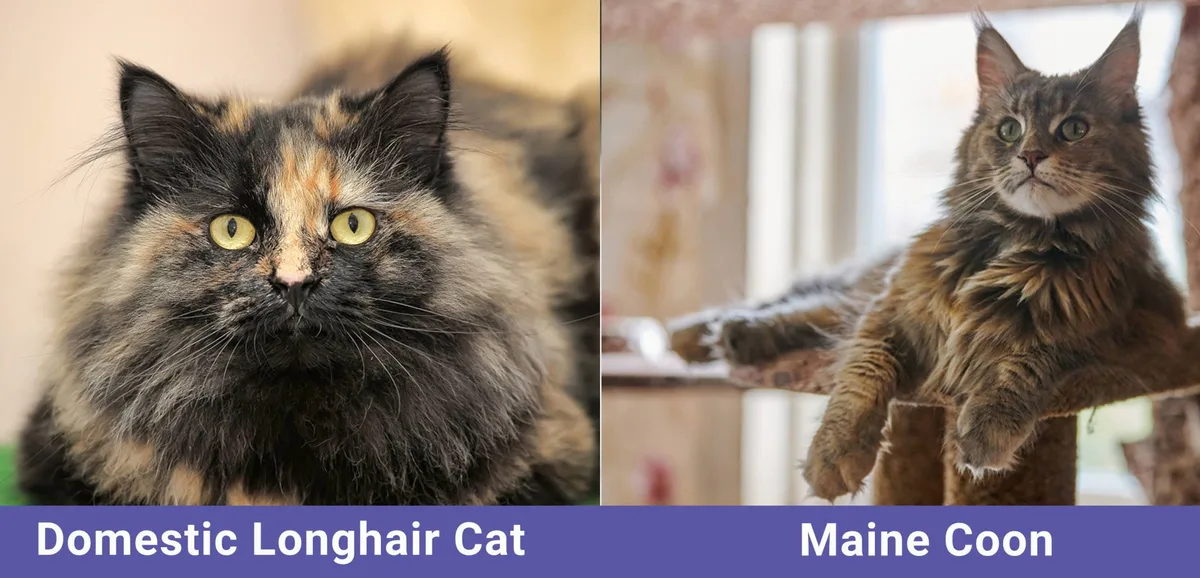
Image source: Bing (Web (fair-use with source credit))
That doesn't mean domestic longhairs are bad cats. They're wonderful companions, and plenty are waiting in shelters. They're just not a distinct breed with a documented lineage.
You'll see similar mix-ups in many other species lists across the internet, so it's not unique to cats.
Side-by-Side: York Chocolate vs. Other Chocolate-Colored Cats
If your goal is a chocolate-colored cat with an established lineage, several recognized breeds offer that without the rarity headache. Here's how they stack up against the York Chocolate.
| Breed | Coat & Color | Recognition | Temperament | Availability |
|---|---|---|---|---|
| York Chocolate | Semi-long, solid chocolate or lavender | ACFA, CCA | Affectionate, people-oriented, playful | Very rare, long waitlists |
| Havana Brown | Short, rich mahogany brown | CFA, TICA, ACFA, GCCF | Smart, curious, moderately vocal | Uncommon but findable |
| Burmese | Short, sable brown and color variations | CFA, TICA, GCCF | Social, dog-like, lap-loving | Widely bred |
| Chocolate Point Siamese | Short, cream body with chocolate points | CFA, TICA, GCCF | Talkative, energetic, attached | Common |
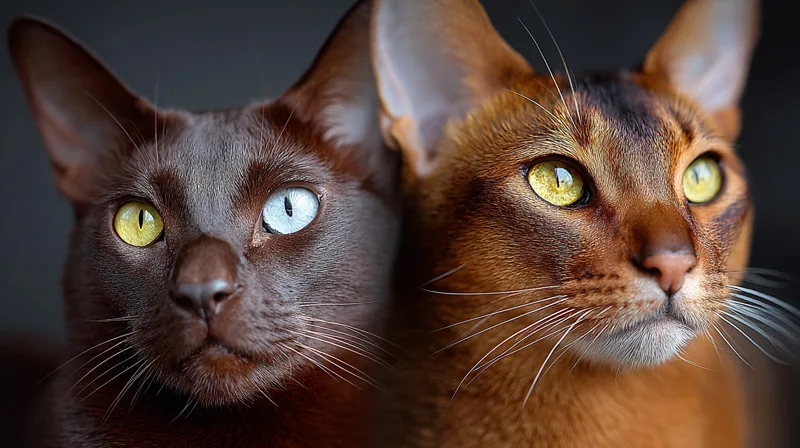
Image source: Bing (Web (fair-use with source credit))
Who should choose what? If you want the thrill of a genuine rare breed, the York Chocolate is the only real answer. If you want an officially recognized chocolate cat with a solid breeder network, the Havana Brown is the smarter pick.
If you want a social, affectionate lap cat you can actually find in your region, the Burmese wins. And if you love the pointed pattern and don't mind a chatty companion, the Chocolate Point Siamese is a classic.
The honest take is that most people don't actually need the Y breed specifically. They want a friendly chocolate-colored cat with a known background. For that, the alternatives are easier, more recognized, and far less stressful to source.
But if the letter Y matters to you, the York Chocolate is the gate to walk through.