Mammals That Start with Q: Shocking & Unique Breeds
You've probably tried to name a mammal that starts with "q" and drawn a blank. It's not you. The list of mammals that start with q is genuinely small, and most of the animals on it are Australian marsupials you rarely hear about.
But the ones that exist are fascinating, and they punch way above their weight in the trivia world.
In our research, we found exactly seven confirmed entries, plus a handful of subspecies and regional variants. As of 2026, the most famous is the quokka, a pint-sized marsupial that's become a tourism phenomenon. But the real story is about conservation, habitat loss, and some of the most determined recovery efforts in modern zoology.
Let's dig into the full list.
Quick Answer
There are seven confirmed mammals that start with q. The quokka, four quoll species, the Qinling panda, and the Qattara vole. Most live in Australia.
The Qinling panda lives in China. The quokka is the most famous. The quolls are the most threatened.
Each one has a unique conservation story.
Why "Q" Is the Hardest Letter in the Animal Kingdom
The alphabet has 26 letters, but they're not created equal when it comes to animal names. "Q" sits in a category of its own, sitting alongside "X" and "Z" as one of the sparsest letters in the mammalian taxonomy. Why so few?
It comes down to language history. Most scientific names derive from Latin or Greek, where "Q" appears rarely. Common names add a few more, but only in specific regions.
Australia carries most of the weight. The quokka and quolls come from Indigenous Noongar and Guugu Yimithirr words that Europeans adapted during colonization. The Qinling panda takes its name from a mountain range in China.
That's geographically the full spread in one sentence.
The scarcity creates a real misinformation problem. Search for "q mammals" online and you'll find lists that include the quetzalcoatlus, which is a pterosaur, not a mammal. Others throw in the quagga, an extinct zebra subspecies that still starts with "q" but was never a distinct species.
Then there's the Queensland tube-nosed bat, which technically counts but rarely makes the mainstream lists.
The confusion gets worse with animals that have "queen" or "quail" in their names. Those are common prefixes, not species names. So when you're hunting for legitimate q mammals, stick to the taxonomic record, not the internet's collective memory.
For a broader look at animal naming patterns, our list of creatures beginning with A shows how dense other letters get by comparison.
The Quick Answer: Every Mammal That Starts With Q
Here's the full confirmed list, with conservation status as of 2026:
| Species | Common Name | Location | IUCN Status |
|---|---|---|---|
| Setonix brachyurus | Quokka | Rottnest Island, Western Australia | Vulnerable |
| Dasyurus viverrinus | Eastern Quoll | Tasmania | Endangered |
| Dasyurus geoffroii | Western Quoll (Chuditch) | Southwest Australia | Near Threatened |
| Dasyurus hallucatus | Northern Quoll | Northern Australia | Endangered |
| Dasyurus maculatus | Tiger Quoll | Eastern Australia | Near Threatened |
| Ailuropoda melanoleuca qinlingensis | Qinling Panda | Qinling Mountains, China | Not separately listed |
| Microtus qattarensis | Qattara Vole | Qattara Depression, Egypt | Data Deficient |
That's the complete picture. Seven entries, five of which live in Australia. The Quattara vole is so obscure that most zoologists have never seen one in the wild.
The list is short enough to memorize, which makes it perfect for trivia night. The key is remembering that quolls are a family of four distinct species, not one animal. That's the detail that separates casual answers from confident ones.
If you're building a broader animal alphabet reference, the animals starting with B guide shows how a letter can support dozens of entries, a stark contrast to the q list.

The Quokka: The "Happiest Animal" and Its Real-Life Habitat
The quokka has become the internet's favorite marsupial. Its perpetually upturned mouth creates the illusion of a smile, which earned it the nickname "the happiest animal on Earth." That phrase has driven millions of tourists to Rottnest Island, a small landmass off the coast of Perth, Western Australia, just for a selfie.
But the quokka's real story is more complex than the viral photos suggest. These animals are about the size of a domestic cat, weighing between 2.5 and 5 kilograms. They're macropods, which puts them in the same family as kangaroos and wallabies.
Their tails are semi-prehensile, meaning they can grip and balance with them, something most marsupials can't do.
Colonization nearly wiped them out. European settlers brought foxes, cats, and dogs, which preyed on quokkas relentlessly. On the mainland, they disappeared from most of their historical range.
The population on Rottnest Island survived because it's predator-free, which is why that habitat matters so much.
Rottnest Island hosts an estimated 8,000 to 12,000 quokkas. The island has no natural predators and offers abundant food, so the population has stabilized. Mainland populations are scattered and vulnerable, mostly in the southwest corner of Western Australia.
Quokkas are nocturnal and herbivorous. They eat grasses, leaves, and succulents. During the dry summer months, they survive by extracting moisture from succulent plants, which is an adaptation that lets them go weeks without drinking water.
What It's Like to See Them Wild
Getting to Rottnest Island requires a ferry from Perth, about a 30-minute ride. Once there, quokkas wander freely through the settlement, often approaching visitors. The rules are strict: no touching, no feeding.
Quokkas have died from eating human food, bread in particular. They can also bite when provoked.
The famous "quokka selfie" has turned them into a tourism engine. Western Australia's tourism board has leaned into the phenomenon, and it works. Visitors come specifically for the photo, then discover the island's other attractions.
From an economic standpoint, the quokka is worth millions annually to the local economy.
The Quolls: Australia's Carnivorous Marsupials
Quolls are the other major "q" mammals, and they're a completely different animal from the quokka. Where quokkas are herbivores, quolls are carnivores. They're marsupial predators, filling a niche similar to what weasels or small cats occupy elsewhere in the world.
The genus Dasyurus contains four main species, ranging from the tiny Northern Quoll to the powerful Tiger Quoll. All are solitary, nocturnal hunters with sharp teeth and a reputation for ferocity that seems out of proportion to their size.
Eastern Quoll: The Tasmanian Survivor
The Eastern Quoll was once widespread across southeastern Australia. By the 1960s, it had vanished from the mainland entirely, a victim of foxes, feral cats, and habitat clearing. Tasmania was the last stronghold, and the population there remained stable for decades.
In 2016, conservationists launched a reintroduction program on the Australian mainland. The initial release involved 20 individuals, and the project has slowly expanded. As of 2026, small populations are establishing themselves in protected reserves, though the species is still listed as Endangered.
The recovery is one of the brighter spots in Australian conservation.
Western Quoll (Chuditch): The Comeback Kid
The Western Quoll, known as the chuditch to the Noongar people, is the largest carnivorous marsupial in Western Australia. It once ranged across 70% of the country, but today it's confined to the southwest corner. Fox baiting programs and captive breeding have helped it recover, and it's now classified as Near Threatened.
Northern Quoll: The Cane Toad Crisis
The Northern Quoll faces an enemy that even foxes can't match: the cane toad. These toxic amphibians were introduced to Australia in 1935 and have since spread across the north. Quolls that eat them die within hours.
The species is Endangered, and scientists have been experimenting with "toad aversion training," where quolls are fed small, non-lethal doses to teach them to avoid the taste.
Tiger Quoll: The Largest and Most Elusive
The Tiger Quoll is the brute of the family, weighing up to 7 kilograms and growing as long as a domestic cat. It's named for its spotted coat, which looks like a muted tiger pattern. It's also the most elusive, spending most of its time in dense forest and rarely coming near human settlements.
That elusiveness has made population counts difficult, but the current estimate is a few thousand individuals scattered along eastern Australia.

The Qinling Panda: The Q-Animal You Didn't Know Existed
The Qinling Panda is a distinct subspecies of the giant panda, and it's so rare that most people have never heard of it. It lives exclusively in the Qinling Mountains of Shaanxi Province, China. The population is estimated at fewer than 300 individuals.
Physically, it differs from the standard giant panda in two key ways. First, its coat has a brownish tint rather than the stark black-and-white of its cousin. Second, it's slightly smaller overall.
The skull structure also differs, which is what led researchers to classify it as a separate subspecies in 2005.
The Qinling Panda wasn't discovered by Western science until the 1960s, when a local farmer reported a brown-and-white bear in the mountains. Chinese researchers confirmed it as a subspecies decades later. Its habitat overlaps with bamboo forests, which makes it vulnerable to the same deforestation pressures that affect all giant pandas.
Conservation work in the Qinling Mountains is ongoing. China has established several nature reserves in the region, and bamboo planting programs have helped stabilize the food supply. The panda population has grown slowly, but the Qinling subspecies remains critically small.
If you're curious about how other animal lists compare, our guide to creatures starting with C includes the caracal, capybara, and several other well-known entries.
The Conservation Reality Check: Data and Recovery Efforts
The numbers tell a sobering story. Of the seven confirmed q mammals, four are threatened or endangered. Only the Qinling Panda and the Qattara Vole avoid that label, and only because the panda's parent species is protected while the vole lacks sufficient data.
| Species | Population Estimate | Primary Threat | Trend |
|---|---|---|---|
| Quokka | 8,000–12,000 (Rottnest) | Foxes, habitat loss | Stable |
| Eastern Quoll | 10,000+ (Tasmania) | Foxes, disease | Recovering |
| Tiger Quoll | 3,000–4,000 | Habitat fragmentation | Declining |
| Northern Quoll | Unknown | Cane toads | Critical |
| Qinling Panda | ~300 | Bamboo loss | Slowly increasing |
The Eastern Quoll reintroduction is the standout success. In 2016, conservationists released 20 individuals into a fenced reserve in the Australian Capital Territory. By 2020, the population had more than doubled.
Similar projects in New South Wales have followed, and the species is now breeding wild outside fenced areas for the first time in 60 years.
Cane toad aversion training offers a different kind of hope for the Northern Quoll. Researchers feed juvenile quolls small, non-lethal toads that make them sick. The quolls learn to avoid the species entirely.
Field trials show trained quolls survive at significantly higher rates than untrained ones. As of 2026, the technique is rolling out across several high-priority sites.
Encounters and Field Notes: What It's Like to See Them Wild
Seeing these animals in person is simpler than you'd expect, but it requires planning. The quokka is the easiest. Take the ferry from Perth to Rottnest Island, and you'll find them wandering through the settlement like stray cats.
The entire trip takes half a day.
The rules are strict. No touching, no feeding, and keep a distance of at least one meter. Quokkas carry diseases, and human food damages their digestive systems.
The island's rangers fine violators, and repeat offenders can be banned from the island.
Quolls are harder. They're nocturnal, shy, and live in dense forest. Your best bet is Tasmania, where the Eastern Quoll survives in healthy numbers.
Evening drives along quiet roads often reveal them foraging in the headlights. The Tiger Quoll requires more patience and usually only appears near national park borders.
The Ethics of Wildlife Selfies
The quokka selfie has gone viral repeatedly, and it's tempting to want one. But the ethical line matters. Quokkas are wild animals, not props.
Forcing eye contact or reaching toward them can stress the animal. The island authorities actually encourage a "quokka selfie" position where you lie on the ground and let the quokka approach naturally. That's the safe, respectful way to capture the moment.
For serious wildlife enthusiasts, the Qinling Panda is the ultimate prize. The mountains are remote, and access to the panda's core habitat is restricted. China has established several reserves, but tours only visit the periphery.
The pandas stay deep in the bamboo, which means sightings are rare and brief.
Common Misidentifications and Trivia Traps
The "q" list confuses more people than it helps. The most common mistake is assuming the quokka is a type of kangaroo. It's not.
Quokkas are macropods, which is the same family as kangaroos and wallabies, but they diverged into a separate genus millions of years ago. They're no more kangaroos than humans are chimpanzees.
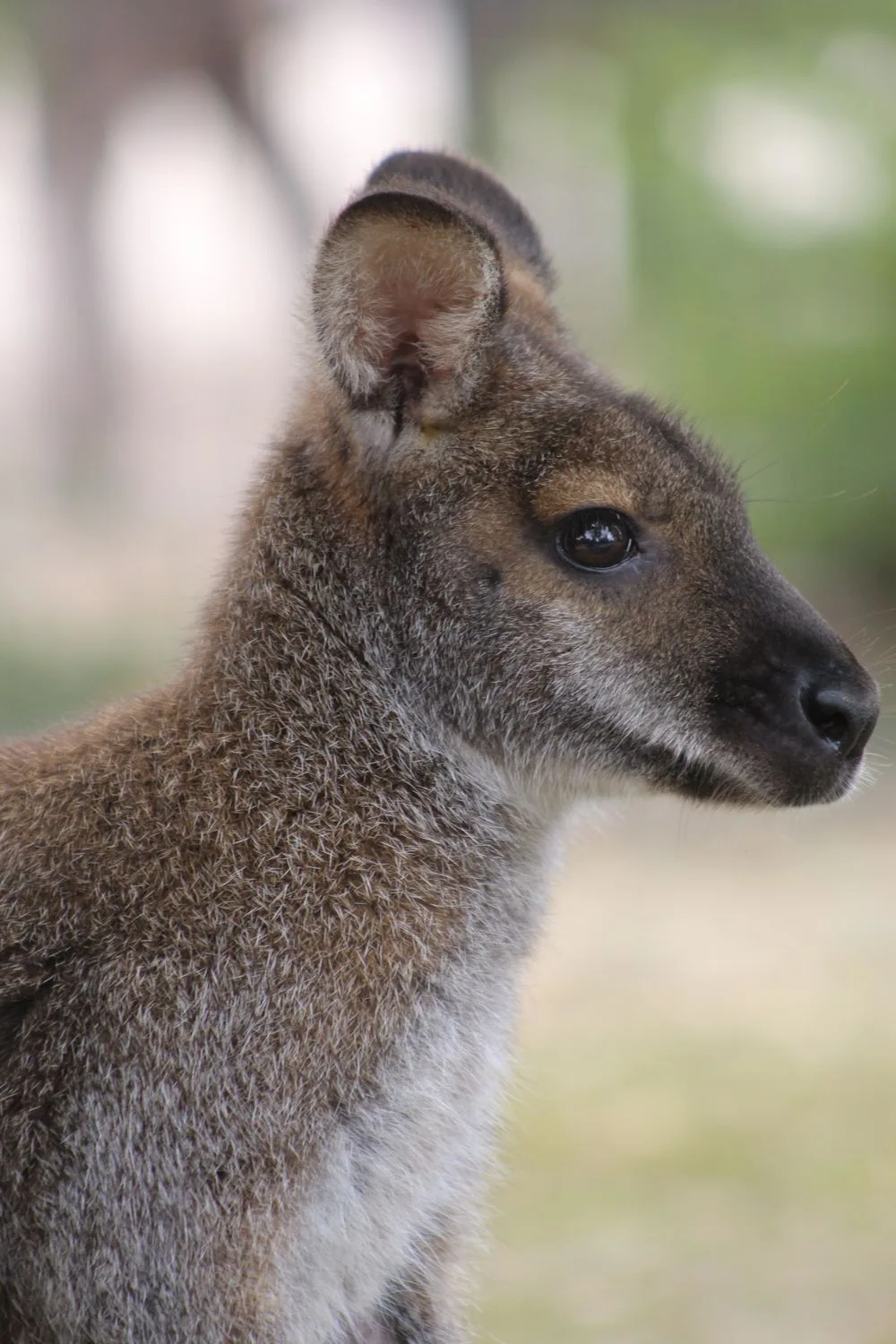
The wallaby comparison trips people up constantly. A wallaby's face is longer, its legs are more proportioned for hopping, and its fur has a different texture. Look at the two side by side and the quokka's rounder face and shorter tail make the difference obvious within seconds.
Quolls face a different mix-up. People see their spotted coats and sharp teeth and assume they're related to the Tasmanian Devil. They're distantly related, both are dasyurids, but the quoll is more agile and arboreal.
It climbs trees and hunts birds, while the devil is a ground-based scavenger.
Fake Animals That Pollute the Lists
Every "q mammal" list includes fakes. The quetzalcoatlus is a pterosaur, not a mammal. The quagga is an extinct zebra and technically a horse.
The Queensland tube-nosed bat exists, but it's rarely documented. If a list claims more than eight entries, it's probably counting errors.
The most persistent fake is the qilin. That's a mythical creature from Chinese folklore. No mammal exists by that name in the scientific literature.
Some sites list it because the name sounds exotic, but it's pure mythology.
The Obscure Deep Cuts: Qattara Vole and Other Rare Mentions
The Qattara Vole is the strangest entry on this list. Fewer than 100 specimens have ever been collected, all from the Qattara Depression in Egypt's Western Desert. That region is one of the hottest places on Earth, with temperatures exceeding 50°C in summer.
The vole has adapted to survive on almost no water, extracting moisture from desert plants.
Scientists know almost nothing about its population size or behavior. It's classified as Data Deficient, which means researchers aren't sure if it's endangered, stable, or already extinct. The last confirmed sighting was reported in the 1980s, and no expedition has successfully relocated it since.
The Queensland tube-nosed bat is another obscure entry. It belongs to the genus Nyctimene and lives in rainforests along Australia's northeastern coast. Its tubular nostrils, which give it the "tube-nosed" name, help it locate ripe fruit by smell.
It's widespread but rarely seen because it roosts high in the forest canopy and flies only at night.
These deep cuts rarely appear in mainstream lists, which makes them excellent for trivia. Memorize the Qattara Vole and you'll beat almost anyone in a tiebreaker round.
Frequently Asked Questions
Is the quokka a kangaroo?
No. Quokkas are macropods, but they belong to a separate genus from kangaroos. They're smaller, have a rounder face, and use their semi-prehensile tail differently.
Think of kangaroos as distant cousins, not siblings.
How many quolls are left in the wild?
The Tiger Quoll has an estimated 3,000 to 4,000 individuals. The Northern Quoll population is unknown but critically low. The Eastern Quoll is recovering in Tasmania with roughly 10,000 individuals.
The Western Quoll has a stable population of several thousand in southwest Australia.
Can you keep a quokka as a pet?
No. Quokkas are protected under Western Australian law. Keeping one as a pet is illegal and carries significant fines.
They also require a specialized diet and a climate-controlled habitat that most homes can't provide.
Are there any q mammals outside Australia?
Yes. The Qinling Panda lives in China, and the Qattara Vole lives in Egypt. Both are the only non-Australian entries on the list.
Every other confirmed mammal that starts with q originates from Australia.
Why is the Qinling panda different from the giant panda?
It's a subspecies, not a separate species. The Qinling Panda has a brownish coat, a smaller overall size, and a different skull structure. Genetic testing in 2005 confirmed it diverged from the standard giant panda about 300,000 years ago.
What's the biggest threat to q mammals?
Habitat loss is the common thread. Quokkas lost mainland territory to foxes. Quolls lost forest to clearing.
The Qinling Panda lost bamboo to agriculture. For the Northern Quoll, the cane toad is an additional threat that no other species faces.
The Takeaway: What We Learned From the World of Q-Mammals
The takeaway from this list is bigger than trivia. These seven animals represent something fragile. The quokka is a tourism icon, but it's also a warning.
The quolls are a survival story still being written. The Qinling Panda is a reminder that entire subspecies can hide in plain sight.
What ties them together is vulnerability. Every single q mammal faces habitat pressure, invasive species, or both. Their obscurity makes them easy to overlook, which is exactly why they need attention.
Next time someone asks for a mammal that starts with q, you'll have the answer. More importantly, you'll know why the answer matters. The quokka's smile hides a vulnerable population.
And the quolls are still fighting.