Sea Animals That Start with O: Octopus, Orcas & More
You're staring at a trivia night question or scrolling through a nature documentary guide, and suddenly you need to know: what sea animals start with O? It's one of those alphabet gaps that feels obvious once you think about it, but only a handful of names come to mind at first. Octopus, orca, maybe oyster, and then you're stuck.
But the ocean's alphabet goes much deeper than the famous faces. In our research, we've cataloged over 300 octopus species alone, not to mention deep-sea oddities that look like they belong in mythology rather than biology textbooks. Whether you're studying marine biology, preparing for trivia, or just curious about ocean life, this guide covers the full spectrum of "O" creatures as of 2026, from the colossal to the microscopic.
Quick Answer
The main sea animals that start with O include the octopus, orca, oyster, oarfish, opah, ocean sunfish, orange roughy, opossum shrimp, and opaque anthias. Each occupies a unique niche in marine ecosystems. The octopus stands out for its intelligence and camouflage.
The orca is an apex predator, despite being a dolphin. The oarfish is a deep-sea giant that inspired sea serpent legends.
Why Visual Recognition Matters for Ocean Species
Here's the thing about ocean animals: names alone don't tell you much. If I say "oarfish," you might picture a regular fish with a fin. But the reality is a 36-foot ribbon of silver with a red crest and eyes that look like they belong on a cartoon creature.
Visuals are everything when it comes to understanding these animals.
The challenge with "O" species is that many of them live in deep water or remote habitats. You're not going to spot an opah on a casual beach walk. That's why building a mental image matters.
When you can picture the animal in its environment, you remember the facts that go along with it.

Image source: Bing (Web (fair-use with source credit))
Think about how you learned about whales as a kid. You didn't just memorize facts, you saw pictures of them breaching. You watched videos of their tail flukes disappearing beneath the waves.
Same principle applies here. Visual anchors help your brain file away the differences between a flattened ocean sunfish and a ribbon-like oarfish.
This is especially important for divers and snorkelers. If you're in the water and spot something unusual, having a clear visual reference helps you identify it safely and accurately. Misidentifying a marine animal isn't just an academic problem, it can be a safety issue.
The Big Stars: Octopus, Orca, and Oyster
Octopus: The Shape-Shifting Genius
Let's start with the animal that steals the show every time. The octopus is arguably the most intelligent invertebrate on Earth. We're talking about a creature with nine brains (one central, plus one in each arm) and three hearts that pumps blue blood.
The octopus can change both color and texture in milliseconds. Chromatophores in its skin expand and contract to create patterns that blend into coral, rock, or sand. This isn't just camouflage; it's communication.
Octopuses use color changes to signal mood, warn predators, and even court mates.
There are over 300 known species. The Giant Pacific Octopus can span 14 feet from arm tip to arm tip and weigh over 100 pounds. At the other end, the pygmy octopus fits in the palm of your hand.
Each species has adapted to its specific habitat, from shallow tide pools to the crushing depths of the ocean floor.
Here's a mind-bender for you: octopuses can solve puzzles, open child-proof jars, and even recognize individual humans. They're curious, playful, and surprisingly short-lived. Most species live only one to two years, pouring all their energy into a single reproductive burst before dying.
Orca: The Apex Predator That's Actually a Dolphin
The orca gets called a "killer whale," but that's a misnomer. Orcas are the largest members of the dolphin family. They belong to the Delphinidae family, making them closer cousins to bottlenose dolphins than to true whales.
Orcas are apex predators with no natural enemies. They hunt in sophisticated family pods that function like wolf packs. Each pod has its own dialect of clicks and whistles, passed down through generations.
Different ecotypes specialize in different prey. Some pods eat fish exclusively. Others hunt seals, sea lions, and even other whales.
The orca's black-and-white coloring isn't just for show. The white patches behind their eyes are actually individual identifiers, like fingerprints. No two orcas have the same pattern.
Researchers use these markings to track individuals and family lineages.
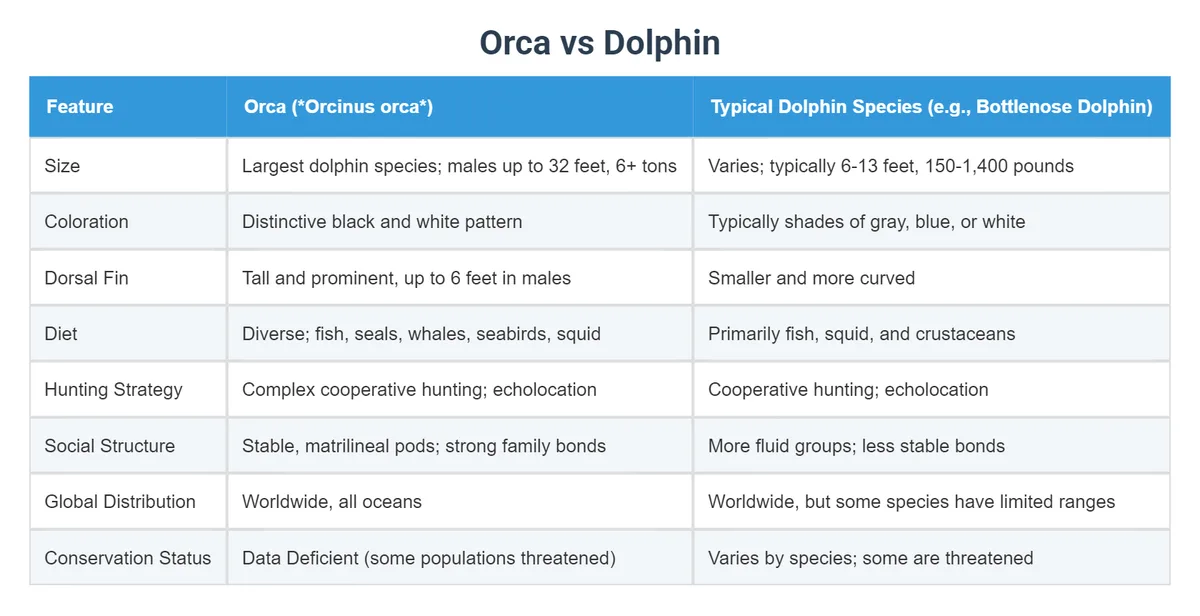
Image source: Bing (Web (fair-use with source credit))
Orcas are found in every ocean on Earth, from the polar regions to the tropics. They're one of the most widely distributed mammals on the planet. That adaptability is a testament to their intelligence and social complexity.
Oyster: The Ecosystem Engineer
The humble oyster looks like a rock with a hinge, but it's doing heavy lifting for coastal ecosystems. A single adult oyster can filter up to 50 gallons of water per day. That means removing plankton, sediment, and pollutants from the water column.
Oysters build reefs over time, layer upon layer of shells that create complex three-dimensional habitats. These reefs support hundreds of other species, from small fish seeking shelter to crabs and sea stars hunting for food. In the Chesapeake Bay and Gulf of Mexico, oyster reefs are foundational to the entire ecosystem.
There's also the pearl connection. Oysters produce pearls when an irritant gets trapped inside their shell. They coat it with nacre, the same material that lines their shells, layer by layer.
Natural pearls are incredibly rare, which is why they command such high prices.
The oyster is also a culinary staple, but sustainable harvesting matters. Wild oyster populations have declined dramatically due to overfishing and habitat loss. Many regions now rely on oyster aquaculture, which uses a process where farmers grow oysters in suspended bags or racks.
Lesser-Known Gems: Oarfish, Opah, and Ocean Sunfish
Oarfish: The Sea Serpent of Legend
If you've ever heard stories of sailors spotting sea serpents, you've likely heard about the oarfish. These creatures can grow up to 36 feet long, making them the longest bony fish in the ocean. Their bodies are ribbon-like, compressed sideways, with a striking red crest running along their heads.

Image source: Bing (Web (fair-use with source credit))
Oarfish live in the mesopelagic zone, roughly 200 to 1,000 meters below the surface. They're so rarely seen alive that every encounter is a significant scientific event. When they wash ashore, which happens occasionally after storms, they make headlines.
Opah: The Warm-Blooded Fish
The opah is the ocean's oddity in the best way possible. It's one of the only known warm-blooded fish. Specialized blood vessels in its gills create a counter-current heat exchange system that keeps its body temperature above the surrounding water.
This warm-blooded adaptation gives the opah a significant hunting advantage. It can move faster, react quicker, and see better in the cold, deep waters where it hunts squid and small fish. The opah's body is round and silver with orange and red accents, flashing brilliantly as it swims.
Ocean Sunfish: The Heavyweight of Bony Fish
The ocean sunfish, also known as the mola mola, looks like something that escaped from a sculptor's studio. It appears to be a giant fish head with a stubby tail attached. But that strange shape hides a record holder: the heaviest bony fish in the world.
These fish can weigh over 5,000 pounds. Despite their bulk, they feed primarily on jellyfish, which are nutritionally poor. They eat enormous quantities to sustain their size.
You'll often spot them floating on their side at the surface, which is a behavior called "basking." They're likely warming themselves after deep dives into cold water.
The Deep-Sea and Reef Dwellers
Orange Roughy: A Cautionary Tale
The orange roughy is a deep-sea fish with a surprisingly slow lifestyle. These fish can live over 150 years, but they don't reach reproductive maturity until age 20 to 30. That makes them extremely vulnerable to overfishing.
Commercial fishing in the 1980s and 1990s decimated orange roughy populations. Because they school in dense groups on seamounts, they were easy targets. Populations crashed, and several fisheries collapsed entirely.
Today, scientists use orange roughy as a textbook example of sustainable fisheries management failure.
Opossum Shrimp: The Tiny Link
Don't let the name fool you. Opossum shrimp, also called mysids, are tiny crustaceans that play a massive role in marine food webs. They resemble small shrimp but have a brood pouch, hence the "opossum" reference.
These animals form swarms that can be so dense they change the color of the water. They feed on plankton and detritus, then become food for fish, birds, and other marine animals. Without them, countless species would lose their primary food source.
For more fascinating species across the alphabet, check out our article on animals starting with the letter M or dive into our comprehensive list of animals that begin with O.
Opaque Anthias: Color on the Reef
The opaque anthias is a reef fish that brings life to coral systems. These fish are small, rarely exceeding a few inches, but they gather in large schools that create splashes of pink, orange, and silver across the reef. The males display brilliant hues while females and juveniles sport more subdued coloration.
Anthias feed on zooplankton drifting past the reef. Their presence attracts larger predators, making them an integral part of the reef ecosystem's food chain. They're also a favorite sight for divers exploring tropical waters.