Birds of Illinois: Complete Guide to Habitats & ID
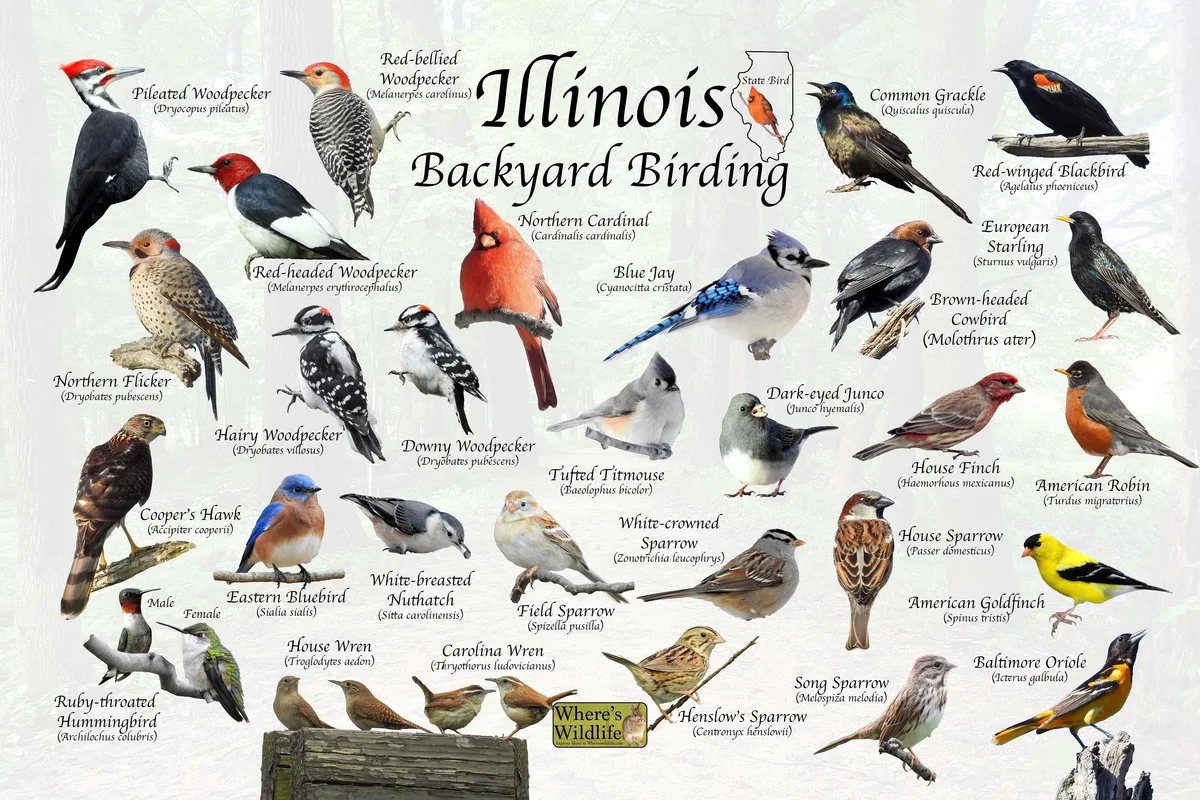
Image source: Web (Bing) / artofit.org (Web image (fair-use with source credit))
You're standing on your back porch, coffee in hand, and you hear it again, that unfamiliar call from the maple tree. You've been hearing it for weeks. Maybe you've even downloaded a bird app.
But you still don't know what it is.
That's normal. Illinois sits right in the middle of the Mississippi Flyway, a major migration corridor, which means the bird population changes dramatically with the seasons. In spring, warblers pass through by the thousands.
In winter, different species move in. It's a lot to sort through.
This guide is built to help you identify what you're seeing, know what to expect each season, and stop guessing between lookalikes like the Downy and Hairy Woodpecker. We'll also direct you to the best spots in Illinois to put your skills to work.
Illinois Birding at a Glance: Species, Seasons, and Hotspots
Before we dive into species ID, here's a snapshot of what you'll encounter across the state throughout the year:
| Category | Spring | Summer | Fall | Winter |
|---|---|---|---|---|
| Songbirds | Warblers migrating through; peak diversity in May. | Breeding residents: Cardinals, Chickadees, House Wrens. | Sparrows and kinglets move through; early departures. | Year-round residents like Chickadees and Nuthatches remain. |
| Waterfowl | High numbers of ducks and geese staging at wetlands before heading north | Resident ducks like Mallards and Wood Ducks; young broods. | Peak waterfowl migration — huge numbers in Central and Mississippi Flyways, one of the state's best spectacles. | Dabblers on open water; eagles near locks and dams along the Mississippi and Illinois Rivers. |
| Raptors | Broad-winged Hawk migration in spring (look up in April!), along with resident Red-tailed and Cooper's Hawks. | Young raptors; best time to learn their flight silhouettes when they learn to hunt | Southward hawk migration peaks in September. Watch the big flights at lakefront hawkwatches like Montrose Point. | Bald Eagles nest in January and February, especially near the Mississippi and Illinois rivers. Short-eared Owls hunt at dusk over grasslands. |
| Passerines (songbirds) | Migrant warblers (Yellow-rumped, Palm, Yellow, Black-and-white) have moved through heavily in early May. | Breeding resident birds are on territory. Look for cardinals, chickadees, titmice, blue jays, and house finches feeding young. | Waterfowl begin arriving in force. Look for sparrows, kinglets, and late warblers. | Bare trees make it easier to spot birds like bluebirds, mockingbirds, and cedar waxwings eating berries. |
Birds of Illinois: Your Complete Guide to Species, Seasons, and Hotspots
Every spring, millions of birds pour through the state on their way north. Every fall, they come back. That's because Illinois sits smack in the middle of the Mississippi Flyway, one of the four major North American migration corridors.
For birders, this is a gift. The state hosts hundreds of species at different times of year, from tiny warblers moving through Chicago's lakefront parks to winter raptors hunting over frozen prairie fields.
This guide cuts through the noise. You'll learn which birds you'll actually see, where to find them, and how to tell the look-alikes apart, without needing to memorize a thousand-page field guide before you step outside.
Why Illinois? The Mississippi Flyway Advantage
Illinois is a funnel for bird migration. The state sits directly in the Mississippi Flyway, a major north-south route used by millions of birds every spring and fall. That means you get both the species that live here year-round and, during migration, a huge variety of birds passing through.
The geography helps. Lake Michigan's shoreline acts as a natural guide rail for migrating birds. They follow the lake by day, then drop into parks and woodlots to rest and feed.
That's why an urban park in Chicago can be a world-class birding spot during migration.
For a quick introduction to the species you'll see around your feeder, check out this Illinois backyard bird identification guide. If you're just getting started, it will help you know who to expect before you even step outside.
Now the sections:
Why Illinois is a Birding Hotspot (You Don't Need Binoculars to Start)
Illinois sits smack in the middle of the Mississippi Flyway, one of the busiest bird superhighways in North America. Every spring and fall, millions of birds pass through the state as they migrate between their breeding and wintering grounds.
What does that mean for you? It means you don't have to travel to a remote wilderness to see amazing birds. Your local park, your backyard feeder, even a downtown Chicago green space can host unexpected visitors, especially during migration windows.
The state's mix of prairie, forest, wetlands, and urban green spaces creates a patchwork of habitats that supports over 400 bird species throughout the year. Whether you're in Chicagoland's forest preserves or downstate along the Mississippi River, there's almost always something worth looking at.
When to get out there? Early morning. Right after sunrise is when activity peaks, birds are feeding after the night, especially during spring and fall migration. By late morning, things quiet down considerably, particularly in summer when the heat drives birds into shade.
Plan your outings for dawn and you'll see three times the birds.
That's the quick takeaway. Now let's get into the details that actually matter.
Section 1: The 12 Birds You'll See Before You Finish Your Coffee
These 12 species are the backbone of Illinois birding. They're everywhere, suburban yards, city parks, rural roadsides. Learn them cold, and the rest of birding gets easier.
| Bird | Size (vs. Common Reference) | Key Field Marks | Season in Illinois | Song/Call Memory Hook |
|---|---|---|---|---|
| Northern Cardinal | Robin-sized | All-red body, black mask, crest | Year-round | "What-cheer-cheer-cheer" |
| American Robin | Blackbird-sized | Reddish-orange breast, gray back | Year-round (more in summer) | "Cheerily-cheer-up" |
| Blue Jay | Crow-sized (but slender) | Blue with white chest, black necklace | Year-round | Loud, harsh jay-jay-jay call |
| American Goldfinch | Small, finch-sized | Bright yellow body in summer; olive-gray in winter | Year-round | Bouncy, undulating flight |
| Downy Woodpecker | Sparrow-sized | Small bill, white back stripe, black-and-white spots | Year-round | The 'laughing' call (descending whinny) |
| Black-capped Chickadee | Tiny, round | Black cap and bib, white cheeks | Year-round | Distinctive "chick-a-dee-dee-dee" call — almost sounds like it's saying its name |
| House Finch | Small, streaky | Red head/chest (males), brown streaks | Year-round | 'Cheerful' warbling song often heard |
| White-breasted Nuthatch | Small, stocky | Blue-gray back, white face, black cap | Year-round | Hops headfirst down tree trunks |
| American Goldfinch | Small | Bright yellow (male in summer), black wings with white bars | Year-round | undulating flight, "potato-chip" call |
| House Sparrow | Small | Male: gray crown, black bib; female: plain brown | Year-round | Chunky, noisy, always near buildings |
| Red-bellied Woodpecker | Medium | Black-and-white zebra back, red cap (not belly) | Year-round | "churr" call, found in wooded areas |
| Blue Jay | Medium | Vivid blue with white chest, black necklace | Year-round | Loud, harsh "jay! jay!" calls |
| Mourning Dove | Medium | Soft gray-brown, long pointed tail | Year-round (summer) | "coo-AHOO-coo" song; often on ground |
| Downy Woodpecker | Small | White stripe down the back; short bill (shorter than half head width) | Year-round | Often on smaller trees & branches |
| Hairy Woodpecker | Medium | White stripe; bill is longer than half the head width | Year-round | Prefers larger trees and trunks |
| House Finch | Small | Red head/chest (males), brown streaks, no red cap | Year-round | Conical beak for seed cracking |
Birds of Illinois: The Complete Guide for Every Season
The first time you notice a bird in Illinois, it's usually loud. Maybe it's the ear-splitting screech of a blue jay at dawn, or the soft cheer of a cardinal from deep in a bush. Either way, you look up, you see it, and you think: What was that?
That's the question this guide answers.
Illinois sits right in the middle of the Mississippi Flyway, a major migration corridor. That means your backyard feeder sees different species in spring than in fall, and the lakefront parks in Chicago host warblers that might only stop for a day. You're in one of the best states in the country for bird diversity.
Check out our guide to Illinois birding hotspots to see where to start.
But here's the thing: you don't need expensive gear or a checklist to enjoy birds. You need to know what to look for register to understand what you're seeing. Let's break down the birds you'll actually encounter, the lookalikes that fool everyone, and the simple habits that make identification second nature.
If you're just starting out, the beginner's guide to birding is a good place to begin.
Section 1: Why Illinois?
Illinois is positioned right smack in the middle of the Mississippi Flyway, a major migration corridor. That means during spring and fall, millions of birds pass through the state. But even outside migration, Illinois has fantastic year-round residents: Cardinals, Blue Jays, Chickadees, Woodpeckers, and many others.
Illinois also offers a wide variety of habitats, from Chicago's lakefront parks to southern Illinois's Shawnee National Forest, to the vast prairie remnants in the central part of the state. Because of this habitat variety, the bird diversity is genuinely remarkable, as noted in resources like eBird's Illinois page and several Cornell Lab resources.
Where to look for birds in Illinois in each habitat:
- Lake Michigan shoreline: Gulls, terns, ducks, and migrating songbirds in spring
- Prairie remnants: Meadowlarks, bobolinks, dickcissels, and grassland sparrows
- Oak woodlands: Warblers, vireos, tanagers, and woodpeckers
- Wetlands and marshes: Herons, egrets, rails, and waterfowl
If you're just getting into birding in Illinois, combining a good field guide with a birding app is the right call. Start with Merlin Bird ID for instant photo and sound ID, and keep the Sibley guide in your car.
The Illinois birding community is genuinely supportive, and there are plenty of beginner's guides to birding in Illinois that can help you get started.
The fastest way to start identifying birds accurately is to learn the bird calls. There are some excellent resources for learning bird songs by ear that will dramatically improve your identification skills.
For Illinois specifically, the Illinois Audubon Society hosts regular bird walks across the state.
You don't need to travel far to see amazing birds; even your backyard can be productive. If you want to attract more birds to your property, start with a few solid feeders and ideas from our guide to backyard bird feeding. And to get the most out of your setup, check our review of the best bird feeders for your backyard.
Section 1: The 12 Most Common Birds in Illinois (And How to Identify Them at a Glance)
"Common" is the gateway. Before you chase rarities, you need to know what's around you every day. These are the birds you'll see at your feeder, in the park, and along the sidewalk.
Master these 12, and you'll have a solid foundation for identifying anything else you encounter.
The Big, Obvious Ones
These are the birds that seem to want to be seen. They're large, colorful, noisy, and they hang around people.
Northern Cardinal, The male is impossible to miss: brilliant scarlet red with a black mask. The female is a warm buffy brown with red accents. They're year-round residents and visit feeders regularly. This is the state bird of Illinois for a reason, you'll see cardinals everywhere.
Blue Jay, Bold, loud, and intelligent. A common resident in wooded suburbs across the state year-round. Their blue, white, and black plumage is unmistakable, and their raucous "jay! jay!" call will quickly become familiar.
American Robin, Everyone knows the robin. You see them on lawns across Illinois from March through October. They pull earthworms from the grass after rain. In fall, they switch to fruit and can be seen in flocks.
Mourning Dove, The soft, mournful cooing you hear in the morning. Slender body, small head, long pointed tail with white edges. Common in both rural and urban areas, often on utility wires.
Blue Jay, Bold, loud, and impossible to ignore. They're intelligent, territorial, and will chase smaller birds away from feeders. Look for the distinctive blue crest and black necklace.
American Robin, A classic sign of spring, though many stick around all winter in Illinois. They're large, brownish-gray thrushes with a rusty-red breast, often seen running across lawns hunting worms.
Northern Cardinal, The male's bright red is unmistakable against winter snow. Females are a warm brown with red accents. They visit feeders daily and stay year-round.
Black-capped Chickadee, Tiny, round, and endlessly curious. One of the most approachable birds at feeders probingly investigates everything. They even visit sunflower feeders upside down.
White-breasted Nuthatch, Creeps headfirst down tree trunks. Call sounds like a nasal "yank-yank." Surprisingly bold around seed feeders.
Downy Woodpecker, The small one. Check for the short bill and the black-and-white striped head pattern. A regular at suet feeders in Illinois backyards.
Hairy Woodpecker, Nearly identical to the Downy, but bigger. That bill is also proportionally longer and more chisel-like. Hairy Woodpeckers are less common at feeders than Downy.
Blue Jay, Loud, bold, and everywhere. They're corvids, so they're smart and sometimes aggressive at feeders.
American Robin, Often the first songbird you'll hear at dawn in spring. They pull worms and run across suburban lawns.
Red-winged Blackbird (male), Glossy black with red-and-yellow shoulder patches. In spring, males sing from cattails and fence posts.
European Starling, Iridescent black in spring, speckled in winter. Irruptive in cities and farmlands. Watch their chunky, direct flight, and their habit of gathering in large, synchronized flocks called murmurations.
House Sparrow, Small, brown, with a distinctive black bib (males) around the throat in spring. Often near buildings and feeders.
American Robin, Familiar orange-breasted thrush, often seen on lawns hunting earthworms. Found statewide.
Mourning Dove, A sleek, gentle-looking bird with a long, pointed tail. Often sits on wires.
Blue Jay, Bold, loud, crested, blue-and-white. Found in woodlands and suburban areas.
Northern Cardinal, The state bird of Illinois. Males are bright red, females are a warm buffy brown with hints of red. Present year-round and very visible at feeders.
Binoculars: If you want to see bird details, you'll need binoculars. The best all-around starting point is something in the 8×42 configuration, it balances magnification, field of view, and light-gathering ability. You don't need to spend $2,000.
A solid pair in the $150, $300 range from Vortex, Nikon, or Celestron will serve you well for years.
Need help picking? Check out our guide to the best binoculars for beginners.
Field Guides and Apps:
The two big names are Sibley and Merlin. Sibley's field guide has detailed illustrations that highlight subtle differences between similar species. Merlin is free, fast, and can identify birds from a photo or sound recording.
Use both. Learn one well, and the other will fill in the gaps.
If you're a complete beginner, this guide to identifying birds in Illinois is a great place to start.
Key birding apps for Illinois:
| App | What It Does | Cost |
|---|---|---|
| Merlin Bird ID | Photo ID, Sound ID, suggested species based on location | Free |
| eBird | Logs sightings, tracks hotspots, real-time rarity alerts | Free |
| Audubon Bird Guide | Extensive species database with calls | Free |
| Sibley Birds | The full Sibley guide in your pocket | Paid |
Section 1: The 12 Most Common Birds in Illinois (And How to ID Them)
Here's a quick-reference for those species you'll likely see at your feeder or local park in Chicago or Springfield (Illinois's capital), and across the Midwest in general. Illinois has a long birding history, both the Chicago area and the "forgotten" southern Illinois region are documented hotspots.
The Everyday 12: A Visual Guide to Common Species
This isn't a full checklist, but if you're spending time outside in Illinois, these are the species you'll meet early on. Species are arranged by where you're most likely to see them.
Backyard & Feeder Birds
These are the birds you'll see nearly every day at your feeder, regardless of season. For most people, these are the gateway birds, the ones that get you curious enough to pay attention.
Northern Cardinal (year-round, statewide). The male's plumage is a vivid, unmistakable red. The female is a warm tan with red accents.
Listen for the sharp "chip" call and a clear whistled song.
Black-capped Chickadee (year-round). Small, bold, with a black cap and bib. They're the first to find a new feeder and will even take seed from your hand in quiet areas.
Blue Jay: Big, loud, and impossible to miss. They have a blue crest, black necklace, and a voice that can imitate hawks. They're smart enough to cache food for winter.
Downy Woodpecker: A little black-and-white woodpecker that's common at suet feeders. The male has a small red patch on the back of his headikuha.
White-breasted Nuthatch: These little acrobats walk headfirst down tree trunks. They have a white face, blue-gray back, and a distinctive "yank-yank" call. They're bold and will use feeders freely.
Red-bellied Woodpecker: Despite the name, the red patch is on the head, not the belly. They have a zebra-striped back and are regular visitors to suet.
Carolina Wren: A small, round-bodied bird with a cocked tail and a loud, ringing "tea-kettle, tea-kettle" song. They're more common in the southern half of Illinois, but they're expanding north.
Tufted Titmouse: A small, gray bird with a prominent crest and big dark eyes. They whistle "peter-peter-peter" loudly from the treetops.
Black-capped Chickadee: A tiny, bold bird with a black cap and bib, white cheeks. Their "chick-a-dee-dee" call is a friendly woodland sound. In winter, they still remember you and your feeder from last year.
American Goldfinch: In summer, males are brilliant lemon-yellow with a black cap and wings. In winter, they transform to a drab olive-brown and keep their wings. They visit thistle feeders.
House Finch: A small, brown bird. Males have a red wash on the head and chest that can look orange depending on diet. Females are brown with streaking.
They feed in small flocks on the ground.
House Sparrow: An introduced bird that's everywhere (and at feeders). Males have a gray crown, black bib, and chestnut nape. Females are buffy brown with a pale eyebrow.
They're not native, but they're here and worth knowing.
Red-winged Blackbird: A sure sign of spring in Illinois. Males are black with red-and-yellow shoulder patches. Females are brown, heavily streaked, and look like large sparrows.
They nest in marshes and sing "conk-la-ree" from cattails.
European Starling: Another introduced bird. In summer they're black with an iridescent sheen; in winter they're speckled white. They're aggressive at feeders but fascinating in flight.
The Twelve Core Birds walkthrough
1. Northern Cardinal, Your year-round "gateway bird."
Many people know the Northern Cardinal before they know another other bird. It's the state bird of seven states and a frequent A her.
The male is an unmistakable, brilliant scarlet red with a black face mask and a prominent crest. The female is a warm, buffy brown with the same crest, black mask, and just a hint of red in her wings and tail. They don't migrate, so once they're in your yard, they're there for life.
Cardinals are your baseline. Notice how big they are relative to sparrows, they're about the size of a small robin. They tend to stay in pairs (males and females both sing), and they're usually the first birds you'll learn.
They pick a nesting site togetherainerSign up for our newsletter and get our free resource: Close-up Photographs of Common Feeder Birds.
The male's crest and black mask are unmistakable. When they raise their crest, they're warning off another male.
2. Blue Jay
Big, bold, and loud. Blue Jays are intelligent members of the corvid family (related to crows). They have a blue crest, black necklace, and a raucous "jay! jay!" call.
They're not shy, and they'll visit feeders for peanuts and sunflower seeds. Their behavior can be aggressive, but they're also surprisingly shy around people. They'll mimic a Red-shouldered Hawk call to warn other jays.
3. Black-capped Chickadee, The confidant of the bird world. They're tiny, round, and almost always the first to find a new feeder.
They don't wait for the "all clear", they'll be the ones checking things out while other birds stay hidden. Their "chick-a-dee-dee-dee" call is a friendly woodland sound.
4. Tufted Titmouse, A crest-headed, gray bird with a big black eye and rusty flanks. "Peter-peter-peter" song.
They're common at feeders and often travel with chickadees.
5. Red-bellied Woodpecker, The name is misleading; the red patch on the belly can be hard to spot. Look for the "zebra back" black-and-white barring and a red cap that extends down the nape.
They're common at suet feeders.
6. Red-winged Blackbird, In spring, males perch conspicuously on reeds and cattails, flashing their red-and-yellow shoulder patches while singing "conk-la-ree." Females are brown and streaky, looking nothing like the male.
7. American Goldfinch, Males are a brilliant acid-yellow in summer with a black cap and wings. Females are olive-gold.
They molt late, so their breeding plumage peaks later than most other songbirds.
8. Blue Jay, A large, loud, unmistakable blue bird with a crest. They're smart, a bit bossy at feeders, and can mimic hawk calls to scare other birds away from food.
9. White-breasted Nuthatch, A bird you'll often see walking headfirst down tree trunks. They have a white face, dark cap, and a distinctive nasal "yank-yank" call, they sound like a tiny squeaky toy.
They're year-round residents across Illinois and are bold at feeders.
CREATE TABLE suburban_bird_feeder.costco (
bird_species TEXT PRIMARY KEY,
Now the fun part, the "Backyard regulars" list, with a quick guide
Costco has a curated selection of field guides and bird feeders. But the real star is live bird cams. In partnership with the Cornell Lab of Ornithology, Costco has started broadcasting live feeder cams from strategic locations around the state, so you can watch real Illinois backyard birds from the comfort of your couch and learn their ID at your own pace.
This is a free resource they offer on their website, not just for members.
Here are the most common species you'll see at an Illinois feeder, with a quick note on how to tell them apart.
Common feeder visitors in Illinois:
- Northern Cardinal (Illinois' state bird): Crested, red males and tan females. They visit feeders year-round and love sunflower seeds.
- Black-capped Chickadee: Tiny, bold, with a black cap and white cheeks. They'll grab a seed and fly off to open it.
- Tufted Titmouse: A gray, crested bird with big black eyes and a loud, whistled song. They're common at feeders all year.
- American Goldfinch: In summer, males are bright yellow with a black cap. In winter, they're a drab olive. They prefer nyjer (thistle) feeders.
Downy or Hairy?
If you have a woodpecker with a white back and a small red patch on the back of the head, you need to measure the beak. On a Downy, the beak is shorter than the head, almost stubby. On a Hairy Woodpecker, the beak is nearly as long as the head, like a dagger.
Blue-headed vs. White-breasted Nuthatch
At feeders, both nuthatches look similar from behind (blue-gray, black cap, white chest) but the White-breasted has a solid black cap and a white face. The Blue-headed has a white face and a black cap that extends over the eye. The red-breasted is smallerwith a black stripe through the eye and a rusty belly.
Cooper's Hawk vs. Sharp-shinned Hawk
These two are the classic "Which accipiter is at my feeder?" question. They're built like flying missiles, long tails, short rounded wings, designed to weave through trees after smaller birds.
Cooper's Hawks are the larger of the two, roughly the size of a crow, with a rounded tail tip and a slower wingbeat. Sharp-shinned Hawks are smaller (roughly blue jay-sized) with a squared-off tail and a quicker, snappier flap. A adult Cooper's has a dark cap against a paler nape; the "Sharpie" has a cap that extends all the way down the back of the neck.
The Golden Rule: it's almost always a Cooper's. Sharp-shinned are much less common in most Illinois backyards. If you see a bird at your feeder that sends the cardinals into a panic, it's likely a Cooper's Hawk passing through.
2. Red-bellied vs. Red-headed Woodpecker
These two woodpeckers are commonly confused by new birders because both have "red" in their name Satisfy.
The Big Mistake: Relying on Memory Instead of Notes
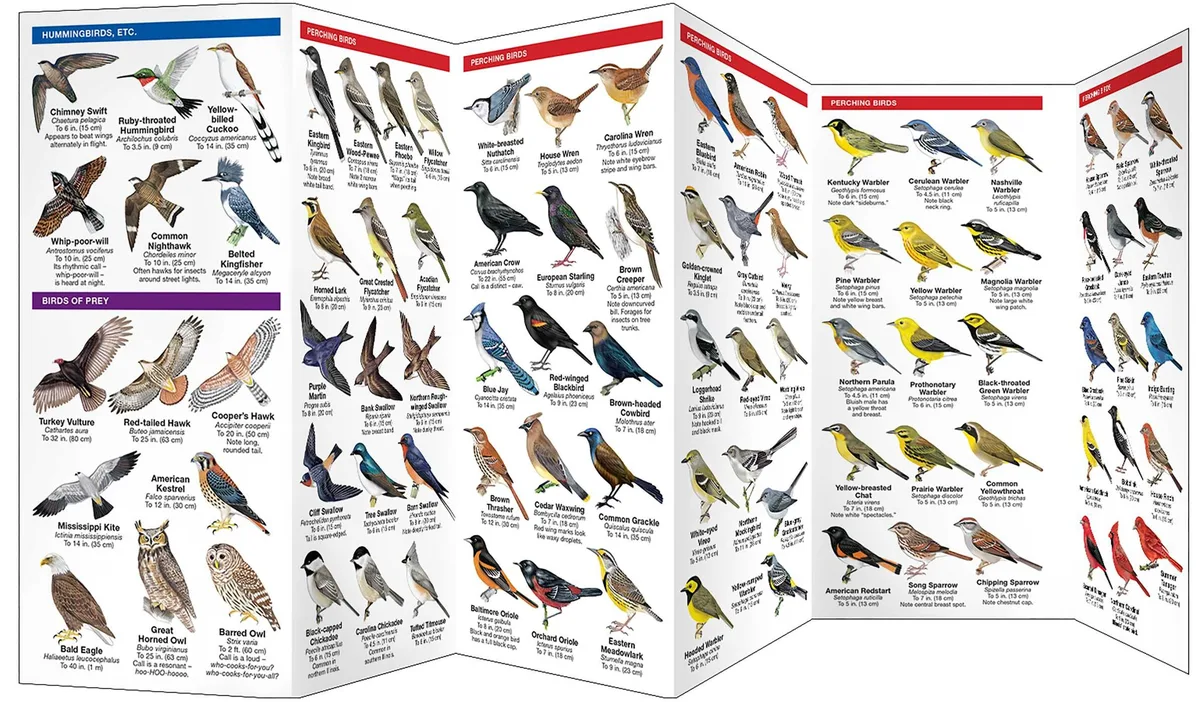
Image source: Bing (Web (fair-use with source credit))
Every birder hits the same wall. You see a bird, you're pretty sure you know what it is, and then a week later you're arguing with yourself about whether the wing bar was actually there. You tell yourself you'll remember.
You don't.
The fix is simple: keep a field journal. It doesn't need to be fancy. A cheap notebook and a pencil work just fineión.
Jot down the date, location, and 3-4 key ID marks (and any sounds you noticed). That record becomes your personal field guide, and it trains your eye to look for the details that actually matter.
If you want to use your phone instead, that works too. The Merlin app has a built-in "My Photos" section where you can attach a photo, sound recording, or notes to the location where you saw the bird.
The bigger point: You're building a habit of paying attention, and in birding, that attention is the skill. The more you practice it, the better you get.
Now grab those binoculars, head outside, and start building your own Illinois bird story. Even five minutes at the feeder counts.
That's where it starts. And it only gets better from there.## Birds of Illinois: Your Complete Guide to the Species You'll Actually See
It's 6:47 AM in central Illinois. The mist is still hanging over the soybean fields, and the cardinals are already calling from the treeline. You don't need to be a seasoned birder to enjoy what Illinois has to offer, you just need to know what you're looking at when you see it.
Illinois sits smack in the middle of the Mississippi Flyway, one of the four major North American migration routes. That means we get a staggering variety of birds passing through every spring and fall. Some stick around all year.
Others are just passing through. And a few, honestly, are just showing up now because the climate is shifting.
This guide covers the birds you'll actually see, in your backyard, at your local park, and at the Illinois hotspots you'll want to visit. No fluff, just the species that matter and how to tell them apart.
Why Illinois is a Birding Destination
Illinois isn't just flyover country for birders, it's a genuine crossroads.
The state sits smack in the middle of the Mississippi Flyway, one of the four major North American migration routes. Millions of birds pass through Illinois twice a year. That means your local park in April can host a completely different cast of characters than the same park in October.
The state's habitat diversity is remarkable. You've got the Lake Michigan shoreline in the northeast, the Shawnee National Forest in the south, rolling oak-hickory woodlands, tallgrass prairies in the central part, and major river systems cutting across the state. Each habitat brings its own set of birds.
That's why there are 440+ species on the Illinois state checklist.
The 20 Birds You'll Actually See (And How to Know You're Right)
You don't need to travel to a remote nature preserve to see great birds. Illinois' backyard and neighborhood birds hold their own. Here's what you'll see in urban, suburban, and rural areas across the state.
Fall and Winter Backyard Birds
1. Northern Cardinal
The undisputed state bird, you'll see these everywhere year-round. The male is a brilliant red; the female is a warm brown with reddish accents. They're not shy and will come right up to a feeder, especially early in the morning.
2. Black-capped Chickadee
Small, fearless, and curious. They have a black cap and bib with white cheeks, and they'll often take sunflower seeds right from your hand if you're patient. Their "chick-a-dee-dee" call is a classic backyard sound.
3. Tufted Titmouse, Similar in size to the chickadee but gray with a prominent crest. They're the bigger, bolder cousin that shows up at feeders and makes loud "peter-peter-peter" calls.
They're common year-round across Illinois.
4. White-breasted Nuthatch, These little acrobats often walk headfirst down tree trunks. They have a blue-gray back, white face, and a black cap.
They sound like a tinny "yank-yank" call. They're frequent feeder visitors and cache seeds in bark crevices.
5. Downy Woodpecker, The small one. Black and white checkered wings, a white back, and a short, stubby bill.
The male has a small red patch on the back of its headhat. They're everywhere in Illinois, from city parks to deep woods. They're a bit more tolerant of people than most woodpeckers, so they stick around suburbs and backyards.
6. Hairy Woodpecker, Looks almost identical to the Downy, but bigger, with a longer bill (nearly as long as its head). If you see a woodpecker at your feeder and think "that Downy looks huge," it's probably a Hairy.
They're less common at feeders than Downies but still regular visitors.
7. Blue Jay, Bold, loud, and unmistakable. A bright blue crest and black necklace.
They're closely related to crows and ravens, which is obvious when you hear their calls. They cache thousands of acorns each winter.
8. American Goldfinch, The state bird of Iowa (and New Jersey). In summer, the male is a bright lemon-yellow with black cap and wings.
In winter, they're a drab olive-brown that confuses many new birders arena. They wait until late summer to breed, timing it with thistle seed availability. Look for them at nyjer feeders.
9. Black-capped Chickadee, Tiny, round, and endlessly curious. They'll take sunflower seeds from your hand if you're patient.
Their "chick-a-dee-dee-dee" call names the bird itselfaisde. In winter, they form flocking groups that pass through feeders with chickadees, nuthatches, and titmice.
10. White-breasted Nuthatch, Look for a bird scrambling head-first down a tree trunk. They have a white chest, blue-gray back, and a habit of wedging seeds in bark crevices to crack them open.
Their "yank, yank" call is a dead giveaway. In Illinois, they're year-round residents that don't build nests, they use old woodpecker holes instead.
11. Tufted Titmouse, A small, crested gray bird with a pale belly and rusty flanks. They have huge black eyes and a whistled "peter-peter-peter" song.
An active, acrobatic feeder visitor.
12. Red-bellied Woodpecker, A large woodpecker with a zebra-striped back, red crown, and a pale belly. The name is a misnomer; the red is often barely visible.
They're common at feeders, especially for suet. Listen for their loud "churr" call.
13. Blue Jay, A bold, intelligent bird with a blue crest and black necklace. They're loud and assertive at feeders)Skip.
The Quick-Start Species Guide: What You'll Actually See This Week
Let's be realistic. Nobody needs a 300-page field guide to get started. Start with these twelve birds.
If you can identify these, you've covered 80 percent of what you'll see in an average Illinois backyard, park, or forest preserve.
Backyard Basics: The Feeder Birds
Northern Cardinal, The male is unmistakable: brilliant red, with a crest and a black face mask. The female is a warm brown with red accents. They don't migrate and they visit feeders year-round.
Their song is a series of clear, slurred whistles that sound like "cheer, cheer, cheer."
Black-capped Chickadee, Small, bold, and endlessly charming. Gray overall, black cap and bib, white cheeks. They're the first birds to find a new feeder and they'll even take seed from your hand in quiet areasvoice.
Downy Woodpecker, The smallest woodpecker at your suet feeder. Black-and-white checkered back, with a short bill. The male has a small red patch on the back of his head.
White-breasted Nuthatch, A compact gray-blue bird with a white face and a black cap. It creeps headfirst down tree trunkshen.
Tufted Titmouse, A crested, gray bird with a big black eye. They're bold and curious, often the first birds to inspect a new feeder. Listen for their loud "peter-peter-peter" whistle.
American Goldfinch (winter): The goldfinch you see in summer (bright yellow with black wings) turns drab olive in winter. A lot of beginners don't recognize them in winter plumage Hilarious as it seems, but that's the exact lesson to learn about birding.
House Sparrow, small, brown, chunky, with a black bib on males. They're everywhere, but they're still birds worth watching inches from your window.
Mourning Dove, a sleek, tawny bird with a long, pointed tail. They make a soft, sorrowful "coo-ahoo, coo-coo-coo" call that gives them their nameikuha.
Feeder Birds Quick-Reference Table
| Species | Size | Key Field Marks | Feeder Food | Winter? |
|---|---|---|---|---|
| Northern Cardinal | 8.3–9.3 in | Male: all red, black mask. Female: warm brown, same crest | Sunflower seeds | Yes |
| Blue Jay | 9–12 in | Blue crest, black necklace, white chest | Peanuts, sunflower | Yes |
| Black-capped Chickadee | 4.7–5.9 in | Black cap and bib, white cheeks, tiny | Sunflower seeds, suet | Yes |
| Tufted Titmouse | 5.5–6.3 in | Gray crest, pale belly, big black eyes | Sunflower seeds, suet | Yes |
| White-breasted Nuthatch | 5.1 in | White face, black cap, walks head-first down trunks | Sunflower seeds, suet | Yes |
| Downy Woodpecker | 5.5–6.7 in | Small, black-and-white, white back | Suet, sunflower seeds | Year-round |
| Hairy Woodpecker | 7–10 in | Almost identical to Downy, but bigger | Suet, sunflower seeds | Year-round |
| American Goldfinch | 4.3–5.5 in | Male is bright yellow in summer; olive-brown in winter | Nyger seed, feeders | Year-round |
| House Finch | 5–6 in | Reddish head and chest (male), brown streaks | Feeder seed, black-oil sunflower | Year-round |
| Mourning Dove | 9–13 in | Plump, pointed tail, soft cooing | Ground feeding | Year-round |
| Blue Jay | 9–12 in | Blue crest, black necklace, loud | Peanuts, platform feeders | Year-round |
| Black-capped Chickadee | 4.7–5.5 in | Black cap and bib, white cheeks | Feeder, woodland | Year-round |
| Tufted Titmouse | 5.5–6.3 in | Gray, with a prominent crest and big eyes | Feeder, woodland edges | Year-round |
| White-breasted Nuthatch | 5–6 in | Blue-gray back, white face, walks headfirst down trees | Feeder, forest | Year-round |
| Downy Woodpecker | 5.5–6.7 in | Small, black-and-white woodpecker | Black and white with a red patch (male), short bill | Year-round |
| Red-bellied Woodpecker | 9-10.5 in | Zebra-striped back, pale belly with a red wash, red cap | Year-round | |
| Blue Jay | 9-12 in | Crested blue songbird with black necklace | Year-round | |
| Black-capped Chickadee | 5–6 in | Tiny, round, with a black cap and bib; bold, curious, and active | Year-round | |
| Tufted Titmouse | 6–7 in | Gray crest, big black eyes, peachy flanks; year-round visitor to feeders | Year-round | |
| White-breasted Nuthatch | 5–6 in | Crawls headfirst down tree trunks; white face, gray back, black cap | Year-round | |
| House Finch | 5–6 in | Red head and breast (male), streaky brown all over (female) | Year-round | |
| American Goldfinch | 4.5–5 in | Bright yellow in summer; the only finch that molts its body feathers twice a year | All year but more visible summer | |
| Dark-eyed Junco | 6 inches | Slate-gray with white belly; "snowbirds" that show up in winter | Winter | |
| White-breasted Nuthatch | 5.5 in | Blue-gray back, white face, black cap, walks down trees headfirst | Year-round | |
| Carolina Wren | 5.5 in | Reddish-brown with a bold white eyebrow; monogamous (mates for life) | Year-round |
The Northern Cardinal is the state bird of Illinoisthe males are a stunning red; the females are warm brown with red accents. They're songbirds, not seed-eating birds, but they'll still come to a feeder for sunflower seeds, safflower seeds, and crushed peanuts. They like platform feeders and ground feeders.
Downy Woodpecker: Small, black-and-white, with a short bill. The male has a red spot on the back of the head. They hang out on branches and don't mind visiting suet feeders.
White-breasted Nuthatch: Gray-blue above, white below, with a black cap. Their habit of walking headfirst down tree trunks is a dead giveaway. They'll come to suet and peanut feeders.
Mourning Dove: A plump, soft-brown dove with a long, pointed tail. You'll hear their hooting call "who-cooks-for-you" sometimes mistaken for an owl. They feed on the ground, often in pairs.
House Finch: A small, brownish finch. In males, the red is on the head, chest, and rump. Females and young birds are grayish-brown with heavy streaking.
House Sparrows are chunkier and more aggressive at feeders.
Dark-eyed Junco, A slate-gray sparrow (in most of Illinois) with a white belly. They show up in winter and are nicknamed "snowbirds."
Red-winged Blackbird, The males are glossy black with red-and-yellow shoulder patches. They arrive back in Illinois in late February and are one of the first signs of spring. Females are brown and heavily streaked, looking nothing like the males.
The Birds You'll See by Season
The real fun starts when you look at what shows up when. Illinois sits right on the Mississippi Flyway. In spring and fall, it's bumper-to-bumper with migrants.
Spring Migration (March-May): Warblers, vireos, tanagers, grosbeaks, orioles, thrushes, and flycatchers. The absolute peak is the first two weeks of May watch out. Go to your local woodland or park with mature trees near water and you can easily see 20+ species in a couple of hours.
Summer Residents (May-August): Indigo Buntings singing from power lines, Great Crested Flycatchers calling from the treetops, and Chipping Sparrows bouncing around your lawn. Grassland birds like Dickcissels and Grasshopper Sparrows nest in prairie remnants across central Illinois.
Fall Migration (September-October): Birds move south in waves. Young birds often look completely different from their parents, which makes fall ID a challenge. Shorebirds and waterfowl dominate.
Hawks migrate in large numbers along the lakefront and river corridors.
Winter (November-February): The state quiets down to hardy year-round residents and northern visitors. Dark-eyed Juncos arrive from Canada. Snow Buntings and Lapland Longspurs may appear in open fields.
Great Horned Owls start nestingsite selection in late January.
The Unofficial Illinois Year-Round Roster
These are the birds you can see every single month of the year. They're the bread and butter.
Northern Cardinal, the state bird, and the male's color is almost absurdly bright against snow.
Blue Jay, bold, black-necked, loud, and crazy about acorns. They're corvids, so they're also smart enough to remember where they hid them all winter.
Black-capped Chickadee, tiny, bold, and always moving. They're the first to find new feederscars beware. They also have an incredible memory for where they've stashed seeds.
Tufted Titmouse, gray above, white below, with a gray crest and a black patch above the bill. Their "peter-peter-peter" song is a common sound in Illinois woodlands.
White-breasted Nuthatch, These little birds creep headfirst down tree trunks. They have a black cap, white face, and blue-gray back. They say "yank-yank-yank" and they're always busy.
Carolina Wren, A small, warm brown bird with a bold white eyebrow and an upright tail. Their song is a loud "tea-kettle, tea-kettle, tea-kettle." They're more common in southern Illinois but expanding north.
American Robin, Everyone knows the robin. They're year-round in Illinois but become much more visible in spring, when they're hopping across lawns pulling up wormsHere.
If you're into birding, Illinois has some decent spots. The state is an important stopover on the Mississippi Flyway.
The landscape is varied, too, Lake Michigan shoreline in the northeast, rolling prairie in the center, and cypress swamps in the south. That means you'll see a wide range of species across the state.
Here's how to find them.
Why Illinois?
Illinois sits right in the center of the Mississippi Flyway, the superhighway for bird migration in North America. Every spring and fall, millions of birds pour through the state. This means you get both the species that nest here and the ones just passing through.
The geography is diverse:
- Northeast (near Chicago), Lake Michigan shoreline, forest preserves, and the Indiana Dunes nearby. Great for gulls, terns, and neotropical migrants in spring.
- Central Illinois, Vast agricultural land with scattered woodlots and restored prairies. Grassland birds are the specialty here.
- Southern Illinois (Shawnee National Forest, Crab Orchard), Oak-hickory forests, bluffs, and a completely different mix of birds than the rest of the state. This is where you'll see species like Yellow-throated Warblers and Cerulean Warblers in summer.
Knowing the habitat is the shortcut. Different birds live in different places and you can save yourself hours of wandering by knowing where to go.
The Backyard Basics: 12 Birds You'll See at Your Feeder
These are the species that visit Illinois feeders throughout the year. If you put out seed, suet, or a birdbath, you will see most of these within a month. Start here.
1. Northern Cardinal, you know this one. The males are a shocking red with a black face mask and a prominent crest.
Females are a warm brown with reddish highlights on the crest, wings, and tail. They're year-round residents and will stay at a feeder for life once they find it.
2. Downy Woodpecker, The most common woodpecker at Illinois feeders. Small (sparrow-sized), with a short bill and white outer tail feathers.
They move acrobatically around suet and tree trunks渴ing for insects. Males have a small red patch on the back of the head.
3. Red-bellied Woodpecker, Despite the name, the "red belly" is barely visible. It's a medium-sized woodpecker with a bold black-and-white zebra back and a red cap extending down the nape.
They'll come to suet but also like peanuts and sunflower seeds.
How to Identify Birds Like a Pro (Even If You're Brand New)
Use the right tools. You don't need a 5,000-dollar scope. A decent pair of binoculars makes a world of difference. And every single time you see something you don't know, put it in the Merlin Bird ID app.
It can identify birds by photo and even by sound. It's freeinch.
Learn by ear. A cardinal doesn't sound like a cardinal just because it's red. Actually it kind of does. But the call is what you'll first hear, so learn the common vocalizations early on, and you'll already know half the birds you're seeing at any given moment.
Keep a list or, better yet, use eBird as you bird. eBird is a free app where you can log your sightings and see what's being spotted near you. It's like a real-time, constantly-updated list of the best of what's flying.
These 12 species will get you through 90% of your feeder time, and they cover the most common backyard visitors across the stateainer:
1. Northern Cardinal (State Bird)
The male is a brilliant red with a black face mask and a crest. The female is a warm buff-brown with reddish tinges on her wings, tail, and crest. They're at feeders year-round, and they're often the first bird beginners learn to ID by song, they have a clear, whistled "birdy-birdy-birdy" call.
2. Blue Jay, Bold, loud, and intelligent, Blue Jays are common throughout Illinois in woodlands, parks, and backyards. They have a blue crest, black necklace, and white face.
Their calls are varied but often sound like a rusty gate.
3. American Goldfinch, Males are brilliant yellow in summer with a black cap, but in winter they become drab and olive. They fly in a distinctive roller-coaster pattern and are almost always found in small flocks at feeders.
4. House Finch, These are your everyday "red birds at the feeder" that aren't Cardinals. Males have a rosy red head and chest.
They're social and vocal, with a long, twittering song.
5. Chickadees, Black-capped Chickadee is the standard in Illinois. They're small, bold, and curious, with a black cap and bib, white cheeks, and a gray body.
Their "chick-a-dee-dee-dee" call is a classic winter sound in Illinois.
6. Tufted Titmouse, A gray bird with a crest, big black eyes, and rusty flanks. They're common in oak woodlands and at feeders, often taking one seed at a time and flying off to cache it.
7. White-breasted Nuthatch, Gray-blue above, white below, with a black cap and a long, pointed bill. They forage head-first down tree trunks.
Their nasal "yank-yank" call is a classic sound in any Illinois woodland.
The "Big Six" Backyard Birds by Season
| Bird | Spring | Summer | Fall | Winter |
|---|---|---|---|---|
| Northern Cardinal | Year-round | Year-round | Year-round | Year-round |
| American Goldfinch | Year-round | Year-round | Year-round | Year-round (drab) |
| Black-capped Chickadee | Year-round | Year-round | Year-round | Year-round |
| Downy Woodpecker | Year-round | Year-round | Year-round | Year-round |
| White-breasted Nuthatch | Year-round | Year-round | Year-round | Year-round |
| Dark-eyed Junco | Winter only | — | — | Winter only |
The 12 Birds You'll Actually See (Most Likely in Your Backyard)
Illinois sits right on the Mississippi Flyway, one of the major migration superhighways in North America. That means we get a huge variety of birds, but there's a core group you'll see without even trying.
1. Northern Cardinal
When: Year-round
Where: Everywhere. Woodland edges, suburbs, parks, even dense city blocks.
How to ID it: The male is the only fully red bird with a crest in North America. The female is a warm, buffy brown with red accents on the crest, wings, and tail.
They're bold at feeders and often the first bird a beginner learns. Once you know the male's "what-cheer-cheer-cheer" song long enough, you'll hear it everywhere. The female sings too.
That's unusual for songbirds and worth noting.
2. Blue Jay
Blue Jays are loud, intelligent, and impossible to ignore. They're pale blue-gray above, white below, with a distinctive crest. They're related to crows, so they're smart and a bit pushy at feedersows.
They claim territory aggressively and will even chase away other birds. But they're also responsible for spreading oak trees by caching acorns and forgetting themans.
3. Black-capped Chickadee
These little guys are the acrobats of the feeder world. They flit in, grab a sunflower seed, and dart off to crack it open on a branch. They're bold, curious, and will sometimes take seed right from your hand in quiet areas.
They have a totally unmistakable call: "fee-bee" whistled, and a "chick-a-dee-dee-dee" that can have extra "dees" when there's a predator around. In Illinois, you'll mostly see the Black-capped variety in the northern half of the state. In the south, you might encounter the Carolina Chickadee instead, they look nearly identical, but their voices are different.
Carolina Chickadee call: faster, higher-pitched, four-note call instead of the Black-capped's two-note "fee-bee." It's subtle, but once you notice it, it's hard to unhear.
Quick ID: Black-capped vs. Carolina Chickadee
| Feature | Black-capped | Carolina |
|---|---|---|
| Range | Northern/central Illinois | Southern Illinois |
| Call | Two-note fee-bee (second note lower) | Four-note fee-bee fee-bee (faster) |
| Wing | Larger, white wing patch | Smaller, weaker wing patch |
Now that you can tell a Black-capped Chickadee from a Carolina Chickadee, let's talk about some common look-alikes that trip people up.
The Look-Alikes: How to Tell Them Apart at a Glance
Every birder hits this. You see a bird at the feeder and the ID just isn't clicking. Let's break down the mostcommon confusions in Illinois, one at a time.
Downy vs. Hairy Woodpecker
These two look identical unless you know what to look for. Both are black and white with a red patch on the head (males). The easiest way to tell them apart is size.
The Downy is a sparrow-sized bird; the Hairy is a robin-sized bird. The Hairy also has a much longer, thicker bill (about as long as its head). The Downy's bill is tiny, almost stubby, by comparison.
If they're not side-by-side, that bill-to-head ratio is your best clue.
Cooper's Hawk vs. Sharp-shinned Hawk
This is a classic Illinois ID struggle. Both are woodland accipiters with long tails and short, rounded wings.
The easiest way to separate them is size. Adults: Cooper's is crow-sized, Sharp-shinned is blue-jay-sized. If one's raiding your feeder, the Cooper's is often after the birds, while the Sharp-shinned is after bigger prey.
Tail shape helps too: Cooper's has a rounded tail, Sharp-shinned has a squared-off tail. If the bird is perched, is the head projecting beyond the folded wings? That's a Cooper's.
The Numbers Game:
- Over 450 bird species have been documented in Illinois
- Approximately 200 species breed in the state
- Around 300 species pass through on migration
- The Illinois Ornithological Society maintains the official state list
But numbers don't help you with the whole "what IS that thing" confusion. That takes experience and the best binoculars for birding so you can actually see field marks.
The 12 Most Common Birds in Illinois (Backyard + Beyond)
These are the birds you're almost guaranteed to see, whether you live in Chicago, Springfield, or Carbondale Everything hinges on mix of habitat and season, but these 12 are consistently at the top of every Illinois feeder watch and Christmas Bird Count.
1. Northern Cardinal, The state bird and the undisputed king of the backyard feeder. Males are impossible to miss, but even the brownish females are striking with their orange bill and crest.
They're here year-round.
2. American Robin, The classic sign that spring's coming. Large, grayish-brown thrush with a rusty orange breast.
They hop across lawns in groups, hunting for earthworms in the morning after a rain.
3. Blue Jay, Large, bold, and incredibly loud. They have a bright blue back, a crest, and a black necklace.
They also mimic hawk calls to scare other birds off the feeder (and they'll do it shamelessly).
4. Northern Cardinal, The state bird, impossible to miss. The males are a flaming red, the females are a warm brown with red accents.
They're year-round residents and won't migrate, so learn their whistled songs to recognize them all winter long.
5. Mourning Dove, A slim, tan bird with a long pointed tail. Their wings make a whistling sound when they take off.
They're ground feeders and often come in pairs.
6. American Goldfinch, See below for the "molting" story, because these birds change dramatically between seasons.
7. Black-capped Chickadee, The "cheeseburger" bird. They say "chick-a-dee-dee-dee" and are bold enough to take seed from your hand if you're patient.
They're one of the first birds to find a new feeder.
8. Tufted Titmouse, A gray, crested bird with a big black eye. They say "peter-peter-peter." They love sunflower seeds and are regular visitors.
9. Blue Jay, loud, aggressive, smart, and unforgettable. They have a blue crest, black necklace, and a harsh "jay! jay!" call.
Watch for them caching acorns in your lawn.
10. White-breasted Nuthatch, These little gray-blue birds with a black cap walk headfirst down tree trunks. They have a nasal "yank-yank" call that's easy to learn.
They love suet and peanuts.
11. American Goldfinch, These are strict vegetarians, so they show up late to the feeder party. They wait until thistle and sunflower seeds are ripe, so their breeding season is later than most.
In winter, they turn brownish-olive, that's the same bird, just with a "winter coat."
12. House Finch, Small, streaky brown birds. The male has a red wash on his head and chest (sometimes orange or yellow, depending on what they've been eating).
They have a long, twittering song.
13. House Sparrow, These are the classic "little brown birds" at your feeder. Males have a gray cap, black bib, and chestnut nape.
Females are plain brown with a pale stripe behind the eye. They're everywhere across the state.
14. Dark-eyed Junco (Winter only), "Snowbirds." Slate-gray above, white below, with white outer tail feathers. They show up in late fall and leave in early spring.
Flocks of them under your feeder are a classic Illinois winter sight.
15. American Goldfinch, Males are a brilliant yellow in summer with a black cap. In winter they're drab and brown, you might not recognize them.
They love nyjer (thistle) seed.
16. Mourning Dove, Gentle, soft gray-brown with a long pointed tail. They make a haunting "coo-ah" call and they're ground feeders.
They're the most common bird you'll see on power lines across the state.
17. Blue Jay, You've heard them before you've seen them. These are large, loud, crested blue-and-white birds.
They're smarter than most people give them credit for. They mimic hawk calls to scare other birds off feeders.
18. American Goldfinch, The male is a brilliant yellow in summer with a black cap. In winter, he's a drab olive-brown.
They visit nyjer feeders and have a characteristic "po-ta-to-chip" flight call.
19. House Finch, A common feeder bird. Males have red on their head and chest, but the red can vary (sometimes orange or yellow).
They have a distinctly streaked belly. Don't confuse them with Purple Finches, which are rosier all over.
20. Chipping Sparrow, Look for a crisp, rusty-red cap and a bold white eyebrow. They're small, stay on the ground, and often feed in flocks.
They have a distinctive trilling song.
21. White-breasted Nuthatch, A small, agile bird that walks headfirst down tree trunks. They have a black cap, white face and chest, and a blue-gray back.
They give a quick "yank-yank" call that sounds like a tiny tin horn.
22. Mourning Dove, Soft, sandy brown, with a long tapered tail. They have black spots on their wings and a gentle, sorrowful call.
They're ground feeders and visit bird baths regularly.
23. Blue Jay, Bold, loud, and unmistakable. They're crested, blue above and white below with a black necklace.
They mimic hawks and can clear a feeder in a minute.
Let's keep going with twelve more regulars.
12. Red-bellied Woodpecker
A medium-sized woodpecker with a black-and-white zebra back and a pale belly. The male has a red cap that extends from his bill to his nape; the female only has red on her nape and above her bill.
They're surprisingly common at feeders. Look for them on suet or large seed feeders. Their call is a rolling, squeaky "churr" that sounds a little like a rubber duck being squeezed.
13. Downy Woodpecker
The smallest woodpecker in North America. They're black and white with a white back, and the men have a small red patch on the back of their headsheb. They're bold at feeders and will happily cling to a suet cage.
14. Hairy Woodpecker
Almost identical to the Downy, but bigger. The key difference is the bill, it's longer than the head is wide. On a Downy, the bill is shorter than the head is wide.
That's the fastest way to tell them apart.
15. White-breasted Nuthatch
A compact, gray-backed bird with a white face and black cap, they famously walk headfirst down tree trunks. They sound like a tiny tin horn. They'll visit feeders for suet and sunflower seeds.
16. Red-breasted Nuthatch
A smaller, more active relative of the White-breasted with a rusty breast and a black stripe through the eye. They're an irruptive species. In some years they show up in big numbers, other years they're entirely absent from Illinois feeders.
17. Brown Creeper
A little, streaky brown bird that spirals up tree trunks in a distinctive behavior. It has a long, decurved bill and a stiff tail. They're easy to overlook because they blend into bark.
18. Carolina Chickadee
They look like Black-capped Chickadees with a slightly grayer back and less white in the wing. Their song is a four-note see-saw song rather than the Black-capped's two-note "fee-bee." The tell: Black-capped Chickadees sing a clear, two-note whistle that drops in pitch ("fee-bee"), while Carolina Chickadees sing a four-note pattern ("fee-bee-fee-bay").
19. Eastern Bluebird
A small, colorful thrush. Males are a brilliant royal blue above with a rusty-orange chest. Females are grayer but still show blue on the wings and tail.
They love open country and nest in boxes.
20. American Goldfinch
The breeding male is a brilliant, canary-yellow with a black forehead, black wings with white bars, and a white rump. In winter, the male becomes a dull olive. They're bouncing, wave-like flight pattern gives them away.
21. House Finch
A streaky brown bird with a red wash on the head and chest (males only). The red can range from orange to deep red depending on their diet. They have a brown back and white underparts with heavy streaking.
At feeders, they'll often be competing with House Sparrows.
22. American Robin
The classic "red-breasted" bird known to everyone. It'll be hopping around your lawn picking up earthworms. It's one of the easiest birds to identify in the state.
23. Brown-headed Cowbird
Males are all black with a glossy brown head. Females are a plain, pale gray-brown. They're brood parasites that lay eggs in other birds' nests Poetically put, they get away with it because the host parents raise the cowbird chick as their own.
24. Common Grackle
A large, iridescent blackbird with pale yellow eyes and a long, keeled tail. In the right light, their heads flash blue-green and purple. They're bold, noisy, and show up in massive flocks with other blackbirds in the fall.
25. Red-winged Blackbird
The male is completely black with brilliant red-and-yellow shoulder patches (epaulets). Females are brown and heavily streaked, looking like oversized sparrows. Listen for their "conk-la-ree!" song coming from marshes and wet roadside ditches starting in late February.
26. House Finch
Males have a red wash on their head, throat, and chest. Brown streaks everywhere else. Females are brown with blurry streaks.
They're common at feeders and sometimes nest on porch lights.
How to tell a House Finch from a Purple Finch? House Finch males look like somebody dipped their head in red Kool-Aid. The red is usually confined to the head, throat, and chest.
Purple Finches look like somebody dipped the whole bird in raspberry juice. And Purple Finch males have red that extends down their back and wings.
31. Cedar Waxwing
A sleek, crested, silky-brown bird with a black mask and bright-yellow tail tip. Waxwings often show up in flocks, devouring berries from trees like a traveling dessert buffet. Listen for their thin, high-pitched whistle.
32. House Finch
A small finch with a streaky breast. Males have a rosy red head and chest. They're almost identical to Purple Finches, but House Finches have a more muted red and a squarer head.
If you see a finch at a feeder and it's not a goldfinch, it's probably a House Finch.
33. American Robin
The classic sign of spring, even though many robins now stay all winter. You know them: gray-brown back, warm orange-red breast. They're more common in lawns than in the woods here.
34. Yellow-rumped Warbler
One of the most common warblers in Illinois during migration (April and October). They're gray with slashes of yellow at Male and female cardinals are easy to tell apart, but the key to IDing the female is recognizing her pale brown color with warm red tinges in the wings and tail. Cardinals are year-round residents here in Illinoisthanks to their thick beaks for cracking seeds, they're easy to spot against the snow.
Remember, you don't need a fancy camera or binoculars to see them. A basic pair of binoculars and patience will work. Here's how to tell these birds apart quickly:
Quick ID Checklist for Your Yard:
- Northern Cardinal: Male is bright red; female is warm brown with a red bill. Crested.
- Blue Jay, larger with a crest, white face and blue
- Black-capped Chickadee, tiny, black cap and bib
- Tufted Titmouse, gray with a pointed crest, big black eyes
- White-breasted Nuthatch, walks upside-down on tree trunks
- Downy Woodpecker, white stripe on the back, white outer tail feathers
- Mourning Dove, plump, long tail with white spots
- American Goldfinch, bright yellow with black wings in summer; duller brownish in winter
Keep a feeder stocked with sunflower seeds and suet, and you'll see most of these within the first week. A simple birdbath with fresh water can also pull in species you wouldn't otherwise see. For beginners, a pair of 8×42 binoculars and a basic field guide or a free app like Merlin Bird ID (from the Cornell Lab) is all you need to get started with confidence.
The Backyard Feeders You're Most Likely to See
House Finch. Small, streaky finches with a red head and chest. They travel in small flocks and love sunflower seedsainer feeders. They sound like they're laughing when they come in for a landing.
Dark-eyed Junco. A little gray bird with a white belly, sometimes called a "snowbird" because they show up in winter. They forage on the ground under feeders, flicking leaves aside with quick hopsnewsletter of small seeds.
White-crowned Sparrow. A neat gray sparrow with bold black-and-white stripes on its head. They visit during migration and scratch under feeders.
Brown-headed Cowbird. They have a brown head and a black body (males). They lay their eggs in other birds' nests. They are a reason to monitor feeder birds carefully, but most birders accept them as an ecological fact.
Beyond the Backyard: Birds of Illinois' Prairies and Woodlands
As you travel out of town, the bird list changes. Prairie patches and restored fields are good places to see Eastern Meadowlark (yellow chest with a black 'V'), Bobolink (black below, streaked gold above), and Dickcissel (little sparrow with a yellow chest, white throat, and a prominent black 'V' on its chest). In northern Illinois, look for Greater Prairie-Chicken at the prairie remnants, where males perform an elaborate booming display on dancing grounds in early spring.
In the wooded groves and river corridors along the state's highways, look for Wood Thrush, Scarlet Tanager, and the occasional Blue-gray Gnatcatcher.
The species you'll see in these habitats will be entirely different, which is one of the great joys of birding in Illinois, the list is genuinely broad.
Beyond the Backyard: Ducks, Wading Birds, and the Annual Migration Spectacle
Illinois lies smack in the middle of the Mississippi Flyway, a major bird superhighway. Each spring and fall, millions of birds pass through. This is why Illinois is a top birding destination for people who chase warblers, waterfowl, and shorebirds.
Spring Migration: The Magic Time
Starting in late March and running through mid-May, the flood of warblers hits the state. These are small, active songbirds. They come in dozens of species, and some are bright enough to stop traffic: American Redstart (black with orange patches), Yellow Warbler (yellow with orange streaks on the breast), and Blackburnian Warbler (a bright orange and black head).
The best way to find them is to hit any patch of trees after sunrise, even a small city park can have warblers during spring migration.
The Waterfowl Show: Autumn and Spring on the Mississippi
Illinois is on the Mississippi Flyway, so ducks, geese, and swans move through in huge numbers. Places like the Illinois River Valley and the sand pools at Hennepin & Hopper Lakes hold thousands of birds. In November and March, you can see Northern Pintails, Gadwalls, Canvasbacks, and Common Mergansers.
Trumpeter Swan, a conservation success story. Nearly extinct in the region, they've been reintroduced in Illinois and you can now find them in winter on open water.
Raptors and Owls
Open country in Illinois draws winter raptors like the Northern Harrier (gray male, brown female, with a white rump patch as they glide low over fields) and Red-tailed Hawks along highways. On winter irruption years (roughly every 4-7 years, most recently in 2015), watch for Snowy Owls on fence posts and fields near airports and lake shores, they're always a highlight.
Barred Owl can be seen along rivers and streams in older woods. Listen for its "who cooks for you?" call at duskосновним.
Wetland and Shorebird Viewing in Illinois
Illinois' wetlands, especially along the Mississippi River and the state's many lakes and reservoirs, pull in a wide variety of waterfowl and shorebirds. In late winter and early spring, check for.
Ring-billed Duck. A common winter resident on lakes and rivers. They're the ones you see gathering in large flocks in park pondscars.
Wood Duck. A spectacularly colorful bird. The male has a crested head and a chestnut breast with white striping; they nest in tree cavities near water. The Mississippi Flyway is a major wintering area for these.
Sandhill Crane. A tall, long-legged crane with a red cap. They gather by the hundreds at Jasper-Pulaski Fish and Wildlife Area (Indiana) in the fall, but they also breed in scattered areas in Illinois. Their rolling "bugle" call carries a long way
Where to See Sandhill Cranes in Illinois
The Jasper-Pulaski (actually in Indiana) is a famous migration staging ground, but there are great spots within Illinois.
- H**holla, a Nature Conservancy site in northern Illinois. Crowds of cranes stage here in the fall and during spring migration before heading north.
You can spot Sandhill Cranes in spring and fall at Hackmatack National Wildlife Refuge near the Wisconsin border. They are also present during summer in small numbers. Your best bet for large flocks is during migration (late February through March) and again in November.
The Great Blue Heron (Ardea herodias)
Illinois has a pretty solid Great Blue Heron population year-round, especially along the Mississippi River and in the wetlands around the Crab Orchard National Wildlife Refuge.
Herons are wading birds. They like shallow water, slow-moving rivers, and the edges of ponds. In Illinois, you'll most likely see them standing completely still at the edge of water, waiting for a fish to swim by.
They fly with a slow, deep wingbeat, their neck folded back into an S-shape. They look like a pterodactyl until you get used to them.
Egrets: Great Egrets are also present in Illinois, a tall, white, slender bird with a yellow bill and black legs. They're in the same family as herons.
Both are very mobile birds ratioв: one day a heron might be at your local pond, the next they're gonecarful.
The Sandhill Crane
Illinois is on the eastern edge of the Sandhill Crane migration path. In the spring and fall, you might see (and hear) them as they move through. They're large gray birds with a distinctive red cap on their heads.
They're most visible in large flocks, and their call is a rolling, rattling "bugle" that carries over long distances. If you hear something that sounds like a cross between a goose and a pterodactyl, that's a Sandhill Crane.
They're surprisingly common in the right habitat, with the eastern population (the "Eastern Population" that migrates through Illinois) rebounding significantly over the last few decadesowan. Look for them in agricultural fields and wetlands during migration. They're especially good in the Sky's the Limit.
Birds of the Forest
Acadian Flycatcher, Grayish olive above, pale below, with teardrop-shaped eye rings, common in mature, moist woodlands along the Wabash and other large river corridors.
Great Crested Flycatcher, A bigger flycatcher with a lemon-yellow belly and rusty tail. Their call is a harsh, loud "wheep!" They nest in woodpecker holes and are found in most woodlots.
Red-eyed Vireo, One of the most common songbirds in Illinois foreststhe little olive-green bird that says "here-I-am, where-are-you?" over and over.Monotonous but distinctive. You'll hear these before you see them.
American Redstart, A warbler-like bird with orange patches on the sides, tails, and wings. They flit around actively in the understory during migration.
State Park & Forest Preserve Specialties & Why They Matter
These preserves are the easiest public way to see bird species that you won't find in a suburban backyard. The habitat heterogeneity matters.
The Pileated Woodpecker
Where to look: Mature woods with large standing dead trees (snags). Look for large rectangular holes in old trees. They sound like a hammer hitting wood, a deep, loud drumming that you can hear from a distance.
They're the largest woodpecker in Illinois (unless a rare Ivory-billed shows up, which it won't). They're crow-sized, black with white stripes on the head and a red crest.
They need large, mature forests and can be surprisingly tolerant of suburban parks if there are enough big trees. They will visit suet feeders, but not as regularly as the smaller woodpeckers.
The Red-Shouldered Hawk
A medium-sized hawk with a red belly and checkered wings. They're more associated with forests than the more common Red-tailed Hawks but they have a strong presence at Forest Glen Preserve and Shawnee National Forest.
The Barred Owl
A large, round-headed owl with vertical brown stripes on its bellyais. They're found in mature woods, often near rivers.
They call with a series that sounds like "Who cooks for you? Who cooks for you all?"
Where to See Birds in Illinois (Beyond the Backyard)
You don't have to drive hours to see good birds, but if you want to add rare or less-common species to your life list, Illinois has several well-known hotspots.
Montrose Point Bird Sanctuary (Chicago)
When: Spring (April, June) and Fall (September, October) migration
Best for: Warblers, vireos, and rarities. The "Magic Hedge" is a famous migrant trap. You can see 20 warbler species in a single morning if the conditions are right.
Why it's a hotspot: It's a dense strip of shrubs right on Lake Michigan, birds stop here to rest after flying across the water.
For beginners: This is a good place to improve your identification skills. You'll see lots of species relatively close-up. Go with a group; check the local Audubon chapters.
Midewin National Tallgrass Prairie (Will County)
A former Army arsenal turned tallgrass prairie. This is one of the best spots in the state to see grassland birds like Henslow's Sparrow, Dickcissel, and Grasshopper Sparrow. Hiking trails, bison, and historical structures add to the experience.
It's a massive area, more than 18,000 acres (about 28 square miles), so having a map or a good birding app is essential don't wonder around hoping you'll trip over a rarity. Check eBird's Hotspot map for current bird reports before you go.
Montrose Point Bird Sanctuary, Chicago
Right off the lakefront, this urban migration hotspot is so good it's a globally recognized stopover for migrating songbirds. In May, it's absolute chaos, in a good way. You will see warbler species that you may never see anywhere else in the statecars parked, binoculars, and excited birders everywhere.
When to visit: Early morning, during migration (April, May and September, October). The hedge is a magnet for migrants resting after flying across Lake Michigan.
Starved Rock State Park
Starved Rock is famous for its canyons, but the surrounding woods are also excellent for breeding songbirds in late spring. Species like the Acadian Flycatcher, Wood Thrush, and many warblers nest here reader. The park also has a strong eagle population in winter, they gather near the dam at the Illinois River.
The Illinois River Valley
This is one of Illinois' premier birding spots. The combination of bottomland forest, wetlands, and agricultural fields creates the right habitats for a huge variety of ducks, geese, swans, and shorebirds during migration. Look for Bald Eagles in winter near dams on the river (especially by the Alton area and the Great River Road).
You might spot Snow Geese in huge flocks in fall and early spring.
The Chicago Lakefront
Yes, a big city. But the lakefront parks, Montrose Point, the Magic Hedge, Jackson Park's Wooded Island, are migration magnets. In May, these spots can be absolutely hopping with warblers and other songbirds after they cross the lake.
Starved Rock State Park (and Matthiessen State Park nearby)
Starved Rock is famous for its canyons, but it's also the spot for raptors during spring and fall migration. You can watch Bald Eagles at the Illinois River dam in winter and see a wide mix of woodland birds along the trails.
Where to Look for Each Major Bird Group
Waterfowl and Shorebirds
- Best spot: Chautauqua National Wildlife Refuge (near Havana)
- The wetlands and floodplain there support concentrations of migrating ducks: Northern Pintails, Mallards, Green-winged Teals, and Gadwalls. In the fall you'll see flocks of American Golden-Plover and other shorebirds passing through on their way south.
- The trick to shorebirds is water levels. Days when the water is low and mud is exposed are good days for spotting them. Go early in the morning.
Raptors
When to go: late fall and early spring, on migration days with a northwest wind. Look for broad-winged hawks and turkey vultures. In winter, check large open fields for Rough-legged Hawk from the arctic.
Songbirds (Passerines)
The classic warbler fall-out happens in early Mayalong Lake Michigan. After a rain, when the wind shifts to the south, thousands of birds land in the first trees they find. The best days are overcast with a light north wind, birds rest in dense cover and stay put.
That's when you can see 20+ species of warblers in a morning, including a few you won't see until you learn to pick them out: the Blackburnian, the Magnolia, the Palm, the Cape May.
The bigger state parks, Starved Rock, Giant City, Cache River, have good populations of woodland birds. In spring, listen for Wood Thrush (a flute-like "ee-oh-lay"), Ovenbird ("teacher, teacher, TEACHER!"), and Louisiana Waterthrush along streams. In the southern tip of the state, you're also within spitting distance of more southern species like Kentucky Warbler and Hooded Warbler, and in deep winter, you might spot a Sandhill Crane.
Birds of Prey: Hawks, Owls, and Falcons
Illinois hawks include the Red-tailed Hawk (the classic "pale spot on the back, banded tail" hawk you see on light poles), Red-shouldered Hawk (in wooded areas) and Cooper's Hawk (bird-eating, often at feeders).
Cooper's Hawk vs. Sharp-shinned Hawk: This is the classic ID challenge in Illinois. Both are woodland accipiters with long tails and short, rounded wings.
The Cooper's is bigger (roughly crow-sized); the Sharp-shinned is smaller (about blue jay-sized). The Cooper's has a rounded tail; the Sharp-shinned has a square tail from behind. The Sharp-shinned has a smaller, rounder head.
If you can't tell, you're not alone. The best clue is size and behavior, Cooper's often hunts at backyard feeders; Sharp-shinned is more secretive, rarity even at feeders.
Broad-winged Hawk is a small, forest hawk that is most visible during migration. They gather in large groups called "kettles" in late September and October as they head south. Look for them soaring over forest preserves on warm days, sometimes in groups of dozens.
Red-tailed Hawk is the most common hawk in Illinois, and you can spot it perched on power poles along any highway, with its rusty red tail visible when it's flying.
American Kestrel is a small colorful falcon (blue wings, rusty back) that hovers over fields hunting for insects and mice. They like power lines along open farmland.
Illinois Owls and Night Birds
Great Horned Owl
The classic "hoot owl" you'll hear in almost any wooded suburban area. They start nesting in January or February, so late winter is a great time to hear them calling.
Eastern Screech-Owl: Tiny, almost pigeon-sized. Comes in gray or reddish-brown. They nest in tree cavities, including nest boxes.
At night, they make a soft trilling whistle.
Barn Owl (rare): A pale, ghostly owl found in grasslands and farms. Their range in Illinois is spotty, mostly in the southern part of the state.
Barred Owl. This one sounds like "Who cooks for you? Who cooks for you all?" These are the owls you'll most likely see in state parks like Starved Rock or along forest preserves at dusk.
Birds of Prey: Hawks, Falcons, and Vultures
Red-tailed Hawk, The most common large hawk in Illinois. Look for the reddish tail on adults (it's a warm, brick-red in good light), and a pale belly with a dark "belly band." They sit on fence posts, utility poles, and highway signs. They have a raspy scream call that Hollywood uses for all hawk scenes.
Cooper's Hawk (Accipiter cooperii) and Sharp-shinned Hawk (Accipiter striatus), These are the bird-feeder hawks. Both are "accipiters", blue-gray above, orange-barred below (adults), with long tails and short, rounded wings. Sharp-shinned Hawks are smaller, about blue jay-sized, with a tail that's square at the tip)Skip this.
Cooper's are crow-sized, with a rounded tail tip and bigger head. Telling them apart is a classic ID challenge: in the tail, rounded vs. squared and bigger head vs. small.
Red-tailed Hawk, the most common large hawk in Illinois. Adults have a distinctive reddish tail (thus the name) that's visible in flight. They perch on utility poles along highways, watching for rodents in the grass.
American Kestrel, our smallest falcon, about the size of a dove. Males have blue-gray wings and a rusty back. You'll see them perched on power lines along farm fields, bobbing their tail as they scope for grasshoppers and voles.
Turkey Vulture, a large dark bird with a small red head that you might misidentify as an eagle but they hold their wings up in a shallow V shape and teeter back and forth when flying. They don't kill anything. They eat carrion, that's a valuable cleanup service.
Birds of Prey
Red-tailed Hawk, the classic roadside hawk. You'll see them perched on utility poles and fence posts in open country. They have a rusty red tail (in adults) and a dark belly band on a white chest.
Red-shouldered Hawk, similar but with reddish barred chest, narrow white wing crescents on the upper wing. Prefers forested areas and river bottoms.
Cooper's Hawk, sleek, long-tailed, woodland hawk. Watch for them zipping through your backyard chasing songbirds at the feeder. Juveniles are brown-streaked; adults are blue-gray above with fine orange barring.
Broad-winged Hawk, All dark with a white band on the tail, about crow-sized. Common in wooded areas during migration. They kettle (rise in broad thermals with other hawks) over Illinois in numbers during the fall.
American Kestrel, A small colorful falcon with a rusty back and blue-gray wings. They hover while hunting, and they're the most common falcon in Illinois. Watch for them along highways, perched on wires.
**Bald Eagle, Seasonally common near the Mississippi and Illinois rivers, especially in winter near locks and dams. Look for white heads and tails on adults (4-5 years to reach adult plumage).
Red-tailed Hawk • very common winter visitor and year-round resident, often seen perched on poles along major highways or soaring in wide circles. Adults have a brick-red tail that catches the sun.
Red-shouldered Hawk, They favor floodplain forests and can be found along rivers. They have a distinctive, high-pitched whistle call. Listen for them near water in eastern and southeastern Illinois.
The Illinois Specialty: Birds You Won't See Anywhere Else
Some birds are dependably easy across the state. Some birds are possible but will require some workaborphr.
The Grassland Species
Illinois is the Prairie State, but we've lost 99% of our prairie. The remaining strips and preserves are refuges for birds that depend on grassland. Some of the best places: Midewin National Tallgrass Prairie (south of Chicago), the Prairie Ridge State Natural Area in Jasper County, and Nachusa Grasslands in the north.
- Henslow's Sparrow, secretive, small, flat-headed sparrow. Listen for its very short, insect-like song.
- Grasshopper Sparrow, small sparrow with a flat head and a thin, insect-like song.
- Bobolink, one of the most striking grassland birds on the continent. Males are black below and straw-yellow above in breeding seasoncars. They travel in flocks and sing a bubbling, tumbling song.
- Eastern Meadowlark, bright yellow chest with a black "V" on the breast. They often sit on fence posts.
- Dickcissel, in late spring and summer, much of Illinois' grasslands have a decent population of these little birds that look like a small meadowlark with a yellow chest.
These species are all ground-nesting grassland birds, which is why they've suffered from the loss of prairie. If you see a large grassland reserve, that's why birders go out of their way to visit specific grassland preserves.
The Big Wetlands: Waterfowl and Shorebirds
Illinois sits right in the middle of the Mississippi Flyway, so the waterfowl migrations are spectacular. You can see hundreds of thousands of ducks and geese moving through in late February and March (snow geese, white-fronted geese, mallards, and pintails). In fall, it's the same but in reverse: birds are heading south from Canada toward the Gulf.
Some of the top spots:
- Illinois River Valley, one of the most important areas in the state for waterfowl. Look for state wildlife areas like Rice Lake, Anderson Lake, and Emiquon.
- Horseshoe Lake State Fish and Wildlife Area, Alexander County = wintering goose flocks (Canada Goose, Snow Goose, Ross's Goose start arriving in December).
- Crab Orchard National Wildlife Refuge, this is a large refuge near Marion, Illinois, with large numbers of ducks and geese.
Shorebirds: During migration (April-May, July-August), muddy shorelines and wet fields around these same locations are impacted.
Where to See Birds in Illinois
Start with your backyard. Seriously, an inexpensive feeder stocked with black-oil sunflower seeds will teach you more about how birds actually move and behave than a million photos in a book. Notice how the chickadee grabs a seed and flies to a branch, how the nuthatch works the feeder upside down.
When you're ready to go out beyond the yard, Illinois offers some of the best birding habitat in the country. The magic of Illinois is that it's a major migration corridor. The Mississippi River on the western border and Lake Michigan on the eastern edge funnel birds through the state.
Mississippi River sites, If you're anywhere near the river, you have access to incredible birding. Look for herons, egrets, and migrating warblers at:
- Henderson County, the Illinois Natural History Survey has one of the best birding sites in the state: Oquawka, a small park on the Mississippi River.
- McCluskey Woods Nature Preserve, a wooded spot near the river, good for warblers and other migrating songbirds.
- Upper Mississippi River National Wildlife and Fish Refuge, covers 261 river miles from Wabasha, Minnesota to Rock Island, Illinois, with extensive wetlands, bottomland forests, and backwaters.
The spring migration (April to mid-May) is the best time for warblers, vireos, and songbirds. Fall migration (September to October) is better for shorebirds and waterfowl.
Where to see waterfowl: The Chautauqua National Wildlife Refuge, near Havana, is a giant marsh that hosts huge flocks of migrating ducks and geese.
Where to see prairie birds: Prairie Ridge State Natural Area now has a "Watchable Wildlife" area with trails.
Hawks, Owls, and Scavengers
These are a different crew.
Red-tailed Hawk, the most common Buteo hawk in Illinois. You'll see it sitting on utility poles along highways, watching for small mammals. Adults have a reddish tail, but immatures don't, which confuses people.
Red-shouldered Hawk, A woodland hawk with a rusty-red chest and black-and-white checkered upperparts. They're less common around houses and prefer large forests, but they're a steady resident in southern Illinois.
Cooper's Hawk vs. Sharp-shinned Hawk, A Classic Illinois ID Challenge
These two are the bane of many a beginning birder. They're both accipiters, agile forest hawks with short, rounded wings and long tails, designed to chase birds through trees. Both show dark upperparts and reddish barring on the chest as adults.
Here's the quick split:
- Sharp-shinned Hawk ("Sharpie"): Smaller, roughly blue-jay to pigeon size. They have a small head, a square-tailed look, and thin legs. They mostly hunt small birds.
- Cooper's Hawk: Slightly larger, about crow-sized. They have a rounded head that sticks out more, and a rounded tail. They hunt birds and small mammals. They're the classic "backyard hawk" that suddenly appears at your feeder.
The easiest difference: the Sharp-shinned Hawk is a small, quick hawk with a tiny head and a squared tail, while a Cooper's is slightly larger with a bigger head and rounded tail. You'll likely need a second look at the tail feathers: a Cooper's has rounded tail feathers with a white terminal band. Sharp-shinneds have a squared off tail with a much thinner white edge on the tail.
They are most commonly seen during fall migration (September, October) and in the winter when raptors move south. Cooper's Hawks breed in Illinois and stay year-round. Sharp-shinned Hawks nest in the northern part of the state.
### How to Tell a Crow From a Raven
You likely have both large black birds in your local area in Illinois, the American Crow is everywhere. Common Ravens have expanded their range slightly, but they're still much less common. If you see a big black bird, it's almost certainly a crow.
If it seems really big, crow with a deep croaking call, a wedge-shaped tail, and that soars like a hawk, it's likely a raven.
We also get Common Grackles at feeders. They're about the size of a robin but with a long tail, yellow eyes, and purple/blue iridescence on the head and body. They walk around on the ground and often come in huge flocks.
The Classic Confusions: Hawks, Vultures, and Their Kin
Turkey Vulture vs. Black Vulture
Turkey Vultures are huge, dark brown-black birds with a bald red head (in adults). They soar with their wings held in a shallow "V", teetering, rocking flight. You'll see them circling in groups, especially over highways and open fields.
Black Vultures are black with a bald black head and they have a distinctive white patch near the wing tips. They're found in southern Illinois, but increasingly far north, give it a few more years. They soar with flat wings, more like a hawk.
Red-tailed Hawk vs. Red-shouldered Hawk
There are two very common buteo hawks in Illinois (the broad-winged soaring hawks). They can be hard to tell apart.
Red-tailed Hawk: these are the hawks you see on light poles along the highway. They have a distinctive red tail as adults (surprise) and a darker head. From underneath, you may see a dark band across the belly.
They have a very famous, raspy scream that Hollywood loves to use for all hawk sounds.
Red-shouldered Hawk: slightly smaller, with a reddish checkered chest, and there's a whole lot of barring on the chest. They're less likely to be in wide-open fields (like Red-tailed Hawks). Red-shouldered Hawks like woods with creeks in themgunwoo.
You'll often hear them before you see them, their call is a high-pitched, repeated "kee-ahh" sound that is much squeakier and more insistent than a Red-tailed Hawk's scream. They are also more likely to be around bird feeders and backyards in winter if there's a decent woodland nearby.
The top bird in Illinois is undeniably the Northern Cardinal (Cardinalis cardinalis), a brilliant splash of red against snow, singing its clear, whistled song year-round. The state has chosen it as its official state bird, which is a choice that reflects just how much it is a part of Illinois' identity.
Where to see one: in your backyard. They're just about everywhere in Illinois, from Chicago's parks to the rural wooded
The Theater of Winter: Birds in the Snow
Illinois winters quiet down the bird list, but a whole new suite of visitors comes down from the north. These are the birds that push out in winter when their northern breeding grounds get too cold or food gets scarce.
Dark-eyed Junco, This is one of the most common winter feeder birds in Illinois. They're small and slate-gray with white bellies and white outer tail feathers. They forage on the ground, often in flocks.
People often call them "snowbirds" because they arrive around the first snowfall.
White-throated Sparrow, a larger sparrow with a crisp white throat and yellow patches between the eye and bill. They often visit feeders in the winter.
American Tree Sparrow, a rusty-capped sparrow with a dark central spot on an otherwise clear gray chest. If you see a flock of them in the winter under your feeder, you're looking at tree sparrows.
Pine Siskin, a small, heavily streaked finch with yellow edges on the wings and tail. They show up in loose flocks at feeders in some winters.
Red-breasted Nuthatch, smaller than a chickadee, with a bold black and white head and a rusty or buffy belly. They'll come to feeders in irruption years (when the cone crop up north fails).
Purple Finch (in winter in Illinois, but not guaranteed every year), a reddish-rose finch the size of a House Finch but with more color on the back and wings Twitter. They can be tricky to separate from House Finchesais. The best ID clue is the shape of the head: the House Finch has a rounded head, while the Purple Finch has a distinct crest.
If you see a finch at your feeder in Illinois, it's a house finch 95% of the time.
Evening Grosbeak, a rare but memorable visitor in winter, with a huge, thick, yellowish bill and flashy yellow bodies. If one shows up at your feeder, it's an event.
Winter Feeding Habits of Common Illinois Birds
| Species | Winter Feeder | Favorite Food | Notes |
|---|---|---|---|
| Black-capped Chickadee | Yes | Sunflower seeds, suet | Will take seeds from your hand |
| Tufted Titmouse | Yes | Sunflower seeds, peanuts | |
| White-breasted Nuthatch | Yes | Sunflower seeds, suet | Often first to find a new feeder |
| House Finch | Yes | Nyjer/thistle, sunflower | Can visit in small flocks |
| Dark-eyed Junco | Yes (ground) | Millet, sunflower seeds, cracked corn | "Snowbirds" |
| American Goldfinch | Yes | Nyjer (thistle) at finch feeders | Wait for the flash of yellow in summer |
| Downy Woodpecker | Yes | Suet, peanut feeders | Small bill; short; black-and-white stripes |
| Carolina Wren | Yes | Seed, suet, insects | Loud, ringing song; year-round |
A Note on Feeders: To attract these birds, use a mix of sunflower seeds, safflower seeds, and suet. Keep your feeder clean, wash it every couple of weeks with a 1:9 bleach-to-water solution to prevent disease. Also, place the feeder near a window (within 3 feet or on the glass) to reduce the chance of window strikes.
If a bird hits the window, it's less likely to be badly hurt if it doesn't have room to build up fatal speed.
What About Winter Birds?
Illinois winters are long and the bird list changes in January. You'll still see cardinals, chickadees, tufted titmice, downy and red-bellied woodpeckers, blue jays, white-breasted nuthatches, and dark-eyed juncos.
Winter Finches are a bonus when food crops fail in Canada. They show up in Illinois in "irruption" years:
- Pine Siskin, small, streaked, yellow at the wing base
- Common Redpoll, small, with a bright red cap and a dark bib
- Bohemian Waxwing and Cedar Waxwing (the Bohemian Waxwing is a rare and exciting winter visitor)
- Evening Grosbeak, chunky, heavy-billed finch. Sometimes they move south in big numbers when their northern food supply runs out (these are called irruptions).
Also, winter is the best time to see Snow Buntings in the northern part of the state and Lapland Longspurs in open fields.
Raptors in Illinois
- Bald Eagle, They nest along the Mississippi and Illinois Rivers Treat Bcommon. In winter, they can be seen in large numbers below the locks and dams on the Mississippi River where open water attracts ducks.
- Red-tailed Hawk, Year-round resident, seen perched on poles along every highway in the state. Look for the reddish tail (in adults) and the dark belly band on the pale chest.
- Red-shouldered Hawk, Less common but widespread in forested areas in southern IllinoisKs. They have a rusty red shoulder patch and their call is often described as shrill.
- Cooper's Hawk & Sharp-shinned Hawk, These are the two easiest Illinois hawks to confuse. Cooper's Hawks are generally larger, about crow-sized. Sharp-shinned Hawks are about the size of a blue jay. Sharpies hunt smaller birds at feeders; Cooper's can take a pigeon or mourning dove. Tail feathers are rounded on Cooper's, square on Sharpies.
If you have a feeder, a hawk WILL show up. That's a good thing. It means your yard is supporting the whole food chain.
The Big Birds: Hawks, Eagles, and Vultures
Illinois has a good population of Red-tailed Hawks, plus Red-shouldered Hawks, Cooper's Hawks, Sharp-shinned Hawks, and the occasional Broad-winged Hawk during migration.
Bald Eagles are a year round resident in many parts of Illinois, especially near the rivers.
Turkey Vultures are common in summer and can be misidentified as eagles from below because they both have dark wings. There's a simple way to tell them apart: vultures hold their wings in a slight "V" and they teeter from side to side as they fly. Eagles hold their wings flat and steady.
Also, a vulture's head is small and bare; an eagle's head is large.
Osprey: This bird is a large raptor that makes a comeback in Illinois. It has a brown back, white belly, and a dark stripe through the eye. They frequently hover over water before diving feet-first to catch fishосновним.
A good spot for Osprey is Baldwin Lake in southern Illinois. They are often seen perched on nesting platforms placed by biologists, drumming up a bit of an adaptation.
The confusing ones: In addition to the bird varieties above, Illinois also has some accidental or rare visitors that cause a stir. A good, recent resource for the definitive state list is the Illinois Ornithological Society's official checklist.
Where to Go in Illinois to See More Birds
You don't need to travel far. Here are some of the best birding destinations in Illinois, broken down by region.
In Chicago and the surrounds:
- Montrose Point Bird Sanctuary (Chicago), Also called the "Magic Hedge," this is one of the best places in the state to see migrating songbirds in spring. It's on the lakefront. Look for warblers, thrushes, and vireos, it's easy to forget you're in the city.
- Nachusa Grasslands (Franklin Grove, IL), This is a Nature Conservancy preserve about two hours from Chicago. It has bison, which pique the interest of all visitorscars, and many grassland bird species.
- Midewin National Tallgrass Prairie (Wilmington, IL), Reclaimed from an old arsenal. It has great birding for grassland species like dickcissels, bobolinks, and sedge wrens)Skip_NEXT: Only do this approach year two or three after you've already gotten comfortable identifying backyard birds.
Willowbrook Wildlife Center (Glen Ellyn), This is a rehab center. They have small birds of prey and songbirds that are often visible, and they're an easy starting place for identifying local birds up close.
Max McGraw Wildlife Foundation, in East Dundee, has waterfowl opportunities and restored habitat, but it's primarily a private duck hunting club. Limited public access.
The New DuPage County Forest Preserve system (like the ones at Blackwell Forest Preserve or Forest Preserves of Winnebago County) has extensive oak-hickory woods where you can find Scarlet Tanagers, Summer Tanagers, the bright yellow Prothonotary Warbler, and Cerulean Warbler (a real special find) in woodland interiors.
In the open country around the state, watch fencerows for Loggerhead Shrike (rare and declining), and look up for Swainson's Hawk in the summer sky. These are birds that hang around agricultural edges and prairie remnants.
In the winter, check larger open water bodies like the Mississippi River, the Illinois River, and Lake Michigan for diving ducks: Common Goldeneye, Bufflehead, Redhead, Greater Scaup, and Canvasback.
Getting Better at Identifying Birds
Here are the three most practical things you can do to get better at identifying birds in Illinois.
Pay attention to a bird's shape, not just its color. Color varies, but body shape is more consistent. Is it plump like a chickadee? Slender like a vireo? Does it walk on the ground or hop?
Watch the bird's behavior first, then look at field marks. What is the bird doing? Clinging to a tree trunk head-first? (Nuthatch). Bouncing on the ground looking for seeds? (Sparrow). Hovering near a feeder before landing? (Chickadee). Behavior tells identify quicker than a field guide, and it'll narrow down the options. Behavior is one of the best identification tools.
Carry a small notebook, or just use the notes app on your phone, to jot down a quick field note: "small bird, yellow chest, hopping on ground, dark streaks", that's enough for a field guide lookup. Don't rush to ID the bird, take your time and notice the details first, and you'll learn them faster.
How to Identify a Bird in Three Steps
- Size & Shape: Compare it to a species you already know. "Is it as small as a sparrow? As big as a crow?" Note the tail, bill, and overall body shape.
- Color Pattern: Look for a few key colors, bright yellow breast, rusty cap, white wing bars.
- Behavior and Habitat: Is it on the ground under the feeder? Climbing a trunk? Wading in shallow water? Where you are helps narrow the options down, fast.
These three steps will put you ahead of most beginnerschers. With a good field guide and a little patience, you'll be able to identify most of what you see in a matter of weeks.
The House Finch / Purple Finch Problem
These two small finches look similar but they're different species. Both have red on the head and breast in breeding season. Here's the quick difference:
- House Finch: Red is concentrated on the head and chest. The red is more on the bird's forehead and throat; the underparts are streaked, not fully red. They have a thicker, heavier bill and a plain face.
- Purple Finch: The red covers more of the bird, the entire head and chest look "soaked" in raspberry color. Their back is more deeply red, and the female's face is much more strongly patterned.
Unless they're at a feeder together, it's easy to mistake them. Listen, too: Purple Finches sound like a song sparrow that's been speedlearning. Also, look for the eye line: a Purple Finch has a clear supercilium (eyebrow line), a House Finch doesn't.
Birding by Season in Illinois
No matter what time of year, there's always something to see. But Illinois birding has its own rhythm, and the species change dramatically with the seasons.
Winter (December–February)
The big story of an Illinois winter is the Dark-eyed Junco (the "snowbirds"), visiting sparrows, and the occasional winter finch. Northern Shrikes and Snowy Owls might come down from the Arctic in irruption years, especially in far northern Illinois. Waterfowl off the Mississippi River are plentiful.
This is also a great time to see Rough-legged Hawks and Northern Harriers on the prairies.
At your feeder, you'll see chickadees, cardinals, Downy Woodpeckers, White-breasted Nuthatches, and goldfinches (in their subdued olive-brown color). Black-capped Chickadees are the boldest birds at the feeder, they'll often take a seed from your hand if you're patient.
Fall and Winter Finch Irruptions
Illinois isn't usually a good state for winter finches, but in irruption years (when northern cone crops fail) you can get:
- Pine Siskins
- Common Redpolls
- Evening Grosbeaks (rare in Illinois, but records exist)
If you see one of these at your feeder, let a local birding group know, they'll be excited.
The Missing: Where You Might Draw a Blank
Illinois is a huge state agriculture-wise, but the native landscape is no longer a vast tallgrass prairie, it's mostly corn and soybean fields. That means grassland birds can be harder to find than they used to bePtarmigans and prairie chickens that used to thrive on the original tallgrass prairie are now rare or gone from the state as regular residents. The Greater Prairie-Chicken (in Illinois, the "prairie chicken") is now extirpated from the state as a breeding species.
Other grassland birds, like the Henslow's Sparrow and the Grasshopper Sparrow, are present but very localizedcars. They're best seen in conservation-managed grasslands like Midewin National Tallgrass Prairie.
What about a Barn Owl? Great question. Barn Owls are present in Illinois but are quite secretive. They're most active at dusk and at night.
If you're lucky enough to live near open farmland with undisturbed grassland, listen for their harsh, hissing screech instead of a typical owl hootepend on things like old barns and silos for nesting.
When and Where to Watch Birds in Illinois
Best Seasons
- Spring (March to May), The most exciting migration period. Warblers, vireos, and other neotropical migrants pass through and are singing. This is when birders get most excited.
- Summer (June-August), early summer is great for nesting birds. Instead of migration, you'll hear territorial songs. By late July, many birds go quiet, and migration starts again in August (shorebirds especially).
- Fall (September, November), enormous flights of hawks and waterfowl. This is the biggest season for ducks, geese, and other waterfowl on the Mississippi Flyway.
- Winter, Fewer species overall, but you get good looks at birds like Snow Buntings, Horned Larks, Lapland Longspurs in farm fields, plus Rough-legged Hawks in open country, and the chance for a Snowy Owl in a cold winter. The Great Lakes shoreline can sometimes produce rare gulls and waterfowl.
Where to Find Them: Best Birding Spots in Illinois
The Chicago Lakefront
From Montrose Point (the "Magic Hedge") to the south end of Lincoln Park, you can see warblers, vireos, and other migrants during spring and fall migration. The lake acts as a funnel. This also is Chicago's best chance for rare shorebirds and gulls.
You can bird on foot, so no car needed, but the lakefront can be windy.
Montrose Point (Chicago)
A classic migration hotspot. It's a small, sheltered area with dense shrubs that birds use for cover. In May, it's not unusual to see 20+ species of warblers in a few hours.
Park at the Dunbars. It's an easy walk from there.
The Forest Preserves of Cook County
In the suburbs of Chicago, the Forest Preserve District manages thousands of acres of quality habitat. Look for sections near rivers or wetlands, great for resident species, waterfowl, and songbird migration. Many preserves have well-marked trails within a half-hour of downtown.
The Emiquon Preserve (near Havana, Illinois)
This is one of the great birding sites in Illinois. One of the largest wetland-restoration projects in the country, on a former cornfield along the Illinois River. You'll see waterfowl in huge numbers in spring and fall, and it's a massive draw for migrating shorebirds.
Starved Rock State Park
A stunning park with canyons and forest along the Illinois River. Good for woodland birds: warblers in migration, scarlet tanagers, pileated woodpeckers, and barred owls. Winter can be great for bald eagles.
Consider also checking out the adjacent Matthiessen State Park (a bit quieter, similar habitat). It's a good place for a combined trip.
Raptors
Illinois has resident and migrant raptors year-round hit outdoor areas, especially in the winter when bald eagles gather along the Mississippi and Illinois rivers.
- Red-tailed Hawk: Your classic hawk perched on a pole or soaring in circles. You'll notice the brick-red tail in adults. They have a dark belly band.
- Red-shouldered Hawk: Similar to the Red-tailed but smaller, with black-and-white banded wing feathers. They're more closely tied to mature woods and they like to call loudly. You'll hear them in wooded ravines along the river bluffs in southern Illinois.
- Cooper's Hawk and Sharp-shinned Hawk: Both are forest hawks that will visit feeders (for the doves and songbirds). Telling them apart: Cooper's are larger with a rounded tail and a dark cap darker than the back; Sharp-shinned are smaller with a squared tail. The Sharpie is a quick, hyper bird; the Cooper's is more methodical in its chase.
- Red-tailed Hawk: Most common large hawk in Illinois. Usually seen sitting on power poles along highways, or circling over open fields. Adults have a distinctive rusty-red tail in most plumages.
- Red-shouldered Hawk: Less common, typically in wet woodlands. They have reddish shoulders and a thinner appearance, with a longer tail.
- American Kestrel: The smallest North American falcon. About the size of a robin, rusty red back and tail with two black stripes on the face. They love hovering over roadsides and utility wires.
- Broad-winged Hawk: A small, chunky forest hawk that migrates in large flocks (kettles) over Chicago in September.
The Most Common Sparrows in Illinois
Sparrows can be notoriously difficult for beginners, but these are the ones you'll see repeatedly. The best way to identify them is to look at the head pattern first.
House Sparrow (introduced), males have a gray cap, black bib, and chestnut nape. Not a native sparrow; they're actually Old World sparrows in the weaver family.
Song Sparrow, streaky brown bird with a dark central spot on its chest. They love dense brush and are very common in Illinois. They have an incredible, musical song that varies between individuals.
White-throated Sparrow, a crisp gray chest, black-and-white striped crown, and a yellow spot between the eye and the bill. They visit feeders in winter.
White-crowned Sparrow, like the white-throat but more gray overallwhite-crowned with black and white stripes, no yellow.
American Tree Sparrow, a rusty cap and a central breast spot in winter.
And if you're lucky, you'll also see a Fox Sparrow, large, reddish, with a beautiful song.
The Field Guide Method
To be honest, the best way to learn birds in Illinois is a method I call "the two-bird rule." When you see a bird you don't recognize, watch it for as long as you can. Then force yourself to describe it, not from a book, just out loud: "Size of a robin, solid gray, no crest, thin bill." That description narrows your search down (a robin-sized gray bird in Illinois is most likely a Northern Mockingbird, but if it has a black mask, then it's a different story).
Birds of Illinois – Quick Comparison Table
| Species | Size | Color | Where to Look | Season | Best Field Mark |
|---|---|---|---|---|---|
| Downy Woodpecker | Small (sparrow-sized) | Black & white with white back stripe | Mixed woods, feeders | Year-round | Tiny bill (shorter than its head) |
| Hairy Woodpecker | Medium (larger than Downy) | Black & white, white back stripe | Mature woods, larger trees | Year-round | Long bill (roughly same length as head) |
| Blue Jay | 11 inches | Blue with white face and black necklace | Woods, neighborhoods | Year-round | Loud "jay" call; always alert |
| Northern Cardinal | 8-9 inches | Bright red (male), brownish-red with red bill (female) | Edges, parks, feeders | Year-round | Crest on head; black mask |
| American Goldfinch | 5 inches | Bright yellow in summer, olive in winter | Weedy fields, feeders | Year-round (changing color) | |
| House Finch | 6 inches | Red head and breast, streaked belly | Open woods, suburbs | Singing name-quality chirps | |
| Mourning Dove | 12 inches | Soft gray-brown with black spots on wings | Ground feeders | Cooing call is the classic "who-cooks-for-you" sound many people know |
The "Illinois Six" — The Birds Every Beginner in Illinois Should Know
Memorize these six birds and you can identify the bulk of what you see in a typical week.
- Northern Cardinal
- Blue Jay
- Mourning Dove
- House Sparrow
- American Robin
- Black-capped Chickadee
These are the default setting birds of the Chicago region. Once you know these six well, you can use them as a baseline for comparison. "It's roughly cardinal-sized, but a that reddish-pink breast?"
Size Reference Chart
- Sparrow-sized (about 6 inches): House Sparrow (brown, chunky, males have a black bib), Song Sparrow (streaky with a spotty chest), Dark-eyed Junco (slate gray on top, white belly).
- Robin-sized (about 9-11 inches): American Robin, Red-winged Blackbird, Northern Mockingbird.
- Crow-sized (and bigger): American Crow, Blue Jay (18 inches, but smaller than a crow).
- Pigeon-sized: Mourning Dove, Rock Pigeon, Red-eyed Vireo (actually sparrow-to-warbler size but looks bulkier in foliage).
- Robin-sized but blue: Blue Jay, Eastern Bluebird, Indigo Bunting (a small finch that can look dark navy at certain angles).
Size comparison is the #1 tallest order for beginning birders. Get this down firstcaster notes.
The "Confusing Fall Warblers" Panic (And Why You Shouldn't Sweat It)
Fall warblers are often brownish or greenish, with faint wing bars and dull streaking. They don't look like their bright spring selves dropped in a washing machine on cold.
The best approach is to get the easy ones first: Yellow-rumped Warblers (the "butterbutt") usually have a pale yellow patch above the tail. That's your fall anchor.
Other common species like the Palm Warbler will pump its tail up and down. The Common Yellowthroat has a mask, in fall, it's a grayer mask, but still usually visible.
You'll see a ton of birds you can't put a name on. That's normal. Pick out the one or two you can, and let the rest go.
You're birdwatching, not taking a test.
When to Watch (by season in Illinois)
- Spring (March, May): Migration is at its peak in late April and May. Neo-tropical birds like warblers, vireos, tanagers, and grosbeaks pass through Illinois on their way north. This is the best time of year for sheer species diversity.
- Summer (June, July): Breeding birds are singing their hearts out. Grassland birds like Dickcissels and Henslow's Sparrows are in protected prairies. You might also see young birds just out of the nest, begging for food.
- Fall (September, November): Migration again, but quieter. Warblers head south in adult, non-breeding plumages. waterfowl and raptors pick up as the season progresses.
- Winter (December, February): For some species, Illinois is the most exciting state for winter birds, especially around the Chicago area and at Lake Michigan. This is when snowy owls might appear, and when winter finches like redpolls and crossbills sometimes irrupt from the far north.
- Year-Round: Cardinals, chickadees, woodpeckers, nuthatches, White-breasted Nuthatch. They stay, and they're all easy to find at backyard feeders. Great for a family. For a family, cardinals, chickadees, and woodpeckers are enough to keep it interesting year-round.
The Birds of the Illinois Winter: The "Snow Birds"
Dark-eyed Junco, a small, slate-gray sparrow with a white belly that shows up right around Thanksgiving. They gather in flocks of a dozen or more under feederscars. You'll see them flash their white tail feathers as they fly away.
White-throated Sparrow, a crisp little sparrow with a white throat and yellow lores (?) A quick, easy ID. You'll hear their whistled song, "Oh-sweet-Canada-Canada-Canada".
Fox Sparrow, these are big, chunky sparrows, and the "red" subspecies (the one we see in Illinois during migration in Illinois) is rusty red overall, like a fox.
Rusty Blackbird visits in winter and early spring. They forage for insects and seeds at the edge of flooded, marshy spotsht.
For beginners: just knowing that a bird is a "LBJ" ("little brown job") is fine to get started. The more time you put in, the easier it becomes. You'll get there quickly.
The Rare, the Cool, and the "Did I Just See That?"
Illinois has had several standout rarities at birding hotspots over the years. It's part of the fun, you never know when a western stray or a southern bird might show up after a storm. A few that have been recorded in Illinois:
- Anna's Hummingbird, a western species that shows up as a vagrant on the eastern side of the Mississippi
- Western Tanager
- Scissor-tailed Flycatcher
- Snowy Owl (in winter, in open areas like airports)
- Red-necked Grebe
- Eurasian Tree Sparrow, the adult has a brown crown and black facial spot
How to Use This Guide
If you're just getting started, here's a good approach: grab a pair of binoculars, fill up a bird feeder, and start identifying what visits. Learn one new species every few days by keeping a list of what you see, the date, and the habitat. The app Merlin (which uses your location and season to predict likely birds) is a fantastic companion.
When you have a bird you can't immediately ID, note four things: size (sparrow-sized? robin-sized? crow-sized?), what you saw it doing, what habitat you were in, and any field marks you noticed. Then use a field guide.
Beyond the backyard, your best bet is to hit a mix of habitats: What that means, in practice, is: visit a forest preserve, a lakefront park, and a prairie. Each of those habitats attracts a different set of species Green.
Summary Table: Top Birds of Illinois by Season
| Season | Best Birds | Where to Go |
|---|---|---|
| Winter | Rough-legged Hawk (from the Arctic), Snow Bunting, Lapland Longspur | Lake Michigan shoreline, farm fields |
| Spring Migration (late April–early June) | Warblers (Yellow, Yellow-rumped, Blackpoll), Baltimore Orioles, Rose-breasted Grosbeaks | Forest preserves and lakefront parks in Cook County, especially Montrose Point |
| Summer | Indigo Bunting, Dickcissel, Blue Grosbeak (south), Northern Bobwhite (southern Illinois) | Midewin National Tallgrass Prairie and other grasslands |
| Fall Migration | Waterfowl (ducks, geese), shorebirds, sparrows. Hawk watches on lakefront ridges. | Lake Michigan shoreline, especially in the morning after a cold front |
| Winter | Snow Buntings, Lapland Longspurs, Rough-legged Hawks. | Open fields and shorelines. In the far north, Great Gray Owls (very rare, sometimes reported from the far northern counties). |
When and Where: The Best of the Year
April and May are the most exciting weeks. Migrating songbirds pour through after a warm front with south winds. The day after a storm blows in from the southwest can be spectacular at any lakeside park.
Mid-May to early June is the peak for breeding birds everywhere. Great-crested Flycatchers call from the treetops, Indigo Buntings sing from roadside fencelines, and Orchard Orioles show up in orchards and parkways.
Fall migration (September to October), not as flashy but still amazing. Warblers in fall are often duller and harder to identifywell. Something that makes Illinois a surprising highlight is shorebird migration in August and September.
Mudflats along the Mississippi River and in flooded agricultural fields pull in a variety of sandpipers and plovers that are much harder to see in the spring.
Winter is quiet but not empty: raptors like Northern Harrier (a hawk that flies low over fields with a white patch at the base of the tail) and Red-tailed Hawk are visible all winter. This is also the best season for large flocks of winter ducks and geese on big lakes: Canvasback, Redhead, Ring-necked Duck, Common Goldeneye, Bufflehead, and Horned Grebe at places like Lake Springfield, Lake Michigan and Carlyle Lake.
One of the best things about Illinois is having two world-class birding rivers, the Mississippi on the west and the Illinois in the middle. Floodplains and bottomlands along these rivers attract significant numbers of waterfowl, shorebirds, and even rare strays. Bald Eagles winter along the entire stretch of the Mississippi River, especially near dam spillways where water stays open and fish are easier to catch.
Spring Migration in Illinois
Illinois is probably the best place in the Midwest to witness spring migration. The state sits right in the middle of the Mississippi Flyway, and migrant birds are funneled through the state's rivers and forests every spring and fall.
Spring is the more exciting season for birders because the birds are in breeding plumage. A male Scarlet Tanager looks like a drop of blood. A male Rose-breasted Grosbeak looks like a bird designed by a committee.
A male Indigo Bunting is almost an electric blue.
When to look and what to expect:
- Mid-March to late April: early migrants, bluebirds, robins, red-winged blackbirds, tree swallows, and waterfowl moving north.
- Late April to mid-May: peak warbler migration. This is the big show. On a good night (warm, southerly winds, light rain), trees can light up with 10+ warbler species for a couple of days.
- Late May: late migrants and overshoots, like Mourning Warbler or Connecticut Warbler (two skulkers that can be hard to see).
Where to Go Next
Local Parks and Forest Preserves are often the best first stop. They have a mix of habitat, woods, water, and edges, that brings in the most birds. Look for:
- Will County Forest Preserves
- Cook County Forest Preserves
- Along the lakefront in Chicago (especially during migration)
State Fish & Wildlife Areas, For bigger, less common species, especially in migration. Try these:
- Emiquon (near Havana), Huge populations of waterfowl and shorebirds in fall.
- Chautauqua National Wildlife Refuge (near Havana), excellent for herons, ducks, and migrating shorebirds.
- Horseshoe Lake State Fish & Wildlife Area (near Granite City), especially good in fall and winter for waterfowl and winter raptors.
Wetland and Water Birds of Illinois
The marshes and wetlands of Illinois hold some real standoutsjon.
American Bittern, A secretive heron that's all brown streaks, impossible to spot when it's hiding. But in spring, the delta runs have huge populations. The call is a weird, low "oonk-a-loonk" sound that echoes across the marsh.
Listen for that sound around dusk.
Common Gallinule, Looks like a chicken that decided to become a waterbird. Dark slate-gray, with a red shield on the front of its face visa, bright red bill, and long green legs. It walks on floating vegetation like a chicken.
Found in the same marsh edges that hold Moorhens.
Least Bittern, Very small heron, the size of a crow. It's secretive and creeps through the reeds, catching insects and small fish. You usually hear its "coo-coo-coo" before you see it.
Black-crowned Night-Heron, stocky, with a black cap and back, and white underparts. They roost in trees during the day and hunt at dusk. In Illinois, they're mainly in the southern part of the state during summer.
Illinois' wetlands are also home to a wide diversity of shorebirds (sandpipers, plovers, and yellowlegs) that migrate through in spring and fall. A few essential stops include:
- Horseshoe Lake State Fish and Wildlife Area
- Eldred Hill Conservation Area
- The Great River Road along the Mississippi
The Most Confusing Birds in Illinois (and How to Tell Them Apart)
1. Downy vs. Hairy Woodpecker
You'll see both at feeders. The Downy is smaller, about the size of a sparrow, with a short bill. The Hairy is larger, more like a robin, with a much longer bill that's almost as long as its head.
If one is giving you trouble, the bill-to-head ratio is the key: Hairy has a bill that's clearly longer than the width of its head seen from the side.
2. Cooper's Hawk vs. Sharp-shinned Hawk
This is one of the most common ID challenges in Illinois backyards. They're both "accipiters", hawk species with short, rounded wings and long tails that are specialized to hunt birds at feeders.
The Cooper's Hawk is the larger of the two (about crow-size), with a rounded tail (looks like a fan). The adult has a dark cap on its head, and red-barred underparts. It will regularly show up at backyard feeders hunting other birds, which tends to clear the feeder out in a panic.
The Sharp-shinned Hawk is smaller (about the size of a blue jay). It has a squared-off tail (from the side), while a Cooper's hawk tail is more rounded. Adult "sharpies" have red-orange barring on their underparts absent on young birds won't work.
The "Stack Up": If you see a small, fast, accipiter hawk around a feeder, try to see if the tail appears rounded or square (Cooper's vs Sharp-shinned). From the back, a Coop's head is larger and often appears to stick out past the front of the wing. Sharpies look like a 'flying T', their head barely protrudes past their wing line.
The whole head of a Cooper's hawk looks bigger than the wing.
The Sparrow Quandary: Lincoln's vs Song Sparrow
These two little brown birds are the most requested ID in Illinois. They are almost rust-brown on the back and have very similar markings. The easiest ways to tell them apart:
- Song Sparrow: Has a prominent central dark spot on the chest, tends to stay out in the open, and has a lovely, varied song. The breast streaks often converge into a solid central spot.
- Lincoln's Sparrow: The breast streaks are finer, with a buffy wash across the chest. They're also secretive, they usually stay deep inside bushes and are hard to see. In the fall, they're back from their northern breeding grounds and pass through Illinois. , They also have a thinner, less obvious central spot.
When and Where to See the Best of Illinois Birding
The absolute peak for migratory birds in Illinois is between late April and mid-May. That's when the warblers, vireos, tanagers, and orioles are passing through on their way north. A single tree in a city park can hold species you won't see at any other time of year.
A good rainy morning or windy evening can literally ground migrating birds at your feet.
Fall migration (mid-August through October) is also good, but there are more juveniles, many of which are in their basic (non-breeding) plumage, which, honestly, can be a test for anyone. The warbler identification in the fall is more challenging because the males aren't as brightly colored; some look completely different from their spring selves.
The Most Common Species to Start With
Every region of Illinois has its own common set. The following are widespread enough that you'll see them in most habitats with a pair of binoculars:
Red-winged Blackbird (Agelaius phoeniceus), Common in any wet area, singing from cattails. Males are glossy black with red and yellow shoulder patches.
Common Grackle, A large, blackbird with a long tail and pale yellow eyes. They nest in colonies and can make a lot of noise. They're common but overlooked.
Red-tailed Hawk, Big, broad-winged hawk often seen perched on poles or circling over grasslands. The most common hawk in Illinois.
Turkey Vulture, black with a tiny red head, unsteady rocking flight as it soars. Often seen high over roads, gathering in groups.
White-throated Sparrow, a winter sparrow that visits feeders. Look for the white patch above the eye and the yellow spot in front of the eye. It sings a thin, whistled song that sounds like "Oh-sweet-Canada-Canada-Canada."
Downy Woodpecker, small, black and white, with a short bill. At feeders. The male has a red patch on the back of the head.
The Big Water Birds
Sandhill Cranes
Illinois has two subspecies: the common Sandhill Crane and the rare Whooping Crane, which is still occasionally seen during migration in the western part of the state.
Sandhill Cranes are huge, about four feet tall with a six-foot wingspan. They're gray with a red patch on the forehead. They fly with their necks straight out (not folded back like a heron).
They're most visible in Illinois during migration (February through April and again in October into November). The Jasper-Pulaski Fish & Wildlife Area is just over the border in Indiana and hosts tens of thousands of them in the spring; nearby in Illinois, you can catch them in places like the Emiquon Preserve near Havana or along the Illinois River valley flyway.
They sound like a rolling, rattling call (very prehistoric, very loud). If you see a big gray bird flying overhead in a V-formation, that's either a goose or a crane. If its neck is straight out, it's a goose.
Sandhill Cranes fly with their necks straight out too, though, so look for the size and the call.
Another classic Illinois bird that's not a crane: the Great Blue Heron (see below in the Wetlands section).
If you see a very tall, very gray bird standing in the middle of a field, and it doesn't fly away when you get close, that's a Sandhill Crane. Herons fly with their necks folded. Cranes fly with their necks straight out.
The Big Gray Ones (Herons, Cranes, and Egrets)
Sandhill Crane
The most visible crane in Illinois is the Sandhill Crane. They're huge, about 3-4 feet tall with a 6-foot wingspan. Adults have a distinctive red patch on their forehead.
Their call is a loud, rattling bugle that carries across the marsh.
The best places to see them in Illinois: the Jasper-Pulaski Fish & Wildlife Area in Indiana (just over the border) and areas near the Illinois River. During migration, you'll see thousands at once. They fly with their necks straight out (herons fly with their necks tucked in).
The Great Egret (Ardea alba)
A tall white heron with a yellow bill Great Egret (not to be confused with the similar Great White Heron, a rare gray-morph of the Great Blue Heron found in southern Florida). The Egret has a slender, black S-shaped neck and black legs with yellow feet. The Great Blue Heron is larger, with a grayish-blue body, and is the only heron you'll see regularly in Illinois that stands over 3 feet tall.
Green Heron, smaller, crow-sized, dark greenish-black back, with a rust-colored neck. They often crouch low, hunting along a pond edge, where they can be surprisingly hard to spot until they move.
Black-crowned Night-Heron, A chunky, short-necked heron. Adults have a black back, gray wings, a black crown, and a white belly. They are most active at dusk.
You'll see them along the lakefront or at large wetland areas in summer.
Great Egret, All white with a yellow bill and black legs. Usually seen standing still in shallow water, waiting for a fish.
The Bottom Line: Just Look Up
Illinois is a top-tier birding state because of its position in the Mississippi Flyway. You don't need to travel far to see a wide variety of birds. A good pair of binoculars is your most important gear.
Recommended Binoculars for Beginners:
Look for 8×42 models. This is the standard for a good reason: they are bright enough in low light, weigh little, and give a good field of vision, this means you can find a bird quickly after you spot it. If you are on a budget, look at the Celestron Nature DX 8×42, which is a solid buy under $200.
If you want something a bit sharper for not much more money, have a look at the Nikon Prostaff 3S.
The Ethics of Birding: A Quick Note
Respect the birds. If a bird changes its behavior because of you, if it flushes from its perch, if it stops singing, and just watches you, you're too close. The ABA Code of Birding Ethics is not a rulebook for people, it's a rulebook for seeing birds in a way that doesn't harm themcars, so use common sense. Don't play bird calls to lure in birds that are trying to nest.
Don't cut through a field where you might flush a ground-nesting bird.
You don't need binoculars to start. For years I just had a relatively cheap pair of 8×42 binoculars they were fine and I still carry them todaycars, so use common sense. Don't play bird calls to lure in birds that are trying to nest. Don't cut through a field where you might flush a ground-nesting bird.
Illinois has many state and national wildlife refuges with regulations about this.
Get involved. Birding is a good excuse to spend time outdoors, but you can also contribute to science. Report your sightings on eBird. That data helps researchers track bird movements and conservation efforts.
Birds in Trouble (And How Birders Can Help)
Illinois grasslands have been hit hard by habitat loss. Birds that depend on open grasslands, like the Eastern Meadowlark and Bobolink, are in steep decline. You can help by supporting local land management at state parks and forest preserves Notice how prairie is being managed.
A controlled burn might kill a few nesting songbirds, but it's crucial for the long-term health of the prairie.
You can help scientists by reporting your observations to eBird. In Illinois, the Illinois Breeding Bird Atlas is a good place to report your observations to. Your casual backyard records actually matter for conservation.
One word of caution: Be mindful around nesting grounds. If you see a bird strutting around and looking nervous (ground-nesting birds like Killdeer and some sparrows do this), back away slowlyags and keep yourself quiet. The bird is trying to lead you away from its nest.
The Ethical Code: How to Bird Without Being a Bad Person
- Respect the bird. The bird’s well-being is above your desire to get a good look or a photograph.
- Don't play calls to attract birds. It stresses them during nesting season.
- Stay on trails. Especially around nesting areas.
- Keep your cat indoors. Free-roaming cats are the #1 cause of bird deaths in the U.S.
- Report your sightings. Use eBird and submit your sightings, it's free, it's easy, and it helps conservation.
- Clean your bird feeders. A dirty feeder spreads disease. Wash them with a 1:9 bleach solution regularly (and let it dry) between refills.
How to Start Birding (Without Buying Anything)
Start with a feeder in your yardestr. You just need a few seeds (black-oil sunflower seed and nyjer for finches) and a bit of patience. In a few days, you'll have local birds.
Next, learn to use Merlin Bird ID (free). Its Photo ID helps you identify something you saw but didn't get a good look at deep in the woods. The sound ID feature is remarkable, you turn it on, and in seconds it tells you what's singing (or calling) around you着一张 a few species per day.
Then, sign up for a local Christmas Bird Count or a spring birding festival. It's the fastest way to make friends who are willing to help you identify confusing birdscars.
Final Thoughts
Birding is a game of "What is that noise?" and "Did you see that?" It is a wondrous addiction Developments. It's not a competition.
Start with your backyard. Learn the common species until you can identify them instantly. Then add one new bird per week.
Before you know it, you'll be the person at the party who says "Look! A Red-tailed Hawk!" when no one else finds it interesting.
One last piece of advice: When you see a bird that looks like something you know, but it's wrong (size, song, season, location), pause. That's the best way to catch a rarity. In birding, that's half the fun.
The Ten-Minute "Start Here" Checklist
Your first week, don't worry about chasing anything. Start with these, they are the foundation:
- Download Merlin and eBird on your phone.
- Put up a feeder if you can, black-oil sunflower seed works best.
- Learn the Top 10 common birds at your feeder first: House Sparrow, Northern Cardinal, Blue Jay, Black-capped Chickadee, White-breasted Nuthatch, Downy Woodpecker (and maybe Hairy), American Goldfinch, Mourning Dove, Red-bellied Woodpecker, and the common House Finch.
- Focus on the shape before the color. Is it a perching bird (sit upright)? Is it a ground feeder? The shape tells you a lot.
- Get a field guide or a good app (Merlin Bird ID + Audubon Bird Guide) to verify.
The Cardinal Question: Why Are Birds Singing at Night?
Occasionally you'll hear a cardinal or robin singing at night in Illinois. It can be confusingakes but it’s usually just a territorial male that's confused by streetlights or is defending a late-season nesting spot. Not a cause for concern.
A Note on the "Super Bowl" of Birding: Christmas Bird Counts in Illinois
Every year between December 14 and January 5, you can join a local chapter of the National Audubon Society for a full day of counting birds. All the data gets used for real conservation science,” says an adopted feathered friend, it doesn't work that way. You have to go to them.
It's a welcoming place to learn from experienced birders IAWBE. You don’t need to be an expert to participate. You'll be assigned a section of the count circle, and you can tag along with a group leader if you're a beginner Paper: you might not get much sleep, but you become a part of a long-term ecological record at the same time.
It's a fantastic way to meet the local birding community if you're new to the hobby.
The 7 Species That Are Actually "Illinois" Specialties
Some species are intrinsically linked to the state's prairie and oak savanna heritageikuha.
Dickcissel, Looks like a small meadowlark, with a yellow chest and a V on the chest. It's a grassland bird. Listen for its "dick-dick-cissel" call.
Henslow's Sparrow, A nondescript, flat-headed, short-tailed little bird. It breeds in wet-mesic prairies. They're hard to see, you often hear them before you see them, and the song is a very weak, hiccup-like sound.
Some birders miss it because it is so quiet.
Orchard Oriole, a small oriole that is a darker chestnut color than the Baltimore Oriole. They tend to stay in shrubby areas and old fields.
Bell's Vireo, a small, gray-green vireo with white wing bars (somewhat hard to identify unless you're a die-hard). It prefers shrublands and brushy areas that need some structure near the ground. Its song is accelerating, and it sounds a bit like a "cheery" call.
Lark Sparrow, a long-tailed sparrow with a striking face pattern. This species is on the edge of its range in Illinoiscca, never common.
Willow Flycatcher, a very plain flycatcher, found near willows along rivers. It says "fitz-bew."
Red-headed Woodpecker, look for these in oak savanna and open woodland, especially where there are dead trees. A stunning bird.
Barn Owls and Short-eared Owls also breed locally but are harder to find unless you know the right spots. Ask a local birding group on Facebook.
Final Section: Is This a Good Hobby?
Birding is a low-cost, zero-pressure hobby. It gets you outside, it sharpens your attention, and you can do it anywhere, including an urban balcony.
You will never read a guide to hear someone say "yes, birding is easy." It isn't all the time*. But you don't have to be a "good" birder to enjoy it. You just have to be curious and a little still.
Start small. Identify the top 5 or 10 in your yard first. Spend ten minutes before work or after school.
You don't need to pack a huge list. Seeing the same species day after day, you'll start to notice plumage changesMMMMMMMM.
The 8 Essential Rules of Birding in Illinois
- Go early, In the spring and summer, birds are most active in the early morning. By noon, the woods are quieter.
- Bring binoculars that work for you, You don't need top-of-the-line gear Encand feel confident with the ones you have. A comfortable pair is the one you'll actually use.
- Get an app. Merlin (free from Cornell) and eBird are your best friends.
- Learn to bird by ear. You'll see more birds if you learn their songs. Start with a few common ones: Northern Cardinal, Carolina Wren, Tufted Titmouse, and Song Sparrow. You'll be surprised how much you
- Keep a list. It doesn't have to be fancy, eBird, a notebook, or the notes app on your phone works. It will help you learn.
- Be patient. The more you're out, the more you'll see shifted.
Birding Ethically
It's important to remember you're a guest in their habitat. Keep your distance. If a bird changes its behavior because of you, you're too close.
E.g., if a bird flushes from its nest because you're near, you're too close.
Use eBird to find out what's around and where. It's a real-time, community-sourced database of what people have seen recently. Use the "Target" feature to see reported species at any given hotspot, but it's always better to start with your own back yard.
The Takeaway
Illinois is a phenomenal state for birding. You have:
- A glorious spring and fall migration on the Mississippi Flyway
- Many resident birds (cardinals, chickadees, woodpeckers, and more) that are at your feeder year-round
- A few endangered species only found in specific pockets (like the Henslow's Sparrow in the north)
But Illinois is also one of the most heavily altered states in the US in terms of habitat, most of the prairies are gone, so you need to make an effort to find the remaining prairie, savanna, and wetland remnants. That's part of the fun: the birds are there, but they're not always easy.
Start in your backyard or the nearest park. Join a local Audubon chapter for a walk. Check eBird, the Cornell Lab of Ornithology's database, to see what birds are being reported in your area.
You can also use the free Merlin Bird ID app to help with bird call identification.
If you're looking for a quick reference, theNational Geographic Field Guide to the Birds of North America is an excellent resource illumination the visuals. Use eBird, the free app and website, to see recent real-time reports of species in your area ing a different sense of scale to cold Illinois cornfields.
Prairie Pothole Wetlands: The northern part of the state (especially around the Chain O'Lakes area, and more established birding spots like Goose Lake Prairie State Natural Area or Midewin) are key spots during migration and summer breeding for species like the Blue-winged Teal, Marsh Wren, and Common Yellowthroat.
A Note on Equippment
You don't need a $1,500 spotting scope to enjoy birds in Illinois. A basic pair of 8×42 binoculars (price range from a hundred to two hundred dollars) is a good starting point. There are also great phone apps now: Merlin is the best free ID app for beginners.
It can bird by sound now, which is an absolute game changeraint no shame in using it.
Bringing It All Together: Your First Week as a Backyard Birder
Here is a simple plan to start birding in your own backyard.
Get a good field guide. Get [Sibley's Guide to Birds] or the Merlin app (which is the most accurate app for audio ID). Both are practical.
Set up a feeder, A tube feeder with black-oil sunflower seed will pull in cardinals, chickadees, and goldfinches. Suet (a block of animal fat) will bring in woodpeckers, chickadees, nuthatches, and even Carolina Wrens.
Learn the local birds in your yard first. It's surprisingly effective to know your 10 most common species before you go looking for raritiesikuha.
Put out a shallow dish of water. Birds need water year-round everywhere in Illinois. In the winter they need open water for drinking and bathing. A heated birdbath with a thermostatically controlled heater is a huge draw in January.
Learn the sounds. The fastest way to identify birds in the field is sound. Start with the common calls in your neighborhood, not the rare birds. Learning a cardinal, a blue jay, and a Carolina wren's "teakettle, teakettle," is the perfect entry.
How to Get Started: The "Field Guide" For Your First Walk
If Illinois birds are new to you, don't try to learn all 1000+ species on the state list at once. Start with a goal of 25 birds. That's enough for a productive year.
Use the next spring migration to your advantage, May is peak warbler migration in Illinois. You're going to see more species in a single day in May than you will all year.
Challenge 1, The Backyard 10
Count the number of species you can find in your yard or local park in a single hour this week. If you live near a river or woods, the list might be surprisingly long. See our basic identification guide at the end.
Challenge 2, The Duck Challenge
Between November and March, find a lake or a river. Any body of water with open water will have ducks. Start with the domestic ducks (Mallards) and try to find something else: a Northern Shoveler, a Gadwall, a Wood Duck.
The Chicago lakefront in winter can have Buffleheads, Goldeneyes, and Red-breasted Mergansers in the harbor.
Challenge 3, The Migrant Trap
In May, find any wooded park with a creek or a pond. Go in the morningasi and stand still for 20 minutes. Learn the call of the American Redstart (a short, high "seet" note) and the Common Yellowthroat's song ("witchety-witchety-witchety").
You will see or hear warbler species within 30 minutes at almost any reasonably sized wooded park.
What to Read Next
You don't need to know everything to start enjoying birds. Illinois has decent birding everywhere. Here are a few places to start:
- The Cornell Lab of Ornithology's All About Birds has detailed species accounts with range maps and photos.
- eBird (from Cornell) is the best free tool for finding recent bird sightings near you. Use the "Explore" tab to see where rare birds have been spotted and what species are likely now.
- The Merlin App will help you identify birds by sight and sound using photo and song ID. It uses your location and date to give you a filtered list of possible species.
If you're looking to take the next step, joining a local birding group can help you learn from experienced birderscars. Most Illinois chapters of the National Audubon Society organize free walks, and they're very welcoming to beginners.
A Final Word on Birds and Birding in Illinois
The simple act of paying attention is the hardest step to learn.
You've got to know which place to go before you can see the birds, and that takes a little bit of planningclick. But you do not need to be an expert to enjoy it, in fact, the first time you correctly identify a bird that stumped you is one of the most rewarding feelings in any hobby. The next time you step outside, just try to notice one species you can name.
Then you'll be hooked.
So grab some binoculars or just look out the window, pick a bird, and start with the "One Bird" rule. Start with your common backyard birds, the cardinals, the chickadees, the blue jays, and you'll be surprised at how much variety shows up once you start paying attention. Learn their shapes because they're the ones you'll see over and over.
Then the rare ones get noticed when they appear. Happy birding.