25 Must-See Birds in Colorado for Birders
You've just spotted a flash of blue in the pines, and now you're chasing a ghost. Identifying birds of Colorado often starts that way, with a glimpse and a guess. The good news is that birding doesn't rely on luck.
It relies on learning to see what's actually in front of you.
Colorado hosts more than 500 recorded species, and about 300 breed here each year. That's a lot of visual variety packed into one state. The key is to use a simple field ID framework, not memorize entire field guides.
Let's break it down.

Image source: Web (Bing) / pinterest.com (Web image (fair-use with source credit))
Why Visual ID Is the Only Way to Really Know Colorado's Birds
Here's the thing about birding in Colorado: the same trail can hold two birds that look almost identical but act completely different. A Cassin's Finch and a House Finch might sit on the same feeder and mock you from a distance. The only reliable way to tell them apart is by looking at subtle color patches, head patterns, and bill shape.
No amount of remembering names will help if you can't see the difference.
That's why visual identification sits at the center of every good field guide and birding app. Photos and annotated diagrams train your eye to notice details like wing bars, eye rings, and tail notches. Colorado's diverse habitats, from the shortgrass prairie to alpine tundra, only make those visual cues more critical.
A bird you've seen in the mountains might look completely different on the plains during breeding season.
The Cornell Lab's All About Birds bird guide is a solid starting point for studying those differences at home. And once you're outside, apps like Merlin can scan the bird's appearance and suggest matches. But no app replaces the skill of reading a bird's visual signals in real time.
That's what we're building here.
The 4-Step Field ID Framework: Habitat, Size, Behavior, Marker Feathers
Every bird in Colorado can be identified with the same four-step process. It works for beginners and seasoned birders alike. You'll move from the big picture down to the tiny details.
By the end, you'll have a mental checklist that narrows the possibilities fast.
Here's the framework in one glance:
| Step | What to Ask | Why It Matters |
|---|---|---|
| 1. Habitat | Am I in prairie, foothills, montane, or alpine? | Each zone hosts species you won't see elsewhere. |
| 2. Size | Compare to a robin, sparrow, crow, or goose. | Instantly eliminates half the field guide. |
| 3. Behavior | How does it move? Hovering, scratching, bobbing? | Behavior reveals family groups before you even see color. |
| 4. Marker Feathers | Any wing bars, eye rings, streaking, or tail patterns? | These are the field marks that seal the ID. |
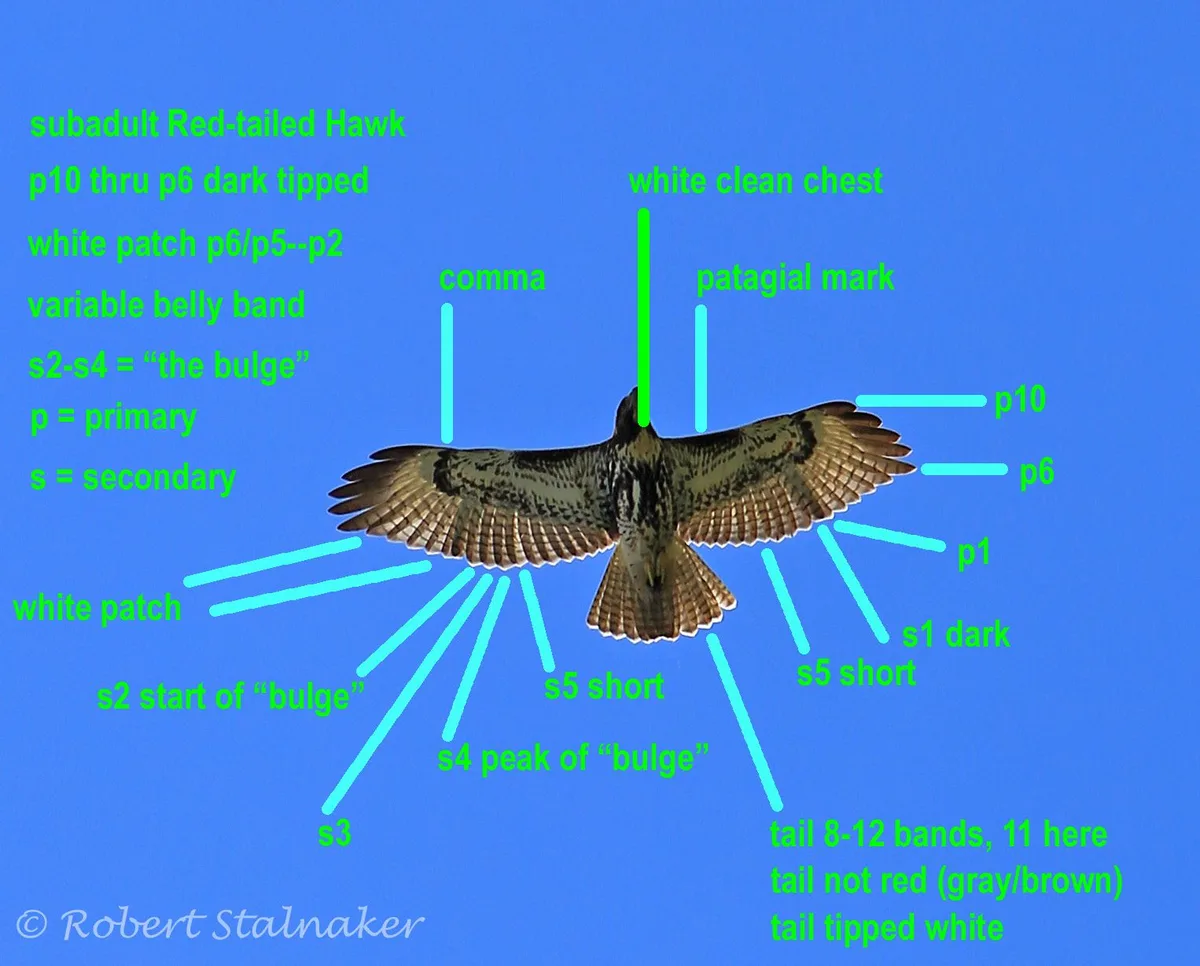
Image source: Bing (Web (fair-use with source credit))
Let's unpack each step.
Step 1: Habitat
Colorado is divided into life zones based on elevation. The shortgrass prairie below 6,000 feet hosts a different cast than the subalpine forest at 9,000 feet. A Lark Bunting won't show up in a pine forest, and a Brown-capped Rosy-Finch won't visit your Denver backyard.
Start with your location and you've already narrowed the list dramatically.
Step 2: Size
This is the easiest filter. Hold the bird mentally against a common reference. Sparrow-sized?
Robin-sized? Crow-sized? A Hairy Woodpecker is roughly robin-sized, while the Downy Woodpecker is sparrow-sized.
That single measurement separates them before you ever look at bill length.
Step 3: Behavior
Watch for a few seconds before you lift binoculars. A bird that hops on the ground is probably a thrush or towhee. A bird that creeps up tree trunks is a nuthatch or creeper.
A bird that hovers over water might be an osprey, which is a visual behavior signature. Behavior is often more reliable than color, especially in bad light.
Step 4: Marker Feathers
Now you're looking at field marks. That includes wing bars, eye stripes, crown color, throat patches, and undertail coverts. The Mountain Chickadee has a white eyebrow stripe; the Black-capped Chickadee doesn't.
That tiny detail is the whole difference.
Backyard Starters: 8 Common Birds You'll See in Denver and Along the Front Range
Before you chase rarities, learn your backyard birds. These eight show up consistently across Denver, Boulder, and the rest of the Front Range urban corridor. Master their visual cues and you'll have a solid baseline for every new bird you meet.
| Bird | Visual Clues | Where to Watch |
|---|---|---|
| Black-billed Magpie | Long tail, black and white body, blue-green sheen on wings | Open parks, neighborhoods, golf courses |
| House Finch | Red head and chest (males), brown streaked body, thick bill | Feeders, city trees, farmlands |
| Black-capped Chickadee | Black cap and bib, white cheeks, tiny body, gray back | Forest edges, backyard feeders |
| White-breasted Nuthatch | White face and belly, black cap, short tail, creeps down trunks | Oak woodlands, feeders |
| Northern Flicker | Brown body, black crescents, white rump, yellow or red wing linings | Lawns, open woods, dead trees |
| American Robin | Gray back, warm orange breast, blackish head | Lawns, berry trees, open ground |
| Spotted Towhee | Black upperparts, white spots, rusty sides, red eye | Dense shrubs, underbrush |
| Mourning Dove | Slim body, small head, long pointed tail, soft beige | Telephone wires, patios, open ground |
The black-billed magpie deserves a special mention. It's one of Colorado's most conspicuous birds, and its long tail and bold pattern make it easy to spot. The magpie population thrives along the Front Range, so you'll see them daily once you start looking.
For a broader look at animals that share these habitats, our guide to fascinating animals starting with F covers some of the same ground. It's a nice way to understand the whole ecosystem.
The Iconic Ones: Lark Bunting, White-tailed Ptarmigan, and Gunnison Sage-Grouse
Every state has its classic birds, but Colorado's three standouts are truly special. Each one is tied to a specific habitat and a specific visual story. Learn these and you'll impress any birder you meet.
Lark Bunting
The state bird of Colorado is a study in contrasts. In spring, the male turns mostly black with a large white wing patch. That wing patch flashes in flight like a signal beacon.
Females and winter birds look like oversized streaky sparrows. You'll find them on the eastern plains in mixed flocks during migration, often bouncing along fences and roadsides.
White-tailed Ptarmigan
This bird is a master of camouflage. In summer, it's mottled brown to blend with rocky tundra. In winter, it turns pure white.
The only constant is the white tail, which gives the ptarmigan its name. You'll need to hike above timberline, often around 11,000 feet or higher, just to catch a glimpse. It's a truly alpine species that few other states can offer.
Gunnison Sage-Grouse
This is the rarest of the three. The Gunnison Sage-Grouse exists only in the Gunnison Basin and a few small pockets of southwestern Colorado. Males gather on leks in early spring to display.
They puff out white chest sacs and fan their pointed tail feathers to create a dramatic, almost alien silhouette. It's a visual spectacle worth planning a trip around. Colorado Parks and Wildlife monitors the remaining populations closely.
Side-by-Side Comparisons: 6 Pairs That Fool Almost Everyone
Even experienced birders get stuck on these pairs. The birds look similar at first glance, but a few visual details separate them. Here are the six most common Colorado lookalikes and the exact markers to check.
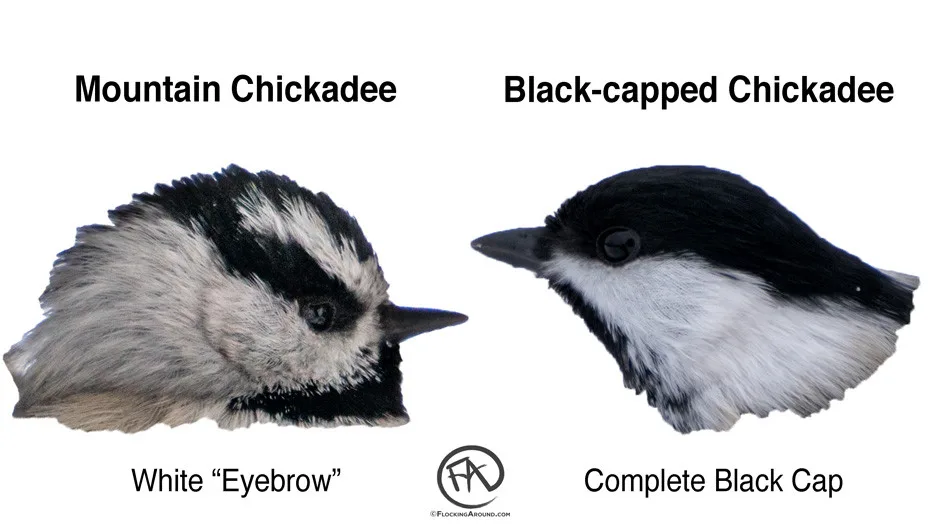
Image source: Bing (Web (fair-use with source credit))
| Pair | The Visual Breaking Point |
|---|---|
| Downy vs. Hairy Woodpecker | Downy is sparrow-sized with a short bill; Hairy is robin-sized with a long bill. |
| Black-capped vs. Mountain Chickadee | Mountain has a white eyebrow stripe; Black-capped has a clean white cheek. |
| Red-tailed vs. Swainson's Hawk | Red-tail has a dark belly band and rufous tail; Swainson's has a white belly and dark flight feathers. |
| American Crow vs. Common Raven | Raven is bigger, wedge-shaped tail, thicker bill, and croaks; Crow has a fan-shaped tail and caws. |
| Cassin's vs. House Finch | Cassin's has a peaked head, finer streaks, and a less rounded bill. |
| Wilson's vs. Yellow-rumped Warbler | Yellow-rump has yellow patches on the rump, sides, and crown; Wilson's is mostly yellow without rump patches. |
Let's zoom in on the chickadee pair since it's the one that stumps the most people. The image above shows it clearly. Mountain Chickadees stick to higher elevations and conifer forests.
They have a bold white stripe over the eye, which gives their face a slightly angry look. Black-capped Chickadees prefer lower, mixed woods and backyards. Their faces are crisp black and white, with no eyebrow stripe.
One glance at the head and you'll know which one you're seeing.
For our money, the woodpecker pair is the second hardest. Size is the quickest tell. If it's clinging to a suet feeder and looks small, it's a Downy.
If it's heftier and the bill looks almost as long as its head, you've got a Hairy.
And if you're scanning the sky for raptors, remember that golden eagles and other large birds of prey have their own set of markers. Wing shape, tail length, and flight style all matter. The same logic applies to every bird in this state.
Look at the whole bird, not just its color.
How to Use Merlin and eBird to Identify and Verify Colorado Birds
Merlin is the free bird ID app from the Cornell Lab of Ornithology. You can take a photo, answer three simple questions, or record a bird's song. It then suggests the most likely species based on location, date, and habitat.
Both Merlin and eBird are built by the Cornell Lab of Ornithology, a leading authority on bird science.
The photo ID feature handles Colorado's common birds well. It returns a short list of matches with photos, range maps, and audio. Treat those suggestions as a starting point, not the final word.
The app can stumble on juveniles or winter plumage.
eBird is the larger database that feeds Merlin. It tracks millions of checklists submitted by birders worldwide. Before a trip, check eBird for recent rare bird alerts or hotspot checklists in your county.
You'll see exactly what's been reported in the last week.
The best workflow is simple. Use Merlin in the field to narrow down an ID. Use eBird to verify what should be present, then submit your own checklist.
Your data helps researchers track population trends across Colorado.
Elevation Matters: Visual Changes from Shortgrass Prairie to Alpine Tundra
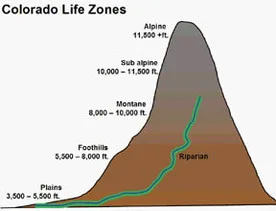
Image source: Bing (Web (fair-use with source credit))
Colorado's geography is a stack of five life zones. Dry prairie sits at 4,000 feet. Foothills, montane forest, and subalpine forest climb from there.
Above the treeline, alpine tundra takes over.
Each zone blocks certain species and welcomes others. The Black-capped Chickadee stays in lower mixed woodlands. The Mountain Chickadee prefers conifer forest at 7,000 feet and higher.
Habitat alone often tells you which bird you're seeing.
The most dramatic shifts happen above 12,000 feet. Brown-capped Rosy-Finches breed only on the tundra. White-tailed Ptarmigan match their feathers to the rocky ground, turning white in winter and mottled brown in summer.
These are Colorado's alpine specialists.
Top Colorado Birding Hotspots and What You'll See Visually
Barr Lake State Park is the easiest place to see bald eagles near Denver. Nesting platforms keep them in view from the boardwalk. The lake also hosts osprey, great blue herons, and wintering waterfowl.
Pawnee National Grassland offers a true prairie experience. Mountain plovers, lark buntings, and longspurs hide among the shortgrass. The flat landscape means you can spot raptors perched on fence posts from a mile away.
Rocky Mountain National Park delivers the alpine scene. Look for American Dippers bobbing along mountain streams. This bird is one of the most entertaining animals that start with d we've ever watched.
Clark's Nutcrackers and white-tailed ptarmigan round out the cast.
Chatfield State Park is perfect for a quick birding session. White pelicans float on the water, and the black-billed magpie patrols the lawns. In the San Luis Valley, sandhill cranes stage by the thousands each spring and fall, filling the sky with their rolling calls.
Common Visual ID Mistakes (and How to Correct Them)
The biggest mistake? Relying on color alone. Birds change with age, season, and sex.
A male house finch is red, but females are brown and streaky. Young birds often look nothing like their parents.
Ignoring habitat is the second trap. A streaky sparrow on the prairie is usually a vesper sparrow. The same-looking bird in a wet marsh could be a Lincoln's sparrow.
Location narrows the list fast.
Seasonal plumage matters just as much. A male lark bunting is black with white wing patches in spring. By late summer, it's brown and sparrow-like.
Trust the calendar.
Here's a quick checklist:
- Check the bill. Shape tells you more than color.
- Watch the tail. White flashes and notches separate lookalikes.
- Study the eye. Eye rings and eyelines are powerful clues.
- Use the date. If a bird doesn't match the season, look again.
Photographing Birds in Colorado: Simple Tips for Better Field Shots
You don't need a massive telephoto lens for usable ID shots. A 300mm lens on a crop-sensor body works perfectly well. Light matters more.
Shoot early or late to avoid harsh midday contrast.
Use aperture priority and a fast shutter speed. At least 1/1000 second keeps motion sharp. Burst mode catches wing position and eye contact.
If your camera has eye tracking, use it.
Pay attention to the background. A clean backdrop makes the bird's colors easier to read. Patience matters too.
Wait for the bird to move into an open perch, then shoot. The best ID photo captures wing bars, tail shape, and bill profile, the same markers the field guide shows.
A Seasonal Visual Calendar: Breeding Plumage, Migration, and Winter Visitors
Colorado birds don't look the same all year. Visual cues shift with the seasons. Start by adjusting your expectations.
| Season | What Changes | Birds to Watch |
|---|---|---|
| Spring (April–May) | Bright breeding plumage arrives with migrants | Western Tanagers, Broad-tailed Hummingbirds, Sandhill Cranes |
| Summer (June–July) | Nesting colors peak, young birds appear | Lark Buntings, Mountain Bluebirds, American Dippers |
| Fall (August–October) | Duller plumage, huge shorebird and raptor movements | Warblers, Swainson's Hawks, Sandhill Cranes again |
| Winter (November–March) | High-elevation birds descend, northern finches appear | Rosy-Finches, Evening Grosbeaks, Bald Eagles |
In spring, look for the male Western Tanager's flaming red head against yellow body. By fall, the same bird looks washed out. If you see a tanager in September, it won't match your spring field guide photo.
Winter finches can irrupt into Colorado from the north. Evening Grosbeaks and Pine Grosbeaks may show up at feeders when their northern food supply fails. That's why the date matters as much as the field marks.
Frequently Asked Questions
What is the state bird of Colorado?
The Lark Bunting is the state bird. Males are mostly black with large white wing patches in spring. Outside breeding season, both sexes look like streaky brown sparrows.
You'll find them on the eastern plains.
When is the best time to see sandhill cranes in Colorado?
The San Luis Valley hosts sandhill cranes by the thousands during migration. The peak counts happen in late February through March and again in late September through October. Look for them at Monte Vista and Alamosa refuges.
How do I attract hummingbirds in Colorado?
Broad-tailed and Rufous Hummingbirds dominate Colorado feeders. Use a 4:1 water-to-sugar mix with no red dye. Put feeders out by mid-April and leave them until October.
They also love native flowers like penstemon and columbine.
What is the easiest way to identify a bird from a photo?
Use the Merlin Bird ID app's photo feature. It compares your image against thousands of records from eBird. Focus the shot on the bird's head and wing bars for the best results.
Always double-check with habitat and date.
How many species of birds live in Colorado?
Colorado has roughly 500 recorded species, with about 300 breeding regularly. The rest are migrants or rare visitors. That makes the state one of the most diverse birding destinations in the country.