Cat Breeds Starting with S: A Complete Guide
If you've been searching for cat breeds that start with s, you've probably noticed something strange. The names all blur together. Siamese, Somali, Siberian, Savannah.
They sound similar, but their care needs, health risks, and personalities are completely different. You could pick "Sphynx" thinking it's just a quirky hairless cat, then discover it needs weekly baths and can't handle cold rooms. Or you might fall for the Savannah's wild looks without realizing it's illegal to own in some places.
That confusion is exactly why this guide exists. We've broken down every recognized S-breed into a simple comparison. As of 2026, there are roughly a dozen breeds starting with S recognized by major registries like TICA and the CFA, each with its own quirks, costs, and care demands.
By the end, you'll know which one fits your home, your budget, and your experience level. Let's sort them out.
Quick Answer
The main cat breeds that start with s are Siamese, Scottish Fold, Siberian, Selkirk Rex, Savannah, Somali, Sphynx, Singapura, Snowshoe, Sokoke, Serengeti, Seychellois, and Skookum.
Each breed differs wildly in coat, energy, and health needs. Siamese cats are vocal and social. Scottish Folds are quiet and laid-back.
Sphynx cats need regular bathing despite having no fur. Savannahs are hybrid cats with strict ownership laws in many regions.
Pick based on your lifestyle, not just looks.
The Big Breakdown: Every S-Breed Covered One by One
Siamese and Snowshoe: The Pointed Talkers
The Siamese is one of the most recognizable cats on the planet. Those blue almond-shaped eyes, cream body, and dark points on the ears, face, paws, and tail make it instantly identifiable. But the personality is the real headline.
Siamese cats are famously vocal. They'll chat with you all day, follow you from room to room, and demand attention like a toddler.
They're not a good fit if you want a quiet, independent cat. They bond intensely to their person and can get depressed if left alone too often. They also live a long time, often 12 to 15 years, sometimes longer with good care.
The Snowshoe is essentially a Siamese variation with white mittens and boots. It came from crossing Siamese with American Shorthairs in the 1960s. Snowshoes are calmer and a bit less chatty than pure Siamese, but they still love human interaction.
They're rare, so finding a breeder can take patience.
Scottish Fold and Selkirk Rex: The Quieter, Cuddlier Options
Scottish Folds are the cats with those adorable folded ears. That fold comes from a natural genetic mutation affecting cartilage. The look is charming, but it comes with a serious catch.
The same gene can cause joint problems, a condition called osteochondrodysplasia, which may lead to arthritis and pain.
Responsible breeders only breed folds with straight-eared cats, never two folds together. Even then, health screening is essential. If you're considering a Scottish Fold, ask the breeder for proof of hip and joint health testing.
Temperament-wise, they're calm, sweet, and moderately active. They're not big climbers or jumpers, making them great apartment cats. They adapt well to families and tolerate gentle children.
The Selkirk Rex is the curly-coated cousin. Unlike the Scottish Fold, its mutation affects the hair, giving it soft, plush, loose curls. They're often described as "sheep in a cat suit." They shed more than you'd expect from a curly coat, and they need gentle brushing to prevent matting.
Personality-wise, they're patient, affectionate, and a little on the lazy side.
Sphynx: The Hairless Attention-Getter
The Sphynx looks like a tiny wrinkled alien, and people either love it or don't get it. Here's what most people don't realize: hairless doesn't mean low-maintenance. Without fur to absorb body oils, the Sphynx's skin gets greasy quickly.
They need regular wiping or bathing, usually weekly, to keep their skin healthy and avoid staining your furniture.
They're also temperature-sensitive. They get cold easily, so they'll hunt down warm spots like sunny windowsills, radiators, or your lap. They're affectionate, playful, and famously people-oriented.
Many owners describe them as dogs in a cat's body. They'll greet you at the door and follow you everywhere.
One upside is that they typically don't trigger allergies as much as fluffy breeds. But "less" doesn't mean "none." No cat is truly hypoallergenic.
Siberian and Somali: Long Coats, Different Warm-Ups
The Siberian is a large, muscular cat from the cold forests of Russia. Its triple coat is dense and water-resistant, designed for harsh winters. Owners in cold climates love them.
They're also one of the breeds that produce lower levels of Fel d 1, the protein responsible for most cat allergies. That's made them popular among allergy sufferers.
Still, "lower" is not "zero." If you have allergies, spend time with a Siberian before committing. Note that they shed heavily in spring and fall. Regular brushing, ideally a few times a week, is non-negotiable.
The Somali looks like a long-haired Abyssinian. It has the same ticked tabby coat, where each hair has alternating light and dark bands, but with extra fluff. Somalis are energetic, curious, and playful well into adulthood.
They love heights, so cat trees and shelves are a must. They're also quite vocal, though not as loud as Siamese.
Savannah and Serengeti: Exotic Looks, Exotic Needs
The Savannah is a hybrid between a domestic cat and an African serval. First-generation crosses, called F1 or F2, are large, striking, and sometimes weigh up to 25 pounds. They're also illegal or restricted in several US states and countries due to concerns about hybrid ownership.
Always check your local laws before even looking at kittens.
Savannahs are highly intelligent and active. They need lots of space, enrichment, and experienced handling. They can be taught to walk on a leash and play fetch.
But they're not lap cats. They're also known for their strong prey drive, which can be risky around small pets like hamsters or birds. If you want a calm, snuggly cat, this isn't it.
The Serengeti looks similar to a Savannah but has no wild blood. It was bred from Bengal and Oriental Shorthair lines to mimic the look of a serval without the legal and behavioral challenges. They're athletic, confident, and loyal.
They're still energetic, but far more manageable for a dedicated owner.
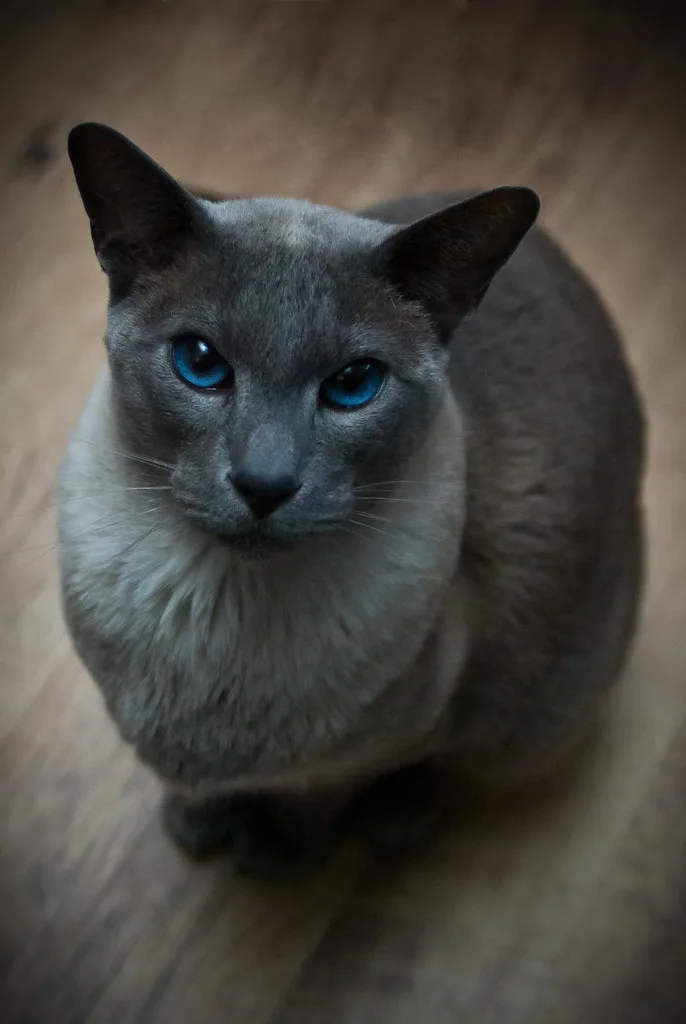
Image source: Bing (Web (fair-use with source credit))
Singapura, Sokoke, and Seychellois: The Rare and Unusual
The Singapura is one of the smallest cat breeds in the world. Adult females often weigh just four to six pounds. Despite their tiny size, they're active, curious, and playful.
They have big eyes and huge ears for such a small face. They're also quite social and don't love being left alone for long stretches.
The Sokoke comes from a coastal forest in Kenya. It's a naturally occurring breed with a striking marbled tabby coat that looks like tree bark. They're rare outside Scandinavia and parts of Europe.
They're intelligent, athletic, and bond closely with their families. If you find one, consider yourself lucky.
The Seychellois is a white-coated cat with colorpoint patches, developed in the UK from Siamese and Oriental lines. It's extremely rare, even by cat breed standards. They share the Siamese temperament: chatty, affectionate, and social.
You'll likely need to be on a breeder's waiting list for a year or more.
Side-by-Side Comparison: Coat, Size, Health, and Personality
Here's the cheat sheet. Use this table to compare all major S-breeds across the traits that actually matter in daily life.
| Breed | Coat Type | Average Size | Energy Level | Vocalization | Grooming Needs |
|---|---|---|---|---|---|
| Siamese | Short, fine | 8–12 lbs | High | Very high | Minimal |
| Snowshoe | Short | 8–12 lbs | Medium | Medium | Minimal |
| Scottish Fold | Short or long | 6–13 lbs | Low–Medium | Low | Moderate |
| Selkirk Rex | Curly, plush | 7–11 lbs | Low–Medium | Low | High |
| Sphynx | Hairless | 6–12 lbs | High | Medium | Very high (bathing) |
| Siberian | Long, dense | 10–20 lbs | Medium | Medium | High |
| Somali | Long, fine | 6–10 lbs | High | Medium | Moderate |
| Savannah | Short, dense | 12–25 lbs | Very high | Medium | Minimal |
| Serengeti | Short | 8–15 lbs | High | Medium | Minimal |
| Singapura | Short, fine | 4–8 lbs | High | Medium | Minimal |
| Sokoke | Short, ticked | 6–10 lbs | High | Low | Minimal |
| Seychellois | Short | 6–10 lbs | High | High | Minimal |
Best for Your Lifestyle: Which S-Breed Should You Pick?
Best for First-Time Cat Owners
The Scottish Fold is forgiving and calm, making it a solid entry point. It doesn't need heavy exercise or constant stimulation. The Selkirk Rex is also patient and easygoing, though the coat care takes some getting used to.
If you want a cat that won't test your patience, either works well.
Best for Families with Kids
The Siamese and Somali are playful, social, and tolerant of noise and activity. The Singapura, despite its tiny size, is sturdy enough for gentle kids but might feel fragile to younger children. For school-age kids, the Siberian is a gentle giant that enjoys interactive play.
Best for Experienced Owners Who Want a Challenge
The Savannah demands space, training, and an understanding of wild-hybrid behavior. It's not a beginner cat. The Sphynx also requires dedication, mostly around bathing, skin care, and temperature control.
If you like a project, either one keeps you busy.
Best for Apartment Living
The Scottish Fold wins for quiet, low-energy indoor living. The Singapura does fine in small spaces as long as it gets daily play. The Sokoke is also adaptable, but it needs vertical climbing spots.
Avoid the Savannah in an apartment unless you have a massive layout and a catio.
Best for People Who Want a Constant Companion
The Siamese is your shadow. It wants to be involved in everything you do, from cooking to sleeping to working. The Sphynx is equally clingy, just in a warmer package.
If you work from home or live alone, these breeds provide endless company and conversation.

Image source: Bing (Web (fair-use with source credit))
The Real Costs: Price, Grooming, and Long-Term Care
Adopting an S-breed is rarely cheap. Rescue fees run from 50 to 250 pounds, which is the budget-friendly route. Going through a breeder is a different story entirely.
| Breed | Typical Price Range | Grooming Frequency | Notable Ongoing Costs |
|---|---|---|---|
| Siamese | 400–1,200 | Weekly brush | None major |
| Scottish Fold | 800–1,800 | Weekly brush | Joint supplements, vet imaging |
| Sphynx | 1,200–3,000 | Weekly bath | Hypoallergenic wipes, skin care |
| Siberian | 900–1,800 | 2–3 brushes weekly | Professional grooming per season |
| Savannah (F1–F4) | 2,000–5,000+ | Minimal | Catio, specialized diet, insurance |
| Singapura | 800–1,500 | Weekly brush | None major |
Recurring costs add up fast. Premium cat food runs 30 to 70 pounds per month. Litter is another 15 to 30 pounds.
Routine vet care, including vaccinations and annual checkups, costs 100 to 200 pounds per year. Health insurance for a purebred, especially a Scottish Fold or Sphynx, can cost 20 to 50 pounds monthly depending on coverage.
Don't forget the less obvious expenses. Sphynx owners burn through pet-safe wet wipes and hypoallergenic shampoo. Savannah owners spend heavily on secure enclosures and puzzle toys.
Siberians need robust grooming supplies and sometimes a professional deshedding session twice a year.
Health Watch: Breed-Specific Risks You Can't Ignore
The Scottish Fold's folded ears come from a cartilage gene that affects more than just ears. It causes osteochondrodysplasia, a progressive joint disease. Even with the ear fold, many Folds develop arthritis, lameness, and severe pain as they age.
Some require lifelong anti-inflammatory medication. Others need surgery.
Breeders should never pair two folded-eared cats together. Responsible programs outcross with straight-eared cats and screen the resulting kittens' joints. If a breeder can't show you health clearances, walk away.

Image source: Web (Bing) / ameblo.jp (Web image (fair-use with source credit))
The Sphynx has its own health burden. Without fur, the skin produces excess oil. Clogged pores, acne, and yeast infections are common without regular bathing.
They also suffer from hypertrophic cardiomyopathy, a heart disease that affects many purebred cats. Ask for echocardiogram results from the breeder.
Savannahs carry risks from both sides of their hybrid lineage. First-generation males are often sterile. Later generations have unpredictable temperaments.
And because they're so athletic, they're prone to injuries from high jumps and escapes. They're also illegal in some cities and countries, so verify local laws before purchase.
For reference, the Cornell Feline Health Center maintains excellent resources on breed-specific hereditary conditions. Check their feline health guidance before you commit.
The "Hypoallergenic" Myth: The Truth About Siberians and Allergies
Here's the honest answer. No cat breed is fully hypoallergenic. The protein Fel d 1, found in saliva and skin oils, triggers cat allergies.
Siberian cats produce measurably lower levels of this protein on average, but individual cats vary widely.
One Siberian might bother your allergies. Another might not. It's a roll of the dice, though better odds than most breeds.
If you're allergic, spend 30 to 60 minutes with an adult Siberian before buying. Some breeders will even send you a fur or saliva sample to test at home.
The Sphynx also gets hyped as allergy-friendly because it's hairless. That's misleading. The allergen lives in skin flakes and saliva, not just fur.
You'll still react if you're sensitive. Regular baths can reduce dander temporarily, but they won't make the cat allergen-free.
Our advice is simple. Test your reaction before you commit. Your allergies and the individual cat's protein levels determine the outcome, not the breed's reputation.
Common Mistakes People Make With S-Breeds
People often shop by looks alone. That's the biggest error, and it's easy to see why. The breeds share a starting letter, so they get lumped together in alphabetical animal lists that say nothing about temperament or needs.
Here are the mistakes we see most often:
- Buying a Savannah for a flat. These cats need space, enrichment, and a secure outdoor enclosure. A small apartment creates frustration for both of you.
- Skipping health testing for Scottish Folds. Joint disease is serious. Without screening, you're gambling on a painful life for the cat and a giant vet bill for you.
- Assuming a Sphynx is maintenance-free. The hairless look tricked you. They need weekly baths and regular ear cleaning. Skipping this leads to skin infections.
- Choosing a Siamese if you work long hours. Purebred Siamese cats are intensely people-oriented. They get loud and destructive when lonely. A pair of cats or a more independent breed works better.
- Believing the hypoallergenic myth. This one hurts. People buy Siberians or Sphynx and still have allergic reactions. Test first, then commit.
Also, don't ignore the S-starting mammals if this whole alphabet thing has you curious. These same mistakes apply to lots of species across the animal world.
Adopting vs. Buying: Where to Find an S-Breed Responsibly
Breed-specific rescues exist for Siamese, Scottish Fold, Siberian, and Sphynx cats. They're the most ethical route if you're open to an adult cat. Rescue fees are lower, and you get a clearer picture of the cat's personality upfront.
If you want a kitten from a breeder, do your homework. A responsible breeder lets you visit, shows you the kitten's parents, and shares health records without hesitation. They'll also ask you questions.
Good breeders care where their kittens go.
Red flags include guaranteed "hypoallergenic" cats, flexible prices, and kittens available immediately. Those are signs of a backyard operation. Breeders who health-test and screen earn their price tag.
One more note. Rare breeds like the Seychellois often require international waitlists. In that case, you might wait a year or more.
It's worth the patience to get a healthy, ethically bred cat.
The Verdict: How to Choose Your S-Breed in 3 Simple Steps
Start with your living space. Small apartment? Skip the Savannah, favor the Scottish Fold or Singapura.
House with a yard? The Siberian or Somali will thrive.
Next, assess your daily routine. Long work hours point toward an independent breed like the Selkirk Rex. Work from home?
The Siamese or Sphynx will be your constant companion.
Finally, be honest about your experience and budget. First-time owners should stick with Siamese, Scottish Fold, or Siberian. Experienced owners with cash to spare can handle the Sphynx's maintenance or the Savannah's complexity.
If you've enjoyed these alphabet-style guides, our roundup of other S-named animals and S-named mammals might give you even more ideas for your next research rabbit hole.
Frequently Asked Questions
How many cat breeds start with S?
Around 13 breeds are recognized by major cat registries as of 2026. These include the Siamese, Scottish Fold, Siberian, Selkirk Rex, Savannah, Somali, Sphynx, Singapura, Snowshoe, Sokoke, Serengeti, Seychellois, and Skookum. Some registries list a few variants or experimental breeds beyond these.
Which S-breed is best for a first-time owner?
The Scottish Fold is calm, quiet, and forgiving. The Selkirk Rex is also easygoing, though its curly coat needs more care. Both adapt well to apartments and busy households.
The Siamese works for first-timers too, but its loud voice and strong need for attention can overwhelm some new owners.
Are Siberian cats safe for allergy sufferers?
Not entirely, but they are a better bet than most breeds. Siberians often produce lower levels of the Fel d 1 protein that triggers allergies. Levels vary from cat to cat, so spending time with an adult Siberian before committing is essential.
Some owners with mild allergies do well, while others still react.
Is owning a Savannah cat legal everywhere?
No. Several states, countries, and municipalities restrict or ban Savannahs, especially early-generation crosses. The rules vary by location and generation.
F1 and F2 cats are most often restricted. Always check local legislation before contacting a breeder. A reputable breeder will also ask about your area's rules.
Do Sphynx cats need special care?
Yes, more than most breeds. Their skin produces oil that builds up quickly, so they need weekly bathing and regular ear cleaning. They also get cold easily and need warm sleeping spots.
Daily skin checks for irritation are wise. Their lack of fur doesn't mean low maintenance.
The Verdict: How to Choose Your S-Breed in 3 Simple Steps
Write down your three must-haves. Calm and quiet? The Scottish Fold fits.
Loud and needy? The Siamese nails it. Low allergen?
The Siberian is your best bet.
Shortlist the coat types you can handle. Hairless needs bathing. Curly needs brushing.
Long needs daily upkeep. Short coats are easiest.
Check your budget against health costs. Folds and Sphynx cats carry higher vet risks. Factor in insurance before you commit to either.
Frequently Asked Questions
Do Scottish Folds suffer from health issues?
Yes, the fold gene affects cartilage throughout the body. Many Folds develop arthritis early. Some need joint medication for life.
Responsible breeders test and avoid breeding two folded-ear cats together.
Is the Singapura good for elderly owners?
Yes, they're gentle, quiet, and bond closely. Their tiny size makes them easy to handle. They don't demand constant activity, but they love lap time and gentle play.
Can you keep a Savannah cat as an indoor-only pet?
Yes, with heavy enrichment. They need tall cat trees, puzzle feeders, and daily interactive play. A securely enclosed outdoor catio helps burn off their high energy.
Without stimulation, they become destructive.
What is the rarest cat breed starting with S?
The Seychellois is among the rarest. It originated in the UK and remains confined to a handful of dedicated breeders. The Sokoke is also uncommon outside Europe and East Africa.
Expect long waits and travel for either breed.