Cat Breeds That Start with U: Rare & Unique Felines
If you're searching for cat breeds that start with u, you've probably noticed something odd: there are only two recognized ones. Not dozens like with "A" or "S." Just two. And both of them are rare enough that most cat lovers have never seen one in person.
That rarity is exactly what makes this comparison interesting. The Ural Rex and the Ukrainian Levkoy aren't just alphabet trivia. They're genuinely fascinating breeds with distinct personalities, unique coat structures, and very different care requirements.
As of 2026, neither breed has widespread recognition in American registries like CFA or TICA, which means finding one takes patience, research, and often an international flight.
Let's break down what each breed actually offers, how they compare on the traits that matter most, and which one fits your home better.
Why "U" Cat Breeds Are So Hard to Compare
Here's the honest truth: comparing Ural Rex vs. Ukrainian Levkoy is like comparing apples to oranges. One has a curly, low-shedding coat.
The other has almost no coat at all. Beyond that, they come from different countries, different breeding programs, and different genetic foundations.
The Ural Rex originated in Russia's Ural region back in the 1940s. A naturally occurring curly-coated cat named Vasily was discovered, and breeders developed the line from there. It took decades for the breed to gain recognition.
The World Cat Federation finally accepted it in the 1990s, but many other registries still haven't caught up.
The Ukrainian Levkoy is much newer. It was developed in Kyiv in the early 2000s by crossing a Donskoy with a Scottish Fold. The goal was a hairless cat with folded ears and a slender, elegant build.
The result is striking, to say the least. But it also comes with specific health considerations tied to those folded ears.
When you're comparing these two, you're not just choosing between coat types. You're choosing between two different philosophies of cat breeding. One preserves a natural mutation.
The other is a deliberate designer creation.
Meet the Ural Rex: The Original Russian Curly
The Ural Rex looks like a cat that got caught in a gentle wave. Its coat forms soft, wavy curls all over its body, including the whiskers, which curl too. Unlike the Cornish Rex or Devon Rex, the Ural Rex has a denser, more substantial coat.
It's not fragile or sparse. It feels like plush velvet with a slight crimp.

Image source: Bing (Web (fair-use with source credit))
There are two coat lengths: shorthair and longhair. Both have the signature wave pattern, but the longhair variant shows it more dramatically, especially around the ruff and tail. The coat comes in virtually every color and pattern.
There's no breed standard restricting color, which keeps the gene pool a bit healthier.
Temperament-wise, the Ural Rex is a people cat. They bond closely with their humans and prefer to be involved in whatever you're doing. They're not clingy exactly, but they'll follow you from room to room and settle nearby.
Owners describe them as moderately active, playful well into adulthood, and notably gentle with children.
One of the breed's biggest selling points is the low-shedding coat. Because the hair is curly, it tends to trap dander and loose fur rather than spreading it around your home. That doesn't make them hypoallergenic, but many allergy sufferers report fewer symptoms.
The trade-off is that the coat needs gentle handling. Over-brushing can damage the curls and cause bald patches.
Meet the Ukrainian Levkoy: The Hairless Wonder
The Ukrainian Levkoy is impossible to ignore. It has a long, angular, wedge-shaped head, large almond-shaped eyes, and those forward-folded ears that give it an almost elf-like expression. The body is slender and muscular, with long legs and a graceful gait.

Image source: Bing (Web (fair-use with source credit))
The coat situation is more varied than you might expect. Some Levkoys are completely hairless. Others have a fine "velour" fuzz that's barely visible.
And a few have a short, straight coat called a brush coat. Within a single litter, you can get kittens with all three coat types, depending on the genes they inherit from the Donskoy side.
What's consistent across all Levkoys is the skin. It's wrinkled, especially around the head and neck, and it feels warm and soft to the touch. That skin requires regular maintenance.
You'll need to wipe them down weekly to remove oil buildup, bathe them occasionally, and monitor for sun exposure. They sunburn easily and need to stay indoors or in shaded spaces.
Personality-wise, the Levkoy is often described as dog-like. They're incredibly social, affectionate, and eager to be part of family activities. They get along well with other cats and cat-friendly dogs.
They're also notably intelligent, which means they appreciate puzzle toys and interactive play. A bored Levkoy will find ways to entertain themselves, and you might not like their choices.
Ural Rex vs. Ukrainian Levkoy: Side-by-Side Comparison
Now we get to the practical part. How do these two breeds actually stack up against each other? Let's lay it out clearly.

Image source: Bing (Web (fair-use with source credit))
| Feature | Ural Rex | Ukrainian Levkoy |
|---|---|---|
| Coat | Curly, soft, dense | Hairless, velour, or brush |
| Shedding | Low | Essentially none |
| Grooming | Weekly gentle combing | Weekly wiping, occasional baths |
| Body type | Cobby, rounded | Slender, muscular, angular |
| Temperament | Affectionate, gentle | Social, dog-like, intelligent |
| Activity level | Moderate | High |
| Good with children | Yes | Yes, with supervision |
| Good with other pets | Yes | Yes |
| Recognition | WCF recognized | WCF recognized, limited |
| Origin | Russia, 1940s | Ukraine, early 2000s |
| Lifespan | 12-16 years | 12-15 years |
The grooming difference is the biggest practical factor. A Ural Rex needs minimal coat care. A quick comb once a week to remove loose hairs, and you're done.
You should avoid frequent bathing because it strips the natural oils and can dull the curl pattern.
The Levkoy demands more. Their skin produces oil just like any cat's, but without hair to absorb it, that oil builds up on the surface. You'll notice a greasy film developing within a week or two.
Regular wiping with a damp cloth or pet-safe wipe keeps it manageable. Bathing every few weeks with a mild, cat-safe shampoo helps, but it's not a weekly necessity.
Ear care is another differentiator. The Levkoy's folded ears trap wax and dirt more easily, making routine cleaning essential. You should check their ears weekly and clean them with a vet-recommended solution.
Neglecting this can lead to infections. The Ural Rex, with its normal upright ears, needs far less attention in this area.
Temperament and Personality: Which One Fits Your Home?
Both breeds are affectionate and people-oriented. That's where the similarities end.
The Ural Rex tends to be a moderate-energy companion. They enjoy play sessions and interactive toys, but they're equally happy to curl up in your lap while you read or watch TV. They're adaptable to different living situations, including apartments.
Their gentle nature makes them a solid choice for families with older children who understand how to handle cats respectfully.
The Ukrainian Levkoy brings more intensity. These cats want to be in the middle of everything. They'll follow you around, demand attention, and involve themselves in whatever task you're undertaking.
They're not content to simply observe. This makes them a better fit for households where someone is home regularly, or where there's another pet to keep them company during the day.
If you work long hours and live alone, the Ural Rex handles solitude better than the Levkoy. A Levkoy left alone for extended periods can develop separation anxiety, leading to destructive behavior or excessive vocalization. They're not a "set it and forget it" pet.
There's also a difference in how they express affection. Ural Rex owners describe their cats as "velcro cats" that prefer to sit near you, often touching. Levkoy owners describe their cats as more actively demanding.
They'll nudge your hand for pets, follow you into every room, and loudly announce their presence. If you want an interactive, chatty companion who's always aware of your schedule, the Levkoy delivers that in spades.
Care and Grooming: Rex Coat vs. Hairless Skin
The grooming difference between these two breeds isn't a small detail. It's a lifestyle choice.
The Ural Rex has it easy. Their curly coat needs a gentle comb once a week to remove loose hairs. That's it.
You should avoid over-brushing because it can damage the delicate curls and irritate the skin. Bathing is rarely necessary, maybe once every few months with a mild cat shampoo. The coat naturally manages itself, which makes this breed surprisingly low-maintenance for something so unusual.
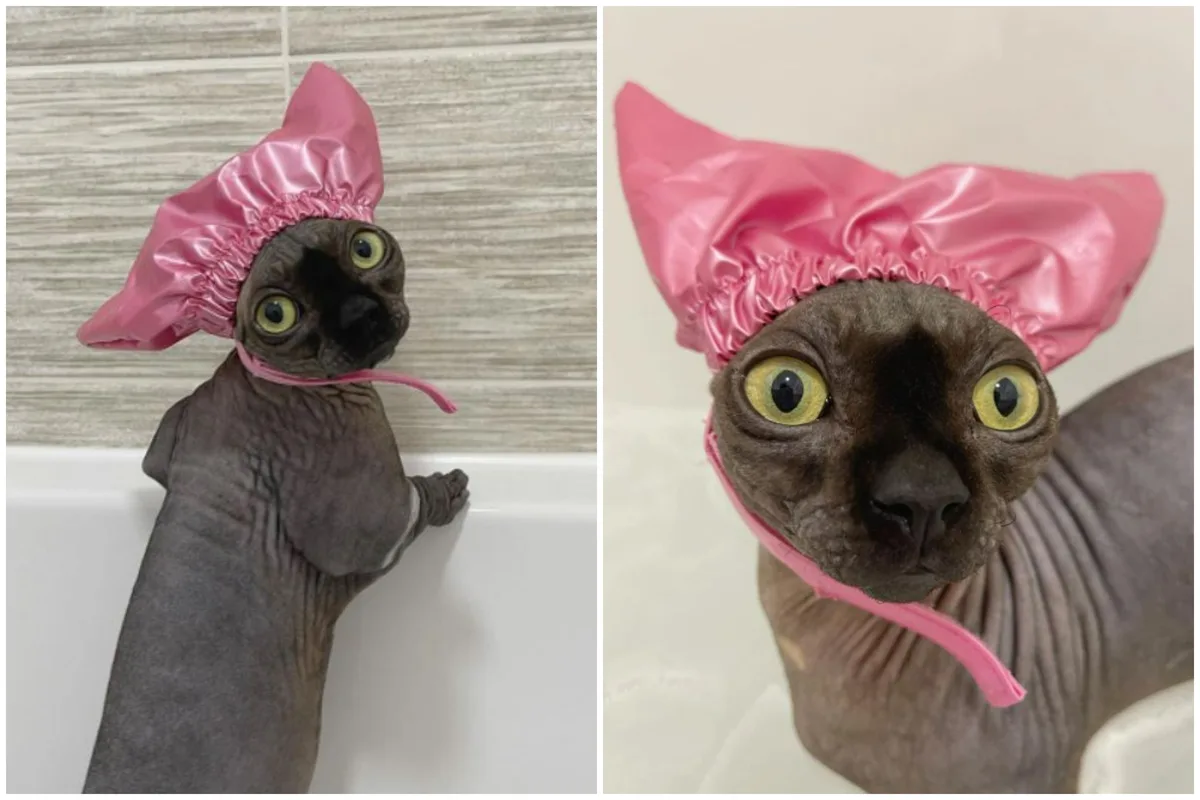
Image source: Bing (Web (fair-use with source credit))
The Ukrainian Levkoy is a different story entirely. Without hair to absorb skin oils, those oils accumulate on the surface. You'll need to wipe them down with a damp cloth or pet-safe wipe every few days.
A full bath every two to four weeks keeps their skin clean and prevents acne, which is a real issue for hairless breeds.
Ear care is non-negotiable with the Levkoy. Those folded ears trap wax, dirt, and moisture, creating a perfect environment for infections. Check their ears weekly and clean them with a vet-approved solution.
You should also watch for sun exposure. Levkoy skin burns easily, so they belong indoors with access to shaded window spots.
If you want a "set and forget" grooming routine, the Ural Rex wins clearly. If you enjoy hands-on care and don't mind the weekly maintenance, the Levkoy rewards the effort with a deeply affectionate bond.
Health and Lifespan: What to Expect
Both breeds are generally healthy, but they come with different concerns.
The Ural Rex benefits from a relatively broad gene pool. Since the breed developed from a natural mutation, there aren't many known hereditary conditions. Reputable breeders screen for hypertrophic cardiomyopathy, which affects many purebred cats, but the Ural Rex has a lower incidence than breeds like the Maine Coon.
Lifespan typically lands between 12 and 16 years.
The Ukrainian Levkoy has more caveats. The folded ears inherited from the Scottish Fold line carry risks. Folded-ear cats can develop cartilage abnormalities, and while this primarily affects ears in the Levkoy, responsible breeding practices are essential.
You should ask breeders about their screening protocols for osteochondrodysplasia, the skeletal condition associated with the fold gene.
Skin issues are the other main concern for the Levkoy. They're prone to sunburn, fungal infections, and acne if their skin isn't maintained properly. With good care, they live 12 to 15 years.
Without it, they can develop chronic skin problems that impact their quality of life.
The takeaway is straightforward. The Ural Rex is the sturdier, less complicated breed from a health perspective. The Levkoy requires a more attentive owner who stays on top of skincare and chooses a breeder who health-tests thoroughly.
Availability and Cost: The Real Hunt for a U-Breed
Finding a Ural Rex or Ukrainian Levkoy is not like finding a Maine Coon. You can't walk into a local shelter or call a nearby breeder. These cats are genuinely rare, especially outside Europe.
The Ural Rex has a small but established breeding community in Russia, Germany, and the Czech Republic. As of 2026, there are only a handful of breeders in North America. Waitlists routinely stretch 6 to 12 months.
Prices range from $800 to $2,000 for a pet-quality kitten, plus shipping if the breeder is overseas.
The Ukrainian Levkoy is even more scattered. Most breeders are in Ukraine and Russia, though a few operate in Europe. The ongoing situation in the region has made importing more complicated.
Some North American owners have worked with rescue networks that specifically transport cats from Ukraine. Prices vary widely, often $1,000 to $2,500 before transport costs.
Here's the hard truth about availability. If you find a U-breed kitten available immediately from a seller without a waitlist, that's a red flag. Reputable breeders don't have surplus kittens.
They have waiting lists and screening processes. Scammers know these breeds are rare, so they advertise fake kittens and take deposits. Always verify breeder credentials, ask for health-testing documentation, and request video calls to see the cattery and the parents.
Which "U" Breed Is Right for You? A Use-Case Guide
Let's be direct. If you want the lower-maintenance cat, choose the Ural Rex. If you want a striking, interactive companion and you're ready to commit to skincare, choose the Ukrainian Levkoy.
Here's a simple breakdown based on your situation:
- First-time cat owners: Go with the Ural Rex. Its care routine is forgiving, and its temperament is adaptable.
- Experienced owners who want something unique: The Levkoy delivers an unmatched appearance and personality, but only if you're prepared for the upkeep.
- People with allergies: Both breeds shed less, but neither is truly hypoallergenic. The protein in cat saliva triggers allergies, not just fur. Spend time with each breed before committing.
- Families with young children: The Ural Rex is the safer bet. It's gentle and tolerant. The Levkoy is more sensitive to rough handling.
- Multi-pet households: Both breeds socialize well, but the Levkoy especially thrives with feline companionship.
- Apartment living: Both adapt well, though the Levkoy needs more enrichment to stay entertained indoors.
If you travel frequently, the Ural Rex handles alone time better. If you work from home or have someone around most days, the Levkoy will reward the constant attention.
Common Mistakes to Avoid When Choosing a U-Breed
The biggest mistake is choosing based on appearance alone. Both breeds look striking, but their care demands differ enormously. An owner unprepared for Levkoy skincare will end up frustrated and the cat will suffer.
Over-bathing the Ural Rex is another common error. Bathing strips the natural oils that keep their coat healthy and curly. This leads to dry, brittle fur and skin irritation.
Stick to sparing baths and regular gentle combing instead.
Neglecting Levkoy ear care is dangerous. Those folded ears are infection magnets. If you skip weekly cleaning, you're inviting ear mites, yeast overgrowth, and painful infections that require veterinary treatment.
Skipping breeder verification is the costliest mistake. Given how rare these breeds are, fake listings abound. Always request health-testing records, parent photos, and veterinary references.
Never send a deposit without speaking directly to the breeder, ideally by video call.
Finally, don't assume either breed will tolerate being left alone for long stretches. The Levkoy especially needs interaction. If your lifestyle keeps you away from home most days, reconsider whether either breed fits your reality.
Final Verdict: My Honest Recommendation
If I had to give you a straight answer, here it is. For most owners, the Ural Rex is the better choice. It's easier to care for, healthier on average, and more forgiving if you're new to rare breeds.
The curly coat is stunning without demanding much effort.
The Ukrainian Levkoy is for enthusiasts. Anyone willing to commit to weekly skincare, consistent ear cleaning, and an animal that demands constant attention. If that sounds like you, you'll be rewarded with one of the most affectionate, intelligent cats you'll ever meet.
But if you want a lower-maintenance companion, this is not the breed.
Looking for more alphabet adventures? You'll find plenty of unusual animals in our roundup of creatures that start with L, or browse our guide to animals starting with S for more fascinating species.
Either way, the real work starts before you bring the cat home. Finding a reputable breeder, verifying health tests, and understanding the long-term cost of ownership. Take your time.
These aren't cats you fall into by accident. They're cats you plan years around.
Frequently Asked Questions
Are Ural Rex cats hypoallergenic?
No breed is truly hypoallergenic. The Ural Rex sheds less and produces less dander, which some allergy sufferers tolerate well. But the allergen is in cat saliva and skin oils, not just fur.
Spend time with the breed before committing if allergies are a concern.
How rare is the Ukrainian Levkoy?
Very rare. Most breeders are in Ukraine and Russia, with a handful scattered across Europe. There are extremely few in North America.
Expect a long waiting list and international transport costs if you pursue one.
Does the Ukrainian Levkoy need bathing?
Yes, but not as often as you might think. A full bath every two to four weeks keeps skin oils manageable. More importantly, wipe them down with a damp cloth every few days to prevent buildup and acne.
Are Ural Rex cats good with children?
Yes, generally. They're gentle, patient, and adaptable. They tolerate respectful handling from older kids.
Always supervise interactions between young children and any cat, especially a rare breed you've invested time and money in.
Can you find these breeds in shelters?
Almost never. Because they're so rare, most cats stay within their breeding networks. Occasionally, retired breeders or rescued cats appear through breed-specific rescue groups.
It's worth checking, but don't expect results.
Do Ukrainian Levkoys get along with other cats?
Yes. They're social and enjoy feline companionship. Having another cat helps fill the interaction gap when you're away.
Just introduce them slowly and give both cats their own space to retreat to.