Sea Animals Starting with K: From Krill to Killer Whales
Most people can name a killer whale and a king crab. Then they hit a wall. Ask someone to list sea animals that start with K and you'll get maybe three answers before the silence gets awkward.
That's not a knowledge gap. That's a framing problem.
The ocean is packed with K-named creatures, from the microscopic krill that feeds entire whale populations to deep-sea sharks that glow in the dark. As of 2026, marine biologists recognize dozens of species under the "K" umbrella, and once you know where to look, the list gets genuinely fascinating. You just have to know which animals actually count.
Quick Answer
The main sea animals that start with K are the killer whale, krill, king crab, kelp fish, keeltail needlefish, kitefin shark, and marine knifefish relatives. Killer whales are actually dolphins, not whales. Krill are tiny crustaceans, not plankton.
King crabs can span over five feet. Kelp fish mimic seaweed to hide. Kitefin sharks glow in the deep ocean.
The Big Names: Killer Whale and Krill
Killer Whale (Orcinus orca)
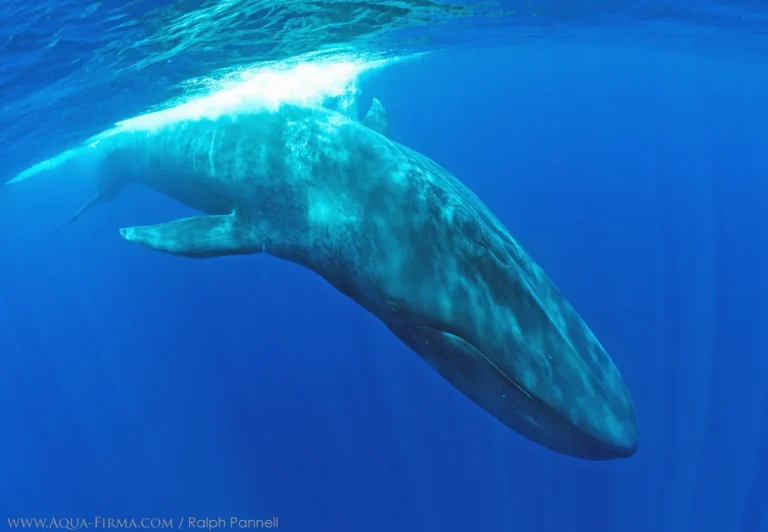
Here's the fact that surprises everyone: killer whales aren't whales at all. They're the largest species in the dolphin family, Delphinidae. The name "killer whale" comes from historical whalers who watched them hunt other whales and called them "whale killers." Somewhere along the way, that got flipped around.

Image source: Web (Bing) / georgekarbusphotography.com (Web image (fair-use with source credit))
These animals are massive. Males reach up to 32 feet and weigh around 12,000 pounds. Females are slightly smaller at 28 feet and roughly 8,000 pounds.
Their tall, curved dorsal fins are unmistakable, especially in males where the fin can hit six feet tall. That's taller than most adult humans.
What makes orcas truly remarkable is their social structure. They live in matriarchal pods where grandmothers lead and knowledge gets passed down through generations. Different ecotypes specialize in different prey.
Some hunt fish. Others hunt seals. A few hunt other whales.
These aren't just behavioral quirks; they're culturally transmitted hunting strategies that scientists have documented across decades of research.
If you're building an A-Z ocean animals list, the killer whale is almost always your anchor for K. Our related coverage of animals beginning with L and sea mammals starting with W shows how often these flagship species anchor alphabetical learning.
Krill (Euphausiacea)
Krill are the unsung heroes of the ocean. These tiny crustaceans, typically just 1 to 2 centimeters long, form the foundation of the Antarctic food web. Scientists estimate the total krill biomass in the Southern Ocean at around 500 million tons.
That makes them one of the most abundant multicellular animals on Earth.
Despite their size, krill punch way above their weight class. They're filter feeders that consume phytoplankton, and they swarm in dense aggregations that can stretch for miles. These swarms attract whales, seals, penguins, and fish.
Blue whales, the largest animals ever to live, eat up to 4 tons of krill per day during feeding season.
Krill are not plankton, even though many people lump them into that category. Plankton refers to any organism that drifts with ocean currents. Krill are actually strong swimmers that can move vertically through the water column.
They migrate from deep waters during the day to surface waters at night, a behavior that plays a critical role in the ocean's carbon cycle.
One of the most fascinating traits? Bioluminescence. Many krill species emit a blue-green glow from photophores along their bodies.
When disturbed, a swarm can light up like underwater fireworks, a defense mechanism that confuses predators and helps the swarm stay together.
The Commercially Vital: King Crab
When people talk about king crab, they're usually talking about the red king crab (Paralithodes camtschaticus). It's the species that dominates the market, and for good reason. These crustaceans are enormous.
They can weigh up to 24 pounds and have a leg span of nearly 5.5 feet from claw to claw.
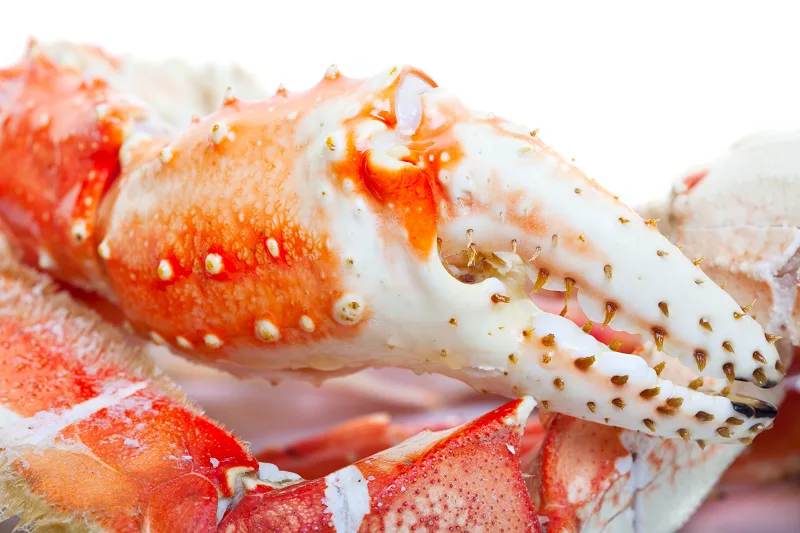
Image source: Bing (Web (fair-use with source credit))
The red king crab's body is covered in sharp spines and a tough exoskeleton. Its coloration ranges from deep burgundy to brick red, which is where the "red" name comes from. They're found primarily in the cold waters of the Bering Sea, with major fisheries in Alaska's Bristol Bay and Norton Sound.
What makes king crab commercially vital? The meat. It's sweet, tender, and commands premium prices in restaurants worldwide.
A single 8-pound cluster of legs can retail for well over $100. That profitability drives a tightly regulated fishery. The Alaska Department of Fish and Game enforces strict quotas, seasonal openings, and size limits.
Only males of a certain size can be harvested, ensuring the breeding population stays healthy.
King crab fishing is also one of the most dangerous jobs in the world. Fishermen work in freezing conditions, hauling massive steel pots weighing 700 to 800 pounds, often in seas that routinely produce 30-foot waves. The injury and fatality rates are among the highest of any occupation in the United States.
If you're curious about how king crab compares to other commercially harvested marine species, our guide to mammals that start with K offers a broader look at K-named animals, including their habitat and conservation status.
The Camouflage Experts: Kelp Fish and Keeltail Needlefish
Kelp Fish (Heterostichus rostratus)
The kelp fish is a master of disguise. Found along the Pacific Coast from California down to Baja, this slender, elongated fish grows up to 24 inches long. Its body is compressed side-to-side, and its coloration shifts between browns, greens, and yellows to match the surrounding kelp fronds perfectly.
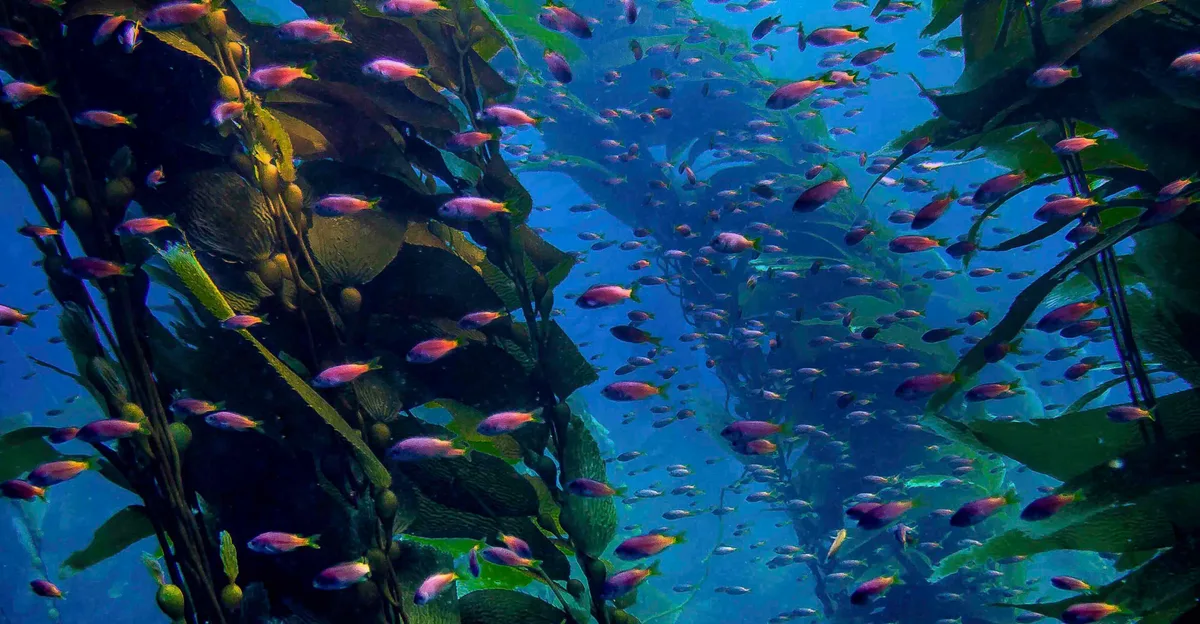
Image source: Web (Bing) / fity.club (Web image (fair-use with source credit))
Kelp fish don't just hide in kelp; they mimic it. They hold their bodies vertical, swaying gently with the water movement, so they look exactly like a piece of drifting seaweed. This camouflage serves two purposes.
It helps them ambush small fish and crustaceans, and it keeps them safe from larger predators like birds and bigger fish.
People often mistake kelp fish for pipefish or eels. That's understandable, given their similar body shapes. But kelp fish are actually members of the family Clinidae, which includes kelpfishes and weedfishes.
They have small, comb-like teeth and a continuous dorsal fin that runs most of the length of their back.
Kelp fish are a favorite among divers and snorkelers in California's kelp forests. They're curious creatures that will often hold their position and watch a diver pass rather than darting away. That makes them relatively easy to observe, provided you know what to look for.
Keeltail Needlefish (Platybelone argalus)
The keeltail needlefish is built like a living spear. It has an elongated, pencil-thin body and a long, pointed snout filled with sharp teeth. It typically reaches about 3 feet in length and inhabits tropical and subtropical waters across the Caribbean, Gulf of Mexico, and the tropical Atlantic.
These fish spend most of their time near the surface, where they hunt small fish and invertebrates. They're fast, agile swimmers that can leap several feet out of the water when startled or chasing prey. That leaping behavior comes with a real warning.
Needlefish have injured and, in rare cases, killed humans. Their pointed rostrum can penetrate skin and even bone. Most incidents happen at night when the fish are attracted to lights and accidentally leap into boats or strike fishermen.
It's not an aggressive behavior, but it's a genuine risk that anyone fishing in needlefish habitat should take seriously.
For divers, needlefish are mostly a spectacle. Watching a school of them zip through clear tropical water is a memory that sticks. Just keep your distance and don't shine bright lights at night.
The Deep-Sea Oddballs: Kitefin Shark and Marine Knifefish
Kitefin Shark (Dalatias licha)
The kitefin shark is a ghost of the deep ocean. It lives at depths of 200 to 600 meters, sometimes venturing down to 900 meters, where sunlight never reaches. It's a relatively small shark, topping out around 6 feet, with a dark brown or gray body and a distinctly kite-shaped cross-section that gives it its name.
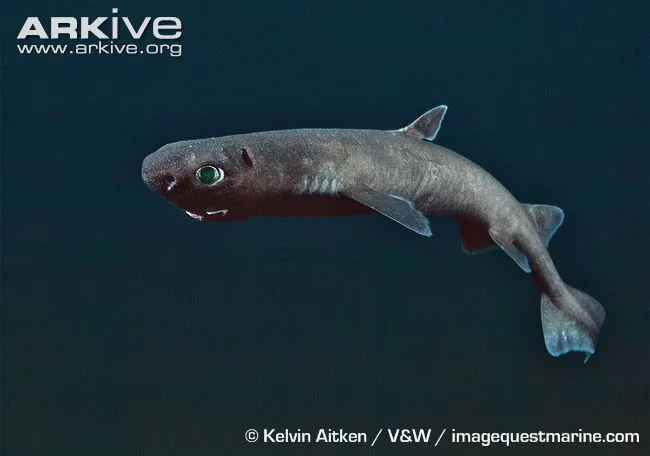
Image source: Bing (Web (fair-use with source credit))
What makes the kitefin shark genuinely extraordinary is its bioluminescence. It has photophores, light-emitting organs, scattered across its body. These organs produce a faint blue glow that serves multiple purposes.
It can counter-illuminate, matching the dim light from above to hide its silhouette from predators below. It can also use its glowing belly to attract prey, drawing small fish close enough to strike.
Scientists still have plenty to learn about kitefin sharks. They're rarely observed in the wild because of their deep habitat. Most research comes from bycatch, accidental captures in deep-sea fishing nets, or specialized submersible dives.
What we do know comes largely from NOAA's deep-sea research programs, which continue to document new behaviors and distribution data.
Kitefin sharks are not commercially targeted, but they're vulnerable to deep-sea trawling and longline fishing. Because they live in deep water and reproduce slowly, populations can take a long time to recover from disturbance. Conservation status varies by region, but the species faces ongoing pressure from expanding deep-sea fisheries.
Marine Knifefish Relatives (Chimaeras)
Here's a point of confusion that trips up a lot of list-makers. When people hear "knifefish," they usually think of the freshwater black ghost knifefish or similar electric fish from South America and Africa. Those are not marine animals.
But there are marine species that carry the knifefish name or belong to closely related groups. The most important are the chimaeras, sometimes called ghost sharks, ratfish, or spookfish. These cartilaginous fish are distant relatives of sharks and rays, and some species have elongated, blade-like bodies that earned them the "knifefish" nickname in certain regions.
Chimaeras live in deep waters around the world, typically below 200 meters. They have large, expressive eyes, a single gill opening, and a venomous spine on their dorsal fin. That spine is a defense mechanism, and it can deliver a painful sting to fishermen who handle them carelessly.
For the purposes of a K-animals list, chimaeras are a stretch but not an outright error. Some regional guides include them. The honest take is that the "knifefish" name applies overwhelmingly to freshwater species.
If you're being strictly accurate, your K-list should focus on the confirmed marine animals like the killer whale, krill, king crab, kelp fish, needlefish, and kitefin shark.
If you're exploring other alphabetical lists while you're at it, our coverage of animals starting with O and marine species starting with S can help you plan a full A-Z series.