Mammals That Start with W: Wolves, Whales, & More
If you're trying to list all the mammals that start with w, you've probably hit a wall. It's easy to name a wolf or a whale, but then your brain goes blank. The truth is, this letter covers a surprisingly wide range of animals, from Arctic giants to tiny burrowing marsupials.
The full list sits at around 15 to 20 commonly recognized species. As of 2026, wildlife databases group them into clear categories like marine mammals, marsupials, hoofed grazers, and land predators. That's exactly how we'll break it down, so you can actually remember them.
Let's start with why this list trips people up in the first place.
Why This List Is Trickier Than It Looks
The biggest problem with "w" mammals is that common names don't follow scientific rules. A "woodchuck" sounds like a lumberjack, but it's really a groundhog. A "warthog" looks like a pig, but it's technically in the same family as wild boar.
And a "white rhino" isn't white at all, it's gray.
You also have regional naming differences. In North America, you say "woodchuck." In the UK, you'd say "groundhog." Same animal, two different names. That splits your list depending on where you're looking.
Another trap is assuming all "w" mammals share a habitat. They don't. You've got the walrus in the Arctic Ocean, the wombat in Australian scrublands, and the wolverine in northern boreal forests.
They have almost nothing in common except that first letter.
Scientific classification helps here. If you sort by family or order, the list suddenly makes sense. Marine mammals sit together, marsupials group up, and the hoofed animals form their own cluster.
That's the mental framework that makes this list stick.
Quick Answer: The Full "W" Mammal Rundown
Here's the fast, scannable list. Every mammal that starts with w, grouped by category so you can digest it quickly.
| Animal | Category | One-Line Description |
|---|---|---|
| Walrus | Marine | Large Arctic pinniped with long tusks |
| Whale | Marine | Fully aquatic cetaceans, including blue and humpback |
| Wombat | Marsupial | Burrowing Australian marsupial with a backward pouch |
| Wallaby | Marsupial | Smaller cousin of the kangaroo |
| Weasel | Carnivore | Small, slender mustelid found worldwide |
| Wolf | Carnivore | Large canid known for pack hunting |
| Wolverine | Carnivore | Muscular mustelid built for brute strength |
| Wildcat | Carnivore | Solitary feline ancestor of domestic cats |
| Warthog | Hoofed | African pig-like grazer with upward-curving tusks |
| Waterbuck | Hoofed | Antelope that seeks water for safety |
| Wisent | Hoofed | European bison, Europe's largest land mammal |
| White-tailed Deer | Hoofed | Most widespread deer species in North America |
| White Rhinoceros | Hoofed | Massive grazer with two horns, actually gray |
| Woodchuck | Rodent | Burrowing groundhog, also called a marmot |
That's the core list. Memorize the categories first, then stack the animals inside each group. It's far easier than trying to recall a flat alphabetical chain.
The Big Three Marine Mammals
When people think of "w" marine mammals, they usually land on the walrus and the whale. Those are the two big names, and they dominate the category.
The walrus (Odobenus rosmarus) is unmistakable. Long tusks, thick whiskers, and a massive blubbery body. Those tusks can reach up to one meter in length, and they serve multiple purposes: hauling onto ice, fighting rivals, and even punching breathing holes in thin ice.
Walruses are pinnipeds, meaning they're flippered carnivores related to seals and sea lions.
Whales are a different story. They're cetaceans, fully aquatic mammals that never come ashore. The blue whale (Balaenoptera musculus) is the largest animal ever known, weighing up to 200 tons.
Humpback whales, sperm whales, and orcas, technically dolphins, all belong to this broad group. Some have teeth, like the sperm whale. Others, like humpbacks, use baleen plates to filter krill from the water.
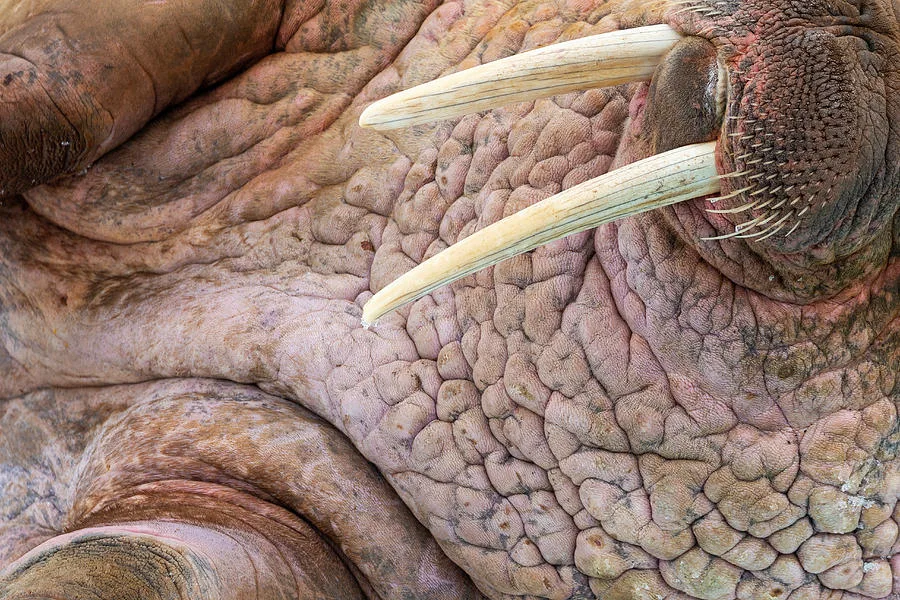
Image source: Web (Bing) / fineartamerica.com (Web image (fair-use with source credit))
If you're trying to tell these apart visually, focus on the tusks. A walrus has visible tusks and spends time on land or ice. A whale never gets out of the water and has no tusks at all.
Simple one-check test.
The Australian Contingent: Marsupials With W Names
Australia owns two entries on this list, and they're both marsupials. That means they give birth to underdeveloped young that finish growing inside a pouch.
The wombat (Vombatus ursinus) is a stocky, burrowing herbivore that looks like a cross between a bear cub and a groundhog. It can weigh up to 35 kilograms and digs extensive tunnel systems with powerful claws. One of the weirdest facts about wombats?
Their pouch faces backward. This keeps dirt out while they dig. They also produce cube-shaped feces, a biological quirk that helps the droppings stay put on rocks and logs.
The wallaby (family Macropodidae) is essentially a smaller kangaroo. They hop on powerful hind legs, carry their young in forward-facing pouches, and graze on grasses and shrubs. Wallabies are more agile in dense forest than their larger kangaroo relatives.
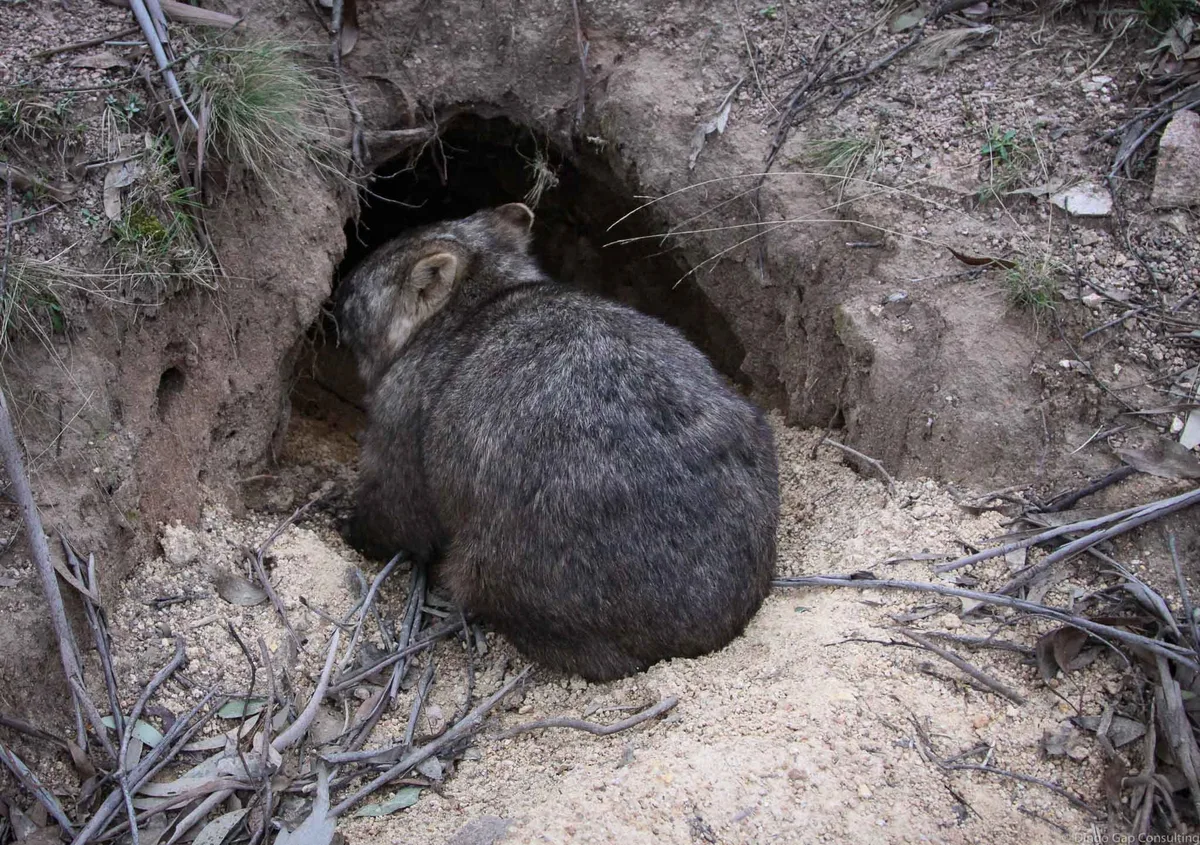
Image source: Web (Bing) / dingogap.net.au (Web image (fair-use with source credit))
The easiest way to tell them apart is body shape and behavior. Wombats are low to the ground, stout, and dig. Wallabies stand upright, hop, and have long tails for balance.
If it's burrowing, it's a wombat. If it's bounding, it's a wallaby.
The Land Predators: Weasel, Wolf, Wolverine, Wildcat
This group covers the carnivores, and it's where most people get confused. Four very different animals, all starting with w, and almost none of them look alike.
The weasel (genus Mustela) is the smallest here. The least weasel measures just 20 to 25 centimeters long and weighs less than 200 grams. They're slender, fast, and hunt rodents in tight burrows.
Their long bodies and short legs make them easy to spot, if you spot them at all.
The wolf (Canis lupus) is the social one. Gray wolves live and hunt in packs with a clear hierarchy. A pack can cover territories of up to 1,000 square kilometers, and wolves communicate through howls, body language, and scent marking.
The wolverine (Gulo gulo) is the brute. Despite looking like a small bear, it's actually the largest terrestrial mustelid. Weighing 10 to 30 kilograms, they're famous for taking down prey much larger than themselves.
They've even been known to steal kills from bears. Their jaws can crush bones, and their thick fur resists frostbite.
The wildcat (Felis silvestris) rounds out the group. Unlike wolves, they're strictly solitary. They look almost identical to domestic tabbies but are slightly larger and more muscular.
They hunt small mammals and birds, and they're the direct ancestor of house cats.

Image source: Web (Bing) / artofit.org (Web image (fair-use with source credit))
If you're trying to identify these in the wild, check size and social behavior. A pack means wolves. A solitary sighting near rocky terrain could be a wildcat or wolverine, but the wolverine's huge furry paws and lumbering gait give it away.