Mammals Starting with U: Last One Will Shock You!
Most people can name maybe two mammals that start with u before they hit a dead end. The uakari? The urial?
Then the list goes quiet. That's not your fault. The letter U is genuinely one of the rarest starting letters in the entire mammal kingdom, and most alphabet animal lists just recycle the same three or four species.
We dug deeper.
Our research combed through taxonomy databases, conservation records, and field guides to find every recognized mammal whose primary common name starts with U. As of 2026, we found ten legitimate species worth knowing. This guide covers them all, with the details that actually matter, like where they live, why they look the way they do, and which ones are vanishing.
Why "U" Is the Hardest Letter in the Mammal Kingdom
Here's the thing about alphabet animal lists. They make letters like A, B, and C look easy because those letters are packed with familiar species. Aardvarks, baboons, cheetahs.
When you hit U, the well runs dry fast.
The reasons are mostly historical. Common names tend to emerge from local languages, and many mammals were named after their appearance, behavior, or the region where Europeans first encountered them. Letters like U simply didn't produce many convenient starting sounds across the world's languages.
English, Spanish, Portuguese, and Latin all lean toward other vowels.
The result? A genuine scarcity. The International Union for Conservation of Nature tracks roughly 6,400 mammal species worldwide.
Of those, fewer than 40 carry a primary common name that starts with U. Compare that to the hundreds of A-named animals, and you start to understand the challenge.
This scarcity creates a knock-on problem. When you search for "mammals that start with u", most sources just list the same handful. The uakari, the urial, the unau.
Then they pad the list with obscure subspecies or invent questionable entries. We wanted better.
So we built a complete roster. Some entries are well-documented species. Others are regional names that often get overlooked.
All of them are verified against recognized taxonomic sources rather than copied from another listicle.
Quick Answer
The mammals that start with u include the bald uakari, black-headed uakari, Uinta ground squirrel, Uinta chipmunk, urial, unau, Uganda kob, Ussuri dhole, ursine tree kangaroo, and unstriped ground squirrel. Ten species total. Most are rare or endangered.
None are household names. The uakari and urial are the most frequently documented. The unau is simply another name for the two-toed sloth.
The Bald Uakari: The Monkey With a Face Only a Scientist Could Love
Let's start with the showstopper. The bald uakari looks like someone told a monkey to cosplay as a tomato. Its face is completely hairless and bright red, which makes it one of the most striking primates on Earth.
That red face isn't just for looks. Research indicates the color reflects the animal's overall health. The redness comes from densely packed blood vessels just beneath the skin, with no pigment involved.
A vibrant red face signals a strong immune system and good circulation. A pale face suggests illness or poor nutrition. It's a living health dashboard.

Image source: Bing (Web (fair-use with source credit))
Bald uakaris live only in the Amazon rainforest, specifically in seasonally flooded areas of Brazil, Peru, and Colombia. They're excellent swimmers, which makes sense given their habitat floods for months each year. They eat mostly fruit, seeds, and the occasional insect, and they live in troops that can number over 100 individuals.
What Makes the Uakari Unusual
Beyond the face, uakaris have one trait that sets them apart from other New World monkeys. They have a short tail.
Most South American monkeys have long, prehensile tails they use like a fifth limb. Uakaris abandoned that adaptation. Their tails are about a third of their body length and serve no grasping function.
Instead, they move through the canopy using their arms and legs alone, more like Old World monkeys.
Conservation Reality Check
The bald uakari is classified as Vulnerable on the IUCN Red List. Its population is declining, primarily due to habitat loss from logging and agricultural expansion in the Amazon. The black-headed uakari, its close relative, faces similar threats and carries a Near Threatened status.
Neither species is well-studied compared to more famous primates like chimpanzees or orangutans, which makes conservation planning harder.
Where to See Them
If you want to see a uakari in the wild, the best options are:
- Mamirauá Sustainable Development Reserve in Brazil, a protected flooded forest area
- Pacaya-Samiria National Reserve in Peru, accessible by guided canoe tours
- Various zoos in North America and Europe with breeding programs
The Mamirauá reserve is the standout choice. It was created specifically to protect uakaris and other flooded-forest species. During the dry season, you can walk forest trails.
During the wet season, you explore by canoe.
The Urial: The Wild Sheep You've Never Heard Of
Move from the Amazon to the mountains of Central Asia, and you'll find the urial. This wild sheep is the ancestor of domestic sheep breeds, yet almost nobody knows its name.
Urials stand about 80 to 90 centimeters at the shoulder and weigh between 40 and 90 kilograms, depending on the region. Males carry massive curved horns that can reach a meter in length. Females have smaller, thinner horns or sometimes none at all.
These horns aren't just for show. Rams use them in dramatic head-on clashes during the mating season, establishing dominance through raw impact.

Image source: Bing (Web (fair-use with source credit))
Where Urials Live
Urials inhabit rugged mountain terrain across a wide but fragmented range. You'll find them in:
- Afghanistan
- Pakistan, especially the northern regions
- Kashmir
- Tajikistan
- Uzbekistan
- Turkmenistan
- Iran
They prefer open grasslands and rocky slopes between 1,000 and 4,500 meters elevation. Their ability to survive in these harsh, high-altitude environments makes them valuable for climate resilience research. As temperatures shift, understanding how uri als cope with extreme conditions could inform conservation strategies for other mountain species.
The Hunting Paradox
Here's where the urial story gets complicated. Trophy hunting is legal in several range countries, with permits costing thousands of dollars. Conservation biologists are divided on whether this helps or hurts populations.
In Pakistan's northern areas, regulated trophy hunts fund local communities and anti-poaching patrols. The money gives villagers a financial incentive to protect urial populations rather than hunt them for meat. In other regions, unregulated hunting poses a serious threat.
The urial is currently classified as Vulnerable on the IUCN Red List. Estimates suggest only 30,000 to 50,000 individuals remain across its entire range. The species is also listed under CITES Appendix I in some range countries, which restricts international trade in urial specimens.
Urial vs. Argali
If you're researching wild sheep, you'll quickly encounter the argali. It's the largest wild sheep species on Earth, and it overlaps with urial territory in parts of Central Asia.
| Feature | Urial | Argali |
|---|---|---|
| Shoulder height | 80-90 cm | 90-125 cm |
| Weight | 40-90 kg | 60-180 kg |
| Horn length | Up to 100 cm | Up to 190 cm |
| IUCN status | Vulnerable | Near Threatened |
| Primary range | Central/South Asia | Central Asia |
The most reliable way to tell them apart is size. A mature argali ram dwarfs a urial. Their horn shape also differs, with argali horns forming a more open spiral.
If you're ever field-guiding, this makes identification straightforward once you know what to look for.
Unau vs. Three-Toed Sloths: The Misnamed Mammal Nobody Talks About
Here's a name that trips up even wildlife enthusiasts. The unau is simply the historic common name for the two-toed sloth. Yes, the exact same animal you've seen hanging from branches in countless wildlife documentaries.
The confusion comes from an old naming system. Early naturalists applied "unau" specifically to the two-toed sloth and "ai" to the three-toed sloth. These names originated from the sounds the animals make.
The "ai" name mimics the three-toed sloth's characteristic vocalization. The "unau" name stuck to its two-toed relative.
In modern taxonomy, the two-toed sloth belongs to the genus Choloepus, which contains two species. The Linnaeus's two-toed sloth (Choloepus didactylus) lives in northern South America. Hoffmann's two-toed sloth (Choloepus hoffmanni) ranges from Central America into South America.
Both can trace their common name lineage back to "unau".
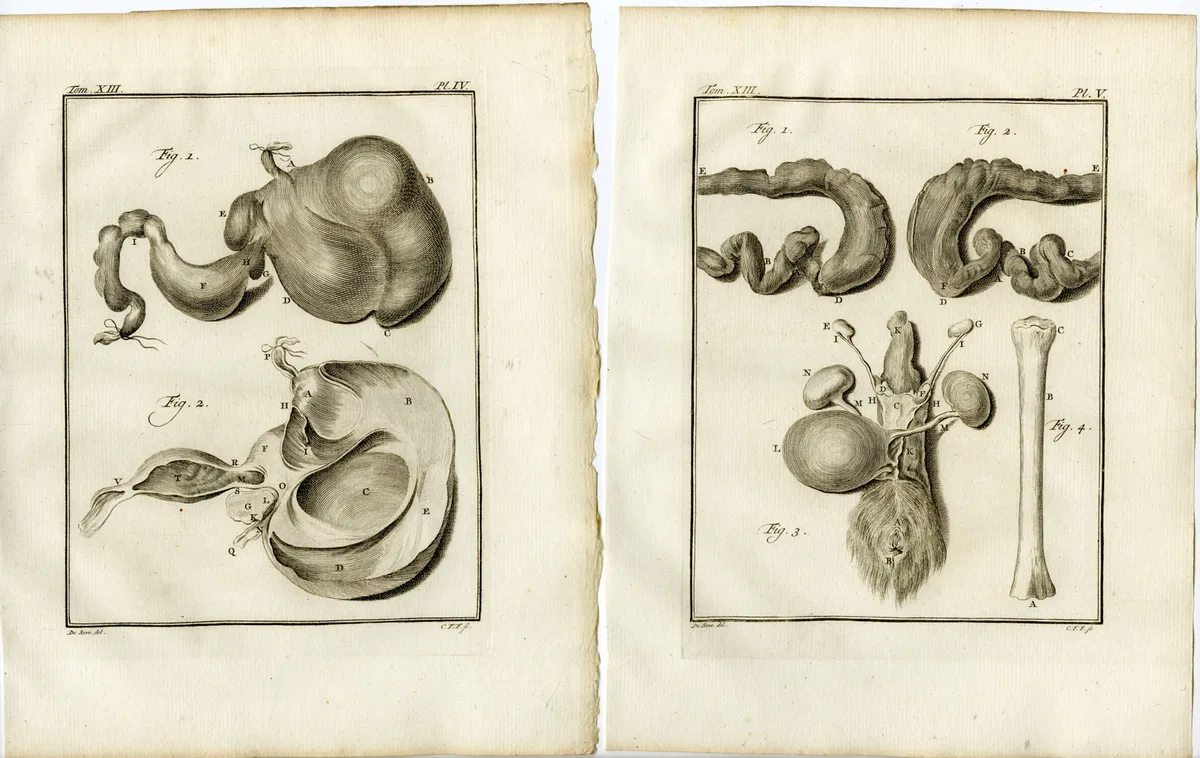
Image source: Bing (Web (fair-use with source credit))
The Anatomical Difference That Matters
The most obvious distinction between the two sloth groups is in their forelimbs. Two-toed sloths have, you guessed it, two claws on their front feet. Three-toed sloths have three.
But the differences run deeper. Two-toed sloths have longer arms, a more prominent snout, and a smaller tail. They're also more nocturnal and more aggressive than their three-toed relatives.
If a two-toed sloth feels threatened, it will strike out with those claws with surprising speed.
Why the Name Matters
The "unau" name isn't just a trivia fact. Understanding it clarifies why you'll find "unau" in older field guides and museum records but never in modern wildlife apps. The name fell out of common usage in the mid-20th century as standardized taxonomy took over.
However, the unau name still pops up in:
- Historical scientific literature
- Antique natural history prints
- Some regional Spanish and Portuguese dialects
- Trivia books and crossword puzzles
For that reason, any credible list of mammals that start with u includes the unau. It may be an old name, but it's a legitimate one.
The Slow-Metabolism Superpower
The two-toed sloth's metabolism runs at roughly 40 to 45 percent of what scientists would expect for an animal its size. That's slower than any other mammal except the three-toed sloth. This adaptation allows them to survive on a diet of leaves, fruit, and flowers that would starve most other animals.
The cost? Sloths move at about 0.3 kilometers per hour on average. They descend from the canopy roughly once a week to defecate, which makes them vulnerable to predators during those rare ground visits.
The Uinta Double Feature: Ground Squirrel vs. Chipmunk
Now we head to North America, specifically the Uinta Basin region of Utah and Wyoming. Two distinct mammals share the "Uinta" name, and people constantly mix them up.
The Uinta ground squirrel (Urocitellus armatus) and the Uinta chipmunk (Neotamias umbrinus) both live in the same general area. They're both small, brownish rodents. They both dig burrows.
And they both pop up in the same open woodland and sagebrush habitats. But they're not particularly close relatives, and telling them apart isn't hard once you know what to look for.

Image source: Bing (Web (fair-use with source credit))
Side-by-Side Comparison
| Feature | Uinta Ground Squirrel | Uinta Chipmunk |
|---|---|---|
| Body length | 30-35 cm including tail | 20-25 cm including tail |
| Stripes | No facial stripes, faint body markings | Five dark and four light stripes on back |
| Tail | Short and thin | Bushy, held upright |
| Ears | Small, barely visible | Larger, more prominent |
| Behavior | Hibernates up to 8 months | Active year-round, stores food |
The fastest identification trick is the stripes. Chipmunks always have bold facial stripes and a striped back. Ground squirrels don't.
If you see a striped rodent in these habitats, it's a chipmunk. No stripes means you're looking at a ground squirrel.
The Ground Squirrel's Underground Life
Uinta ground squirrels are serious diggers. Their burrow systems can extend several meters underground, with multiple entrances and separate chambers for nesting, food storage, and waste. These burrows aren't just homes.
They also provide crucial habitat for other species, including snakes, burrowing owls, and various insects.
The daily cycle follows the sun. Ground squirrels emerge from their burrows in the morning, forage for seeds and grasses, and retreat to the cool underground when temperatures peak. In the winter, they hibernate for up to eight months, one of the longest hibernation periods of any North American rodent.
The Chipmunk's Talent for Hoarding
Uinta chipmunks take a different survival approach. Instead of hibernating, they stay active year-round. Their strategy is stockpiling.
A single chipmunk can gather hundreds of seeds and nuts in a single season. They carry these in expandable cheek pouches, which can stretch to the size of the animal's head. They then distribute their stash throughout multiple burrow chambers, reducing the risk of losing everything to a single raid.
Which One Are You Seeing?
If you're hiking in the Uinta Mountains and spot a small rodent, here's your quick decision tree:
- Does it have clear stripes on its face and back? That's a Uinta chipmunk.
- Is it chunky with a short tail and no stripes? That's a Uinta ground squirrel.
- Is it standing on its hind legs looking around? Ground squirrels do this constantly. Chipmunks do it less often.
- Did it dart across a trail or road? Ground squirrels run with a distinctive waddle. Chipmunks move in quick, jerky bursts.
Both species are common and easy to observe in national forests and parks across the region. The Uinta-Wasatch-Cache National Forest in Utah is a reliable spot for both. Yellowstone National Park also hosts Uinta ground squirrels in its northern grasslands.
The Ussuri Dhole: The Pack Hunter Endangered in Silence
Most people have heard of wolves. Few know the dhole. That's the problem.
The Ussuri dhole (Cuon alpinus alpinus) is a subspecies of the Asiatic wild dog that roams the forests of Manchuria, the Korean Peninsula, and parts of eastern Russia. It's a medium-sized canid, roughly the size of a German shepherd, with a reddish coat, a white chest, and a bushy black-tipped tail. Dholes are exceptional pack hunters, working in groups of 5 to 12 individuals to bring down prey much larger than themselves, including deer and wild boar.
Image source: Bing (Web (fair-use with source credit))
What makes the dhole remarkable is its stamina. Unlike wolves that rely on sheer power, dholes were observed in field studies chasing prey for hours at a steady lope, wearing their targets down before making a coordinated kill. Their communication system is just as sophisticated.
Dholes produce a range of whistles, clucks, and screams that keep the pack coordinated in dense vegetation, earning them the nickname "whistling dogs."
The Silent Decline
Dholes are classified as Endangered on the IUCN Red List. The Ussuri subspecies is the rarest, with few confirmed sightings in recent decades. Habitat loss, prey depletion, and diseases transmitted by domestic dogs have pushed populations to the brink.
Unlike wolves and big cats, dholes don't have a high-profile conservation campaign backing them. They sit in a conservation blind spot. If you want to help, supporting habitat preservation in their remaining range is the most practical step.
Organizations working on Asiatic wild dog conservation focus on maintaining connected forest corridors and reducing human-wildlife conflict.
Conservation Status Check: Which U-Mammals Are in Trouble
Across the roster of U-named mammals, conservation status varies dramatically. Here's the full picture at a glance.
| Species | IUCN Status | Primary Threat |
|---|---|---|
| Bald Uakari | Vulnerable | Deforestation |
| Black-headed Uakari | Near Threatened | Habitat loss |
| Urial | Vulnerable | Overhunting |
| Unau (Two-toed Sloth) | Least Concern | Habitat fragmentation |
| Uinta Ground Squirrel | Least Concern | None significant |
| Uinta Chipmunk | Least Concern | None significant |
| Uganda Kob | Least Concern | Poaching, habitat loss |
| Ussuri Dhole | Endangered | Prey depletion, disease |
| Ursine Tree Kangaroo | Vulnerable | Hunting, logging |
| Ucayali Spiny Mouse | Data Deficient | Unknown |
The pattern is clear. Larger, more specialized species face the most risk. Small, adaptable rodents thrive.
Sloths persist because their slow lifestyle lets them survive in disturbed forests. According to the IUCN Red List, habitat loss remains the single biggest driver of decline across the board.
How to Spot a U-Mammal in the Wild (Without Getting It Wrong)
Field identification doesn't need to be stressful. Here are the quickest visual cues for each species in this guide:
- Bald Uakari: Look for the red face and short tail in flooded Amazon forests.
- Urial: Large curved horns and a pale rump patch on rocky mountain slopes.
- Two-Toed Sloth (Unau): Longer arms, a prominent snout, and two claws on the forelimbs.
- Uinta Ground Squirrel: Chunky body, no facial stripes, short tail, darts across trails.
- Uinta Chipmunk: Bold facial stripes, bushy tail held upright, rapid jerky movements.
- Ussuri Dhole: Rusty red coat, white chest, bushy black tail in pack formation.
- Uganda Kob: A medium antelope with a heart-shaped white patch between its eyes.
When in doubt, note the habitat and behavior. Ground squirrels forage in open meadows. Chipmunks stick closer to tree lines and rock piles.
Urials prefer steep, open slopes. Habitat narrows the list faster than any field mark.
Common Mistakes and Misconceptions About U-Mammals
Several errors pop up repeatedly when people research mammals that start with u. Here are the ones to avoid.
Treating "unau" as a separate species. It's just the old common name for the two-toed sloth. Modern taxonomy uses Choloepus. Both names refer to the same animal.
Misspelling the uakari. It's U-A-K-A-R-I, not "uakari" with an extra "c". The name comes from indigenous Amazonian languages and survives unchanged in English.
Confusing urial and argali. They overlap in range, but size settles it. Argali rams are nearly twice as heavy, with much larger horns.
Assuming all U-mammals are obscure. The Uinta ground squirrel and chipmunk are common and easy to see in North American parks. The Uinta chipmunk might even visit your campsite.
Using outdated taxonomy. Some sources list animals like the "Ussuri brown bear" or "Ussuri moose" as U-named species. Those exist, but they're usually better known by their primary names (brown bear, moose). We stuck with species whose primary common name starts with U.
Frequently Asked Questions
What is the rarest mammal that starts with U?
The Ussuri dhole is the rarest. Fewer than 2,500 mature individuals are estimated across its range, with the Ussuri subspecies seeing the steepest declines. Confirmed sightings in historical habitat are increasingly rare.
Are all uakari monkeys critically endangered?
No. The bald uakari is Vulnerable. The black-headed uakari is Near Threatened.
Neither has reached Critically Endangered status yet, but both face ongoing habitat loss in the Amazon.
Why is the two-toed sloth called an unau?
The name comes from early naturalists who used "unau" for the two-toed sloth and "ai" for the three-toed sloth. Those names reflected the animals' vocalizations. "Unau" persists mainly in historical literature, not modern usage.
Is a ground squirrel a chipmunk?
No, they're separate genera. The Uinta ground squirrel belongs to Urocitellus. The Uinta chipmunk belongs to Neotamias.
The most visible difference is stripes: chipmunks always have them on the face and back, ground squirrels don't.
Where can I see a urial in the wild?
The best spots are protected areas in Pakistan's northern mountains, especially Khunjerab National Park and the surrounding valleys. Some conservation programs there support guided viewing trips, and the permits help fund local communities.
How many mammal species start with the letter U?
Based on recognized common names, roughly 20 to 30 mammal species start with U. Most are obscure or regional. Only about ten appear regularly in credible field guides and taxonomic databases.
The Takeaway: Why These 10 Animals Deserve More Attention
The letter U may be rare in the mammal kingdom, but the animals it produces are anything but boring. From the uakari's living health dashboard to the unau's evolutionary slowdown, each species tells a story about adaptation, survival, and the places we're still learning to protect.
If this list sparked your curiosity, you'll find similar surprises in the rest of the alphabet. Our exploration of animals starting with C features familiar faces like cheetahs and crabs. The guide to B-named creatures covers everything from badgers to bison.
And the A-list collection includes the remarkable aardvark and axolotl.
What You Can Do Next
Pick one species from this guide and dig deeper. Read the IUCN assessment for the bald uakari or the Ussuri dhole. Follow a conservation group working in their habitat.
Even a small donation helps fund the field research these understudied animals desperately need.
Next time someone asks you to name a mammal that starts with U, you'll have ten. That's more than most people will ever manage. And now you know exactly what makes each one worth remembering.