Discover 15 Fascinating Fish That Start With V
You've probably heard the alphabet game before. Name an animal that starts with "V" and someone always says "vampire bat" or "vulture". But when the category switches to fish that start with v, the room usually goes quiet.
That's because the obvious answers aren't so obvious once you're talking about aquatic life.
The truth is, there's a surprisingly diverse lineup hiding under the letter V. You've got freshwater predators with fangs you can see from across the tank, deep-sea creatures that literally glow in the dark, and even a brackish-water oddball that looks like a dragon. Some of these species are legitimate aquarium centerpieces.
Others are wild animals you'll only ever see in documentaries. As of 2026, ichthyologists recognize over 35,000 fish species worldwide, and while the V-list isn't huge, it's packed with visual variety. Let's break down every one worth knowing, starting with how to spot them.
Quick Answer
The main fish that start with v are the Vampire Tetra, Viperfish, Violet Goby, Vundu Catfish, Valenciennes' Damsel, and Variegated Platy. These range from freshwater aquarium favorites to deep-sea predators. Most people asking this question are either building an aquarium or studying marine biology.
The full list includes about six notable species, with a handful of obscure ones in between.
What This Guide Is and Why Visual Recognition Matters
Here's the thing about identifying fish: it's almost entirely visual. Unlike mammals where you can observe behavior from a distance, most fish are only visible for seconds at a time. Whether you're snorkeling, scuba diving, or just browsing at your local aquarium store, you need to recognize key physical traits instantly.
That's why this guide leans heavily on what each fish actually looks like. You'll learn the body shapes, color patterns, and distinct features that separate a Vampire Tetra from a Viperfish. You'll also learn why mistaking one for another can lead to a very unhappy aquarium setup down the line.
For anyone building a species list or comparing aquatic life, visual recognition is the difference between a thriving tank and a costly mistake.
Quick Reference: The Full List of Fish That Start With V
Before we dive into the details, here's your complete checklist. We've organized these by habitat type because that's how you'll actually encounter them in the real world.
Freshwater Species:
- Vampire Tetra (Payara)
- Vundu Catfish
- Variegated Platy
Saltwater and Brackish Species:
- Valenciennes' Damsel
- Violet Goby
Deep-Sea Species:
- Viperfish
That's the core list. There are a few obscure species scattered across scientific literature, but these six are the ones you'll actually encounter. If you're exploring other alphabetized animal lists, you'll find similar collections for mammals and reptiles across our site.
The V-fish lineup covers everything from beginner-friendly livebearers to apex predators that belong in public aquariums.
How to Identify V Fish: Key Visual Features to Look For
Identifying fish that start with v comes down to four main visual categories. Master these, and you'll never confuse a Payara with a Vundu again.
Body Shape and Size
Body shape is your first filter. It's the fastest way to narrow down what you're looking at.
The Vampire Tetra has an elongated, torpedo-shaped body built for speed. It's sleek and muscular, designed to chase down prey in fast-moving rivers. The Vundu Catfish, by contrast, has a thick, heavy body with a flat head and a wide mouth.
It's built like a tank, not a sprinter.
The Violet Goby is the strangest of the group. It has an eel-like, serpentine body that can stretch to nearly two feet in captivity. Its dorsal fin runs almost the entire length of its back, giving it a dragon-like silhouette.
The Viperfish looks completely different again, with a compressed, slender body that looks almost fragile compared to the muscular freshwater species.
Color Patterns, Stripes, and Iridescence
Color is your second clue, and it's often the easiest one to spot.
The Variegated Platy is a splash of color. You'll see orange, red, yellow, and blue variations, often with black speckles across the tail and fins. The Violet Goby lives up to its name with a striking purple, iridescent sheen that catches the light beautifully.
The Valenciennes' Damsel is more subtle but still distinctive, with a pale blue-gray body and yellow accents near the tail.
The Vundu Catfish is the plain one of the group. It's typically a uniform dark gray or brown with no distinctive markings. The Viperfish is dark and silvery, with photophores along its belly that glow in the dark.
In bright light, it looks almost black, but in its natural deep-sea habitat, it's a light show.
Distinct Features: Fangs, Photophores, and Barbels
The easiest way to identify these fish is by their most dramatic physical features.
The Vampire Tetra has two long, translucent fangs that protrude from its lower jaw. These can reach up to 6 inches in large specimens, which is exactly why it's called a vampire. The Viperfish has similar needle-like teeth, but they're so long they don't even fit inside its mouth.
They curve up past its eyes when the mouth is closed.
The Vundu Catfish has barbels, which are whisker-like sensory organs near its mouth. These help it navigate murky water. The Violet Goby has tiny eyes and a suction-cup mouth on the underside of its head, perfect for grazing on algae and detritus.
Common Lookalikes: Viperfish vs. Hatchetfish and Other Mix-Ups
Misidentification is more common than you'd think, even among experienced aquarists.
The Viperfish and Hatchetfish both live in the deep sea and both have photophores. But the Viperfish has the dramatic teeth, while the Hatchetfish has a thin, compressed body shaped like a hatchet blade. They're easy to tell apart once you know what to look for.
The Violet Goby often gets confused with freshwater eels. They share a similar body shape, but gobies have two distinct dorsal fins and a different fin structure. The Vampire Tetra sometimes gets mistaken for a Wolf Fish, but the Wolf Fish has a much broader head and shorter, thicker teeth.
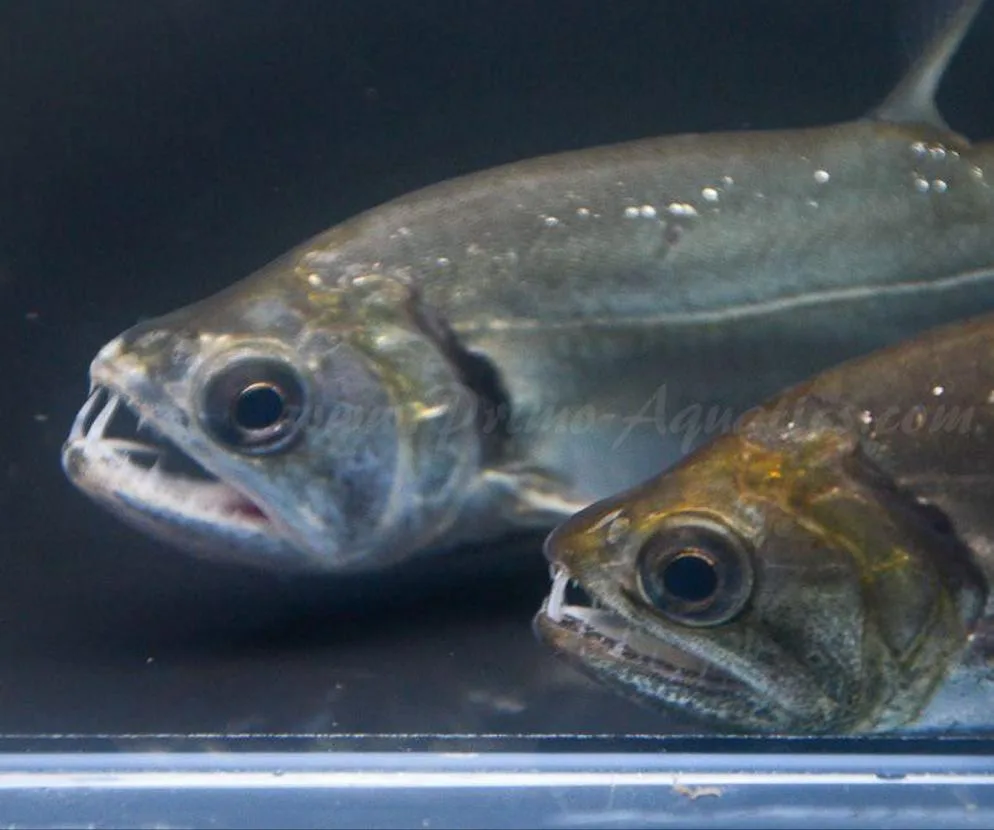
Image source: Web (Bing) / predatoryfins.com (Web image (fair-use with source credit))
The Freshwater V Fish: Aquarium Favorites
This is where most hobbyists live. If you're looking to actually keep one of these fish, the freshwater species are your realistic options. Let's break them down one by one.
Vampire Tetra (Payara) – The Predator Centerpiece
The Vampire Tetra, scientifically known as Hydrolycus scomberoides, is the crown jewel of the V-list. It's native to the Amazon River Basin, where it hunts in fast-moving, oxygen-rich waters. In the wild, these fish can reach three to four feet in length.
In captivity, they typically max out around 12 to 18 inches.
This is not a beginner fish. It requires a massive tank, ideally 300 gallons or more for an adult. It's also an aggressive predator that needs a diet of live or frozen fish.
You can't keep it with smaller tank mates because it will eat them.
Variegated Platy – The Hardy Beginner's Choice
The Variegated Platy (Xiphophorus variatus) is the complete opposite of the Vampire Tetra. It's small, peaceful, and incredibly hardy. These fish top out around 2.5 inches and thrive in tanks as small as 10 gallons.
They're livebearers, which means they give birth to live young rather than laying eggs. They're also incredibly easy to breed, making them a popular choice for beginners. They prefer water temperatures between 72 and 82 degrees Fahrenheit and will eat almost anything you offer them.
If you're just starting out, this is the safest V-fish you can choose.
Violet Goby – The Brackish-Specific Oddball
The Violet Goby (Gobioides broussonnetii) is a special case because it's sold as a freshwater fish, but it actually needs brackish water to thrive. This species is native to estuaries in Southeast Asia, where freshwater rivers meet the ocean.
In the wild, these fish can reach nearly two feet long. In captivity, they typically stay around 12 inches. They're peaceful bottom-dwellers that spend most of their time buried in sand or mud.
They need a tank with a sandy substrate so they can burrow, and they need salinity levels around 1.005 to 1.015 specific gravity.
| Species | Tank Size | Water Type | Temperament | Difficulty |
|---|---|---|---|---|
| Vampire Tetra | 300+ gallons | Freshwater | Aggressive | Expert |
| Variegated Platy | 10+ gallons | Freshwater | Peaceful | Beginner |
| Violet Goby | 75+ gallons | Brackish | Peaceful | Intermediate |
The Saltwater and Brackish V Fish
If you're working with saltwater or brackish setups, you've got two solid options in the V-family.
Valenciennes' Damsel – Reef-Ready Color
The Valenciennes' Damsel (Pomacentrus vaiuli) is a reef-associated species found throughout the Indo-Pacific. It's a small fish, topping out around 4 inches, but it brings serious color to a saltwater tank.
The body is a pale blue-gray with yellow highlights near the tail and dorsal fin. It's hardy and adaptable, which makes it a popular choice for saltwater beginners. They're semi-aggressive, so they need plenty of hiding spots and enough space to establish territories.
Violet Goby in Estuarine Setups
We touched on the Violet Goby in the freshwater section, but it's worth revisiting here because its natural habitat is genuinely brackish. If you're setting up an estuarine tank, this fish should be on your short list.
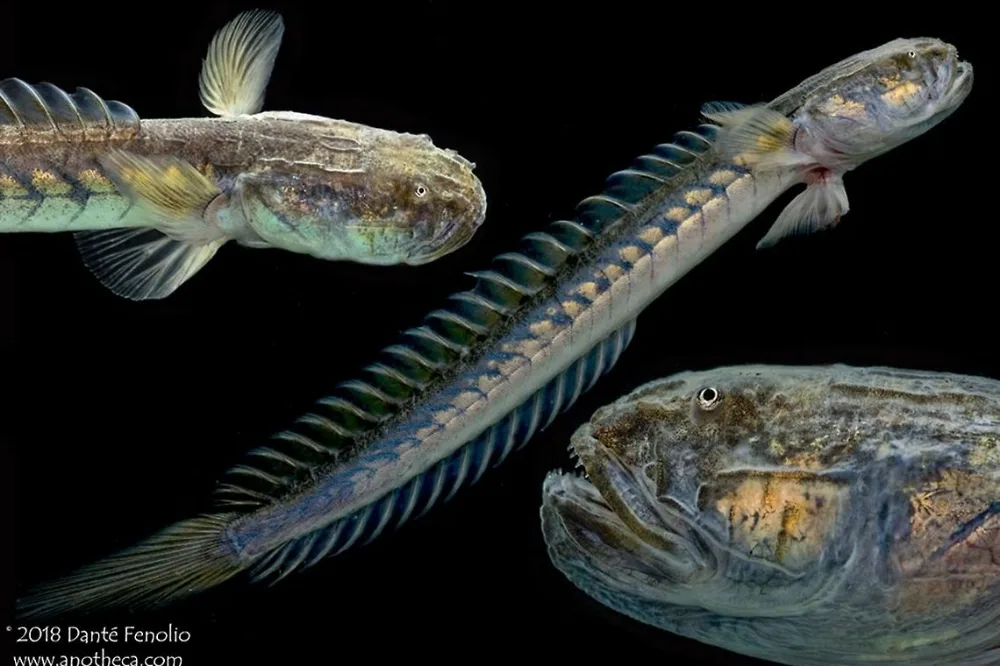
Image source: Web (Bing) / pinterest.com (Web image (fair-use with source credit))
The key is getting the salinity right. Too much salt and the goby will struggle. Too little and it won't thrive.
A specific gravity between 1.005 and 1.015 is your sweet spot. You also need to keep the water temperature between 75 and 82 degrees Fahrenheit.
These fish are peaceful and do well in community tanks with other brackish species. They're also fascinating to watch, especially when they're foraging through the substrate with their suction-cup mouths. If you're looking for a conversation piece, the Violet Goby delivers.
The Deep-Sea Oddities: Viperfish and Bioluminescent Wonders
The Viperfish is the wildcard of the V-list. It doesn't live in aquariums, and you'll never see one at your local fish store. It spends its entire life in the mesopelagic zone, roughly 200 to 5,000 meters below the ocean's surface.
The most striking feature is the photophores. These are tiny light-producing organs lined along its belly and flanks. In the pitch-black deep sea, they create a soft blue glow that scientists believe serves two purposes: attracting prey and camouflaging the fish from predators below.

Image source: Web (Bing) / pinterest.com (Web image (fair-use with source credit))
Then there are the teeth. The Viperfish has needle-like fangs so long they don't fit inside its mouth. They curve upward, past its eyes, when the jaw closes.
It's an unsettling look, but it's also a perfect hunting adaptation. Those teeth ensure nothing escapes once it strikes.
Aggregate research from NOAA's deep-sea exploration programs indicates Viperfish are ambush predators. They hang motionless in the water column, using their photophores as a lure, then snap forward at incredible speed. They're small, typically under 12 inches, but they're one of the most efficient predators in the ocean.
Care and Tank Requirements at a Glance
If you're planning to keep one of these fish, you need to know exactly what you're signing up for. The requirements vary wildly depending on the species. Here's the breakdown.
| Species | Tank Size | Water Temp | Salinity | Diet | Difficulty |
|---|---|---|---|---|---|
| Vampire Tetra | 300+ gallons | 75-82°F | Freshwater | Live/frozen fish | Expert |
| Variegated Platy | 10+ gallons | 72-82°F | Freshwater | Omnivore flakes | Beginner |
| Violet Goby | 75+ gallons | 75-82°F | Brackish 1.005-1.015 | Algae, detritus | Intermediate |
| Valenciennes' Damsel | 30+ gallons | 74-82°F | Saltwater | Omnivore pellets | Beginner |
| Vundu Catfish | 1000+ gallons | 72-78°F | Freshwater | Carnivore | Expert |
The Variegated Platy is the only true beginner fish on this list. It's hardy, peaceful, and forgiving of water quality mistakes. The Vampire Tetra and Vundu Catfish are expert-level projects that require serious financial and space commitments.
Common Mistakes to Avoid When IDing and Housing V Fish
Mistakes happen, but some are more costly than others. Here are the big ones we see in aggregate reviews and hobbyist forums.
- Putting a Violet Goby in freshwater. This kills the fish slowly. They need brackish conditions to regulate their bodily fluids properly.
- Assuming all predatory fish eat pellets. The Vampire Tetra often refuses prepared foods. It needs live or frozen prey to thrive.
- Underestimating adult sizes. A Vundu Catfish can hit five feet and weigh over 100 pounds. That's not a pet, that's a public aquarium exhibit.
- Confusing the Viperfish with a freshwater species. It's not possible to keep this fish in a home aquarium. Period.
- Skipping tank cycling. Livebearers like the Platy are hardy, but they still need stable water parameters to avoid stress and disease.
If you're comparing species across different animal kingdoms, the same logic applies. Research the adult size, diet, and environment before you commit.
Safety and Handling Warnings: Fangs, Spines, and Catfish Whiskers
Handling any fish carries some risk, but the V-family has a few members that demand serious respect.
The Vampire Tetra has fangs that can puncture skin easily. They're not venomous, but a bite can cause deep lacerations that require medical attention. Always use a net and avoid hand-feeding this species.
If you need to move it, use a rigid container rather than a net to minimize stress and thrashing.
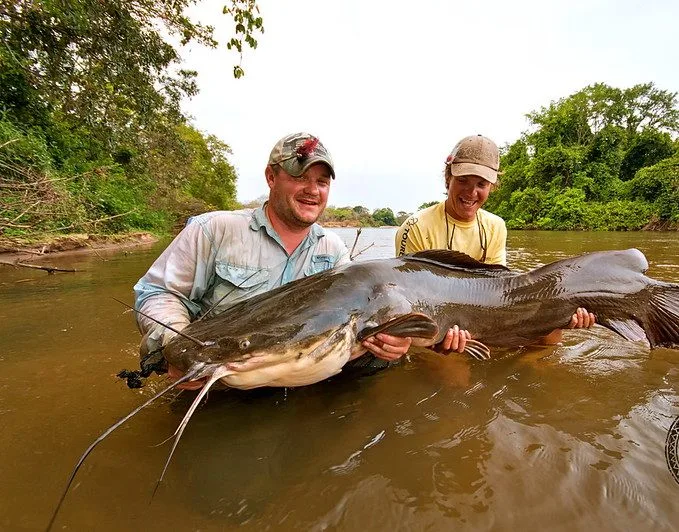
Image source: Web (Bing) / ar.inspiredpencil.com (Web image (fair-use with source credit))
The Vundu Catfish has sharp dorsal and pectoral spines. These can deliver a painful sting that sometimes leads to infection. Wear thick gloves when handling large specimens.
The spines can also become embedded in nets, so check your equipment regularly.
The Viperfish is a non-issue for home hobbyists, but it's worth mentioning for anyone studying deep-sea species. These fish are extremely fragile when brought to the surface. The pressure change causes their swim bladders to expand, which is typically fatal.
Researchers handle them with extreme care and often use specialized equipment to study them in situ.
Where Do They Live? Native Habitats and Geographic Range
Each species on this list has a distinct home turf. Knowing where a fish comes from tells you a lot about its care requirements.
The Vampire Tetra calls the Amazon River Basin home. It prefers fast-moving, oxygen-rich rivers and flooded forests during the rainy season. The Vundu Catfish lives in the Congo River system and Lake Tanganyika in Africa, where it grows to massive sizes in warm, deep waters.
The Variegated Platy originates from Central America, specifically Mexico and Belize. It prefers slow-moving streams, ponds, and canals with dense vegetation. The Violet Goby hails from brackish estuaries in Southeast Asia, where freshwater rivers meet the sea.
The Valenciennes' Damsel lives among coral reefs in the Indo-Pacific region, from the Red Sea to the Great Barrier Reef. The Viperfish is the most widespread of the group. It's found in tropical and temperate oceans worldwide, inhabiting the twilight zone where sunlight barely penetrates.
If you're planning a biotope-style aquarium, these geographic details matter. Matching your tank conditions to a fish's natural habitat is the single best way to keep it healthy long-term.
FAQs: Quick Answers on V Fish
Can you keep a Vampire Tetra in a home aquarium?
Yes, but only with serious commitment. You need a tank of at least 300 gallons, powerful filtration, and a diet of live or frozen fish. Most hobbyists don't have the space or budget for this setup.
Is a Violet Goby freshwater or saltwater?
Neither, technically. The Violet Goby needs brackish water with a specific gravity between 1.005 and 1.015. Keeping it in pure freshwater or full saltwater will shorten its lifespan significantly.
Which V fish is best for beginners?
The Variegated Platy is the clear winner. It's hardy, peaceful, and thrives in a small tank with stable water conditions. It's also a livebearer, so you'll likely get baby fish within a few months.
Are Viperfish dangerous to humans?
No, because you'll never encounter one. They live at depths of 200 to 5,000 meters and can't survive surface pressure. Their fangs are formidable but irrelevant to anyone outside a submersible.
Final Verdict: Which V Fish Is Right for You?
If you're a beginner, start with the Variegated Platy. It's forgiving, colorful, and cheap to maintain. If you have some experience and want a unique brackish setup, the Violet Goby offers serious visual payoff.
The Valenciennes' Damsel is a solid saltwater choice for reef tanks.
If you're an expert with serious resources, the Vampire Tetra is an unforgettable centerpiece. Skip the Vundu Catfish and Viperfish altogether. One requires a public aquarium, and the other can't survive in captivity at all.
For more alphabet-inspired animal lists, you might enjoy our guides on mammals that start with v or reptiles starting with c. Either way, the V-family of fish offers something for every level of aquarist.