Sea Animals That Start with J: From Jellyfish to Jacks
You've probably seen those alphabet animal lists that breeze through the easy ones and stall at the letter J. For sea creatures, the initial reaction is usually "jellyfish, done." But the ocean has more J-named residents than most people realize, and a few of them are genuinely spectacular.
In our research across marine databases and identification guides, we found roughly a dozen distinct sea animals that start with J, ranging from the familiar jellyfish to the colossal Japanese spider crab. As of 2026, only about 200 jellyfish species are formally described, yet they dominate the letter J conversation. So let's clear up the confusion and give you a solid visual and factual guide to the ocean's J-list, because knowing what you're looking at matters whether you're diving, fishing, or just curious.
Quick Answer
Several sea animals start with J. The most common is the jellyfish. Others include the Japanese spider crab, jackknife fish, jawfish, John Dory, and jackfish.
The Japanese eel and Japanese angelfish round out the list. Most people encounter jellyfish, but the others are worth knowing.
Why Visuals Matter for Identifying "J" Species
Here's the honest truth: common names are a mess. The same animal gets called three different things depending on where you are, and two completely different animals can share one name. When you're dealing with sea animals that start with J, misidentification isn't just embarrassing.
It can be dangerous.
Take the "jellyfish" label. People slap it on anything gelatinous and floating. But the Portuguese man o' war isn't a jellyfish.
It's a siphonophore, a colony of specialized organisms working together. Its sting is far more severe than most true jellyfish. If you can't tell the difference visually, you could make a painful mistake.
That's why this guide leans heavily on what these animals look like, not just what they're called. We're going to focus on identifying features you can actually see: shape, color, size, and habitat. Photos and diagrams help enormously here.
A moon jellyfish and a box jellyfish look nothing alike once you know what to look for.
When you're out on the water or scrolling through identification apps, these visual cues are your first line of defense. They're also your best tool for impressing your dive buddies with accurate IDs.
Jellyfish: The Headline Animal That Isn't One Species
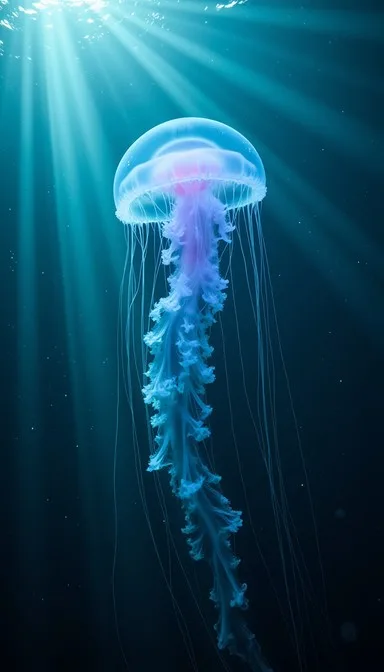
Image source: Bing (Web (fair-use with source credit))
When most people think of sea animals that start with J, jellyfish is the first word that comes to mind. But here's the thing that surprises people: "jellyfish" isn't one species. It's an umbrella term covering hundreds of distinct animals across multiple classes.
The moon jellyfish, the lion's mane, the box jellyfish, and the sea nettle are all different creatures with different behaviors and different levels of danger to humans.

Image source: Web (Bing) / buildyouraquarium.com (Web image (fair-use with source credit))
The first big visual distinction you need to master is the difference between true jellyfish and comb jellies. True jellyfish belong to the phylum Cnidaria. They have stinging cells called nematocysts that they use to capture prey.
Comb jellies, on the other hand, belong to the phylum Ctenophora. They don't sting. Instead, they capture food with sticky cells called colloblasts.
Visually, the difference is obvious once you know it. True jellyfish typically have a bell-shaped body with trailing tentacles hanging from the edges. Comb jellies are more oval or globe-shaped, and they move using rows of tiny hair-like structures called cilia that create a shimmering, rainbow-like effect as they beat.
If you see an animal with rainbow streaks running along its body, you're looking at a comb jelly, not a true jellyfish.
Which Jellyfish Should You Actually Worry About?
If you're swimming in tropical waters, particularly in Australia or the Indo-Pacific region, the box jellyfish deserves your respect. Its tentacles can reach three meters long, and its venom can cause cardiac arrest in severe cases. The Irukandji jellyfish, a tiny box jellyfish species, is even more concerning because its body is barely visible in the water.
By contrast, most true jellyfish you'll encounter in temperate waters deliver stings that are painful but rarely life-threatening. The moon jellyfish, the species most common in home aquariums and often seen in public displays, has very mild venom. Its sting feels like a minor irritation at worst.
What to Look For When Identifying Jellyfish
- Bell shape: dome-shaped, flattened, or boxy
- Tentacle position: hanging from bell edges or from the center
- Coloration: translucent, pink, blue, or golden
- Size: from the tiny Irukandji at 1 cm to the lion's mane at over 2 meters across
- Bioluminescence: many deep-sea species glow when disturbed
The Other "J" Fish: Jackfish, Jackknife Fish, and Jawfish
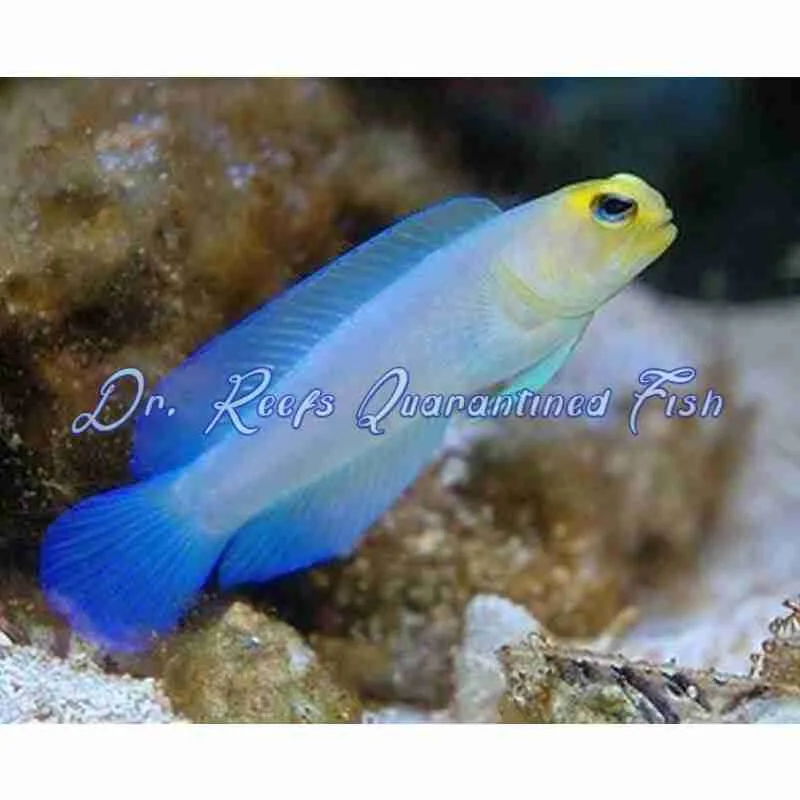
Image source: Web (Bing) / drreefsquarantinedfish.com (Web image (fair-use with source credit))
Beyond jellyfish, three fish families dominate the J-list, and confusing them is easier than you'd think. Jackfish, jackknife fish, and jawfish all start with J, but they live completely different lives.
Jackfish are powerful, fast-swimming predators in the genus Caranx. You'll hear them called jacks, trevallies, or crevalle jacks depending on your region. They cruise open water and reef edges, hunting smaller fish in aggressive bursts.
Sport fishermen love them because they fight hard. Visually, they look like streamlined tuna cousins with forked tails and silver bodies. They can grow substantial, with some species reaching over a meter in length.
Jackknife fish look nothing like jackfish. These are small, striking reef fish with tall, compressed bodies and bold black-and-white vertical stripes. The dorsal fin is long and elegant, and when it's raised, the fish resembles an old-fashioned straight razor.
That's where the name comes from. They're shy, nocturnal fish that hide in crevices during the day. If you're diving in the Caribbean or western Atlantic, keep an eye on coral ledges at night.
Jawfish are the burrowers. These small, big-headed fish dig elaborate tunnels in sandy bottoms and spend most of their time hovering near the entrance, waiting for plankton to drift by. There are about 80 species, and their distinguishing feature is exactly what the name suggests: a large, muscular jaw.
The yellowhead jawfish is a favorite among underwater photographers because of its bright yellow head and blue-gray body. They're fascinating to watch, but they're shy and will vanish into their burrows at the slightest movement.
How to Tell Them Apart at a Glance
- Jackfish: large, silver, open-water speedsters with forked tails
- Jackknife fish: small, striped, reef-dwelling, with a tall dorsal fin
- Jawfish: small, big-headed, hovering over sandy burrows
The Japanese Spider Crab: The Giant of the Deep
If you want the most dramatic animal on this list, the Japanese spider crab takes the crown. This is the largest arthropod on Earth. The leg span is the headline number.
Fully grown, these crabs can stretch their legs up to 3.7 meters, which is about 12 feet. That measurement comes from the tip of one front leg to the tip of the opposite one. The body itself is much smaller by comparison, usually around 37 centimeters across, but the legs make them look like something out of a sci-fi film.
These crabs live deep in the waters off Japan, typically at depths of 150 to 300 meters. The cold, dark environment means they grow slowly and live long. Research suggests some individuals reach 100 years of age.
Their long legs help them cover the rocky, uneven seafloor where they scavenge for dead animals and occasionally catch slow-moving prey.
Fishing for Japanese spider crabs is regulated in Japan. The season is limited, and there are restrictions on catching females to protect the population. If you ever see one in an aquarium, you're looking at an animal that might outlive you.
Their size, longevity, and ancient appearance make them a favorite exhibit at facilities that have the space to house them.
John Dory: The Fish That Looks Like a Leaf
The John Dory is one of those fish that confuses people the first time they see it. It's laterally compressed, meaning its body is extremely thin from side to side. From head-on, it's almost invisible.
From the side, it looks like a large oval leaf with a big mouth and spiny dorsal fin. It's a perfect camouflage strategy for a predator that sneaks up on small fish and shrimp.
Its scientific name is Zeus faber, which translates roughly to "Zeus the smith." The name John Dory itself has a debated origin. Some say it comes from the French jaune doré, meaning "golden yellow," which describes its coloring. Others point to an old English sea shanty or the name of a legendary pirate.
Either way, the fish is easy to recognize by the large dark spot on its side. Legend says that spot is the thumbprint of Saint Peter, who pulled a coin from the fish's mouth in biblical stories.
In terms of size, John Dory typically reaches about 10 kilograms, though most caught specimens are smaller. Chefs prize it for firm, white, flaky flesh that holds up well to pan-searing. If you see it on a menu, it's usually prepared simply with butter and herbs because the flavor is delicate enough to stand on its own.
The fish is found in the eastern Atlantic, the Mediterranean, and parts of the Indian Ocean. It's also called "St. Peter's fish" in some regions, which adds to the confusion if you're researching it.
But the visual cues are consistent: thin body, golden-brown coloring, and that unmistakable dark spot.