Hammerhead to Hagfish: Sea Animals Beginning with H
If you've ever tried to list sea animals that start with H, you probably hit the famous three: humpback whale, hammerhead shark, and maybe seahorse if you stretched it. But here's the thing. The letter H is actually a goldmine in marine biology.
It's stacked with everything from ancient creatures that outlived the dinosaurs to deep-sea oddities that produce slime measured in gallons. Most people stop at the obvious ones and miss the rest.
In our research, we found over a dozen distinct species that start with H, spanning six different biological classes. As of 2026, only about 230,000 marine species have been documented worldwide, and the H-list punches well above its weight. Understanding these animals matters whether you're a scuba diver, an aquarium hobbyist, or just someone who loves ocean trivia.
So let's break down the full roster, compare the heavyweights, and clear up some common mix-ups along the way.
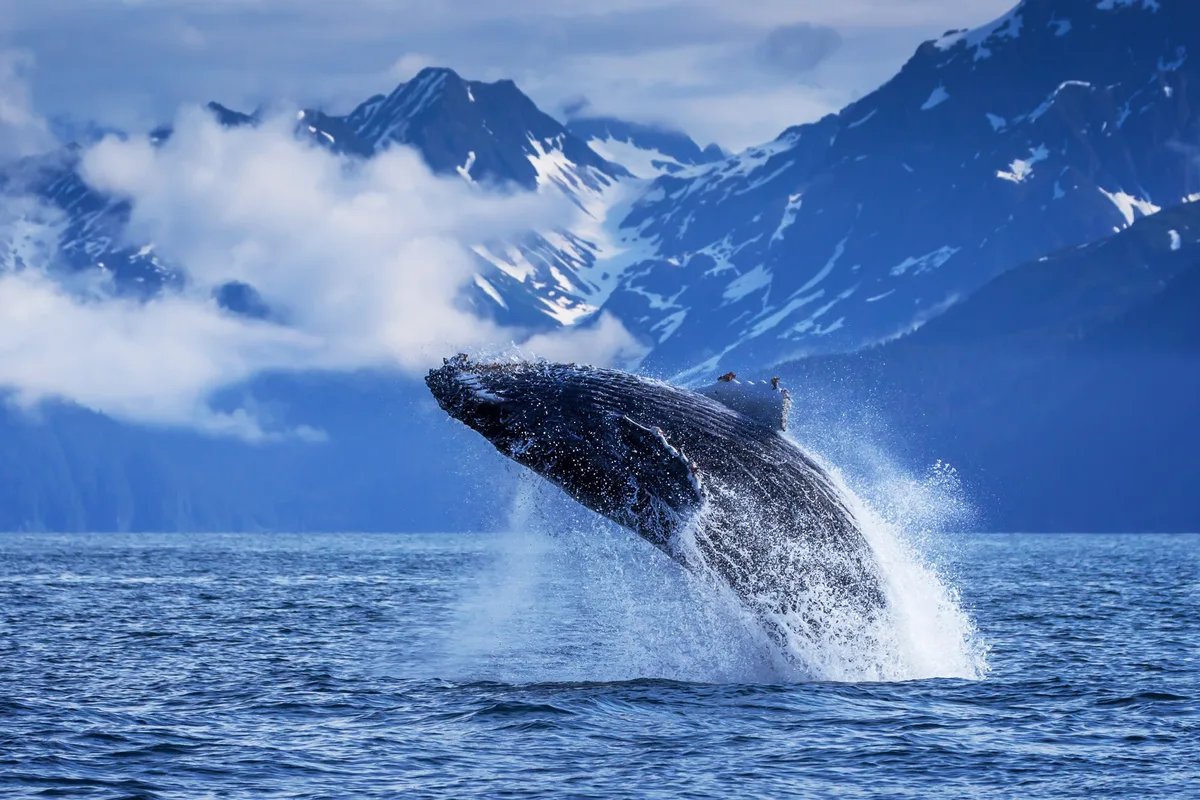
Image source: Web (Bing) / blobby-volley.de (Web image (fair-use with source credit))
Why This List Matters More Than You Think
The letter H covers an incredible range of evolutionary stories. You've got the horseshoe crab, which has barely changed in 450 million years. You've got the hagfish, which ties itself in knots to escape predators.
You've got the Hector's dolphin, one of the rarest marine mammals on Earth. These aren't just random creatures sharing a letter. They represent distinct branches of the animal kingdom that most people never connect.
Here's why this matters practically. If you're a diver, knowing your hammerhead from your horn shark could change how you approach a reef. If you're an aquarium keeper, seahorses and hermit crabs have wildly different care requirements than fish.
And if you're just curious, the H-list offers some of the most mind-blowing facts in ocean science. The sheer diversity under one letter makes it a perfect case study for how marine life adapts across habitats.
Quick Answer
The main sea animals that start with H include humpback whale, hammerhead shark, harbor seal, seahorse, horseshoe crab, hermit crab, hagfish, hake, haddock, halfbeak, hogfish, horn shark, and Hector's dolphin. Each occupies a different ecological niche. Some are endangered.
Some are commercially fished. All are worth knowing.
The Heavyweights: Humpback Whales, Hammerhead Sharks, and Harbor Seals
These three are the celebrities of the H-list. You'll find them in documentaries, on whale-watching tours, and in countless wildlife photos. Each one holds a record or two that makes them stand out in the animal kingdom.
Humpback Whale: The Acrobat of the Ocean
The humpback whale (Megaptera novaeangliae) is the showstopper of the cetacean world. It's famous for breaching completely out of the water, a behavior that can launch up to 40 tons of whale into the air. These whales migrate farther than almost any other mammal, traveling up to 16,000 miles in a single year between polar feeding grounds and tropical breeding grounds.
What makes humpbacks particularly fascinating is their song. Only males sing, and they produce complex, evolving melodies that last 10 to 20 minutes. These songs are so structured that researchers at NOAA have tracked how new phrases spread across Pacific populations like musical trends.
If you're planning to see one in the wild, Hawaii's Maui channel hosts around 10,000 humpbacks each winter, making it one of the best whale-watching spots on Earth.
Hammerhead Shark: The Odd-Shaped Hunter
The hammerhead shark isn't one species. It's a family called Sphyrnidae, containing nine distinct species ranging from the bonnethead at 3 feet to the great hammerhead at 20 feet. That flattened head, called a cephalofoil, isn't just for looks.
It spreads the shark's electroreceptors across a wider area, letting it detect prey hiding in the sand with incredible precision.
Hammerheads are also one of the few sharks that school together. During the day, you might spot a hundred of them gathered around seamounts like the ones near Cocos Island, Costa Rica. At night, they scatter to hunt.
This social behavior is rare among sharks and still puzzles marine biologists. The scalloped hammerhead specifically is listed as critically endangered by the IUCN Red List, so conservation efforts matter here.
Harbor Seal: The Coastal Charmer
The harbor seal (Phoca vitulina) is the adorable face of the H-list. Unlike sea lions, they lack external ear flaps, giving them that sleek, torpedo-like appearance. They're also remarkably adaptable, thriving from the cold waters of the Arctic down to temperate coasts like those of California and the UK.
Harbor seals weigh between 180 and 285 pounds but can dive to depths of 1,500 feet on a single breath.
What's most charming about harbor seals is their behavior on land. They haul out on beaches, rocks, and even docks, often in large groups. A key identifier is their V-shaped nostrils and spotted coat, which helps them blend into rocky shorelines.
If you're exploring coastal areas, these are the seals you're most likely to encounter relaxing in the sun.

Image source: Web (Bing) / pinterest.com (Web image (fair-use with source credit))
The Surprising Superstars: Seahorses, Horseshoe Crabs, and Hermit Crabs
The heavyweights get the spotlight. But these three H-animals are arguably more interesting, especially if you love weird biology or keep a home aquarium. They represent entirely different body plans and survival strategies.
Seahorse: The One That Swims Upright
The seahorse, genus Hippocampus, is the only fish in the world that swims upright. It's also one of the slowest, moving at a leisurely pace thanks to a tiny dorsal fin that flutters up to 35 times per second. Instead of scales, seahorses have bony plates arranged in rings, making them more like tiny armored knights than typical fish.
The most famous seahorse fact is that males carry the pregnancy. Females deposit eggs into a specialized brood pouch on the male's belly, where he fertilizes and incubates them for 2 to 4 weeks. When they're ready, he goes into labor, contracting to push out dozens to hundreds of miniature seahorses.
As of 2026, seahorse populations face pressure from traditional medicine trade and aquarium collection, so captive-bred specimens are increasingly recommended for hobbyists.
Horseshoe Crab: The 450-Million-Year-Old Living Fossil
Here's a mind-bender. The horseshoe crab is more closely related to spiders and scorpions than to true crabs. It's a chelicerate, part of a lineage that predates the dinosaurs by over 200 million years.
These animals haven't changed much in 450 million years, which is why they're called living fossils.
If you've ever received an IV or a vaccine, you've indirectly benefited from horseshoe crabs. Their blue blood contains amebocytes that detect bacterial endotoxins, and that blood is used in the Limulus Amebocyte Lysate (LAL) test. This test screens virtually all injectable medications for contamination.
It's regulated tightly by the FDA, with harvesting programs that aim to keep mortality low. You can see them spawning on Atlantic beaches, especially Delaware Bay, during full moon high tides in late spring.
Hermit Crab: The Recycler of the Seafloor
Hermit crabs aren't true crabs either. They're anomurans, more closely related to squat lobsters. The defining trait is their soft, spiraled abdomen, which they protect by living in abandoned snail shells.
As they grow, they need new shells, creating a fascinating process called vacancy chains. When one crab finds a bigger shell, it moves in, leaving its old one for the next crab in line.
There are over 800 species of hermit crabs, split between marine and terrestrial varieties. The marine ones are popular in saltwater aquariums, where they double as clean-up crew by eating algae and leftover food. If you're keeping them, the critical factor is shell availability.
Provide a range of sizes and let them trade up naturally.

Image source: Web (Bing) / pngtree.com (Web image (fair-use with source credit))
The Deep Cuts: Lesser-Known H Animals Worth Knowing
Beyond the famous five, the H-list gets seriously interesting. These animals might not headline documentaries, but they're ecologically vital and packed with strange adaptations.
Hagfish. These jawless fish are the slime kings of the ocean. When threatened, they release a protein-based slime that expands up to 5 gallons in seconds when mixed with seawater. It clogs the gills of predators.
Their skin is extremely loose, letting them tie themselves in knots to wipe off the slime after an attack.
Hake. A commercial whitefish in the Merlucciidae family, hake is a staple in Mediterranean cuisine. It's often confused with cod, but it has a softer texture and a milder flavor. Global hake fisheries are managed under strict quotas, particularly in the North Atlantic, to prevent overfishing.
Haddock. Similar to hake but distinct with a dark lateral line and a black spot on each side. It's the foundation of traditional fish and chips in the UK. The haddock fishery in the North Atlantic has recovered significantly thanks to management measures implemented by NOAA Fisheries.
Halfbeak. Named for its unique jaw structure, where the lower jaw extends far beyond the upper. These surface-dwelling fish use their elongated jaws to skim small insects and plankton. Some species even fly short distances above the water.
Horn Shark. A small, docile shark found in kelp forests along the California coast. It has a sharp spine on each dorsal fin and lays spiral-shaped egg cases called mermaid's purses. Divers love spotting them resting on the seafloor during the day.
Hogfish. A reef fish that can change its sex from female to male during its lifetime. It gets its name from its elongated snout, which it uses to root out prey from the sand. It's a prized food fish in the Caribbean, though reproducing males are increasingly protected.
Humphead Wrasse. Also called the Napoleon wrasse, this massive reef fish can reach 6 feet and weigh up to 400 pounds. It's listed under CITES Appendix I, restricting international trade due to overfishing for the live reef food fish trade.
Hawaiian Monk Seal. One of the most endangered marine mammals, with fewer than 1,400 individuals remaining. Unlike harbor seals, these are endemic to Hawaii and face threats from habitat loss, entanglement in fishing gear, and disease. They're protected under both the Endangered Species Act and the Marine Mammal Protection Act.
Hector's Dolphin. The smallest and rarest marine dolphin in the world. Endemic to New Zealand, it has a distinctive rounded dorsal fin that resembles a Mickey Mouse ear. Population estimates suggest only around 7,000 individuals remain, concentrated mostly around the South Island.
If you're curious how other letters stack up, our collection of animal lists covers everything from the familiar to the obscure, and the P-list page has some surprising entries worth checking out.
Side-by-Side Comparison: Key Facts at a Glance
Here's a quick reference table to compare the main H-animals across the traits people actually ask about. Use it to spot the differences that matter for identification, conservation, or just trivia night.
| Animal | Size | Habitat | Diet | Conservation Status |
|---|---|---|---|---|
| Humpback Whale | 40-60 ft, up to 40 tons | Open ocean, migrates globally | Krill, small fish via baleen | Least Concern |
| Hammerhead Shark | 3-20 ft depending on species | Coastal waters, seamounts | Fish, squid, rays | Varies, some critically endangered |
| Harbor Seal | 5-6 ft, 180-285 lbs | Temperate and Arctic coasts | Fish, squid, crustaceans | Least Concern |
| Seahorse | 0.6-14 in depending on species | Seagrass, coral reefs, estuaries | Tiny crustaceans, plankton | Varies, many vulnerable |
| Horseshoe Crab | 18-24 in | Atlantic coastlines, sandy bottoms | Worms, mollusks, algae | Vulnerable (regional) |
| Hermit Crab | 0.5-8 in depending on species | Tidal pools, reefs, ocean floor | Omnivorous scavenger | Least Concern |
| Hagfish | 16-40 in | Deep ocean, muddy bottoms | Carrion, dead fish | Least Concern |
| Haddock | 12-36 in | North Atlantic, cool waters | Small fish, shellfish | Recovering, managed |
| Hector's Dolphin | 4-5 ft, 88-132 lbs | New Zealand coastal waters | Small fish, squid | Endangered |
The size ranges alone tell you how diverse this group is. A 40-ton humpback and a half-inch hermit crab both start with the same letter.
Who Should Care About Each Animal: A Use-Case Breakdown
Different H-animals matter to different people. Here's who gets the most out of knowing each one.
Scuba divers. You'll want to recognize hammerheads, horn sharks, and hogfish on reef dives. Knowing their behavior keeps you safe and helps you spot them faster. Hammerheads school at depth.
Horn sharks rest in crevices during the day. Hogfish are curious and may approach divers.
Anglers and seafood lovers. Haddock and hake are the commercial heavyweights on this list. If you fish in the North Atlantic, telling them apart matters for compliance with catch limits. If you cook, hake's flaky texture makes it a favorite in Mediterranean recipes.
Aquarium hobbyists. Seahorses and hermit crabs are the two you'll actually keep at home. Seahorses need pristine water and slow flow. Hermit crabs need shell options and a varied diet.
Both are fascinating to watch but demand specific care.
Wildlife watchers and ecotourists. Humpback whales and Hawaiian monk seals are the bucket-list sightings. Book a winter trip to Hawaii for whales. Visit remote Hawaiian beaches for monk seals, but keep your distance as required by law.
Conservation researchers. Hector's dolphins and Hawaiian monk seals are priority species. Both face extinction without active management. If you're studying marine mammals, these are the H-animals that matter most.
If you enjoy exploring animal lists, our letter M collection includes some equally fascinating ocean dwellers, and the S-list page covers more marine mammals in depth.
Common Mix-Ups and Identification Mistakes
The H-list has some notoriously confusing look-alikes. Even experienced naturalists occasionally pause on these pairs.
Haddock vs. Cod. These are the most confused fish in the North Atlantic. Haddock has a dark lateral line and a distinctive black spot above its pectoral fin.
Cod has a paler lateral line and a chin barbel. Check the lateral line first, it's the fastest tell.
Harbor Seal vs. Sea Lion. Sea lions have visible ear flaps and can rotate their rear flippers forward to walk on land. Harbor seals lack ear flaps and wiggle on their bellies.
If you see one "sitting up," it's a sea lion.
Horseshoe Crab vs. True Crab. Horseshoe crabs have no antennae and a smooth, dome-shaped shell. True crabs have two antennae and a segmented shell.
Also, horseshoe crabs move their legs in a walking pattern, while true crabs scuttle sideways.
Humphead Wrasse vs. Hogfish. Both have prominent foreheads and can be large. The humphead wrasse is massive, reaching 400 pounds, with thick lips and a humped head.
Hogfish max out around 20 pounds and have a more elongated snout.
Hake vs. Haddock. Both are whitefish, but hake has a more elongated body and a protruding lower jaw. Haddock is deeper-bodied with a concave tail fin.
Commercial markets often mislabel them, so knowing the difference helps you avoid overpaying.
Conservation and Safety: What You Need to Know
Several H-animals carry serious conservation status, and a few present safety considerations for humans. Here's the breakdown.
Hawaiian Monk Seal. Fewer than 1,400 individuals remain as of 2026. They're protected under the Endangered Species Act and the Marine Mammal Protection Act. NOAA Fisheries enforces a minimum 150-foot distance.
Approaching one can result in fines up to $50,000.
Hector's Dolphin. With roughly 7,000 individuals left, this species is classified as endangered. Bycatch in gillnets is the primary threat. New Zealand has implemented marine protected areas to reduce entanglements, but recovery is slow.
Scalloped Hammerhead. This species is listed as critically endangered by the IUCN Red List. The main driver is overfishing for shark fin soup. Several countries have implemented catch bans, but enforcement remains inconsistent.
Humphead Wrasse. Trade is restricted under CITES Appendix I. That means international commercial trade is essentially banned. Poaching continues in some regions, but legal penalties are severe.
Horseshoe Crab Biomedical Harvesting. The LAL test industry harvests roughly 500,000 horseshoe crabs annually along the US Atlantic coast. Regulators under the Atlantic States Marine Fisheries Commission set quotas. Mortality from bleeding is estimated at 15 to 30 percent.
A synthetic alternative called rFC exists, but adoption is still growing.
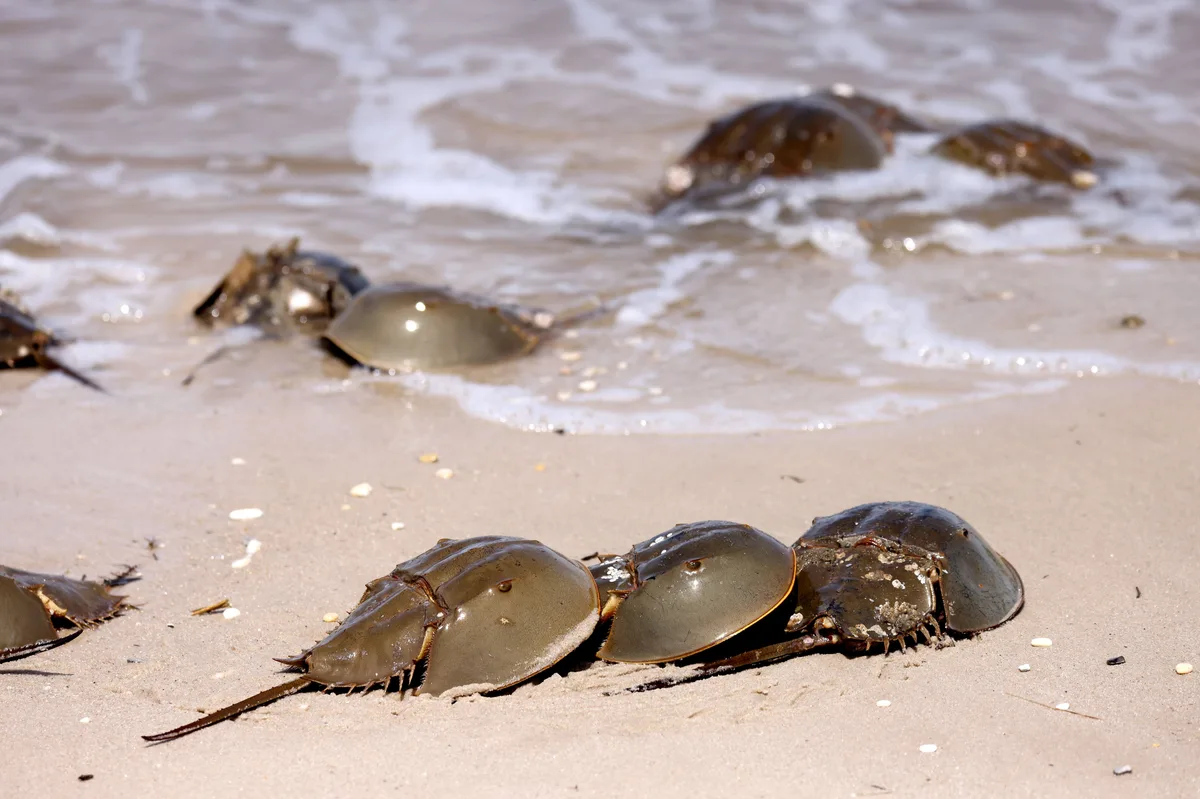
Image source: Web (Bing) / ar.inspiredpencil.com (Web image (fair-use with source credit))
Hammerhead Safety for Divers. Despite their reputation, hammerhead attacks on humans are extremely rare. The species is shy and typically avoids divers. Keep a respectful distance, never feed them, and avoid sudden movements.
Aggressive behavior is almost always provoked.
Harbor Seal Interactions. Harbor seals are generally docile, but they bite when cornered. The Marine Mammal Protection Act prohibits touching or feeding them. If you see a seal pup alone on the beach, it's likely waiting for its mother.
Leave it alone and report it to local authorities.
Where to See H Animals in the Wild
If you want to spot H-animals in their natural habitat, here are the top destinations with the best odds.
Humpback Whales. Winter months in Maui, Hawaii, offer the densest concentration in the Northern Hemisphere. Alaska and British Columbia are prime summer viewing during feeding season.
Hammerhead Sharks. The Galapagos Islands and Cocos Island, Costa Rica, are famous for schooling scalloped hammerheads. Divers visit between June and September for the best visibility.
Harbor Seals. The Pacific coast from California to British Columbia has year-round populations. Point Reyes National Seashore and Monterey Bay are reliable spots.
Seahorses. The seagrass beds of the Florida Keys and the Mediterranean coast hold healthy populations. Look for them in shallow, sheltered bays.
Horseshoe Crabs. Delaware Bay is the epicenter for spawning season. Late May to early June, during full moon high tides, brings thousands ashore.
Hector's Dolphins. Head to Akaroa Harbour on New Zealand's South Island. Several tour operators offer dolphin-watching trips with high encounter rates.
Hagfish. These are deep-sea dwellers, so you'll need a research vessel or a public aquarium with a deep-water exhibit. The Monterey Bay Aquarium has successfully displayed them.
Horn Sharks. California's kelp forests, particularly around Catalina Island and La Jolla, are reliable spots for daytime dives. Look under ledges and in crevices.
If you're planning a wildlife trip and want to explore other letter categories too, our P-animal page covers more species you might encounter along the way.
Expert Tips for Learning More
Start with field guides specific to your region. The Peterson Field Guide series and the Reef Fish Identification series are solid choices. For deeper research, NOAA Fisheries publishes species fact sheets and stock assessments on their website.
Citizen science apps like iNaturalist let you log sightings and verify them with experts. Joining local marine mammal stranding networks or aquarium volunteer programs gives hands-on experience. Our O-animal collection offers another angle on ocean biodiversity.
Frequently Asked Questions
Which H animal is the fastest?
The hammerhead shark tops out around 25 miles per hour. That's quick for a shark, but the humpback whale can sustain longer bursts during migration.
Which H animal is most endangered?
The Hawaiian monk seal holds that title with fewer than 1,400 individuals left. The Hector's dolphin is close behind at roughly 7,000.
Which H animal makes the weirdest sound?
The hagfish? No sound at all. The humpback whale wins with complex songs that last up to 30 minutes and travel hundreds of miles underwater.
Can I keep H animals in a home aquarium?
Seahorses and hermit crabs are the practical options. Both need specialized setups, and seahorses in particular require live food and pristine water conditions.
The Takeaway: Choosing Your H Animal
Every H animal offers something worth knowing. Pick the one that matches your interests, then dig deeper. Whether you're watching humpbacks breach or keeping a seahorse tank, you'll find the H-list is far more than a trivia answer.
The letter H might not get the spotlight in ocean alphabet lists. But after this tour, you know better. It's a doorway into some of the most extraordinary biology on the planet.