Reptiles That Start with L: From Lizards to Sea Turtles
You're probably here because you're working through an animal alphabet list or just want to settle a bar bet about reptiles that start with l. It's a smaller group than you might think, but it packs some serious heavyweights. From a two-pound pet gecko to a two-thousand-pound ocean wanderer, this letter covers a lot of ground.
One stat puts it in perspective: leatherback sea turtles can dive past 4,000 feet, deeper than most whales. That makes them the deepest-diving reptiles on record, as of 2026. If that doesn't convince you the letter L deserves a closer look, the rest of this list will.

Image source: Bing (Web (fair-use with source credit))
Why the Letter "L" Hits Different in the Reptile World
The letter L pulls from three completely different reptile families. Lizards, snakes, and turtles all show up here. That's rare.
Most letters stick to one group, like the reptiles starting with a, which are mostly snakes and lizards.
What makes L special is how extreme the differences are. The smallest entry, the leopard gecko, tops out around ten inches. The largest, the leatherback sea turtle, can weigh over 2,000 pounds.
We're talking about a scale difference of a hundred times or more. That's not just a gap. That's a whole category shift.
The habitats are just as varied. You've got desert dwellers in the American Southwest, marine snakes in the Indo-Pacific, and grazers on African savannas. The letter L isn't a single category.
It's a cross-section of everything reptiles can be.
The Lizards That Start with L: From Pet Tanks to Galápagos Rocks
The lizards own this letter. They're the most common "L" reptiles, and they run the full spectrum from easygoing pets to wild desert racers. Let's meet them.
Leopard Gecko: The Beginner's Best Friend
If you've ever been inside a pet store, you've seen a leopard gecko (Eublepharis macularius). They're the small, spotted lizards that sit in the reptile aisle like they own the place. For good reason, too.
They're one of the most popular pet reptiles in the world.
Here's why they're such a hit:
- They have eyelids, which most geckos don't. That gives them a surprisingly expressive face.
- They're vocal. They chirp and squeak when hunting or feeling territorial.
- They drop their tails when stressed. The tail grows back, but it never looks exactly the same.
Aggregate reviews from keepers consistently point to leopard geckos as one of the easiest reptiles to care for. A healthy one can live 15 to 20 years in captivity. That's a long commitment, but a rewarding one.
If you're comparing pet-friendly options, the reptiles starting with c list has a few more you might like.
Leopard Lizard and Long-Nosed Lizard: The Desert Speedsters
Don't mix these two up with the gecko. Leopard lizards (Gambelia wislizenii) are fast, heat-loving hunters from the deserts of the American Southwest and Mexico. They're not pets.
They're all speed and appetite. They'll even eat other lizards when the opportunity comes.
The long-nosed lizard is a close cousin with a slightly stretched snout. That extra nose helps it wedge into narrow rock crevices to escape predators or beat the heat. Both species are more about watching than handling.
If you're out in the desert, you'll likely see nothing but a blur as they dart off.
Lava Lizard: The Galápagos Push-Up Champion
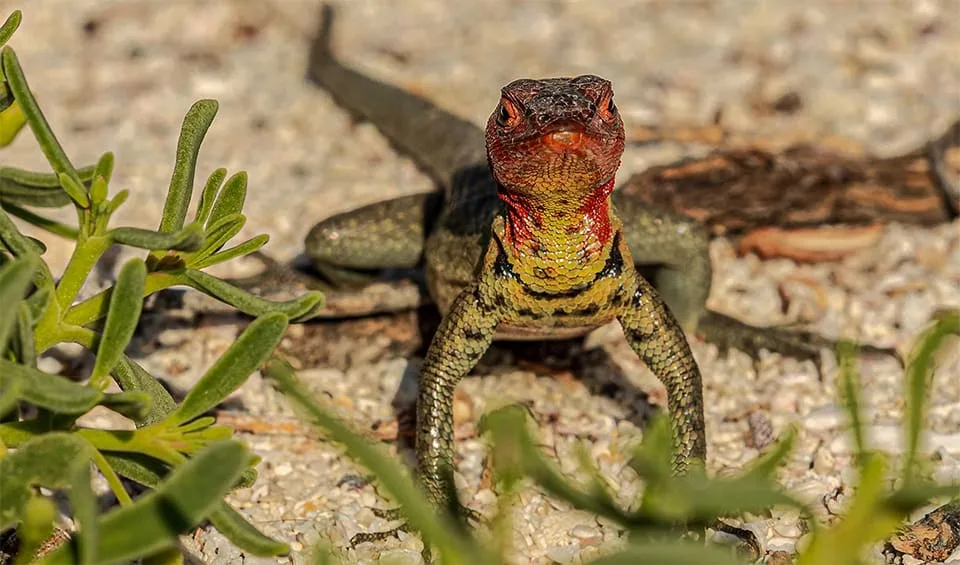
Image source: Web (Bing) / biodb.com (Web image (fair-use with source credit))
Head to the Galápagos Islands and you'll spot lava lizards almost everywhere. There are roughly 22 species, all in the genus Microlophus. They're the small dark lizards doing frantic push-ups on volcanic rocks.
That push-up display is a real message. Males do it to warn other males and to impress females. It's a tiny drama playing out on every sunny boulder.
They're not closely related to the other L lizards, but they make up for size with personality.
The Snakes That Start with L: Ladder and Lora
The letter L has only two notable snakes, but both are genuinely interesting. You won't find them at your local pet shop, but they're worth knowing about.
Ladder Snake (Rhinechis scalaris), Found in Spain and Portugal. Young snakes have a pattern that looks exactly like a ladder: two parallel lines with crossbars. As they age, that pattern fades into a pair of stripes.
They're constrictors but completely harmless to humans. They prefer to slip into brush rather than fight.
Lora Snake, This is a true marine snake, sometimes called the reef shallows sea snake. It lives its whole life in saltwater habitats across the Indo-Pacific. A paddle-shaped tail helps it swim, and it comes to the surface to breathe.
It's not the snake you'll meet at the zoo, but it's a fascinating example of how reptiles adapted to the open sea. For a few more unusual serpents, check out the reptiles that start with d guide.
The Turtles and Tortoises: Leatherbacks, Loggerheads, and Leopard Tortoises
This is where the letter L gets heavyweight. Sea turtles, giant tortoises, and the biggest reptile on the list all live here.
Leatherback and Loggerhead Sea Turtles: The Ocean Wanderers
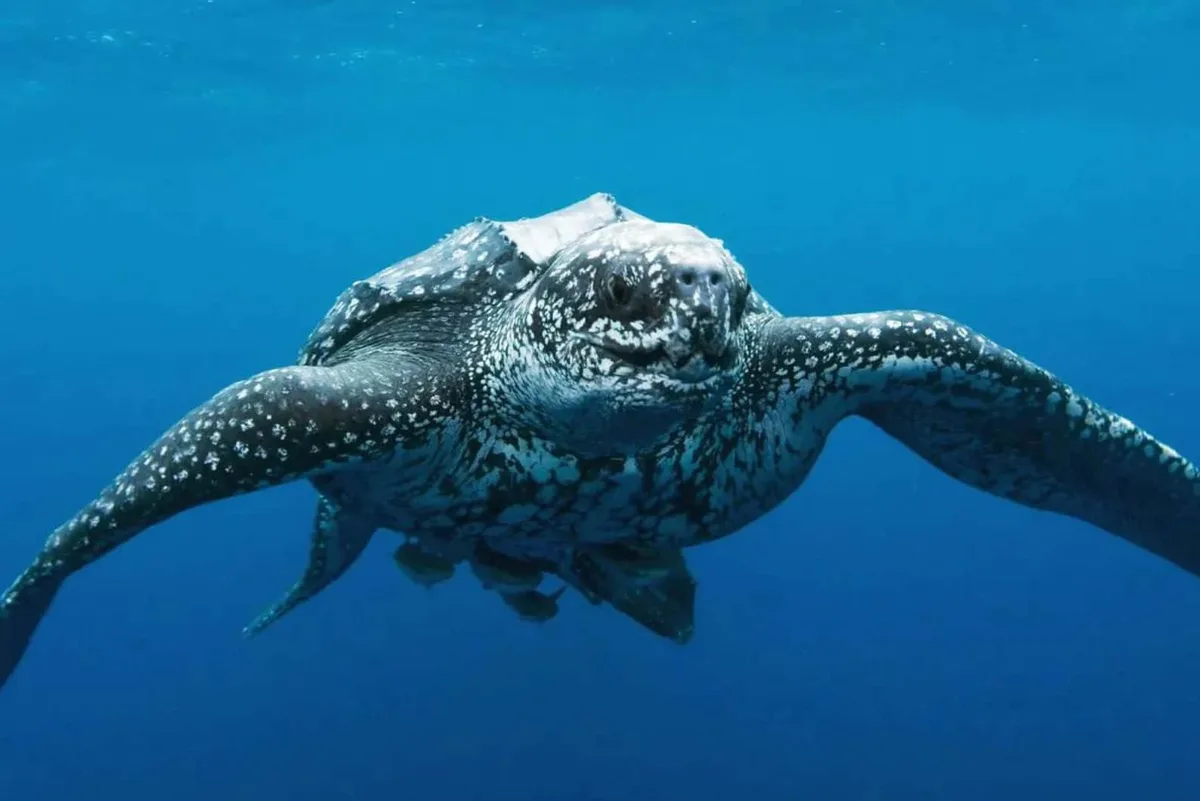
Image source: Web (Bing) / wallpapers.com (Web image (fair-use with source credit))
Let's start with the biggest reptile on this entire list. The leatherback sea turtle (Dermochelys coriacea) is the largest turtle in the world. It doesn't have a hard shell.
Instead, it has a thick leathery skin covering a mosaic of tiny bones. They've been recorded diving deeper than 4,000 feet, mainly to hunt jellyfish.
The loggerhead sea turtle (Caretta caretta) is another giant, named for its massive head and powerful jaws. Those jaws let it crush crabs, conchs, and other hard-shelled prey. Loggerheads nest on beaches across the southeastern US, and they hold the title of state reptile in South Carolina.
Both species face serious conservation pressure. Bycatch in fishing gear and plastic pollution are major threats. NOAA Fisheries maintains the official recovery plans for both, and their data tracks these populations year after year.
Leopard Tortoise: The Spotted Grazer of Africa

Image source: Web (Bing) / animalkingdom.org (Web image (fair-use with source credit))
On the land side, the leopard tortoise (Stigmochelys pardalis) brings the pattern. Native to the savannas of sub-Saharan Africa, it carries a high-domed shell with black and yellow blotches that really do look like a leopard print. These tortoises get big.
Adults can reach 100 pounds, and they live for 50 years or more.
They're strict grazers. Grass makes up most of their diet, which means they have a slow, steady metabolism. One quirk: they sometimes flip over on their backs.
In the wild, that's usually fatal unless another tortoise or a helpful human comes along. It's a weird, vulnerable side of an otherwise tank-like animal.
Leopard Gecko vs. Leopard Tortoise vs. Ladder Snake: A Quick Side-by-Side
If you're trying to decide which "L" reptile might actually belong in your life, here's a clean comparison. It covers the three species you're most likely to encounter.
| Reptile | Type | Average Size | Habitat | Pet Potential |
|---|---|---|---|---|
| Leopard Gecko | Lizard | 8–10 inches | Arid, rocky scrubland | Excellent |
| Leopard Tortoise | Tortoise | Up to 100 pounds | African savanna | Moderate |
| Ladder Snake | Snake | Up to 4 feet | Mediterranean woodland | Low to moderate |
So which one stands out? It depends on what you want.
The leopard gecko is the clear winner for first-time keepers. Small, docile, and forgiving. If you want a pet, this is the one.
The leopard tortoise is a big commitment. They need a lot of outdoor space, a careful diet, and a long-term plan. They're not for apartments or casual owners.
The ladder snake is a wild species tamed by a few hobbyists. It's interesting to observe, but it's not a beginner animal. They can be defensive when startled.
And if you're more into mammals than reptiles, the letter L has some great company there too, like the mammals starting with L. Or you can keep rolling through the alphabet with the animals that start with A list and see where the trail takes you.
Pet Potential: Which "L" Reptile Actually Belongs in Your Home?
Space and experience decide this answer. A leopard gecko fits on a shelf. A leopard tortoise needs a garden.
Those two completely different starting points split pet owners into separate camps.
| Reptile | Best For | Space Needed | Commitment |
|---|---|---|---|
| Leopard Gecko | First-time owners | 20-gallon tank | 15-20 years |
| Leopard Tortoise | Experienced keepers with yards | Large outdoor pen | 50+ years |
| Ladder Snake | Advanced hobbyists | 40+ gallon enclosure | 15-20 years |
Aggregate keeper feedback is straightforward. The gecko is the only one that forgives beginner mistakes. The tortoise requires a long-term outdoor plan.
The ladder snake never fully warms up to handling. Wild species like the leopard lizard and lora snake stay out of home setups entirely. Their diets and habitat needs are too specific, and many are legally protected.
Common Misidentifications and Mistakes to Avoid
Mix-ups happen more than you'd think. The leopard gecko and leopard lizard share a name, but one is a docile pet and the other is a wild speedster. The gecko has eyelids and vocalizes.
The lizard doesn't.
The lora snake is another one. People mistake it for an eel. Look for scales and a lunged air-breather.
An eel has fins and gills.
Also, the "L" trap: the Laughing Kookaburra isn't a reptile. It's a bird. Always double-check the class before dropping something into an animal list.
And in the turtle world, don't lump leatherbacks with loggerheads. Their shells, diets and dive habits differ completely. A leatherback's shell is soft and rubbery.
A loggerhead has hard plates.
Conservation and Legal Warnings: Sea Turtles and Protected Species
These animals carry legal weight. Leatherback and loggerhead sea turtles are listed under the US Endangered Species Act. Disturbing nests, capturing adults, or removing eggs can trigger federal penalties.
The leopard tortoise is CITES-listed, so international trade is heavily regulated.
If you're buying any of these, ask for documentation. A missing permit is a huge red flag. For official status data, NOAA Fisheries publishes recovery plans and population counts.
The CITES website lists current trade rules. If you spot illegal sales, report them to your local wildlife agency.
Frequently Asked Questions About "L" Reptiles
Are leopard geckos good pets for beginners?
Yes. They're hardy, handle well, and eat a simple insect diet. A single adult does great in a 20-gallon tank.
Keep a heat gradient with a warm side around 90 degrees Fahrenheit. Most gecko health problems trace back to bad temperatures.
Do leopard tortoises make good pets?
They can, but they're a huge commitment. They live over 50 years and need large, warm outdoor spaces with grass. Their size rules out indoor living for most people.
This is a long-term project, not a casual pet choice.
What is the rarest reptile that starts with L?
The leatherback sea turtle. They're globally vulnerable, and their nesting beaches are limited. Every hatchling counts.
Conservation teams track each season because their numbers are still uncertain.
Can I keep a lava lizard as a pet?
No. Lava lizards are protected wildlife in the Galápagos. Removing them is illegal, and they rarely survive in captivity.
Their temperature, diet, and stress needs are too specific. They belong on the volcanic rocks.
Which is bigger, a leatherback or a loggerhead?
A leatherback. They can pass 2,000 pounds, the heaviest of any living turtle. Loggerheads usually top out around 350 pounds.
Shells differ too. The leatherback's is soft and leathery, while the loggerhead's is hard bone.
The Final Verdict: Why These Reptiles Deserve Your Attention
The letter L covers more ground than almost any other. A ten-inch gecko and a 2,000-pound sea turtle share this letter. That range is exactly why animal lists stay interesting.
For pet owners, the leopard gecko leads. For conservation, the sea turtles matter most. For pure entertainment, watch a lava lizard do push-ups.
Next time someone asks about reptiles that start with l, you'll have the full picture.