Animals That Start with T: Tigers, Turtles & More
Animals that start with T are some of the most recognizable creatures on the planet, yet most people can only name three or four off the top of their heads. You've got tigers, turtles, and toucans, but what about the tarsier with its giant eyes or the tenrec that looks like a hedgehog's distant cousin? The truth is, the list runs much deeper than the obvious picks, and that's what makes this letter so fun to explore.
In our research, we rounded up 15 standout species that span four different animal classes: mammals, reptiles, birds, and even insects. Each one brings something unique to the table, whether it's the tapir's prehensile snout or the thorny devil's water-collecting skin. As of 2026, several of these species face real conservation challenges, so we've included current status data where it matters.
Let's dig into the full lineup, starting with why a visual approach makes all the difference when learning these animals.
Why a Visual Field Guide Beats a Plain List
The problem with alphabetical animal lists
Alphabetical lists are boring. They're also genuinely unhelpful when you're trying to actually learn something. When you see "Tiger, Toad, Toucan, Turkey" written in a row, your brain just skims past each name without forming any real connection to the animal.
You might memorize the words, but you couldn't pick a tapir out of a lineup if your life depended on it.
The bigger issue is context. A bare list tells you nothing about where an animal lives, how big it gets, or what makes it special. Is a tortoise a turtle?
Why does a tarsier look like it's permanently surprised? These are the questions that actually make animal learning stick, and you can't answer them with a bullet point.
How we picked these 15 standout "T" animals
We didn't just grab the first 15 alphabetically. We chose species that represent different habitats, body types, and interesting behaviors. You'll find apex predators like the tiger, tiny primates like the tarsier, and bizarre reptiles like the thorny devil.
The goal was variety. If every animal on the list looked the same or lived in the same place, the article wouldn't teach you anything new. So we balanced familiar faces with obscure ones, land dwellers with ocean swimmers, and gentle herbivores with venomous hunters.
What makes visual recognition the key to learning them
Here's the thing about animals: you recognize them by how they look. The tiger's stripes, the turtle's shell, the toucan's oversized beak. These visual cues are what your brain latches onto, and they're exactly what a text-only list can't deliver.
That's why this guide leans heavily on visual identifiers. We'll describe what to look for in each species, so when you see a photo or spot one in the wild, you can name it with confidence. Think of this as a mental photo album, not a vocabulary list.
The "T" Lineup: Meet the Main Players
Tigers, Turtles, and Toucans (the crowd favorites)
Let's start with the animals everyone knows. The tiger (Panthera tigris) is the largest cat species on Earth, with males reaching up to 660 pounds in the Siberian subspecies. Their striped coats aren't just for show; they provide camouflage in tall grass and forest shadows.
Turtles are ancient reptiles that have existed for over 200 million years. They carry their homes on their backs, and the shell is actually fused to their skeleton. You can't just lift a turtle out of its shell, because that shell is part of its body, complete with nerve endings and blood vessels.
Toucans are the birds with the unmistakable beaks. The toco toucan, the largest species, sports a beak that measures up to 7.5 inches long, about a third of its total body length. Despite looking heavy, the beak is mostly hollow keratin, making it surprisingly light.
Tapirs, Tarsiers, and Tamarins (the exotic gems)
These are the animals that make people go, "Wait, that's a real thing?" Tapirs look like a cross between a pig and an anteater, with a short, flexible snout they use to grab leaves and fruit. They're actually related to rhinos and horses, and they've been around for about 50 million years.
Tarsiers are tiny primates found only in Southeast Asia. They weigh just 3 to 5 ounces, about the same as a deck of cards. Their eyes are so large that each one weighs more than their entire brain, and they can't even move their eyeballs in their sockets.
Instead, they rotate their heads nearly 180 degrees to scan for prey.
Tamarins are small monkeys from Central and South America. Many species have elaborate mustaches and manes, earning them names like the emperor tamarin, which looks like it has a white handlebar mustache. They're incredibly social, living in family groups of up to 15 individuals.
Tarantulas, Tegu, and Thorny Devils (the unexpected ones)
Tarantulas get a bad rap, but they're fascinating creatures. These hairy spiders are found on nearly every continent, and while their bite is painful, it's rarely dangerous to humans. Their primary defense is actually flicking tiny barbed hairs from their abdomen, which irritate predator eyes and skin.
The tegu is a large lizard native to South America. Black and white tegus can grow to 4.5 feet long and are surprisingly intelligent for reptiles. They're known to recognize their owners and can even be potty-trained, which is why they've become increasingly popular in the exotic pet trade.
The thorny devil is a small Australian lizard covered in conical spikes. Those spikes aren't just armor; they're a water collection system. The skin between the spikes channels moisture toward the lizard's mouth through capillary action, letting it drink from any part of its body.
Tuna, Tropicbirds, and Tasmanian Devils (the habitat outliers)
Tuna are ocean powerhouses. The bluefin tuna can reach 990 pounds and swim at bursts up to 43 miles per hour. Unlike most fish, they're warm-blooded, which lets them hunt in colder waters and maintain an advantage over their prey.
Tropicbirds are seabirds with long, streaming tail feathers that can reach twice their body length. They're found in tropical oceans, where they nest on remote cliffs and islands. Their name comes from their tropical distribution patterns.
The Tasmanian devil is the world's largest carnivorous marsupial, found only in Tasmania. They're famous for their loud, unsettling screeches and powerful jaws that can crush bone. Their bite force per pound is actually stronger than a lion's.
Visual Identification: What to Look For
Body shape and silhouette at a glance
Before you even look at color patterns, pay attention to body shape. A turtle is flat and streamlined, built for water. A tortoise is round and domed, built for land.
A tapir has a stocky, pig-like body with a short trunk. A tarsier is tiny with oversized hind legs built for leaping.
Silhouette alone can narrow down an animal's family in seconds. Think about the toucan: nothing else looks like it. The massive beak, the compact body, the colorful chest.
Same with the thorny devil, which looks like a walking pinecone. When you see that shape, you know exactly what you're looking at.
Color patterns and markings that distinguish species
Color does more than make animals pretty. It helps them survive. Tigers use their orange and black stripes to break up their outline in dappled jungle light.
The tamarin's white mustache helps individuals recognize each other within social groups.
Some patterns are key identifiers. The tiger's stripes are unique to each individual, like human fingerprints. The red-billed toucan has a bright orange-yellow throat.
The Tasmanian devil has white patches on its chest and rear that stand out against its black fur.
Size comparisons relative to familiar objects
Numbers are great, but they're abstract. Telling someone a tarsier is 5 inches long doesn't paint a picture. Telling them it fits in the palm of your hand does.
That's the trick to making size stick.
Use familiar references: a tiger is about as long as a small car. A tarantula's leg span is roughly the diameter of a dinner plate. A tortoise can weigh as much as a washing machine.
These comparisons make the information click instantly.
Distinguishing features (beaks, shells, tails, spikes)
Every "T" animal has at least one feature you can't miss. It might be the toucan's bill, the turtle's shell, or the thorny devil's spikes. These are your anchor points for identification.
When you look at a photo, ask yourself what stands out first. For the tapir, it's the snout. For the tarsier, it's the eyes.
For the tamarin, it's the facial hair. For the tuna, it's the sleek, torpedo-shaped body. Name that feature, and you've named the animal.

Image source: Web (Bing) / pinterest.com (Web image (fair-use with source credit))
Tricky Lookalikes: Spot the Difference
Turtle vs. Tortoise (shell shape and feet tell the story)
This is the classic confusion, and it's easy to clear up. All tortoises are turtles, but not all turtles are tortoises. The distinction comes down to habitat and anatomy.
Tortoises live entirely on land. Their feet are round and stumpy, like elephant legs, built for walking on solid ground. Their shells are heavy, domed, and often slightly bumpy.
Turtles, on the other hand, spend most of their time in water. Their feet are webbed or flippers, perfect for swimming, and their shells are flatter and more streamlined for cutting through water.
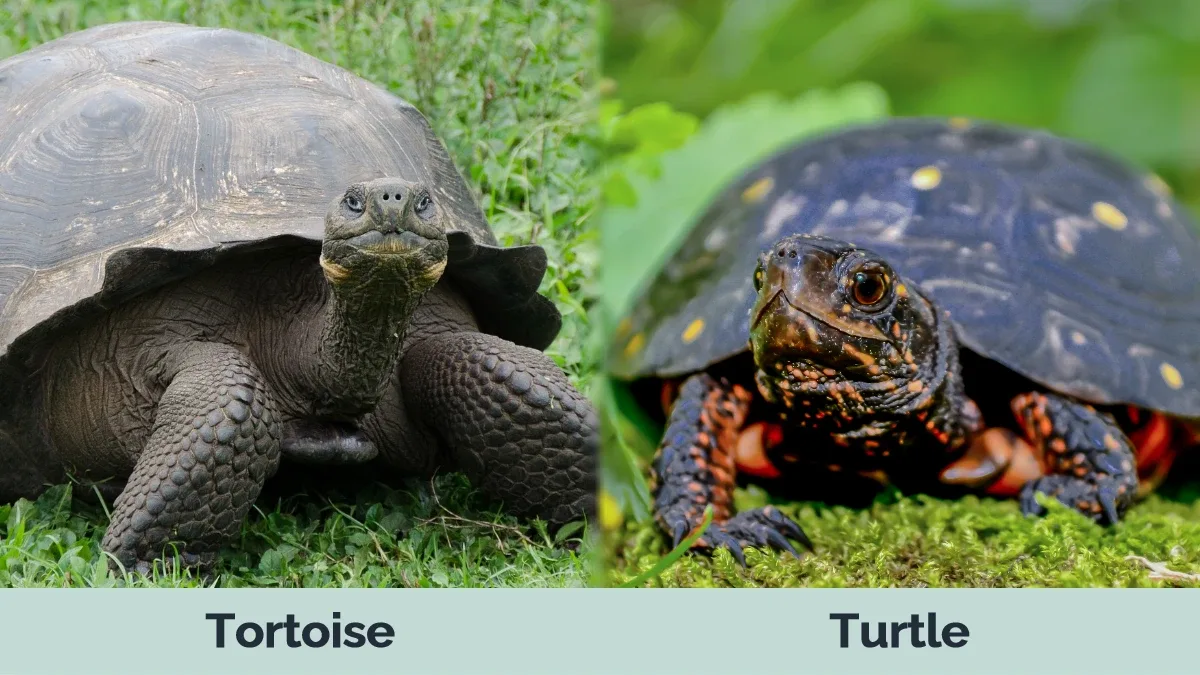
Image source: Web (Bing) / hepper.com (Web image (fair-use with source credit))
Toad vs. Tree Frog (skin texture and habitat clues)
Both are amphibians, and both start with T if you count toads. But they're easy to tell apart once you know what to look for. Toads have dry, warty skin and prefer to stay on the ground.
Their bodies are squat and their hops are short.
Tree frogs have smooth, moist skin and sticky toe pads that let them climb vertical surfaces. Their bodies are slender and their legs are long, built for leaping between branches. If you see a frog up a tree, it's not a toad.
Tuna vs. Other Game Fish (fin structure and body shape)
Tuna are built for speed, and their bodies show it. They have a torpedo shape, a deeply forked tail, and a row of small finlets between the dorsal fin and tail. Those finlets are the key identifier.
No other game fish has that exact arrangement.
Compare that to a mahimahi, which has a blunt face and a long dorsal fin running down its back. Or a marlin, which has a spear-like bill and a tall, pointed dorsal fin. Once you spot the finlets, you're looking at a tuna.
Toucan vs. Tropicbird (beak size and tail feathers)
Both are tropical birds, but they couldn't look more different. The toucan's defining feature is its massive, colorful beak. It's thick, curved, and impossible to miss.
The tropicbird, by contrast, has a slim, sharp beak and long, white tail streamers that trail behind it in flight.
One is a fruit-eater living in rainforest canopies. The other is a seabird diving for fish over open ocean. Different worlds, different looks.
Where in the World: "T" Animals by Region
The Americas (toucan, tamarin, tegu, turkey)
The Americas are a treasure trove for "T" animals. South America alone hosts the toco toucan, the emperor tamarin, and the black and white tegu. These species thrive in the Amazon rainforest, where the canopy provides food, shelter, and breeding grounds.
North America brings us the wild turkey (Meleagris gallopavo). These birds were nearly extinct in the early 1900s, but conservation efforts brought them back strong. Today, an estimated 7 million wild turkeys roam the United States, a remarkable comeback story.
Central America adds another layer. The Baird's tapir, the largest land mammal in the region, roams the jungles of Mexico, Belize, and Panama. It plays a critical role in seed dispersal, keeping the rainforest healthy.
Africa & Madagascar (tsetse fly, tenrec, thorny devil)
Africa is home to the tsetse fly, an insect that feeds on vertebrate blood and transmits sleeping sickness. It's a serious public health concern across sub-Saharan Africa, with an estimated 70 million people at risk of infection.
Madagascar brings us the tenrec. This small mammal evolved in isolation, filling ecological niches that hedgehogs, shrews, and even otters occupy elsewhere. Some species have spines, some have soft fur, and some can even produce ultrasonic calls for echolocation.
The thorny devil calls the arid deserts of central and western Australia home, not Africa, but it deserves a mention alongside its dry-climate counterparts. Its spiky exterior and desert camouflage make it a master of survival in harsh conditions.
Asia & Oceania (tiger, tapir, tarsier, Tasmanian devil)
Asia is where the tiger rules. The Bengal tiger roams India's forests, while the Sumatran tiger clings to survival on the island of Sumatra. Both subspecies face habitat loss and poaching, with fewer than 4,000 wild tigers left across the entire continent.
The Malayan tapir lives in the dense rainforests of Southeast Asia, recognizable by its black-and-white pattern that breaks up its outline in dappled light. Tarsiers are also found here, in the Philippines and surrounding islands, where they hunt insects at night.
Oceania brings us to the Tasmanian devil, found only on the island state of Tasmania. Since the 1990s, a contagious facial tumor disease has decimated the population, dropping numbers by up to 80% in some areas. Conservation efforts include captive breeding programs and vaccine research.
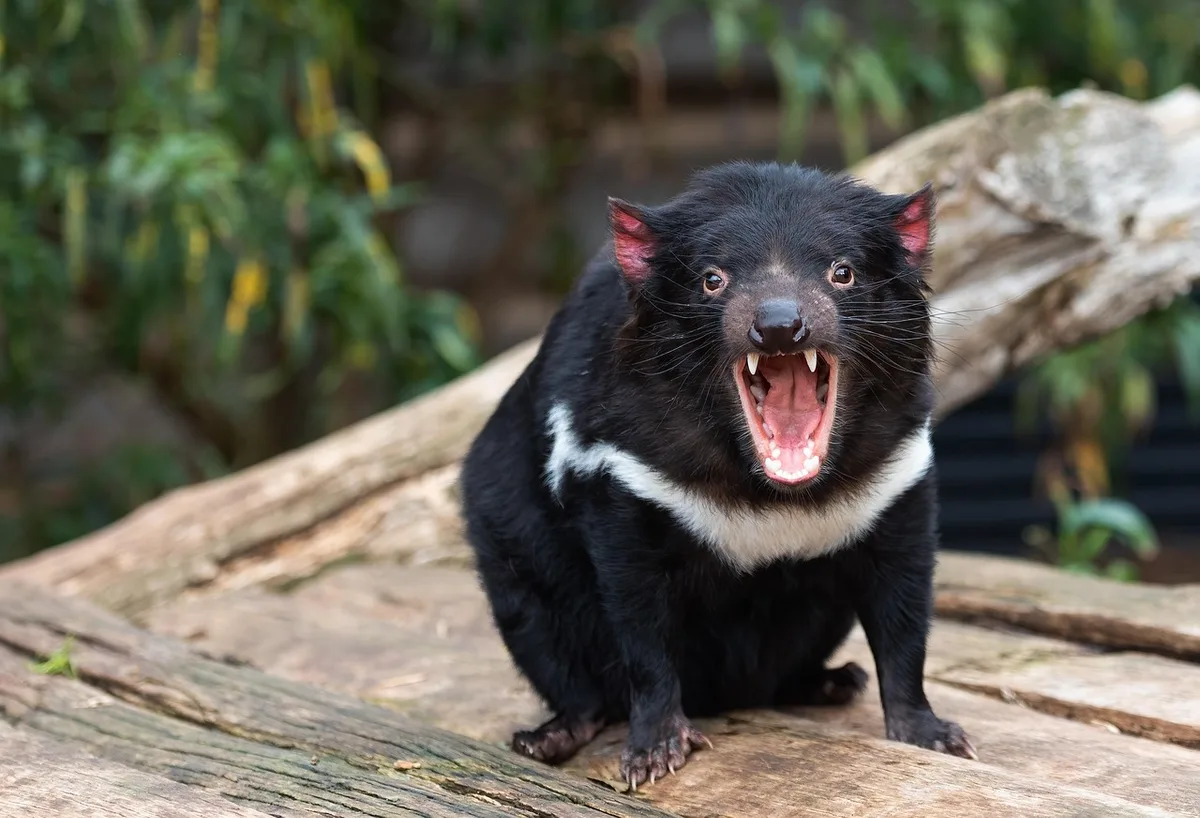
Image source: Web (Bing) / pixabay.com (Web image (fair-use with source credit))
Global oceans and waterways (tuna, tiger shark, sea turtle)
Some "T" animals don't have a home turf. They roam the open ocean. Bluefin tuna are found in both the Atlantic and Pacific, migrating thousands of miles between feeding and spawning grounds.
Tiger sharks are equally wide-ranging, inhabiting tropical and temperate waters worldwide.
Sea turtles travel even farther. Leatherback sea turtles can cross entire ocean basins, swimming up to 10,000 miles in a single year. They nest on tropical beaches but feed in colder, nutrient-rich waters, making them true global citizens.
Common Mistakes People Make
Calling every shelled reptile a "turtle"
It's an easy slip, but it's wrong more often than not. Tortoises are turtles, but the reverse isn't true. If the animal lives on land and has stumpy, elephant-like feet, it's a tortoise.
If it lives in water and has webbed feet or flippers, it's a turtle.
The distinction matters for care and conservation. Tortoises need dry, warm enclosures. Sea turtles need saltwater habitats.
Misidentifying them can lead to poor care decisions and misleading conservation data.
Assuming all tarantulas are deadly
This myth refuses to die. Of the nearly 1,000 tarantula species, none pose a serious threat to human life. Their venom is designed to subdue insects and small vertebrates, not large mammals.
A tarantula bite can be painful, like a bee sting, but deaths are virtually unheard of. The real risk comes from an allergic reaction, not the venom itself. If you're considering a tarantula as a pet, the bigger concern is handling stress, which can cause them to flick irritating hairs.
Forgetting that "T-Rex" isn't a real "T" animal
This one trips up kids and adults alike. Yes, Tyrannosaurus rex starts with T. No, it doesn't count in this list.
The reason is simple: dinosaurs are extinct, and every other animal in this guide is alive today.
If you're building a classroom list or playing trivia, keep T-Rex in the dinosaur category. For living "T" animals, stick to tigers, turtles, toucans, and the rest of the roster above.
Mixing up tamarins and tarsiers (different continents, both small primates)
Both are small primates, but they live half a world apart. Tamarins are New World monkeys, native to Central and South America. Tarsiers are prosimians, an older branch of the primate family tree, found only in Southeast Asia.
Their physical differences are just as clear. Tamarins have claw-like nails and often sport facial hair. Tarsiers have huge eyes, elongated ankles, and lack nails entirely, they have tiny pads on their fingertips instead.
Different continents, different families, different looks.
The Visual Cheat Sheet
Quick-reference table: animal, habitat, size, key feature
This is the section to bookmark. We've condensed everything into one scannable table so you can quickly compare the full lineup.
| Animal | Habitat | Size | Key Feature |
|---|---|---|---|
| Tiger | Asia | Up to 660 lbs | Striped coat |
| Turtle | Water | 4 in to 6 ft | Webbed feet, flippers |
| Tortoise | Land | 4 in to 6 ft | Stumpy, round feet |
| Toucan | Central/South America | Up to 25 in | Oversized colorful beak |
| Tapir | Southeast Asia, Americas | Up to 700 lbs | Short flexible snout |
| Tarsier | Southeast Asia | 3.5 to 6 in | Giant eyes |
| Tamarin | Central/South America | Up to 13 oz | Facial hair or mustache |
| Tarantula | Worldwide | Up to 11 in leg span | Hairy body |
| Tegu | South America | Up to 4.5 ft | Bands or spots |
| Thorny Devil | Australia | Up to 8 in | Conical spikes |
| Tuna | Global oceans | Up to 990 lbs | Torpedo body, finlets |
| Tasmanian Devil | Tasmania | Up to 26 lbs | Powerful jaws |
| Turkey | North America | Up to 24 lbs | Fan-shaped tail |
| Tropicbird | Tropical oceans | Up to 30 in | Long tail streamers |
| Tsetse Fly | Sub-Saharan Africa | Up to 0.6 in | Biting mouthparts |
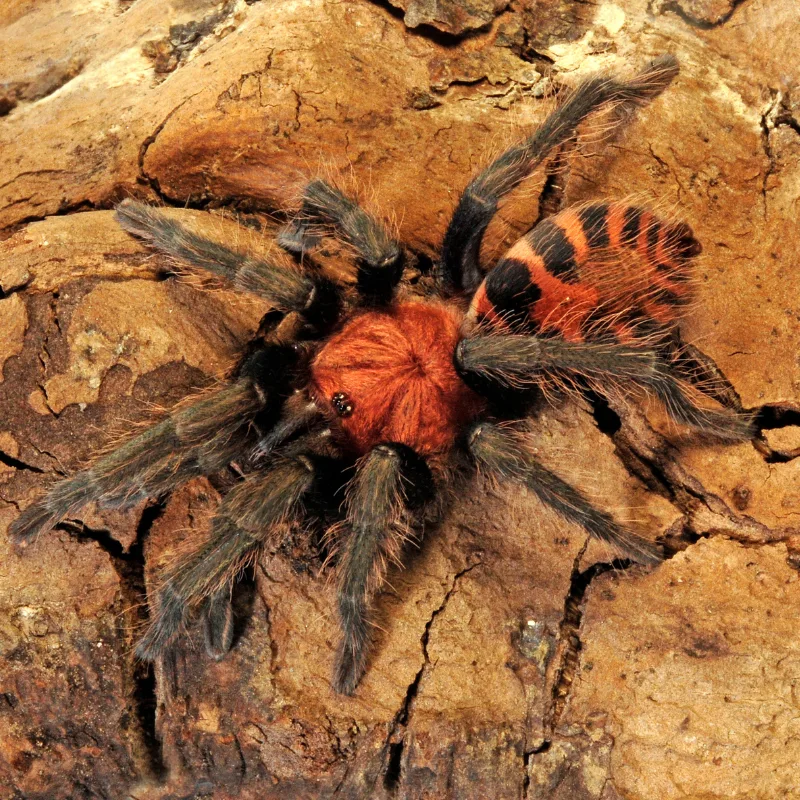
Image source: Web (Bing) / bugpets.co.uk (Web image (fair-use with source credit))
Memory tricks to lock in each species
Associations work better than memorization. Think of the tiger and its stripes like fingerprints, unique to every individual. Picture the tapir with its tiny trunk, like a mini elephant.
Imagine the tarsier with eyes bigger than its stomach, literally, since its eyes outweigh its brain.
Group them by feature. Flat shell means turtle. Dome shell means tortoise.
Beak bigger than its head means toucan. Spikes all over means thorny devil. Long tail streamers mean tropicbird.
How to explain these animals to kids without overwhelming them
Start with the five most recognizable species and build from there. Lead with the tiger, turtle, toucan, turkey, and tarantula. Ask questions rather than lecturing.
What color is the tiger? How many legs does the spider have? Why does the turtle carry a shell?
Then introduce the more obscure ones one at a time. Show a photo of the tarsier and ask kids to describe its eyes. Show the tapir and ask what animal they think it's related to.
The answers will surprise them, and surprise builds retention.
"T" Animals as Pets, Symbols, and Icons
Tegus and tarantulas are the most common "T" animals in the pet trade. Tegus are intelligent and can bond with owners, but they need huge enclosures and a varied diet of meat, fruit, and vegetables. Tarantulas are low-maintenance, yet their urticating hairs can irritate skin, so handling is discouraged.
Tigers dominate branding worldwide. Sports teams, energy drinks, and even cereal mascots use their image to project power. Turtles symbolize longevity in many Asian cultures, while the turkey is famously tied to Thanksgiving in the US.
For a deeper dive into similar species, check out these animal name lists or this collection of critters for comparison.
Pick a Favorite: How to Choose Your "T" Animal
If you love big cats, the tiger wins. If you're drawn to reptiles, the tortoise or tegu fits best. Bird fans will naturally gravitate toward the toucan's vibrant beak, while arachnid enthusiasts already know the tarantula's appeal.
For kids, stick with the turkey or turtle. They're safe, easy to recognize, and have fun facts. For adults who want a conversation starter, the tarsier's giant eyes or the thorny devil's spikes will do the trick.
FAQ: Quick Answers About "T" Animals
Are there any "T" animals that are extinct?
Yes. The thylacine, also called the Tasmanian tiger, went extinct in the 1930s. The Turgai river dolphin is another extinct species.
What's the rarest animal starting with T?
The Sumatran tiger is critically endangered, with fewer than 400 left in the wild. The ploughshare tortoise from Madagascar is even rarer, with roughly 100 individuals remaining.
Which "T" animal lives the longest?
Tortoises win this one. The Aldabra tortoise can live past 150 years. The oldest recorded tortoise, Jonathan, is over 190 years old and still alive in 2026.
Are any "T" animals dangerous to humans?
The tsetse fly transmits sleeping sickness, which can be fatal if untreated. Tiger sharks and tigers have both been responsible for attacks, though these events are rare.
Species Data Quick Reference
| Animal | Lifespan | Conservation Status |
|---|---|---|
| Tiger | 10-15 yrs (wild) | Endangered |
| Tortoise | 50-150 yrs | Varies by species |
| Toucan | 15-20 yrs | Least Concern |
| Tarsier | 12-20 yrs | Vulnerable |
| Tasmanian Devil | 5-7 yrs | Endangered |
| Bluefin Tuna | 15-30 yrs | Least Concern |
For species-by-species notes, the wildlife resources page offers a great starting point.
The Conservation Angle
Several "T" animals are under serious threat. The tiger population has dropped 97% over the last century, down to roughly 4,500 wild individuals. The Tasmanian devil faces an infectious cancer called devil facial tumor disease, which has killed about 80% of the population since 1996.
You can support these species through reputable organizations like the World Wildlife Fund. Even small actions, like reducing palm oil consumption, help protect tiger habitats in Southeast Asia.
Your Next Steps: Test Yourself
You now have 15 animals to remember. Start by covering the list and seeing how many you can name from memory. Focus on the key identifiers we covered: a tiger's stripes, a tapir's snout, or a thorny devil's spikes.
Next, test yourself with geography. Can you match each animal to its continent? Use the regional breakdown above as your cheat sheet.
Finally, explore the species further. The IUCN Red List has the latest conservation status for every animal on this list. Check how your favorites are doing and what you can do to help.