The Ultimate List of Dog Breeds Starting With O
If you've ever seen a giant, shaggy dog at the park and wondered what on earth you were looking at, you're not alone. The dog breeds that start with o are some of the most distinctive and rare pups in the canine world, yet most people can only name one or two of them. That's a shame, because these four breeds each bring something genuinely unique to the table.
The challenge is that most of these dogs look similar at a glance. Big, hairy, and sturdy describes three of the four. As of 2026, the Otterhound is officially rarer than the giant panda, with fewer than 1,000 individuals worldwide.
That kind of scarcity makes visual identification even trickier, because you simply don't see them often enough to learn the differences. Let's fix that today.
Quick Answer
The dog breeds that start with o are the Old English Sheepdog, Otterhound, Olde English Bulldogge, and Old Danish Pointer. The OES is the shaggy herder you'll recognize immediately. The Otterhound is a rare water tracker with webbed feet.
The Olde English Bulldogge is a muscular revival breed. The Old Danish Pointer is a Scandinavian hunting rarity. Each one has distinct physical markers that make identification straightforward once you know what to look for.
Can't Tell Your Shaggy Dogs Apart? Start Here
Here's the thing about dog breeds that start with o: they suffer from what we call "shaggy dog syndrome." When a breed is covered in thick fur, your brain defaults to "big fluffy dog" and stops paying attention to the details. That's exactly where identification breaks down.
The Old English Sheepdog is the poster child for this problem. Everyone recognizes the gray-and-white shaggy coat, but few people can explain why it looks different from a Bearded Collie or a Briard. The same goes for the Otterhound, which has a wiry, rough coat that many people mistake for an unkempt OES.
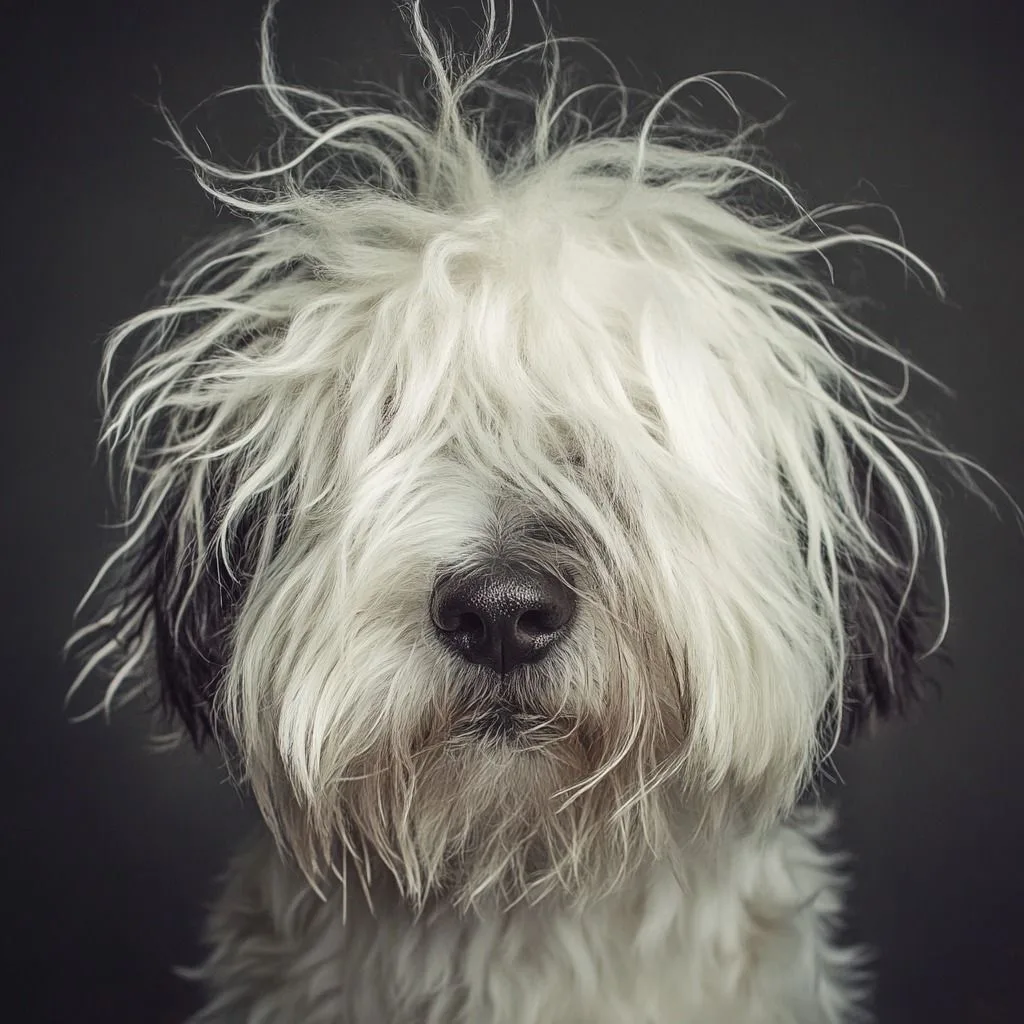
Image source: Web (Bing) / ca.pinterest.com (Web image (fair-use with source credit))
So why does this matter? Because breed identification affects everything from grooming expectations to health risks and exercise needs. An Otterhound will destroy your backyard if bored.
An Olde English Bulldogge will happily nap all day. If you're considering adopting one of these breeds, or just satisfying your curiosity about that dog you saw last weekend, knowing the difference changes everything.
Our research suggests that the quickest path to confident identification is a simple visual checklist. Coat texture first, ears second, body build third, and tail last. Once you run through those four markers in order, you'll narrow it down fast.
Visual ID Made Simple: A Decision Framework
Let's build the identification framework that will carry you through the rest of this guide. Think of it as a flow chart you run in your head when you meet an unfamiliar dog.
Step 1: Check the coat texture. This is your fastest filter. Run your fingers through the fur if the dog is friendly, or just look closely. The Old English Sheepdog has a profuse, shaggy double coat that feels dense and slightly coarse on the outer layer.
The Otterhound has a wiry, broken coat that feels rough and springy, almost like a hard-wearing carpet. The Olde English Bulldogge is smooth-coated, short, and glossy. The Old Danish Pointer has a short, dense, and smooth coat that lies flat against the body.
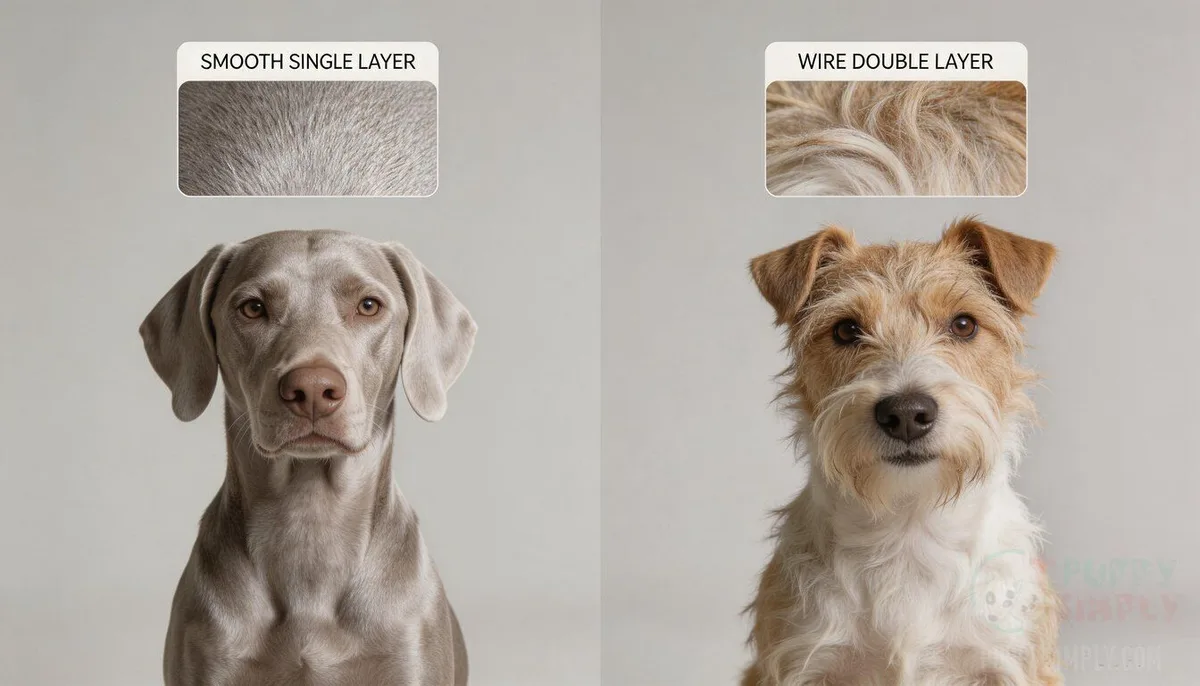
Image source: Bing (Web (fair-use with source credit))
Step 2: Look at the ears. This is where people get tripped up. The OES has small, drop ears that lie flat against the head, often hidden completely beneath the coat. The Otterhound has large, low-set, folded ears that hang close to the cheek.
The Olde English Bulldogge typically has rose ears, which fold backward and reveal the inner ear opening. The Old Danish Pointer has broader, drop ears that sit moderately high and taper toward a rounded tip.
Step 3: Size up the build. Stand back and assess the overall silhouette. The OES is square, sturdy, and rolled when it walks, almost like a bear. The Otterhound is slightly taller than it is long, with a deep chest and a head that appears large for its body.
The Olde English Bulldogge is low to the ground, wide in the chest, and heavily muscled in the shoulders and hindquarters. The Old Danish Pointer is lean, athletic, and built for endurance rather than power.
Step 4: Examine the tail. The Old English Sheepdog traditionally has a bobbed tail, either naturally or docked, giving it that rounded rear end. The Otterhound carries a long, thick tail that tapers from a broad base and is often held high when tracking. The Olde English Bulldogge has a straight or screw tail that hangs low between the legs.
The Old Danish Pointer carries its tail straight or slightly upward when working, parallel to the ground at rest.
Old English Sheepdog: The Fluffy Herder
The Old English Sheepdog, affectionately called the Bobtail, is the breed most people picture when they hear "shaggy dog." It originated in the western counties of England, where farmers needed a drover dog capable of moving cattle and sheep to market. That working heritage shows in the breed's intelligence, stamina, and occasional stubborn streak.
Visually, the OES is unmistakable once you know the markers. The head is large and square, with a definite stop between the brow and the muzzle. The eyes are dark and expressive, often completely hidden beneath a fall of hair.
The ears are small, flat against the skull, and almost invisible. The coat is profuse, harsh to the touch on the outer layer, and covers the entire body in a shaggy blanket of gray, blue, or blue-merle mixed with white.
Personality-wise, the OES is a clown. These dogs are playful, affectionate, and endlessly entertaining. They're also independent thinkers.
Herding breeds were bred to make decisions on their own, which means a Bobtail will sometimes look at you, consider your command, and decide that its own plan is better. That's not defiance. It's centuries of selective breeding.
The grooming commitment is the real deal-breaker for many owners. The OES coat mats quickly if neglected. Daily brushing is non-negotiable during shedding season, and professional grooming every 6 to 8 weeks is the norm.
Aggregate groomer reports place the average cost at $100 to $150 per session, depending on your region. If that sounds like a lot, consider the alternative of purchasing your own high-quality grooming tools and learning the technique. Many OES owners do, but it takes patience.
Otterhound: The Rare Water Tracker
If the Old English Sheepdog is the breed you're most likely to meet, the Otterhound is the one you're least likely to see. This ancient British scent hound was developed to hunt otters along rivers and lakes, a task it performed with an enthusiasm that bordered on obsession. The breed's webbed feet and water-resistant coat made it a natural swimmer, and its powerful nose made it the best tracker in the region.
The Otterhound's visual profile is distinct once you recognize it. The head is deep and narrow, giving it a somewhat rectangular appearance. The ears are long, folded, and set low, often reaching the corner of the mouth.
The coat is a rough, broken texture that feels harsh and springy, never silky. The tail is thick, tapering, and carried high when the dog is working. The overall impression is of a large, shaggy, slightly shambolic dog that looks like it just rolled out of a hedge.
Temperament is where the Otterhound reveals its true nature. These dogs are friendly, boisterous, and deeply affectionate with their families. They get along well with children and other dogs, largely because they were bred to work in packs.
However, they're also stubborn and independent in a way that can frustrate first-time owners. Recall is a significant challenge, especially when the nose catches an interesting scent.
The biggest surprise in our research was the exercise requirement. Otterhounds need more than just daily walks. They need mental stimulation, tracking games, and opportunities to use that remarkable nose.
Without it, they become destructive. Chewed furniture, excavated flower beds, and demolished crates are common complaints in Otterhound owner forums. This is not a couch potato breed.
It's a working hound that happens to live in your house.
Health-wise, the Otterhound is generally robust, but it does carry a predisposition to hip dysplasia and certain bleeding disorders. Responsible breeders screen for these conditions. The average lifespan is 10 to 15 years, which is respectable for a dog of this size.
But the rarity of the breed poses its own challenge. Finding a reputable breeder can take years, and rescue networks operate at minimal capacity.