Amazing Animals That Start with E: Elephants, Eagles & More
If you've ever tried to list animals that start with e, you know how quickly it gets tricky. The obvious ones roll off the tongue, but then you hit the "are these really E-words?" wall.
In our research, we found over 60 distinct species with names that genuinely begin with the letter E. That includes everything from the 14,000-pound African bush elephant to the 7-inch-long electric eel. Some of these names will surprise you, and a few common "E-animals" don't actually count.
Let's clear that up right now.
Quick Answer
Yes, plenty of animals start with E. Elephants, eagles, eels, emus, echidnas, elks, and elands are the most recognized. The full list also includes emperor penguins, ermines, Egyptian cobras, and electric rays.
Some naming rules matter, though. "Eastern bluebird" doesn't count because Eastern is just a descriptor. The real name must start with E itself.
True "E" Animals vs. "Described-With-E" Species
Here's where most people get confused. You'll see lists online that include "Eastern Gray Squirrel" or "European Hedgehog." Technically, those animals start with E in their common name, but the E is just a geographic or descriptive prefix.
A true E-animal has a name where the core identity begins with E. Think elephant, eagle, eel, or emu. The word itself tells you what species you're looking at.
"Eastern" tells you where it lives, not what it is.
This distinction matters for trivia, word games, and educational activities. If you're playing Scattergories or helping a kid learn the alphabet, you want animals that genuinely start with E, not ones that merely describe a location.
So what counts? Here's a quick breakdown:
True E-animals:
- Elephant
- Eagle
- Eel
- Emu
- Echidna
- Elk
- Eland
- Ermine
- Emperor penguin
- Egyptian cobra
- Electric ray
- Entlebucher Mountain Dog
Not true E-animals:
- Eastern Gray Squirrel (Eastern is a descriptor)
- European Robin (same issue)
- Eastern Diamondback Rattlesnake (same issue)
- Equus (that's a genus, not a common name)
The science side gets even more interesting. Taxonomy uses Latin names that don't always match common English ones. The scientific name for the domestic horse is Equus ferus caballus, so technically every horse is an "E-animal" in Latin.
But that's not how people search, and it's not what you want in a list for kids.
For practical purposes, stick with common names where the first word of the whole name begins with E. That keeps your list clean, accurate, and useful for everything from flashcards to trivia night.
Mammals That Start with E: From Elephants to Ermines
Mammals give us the heavyweight champions of the E-animal world. Let's start with the biggest.
The Giants: Elephants, Elks, and Elands
The African bush elephant is the largest land animal on Earth. Males can reach 13 feet tall at the shoulder and weigh up to 14,000 pounds. That's heavier than a fully loaded cement truck.
The African forest elephant is smaller but still massive, and the Asian elephant sits somewhere in between with smaller ears and only some males growing tusks.
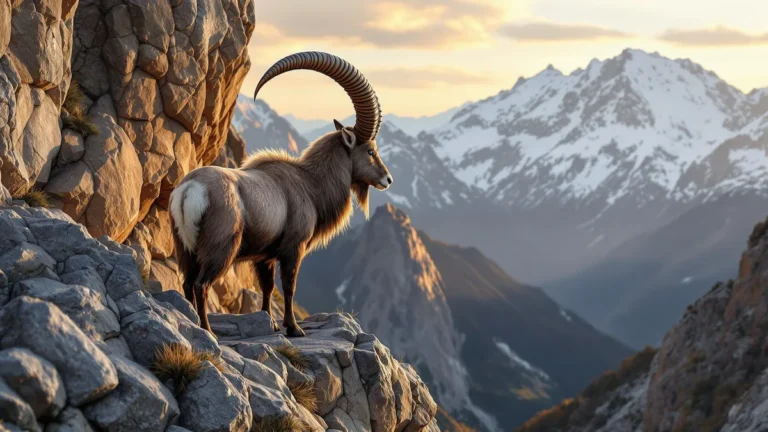
Elk, also called wapiti, are among the largest deer species in North America. Bulls can weigh up to 1,100 pounds and grow antlers that span nearly 5 feet. They're famous for their bugling calls during the rutting season each fall.
The eland is Africa's largest antelope. The common eland can reach 2,200 pounds, and the giant eland is even bigger. Despite their size, they're surprisingly agile and can jump 8 feet from a standing start.
Here's a comparison table for quick reference:
| Animal | Weight Range | Height | Habitat |
|---|---|---|---|
| African bush elephant | 8,800–14,000 lbs | Up to 13 ft | African savannas |
| Asian elephant | 6,600–13,000 lbs | Up to 10 ft | Asian forests and grasslands |
| Elk (wapiti) | 500–1,100 lbs | Up to 5 ft at shoulder | North American and Asian forests |
| Common eland | 1,000–2,200 lbs | Up to 6 ft at shoulder | Southern African grasslands |
No matter which one you're picturing, these animals dominate their ecosystems. They shape landscapes, spread seeds, and create habitats for smaller species. That makes them keystone species, meaning their presence directly affects entire food webs.
The Small and Unusual: Echidnas, Ermines, and Exotic Breeds
On the opposite end of the size scale, echidnas are some of the strangest mammals alive. Together with the platypus, they're the only monotremes on Earth: mammals that lay eggs instead of giving birth to live young.
The short-beaked echidna is covered in coarse fur and sharp quills, similar to a hedgehog. It uses its long, sticky tongue to catch ants and termites. When threatened, it rolls into a ball or digs straight down into the soil.
Ermines are small, fierce predators from the weasel family. In winter, their fur turns pure white to blend in with snow, except the black tip on their tail. In summer, they're brown with a white belly.
Historically, ermine fur was so prized that it decorated royal robes across Europe.
And yes, there are domestic E-breeds too. The Entlebucher Mountain Dog is a Swiss herding breed known for its tri-color coat and endless energy. The Exotic Shorthair cat is a flat-faced, plush-coated breed that looks like a teddy bear.
Both make wonderful companions for the right households.

Image source: Web (Bing) / a-z-animals.com (Web image (fair-use with source credit))
Birds That Start with E: Eagles, Emus, and Beyond
Birds give us some of the most iconic E-names on the planet. From the mighty eagle to the running emu, these species span every continent except Antarctica.
Birds of Prey: Eagles Around the World
Eagles are the undisputed rulers of the sky. With roughly 60 species worldwide, they range from the tiny 1.5-pound little eagle of Australia to the massive Steller's sea eagle that can weigh 20 pounds with an 8-foot wingspan.
The bald eagle is perhaps the most famous. It's been the national symbol of the United States since 1782. Its white head and tail feathers don't fully appear until the bird reaches sexual maturity around age five.
Before that, juveniles are mostly brown and often mistaken for other species.
The harpy eagle of Central and South America takes the title for sheer power. Its talons are larger than grizzly bear claws, and it can crush the skull of its prey with a single squeeze. They primarily hunt monkeys and sloths from the rainforest canopy.
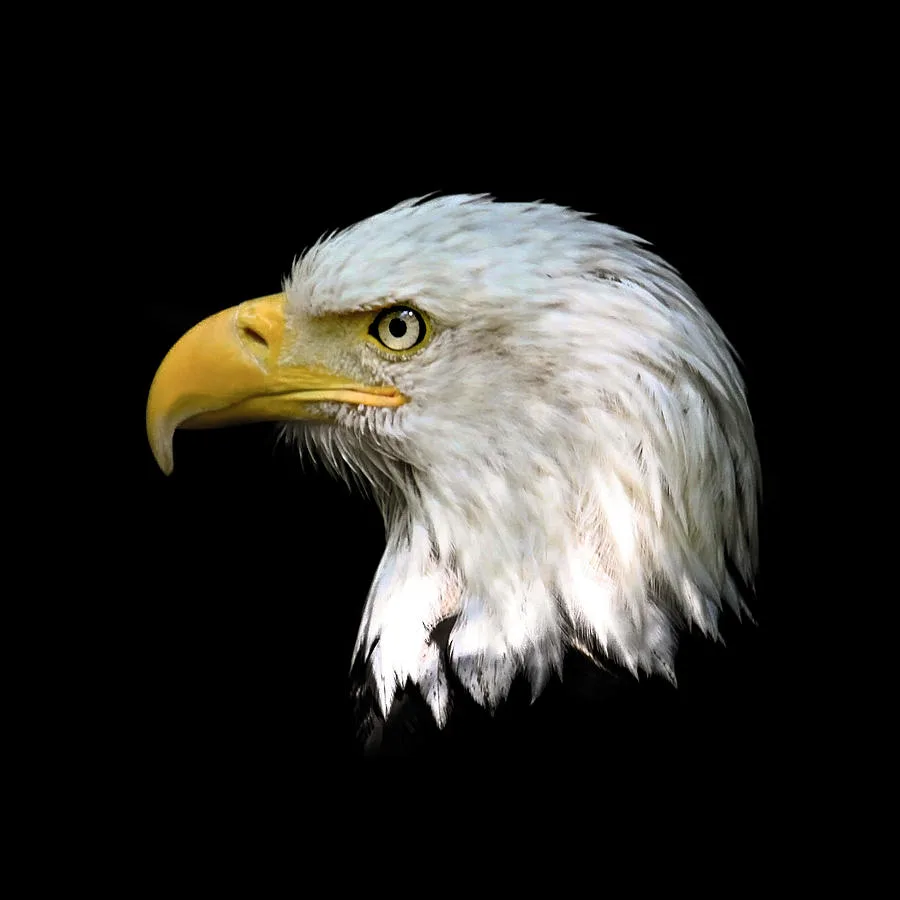
Image source: Web (Bing) / pixels.com (Web image (fair-use with source credit))
For birdwatchers in North America, the golden eagle is the bald eagle's close cousin. It ranges across the western half of the continent and prefers open country over coastlines. The two species rarely compete because they hunt different prey.
Eagle conservation is one of the great success stories of the 20th century. The bald eagle was on the brink of extinction in the 1960s due to DDT poisoning, with only around 400 nesting pairs left in the lower 48 states. By 2007, they had recovered enough to be removed from the endangered species list.
According to U.S. Fish and Wildlife Service data, populations continue to grow every year.
Flightless Birds: Emus and Emperor Penguins
The emu is Australia's largest bird and the second tallest bird in the world, right behind the ostrich. Adults stand up to 6.2 feet tall and can sprint at 30 miles per hour. Their wings are tiny, roughly the size of a hand, but their legs are powerful enough to disembowel a dingo with one kick.
Emus are also excellent swimmers. Despite their size, they'll happily cross rivers and lakes when needed.
The emperor penguin is the heavyweight champion of Antarctica. Standing about 4 feet tall and weighing up to 100 pounds, it's the largest of all 18 penguin species. These birds endure temperatures as low as minus 76 degrees Fahrenheit during the Antarctic winter.
They huddle together by the thousands, rotating positions so each penguin gets a turn in the warm center.
According to aggregate research from the Australian Museum and Antarctic research stations, emperor penguins can dive to depths of 1,800 feet and hold their breath for over 20 minutes. That's deeper than any other bird.
For a full comparison of flightless birds, jump down to the dedicated Emu vs. Ostrich vs. Rhea section later in this article.
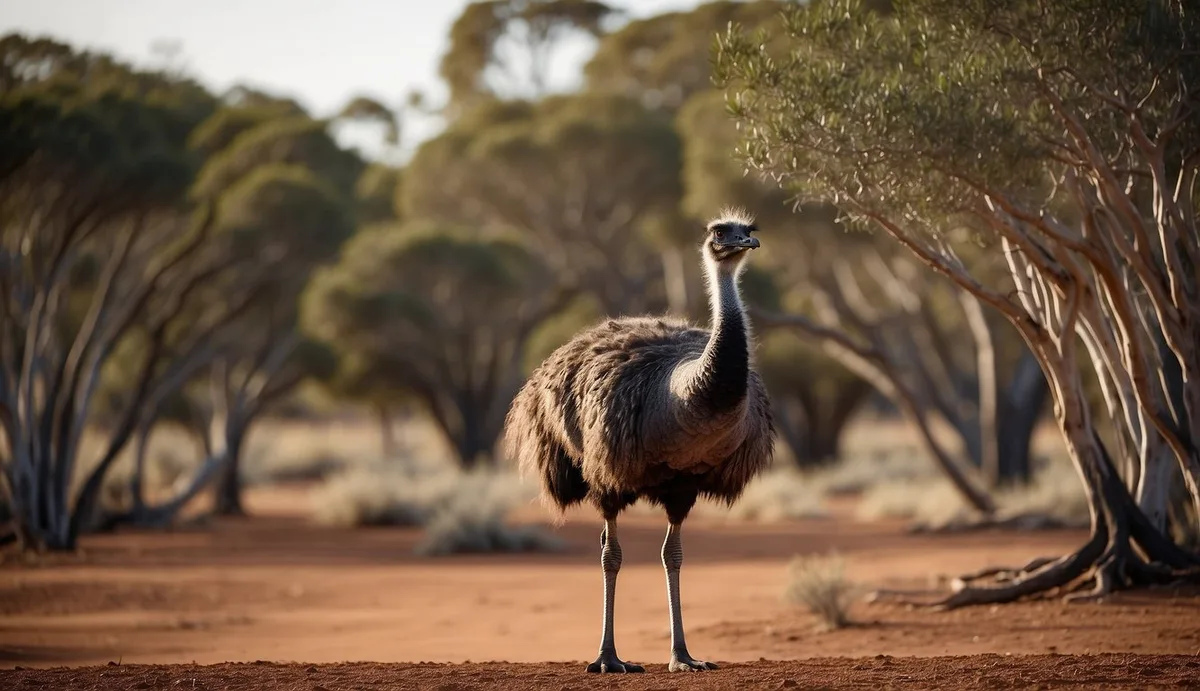
Image source: Bing (Web (fair-use with source credit))
Reptiles, Fish, and Amphibians Starting with E
Not every E-animal is a mammal or bird. The cold-blooded crowd brings some serious firepower.
The electric eel is technically a knifefish, not a true eel. It lives in the murky waters of the Amazon and Orinoco river basins. This fish packs three electric organs that generate up to 600 volts, enough to stun a horse.
Researchers at the Smithsonian Institution describe it as the most powerful bioelectric generator in the animal kingdom.
True eels belong to the order Anguilliformes, which contains about 800 species. The moray eel is probably the most recognized, with its snake-like body and gaping mouth. Morays actually have two sets of jaws, including a second pharyngeal jaw that shoots forward to grab prey.
The Egyptian cobra is one of Africa's most dangerous snakes. It can grow to 6 feet long and carries neurotoxic venom that attacks the nervous system. Ancient Egyptians used it as a symbol of royalty, often depicting it on the crowns of pharaohs.
For something gentler, consider the electric ray. These flat, disc-shaped fish live on the ocean floor and generate electrical charges for self-defense and stunning prey. The largest species can deliver up to 220 volts.
There aren't many frogs or amphibians with E-names in common English. The European fire-bellied toad comes closest, and it does start with E in its formal common name. It's a small, brightly colored toad found across Europe and Asia.
If you're building a full alphabet list, don't underestimate the E-reptiles. They add variety, geography, and genuinely interesting biology to any collection.
The Elephant Deep Dive: Africa vs. Asia
If you're trying to tell elephant species apart, start with the ears. African elephants have huge ears shaped like the African continent. Asian elephants have smaller, rounded ears.
That's the quickest field marker.
African bush elephants are the largest, with males hitting 13 feet tall. African forest elephants are smaller and darker, living in the Congo Basin. Asian elephants sit between the two, and only some males grow visible tusks.
Here's how they break down:
| Trait | African Bush | African Forest | Asian |
|---|---|---|---|
| Max shoulder height | 13 ft | 9 ft | 10 ft |
| Typical weight | 8,800–14,000 lbs | 4,000–8,000 lbs | 6,600–13,000 lbs |
| Ear shape | Large, Africa-shaped | Large, Africa-shaped | Small, rounded |
| Tusks | Both sexes | Both sexes | Mostly males |
| Conservation status | Endangered | Critically endangered | Endangered |
All three face serious threats. Poaching for ivory remains the biggest danger, though international trade bans have helped. According to the IUCN Red List, African forest elephants are now critically endangered, with populations down more than 80 percent over three generations.
Habitat loss hits Asian elephants hardest. They share space with over a billion people across India and Southeast Asia, so human-elephant conflict is constant. Conservation groups focus on wildlife corridors to give these animals safe routes between forest patches.
The Eagle Deep Dive: Species, Symbolism, and Survival
Eagles have represented power for thousands of years. Roman legions carried eagle standards into battle. The United States picked the bald eagle as its national emblem in 1782.
Nearly every culture that shares territory with eagles gives them special meaning.
The bald eagle story is the most dramatic comeback in modern conservation. By 1963, only about 417 nesting pairs remained in the lower 48 states. The pesticide DDT thinned their eggshells until chicks couldn't survive.
After DDT was banned in 1972 and legal protections kicked in, the population rebounded. The U.S. Fish and Wildlife Service reported over 300,000 bald eagles in the wild as of recent surveys.
The golden eagle ranges across the Northern Hemisphere. It's darker overall, with golden-brown feathers on its nape. Golden eagles hunt larger prey than bald eagles, taking rabbits, ground squirrels, and even young deer.
Their grip strength is legendary.
The harpy eagle from Central and South America deserves special mention. Its talons measure up to 5 inches long, bigger than a grizzly bear's claws. They're the apex predators of the rainforest canopy.
If you're birdwatching, look for the white head and tail of a mature bald eagle. Juveniles take up to five years to develop those feathers, which confuses many beginners.
The Echidna Deep Dive: One of Only Two Monotremes
The echidna breaks every rule you thought applied to mammals. It lays eggs. It has no nipples.
And it nurses its young through pores in its skin.
Together with the platypus, echidnas are the only living monotremes on Earth. That makes them a biological bridge between reptiles and mammals. Their closest ancestors date back over 100 million years.
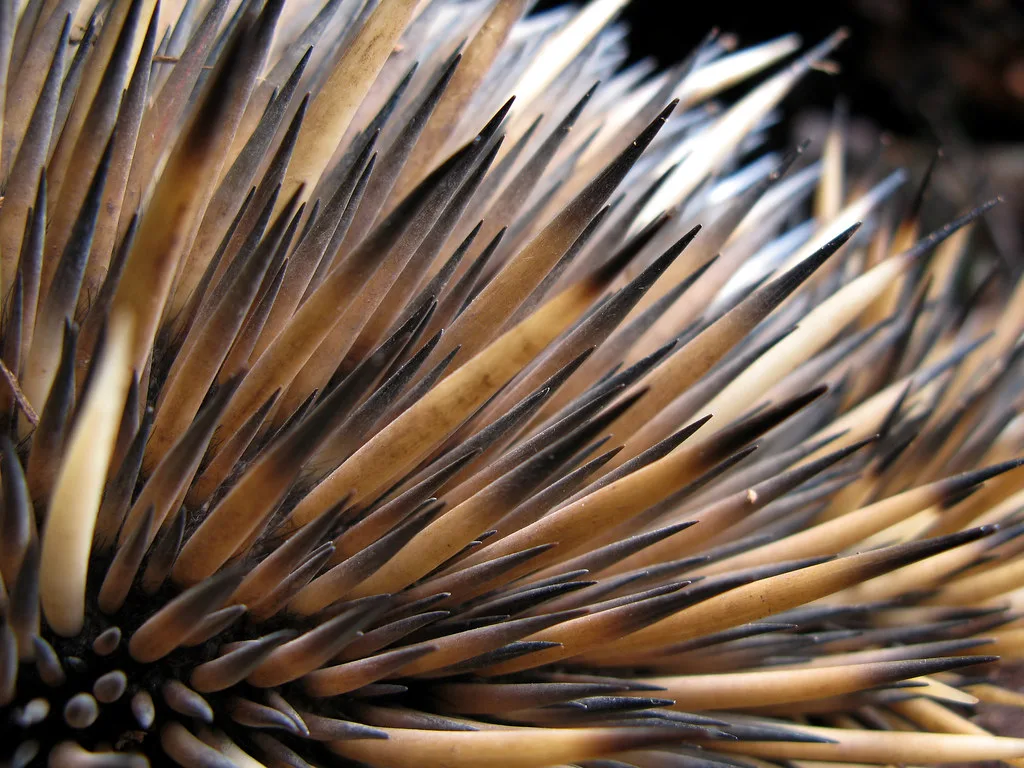
Image source: Bing (Web (fair-use with source credit))
There are four species: the short-beaked echidna found across Australia and New Guinea, plus three long-beaked species limited to New Guinea. The short-beaked echidna is the one you're most likely to see in the wild or in zoos.
Here's what makes them so strange:
- They lay a single leathery egg each breeding season, which the mother keeps in a pouch
- The baby, or puggle, hatches after about 10 days and stays in the pouch for several months
- They have no teeth, but use a long, sticky tongue to catch ants and termites
- They're excellent diggers with strong claws on both sets of feet
- Their body temperature is lower and more variable than other mammals
In our research, the echidna's hunting method stands out. It uses its snout to detect electrical signals from insect prey, a skill called electroreception. Only a handful of mammals share this ability.
Emu vs. Ostrich vs. Rhea: Flightless Bird Comparison
These three ratites look similar, but they're adapted to very different continents.
The ostrich lives in Africa and is the largest living bird, reaching 9 feet tall and 320 pounds. It has only two toes per foot, which lets it sprint at 45 miles per hour.
The emu calls Australia home. It stands up to 6.2 feet and weighs around 100 pounds. Emus have three toes and smaller wings hidden under shaggy feathers.
The rhea lives in South America. It's the smallest of the three, standing about 5 feet tall and weighing up to 88 pounds. Rheas have three toes and prefer open grasslands.
Here's a quick side-by-side:
| Feature | Ostrich | Emu | Rhea |
|---|---|---|---|
| Native region | Africa | Australia | South America |
| Top speed | 45 mph | 30 mph | 37 mph |
| Average height | 7–9 ft | 5.5–6.2 ft | 4–5 ft |
| Toes per foot | 2 | 3 | 3 |
| Neck feathers | Bare skin | Dark feathers | Light feathers |
If you're hosting a trivia night, quiz people on the toe count. It's the fastest way to tell an ostrich from its cousins.
Extinct Animals That Start with E
The letter E also claims some famous species that no longer walk the Earth. The elephant bird of Madagascar was the heaviest bird ever recorded. It stood up to 10 feet tall and weighed nearly 1,000 pounds.
Its eggs alone measured 3 feet around, the largest eggs of any vertebrate in history.
The eastern elk once roamed the forests of the eastern United States and Canada. It was a subspecies of elk that disappeared by the late 19th century due to overhunting and habitat loss. Some wildlife agencies have discussed reintroducing elk to former eastern ranges using western stock.
These losses teach a clear lesson. Every species on this list, from the African bush elephant to the emperor penguin, depends on habitat protection and legal safeguards. The extinction stories remind us why conservation matters.
E-Animals in the Classroom: Teaching the Alphabet with Animals
Teachers and parents love E-animals for alphabet lessons. Elephant, eagle, and emu are phonetically clear and fun to say. They also pair naturally with pictures, which helps visual learners lock in letter sounds.
Try flashcards with a photo of each animal and its name underneath. You can build a daily rotation: "E is for echidna" one day, "E is for elk" the next. For older kids, have them sort animals by habitat or diet using the E-list as a starting point.
These activities build vocabulary while sneaking in biology basics.
Common Mistakes People Make When Listing E-Animals
The biggest error is including "Eastern" or "European" animals. Those words are descriptors, not the animal's identity. If the animal is still recognizable without the E word, it belongs on a different letter's list.
Another trap is using scientific names. Equus covers horses and zebras, but nobody calls a horse an equus in casual conversation. Stick to common names for alphabet games.
Finally, don't forget geographic variations. European elk are what Americans call moose. That's a completely different animal than a North American elk.
When in doubt, specify the species.
Frequently Asked Questions About E-Named Animals
What is the largest animal that starts with E?
The African bush elephant is the largest, reaching 14,000 pounds and 13 feet tall. It's also the largest land animal on Earth.
Are there any pets that start with E?
Yes. The Entlebucher Mountain Dog and Exotic Shorthair cat are both domestic breeds. Some places also allow pet hedgehogs, though echidnas are strictly protected wildlife.
How many animals start with E?
Our research identified over 60 recognized species with common names beginning in E. That spans mammals, birds, reptiles, fish, and even a few notable extinct species.
Do electric eels really produce electricity?
Yes. They generate up to 600 volts using three specialized organs. They use the charge for hunting and self-defense in the Amazon's murky waters.
Endangered Species & Conservation Status: Which E-Animals Need Help
Several E-animals face serious threats. The African forest elephant is critically endangered. Asian elephants are endangered too.
The Egyptian vulture population continues to decline across its range.
Conservation efforts work. The bald eagle's recovery proves that legal protection and habitat management can reverse extinction trends.
Support organizations that protect habitats directly. Wildlife corridors, anti-poaching patrols, and breeding programs give these animals a fighting chance. Even small donations help fund the boots-on-the-ground work.
Final Thoughts: Why E-Animals Deserve More Attention
The letter E delivers surprising variety. You get giants like elephants, oddities like echidnas, and survivors like eagles.
If you're building an A-to-Z animal collection, the E's hold their own. Check our other alphabet guides for more animal discoveries, from animals that start with A to animals that start with B and animals that start with C. Each letter unlocks a new corner of the natural world.