Mammals That Start with G: The Complete Guide
You're staring at a blank page, or maybe a quiz sheet, trying to remember every mammal that starts with G. Giraffe. Gorilla.
Grizzly bear. Then your brain hits a wall. Don't worry, you're not alone.
This list feels simple until you actually try to complete it, and that's exactly where most people get stuck.
The truth is, the G-mammal family is surprisingly diverse. It includes the tallest animal on Earth, one of the smartest primates, apex predators, tiny burrowing rodents, and even the pet guinea pig in your kid's bedroom. As of 2026, researchers recognize roughly 30 wild mammal species with common English names starting with G, plus several domesticated ones.
That's a lot more than most people expect.
Let's break them all down so you never draw a blank again.
Quick Answer: The Full List of G-Mammals
The mammals that start with G are:
- Giraffe
- Gorilla
- Grizzly Bear
- Grey Wolf
- Gazelle (several species)
- Giant Panda
- Gerenuk
- Gemsbok
- Gopher
- Guinea Pig (domesticated)
- Goat (domesticated)
- Golden Retriever (domesticated)
- Grey Squirrel
- Grison
That's the complete list. A few of these are domesticated, but most roam wild across Africa, North America, and Asia. The rest of this guide covers each one in detail.
When You Can't See Them: How to Identify G-Mammals by Description
Since many of these animals live thousands of miles apart, you might never see them in person. That's where description-based identification becomes essential. Whether you're studying for a bio exam, planning a safari, or just settling a bet, knowing the key visual traits matters.
Here's what to look for with each species:
- Giraffe: Long neck, spotted coat, ossicones (horn-like bumps) on the head. Height ranges from 14 to 19 feet.
- Gorilla: Large body, broad chest, prominent brow ridge, dark fur. Adult males develop silver hair on their backs.
- Grizzly Bear: Massive shoulder hump, brown fur with lighter tips, dished face profile. Weighs 400 to 790 pounds.
- Grey Wolf: Lean build, bushy tail, gray or black coat, pointed ears. Pack hunters.
- Gazelle: Slender legs, curved ringed horns, white underside, tan coat. Built for speed.
- Giant Panda: Black and white fur, round face, bamboo diet. Weighs 220 to 330 pounds.
- Gerenuk: Long neck, small head, short horns (males only). Stands on hind legs to browse.
- Gemsbok: Straight, spear-like horns up to 33 inches. Distinctive black and white face mask.
- Gopher: Small, stocky body, large cheek pouches, strong front claws for digging.
- Guinea Pig: Compact, round body, no tail. Comes in many colors and coat textures.
- Goat: Cloven hooves, horns (often), horizontal pupils. Agile climbers.
- Golden Retriever: Dense golden coat, friendly expression, muscular build. Athletic.
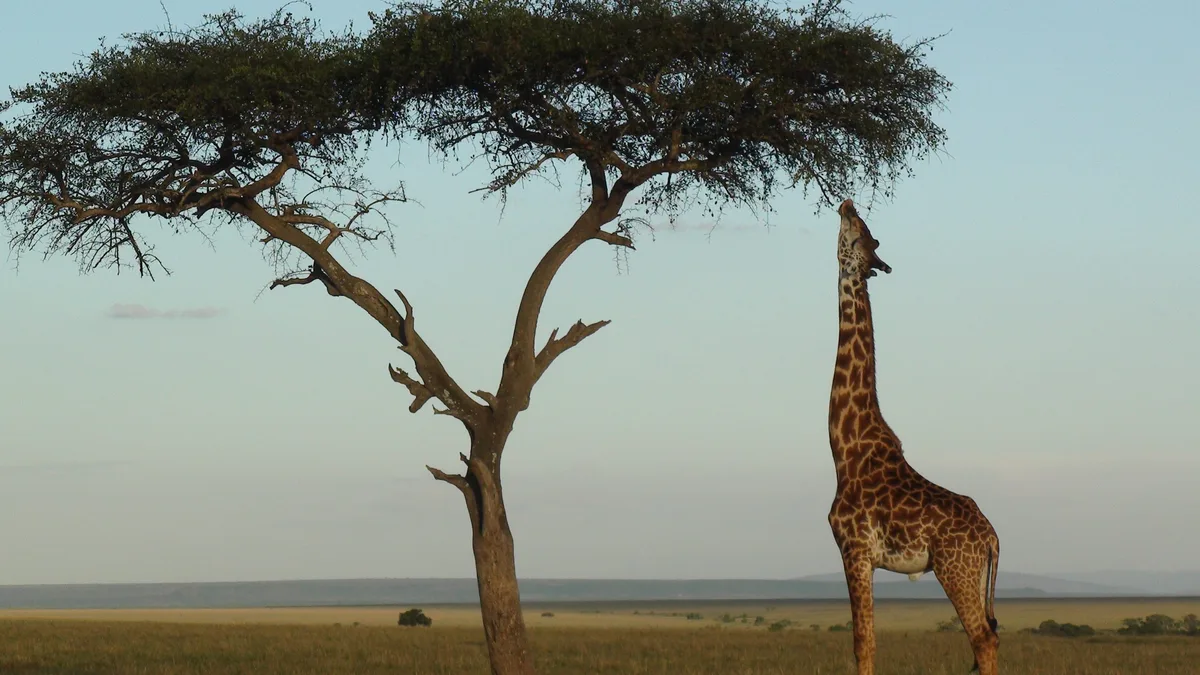
Image source: Web (Bing) / animalia-life.club (Web image (fair-use with source credit))
The Icons: Giraffes, Gorillas, and Giant Pandas
These three are the heavyweights of the G-mammal list. Everyone knows them, but surprisingly few people know the details that separate them from other species. Let's fix that.
Giraffe: The Tallest Land Animal
The giraffe stands alone as the tallest living land mammal. Adult males reach up to 19 feet tall, with necks alone stretching six feet. Not for reaching leaves, which it does, but also for dramatic head-butting displays between males called "necking."
Giraffes have seven neck vertebrae, the same number as humans. Each one can be over 10 inches long. Their hearts weigh around 25 pounds and pump blood up to the brain against gravity.
Special valves in the neck prevent fainting when they lower their heads to drink.
You'll find giraffes across sub-Saharan Africa in savannas, grasslands, and open woodlands. As of 2026, the IUCN lists them as Vulnerable, with populations declining in some regions due to habitat loss and poaching.
Gorilla: The Gentle Giant
Gorillas are the largest living primates. Eastern gorillas can reach 485 pounds in the wild, making them the biggest of all. Despite their intimidating size, they are primarily herbivores, feeding on leaves, stems, bamboo shoots, and occasionally fruit.
Two species exist: the Eastern gorilla and the Western gorilla. Both face severe threats. The mountain gorilla subspecies numbers around 1,000 individuals as of the latest IUCN data.
Grauer's gorilla, another eastern subspecies, has seen populations drop sharply due to civil unrest and habitat destruction.
Gorillas live in troops led by a dominant silverback male. They share about 98% of their DNA with humans, making them one of our closest living relatives. They communicate through vocalizations, facial expressions, and body postures, and they build fresh nests each night.
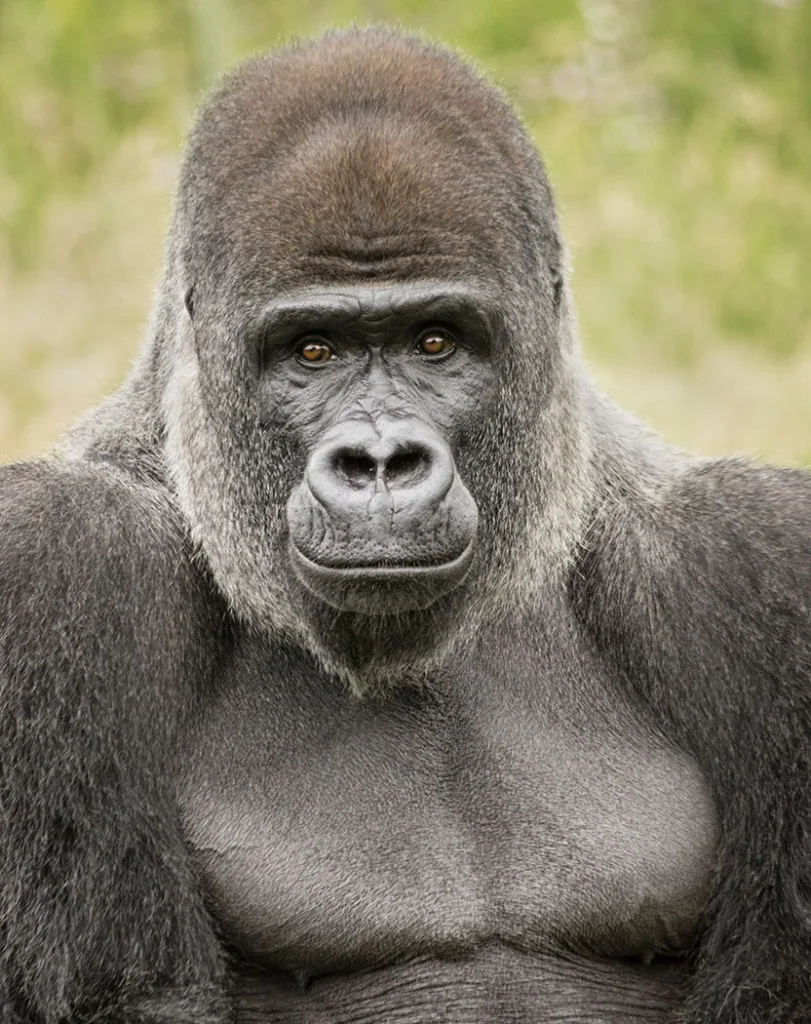
Image source: Web (Bing) / maidstonecameraclub.org.uk (Web image (fair-use with source credit))
Giant Panda: The Bamboo Specialist
The giant panda is a bear, but it's nothing like a grizzly. Its diet is about 99% bamboo, which is unusual for a carnivore-order animal. They consume 26 to 84 pounds of bamboo daily to meet their nutritional needs.
Giant pandas have a "thumb," which is actually an enlarged wrist bone used to grip bamboo stalks. They also have powerful jaw muscles and flat molars for crushing tough plant material.
Native to central China, giant pandas were once critically endangered. Decades of conservation work, including captive breeding and habitat protection, boosted their status to Vulnerable as of 2026. The Chinese government considers them a national treasure and a "umbrella species" whose protection benefits many other animals in shared habitats.
The Predators: Grizzly Bears and Grey Wolves
North America is home to two iconic G-mammal predators. Both sit at the top of their respective food chains, and both have fascinating social lives.
Grizzly Bear: Size, Range, and Behavior
The grizzly bear is a subspecies of the brown bear. It's named for the "grizzled" appearance of its fur, which has lighter tips on a darker base. The most reliable way to identify a grizzly is the prominent hump over its shoulders, which is a mass of muscle that powers its front legs for digging.
Grizzlies weigh between 400 and 790 pounds, with coastal Alaskan populations reaching even larger sizes. They are omnivores. Their diet includes salmon, berries, roots, insects, small mammals, and sometimes carrion.
During fall, they enter hyperphagia, eating up to 20,000 calories daily to build fat reserves for hibernation.
Grizzly populations in the lower 48 states were nearly wiped out by the mid-20th century. Recovery efforts in Yellowstone and Glacier National Parks have brought numbers back, though they remain protected under the Endangered Species Act.
Image source: Web (Bing) / pngtree.com (Web image (fair-use with source credit))
Grey Wolf: Pack Structure and Hunting
The grey wolf is the largest wild member of the dog family. Males average 85 to 115 pounds, with females slightly smaller. Their thick coats range from pure white to black, though gray and brown are most common.
Wolves are highly social and live in packs of 5 to 11 individuals. Each pack has a strict hierarchy led by an alpha male and female. Packs hunt cooperatively, and their prey includes deer, elk, moose, and bison.
A single wolf can consume 20 pounds of meat in one sitting.
Wolves once ranged across most of the Northern Hemisphere. Habitat loss and persecution reduced their range significantly, but reintroduction programs in Yellowstone National Park in the 1990s demonstrated their role as a keystone species. Their return restored balance to the ecosystem by controlling elk populations.
The Grazers: Gazelles, Gerenuk, and Gemsbok
Africa hosts a spectacular array of hoofed G-mammals. These three are often confused with each other, but they look and behave quite differently.
Gazelle: Built for Speed
Gazelles are the sprinters of the antelope family. Thomson's gazelle, for example, reaches speeds of up to 50 miles per hour and maintains them for longer than most predators can manage. Their body features include slender legs, tan coats with white underparts, and distinctive black facial markings.
Several gazelle species exist across Africa and Asia, including Grant's gazelle, Dorcas gazelle, and the mountain gazelle. Most are adapted to arid grasslands and scrublands. They survive on a diet of grasses, leaves, and shoots, often getting moisture from the plants they eat.
Gazelle populations vary by species. Some, like Thomson's gazelle, remain relatively widespread. Others, such as the Saudi gazelle, went extinct in the wild in the 1990s.
Conservation efforts continue for several vulnerable species.

Image source: Web (Bing) / stockcake.com (Web image (fair-use with source credit))
Gerenuk: The Giraffe Antelope
The gerenuk looks like a gazelle that stretched upward. Its name comes from Somali and means "giraffe-necked." This adaptation allows it to browse on acacia leaves and other vegetation that other antelopes can't reach.
Gerenuks are unique among antelopes for standing on their hind legs to feed. They balance on two legs like a biped, using their front legs to pull down branches. This gives them access to food sources during dry seasons when ground-level vegetation is scarce.
You'll find gerenuks in the Horn of Africa, particularly in Kenya, Ethiopia, and Somalia. They prefer dry, thorny bushlands and deserts. Males have short, thick horns that curve backward, while females are hornless.
Gemsbok: The Desert Sword
The gemsbok is a large antelope native to the Kalahari and Namib deserts. Its most striking feature is its pair of straight, spear-like horns that can reach 33 inches long. Both males and females carry them, and they're capable of inflicting serious damage to predators.
Gemsboks have a distinctive black and white face mask and dark markings on their legs. Their pale brown-gray coats reflect sunlight, helping them stay cool in extreme desert heat. They can survive for weeks without water by extracting moisture from melons, roots, and tubers.
One remarkable adaptation sets gemsboks apart: they allow their body temperature to rise during the day, sometimes above 104°F, then dissipate the heat at night. This reduces water loss from sweating and panting.