Sea Animals Starting with A: Fascinating Facts
Hunting down every sea animal that starts with "a" feels like opening a treasure chest where half the gems are mislabeled. You've got your classic anchovies and angelfish, sure, but then someone throws in "Atlantic cod" or "Australian sea lion" and suddenly you're questioning whether geography counts as a cheat code. The truth is, the ocean is packed with incredible creatures whose names begin with "a," and most alphabetical lists do a terrible job of helping you actually recognize them.
That's exactly why we built this guide. Instead of just reciting names like a glossary, we've focused on what each animal actually looks like, where you'll find it, and how to tell it apart from its look-alikes. Whether you're teaching a classroom full of kids, planning a snorkeling trip, or just settling a trivia argument, this visual field guide gives you the real details.
As of 2026, marine biologists have identified over 240,000 known marine species, and the "a" section alone covers everything from microscopic krill to 140-pound tuna.
Quick Answer
Sea animals that start with "a" include anchovies, albacore tuna, angelfish, anglerfish, abalone, sea anemones, arrow crabs, American lobsters, and Antarctic krill. Atlantic puffins and albatrosses round out the seabird category. Each has distinct visual traits that make identification straightforward once you know what to look for.
Why Visuals Matter for Identifying These Animals
Think about the last time someone described a fish to you. "It was silver and sort of elongated." That could be an anchovy, a sardine, a herring, or a dozen other baitfish. Words fail when it comes to marine identification because so many species share the same basic body plan adapted for similar environments.
That's where this guide changes the game. Every animal listed here comes with specific visual cues you can actually use in the field. Body shape, fin placement, coloration patterns, shell texture, and even behavior all serve as reliable markers.
Per NOAA Fisheries guidelines, physical characteristics remain the primary method for species identification in the wild, especially when genetic testing isn't practical.
Photographs and diagrams do more than just decorate an article. They train your eye to notice the subtle differences that separate one species from another. The angle of a fish's mouth, the curve of a shell, the length of a bird's wingspan; these details matter when you're staring at a living creature through a snorkel mask or binoculars.
What's more, many of these animals look dramatically different at various life stages. A juvenile angelfish sports bold vertical stripes that fade into entirely different patterns as it matures. Without visual reference points, you'd confidently misidentify two of the same species as completely different animals.
That's a mistake no field guide should let you make.
The Sea Animals That Start With A — Broken Down by Type
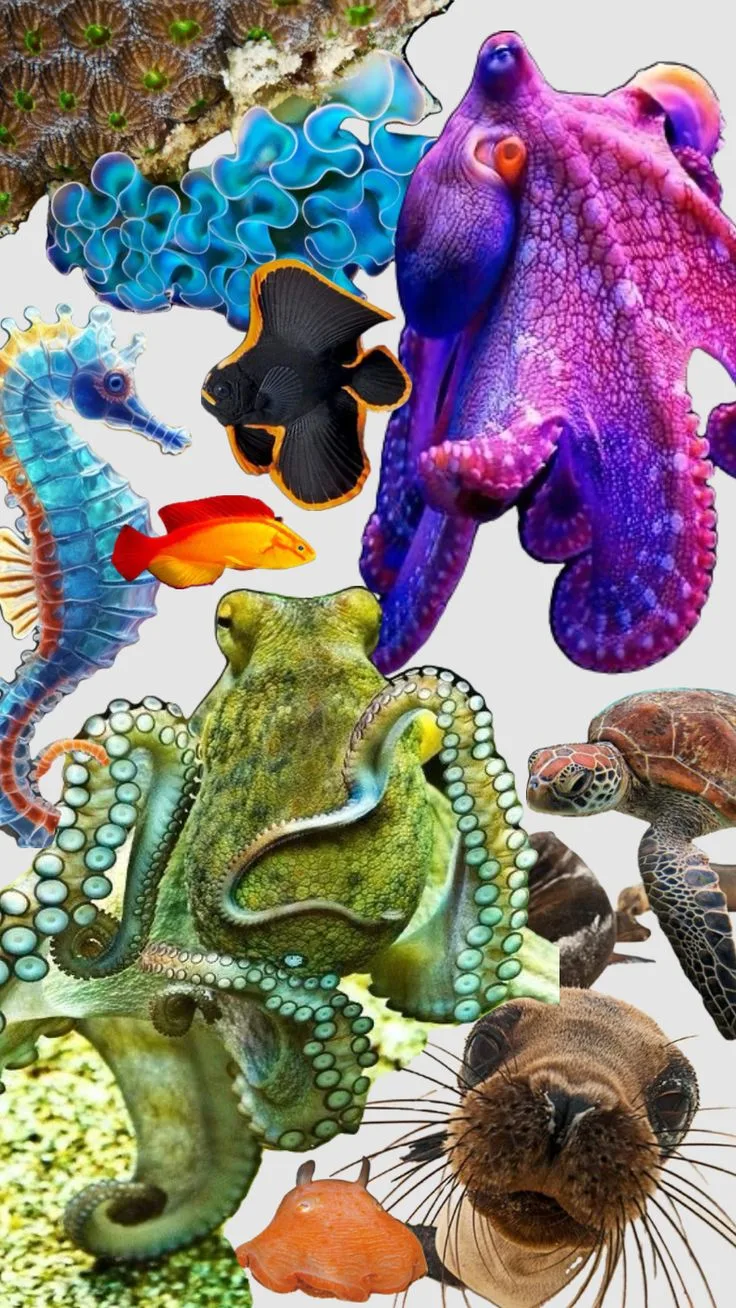
Image source: Bing (Web (fair-use with source credit))
Fish That Start With A
The fish category dominates the "a" list with some of the most recognizable species in the ocean. Here's what you need to know about each one.
Anchovy. Small, silvery, and almost always schooling. Anchovies typically measure between 10 and 20 centimeters long. Their most distinctive feature is a protruding lower jaw that extends well beyond the upper jaw.
If you see a bait ball of tiny silver fish flashing in the sun, you're probably looking at anchovies or their close cousins, sardines.
Albacore tuna. These are the big boys of the "a" list. Albacore can reach 140 centimeters and weigh up to 60 kilograms. Look for a sleek, torpedo-shaped body with remarkably long pectoral fins that reach past the anal fin.
Their metallic blue-black backs fade to silver on the belly, giving them that classic tuna appearance.
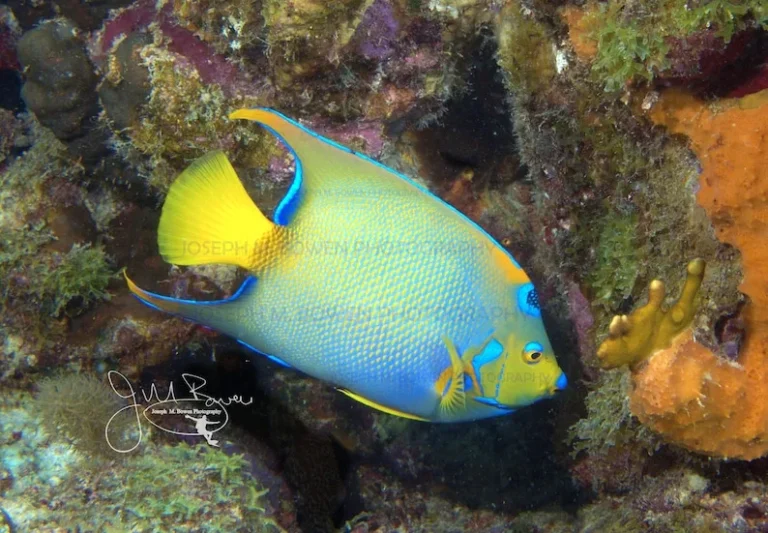
Angelfish. Marine angelfish are the showstoppers of coral reefs. Their bodies are thin and disc-shaped with strikingly elongated dorsal and anal fins that stream behind them as they swim. Coloration varies wildly between species, but most feature bold vertical stripes or intricate patterns in bright yellows, blues, and oranges.
Unlike freshwater angelfish, their marine counterparts grow much larger, some reaching 60 centimeters.
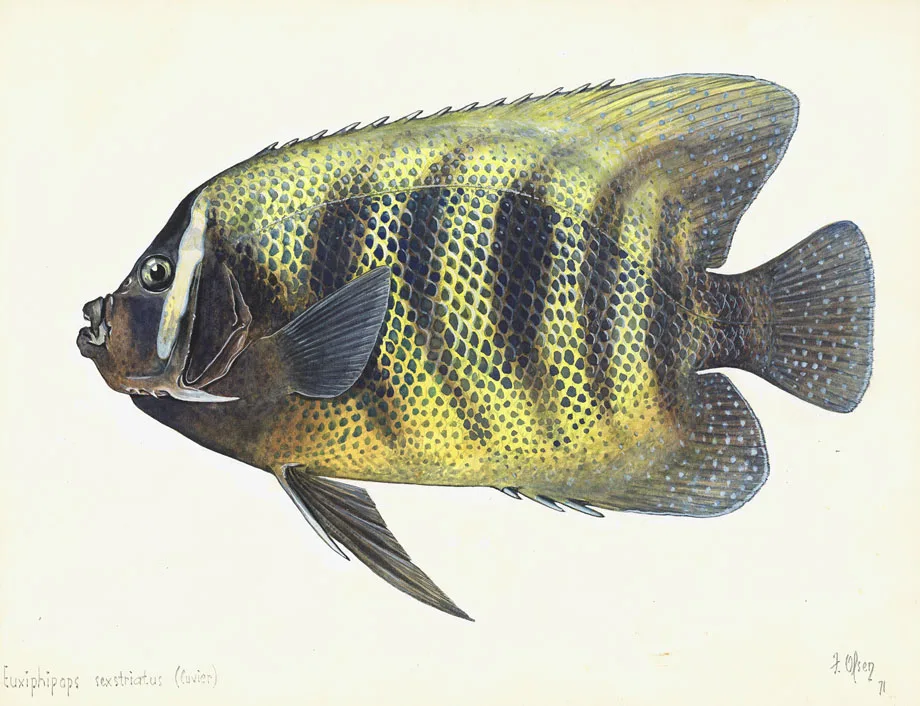
Image source: Wikimedia Commons / Queensland State Archives
Anglerfish. The deep sea's most famous resident is a master of disguise. Females grow a distinctive dorsal spine that extends forward like a fishing rod, tipped with a glowing lure used to attract prey in the pitch-black depths. Most species stay under 20 centimeters, though some Abyssal varieties get considerably larger.
Their enormous mouths and sharp, needle-like teeth make them immediately recognizable.
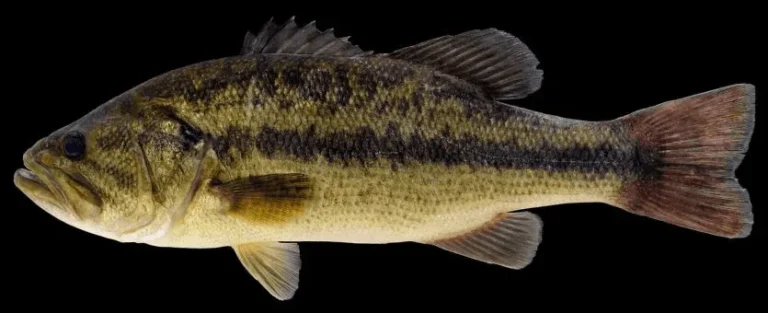
Amberjack. These powerful, fast-swimming predators patrol reefs and open water. Their bodies are robust and slightly compressed with a forked tail fin built for speed. They typically appear silver to bronze with a distinctive amber stripe running along the lateral line, which is exactly how they earned their name.
Atlantic cod. A classic bottom-dwelling fish with a stout body, a prominent chin barbel, and three separate dorsal fins. Color ranges from greenish-brown to gray, often with darker spots scattered across the back. They've supported commercial fisheries for centuries, and their iconic silhouette is instantly familiar to anyone who's studied marine life.
Marine Mammals and Seabirds That Start With A
Not everything in the ocean has gills. The "a" list also includes warm-blooded creatures that breathe air, along with seabirds that spend most of their lives over open water.
Australian sea lion. Endemic to southern and southwestern Australia, these intelligent pinnipeds have short, coarse fur and prominent external ear flaps. Their coloration is distinctive: light golden-brown on top fading to cream on the belly. They're also the only sea lion species that molts annually, which is a rare trait among marine mammals.
Atlantic spotted dolphin. True to their name, these dolphins develop spots as they age. Calves are born spotless with a uniform gray color, then gradually develop pale spots on their backs and dark spots on their bellies. Adults can be heavily speckled.
They're social, acrobatic, and frequently approach boats, making them a favorite for whale-watching tours.
Albatross. These seabirds are legends of long-distance flight. With wingspans ranging up to 3.5 meters for the wandering albatross, they have the largest wingspan of any living bird. Their long, narrow wings are adapted for dynamic soaring, allowing them to travel thousands of kilometers across the open ocean without flapping.
Look for their distinctive hooked bills and predominantly white bodies with dark wing tips.
Atlantic puffin. These are the "clowns of the sea" with their colorful, triangular beaks and striking black-and-white plumage. Puffins are relatively small, standing about 25 centimeters tall. Their beaks are most vibrant during breeding season, displaying oranges, yellows, and blues before dulling in winter.
They nest in colonies on coastal cliffs and rocky islands across the North Atlantic.
Auk. This is a broader family that includes puffins, murres, guillemots, and razorbills. Auks are compact seabirds with short wings adapted for swimming underwater rather than long-distance flight. Their bodies are streamlined with feet set far back for propulsion.
If you see a small black-and-white seabird diving from the surface rather than plunge-diving from the air, you're watching an auk.
Invertebrates and Ocean Creatures That Start With A
The invertebrates bring incredible diversity to this list, from armored shells to stinging tentacles.
Abalone. These marine snails have a distinctive ear-shaped shell with a row of open respiratory pores. The interior of the shell displays an iridescent, rainbow-like nacre that's prized for jewelry and decoration. Sizes vary by species, but most range between 10 and 25 centimeters across.
They cling tightly to rocks in intertidal and subtidal zones.
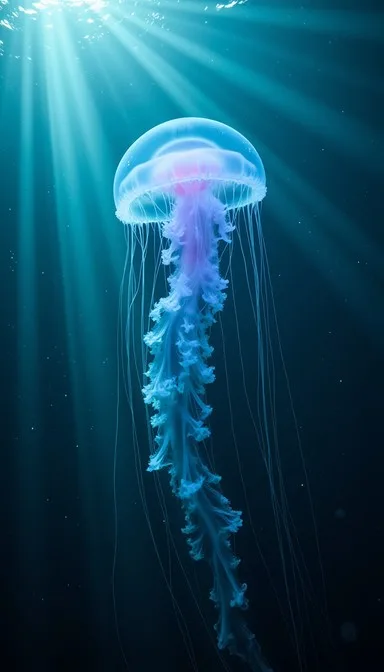
Sea anemone. You're looking at a predator with flower-like tentacles, not a plant. Anemones anchor themselves to rocks or coral and use their stinging tentacles to capture passing prey. They range from less than 1 centimeter to over 1 meter in diameter.
Their colors span nearly the entire spectrum, from translucent whites to electric purples and neon greens.
Arrow crab. This spider-like crustacean has a distinctive triangular body and incredibly long, spindly legs that can span up to 20 centimeters. Their legs and claws are covered in small spines, giving them a somewhat menacing appearance. They're commonly found hiding in crevices and under coral heads on tropical reefs.

Image source: Bing (Web (fair-use with source credit))
American lobster. One of the most commercially important crustaceans in North America. American lobsters have a hard, segmented shell, two large claws (a crusher claw and a pincer claw), and a curved tail used for swimming backward. They range in color from deep blue-green to brownish-red, though rare genetic mutations can produce blue, yellow, or white lobsters.
They can grow up to 64 centimeters and live for decades.
Antarctic krill. Small but mighty, these shrimp-like crustaceans form the foundation of the Antarctic food web. At roughly 6 centimeters long, they're easy to overlook individually. But their swarms are enormous, with densities reaching 30,000 individuals per cubic meter.
Their translucent bodies with visible red-orange digestive organs make them identifiable under magnification.
Sea hare. These marine gastropods look like small, slimy rabbits, complete with two rhinophore "ears" on their heads. Their soft, slug-like bodies can range from a few centimeters to nearly a meter in length, depending on species. When disturbed, they release a purple ink to confuse predators.
They're common in tide pools and shallow seagrass beds.
Acorn worm. You might miss these if you're not looking closely. Acorn worms are soft-bodied, worm-like hemichordates that burrow in sand and mud. Their bodies have a distinct three-part structure: a proboscis, a collar, and a long trunk.
They play a crucial role in sediment turnover and are more closely related to vertebrates than true worms.
Ascidian. Also called sea squirts, these filter-feeding animals look like small, often colorful sacs attached to rocks, pilings, or boat hulls. They have two siphons that draw in and expel water, filtering out plankton and organic particles. Their outer layer contains a cellulose-like substance called tunicin, which is a rare compound in the animal kingdom.