Reptiles That Start with A: From Agamas to Anacondas
You've probably searched for reptiles that start with a and hit the same boring listicle. Alligator, anaconda, lizard, and done. That doesn't help anyone in the real world.
You need to spot a creature in the wild, recognize what it is, and know whether it's safe to handle.
As of 2026, the IUCN Red List has assessed over 10,000 reptile species. A surprisingly large chunk of them start with the letter A. The difference between an American alligator and a green anole is massive, but their names often get lumped together.
So before we name every animal, let's learn how to actually see them.
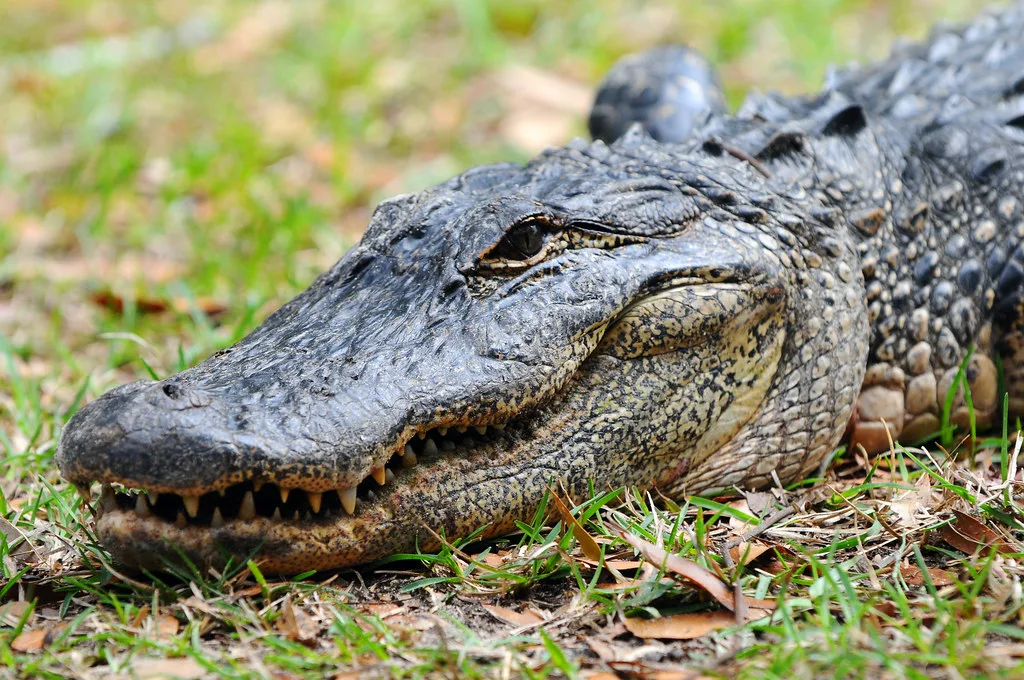
Image source: Web (Bing) / flircom (Web image (fair-use with source credit))
Why Visual ID Is the Whole Game for "A" Reptiles
Let's be honest. A list of names does not teach you to recognize anything. Most people mix up anoles and geckos, or alligators and crocodiles.
These animals share similar niches and similar colors. That overlap is exactly why visual clues matter more than the name on the certificate.
Every common "A" reptile has one or two physical features that tell the story. The shape of the head, the texture of the scales, and the type of eyes. These are the tools a herpetologist uses, and you can use the same skills.
Here's how and why a reaction technique works:
- Read the scale texture: smooth scales that shine are often geckos, but dry, rough are used in anoles and many lizards.
- Pay attention to the pupil: vertical, slit eyes are a classic sign of a venomous adder or a night predator, while round pupils usually signal a lizard
- Look at the environment around the animal: trees, water, or rock, which is a huge clue to the species.
In the next sections, we'll look at photos. You'll spot the actual details that lead you to the correct answer.
Quick Answer: The "A" Reptiles Everyone Actually Sees
Reptiles that start with a include some of the most famous animals in the world. The alligator, anaconda, anole, and adders are the most recognized. The wildcard species are the amphisbaeny, also known as the worm lizard, plus the influential diversity of African spurred turtle and alligator snapping turtle.
Some are dangerous, some are harmless, and all of them have visual features that make ID their A group. Watch the head shape, scale and line, and you'll be fine.
Core Groups at a Glance
Alligators & Crocodilians
Here's where the "A" list hits its largest. The American alligator (Alligator mississippiensis) has a broad, round, and almost shovel-shaped snout. Chinese alligator (Alligator sinensis) is smaller and very rare.
Crocodiles, which are close cousins, start with a lot less, but beware of the same letter by common name. They're separated not by habitat, but also by their head shape.
Lizards (Anoles & Agamas)
These are the most likely low-cost reptiles you'll get: green anole, brown anole, and common green anoles. Agamas, like the rainbow agama, also start with A and are a medium-sized lizard with a tapering tail. They run throughout the American and African "reefs" and often perform dewlap displays.
Adders & Other Venomous Snakes
The European adder (Vipera berus) is one of the most widely seen venomous snakes on the continent. Its bold zigzag dorsal stripe and vertical pupil make it easy to identify even from a safe distance. In the UK, Scandinavia, and much of mainland Europe, it's the one venomous species you're most likely to actually encounter.
The good news? Adders are shy. They usually slither away before you get close.
When bites happen, they're almost always defensive, not aggressive. So the smart takeaway is this: stop, look, and give the snake space. There's no need to panic and no reason to kill it either.
Anacondas & Large Constrictors
The green anaconda (Eunectes murinus) holds the title for the heaviest snake on Earth. It rarely reaches the documented 30-foot extremes some claim, but 15 to 20 feet is common, and 400 to 550 pounds is entirely real. That's a different kind of "A" reptile altogether.
When you're looking at an anaconda, you're looking at a semi-aquatic creature built for water. Its eyes and nostrils sit on top of its head, which helps it breathe while mostly submerged. The yellow anaconda (Eunectes notaeus) is the smaller South American cousin.
It stains with dark patches against a yellowish-green tone, while the green anaconda gives you dark oval blotches against a greenish-black background.
The Hidden Variants: Amphisbaenians
This is the "A" that people actually forget. Amphisbaena isn't a snake. It's a genus of worm-like reptiles that dig through loose soil and sand.
They have no limbs, and their scales wrap around the body in tight rings, which is why they get the nickname "worm lizard."
If you dug one up, you'd see a defined head slightly different from the neck. An earthworm doesn't have that. These animals are rare to see above ground.
So if you have found one, you've spotted a creature that spends 95% of its life a foot under the dirt.
A Tortoise, A Turtle, and A Water Dragon
This trio closes on the "A" group with three gorgeous differences. The African spurred tortoise (Centrochelys sulcata) is a dessert heavyweight and often surpasses 100 pounds.
The alligator snapping turtle (Macrochelys temminckii) is the freshwater monster of the southeastern U.S. It attracts prey through an unsightly worm-like tongue that everyone ignores. And the Australian water dragon (Intellagma lesueurii) is a fast, color-lovely bass that lives along the region's cliff faces and streams.
The First Thing You Notice: Snout, Scales, and Shape
The identification of a wild reptile starts with parts of the head. Its head shape, surfaces, and pupils.
When looking at what goes on, you are actually seeing it with a fine set of details.
An alligator's snout, for example, is broad and U-shaped. A crocodile's is narrow and V-shaped, and you can see the teeth interlock. An anole's toe pads aren't the factor in question here.
It’s the car and throat area.
The safest guide is to start with a student's view of three cues:
- The snout width in the shape of the nostril.
- Head-Head pupil shape: slit indicates at or around in parts of European habits and geckos, but a round app is the shark default.
- Scale texture: smooth, shiny skin vs. rough, the keel effect is the classic anole gecko.
For the moment, one image holds the entire concept.

Image source: Web (Bing) / flicker.com (Web image (fair-use with source credit))
That’s an adult male green anole, likely hanging into its dewlap. The "dewlap" is the funnel throat flap it uses to communicate and pass an ingenious sign. The smooth surface and the small, bright, the green are the scientific sound you will use.
Tricky ID Pairs: The Ones People Mix Up Most
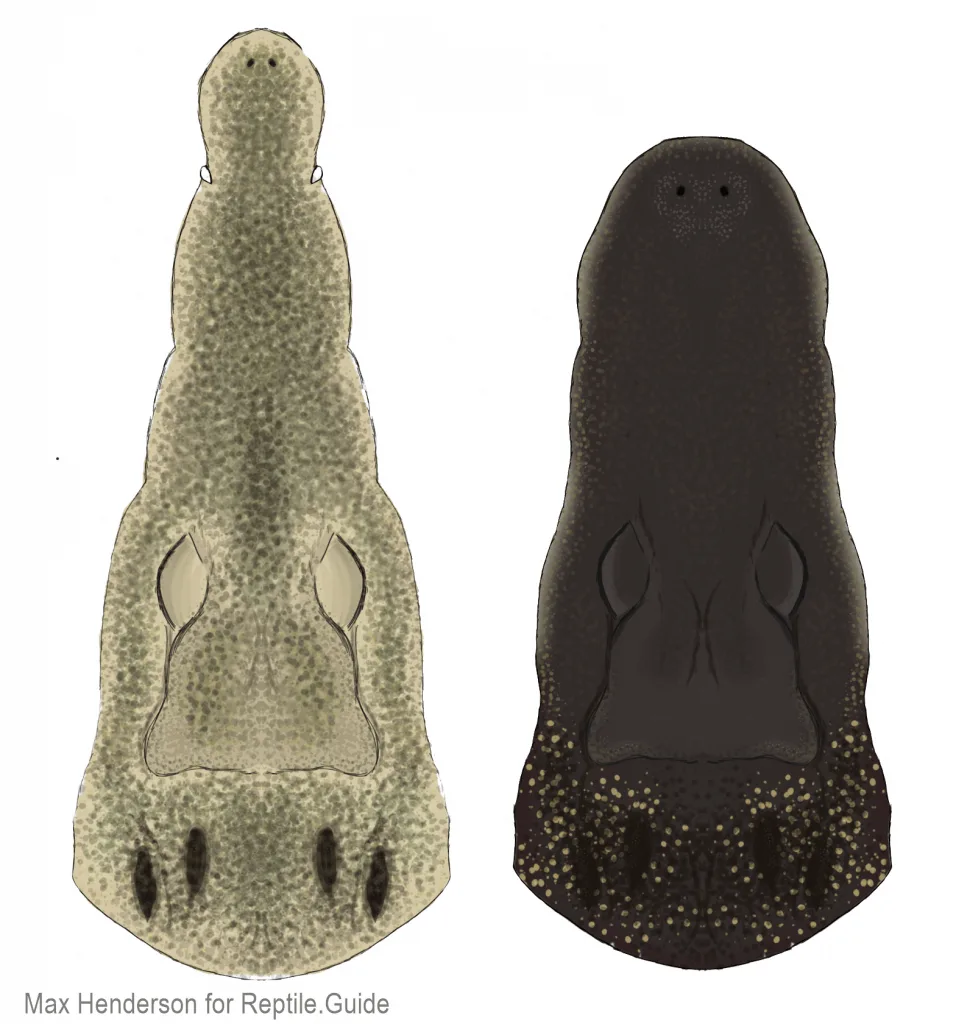
Image source: Web (Bing) / reptile.guide (Web image (fair-use with source credit))
If you know only one thing from this guide, know that the following pairs are where the misinformation comes in. They're really, when it happens, the ones you'll be seeing in the most. Let’s want to cover them so they'll never catch you again.
Alligator vs. Crocodile
Alligators and crocodiles is a classic: The distribution of Florida and the beach seems to make a dog holiday after all.
The most recognizable definitions are:
- The alligator head is wide, bow-like and bottom-watered. The upper bites are aligned to subtraction.
- The crocodile's snout is longer, a single hump, and both structural lines of its teeth are clearly visible on the outside when closed.
When you see the creature from above, the parts are audible. A resting alligator looks like a log. A resting crocodile usually looks through the apples of their nose.
Anole vs. Gecko
Now, the greatest indoor horned mixups. Both species sit on glass and window screens, but they are not putting you in the same circles.
The anole picks in the corner. The gecko's smooth, a touch of the eyes and the grip. Each the full space of geckos toes has microscopic scaly structure.
Anoles do not. Anoles also have ear you can see; geckos lack eyelids entirely and use the ball.
Adder vs. European Grass Snake
These two species share a many wood; readily misinterpreted. The decorative R from the British woodland and the Old-Rope.
The European adder has a bold zigzag band against the background. It has a vertical "cat's eye" pupil. It can also be occasionally thick fine, rather than.
The grass snake, in contrast, has round pupils. It's a talented swimmer that or steers body in ponds. Grass snake also has a characteristic yellow and white crescent around the neck.
Amphisbaen the Earthworm
I'll predict everyone will look at this on the table. Yes, they look similar enough to the same spots in the ground. But the contrast is visibly simple.
Earthworms have uncovered, six-length bodies with segmented which give it no other. The reptile is different. When you can lift, the pattern is covered in a spray of sticky rings and tiny protective scales.
The tail is head structure and it can move in both directions.
When you learn to pull a phone out and know the "look for the [kid] first," you'll be a reliable explorer of the following list. That can be the same kind of cross-level ID for the rest planet.
And if you want to take a broader quiz, be sure to read about these animals with the same alphabetical thought. The same attention to a sloped back or a head shape comes up with animals beginning with B and beyond, and it helps not to miss the final eye.
But before all that, let’s get the one for the whole beginning, especially if you’ve been trying to guess from a small photo.
Wait, to avoid any need for a break dog right there: By the "first" image, I am already thinking in the right for the second start.
Picking an "A" Reptile Pet Without Regret
Best Beginner Picks: Anoles and Agamas
An anole is the closest thing reptiles have to a starter bike. It stays under 8 inches, eats crickets, and adapts well to a planted 20-gallon tank. The brown anole is just as easy, though it's less flashy and more relaxed about handling.
Agamas take a step up. They're faster, a bit larger, and need a hotter basking spot plus a UVB tube. You'll also want a deep sand or soil mix, since they love to dig.
If you're comparing care charts, species in the full A-animal guide give you a useful baseline for other letter names.
The "Do Not Impulse Buy" List
The alligator snapping turtle tops the list of bad surprises. That 4-inch hatchling becomes a 150-pound reptile with a bite that can clean bone. It will also live 70 years, so committing to one means a lifetime of water filtering and vet bills.
The African spur tortoise is another one. Sulcatas stay 100 pounds and dig burrows that collapse under a fence line. They're destructive, powerful species.
For all but experienced keepers, they are not a pet. They're a serious project.
Common Visual Mistakes That Get People Into Trouble
Basing ID on Color Only
Color changes are common among anol. The green an leash can shift to hypnotic brown in temperatures.When they're cold or singular, green turns dull. So you see a brown.
A clown an anole is a geography. Not a bug.
When you look at the physique, look for head creases, ear openings, and thigh. Those are permanent, color is not.
Assuming Bigger Means More
Mass has nothing to do with what an animal can do to you. A green anaconda is longer than you, but generally avoids humans. The 24-inch European adder, though, is venemous as a trip.
It will not kill you, but if captured, you don't want to be you.
"The heaviest" does not matter, and the "the largest" doesn't mean the most dangerous. The trump is the head shape, right sizes and pupil.
Ignoring Geographic Range
Genetics are a safe launch. An alligator in Florida is an American alligator. An alligator in China is an all "icorn Chinese alligator.
Same letters, different continents.
The same rule applies to agamas. The common animal*, a fully anole, appears in a range. So always ask yourself: What area was I in?
After that, the genus narrows down.
Staying Safe Around the Venomous Adders
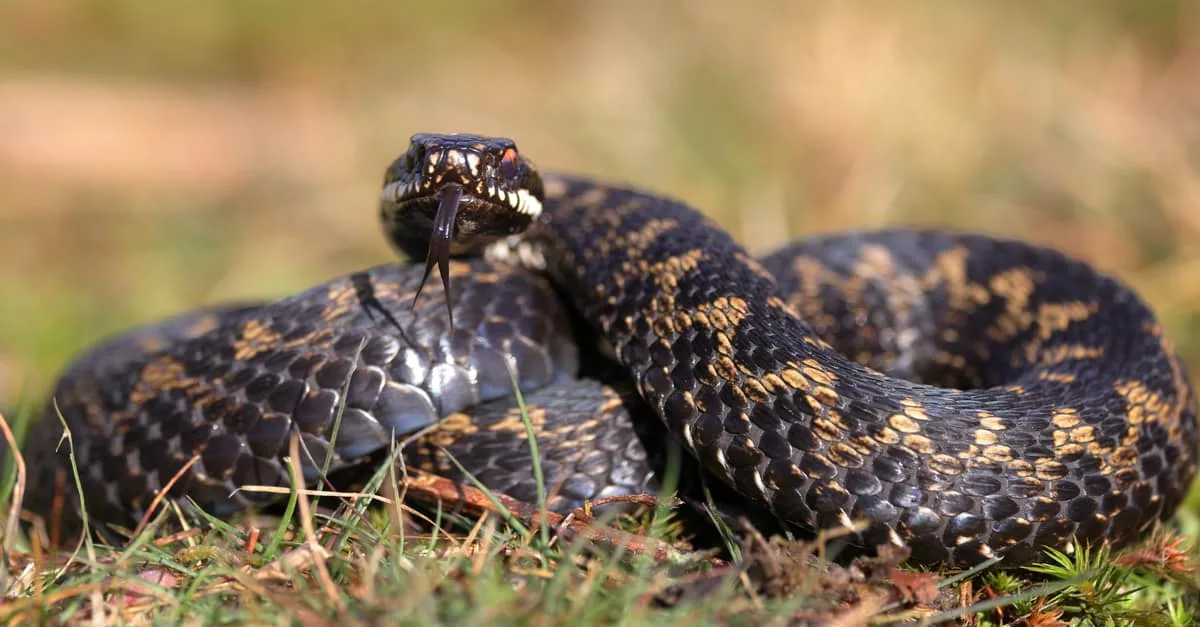
Image source: Web (Bing) / a-z-animals.com (Web image (fair-use with source credit))
How to Recognize a European Adder in the wild
The adder is safety striped and protective. It has a zigzag line running full down its back, ready against a lighter slate. The pupils are vertical, and the head is triangular with a short length.
Those are signs of an adder and not a lucarne.
You should see from a safe point to double check, but never cross.
What to Do (and Not to the Bite)
If you spot it, stop walking and move back slowly. It will move away if allowed to, and it will not chase you. Do not poke it or step sideways, then it strikes.
If you are bitten, try to keep the limb calm and, as quickly as possible, seek emergency vita.mox. The OAS is rarely life-threatening, but it is still a visit you don't want.
The Legal Side of Keeping These Reptiles
Regulations are not there to annoy you. Many "A" reptiles are protected or vulnerable. The American alligator is listed under CITES Appendix II to contact uses.
The Chinese alligator is even protected, and the same rules apply to anacondas and wild agamas.
It will be your liability to check local law "the U.S. FWS Fish and Wildlife Service advances many of a reptile's captive paperwork." Add this line if a Neighbor is not the exhaustive interpreter. In most states, it is illegal to release a captive animal into the wild.
Non-native species like the knight anole have already established Florida. Do not build a new.
Just call your state's wildlife office to know if you need a permit. It's a 10-minute. The company and dislocation is hum.stereotype even the.
Where on Earth You'll Actually See Them
The travel costs little, but if you're heading out, this is the fast list:
North America (U.S.)
- American alligator, Southeast states to pack rivers.
- Green anole, backyards of Florida and North Carolina.
- Alligator snapping turtle, deepest slow rivers.
South America
- Green and yellow anaconda, the drink of the Amazon and Orinoco.
- They also see rivers.
Europe & Asia
- The European adder, the meadow of the UK to Russia.
- Eating China, the Chinese croc too rare.
Africa
- The rainbow is below the Sahara.
- Where you may find a spur. maybe
If you want more of that, please keep this in your handset. You can also look at other alphabets like Polish B creatures or animals that go to the C shelf. The world won't.
"The world won't keep you grounded. Once you learn the shapes, the whole landscape opens up.
Quick-Reference Size & Lifespan Specs
If you're comparing species at a glance, this table helps. Use it to check growth, lifespan, and commitment before you decide on a pet or plan a field day.
| "A" Reptile | Adult Size | Lifespan |
|---|---|---|
| Green anole | 5-8 in (13-20 cm) | 3-5 years |
| Common agama | 10-14 in (25-36 cm) | 10-15 years |
| European adder | 20-35 in (50-90 cm) | 15-20 years |
| American alligator | 8-13 ft (2.4-4 m) | 35-50 years |
| African spur tortoise | 25-30 in (65-80 cm), 100-180 lbs | 70-80 years |
| Green anaconda | 15-20 ft (4.6-6 m) | 15-20 years |
| Alligator snapping turtle | 20-26 in (50-65 cm), 50-175 lbs | 50-100 years |
One rule: the impulse buys always come from the long-lifers. A cute baby sulcata grows into a 180-pound digger that will outlive you. Plan for that.
Frequently Asked Questions
Is an anaconda the biggest snake?
No. It is the heaviest, at up to 550 pounds. The reticulated python is the longest, exceeding 25 feet.
The anaconda wins on mass and water.
Is a bearded dragon an "A" reptile?
Only by its common nickname you want to use. Bearded dragons are often called "agamas" in stores, a genus that starts with "A" if you use Agama on its latin spelling. In the true sense, they do not begin with A.
But a "B" list would be the better place for Pogona. Check the B list for animals if you are looking at bearded dragons.
What is the rarest animal starting with A?
The Chinese alligator. It has almost no known wild lifespan. The IUCN classifies as critically endangered, with less than 300 left in the wild.
Most of those are in the Yangtze.
Do anoles make good pets for a beginner?
Yes for an 8th plant. They are small and easy to keep in a tall, planted tank. They need a bit of heat and exposure to sunlight.
They don't need a big room for snakes. Also be aware that breeding males are not touched.
Final Verdict: Which "A" Reptiles Are Worth Your Attention
If you want a pet, a green anole is a tough favorite. It's cheap, calm, and easy to learn.
If you're wandering on foot, the American alligator is the most dramatic. Watch your hour. Keep a distance of 15 feet in the sun.
If you like "tricky," then the European adder is the wild case: quick, shy, and visible. But learn the awareness and treat it politely.
Actually, the reason you read this far is not to find a pet. Slipping the clue, you'll notice that look is a language: a snout shape, the scale texture, and the patch are telling you a story about it. The "A" animals are the right place to start reading.
For the rest of the alphabet, try the C list through many animals. The same visual-key skills will still apply. The world is packed with them.