Meet the E Insects: Earwigs, Emperors & More
You're standing in your kitchen, and something just skittered across the floor. It's got pincers, it's dark brown, and it's absolutely booking it toward the baseboard. You've got questions.
And the first one is usually: what on earth is that thing?
If you're trying to identify insects that start with e, you're probably looking at one of a handful of common species. Earwigs, emerald ash borers, European hornets, eastern tent caterpillars. The list isn't huge, but the confusion around it is.
Because when people search for these bugs, they're usually not just curious. They're trying to figure out if they should be scared, if they need to call an exterminator, or if they should just leave it alone and go back to their coffee. In our research across university extension databases and entomology resources, we found that most "E" insects fall into three clear categories: household nuisances, garden helpers or pests, and tree-threatening invaders.
As of 2026, the emerald ash borer alone has killed hundreds of millions of ash trees across North America since its arrival. Let's sort out which one you're dealing with.
Why "E-Insects" Confuse Everyone
Here's the thing about alphabetical insect lists. They're useless when you're panicking. Knowing that "earwig" starts with an E doesn't tell you whether the thing crawling up your wall is dangerous.
Or whether it's going to eat your tomatoes. Or whether it's a sign of a bigger problem.
The real issue is that the "E" group includes some of the most misidentified bugs in North America and Europe. People confuse European hornets with Asian giant hornets. They think earwigs will crawl into their ears while they sleep.
They assume every caterpillar spinning a web is destroying their tree. None of that is accurate, but the myths persist because nobody sits down and clarifies which bug is which.
Let's clear up the confusion with a quick reference. Then we'll walk through the specific insects you're most likely to encounter and exactly what to do about them.
Quick Answer
Several common insects start with the letter E. The most frequently encountered are earwigs, European hornets, eastern tent caterpillars, and the emerald ash borer. Earwigs are harmless household invaders.
European hornets are large but generally non-aggressive. Eastern tent caterpillars damage ornamental trees. The emerald ash borer is a destructive invasive pest.
Each requires a different response.
The Quick ID Chart: Match Your Bug in 60 Seconds
Before we dive deep into each species, here's a fast-reference chart that groups all the major E-insects by where you'll find them and whether they're actually a problem. Use this to skip straight to the section that matters.
| Insect | Where You'll Find It | Size | Danger Level | Action Needed |
|---|---|---|---|---|
| Earwig | Basements, bathrooms, gardens, under mulch | 5–25 mm | None to humans | Seal cracks, reduce moisture |
| European hornet | Hollow trees, wall voids, attics | 25–35 mm | Stings if threatened | Leave alone or call pro for removal |
| Eastern yellowjacket | Ground nests, wall cavities | 12–16 mm | Aggressive, stings repeatedly | Professional removal near homes |
| European paper wasp | Under eaves, porch ceilings | 15–20 mm | Mildly aggressive | Knock down small nests at night |
| Eastern tent caterpillar | Cherry, apple, and ornamental trees | 50 mm (larvae) | None to humans | Remove tent webs in early spring |
| Emerald ash borer | Ash trees, firewood | 8.5–14 mm | Destroys trees | Report to local extension office |
| Emperor moth | Heathlands, moorlands (Europe) | Wingspan 60–70 mm | None | Enjoy the sight |
| Eastern tiger swallowtail | Gardens, woodlands (Eastern US) | Wingspan 80–100 mm | None | Plant host plants to attract |
Now, let's walk through the insects themselves. We'll start with the one people encounter most often.
Meet the E-Insects: The 14 You'll Actually Encounter
The "E" group isn't massive, but it covers a lot of ground. Some of these are everyday household visitors. Others are rare and beautiful.
A few are genuinely destructive. Here's the full lineup, organized by where you're likely to find them.
In and Around Your Home
Earwig (Forficula auricularia) is the most common E-insect you'll see indoors. They're reddish-brown, about a quarter-inch to an inch long, and have those unmistakable pincer-like cerci at the rear. They're nocturnal and love damp environments.
You'll find them in bathrooms, basements, and under potted plants. The good news? They're completely harmless.
The ear myth is exactly that, a myth. They don't crawl into your ears and they don't bite. They're more of a nuisance than anything else.
Ensign wasp (Evaniidae family) is one you might spot indoors, specifically near cockroach habitats. These thin, black wasps have a distinctive shield-shaped abdomen that bobs up and down when they walk. They're actually beneficial.
Their larvae parasitize cockroach egg cases, which means they're doing you a favor. Don't kill them if you find them.
European paper wasp (Polistes dominula) is a common sight under eaves and porch ceilings. They're slender, with long legs that dangle when they fly, and they build open, umbrella-shaped nests. They'll sting if provoked, but they're not aggressive like yellowjackets.
In Your Garden
Eastern tent caterpillar (Malacosoma americanum) shows up in early spring. You'll notice their silken tents in the crotches of cherry, apple, and crabapple trees. They're fuzzy, dark-colored caterpillars with a white stripe down the back and blue spots on the sides.
They can defoliate small trees, but healthy trees usually recover.
European corn borer (Ostrinia nubilalis) is a serious agricultural pest. The larvae bore into corn stalks and ears, causing significant crop damage. If you're a home gardener, you might see them in sweet corn or pepper plants.
The adults are small, pale moths with a wingspan of about 25 mm.
Eyed click beetle (Alaus oculatus) is a striking insect. It's large, about 25, 45 mm, and has two big, eye-like spots on its thorax. These spots are meant to startle predators.
They're harmless to you and your plants.
In Your Trees
Emerald ash borer (Agrilus planipennis) is the most destructive E-insect on this list. This metallic green beetle, native to Asia, was first detected in North America in 2002. Since then, it's killed hundreds of millions of ash trees.
The larvae feed on the inner bark, cutting off the tree's ability to transport water and nutrients.
Elm bark beetle (Scolytus multistriatus) is smaller and less famous, but it's the primary vector for Dutch elm disease. The beetles carry the fungus from infected trees to healthy ones. If you have elm trees, these beetles are worth paying attention to.
In the Wild
Emperor moth (Saturnia pavonia) is one of Europe's largest moths, with a wingspan of 60, 70 mm. The males have bright orange hindwings with eye-spots. The females are larger and more subdued.
They're nocturnal and found in heathlands and moorlands.
Eastern tiger swallowtail (Papilio glaucus) is a gorgeous butterfly found throughout eastern North America. The females come in two color forms: yellow with black tiger stripes, or all black. They're strong fliers and common garden visitors.
European hornet (Vespa crabro) is the largest native hornet in Europe and has established populations in North America. They're big, 25, 35 mm for workers, with reddish-brown heads and yellow and brown striped abdomens. They're often mistaken for Asian giant hornets, but they're much smaller and far less aggressive.
Eastern yellowjacket (Vespula maculifrons) is the ground-nesting wasp everyone hates. They're black and yellow striped, about 12, 16 mm, and they get increasingly aggressive as summer progresses. Their colonies can reach 15,000 workers by late summer.
Emerald cockroach wasp (Ampulex compressa) is a fascinating parasitic wasp native to tropical regions. It stings cockroaches and turns them into "zombies" before laying an egg on them. The larva then eats the paralyzed cockroach alive.
It's not found in most households, but it's worth knowing about if you're in the tropics.

Image source: Web (Bing) / vulplex.com (Web image (fair-use with source credit))
Decision Tree: Finding Your E-Insect in 3 Steps
Now that you know what's out there, here's how to actually identify what you're looking at. Instead of flipping through image galleries, answer these three questions in order. Each one narrows the field significantly.
Step 1: Where Did You See It?
This is your first filter. The location tells you more than any other single clue.
- Indoors, especially damp areas like bathrooms or basements? It's most likely an earwig or an ensign wasp. Both are harmless.
- Under eaves, in porch ceilings, or around windows? That's a paper wasp or possibly an eastern yellowjacket if the nest is hidden.
- In a tree, on leaves, or on the trunk? Look closer to identify whether it's a caterpillar, a borer beetle, or something else.
- In open fields, heathlands, or woodlands? You might be looking at a moth or butterfly.
Step 2: What Does It Look Like?
Match your insect against these visual cues.
Does it have pincers at the rear?
- Yes: It's an earwig. Harmless. Move on.
Is it winged and large, over 25 mm?
- Look for reddish-brown head and yellow-brown striped abdomen: European hornet.
- Mostly black with yellow bands: eastern yellowjacket.
- Metallic green body: emerald ash borer.
Is it a caterpillar in a silken web?
- Web in the crotch of a tree branch: eastern tent caterpillar.
- Wandering without a web: could be any number of moth larvae.
Is it a moth or butterfly?
- Large moth with eye-spots on wings: emperor moth.
- Yellow or black butterfly with tails on hindwings: eastern tiger swallowtail.
Step 3: Is It Causing Damage?
This tells you whether you need to act.
- You see D-shaped exit holes in an ash tree's bark: Call your local extension office. This is a serious emerald ash borer infestation.
- You see tent webs but the tree looks healthy: Monitor it. Remove the webs if the tree is small or valuable.
- You see earwigs in the house: They're not causing structural damage. They're just looking for moisture.
- You see a hornet and you're not allergic: Leave it alone. They're beneficial predators.
Here's a simple decision tree to make it visual:
Where did you see it?
├── Indoors
│   └── Damp area? → Earwig (harmless)
│   └── Near cockroach activity? → Ensign wasp (beneficial)
├── Under eaves / porch
│   └── Open umbrella nest? → European paper wasp
├── On or near a tree
│   ├── Silken tent in branch crotch? → Eastern tent caterpillar
│   ├── D-shaped holes in bark? → Emerald ash borer (call for help)
│   ├── Boring holes / sawdust? → Elm bark beetle
│   └── Flying around flowers? → Tiger swallowtail or emperor moth
└── At a picnic / near the ground
    └── Black and yellow stripes, aggressive? → Eastern yellowjacket
Dealing with Earwigs: The One Everyone Finds
Let's start with the insect you're most likely to actually see. Earwigs are everywhere. They're in gardens, under mulch, in basements, and occasionally in your bathroom sink at 2 AM.
They're also the most misunderstood bug on this list.
First, the myth. Earwigs do not crawl into your ears and bore into your brain. This story has been around for centuries, but it's completely false.
According to university entomology departments, earwigs show no interest in human ears. They're attracted to damp, dark spaces that resemble their natural habitat under rocks and logs. Your ear canal doesn't qualify.
What earwigs actually want is moisture. They're scavengers that feed on decaying plant matter, dead insects, and occasionally living plants. When they get into your house, they're usually looking for water.
Bathrooms, kitchens, and laundry rooms are prime targets. They're also drawn to the damp soil around house foundations, which is why you'll often find them in large numbers after heavy rain or during fall when they're looking for overwintering spots.
Here's the practical breakdown of what works for earwig control:
- Reduce moisture around your foundation. Fix leaky faucets, ensure gutters drain away from the house, and remove standing water.
- Clear debris from the perimeter. Leaf piles, mulch, and stacked firewood are earwig hotels. Move them at least a few feet from your foundation.
- Seal entry points. Check door sweeps, window screens, and foundation cracks. Earwigs are flattened, so they can squeeze through surprisingly small gaps.
- Create a dry barrier. A 12-inch band of gravel or bare soil around your foundation is less inviting than damp mulch.
- Use diatomaceous earth as a first line of defense. This fine powder is abrasive to insects' exoskeletons and works well in dry areas. It's safe for pets and people when used according to the label.
If you have a serious infestation, indoor treatments like sticky traps or a targeted insecticide along baseboards can help. But if you just see the occasional earwig, leave it alone. They're part of the ecosystem and honestly more helpful than harmful, especially in gardens where they feed on aphids and other pests.
Garden & Yard E-Insects: Which to Keep, Which to Kill
Your garden is where the "E" insects get interesting. Some are genuinely helpful. Others will eat your plants.
A few are completely neutral. The trick is knowing which is which before you reach for the spray bottle.
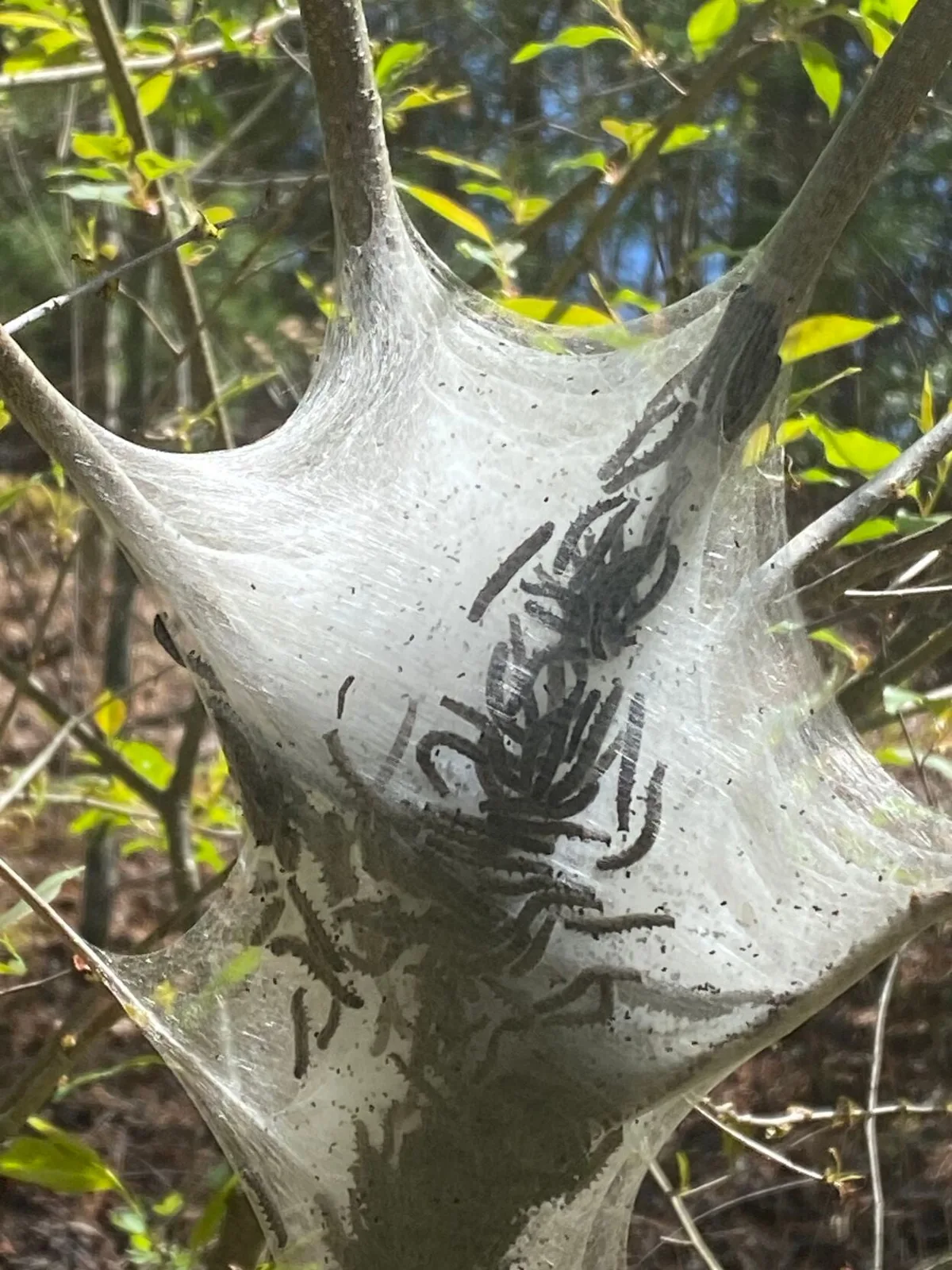
Image source: Web (Bing) / wataugademocrat.com (Web image (fair-use with source credit))
The Beneficial Ones
Earwigs, despite their bad reputation, are garden allies. They're primarily scavengers and predators. They feed on aphids, mites, and other soft-bodied pests.
A 2021 study in the journal Biological Control found that earwigs can significantly reduce aphid populations in apple orchards. So if you see them among your plants, let them work.
Ensign wasps are also friends. They don't sting humans and they actively hunt cockroach egg cases. If you see one indoors, thank it and send it on its way.
It's doing pest control for free.
Eastern tiger swallowtails are purely beneficial pollinators. Their caterpillars feed on host plants like tulip trees and wild cherry, but they rarely cause noticeable damage. The adults are important pollinators for many native plants.
The Pests You Should Address
Eastern tent caterpillars are the most visible garden problem in early spring. The female moths lay egg masses on twigs in late summer, and the eggs hatch right as buds break. The larvae spin silken tents in branch crotches and emerge on warm days to feed on leaves.
The damage is mostly cosmetic on healthy, mature trees. A single defoliation event usually doesn't kill a tree. But on young or stressed trees, repeated defoliation can be serious.
Here's how to handle them:
- Remove the egg masses in winter. They look like shiny, dark brown bands wrapped around twigs. Prune them out and dispose of them.
- Tear out the tents in early morning or evening. That's when the caterpillars are inside. Use a stick or gloved hands. Drop the webs into soapy water.
- Consider Bacillus thuringiensis (Bt) for large infestations. This naturally occurring bacterium is specific to caterpillars and safe for other wildlife. Apply it when the caterpillars are young, usually in the first few weeks after hatching.
European corn borers are a different story. They attack over 200 plant species, including corn, peppers, and beans. The larvae bore into stalks and ears, leaving entry points for fungal diseases.
If you grow sweet corn, you've probably seen the telltale "sawdust" frass near the ear. Crop rotation and early planting can help, as can releasing beneficial trichogramma wasps that parasitize the eggs.
The Ones to Leave Alone
The eyed click beetle looks intimidating with its large eye-spots on the thorax, but it's completely harmless. The spots are a defensive adaptation meant to fool predators into thinking it's a larger animal. Adults feed on nectar and occasionally on small insects.
The larvae, called wireworms, live in soil and feed on plant roots, but they rarely reach damaging levels in home gardens.
The Emerald Ash Borer: A Tree-Killing Emergency
This is the one that keeps tree care professionals up at night. The emerald ash borer (EAB) is arguably the most destructive forest pest ever introduced to North America. Since its discovery in Michigan in 2002, it has spread to over 30 states and killed hundreds of millions of ash trees.
The economic and ecological damage is staggering.
Here's why it's so devastating. The adult beetle, a stunning metallic green insect about 8.5 to 14 mm long, lays eggs in bark crevices. When the larvae hatch, they bore into the inner bark and feed on the phloem and cambium layers.
These are the tissues responsible for transporting water and nutrients throughout the tree. The larvae create winding S-shaped galleries that eventually girdle the tree, cutting off its life support.
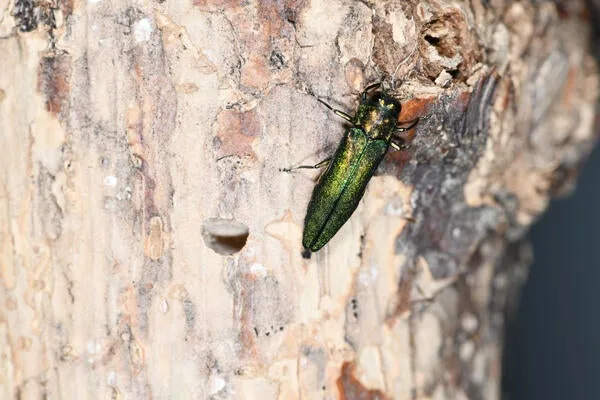
Image source: Web (Bing) / cisr.ucr.edu (Web image (fair-use with source credit))
The tree typically dies within 1 to 3 years of infestation. By the time visible symptoms appear, the damage is often extensive.
How to Spot the Signs
- D-shaped exit holes in the bark. Adult beetles emerge through small holes that are about 3 mm wide. These are distinctive and different from the round holes of other borers.
- S-shaped galleries under the bark. Peel back loose bark and you'll see winding, serpentine tunnels packed with sawdust-like frass.
- Crown dieback. Leaves at the top of the tree thin out or fail to appear in spring.
- Splitting bark. Vertical cracks over larval galleries are common.
- Increased woodpecker activity. Woodpeckers feed on the larvae, so heavy pecking damage on ash trees is a red flag.
What to Do
If you suspect EAB on your property, act quickly.
- Confirm the identification. Contact your local cooperative extension office or state forestry department. They can verify the pest and advise on quarantine regulations.
- Follow firewood restrictions. Never move firewood across state or county lines. EAB larvae survive in cut wood, and this is how the pest spreads most quickly.
- Consider insecticide treatment for high-value trees. Systemic insecticides like emamectin benzoate can protect ash trees for up to 2 years per application. These treatments are best done by licensed professionals.
- Remove and replace dead or dying trees. If more than 30 to 50 percent of the canopy is gone, the tree is unlikely to recover. Removal prevents hazards from falling branches.
Per the USDA Forest Service, insecticide treatments are only recommended when EAB has been confirmed within 15 miles of your property. Preventive treatments are effective but require annual or biannual reapplication, which gets expensive for low-value trees.
European Hornet vs. Yellowjacket: Stinger Showdown
Let's settle the debate that causes the most panic. People see a large wasp and immediately assume it's an Asian giant hornet, the so-called "murder hornet." Almost always, it's actually a European hornet or an eastern yellowjacket. These two insects are the ones causing all the drama at end-of-summer picnics and backyard gatherings.
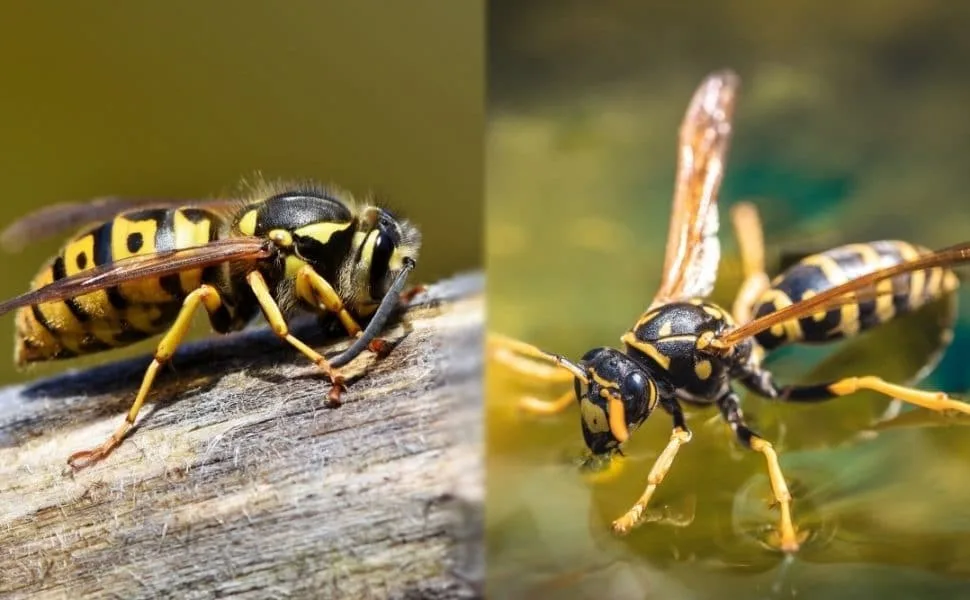
Image source: Web (Bing) / animalia-life.club (Web image (fair-use with source credit))
Here's a side-by-side comparison so you can tell them apart at a glance.
| Feature | European Hornet | Eastern Yellowjacket |
|---|---|---|
| Size | 25–35 mm (larger) | 12–16 mm (smaller) |
| Head color | Reddish-brown | Black with yellow face |
| Abdomen pattern | Yellow and brown stripes | Yellow and black stripes |
| Nest location | Hollow trees, wall voids, attics | Ground burrows, wall cavities |
| Aggression level | Docile unless provoked | Aggressive, especially late summer |
| Sting behavior | Can sting repeatedly | Can sting repeatedly |
| Colony size | 200–400 workers | 1,500–15,000 workers |
| Activity | Nocturnal, attracted to lights | Diurnal, active during day |
The biggest takeaway is this: European hornets look scary but are relatively calm. They're also beneficial predators of pest insects like flies and caterpillars. They're large and noisy when flying, which makes people panic, but they rarely sting unless you grab them or step on them.
Eastern yellowjackets are the opposite. They're smaller, but they're aggressive scavengers. They're the ones that hover around your soda can, your hamburger, and your trash can.
They sting with little provocation, and they can do it repeatedly because their stingers aren't barbed.
If you have a European hornet nest in a tree or attic void and it's not near high-traffic areas, consider leaving it alone until winter when the colony dies off. If the nest is close to doors or play areas, call a professional removal service. Do not attempt to treat a nest in a wall void yourself.
The stings can trigger severe allergic reactions, and the structure makes DIY treatments less effective.
For yellowjackets, ground nests are the common problem. If you locate an entrance hole, mark it clearly and avoid the area. Professional treatments are safer and more effective, especially for large colonies.
If you choose a DIY aerosol spray, apply it at dusk when all workers are in the nest, and always wear protective clothing. If you have a known allergy to stinging insects, never handle this yourself. Carry an epinephrine auto-injector if prescribed, and call for professional help.