Fish That Start with L: Lionfish, Lungfish & More
If you've ever searched for "fish that start with l," you know the challenge isn't finding one. It's figuring out which one you actually mean. Largemouth Bass, Lionfish, Loaches, Lamprey, Lungfish: they're all out there, and they couldn't be more different from each other.
The problem is that common names overlap, confuse, and sometimes flat-out mislead you.
The good news? Once you understand the basic categories, the whole thing clicks into place. As of 2026, there are over 34,000 recognized fish species worldwide, and a solid handful of them start with the letter L.
The key distinction comes down to where they live, how big they get, and what they need to thrive. Let's sort out the real contenders from the confusion.

Image source: Bing (Web (fair-use with source credit))
Quick Answer
The most common fish that start with L include Largemouth Bass, Lionfish, Loaches, Lamprey, Lungfish, and Leopard Plecos. These species span both freshwater and saltwater habitats. Each one has distinct care requirements, sizes, and temperaments.
The name alone never tells you whether it's an aquarium fish or an open-ocean predator. Always verify the full scientific name before purchasing or fishing.
Why the Right Name Matters
Common names are a mess. One species can have five different common names across different regions, and two totally different species can share the same one. That's why hobbyists and researchers rely on scientific names for clarity.
For example, the Largemouth Bass is Micropterus salmoides, while the Lionfish is Pterois volitans. Same letter, completely different families, habitats, and behaviors.
This confusion causes real problems. Aquarium beginners sometimes buy a fish thinking it's small and peaceful, only to discover it grows three feet long and eats their other pets. Anglers might think they're catching one species when they're actually catching another, which matters for size limits and bag limits.
If you're researching fish that start with L, your first question should always be: freshwater or saltwater? Your second question: how big does it actually get? Answer those two first, and half of your decision is already made.
Freshwater vs. Saltwater: The First Big Filter
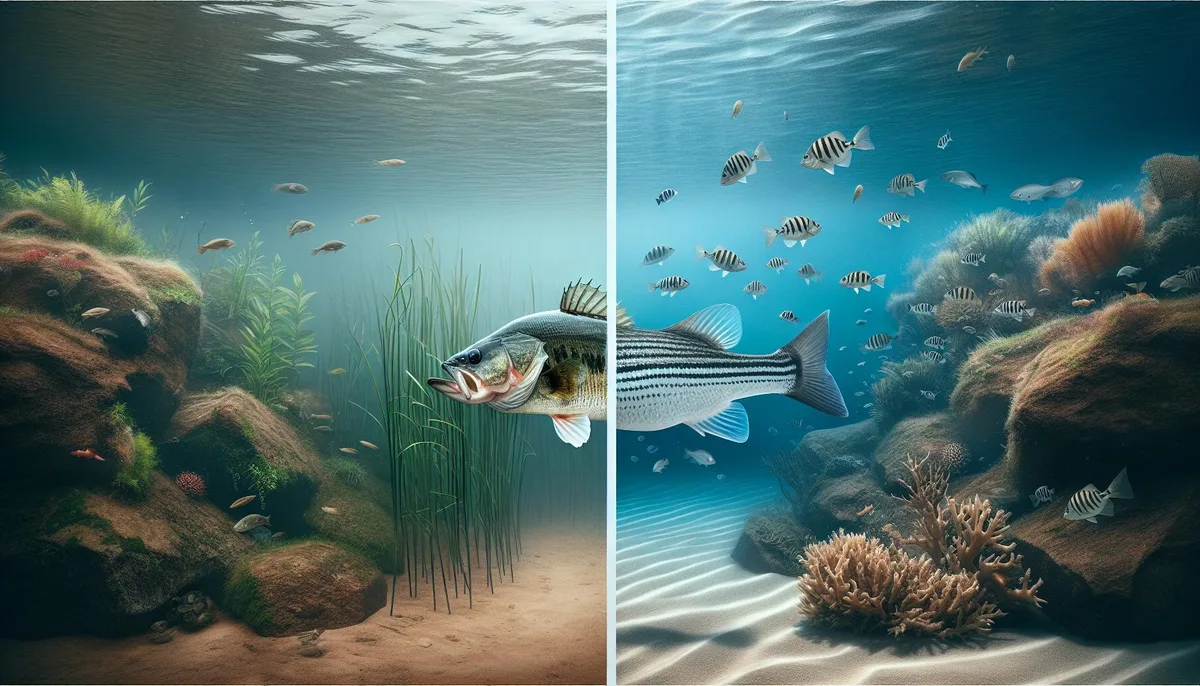
Image source: Web (Bing) / bassfishingtechniques.net (Web image (fair-use with source credit))
Before anything else, split your list into two columns. Freshwater fish live in rivers, lakes, and ponds. Saltwater fish live in oceans and seas.
Some species can handle brackish water, a mix of both, but they're the exception, not the rule.
The freshwater list is the longer one. Largemouth Bass, Loaches, Lungfish, and Leopard Plecos all call freshwater home. The saltwater side includes Lionfish, Lizardfish, Lingcod, and Lemon Sharks.
Lake Trout technically live in freshwater lakes, but they're a cold-water species with very specific temperature needs.
Here's the practical angle: your habitat determines your choices. If you're setting up a home aquarium, tropical freshwater species like Loaches and Plecos are the easiest starting points. If you're fishing, Largemouth Bass and Lake Trout dominate the freshwater scene, while Lingcod is a Pacific Northwest saltwater favorite.
If you dig animals that start with L in general, you'll notice the same pattern: habitat defines everything.
Largemouth Bass: The All-American Game Fish
The Largemouth Bass is the most recognizable fish starting with L, and for good reason. It's the most targeted game fish in North America. With a dark green back, a white belly, and a jaw that extends past its eye, it's built for ambush hunting.
It thrives in warm, slow-moving water across the United States and Mexico.
Where They Live and How to Catch Them
Largemouth Bass love structure: fallen trees, weed beds, docks, and drop-offs. They hide in cover, then explode out to strike prey. Anglers typically use spinnerbaits, plastic worms, and crankbaits.
Topwater lures work best early morning and late evening.
The current world record Largemouth Bass weighed 22 pounds 4 ounces, caught in 1932 at Montgomery Lake, Georgia. That record has stood for nearly a century. Most bass you'll catch run 1 to 5 pounds, with 8-pounders considered trophies in most lakes.
Why Anglers Love Them (and Why They're Tough)
They fight hard. A hooked bass will jump, run, and dive for cover. That's why they're a favorite among both beginners and tournament pros.
But they're not invincible. Bass are sensitive to water temperature, spawning behavior, and pressure from overfishing. Catch-and-release practices and slot limits help keep populations healthy.
If you want to explore similar species, the same careful approach applies to the larger mammals that start with L, where habitat and behavior matter just as much.
Lionfish: Beautiful, Venomous, and Controversial

Image source: Web (Bing) / pexels.com (Web image (fair-use with source credit))
The Lionfish is arguably the most striking fish that starts with L. Its red, white, and brown stripes scream warning. And that warning is legit: Lionfish carry 18 venomous spines along their dorsal, pelvic, and anal fins.
A sting causes intense pain, swelling, and in rare cases, serious systemic reactions.
The Sting Risk You Need to Know
The venom is a protein-based toxin. It breaks down with heat, so the standard treatment for a sting is immersing the affected area in hot water, around 110 to 113 degrees Fahrenheit, for 30 to 90 minutes. Seek medical attention for severe reactions.
The venom isn't usually fatal to healthy adults, but it's miserable and can cause complications in children or people with allergies.
Why They're Considered Invasive
Lionfish are native to the Indo-Pacific. But in the 1980s, they appeared in the Atlantic. Possibly released from home aquariums, they've since exploded across the Caribbean and Gulf of Mexico.
They have no natural predators in these new waters, and they eat native fish voraciously.
The NOAA and other agencies actively encourage lionfish hunting. Spearfishing tournaments, culling programs, and even culinary campaigns have emerged. Lionfish meat is white, flaky, and delicious, which makes removal a tasty solution.
If you're interested in invasive species management, the NOAA provides official guidance on lionfish removal.
Moving from the ocean to your living room, we hit the aquarium favorites. These are the fish you'll actually see in pet stores. And they're the ones causing the most confusion.
Loaches and L-Number Plecos: The Aquarium Favorites

Image source: Bing (Web (fair-use with source credit))
When hobbyists say "L fish," they usually mean L-number plecos, not all fish starting with L. The "L" stands for "Loricariidae," the scientific family name for armored catfish. Each newly discovered species gets a number, like L046 or L333.
That's where the confusion starts.
The Confusion Around "L Fish"
Newcomers search for fish that start with L and find the L-number system. They expect a list of common names. Instead, they get a catalog of identification numbers tied to specific pleco species.
The L-number is a shorthand used by importers and breeders until a formal scientific name gets assigned.
This matters because two plecos with different L-numbers can look nearly identical. But their care requirements might differ in water temperature, pH, or adult size. Always cross-reference the L-number with the full species name before buying.
Loaches vs. Plecos: Which Fits Your Tank
Loaches are a separate family entirely, the Cobitidae. They're slender, active bottom-dwellers. Popular species include the Clown Loach and the Kuhli Loach.
Plecos are armored catfish with sucker mouths and a more sedentary lifestyle.
Here's the quick breakdown:
- Clown Loaches grow up to 12 inches and need groups of five or more. They're social and playful but outgrow most home tanks.
- Kuhli Loaches stay around 4 inches and hide most of the day. They're peaceful and do well in planted tanks.
- Common Plecos can hit 18 inches and produce massive waste. Most pet store babies end up in ponds or rehomed.
- L-number plecos range from 3 to 12 inches depending on the specific species. Research the L-number before you commit.
For beginners, Kuhli Loaches are the safest bet. They're hardy, small, and don't eat live plants. If you want a pleco, look for a species labeled as dwarf or small, like the LDA-01.
For more on related animal naming, you might find our guide to naming conventions in the animal kingdom useful.
The Rest: Lamprey, Lungfish, Leopard Pleco, and More
Beyond the big names, several other fish that start with L deserve attention. Some are evolutionary marvels. Others are niche aquarium residents.
A few are honest-to-goodness monsters you'll never keep in a glass box.
Lamprey: The Parasitic Primitive
Lampreys are jawless fish with a circular, suction-cup mouth lined with teeth. They attach to host fish and feed on blood and tissue. They're ancient creatures, unchanged for over 360 million years.
In the Great Lakes, the sea lamprey is a major invasive pest. The Great Lakes Fishery Commission spends millions annually on lamprey control programs.
Lungfish: The Living Fossil
Lungfish can breathe air using a modified swim bladder. They survive droughts by burrowing into mud and entering a dormant state called estivation. Some species can stay like that for years.
They're native to Africa, South America, and Australia. In captivity, they need huge tanks and can live over 20 years.
Leopard Pleco: The Showpiece Cleaner
The Leopard Pleco, sometimes sold as the Leopard Frog Pleco, is a smaller L-number species with striking dark spots on a light body. It grows to about 10 inches and stays mostly nocturnal. It's an efficient algae eater but needs driftwood in the tank for grazing and hiding.
Lizardfish, Lingcod, and Lake Trout: The Less Common Picks
Lizardfish are slender saltwater ambush predators. Lingcod is a fierce Pacific Northwest species that can reach 5 feet and 80 pounds. Lake Trout, despite the name, aren't actually trout; they're a char species.
They thrive in deep, cold lakes and are a prized catch for ice fishermen. If you're into animal naming lists, you'll see similar quirks in mammals.
Minimum Tank Sizes and Water Parameters at a Glance
This is where most people make mistakes. A fish's beauty never outweighs its biological needs. Here's a practical table for the species we've covered.
| Species | Minimum Tank Size | Water Temperature | pH Range | Adult Size |
|---|---|---|---|---|
| Kuhli Loach | 20 gallons | 74–82°F | 5.5–7.0 | 4 inches |
| Clown Loach | 75 gallons | 77–86°F | 6.0–7.5 | 12 inches |
| Leopard Pleco | 40 gallons | 72–82°F | 6.5–7.5 | 10 inches |
| Largemouth Bass | 200+ gallons | 65–80°F | 7.0–8.0 | 24 inches |
| Lionfish | 100 gallons | 74–82°F | 8.0–8.4 | 12–15 inches |
| Lungfish | 500 gallons | 75–85°F | 6.5–7.5 | 36+ inches |
Every one of these species needs filtration rated for double the tank volume. Bigger fish produce more waste, and waste spikes ammonia. Test your water weekly until your tank cycles fully.
Then test monthly for maintenance.
Beginner-Friendly vs. Expert-Only: Where You Fit
Be honest about your experience level. That single decision saves you money and keeps fish alive.
If you're a first-time owner, stick with small, hardy species. Kuhli Loaches and L-tail Guppies are forgiving of minor water parameter swings. They also stay small enough for a standard 20-gallon aquarium.
If you've kept tanks for a couple years, Loaches and smaller Plecos are fine. You understand nitrogen cycling, quarantine protocols, and the importance of consistent water changes.
If you're a serious hobbyist with big tanks, you can tackle Lionfish or even a juvenile Largemouth Bass. Both need specialized setups, strong filtration, and a diet of live or frozen foods. Lionfish require venom-safe handling gear.
Saltwater systems are another entire level of commitment. The water chemistry is less forgiving, the equipment costs more, and the livestock is pricier. Start with freshwater.
Graduate to brackish. Then consider saltwater.
Mistakes to Avoid When Choosing an "L Fish"
The biggest mistake is buying on impulse. A cute 2-inch pleco in a pet store becomes an 18-inch waste machine in two years. That's how fish end up in ponds, toilets, and rehomed through social media groups.
Another common error is mixing incompatible species. Lionfish will eat anything that fits in their mouth. Plecos and Loaches are generally peaceful but can stress each other out if the tank is too small.
Here's the real-world checklist we recommend:
- Research the adult size, not the juvenile size.
- Confirm the water temperature and pH match your tap water.
- Set up the tank fully, including cycling, before adding fish.
- Quarantine new fish for two weeks in a separate tank.
- Check your local regulations about keeping exotic species.
- Never release fish into natural waterways.
These mistakes are easy to avoid with a few minutes of research. It's the difference between a thriving aquarium and a tank full of issues. If you're curious about other species, our list of animals starting with C covers another set of interesting creatures.
Fishing Regulations, Invasive Species, and Legal Concerns
Keeping or catching fish that start with L isn't always straightforward. Laws vary by state, species, and even body of water. What's legal in Florida might land you a fine in California.
License Requirements and Size Limits
Every state requires a fishing license for freshwater and saltwater angling. Largemouth Bass have specific size and bag limits that vary by water body. Lake Trout often have stricter rules due to population management concerns.
Check your state's wildlife agency website before heading out.
For aquarium keepers, the rules are different. Some species, like certain L-number plecos, fall under CITES protections. That means international trade is regulated, and imported fish need proper documentation.
The US Fish and Wildlife Service enforces these rules at borders and ports.
When Invasive Species Laws Apply
Lionfish are the standout example. In Florida and across the Caribbean, they're classified as invasive. State agencies actively encourage removal by any means.
You don't need a permit to spearfish lionfish in most areas, but you still need a valid saltwater fishing license.
Releasing any non-native fish into natural waterways is illegal in nearly every state. This includes common aquarium species like Plecos and Loaches. If you can't keep your fish anymore, rehome them through a local aquarium club or pet store.
If you're curious about other animal naming conventions and their quirks, our guide to animals starting with B covers similar ground.
Frequently Asked Questions
What is the most common fish that starts with L?
The Largemouth Bass is the most common and widely recognized. It's found across the United States, Mexico, and parts of Canada. Anglers target it more than any other freshwater game fish.
Its popularity also makes it the most photographed and written-about species on this list.
Are lionfish safe to keep in a home aquarium?
Lionfish are safe if you follow careful handling protocols. Their venomous spines require gloves and tongs during maintenance. They need a minimum 100-gallon tank with strong filtration and skilled tankmates.
Aggressive or large fish may attack them, while small fish become food. They're best suited for experienced saltwater keepers.
What does the L-number mean for plecos?
The L-number system identifies undescribed species of armored catfish. Each new import gets a sequential number, like L046 or L333. It's a temporary identifier until scientists formally name the species.
Hobbyists use these numbers to track specific color variants and regional differences.
Can I keep a fish I catch in a home aquarium?
Yes, but it's complicated. Wild-caught fish carry parasites and need quarantine. They also require larger tanks than most pet store species.
Largemouth Bass need 200 gallons minimum. Lake Trout need cold water systems, which are expensive to maintain. Releasing a wild fish into an aquarium is stressful and often fatal.
What is the easiest L fish to care for?
The Kuhli Loach is the easiest. It stays under 4 inches, tolerates a range of water conditions, and eats standard fish foods. It needs a group of at least three and a tank with plenty of hiding spots.
For plecos, the LDA-01 or a dwarf species is a better beginner choice.
Final Recommendation / Most Reliable Choices
If you want a safe, rewarding experience with fish that start with L, match the species to your situation.
For beginners, start with Kuhli Loaches in a 20-gallon tank. They're hardy, peaceful, and forgiving.
For anglers, target Largemouth Bass in local lakes. They're accessible, fun to catch, and don't require specialized gear.
For advanced hobbyists, a L-number pleco or a small group of Clown Loaches in a 75-gallon tank offers visual appeal and interesting behavior.
For experienced saltwater keepers, Lionfish are stunning but demand respect and careful handling.
Avoid the impulse buys. Skip the wild-caught monsters and the fish that outgrow your setup. Research, prepare, and you'll have years of enjoyment.
The reliable options are the ones that match your experience level and your tank's real capacity.