Which Reptiles Start with K? King Cobra, Komodo & More
Looking for reptiles that start with k? You're not alone. It's one of those alphabet questions that seems simple until you realize how many species share the same letter.
The answer spans everything from a 300-pound island predator to a tiny desert gecko. In our research, we found ten K-named reptiles you should actually know.
The most dangerous one, the common krait, carries venom with an LD50 of just 0.09 mg/kg in subcutaneous tests. That puts it among Asia's deadliest snakes. As of 2026, species like the Komodo dragon and Kemp's ridley turtle are also conservation priorities.
Let's start with the full list, then break down how to tell them apart.

Image source: Web (Bing) / ypkbe.hoover-ink.com (Web image (fair-use with source credit))
Quick Answer: Reptiles That Start With K — The Full List
Ten reptiles start with K. The big ones are king cobras, kingsnakes, and Komodo dragons. Then come kraits, Kenyan sand boas, and keelbacks.
The rest are Kemp's ridley turtles, knob-tailed geckos, Kirtland's snakes, and katualis. Some are deadly, and others make great pets.
Meet the K-List: The Usual Suspects at a Glance
Before we dive into identification, here's the full cast. These ten species are the ones that keep showing up in alphabetical reptile lists, school projects, and zoo exhibits. We've grouped them by what they are and where they fit.
| Species | Type | Where It Lives | Danger Level |
|---|---|---|---|
| King cobra | Venomous snake | South and Southeast Asia | Extreme |
| Kingsnake | Non-venomous snake | North America | Minimal |
| Komodo dragon | Monitor lizard | Indonesian islands | High |
| Krait | Venomous snake | Asia | Extreme |
| Kenyan sand boa | Non-venomous snake | East Africa | Minimal |
| Keelback | Generally mild snake | Wetlands across Asia | Low to moderate |
| Kemp's ridley | Sea turtle | Gulf of Mexico | Not dangerous |
| Knob-tailed gecko | Gecko | Arid Australia | Minimal |
| Kirtland's snake | Non-venomous snake | Midwest US | Minimal |
| Katuali | Sea krait | New Caledonia | Venomous |
A few notes. The katuali is sometimes called the New Caledonian sea krait. The keelback group includes several genera, and a few have caused serious bites.
The rest are harmless to humans, though that doesn't mean you should pick one up.
This list continues our alphabetical reptile series. Different letters bring different surprises. The K letter, as you can see, is heavily weighted toward snakes.
How to Tell Them Apart: The Visual Identification Guide
This is where most people get stuck. A beginner looks at a photo of a banded krait and thinks it's a harmless kingsnake. The difference is life and death.
Let's use visual cues that actually matter.
Start with body shape. Kraits have a triangular, flattened head and a thick, rounded body. Kingsnakes have a narrower head and a more cylindrical build.
Then check the scales. Most kraits have smooth, glossy scales. Many keelbacks, as the name suggests, have raised ridges running down each scale.
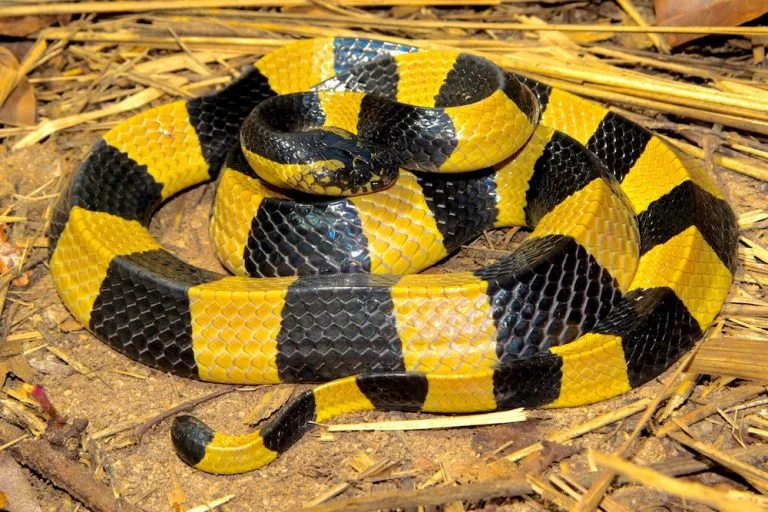
Image source: Bing (Web (fair-use with source credit))
This banded krait shows the classic pattern: bold black and yellow crossbands that wrap the entire body. Kingsnakes can also have bands, but the bands are usually less uniform. The head pattern helps too.
Kraits often have a yellow or white marking on the top of the head.
If you're comparing species side by side, look for these four markers:
- Head shape: flat and distinct in kraits, sleeker in kingsnakes.
- Scale texture: smooth in kraits, keeled in many keelbacks.
- Band pattern: consistent full-body bands in kraits, variable in kingsnakes.
- Tail: short and blunt in kraits, longer and tapering in kingsnakes.
One quick example. The common krait is active at night and rarely seen during the day. If you spot a banded snake crossing a dirt road in rural India after dark, slow down and give it space.
Daytime sightings are much more likely to be a harmless keelback or rat snake.
The same confusion happens with D-named reptiles, where common names hide true family relationships. Always use physical traits, not the name.
King Cobra vs. Kingsnake: The Most Dangerous Mix-Up
These two sound like they could be cousins. They're not. A king cobra is a venomous elapid.
A kingsnake is a harmless colubrid. The only things they share are the letter K and a snake-shaped body.
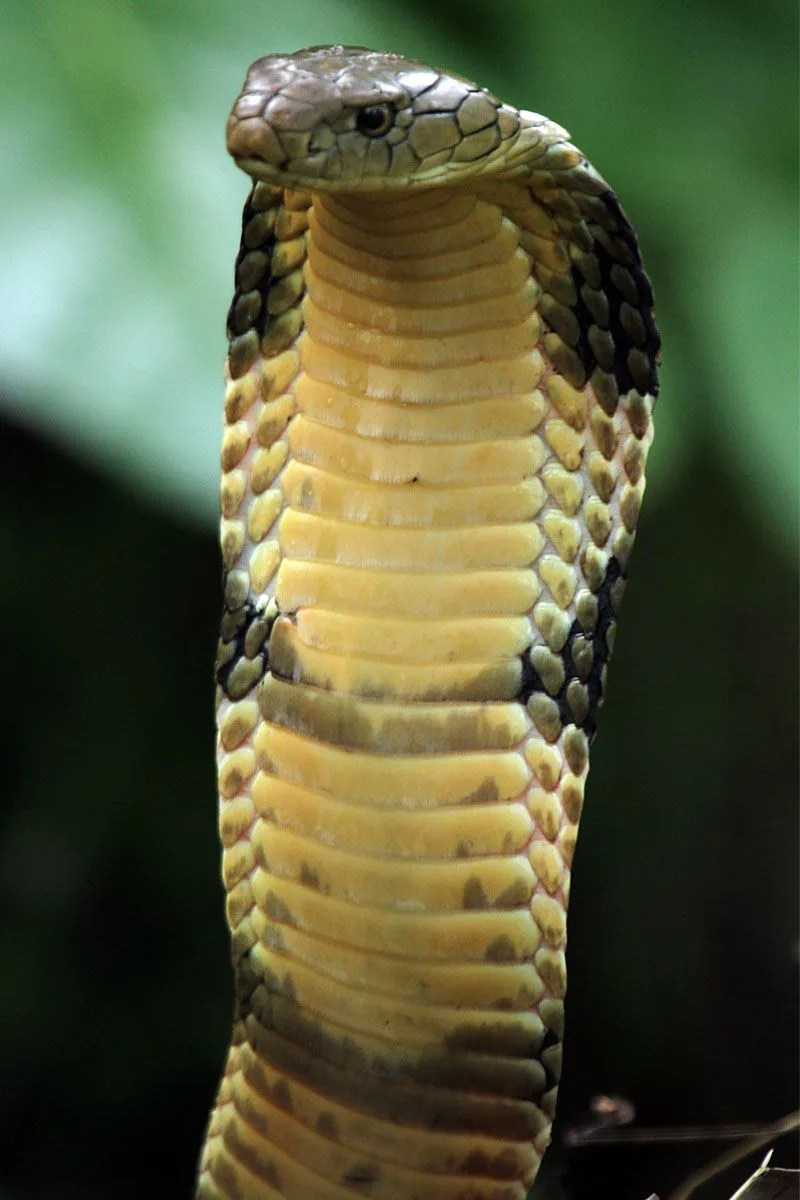
Image source: Web (Bing) / animalia-life.club (Web image (fair-use with source credit))
The photo above shows the king cobra's signature move: a raised hood. Kingsnakes cannot flare their neck like that. They also don't hiss as loudly, grow as long, or eat other snakes, which is where people really get confused.
Here's a side-by-side comparison:
| Feature | King Cobra | Kingsnake |
|---|---|---|
| Length | Up to 18 feet (5.5 m) | 2 to 6 feet (0.6 to 1.8 m) |
| Hood | Can expand neck when threatened | No hood |
| Venom | Neurotoxic, deadly | None |
| Habitat | Forests and fields of Asia | North America |
| Diet | Other snakes | Rodents, birds, eggs |
| Pet potential | Illegal for most people | Popular beginner pet |
The biggest red flag is geography. If you see a large hooded snake in Thailand, it's a king cobra. If you see an unhooded snake with bands in your garden in California, it's probably a kingsnake.
They don't even live on the same continent.
Defensive behavior differs too. A king cobra rears up, spreads its hood, and tracks your movement. A kingsnake usually tries to flee first.
If cornered, it may vibrate its tail in dry leaves and strike, but the bite is harmless to people. Some kingsnakes even release a musky smell when stressed. That's a world away from an elapid that can drop an elephant with one bite.
If you enjoy these lookalike puzzles, our C-named reptiles guide covers a few more species with confusing common names.
The Hunted and the Hunters: Komodo Dragon, Kraits, and Keelbacks
The K list gets serious here. These three reptiles are either dangerous, venomous, or both. Let's take them one at a time.
Komodo Dragon
The Komodo dragon (Varanus komodoensis) is the largest living lizard on Earth. Adults routinely reach 10 feet (3 m) and weigh 150 to 300 pounds (70 to 135 kg). They live on five Indonesian islands, including Komodo and Rinca.
The IUCN Red List classifies the species as Endangered, and the official park restricts how close visitors can get.
Their hunting strategy is brutal. They hide in the grass, snap at a deer's leg, and then wait. The bite is loaded with bacteria and toxins.
If the prey doesn't bleed out, it dies of sepsis days later.
Komodo dragons are also cannibals. Juveniles spend their first years in trees to avoid becoming a meal for adults. That's how you know this animal plays by different rules.
Kraits
Kraits are the opposite of flashy. Most are nocturnal, shy, and active after dark. The common krait (Bungarus caeruleus) lives in farms and villages across South Asia.
People step on it by accident at night, and that's when bites happen.
The venom is neurotoxic. It blocks nerve signals and can cause paralysis without much pain at the bite site. Many victims don't realize how serious it is until their eyelids droop or their breathing weakens.
The World Health Organization tracks krait bites as a major snakebite concern in rural Asia.
The banded krait (Bungarus fasciatus) is the flashier cousin. It has those bold black-and-yellow bands you see in the identification section above. The venom is still dangerous, but the snake is less aggressive and more likely to retreat.
Keelbacks
Keelbacks are less famous, but they're worth knowing. Most are harmless, semi-aquatic snakes that eat frogs and fish. A few species in the genus Rhabdophis, though, have venom glands in the back of the neck.
They can cause severe bleeding and clotting problems in people.
The tricky part is that keelbacks look ordinary. They're usually olive, brown, or greenish with keeled scales that give them a rough texture. If you're working in wetlands across Asia, treat any unidentified snake with caution.
These species show why the K letter isn't just about pets. It's about respecting wild animals. For more on the conservation side, our K-named mammals guide highlights protected species like the kouprey and koala.