Weird and Wonderful Sea Animals That Start with W
You probably didn't expect so many sea animals that start with w. But the ocean is packed with them, from the enormous whale shark to the tiny wonderpus octopus. This list covers the creatures worth knowing, the ones people mix up, and a few that will genuinely surprise you.
In our research, we found roughly 90 recognized whale species and more than 600 wrasse species alone. That's a lot of "W" animals swimming around out there. As of 2026, marine biologists continue discovering new species in this group every year.
Let's dive into the most fascinating ones.
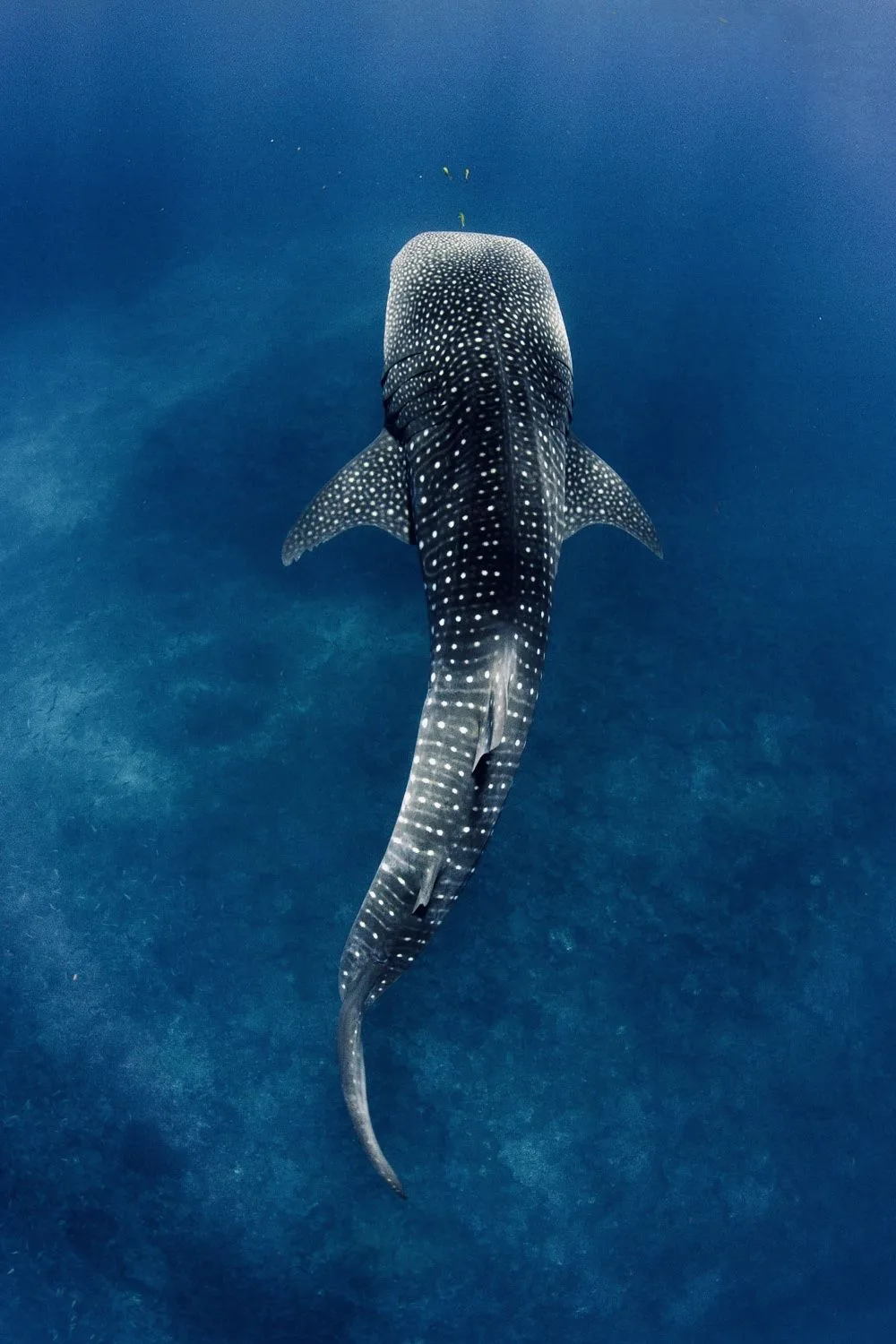
Image source: Web (Bing) / pinterest.com (Web image (fair-use with source credit))
The Real Question First: Weirdest or Biggest?
Everyone comes to this list with a different goal. Some want sheer size, the heavyweights of the ocean. Others want the strangest creatures that look like they belong on another planet.
Both are valid approaches.
If you want the biggest, you're looking at the whale shark and the blue whale. The blue whale holds the record as the largest animal to ever live on Earth. A single one can weigh as much as 200 tons, which is roughly 33 elephants.
If you want the weirdest, you've got the wonderpus octopus with its dramatic banded arms. You've got the weedy sea dragon that looks like floating seaweed. And you've got the warty frogfish, which sits motionless on reefs waiting for prey to wander too close.
The wales are the fascinating middle ground. Walrus tusks can reach three feet long. Whale sharks have skin patterns as unique as human fingerprints.
The wobbegong shark blends so perfectly into the seafloor that divers routinely swim right past it without ever noticing.
The truth is, the "W" category contains extraordinary diversity. You get filter feeders, apex predators, bottom dwellers, and masters of disguise. That's what makes this letter so special in marine biology.
Quick Answer
Ten standout sea animals start with W. They include the whale shark, walrus, and white shark. Also on the list are the wobbegong, wolf eel, and wahoo.
The wonderpus octopus, weedy sea dragon, wrasse, and wedgefish round it out. Each one offers something unique worth exploring.
Wait, What Counts as a "Sea Animal"?
This seems obvious, but the boundaries matter more than you'd think. A sea animal must live in saltwater for all or most of its life. That includes marine mammals, fish, sharks, rays, and invertebrates.
Some creatures people assume are sea animals actually aren't. Sea otters spend time on land. Polar bears hunt on sea ice.
Neither counts as a true sea animal, even though they're ocean-adjacent.
Then there are the confusing names. The wolf eel sounds like it belongs in a horror movie, but it's not actually an eel. It's a fish from the wolffish family.
The whale shark isn't a whale at all, since whales are mammals and whale sharks are fish. The taxonomy gets confusing, but understanding it helps you appreciate these creatures better.
For this list, we're focusing on animals that genuinely live in marine environments. That includes the walrus, which hauls out on ice but spends its life hunting in the ocean. And it includes the wedgefish, a ray-like shark that lives in coastal waters.
The National Oceanic and Atmospheric Administration (NOAA) maintains extensive records on marine species classification, and their framework guides how we understand these boundaries. Their work confirms the distinction between true marine life and animals that merely visit the ocean.
Breaking Down the Big Categories
Once you know what qualifies, it helps to group the "W" animals by type. This makes the list easier to process and highlights how different species evolved to fill different roles.
| Category | Examples | Defining Trait |
|---|---|---|
| Marine Mammals | Walrus, whales, white-beaked dolphin | Warm-blooded, breathe air, nurse young |
| Sharks & Rays | Whale shark, white shark, wobbegong, wedgefish | Cartilaginous skeletons, no bones |
| Bony Fish | Wahoo, wrasse, wolf eel, wrymouth | Skeletal structure made of bone |
| Oddities & Specialists | Wonderpus, weedy sea dragon, warty frogfish | Unique adaptations for survival |
Marine Mammals
These are the warm-blooded visitors to our list. Whales are the most prominent, spanning from the massive blue whale to the smaller minke whale. The walrus belongs here too, using its tusks to haul itself onto ice floes.
The white-beaked dolphin rounds out this group with its distinctive pale markings. Check out this overview of wild mammals starting with W to see how they compare to land-based relatives.
Sharks and Rays
Sharks and rays share a cartilaginous skeleton, which is lighter than bone and more flexible. The whale shark is the largest fish in the ocean, reaching lengths over 40 feet. The white shark is the apex predator everyone recognizes.
The wobbegong is a bottom-dwelling ambush predator. The wedgefish is critically endangered, with populations down over 80 percent in some regions.
Bony Fish
Bony fish have skeletons made of actual bone, just like most fish species. The wahoo is one of the fastest fish in the ocean, hitting speeds near 60 miles per hour. The wrasse family includes over 600 species, many of which serve as cleaner fish on reefs.
The wolf eel, despite its name, belongs in this group.
Oddities and Specialists
Some "W" animals defy easy categorization. The wonderpus octopus is a cephalopod with remarkable mimicry abilities. The weedy sea dragon is related to seahorses but looks like drifting plant matter.
The warty frogfish sits camouflaged on reefs, waiting to strike with one of the fastest bites in nature.
The Spotlight: Deep Dives on the Most Fascinating Species
Now we get to the stars of the show. These are the creatures worth learning about in depth. Each one has characteristics that make it stand out from the crowd.

Image source: Web (Bing) / stockcake.com (Web image (fair-use with source credit))
Walrus: The Arctic Giant With a Social Life
The walrus is impossible to mistake for anything else. Those long tusks, present in both males and females, can reach three feet in length. They're not just for fighting either.
Walruses use their tusks to haul their massive bodies out of the water and onto ice.
A full-grown male walrus weighs between 1,700 and 3,700 pounds. That's heavier than a small car. Despite their bulk, they're surprisingly social animals.
They gather in groups called herds, sometimes numbering in the thousands.
Their most remarkable feature might be their whiskers. A walrus has up to 450 whiskers on its snout, each one packed with nerves. These whiskers are sensitive enough to detect shellfish buried in the muddy seafloor.
Related to seals and sea lions, walruses depend on Arctic ice for survival.
Whale Shark: The Gentle Giant You Can Actually Swim With
The whale shark is the largest fish in the ocean. Adults range from 18 to 33 feet long, though some exceed 60 feet. Despite the intimidating size, they're completely harmless to humans.
These gentle giants are filter feeders. They swim with their mouths wide open, straining plankton and small fish from the water. A single whale shark can filter millions of gallons of water each day.
Their spots are as unique as human fingerprints. Each whale shark has a distinct pattern that researchers use to identify individuals. This tracking helps scientists understand migration patterns and population numbers.
You can swim with whale sharks at several locations worldwide, including Ningaloo Reef in Australia and parts of Mexico.
White Shark: The Apex Predator Everyone Gets Wrong
The white shark gets a terrible reputation thanks to movies and sensational headlines. The reality is more nuanced and more fascinating. These sharks are ambush predators, not mindless killers.
A typical white shark measures 11 to 16 feet long. The largest confirmed specimen reached over 20 feet. They're built for speed, with bursts up to 35 miles per hour when attacking prey.
White sharks are ectothermic, meaning they maintain a warm body temperature even in cold waters. This adaptation lets them hunt in a wider range of environments than most other sharks. Their population is classified as Vulnerable by the IUCN Red List, with protections in place across their range.
Wolf Eel: The Reef's Scariest-Looking Softie
Despite its fearsome appearance, the wolf eel is a gentle creature. Divers who encounter them often describe them as curious and even approachable. They're not actually eels at all.
They belong to the wolffish family, making them true bony fish.
Wolf eels can grow up to eight feet long. They live in rocky crevices and dens along the Pacific coast of North America. Their powerful jaws let them crush sea urchins, crabs, and other hard-shelled prey.
The breeding behavior of wolf eels is unusual. Pairs mate for life and take turns guarding their eggs. This monogamous behavior is rare among fish and demonstrates a more complex social life than most people expect.
Wobbegong: The Carpetshark That Camouflages Too Well
The wobbegong is a shark that looks more like a rug than a fish. Its flattened body and intricate pattern of spots and bands blend perfectly with the seafloor. They're ambush predators, waiting motionless for prey to swim too close.
Wobbegongs range from three to ten feet long, depending on the species. They're found primarily in the waters around Australia and Indonesia. Their camouflage works so well that divers sometimes accidentally step on them.
The danger posed by wobbegongs is usually defensive rather than aggressive. When stepped on, they may bite reflexively. Their teeth are sharp and their jaws powerful, so it's best to give them space.
Look closely at how the wobbegong shark disappears into its surroundings, and you'll understand why they're so successful at ambush hunting.
Wonderpus Octopus: The Master of Disguise
The wonderpus octopus is a small but spectacular creature. It grows to only about eight inches long, but its dramatic white bands over a brown or orange background make it unmistakable. It was formally described by scientists in 2006, making it a relatively recent discovery.
This octopus is a master of deception. It can change its color, pattern, and even texture to blend into its surroundings. When threatened, it can mimic other local species to confuse predators.
It also uses its flexible body to squeeze into tight crevices that would seem impossible to fit through.
The wonderpus spends most of its time in borrowed burrows, emerging mainly at dawn and dusk to hunt small crustaceans. Its beauty and rarity make it a prized sighting for divers and underwater photographers.
Weedy Sea Dragon: Australia's Underwater Leaf
The weedy sea dragon looks like a piece of floating seaweed, and that's exactly the point. Its leaf-like appendages provide perfect camouflage among kelp and seagrass. It's found only along the southern coast of Australia.
Weedy sea dragons grow up to 18 inches long. They're related to seahorses, with one notable difference: the male carries the eggs. Males have a specialized brood patch where females deposit eggs, and he carries them until they hatch.
These creatures are slow swimmers, drifting along with ocean currents. They feed on tiny crustaceans and plankton. Their populations face pressure from habitat loss and collection for the aquarium trade, though protection efforts continue to expand.
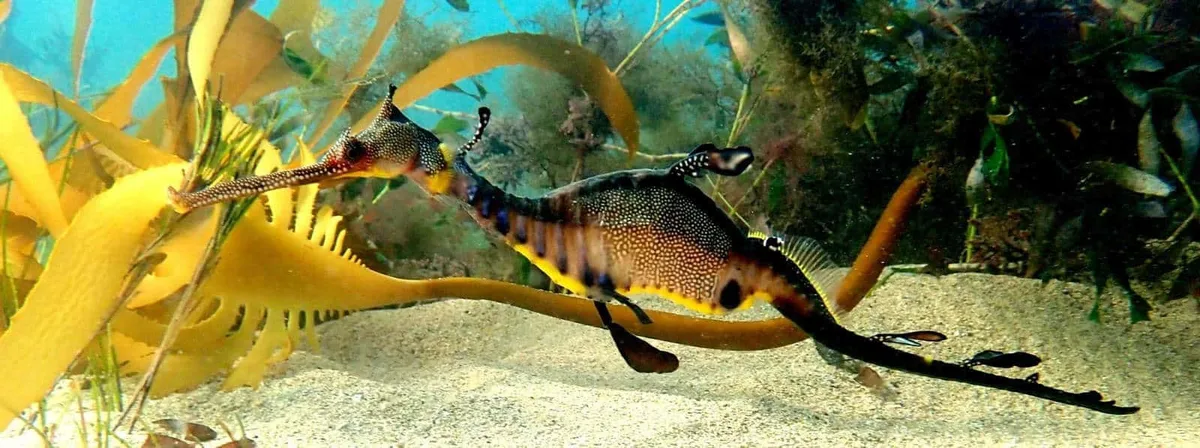
Image source: Web (Bing) / wallpapers.com (Web image (fair-use with source credit))
The Confusion Files: Species People Mix Up
People mix these animals up constantly. It's understandable, since some share names, habitats, or looks that are deceptively similar.
| Confused Pair | Key Difference |
|---|---|
| Whale Shark vs. Basking Shark | Whale sharks have checkerboard spots; basking sharks are gray-brown and wider-mouthed |
| Wolf Eel vs. Moray Eel | Wolf eels are bony fish with rounded tails; morays are true eels with finless, ribbon-like bodies |
| Wrasse vs. Parrotfish | Wrasse have fleshy lips and protruding teeth; parrotfish have beak-like fused teeth for scraping coral |
| Weedy vs. Leafy Sea Dragon | Weedy dragons have thin, weed-like appendages; leafy dragons have wide, branching flaps |
The wobbegong gets misidentified too, often mistaken for a rock or a patch of seaweed-covered seabed rather than a shark. Its flattened shape and fringed lobes around the mouth make it look nothing like a typical shark. The wonderpus octopus is also confused with its close relative, the mimic octopus.
They share black-and-white banding, but wonderpus patterns are more consistent and less dynamic.

Image source: Web (Bing) / wallpapers.com (Web image (fair-use with source credit))
The thing to remember is that common names lie. Trust scientific taxonomy instead. It's the only reliable way to tell a true eel from a wolf eel, or a whale from a whale shark.
Species that share a name are frequently less related than they seem.
Where to Find Them: Habitat Breakdown
Each "W" animal has a preferred neighborhood. Knowing where they live helps you plan encounters, whether you're diving, boating, or just daydreaming.
| Species | Primary Location | Habitat Type |
|---|---|---|
| Walrus | Arctic Ocean | Sea ice, shallow continental shelves |
| Whale Shark | Tropical and subtropical seas | Open ocean, coastal upwellings |
| Wolf Eel | North Pacific coast | Rocky kelp forests, crevices |
| Weedy Sea Dragon | Southern Australia | Kelp beds, seagrass meadows |
| Wobbegong | Australia, Indonesia, Japan | Sandy bottoms, reef ledges |
Image source: Web (Bing) / wallpapers.com (Web image (fair-use with source credit))
The white shark is more adaptable, roaming temperate and subtropical waters worldwide. Wahoo prefer warm offshore waters where they can reach top speed. The wonderpus octopus sticks to sandy slopes in the Indo-Pacific, while the wrasse family spans nearly every reef system on Earth.
If you want to see a specific species, match the region to the animal. A walrus sighting requires an Arctic expedition. A weedy sea dragon encounter needs a trip to Australia.
Knowing the habitat makes the difference between spotting your target and going home empty-handed.
For Divers and Snorkelers: What's Worth Seeing and How
The "W" category offers some of the best diving encounters in the ocean. Start with the whale shark. Swimming beside a 40-foot filter feeder is an experience you'll never forget.
Best spots include Ningaloo Reef in Western Australia, where whale sharks gather seasonally, and Isla Holbox in Mexico.
The manta ray gets all the hype, but the wrasse deserves your attention. Cleaner wrasse stations attract crowds of fish waiting for parasite removal. Watching the interaction up close gives you a window into reef social dynamics.
Keep your distance and let the fish do their work.
When diving near wobbegongs, remember they're masters of camouflage. Look for a shark-shaped outline resting on sandy patches or under ledges. Don't touch or poke them.
A startled wobbegong bites defensively. Respect their space and you'll get an incredible photo.
The wonderpus octopus is a night-dive specialty. It emerges at dusk to hunt small crustaceans. Guides in Indonesia and the Philippines know their burrows and can point them out.
Stay still and let the octopus acclimate to your presence.
For Anglers: Which "W" Fish Are Worth Chasing?
Anglers know the wahoo as one of the fastest, most thrilling game fish in the ocean. It strikes with explosive speed and runs hard when hooked. Specimens commonly exceed 50 pounds, making them a challenging catch.
The wrasse offers a different kind of challenge. Most wrasse species are smaller, but they fight aggressively for their size. They're a popular target for reef anglers in warm waters.
Some larger wrasse species, like the humphead wrasse, reach over 400 pounds but are protected in many regions.
The wedgefish, also known as the bowmouth guitarfish, is not a species to target. Wedgefish populations have crashed by more than 80 percent in many areas. The International Union for Conservation of Nature (IUCN) lists them as Critically Endangered.
If you accidentally catch one, release it carefully.
Before heading out, check local fishing regulations. Many "W" species have seasonal limits, size restrictions, or complete bans. NOAA Fisheries maintains up-to-date catch rules for US waters, and other countries have similar frameworks.
The Conservation Angle: Which "W" Animals Need Help
The conservation status of "W" sea animals varies dramatically. Some are thriving, while others face serious threats. Know which ones need protection.
| Species | IUCN Status | Primary Threat |
|---|---|---|
| Wedgefish | Critically Endangered | Overfishing, bycatch |
| White Shark | Vulnerable | Bycatch, finning |
| Walrus | Vulnerable | Climate change, sea ice loss |
| Whale Shark | Endangered | Ship strikes, bycatch |
| Wahoo | Least Concern | Commercial fishing pressure |
Climate change poses the biggest long-term threat to Arctic species like the walrus. Sea ice loss reduces their resting grounds, forcing them to swim longer distances. Conservation groups are pushing for expanded protected zones and stricter fishing quotas.
For shark and ray species, the main issue is bycatch. Gillnets and longlines catch wobbegongs, wedgefish, and white sharks unintentionally. The Convention on International Trade in Endangered Species (CITES) lists several "W" sharks under Appendix II, which regulates international trade.
This isn't a total ban, but it requires that exports come from sustainable sources.
Supporting sustainable seafood and choosing certified fisheries helps. Organizations like NOAA work with regional councils to set quotas that prevent overfishing. Individual choices, like avoiding shark fin soup and choosing sustainable tuna, have a measurable impact on demand.
Fun Facts That'll Win You Trivia Night
- A walrus can hold its breath for up to 30 minutes underwater
- Whale shark spot patterns are as unique as human fingerprints
- The wonderpus octopus was only formally described by scientists in 2006
- A wolf eel pair mates for life and guards eggs together
- Wahoo can swim up to 60 miles per hour in short bursts
FAQs People Actually Ask
Are whale sharks whales?
No, whale sharks are fish. They're sharks with cartilage skeletons, not mammals like true whales.
Do walruses use their tusks to fight?
Mostly no. Tusks help them haul out on ice and establish social dominance. Serious fights are rare.
Can you keep a wrasse in a home aquarium?
Yes, many smaller wrasse species thrive in reef tanks. Larger species like the humphead wrasse grow too big for home setups.
What's the rarest "W" sea animal?
The wedgefish is critically endangered, with populations down over 80 percent in some regions.
The Final Pick: Choose Your Favorite "W" Sea Animal
If you want size, pick the whale shark. If you want weirdness, go with the wonderpus octopus. If you want raw speed, choose the wahoo.
Divers tend to favor the weedy sea dragon for its delicate beauty.
One Mistake to Avoid With "W" Animals
Don't trust common names. The wolf eel isn't an eel, the whale shark isn't a whale, and the wedgefish is a ray, not a fish. Always check the scientific classification before assuming what an animal is or how it behaves.