Discover Fish That Start with U: Unicornfish & More
If you're trying to find fish that start with u, you've probably already hit a wall. Unlike common letters like B or C, U is one of the thinnest letters in the fish world. That's not bad luck.
It's just how common names evolved.
As of 2026, a full sweep of aquarium fish, saltwater species, and freshwater natives turns up only about a dozen genuine options. Most are freshwater cichlids or catfish. A few are regional names you'll only see in specific countries.
That scarcity actually works in your favor. It makes choosing easier. Let's walk through every real "U" fish worth knowing.
Why There Aren't More "U" Fish
The alphabet problem is real. Common fish names rarely start with certain letters. U, X, and Z are the hardest.
Here's why.
Scientific Names vs. Common Names
Most fish get their common names from appearance, behavior, or origin. Very few descriptive words start with U. Compare that to "blue," "red," or "clown." Those colors and traits are everywhere.
Scientific names are a different story. The genus Uaru exists. So does Ulocentridae.
But Latin doesn't always translate into catchy English names. A fish called Uaru amphiacanthoides becomes "triangle cichlid" at the pet store, not "Uaru." That's how you lose good U-options to their nicknames.
Regional Names Don't Travel
Some "U" fish exist only in local languages. Ula refers to certain reef fish in Hawaii. Umang is a Southeast Asian river fish name. These aren't in mainstream aquarium literature. You'll only find them in regional fishing guides or local markets.
The Real List Is Short
When you strip away scientific jargon and regional slang, the actual aquarium-relevant list is about five fish. Two are cichlids. One is a catfish.
One is a rare collector's piece. The rest are obscure.
That's not disappointing. It's practical. You don't need to wade through dozens of options.
You need to meet the few that actually matter.
Quick Answer: The 5 Fish You'll Actually Encounter
Here's the short version. These are the "U" fish you can realistically find, buy, or research.
| Species | Type | Size | Tank Minimum | Difficulty |
|---|---|---|---|---|
| Uaru (Triangle Cichlid) | Freshwater cichlid | 10-12 inches | 75 gallons | Intermediate |
| Umbrella Cichlid | Freshwater dwarf cichlid | 2.5-3 inches | 20 gallons | Beginner |
| Upside-Down Catfish | Freshwater catfish | 3-4 inches | 30 gallons | Beginner |
| Panther Fish (Uaru fernandezyepezi) | Freshwater cichlid | 8-10 inches | 75 gallons | Advanced |
| Ula | Saltwater reef fish | Varies by species | N/A | Saltwater expert |
If you want the simplest answer for most people, the Umbrella Cichlid is the best all-around pick. It's small, peaceful, and doesn't need a massive tank. If you want something impressive, the Uaru is your fish.
It's big, smart, and genuinely rewarding. The rest are for specialists and collectors.
The Uaru: The Big, Smart "Triangle" Cichlid
The Uaru is the headliner of this list. It's the fish that everyone thinks of when they ask about fish that start with u. The full scientific name is Uaru amphiacanthoides.
In the hobby, it's usually called the triangle cichlid.
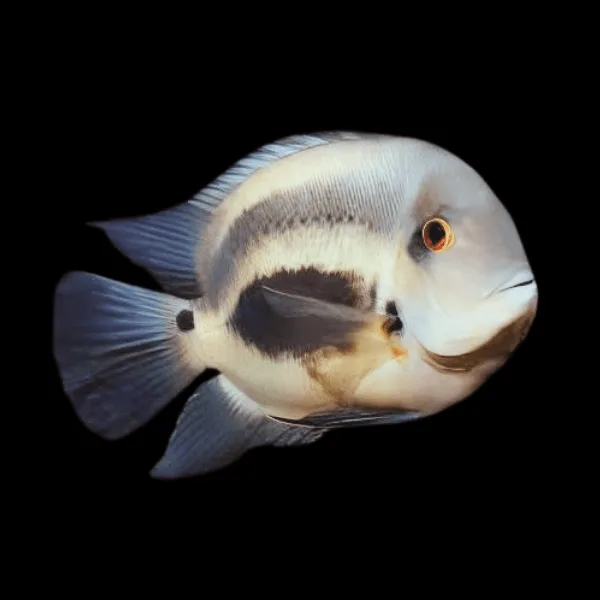
Image source: Bing (Web (fair-use with source credit))
What It Looks Like
Adult Uaru have a distinctive triangular body shape. Their base color is a mottled brown or olive. Dark vertical bands run down the sides.
Juveniles look completely different. They're dark with spotted patterns that fade as they mature.
Personality and Intelligence
Uaru are known for recognizing their owners. They'll swim to the front of the tank when you approach. They're curious and interactive in a way that smaller cichlids rarely are.
Our research indicates they form bonds with their keepers, similar to oscars or flowerhorns.
Care Requirements
This is not a beginner fish. It needs room and consistency.
- Tank size: Minimum 75 gallons. A 90-gallon or larger is better for a group.
- Water temperature: 75-82°F
- pH range: 5.5-7.0, slightly acidic to neutral
- Diet: Omnivorous, but heavily plant-based. They need spirulina wafers, blanched spinach, zucchini, and other vegetable matter.
- Temperament: Peaceful with same-sized tankmates, but territorial during breeding.
One thing most people miss is the plant matter. Uaru are not like most cichlids that eat mostly protein. They need a significant portion of greens.
Skipping this causes digestive issues and stunted growth.
Tankmates
Good companions include severums, geophagus, and larger tetras. Avoid small fish that fit in their mouths. Avoid aggressive cichlids like jaguars or red devils.
The Uaru will hold its own, but constant stress shortens its lifespan.
If you're ready for a larger commitment and you provide the space, the Uaru is one of the most rewarding freshwater fish you can keep.
The Umbrella Cichlid: A Peaceful Dwarf Option
The Umbrella Cichlid, Apistogramma borellii, is the exact opposite of the Uaru. It's small, shy, and perfect for a modest setup. It's also the best "U" fish for beginners.
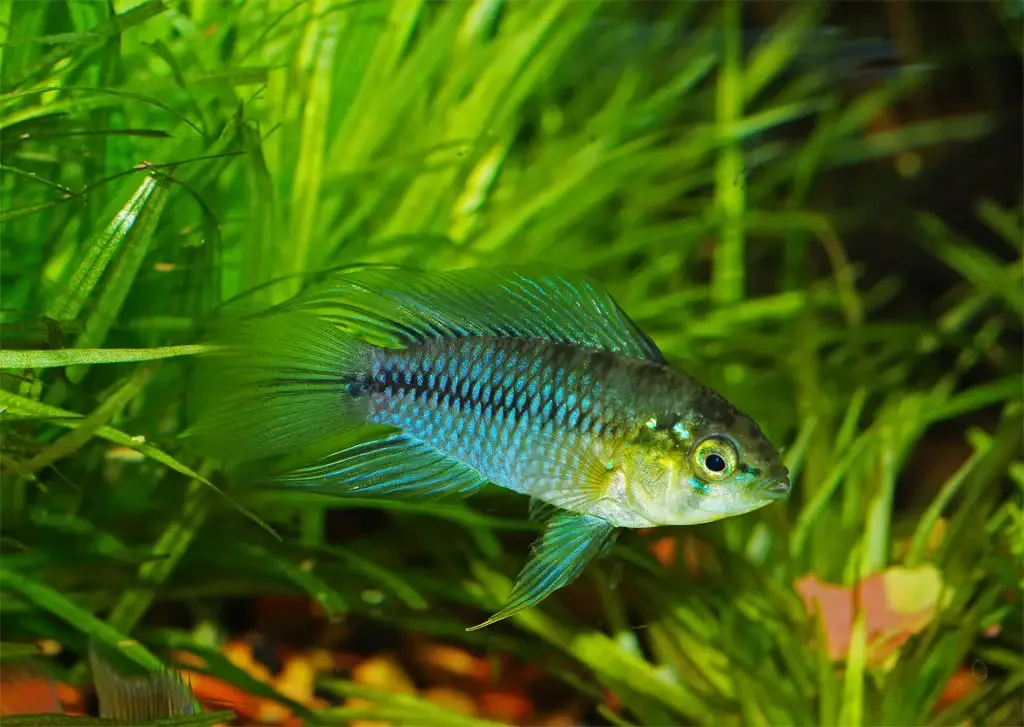
Image source: Bing (Web (fair-use with source credit))
What It Looks Like
Males reach about 3 inches. Females stay closer to 2.5 inches. Males show iridescent blue-green colors on their flanks.
Their fins have a subtle yellow or amber tint. They're not as flashy as rams or apistos, but they're elegant in a quiet way.
Why It's Great for Smaller Tanks
A 20-gallon tank is the sweet spot. You can keep a pair comfortably. They're peaceful, so they work well in a community setup with tetras, rasboras, and dwarf corydoras.
Care Requirements
- Water temperature: 72-79°F
- pH range: 6.0-7.5, slightly acidic preferred
- Diet: Carnivorous. High-quality pellets, frozen bloodworms, brine shrimp, and daphnia.
- Temperament: Shy and cautious. They need hiding spots like caves, driftwood, and dense plants.
A Note on Water Quality
Umbrella Cichlids are more sensitive than your average community fish. They don't tolerate ammonia spikes or dirty tanks. Regular water changes are non-negotiable.
Weekly 25-30% changes keep them healthy and vibrant.
Who It's For
This is the fish to recommend to someone who wants a "U" species without the space or experience for a Uaru. It's also a solid choice for a planted aquarium where its calm nature won't disturb delicate aquascaping.
If you want a dwarf cichlid that's less common than a ram but just as manageable, the Umbrella Cichlid is your pick.
The Upside-Down Catfish: Nature's Quirky Swimmer
The Upside-Down Catfish, Synodontis nigriventris, earns its name honestly. It swims belly-up. That's not a defect or a sign of stress.
It's an evolutionary adaptation.

Image source: Web (Bing) / fishlaboratory.com (Web image (fair-use with source credit))
Why It Swims Upside Down
In its native Congo Basin, this catfish feeds on the underside of submerged branches and leaves. Swimming inverted makes it easier to graze on insects and organic matter that collect there. Its belly is lighter in color to confuse predators swimming below.
When it flips upside down, that lighter belly blends with the bright water surface above.
Appearance
Adults reach about 3 to 4 inches. The body is tan or beige with dark blotches. The pattern helps it disappear among roots and debris.
Its eyes are positioned so it can still watch for danger while inverted.
Care Requirements
- Tank size: Minimum 30 gallons
- Water temperature: 72-78°F
- pH range: 6.0-7.5
- Diet: Omnivorous. Sinking pellets, frozen foods, and vegetable wafers.
- Temperament: Nocturnal, peaceful, and shy during the day.
Setting Up Its Home
This fish needs a dimly lit tank. Bright lights stress it out. Add plenty of driftwood, caves, and floating plants to create shaded zones.
It's most active after lights out. You'll see it cruising the tank upside down once dusk settles.
Tankmates
Good tankmates include tetras, rasboras, corydoras, and dwarf cichlids. They're peaceful and won't compete aggressively. Avoid large, boisterous fish that might bully them.
Why Keep It
It's a conversation piece. Every visitor will ask why it swims like that. It's also hardy and forgiving, making it a good middle-ground option between the delicate Umbrella Cichlid and the demanding Uaru.