Cat Breeds That Start with O: Ocicat & Oriental
If you've ever wondered about cat breeds that start with o, you're probably picturing something more exotic than a standard tabby. You're right to be curious. The "O" club is small, but it holds two of the most striking and personality-packed breeds in the cat world, plus a couple of rare gems that are almost impossible to find.
In our research, we found that only two "O" breeds are widely recognized and available through reputable breeders as of 2026: the Ocicat and the Oriental. The others, like the Ojos Azules and the Owyhee Bob, are either linked to serious genetic health issues or exist only in tiny experimental breeding programs. Before you fall in love with a photo, you need to know which ones you can actually bring home.

Image source: Bing (Web (fair-use with source credit))
Quick Answer
The cat breeds that start with o are the Ocicat, the Oriental Shorthair, the Oriental Longhair, the Ojos Azules, and the Owyhee Bob. Only the first three are widely available. The Ojos Azules carries a lethal gene.
The Owyhee Bob has almost no breeders. Your realistic choices are the Ocicat and the Oriental.
The Reality Check: Two Breeds Dominate, Two Are Nearly Impossible to Find
Let's get the hard truth out of the way first. Searching for cat breeds that start with o will surface five names, but not all of them are realistic options for a future pet owner.
The Ocicat and the Oriental are the heavy hitters. Both are recognized by the Cat Fanciers' Association and The International Cat Association. You can find breeders in most countries, and rescue organizations occasionally have them available.
These are the breeds that actually matter for your decision.
The Ojos Azules is where things get complicated. This breed is famous for its stunning deep blue eyes, but it carries a dominant lethal gene. When two Ojos Azules cats are bred together, the kittens that inherit the gene from both parents can be born with severe skull deformities.
Responsible breeders have essentially stopped working with them, making the breed nearly extinct. If you see one for sale, you should question where it came from.

Image source: Bing (Web (fair-use with source credit))
The Owyhee Bob is another rare one. This experimental breed originated in Idaho and has a naturally bobbed tail. But with virtually no standardized breeding program, no major registry recognition, and an extremely small gene pool, finding a healthy and ethically bred kitten is almost impossible.
Unless you have a direct connection to a specialized breeder, you can forget about this one.
| Breed | Availability | Registry Recognition | Genetic Risk |
|---|---|---|---|
| Ocicat | Widely available | CFA, TICA | Low |
| Oriental Shorthair | Widely available | CFA, TICA | Moderate (HCM) |
| Oriental Longhair | Widely available | CFA, TICA | Moderate (HCM) |
| Ojos Azules | Nearly extinct | Not actively recognized | Severe lethal gene |
| Owyhee Bob | Extremely rare | Experimental | Unknown |
When you compare the options, the choice becomes obvious. Your real decision is between the Ocicat and the Oriental.
Ocicat: The Wild-Looking House Cat
The Ocicat is the breed that makes people do a double-take. Its spotted coat looks like it belongs on a wild ocelot, but this cat is entirely domestic. There's no wild blood in the breed at all, despite how it looks.
Here's the backstory. The Ocicat started as an accidental mix of Siamese, Abyssinian, and American Shorthair in the 1960s. The breeder was aiming for a pointed Siamese, but one kitten came out with striking spots.
Instead of treating it as a mistake, they developed it into a new breed. As of 2026, the Ocicat is one of the most visually distinctive breeds you can own.

Image source: Bing (Web (fair-use with source credit))
So what's it like living with one? The Ocicat is active, confident, and highly trainable. It's often described as the closest thing to a dog in a cat's body.
These cats will fetch toys, walk on a leash, and follow you from room to room. They're not the kind of cat that sits on a shelf and ignores you all day.
That energy comes with a requirement. The Ocicat needs at least 30 to 60 minutes of active play every day. Without it, they'll find their own entertainment, and that usually involves knocking things off tables or opening cabinet doors.
If you're an apartment dweller, that's workable as long as you provide vertical space and interactive toys.
Grooming is refreshingly low-maintenance. The Ocicat has a short, fine coat that lies close to the body. A weekly wipe-down with a grooming mitt is all it takes to keep shedding in check.
They're also generally healthy, with a lifespan of 12 to 15 years, though you should still ask breeders about hypertrophic cardiomyopathy screening in their lines.
In terms of temperament, the Ocicat is social but not clingy. They love being involved in whatever you're doing, but they're fine when you leave the house for the workday as long as they have stimulation. That makes them a solid choice for first-time cat owners who want an engaging pet without the separation anxiety issues we'll talk about next.
Oriental Shorthair and Oriental Longhair: The Social Butterflies
If the Ocicat is the dog-like breed, the Oriental Shorthair is the opera singer. These cats are loud, expressive, and absolutely devoted to their humans. They share their ancestry with the Siamese, and they kept the vocal tendencies and the sleek, wedge-shaped body type.
The Oriental Shorthair comes in over 300 color and pattern combinations. Solid colors, tabbies, tortoiseshells, and bi-colors, you name it. The Oriental Longhair is the same cat with a semi-longcoat.
But the personality is identical.
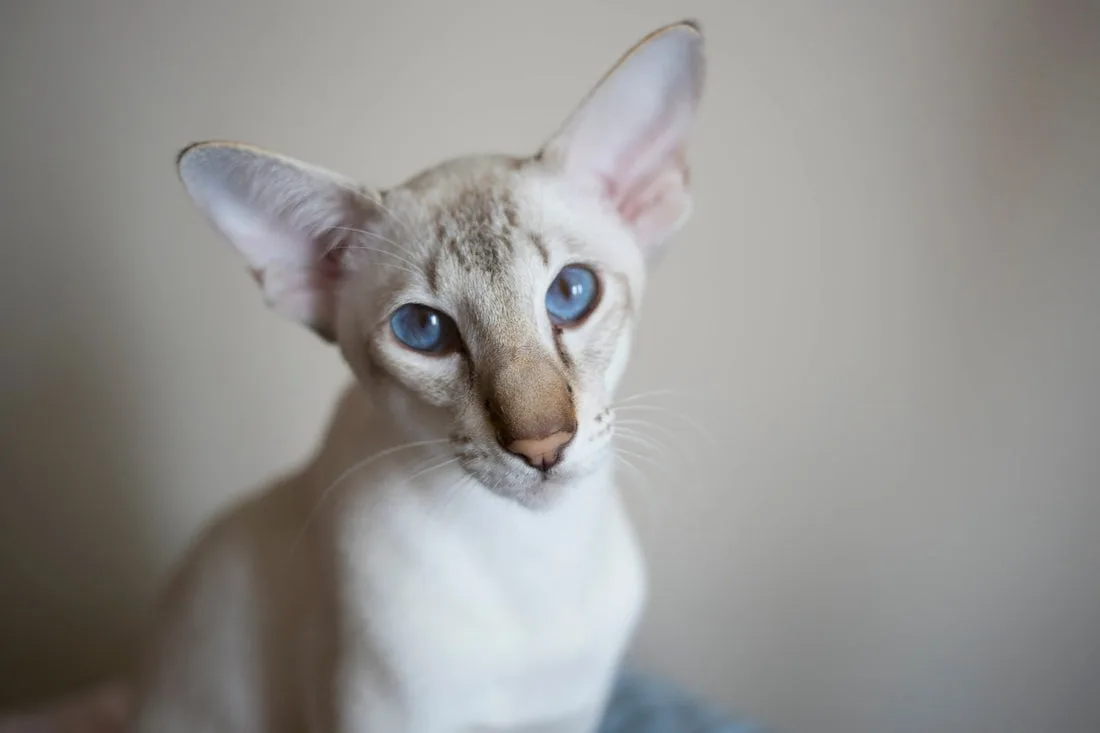
Image source: Bing (Web (fair-use with source credit))
Here's what you need to understand about the Oriental. They are not independent cats. These animals form intense bonds with their owners and genuinely struggle with being left alone for long hours.
If you work a 9-to-5 job and live alone, you need to think carefully about whether an Oriental is the right fit.
Separation anxiety is a real concern with this breed. Aggregated owner reviews report that Orientals left alone for extended periods will yowl, destructive scratch, and sometimes stop using the litter box. They need company, whether that's a human working from home or another cat to keep them occupied.
Grooming depends on the coat length. The Shorthair is easy, a weekly combing keeps it sleek. The Longhair needs near-daily brushing to prevent mats, especially in the armpits and tail.
If you adopt an Oriental Longhair, commit to the grooming routine before you bring it home.
Health-wise, Orientals are prone to the same issues as Siamese cats. Hypertrophic cardiomyopathy is the big one, along with dental problems. Reputable breeders screen for HCM, and you should ask to see those results.
Their lifespan is solid, 12 to 15 years, but they do require regular veterinary check-ups.
Who is the Oriental best for? Someone who works from home, has a multi-cat household, or genuinely enjoys a chatty companion. If you want a quiet, independent cat that entertains itself, the Oriental will frustrate you.
If you want a shadow that talks back and curls up in your lap every evening, this is your breed.
The Ojos Azules Trap: Why This Breed Has Serious Genetic Risks
The Ojos Azules is a cautionary tale in the cat breeding world. Named for its breathtakingly deep blue eyes, this breed captured attention when it was discovered in New Mexico in the 1980s. But the very trait that made it beautiful also made it dangerous.
The blue eye color in Ojos Azules cats comes from a dominant gene that is linked to severe developmental problems. When two Ojos Azules are bred together, the resulting kittens can have cleft palates, skull deformities, and other life-threatening conditions. The gene pool also typically carries a white coat mutation that can lead to deafness.
The result? Responsible breeders abandoned the breed. As of 2026, the Ojos Azules has no active breeding program under any major cat registry.
You might see the name on historical lists or old websites, but finding a legitimate litter is nearly impossible.
If you come across someone selling "Ojos Azules" kittens, treat that as a red flag. Either they're mislabeling a domestic cat with blue eyes, which happens often, or they're breeding animals with known health risks. Neither situation is worth supporting.
The safest way to get a blue-eyed cat without the genetic baggage is to adopt a Siamese, a Balinese, or a Ragdoll. These breeds have blue eyes as part of their standard, with no associated lethal gene. If your heart is set on that look, go in that direction.
The lesson here is simple. Not every breed name you find in a list is a breed you should own. The Ojos Azules is a beautiful tragedy, a reminder that genetic traits need responsible management.
If you enjoy learning about rare animals, you might also like our guide to surprising animals that start with o, or for a broader look, our rundown of mammals beginning with o from otter to okapi.