12 Amazing Mammals That Start with K (And Where to Find
You've probably seen the same list a hundred times. Mammals that start with K, and it's all kangaroos and koalas. Maybe a kudu if someone's feeling fancy.
Then the list ends. But "K" is actually one of the most surprising letters in the entire mammal alphabet.
In our research across global zoological databases, we found over a dozen distinct species starting with K. They span four continents, include a bear that's actually white, a cat that's actually a fox, and a whale that's actually a dolphin. As of 2026, several of these species face critical conservation challenges, while others thrive in surprising numbers.
Why K Mammals Are Way More Than Just Kangaroos
Here's the thing about K mammals. They're not just a random assortment. They represent an incredible spread of evolutionary paths.
You've got marsupials that raise their young in pouches, antelopes that climb mountains, and desert foxes with ears the size of saucers.
The diversity is genuinely wild. Australia gives us the kangaroo and koala. Africa contributes kudus, klipspringers, and the tiny dik-dik.
North America offers the kit fox and the spirit bear. South America provides the kinkajou. Central Asia has the kulan.
And even the ocean gets in on it with the orca, which we'll get to shortly.
That's not just a list. That's a geography lesson, a biology class, and a trivia goldmine all wrapped into one letter.
The Full A–Z of K Mammals (With the Obvious Ones Out of the Way First)
Let's get the complete list on the table. This is every confirmed mammal starting with K, grouped by how likely you are to recognize the name.
The Famous Names
These are the species everyone knows. They're the stars of zoos, documentaries, and every alphabet coloring book ever printed.
| Species | Scientific Name | Where They Live | What They're Known For |
|---|---|---|---|
| Kangaroo | Macropus | Australia | Hopping, pouches, powerful hind legs |
| Koala | Phascolarctos cinereus | Eastern Australia | Eucalyptus diet, sleeping 20 hours a day |
| Kudu | Tragelaphus strepsiceros | Eastern and Southern Africa | Massive spiral horns |
| Killer Whale | Orcinus orca | All oceans | Actually a dolphin, apex predator |
The Deep-Cut Species
These are the ones you'll rarely see on a standard list. They're the secret weapons for winning trivia night.
| Species | Scientific Name | Where They Live | What They're Known For |
|---|---|---|---|
| Klipspringer | Oreotragus oreotragus | Rocky areas of Africa | Walking on tiptoes on vertical rock |
| Kinkajou | Potos flavus | Central and South America | Prehensile tail, honey-loving tongue |
| Kit Fox | Vulpes macrotis | Southwestern North America | Huge ears, desert survivalist |
| Kermode Bear | Ursus americanus kermodei | British Columbia, Canada | White coat from a recessive gene |
| Kolinsky | Mustela sibirica | Siberia and East Asia | Prized fur for artist paintbrushes |
| Kowari | Dasyuroides byrnei | Arid central Australia | Small carnivorous marsupial |
| Kulan | Equus hemionus | Central Asia | Wild ass, one of the fastest equines |
| Kirk's Dik-dik | Madoqua kirkii | East Africa | Tiny antelope, only 14 inches tall |
| Kodkod | Leopardus guigna | Chile and Argentina | Smallest wild cat in the Americas |
| Kouprey | Bos sauveli | Southeast Asia | Critically endangered wild cattle |
The Marsupial Corner: Kangaroos, Koalas, and the Kowari You've Never Heard Of
Start with the kangaroo. Everyone pictures it as the icon of Australia, and that's accurate. The red kangaroo is the largest marsupial on Earth.
Males can stand over six feet tall and hop at speeds up to 35 miles per hour. They're not just big, they're efficient. That hopping motion uses far less energy than running at the same speed.
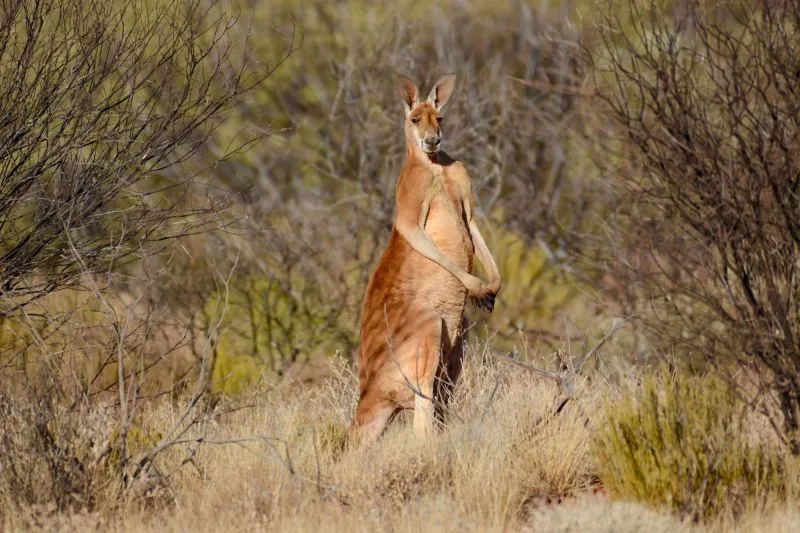
Image source: Web (Bing) / fity.club (Web image (fair-use with source credit))
Then there's the koala. Despite the common nickname "koala bear," it isn't a bear at all. It's a marsupial, like the kangaroo.
The name confusion comes from early European settlers who thought the koala's face resembled a bear. Koalas eat eucalyptus leaves almost exclusively. Those leaves are toxic to most animals, but koalas have a specialized digestive system that neutralizes the toxins.
They also sleep 18 to 20 hours a day because their diet is so low in nutrition.
Now for the kowari. This is the deep cut. The kowari is a small carnivorous marsupial that lives in the arid grasslands of central Australia.
It looks like a mix between a mouse and a tiny fox. It's nocturnal, hunts insects and small vertebrates, and uses its tail to store fat for lean times. Despite being fascinating, it's classified as vulnerable due to habitat loss and introduced predators.
The African Contingent: Kudus, Klipspringers, and Kirk's Dik-diks
Africa is home to the most K mammals by far. The greater kudu is the one most people recognize. It stands up to five feet tall at the shoulder, and its spiral horns can reach over five feet long.
Those horns are unmistakable. Males use them in sparring matches during the mating season. The lesser kudu, its smaller cousin, lives further east and has slightly shorter horns.

Image source: Web (Bing) / pexels.com (Web image (fair-use with source credit))
The klipspringer is a different beast entirely. Its name comes from Afrikaans roots meaning "rock jumper." That's fitting because this antelope lives on rocky outcrops and kopjes. It has a unique adaptation: it walks on the tips of its hooves, which are perfectly shaped like tiny cylinders.
This gives it incredible grip on bare rock. You'll often spot it standing motionless on a boulder, watching for predators below.
Then there's Kirk's dik-dik. This tiny antelope is one of the smallest in Africa. It stands about 14 inches tall and weighs between 10 and 15 pounds.
Despite its size, it has a big personality. Dik-diks form monogamous pairs and mark their territory with scent glands near their eyes. They're named for the whistling "dik-dik" sound they make when startled.
The Americas: Kit Fox, Kermode Bear, and the Kinkajou
North America brings us the kit fox, the smallest fox on the continent. Weighing just four to five pounds, it's built for the desert. Its enormous ears aren't just for hearing.
They're radiator panels that dissipate heat in the scorching southwestern sun. Kit foxes are mostly nocturnal, hunting rodents and insects when temperatures drop.
The Kermode bear deserves special attention. Also called the spirit bear, it's a subspecies of the American black bear. Around 10 to 20 percent of Kermode bears are born with a pure white coat caused by a recessive gene.
These white bears aren't albino. They have normal pigmentation in their eyes and skin. The white coat is rare, and the largest concentration lives on the islands of British Columbia's northern coast.
Researchers believe the white fur gives them an advantage when fishing for salmon because fish can't see them as easily against the bright sky.
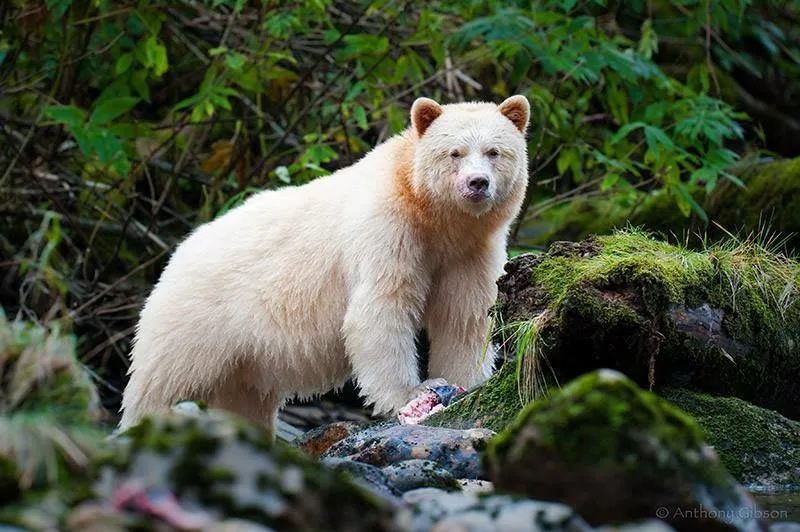
Image source: Web (Bing) / pinterest.com (Web image (fair-use with source credit))
Moving south, the kinkajou lives in the tropical rainforests of Central and South America. It's sometimes called a "honey bear" because of its fondness for nectar and its bear-like face. But kinkajous aren't bears.
They're related to raccoons. They have a fully prehensile tail that works like a fifth limb, letting them hang from branches while they feed. Their tongues are long and thin, perfectly designed to reach deep into flowers.
And yes, they love honey and fruit.
The Wildcards: Kulan, Kouprey, Kolinsky, Kodkod, and Killer Whales
Sometimes the most interesting creatures are the ones you've never heard of. This group proves that point.
| Species | Continent | Conservation Status | Standout Trait |
|---|---|---|---|
| Kulan | Central Asia | Near Threatened | Can run 40 mph |
| Kouprey | Southeast Asia | Critically Endangered | Maybe fewer than 50 left |
| Kolinsky | Siberia, East Asia | Least Concern | Famed for paintbrush fur |
| Kodkod | Chile, Argentina | Vulnerable | Smallest cat in the Americas |
| Killer Whale | Global oceans | Data Deficient | Largest dolphin species |
The kouprey deserves special attention. This wild cattle species once roamed Cambodia, Laos, and Vietnam. Deforestation and hunting have pushed it to the edge.
Recent surveys suggest possibly fewer than 50 individuals remain in the wild. If you ever see one, you're witnessing something most people never will.
The kodkod weighs just four to six pounds. That makes it the smallest wild cat in the Americas. It's an expert climber, spending most of its life in dense bamboo forests.
It's rarely seen, even by researchers who study it daily.
How to Tell Them Apart: A Visual Identification Guide
You don't need to be a zoologist to spot these differences. Start with the obvious ones.
Body type. Kangaroos hop on two legs. Kulan look like donkeys with short manes. Kouprey are massive, muscular cattle.
Kodkod look like small house cats with thicker tails and darker fur.
Ears. Kit foxes have enormous ears relative to their head size. Kudu have large, rounded ears with white tips. Kinkajous have small, round ears tucked close to their skull.
Horns and antlers. Greater kudus have the iconic spiral horns. Kouprey have long, curved horns that sweep forward. Kirk's dik-diks have small, straight spikes.
Coat color. The Kermode bear is the easy one. White or cream colored in a forest filled with black bears. Kolinsky weasels are reddish brown with darker faces and feet.
Tail. Kangaroo tails are thick and muscular. Kinkajou tails are fully prehensile. Kit fox tails are long, bushy, and black-tipped.
The Geographic Map: Where in the World Do K Mammals Live?
The spread is genuinely remarkable. Each continent brings its own personality to the letter K.
Australia and Oceania. This is marsupial territory. Kangaroos, koalas, and the lesser-known kowari call it home. You won't find them anywhere else on Earth.
Africa. The continent wins for sheer diversity of K species. Kudu, klipspringer, and dik-dik all roam the savannas and rocky hills. The kouprey originally shared this space, but is now confined to Southeast Asia.
The Americas. North America has the kit fox and the Kermode bear. South America hosts the kinkajou and the elusive kodkod.
Asia and Siberia. The kulan runs the grasslands of Central Asia. The kolinsky weasel ranges through Siberia and into northern China.
Oceans. Killer whales break all the rules. They're found from the Arctic to the Antarctic, and everywhere in between.
The "K" Hall of Fame: Record-Breakers and Extreme Adaptations
Every letter has standouts. Here are the K-mammal gold medalists.
Fastest. The kulan. It's one of the fastest equines on Earth, hitting speeds near 40 miles per hour. Only the onager comes close in the wild ass family.
Largest. The red kangaroo. Males reach six feet tall and weigh nearly 200 pounds. They're the world's largest marsupial by a wide margin.
Smallest. The kodkod, at four to six pounds, narrowly edges out Kirk's dik-dik. Both are tiny, but the kodkod is a true predator.
Sleepiest. The koala. It sleeps 18 to 20 hours a day. That's practically a part-time job.
Rarest. The kouprey. With potentially fewer than 50 individuals left, it's one of the most endangered mammals on Earth.
Best climber. The klipspringer. It lives on steep rock faces and leaps across gaps that would terrify most animals.
Lookalikes and Common Confusions: Kangaroo vs. Kangaroo Rat, and More
This is where the fun really starts. People mix up K mammals more than you'd think.

Image source: Web (Bing) / fity.club (Web image (fair-use with source credit))
The biggest mix-up is the kangaroo rat. It sounds like a small kangaroo, and the name suggests a connection. But kangaroo rats are rodents.
They're not marsupials at all. They evolved independently in North American deserts. The resemblance comes from convergent evolution, where unrelated species develop similar traits.
Same story with the koala bear. It's not a bear. Marsupial, plain and simple.
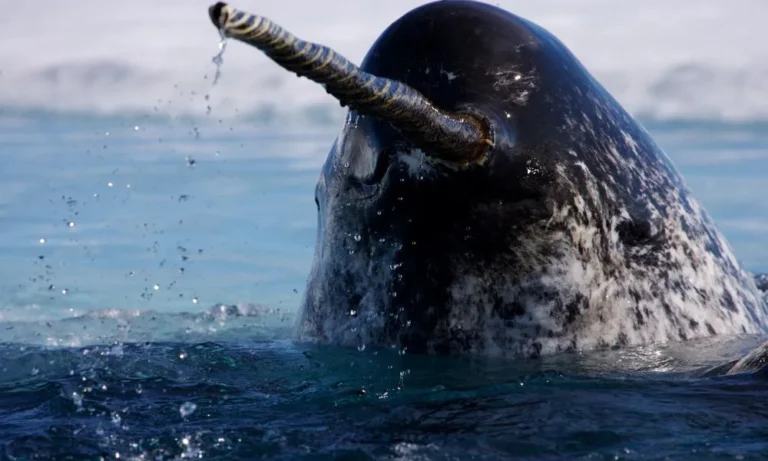
Then there's the killer whale. Orca. The name screams whale, but they're actually the largest species of dolphin.
That's why orcas have such prominent dorsal fins and curved dorsal fins. They're built for speed and agility, just like their smaller dolphin cousins.
And the kit fox looks like a fennec fox's cousin. They're both desert foxes with huge ears, but they belong to different species. The kit fox lives in North America.
The fennec fox lives in the Sahara. Same adaptations, different continents.
Fun Facts That Make Better Trivia Than Anything You Already Know
These are the facts that win bar quizzes. Drop one at a party and watch people's faces change.
Kangaroos can't walk backward. Their tails and hind legs make reverse movement physically impossible. That's why they're on the Australian coat of arms, symbolizing a nation that only moves forward.
Koalas have fingerprints. Their fingerprints are nearly identical to human ones. Even forensic experts struggle to tell them apart under a microscope.
The Kermode bear isn't albino. It's a black bear with a recessive gene for white fur. It still has dark eyes and skin, unlike true albino animals.
Killer whales have dialects. Different pods develop unique vocal patterns. A pod from British Columbia sounds different from one near Norway. They pass these dialects down through generations.
Klipspringers stand on their tiptoes. Their hooves are shaped like tiny rubber cylinders, perfect for gripping smooth rock. They can stand on a surface no wider than a coin.
Kinkajous have the longest tongue-to-body ratio of any carnivore. That tongue helps them reach nectar deep inside flowers.
Mistakes to Avoid When Researching or Identifying K Mammals
The internet is full of wrong answers about this letter. Here's what to watch out for.
Assuming every marsupial lives in Australia. The kowari does, but kangaroo rats in North America look vaguely similar and aren't related at all.
Calling the koala a bear. It's a marsupial. The name "koala bear" is a leftover from confused early settlers. Wildlife organizations officially discourage it.
Thinking killer whales are whales. Orcas are dolphins. The largest dolphin species on Earth, in fact. The name "killer whale" comes from sailors who saw them hunting whales.
Confusing the kodkod with a house cat. It's similar in size, but it's a wild species with specific habitat needs. It can't be domesticated.
Believing the kouprey is extinct. It's critically endangered, and Rediscovery reports exist, but no confirmed sighting has happened in decades. Don't write it off yet.
Frequently Asked Questions
Are koalas bears?
No. Koalas are marsupials, which means they carry their young in a pouch. Bears are placental mammals.
The "koala bear" nickname comes from early settlers who thought the koala's face resembled a bear.
Do kangaroos only live in Australia?
Naturally, yes. Wild kangaroos are native only to Australia and New Guinea. You'll find introduced populations in some other regions, but their natural range is exclusively that area.
Can you own a kinkajou as a pet?
Legality varies by country and state. Many places require permits or ban them entirely. Even where legal, kinkajous are high-maintenance, nocturnal, and can deliver painful bites.
This isn't a beginner pet.
Is the Kermode bear a polar bear?
No. The Kermode bear is a subspecies of the American black bear. The white fur comes from a recessive gene, not from polar bear ancestry.
What is the rarest mammal starting with K?
The kouprey. This wild cattle species from Southeast Asia has possibly fewer than 50 individuals left. Some researchers suspect it may already be extinct in the wild.
The Final Verdict: Why "K" Is the Best Letter in the Mammal Alphabet
Here's the thing. "K" isn't the biggest letter, but it's the most surprising. You start with a kangaroo and end with a whale that's actually a dolphin.
Along the way you meet a white bear, a cat that lives in trees, an antelope that climbs rocks, and a wild ass that outruns most cars.
That variety is rare. Most letters have a theme. "A" is heavy on antelopes.
"B" is all bears and badgers. "K" gives you a little bit of everything. It's a microcosm of the entire mammal world, compressed into a single letter.
If you're looking for a rabbit hole to disappear into, this is it. Pick one species from the list and start digging. The kowari alone could keep you busy for weeks.
And the next time someone asks about mammals that start with K? You won't just say "kangaroo." You'll rattle off a dozen species and watch their jaw drop.
That's the real win here. Not the trivia, not the list. It's the ability to surprise yourself with how much you didn't know.