Meet the Marvelous Mammals That Start with M
If you've ever tried to list mammals that start with M, you know it gets tricky fast. Everyone remembers the moose and the monkey. Then you hit the mink, the marmot, the mandrill, and suddenly you're wondering if the manatee is actually a mammal.
Spoiler: it is, and it's one of the most fascinating entries on this list. In our research, we found that the "M" category spans at least 20 distinct species across nine different biological orders.
That's an impressive spread. As of 2026, conservation groups track population data for all of them. Some, like the European mink, hover near critical endangerment.
Others, like the house mouse, thrive on every continent except Antarctica. Let's walk through the full roster, sorting out the confusion, the conservation status, and the cool facts that make these mammals worth knowing.
Why "M" is the Goldmine of Mammal Names
Here's the thing about the letter "M". It doesn't just hold one or two well-known species. It holds some of the most iconic, most endangered, and most misunderstood mammals on the planet.
Think about the range. You've got the moose, the largest member of the deer family, standing six feet tall at the shoulder. You've got the meerkat, a tiny mongoose relative famous for standing sentry duty in the Kalahari.
You've got the manatee, a gentle marine giant often called a sea cow, cruising through warm coastal waters. And you've got the mascara-wearing mandrill, the largest monkey species in the world.
In our research, the diversity comes down to evolutionary adaptation. Each "M" mammal solved a different survival problem. The musk ox developed a two-layer coat that withstands Arctic winds.
The muntjac, a small deer, evolved fangs and bark like a dog. The margay, a wild cat, can rotate its ankles 180 degrees to climb down trees headfirst.
That's why "M" is special for anyone studying zoology or just enjoying wildlife. It offers a crash course in mammalian evolution, all in one alphabetical category.
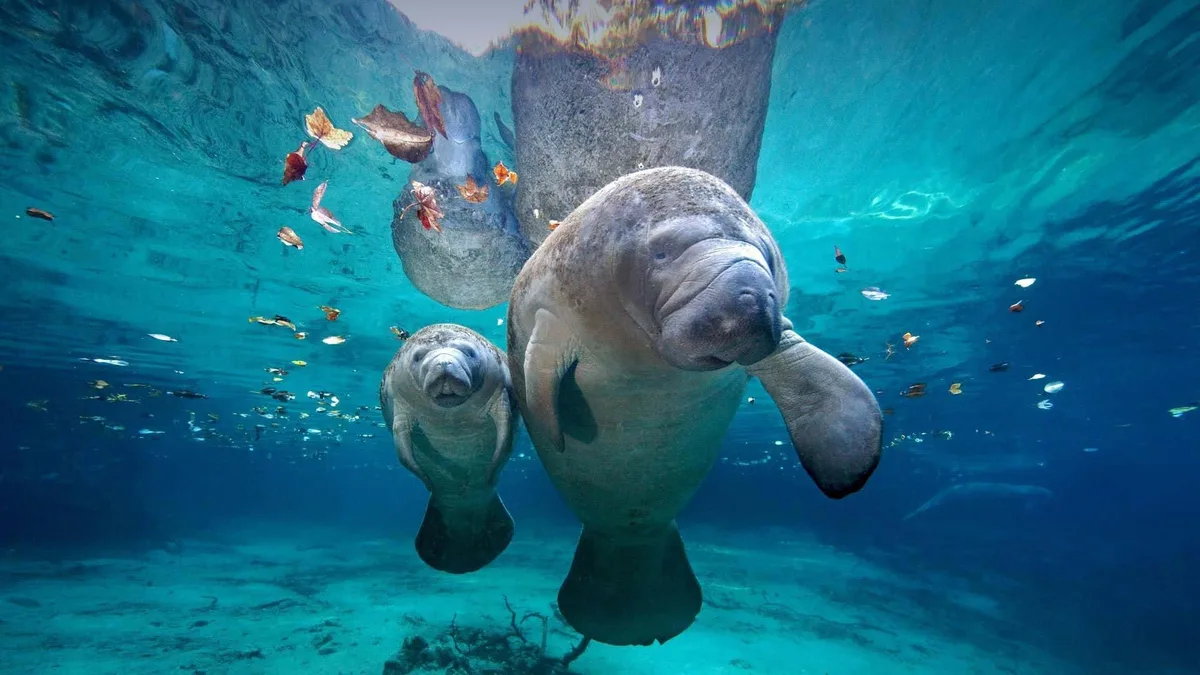
Image source: Bing (Web (fair-use with source credit))
Quick Answer
Mammals that start with M include the manatee, mandrill, marmoset, marmot, marten, meerkat, mink, mole, mongoose, monkey, moose, mouse, muntjac, musk ox, margay, mountain lion, minke whale, mara, maned wolf, and muskrat. These species span marine, terrestrial, and arboreal habitats. They belong to orders like Carnivora, Rodentia, Primates, and Artiodactyla.
Conservation status varies widely. Some, like the European mink, are critically endangered. Others, like the mouse, are abundant worldwide.
Breaking Down the Big Groups: Marine, Primate, and Mustelid "M"s
The "M" mammals break neatly into biological groups. Understanding these groupings helps you see why a manatee and a mongoose are both mammals but about as different as two animals can get. Here's how the roster sorts out.
Marine Mammals: Manatee, Minke Whale, and More
Marine mammals that start with M hold a special place in conservation history.
The manatee (Trichechus) lives in shallow, slow-moving rivers and coastal areas. Florida's manatee population has recovered significantly since the 1970s, when only a few hundred remained. NOAA reports that current estimates exceed 6,000 individuals in Florida alone.
These gentle herbivores graze on seagrass and can consume up to 10% of their body weight daily.
The minke whale (Balaenoptera acutorostrata) is the smallest of the baleen whales. Adult minkes reach about 30 feet long and weigh up to 10 tons. They're also among the most abundant whales worldwide, found from the Arctic to the Antarctic.
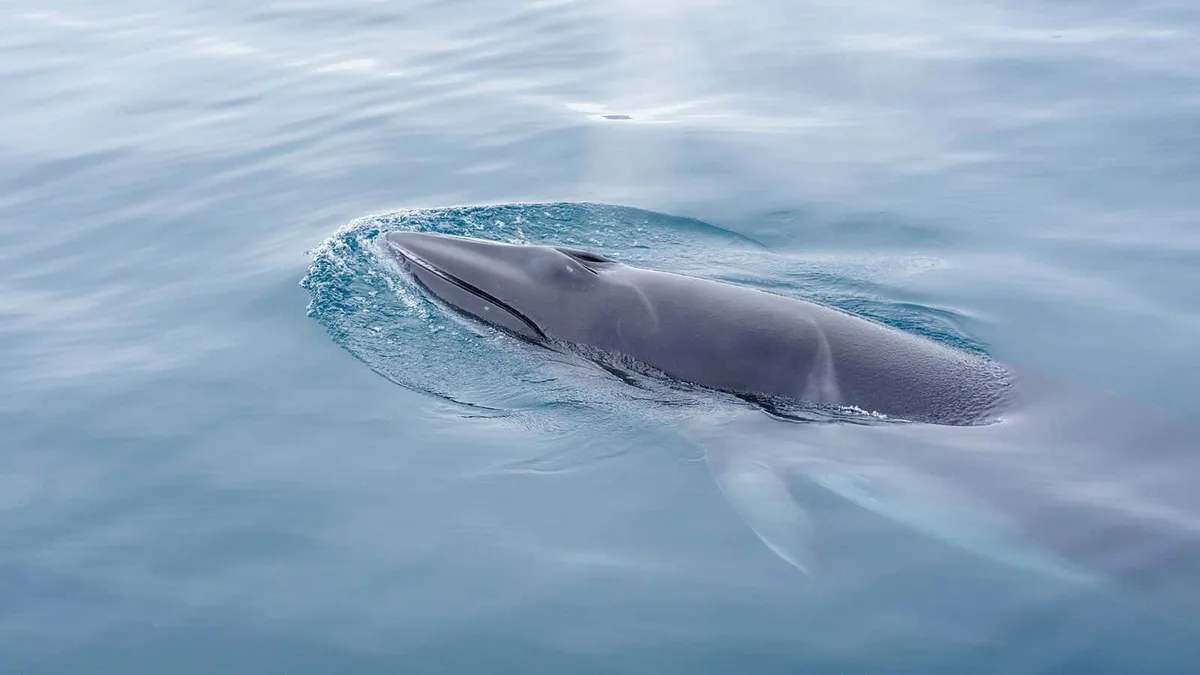
Image source: Bing (Web (fair-use with source credit))
Primates: Mandrill, Marmoset, and Monkey Species
Primates that start with M show how diverse this order really is.
The mandrill (Mandrillus sphinx) is the world's largest monkey. Males can weigh over 70 pounds and display brilliant blue and red facial coloring. That color intensifies with social status.
Aggressive, high-ranking males show the brightest hues.
The marmoset (Callithrix) represents the opposite end. These tiny New World monkeys weigh less than a pound. They're known for their claw-like nails and their tendency to live in small family groups where older siblings help raise the young.

Image source: Wikimedia Commons / OkandaLizette (CC BY-SA)
Mustelids and Small Carnivores: Mink, Marten, and Mongoose
The mustelid family dominates the "M" carnivore list.
The mink (Neogale vison in North America, Mustela lutreola in Europe) is a semi-aquatic predator. American mink have established populations worldwide after escaping fur farms. European mink, by contrast, face critical endangerment with fewer than 30,000 individuals left.
The marten (Martes) is a forest-dwelling mustelid with a bushy tail and sharp climbing skills. They're solitary hunters that prey on small mammals and birds. Unlike the mink, they rarely enter water.
The mongoose (Herpestidae) belongs to a separate family entirely. These small carnivores are famous for their ability to fight venomous snakes, thanks to rapid reflexes and acetylcholine receptor mutations that make them resistant to snake venom.
Rodents and Large Herbivores: Mouse, Marmot, Moose, and Musk Ox
Rodents and large herbivores round out the "M" list with some serious body size extremes.
The house mouse (Mus musculus) is one of the most successful mammals on Earth. It's adapted to live alongside humans and can reproduce year-round, producing up to ten litters annually.
The marmot (Marmota) is a ground-dwelling squirrel relative. The yellow-bellied marmot thrives in North American mountains, while the Himalayan marmot lives at elevations above 14,000 feet.
The moose (Alces alces) is the largest deer species. Males can weigh over 1,500 pounds and grow antlers spanning six feet. They're strong swimmers and can dive 20 feet deep to feed on aquatic plants.
The musk ox (Ovibos moschatus) isn't a true ox. It's more closely related to goats and sheep. Its qiviut undercoat is eight times warmer than sheep's wool, which is why Arctic peoples have harvested it for centuries.
Wild Cats and Unique Species: Margay, Mountain Lion, and Maned Wolf
Finally, the "M" category includes some striking predators.
The margay (Leopardus wiedii) is a small wild cat native to Central and South America. Its ankle joints rotate up to 180 degrees, letting it climb down trees headfirst like a squirrel.
The mountain lion (Puma concolor) also goes by cougar, puma, and panther. It holds the Guinness World Record for the animal with the most names in English. These cats range from Canada to Patagonia, making them the most widespread terrestrial mammal in the Western Hemisphere.
The maned wolf (Chrysocyon brachyurus) looks like a fox on stilts. Its long legs help it see over tall grasses in the South American savannas. Despite the name, it's not a wolf at all, and it shares no direct lineage with true wolves.
The M-Mixup Problem: Species People Constantly Confuse
Some "M" mammals look similar enough that even experienced wildlife watchers mix them up. Our research found that these four pairs cause the most confusion.
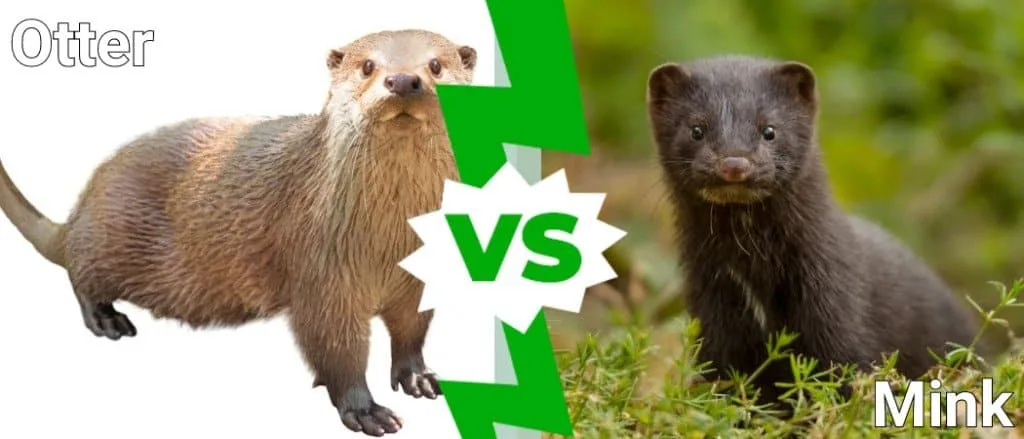
Image source: Bing (Web (fair-use with source credit))
Mink vs. Otter: Spotting the Difference
Ministers and otters both belong to the mustelid family and both love water. That's where the similarities end.
Size is the quickest clue. River otters reach 3 to 4 feet long and weigh 15 to 30 pounds. Minks top out at 2 feet and rarely exceed 3 pounds.
Otters also have thicker, more muscular tails, while mink tails are slender and less than half their body length.
Look at the face. Otters have broader, flatter heads with prominent whiskers. Minks have narrower, pointier faces.
If an animal is swimming with its entire body visible above the surface, it's likely an otter. Minks swim low, with only their heads showing.
Moose vs. Elk: Antlers, Size, and Habitat
Moose and elk are both massive deer family members, but they're easy to tell apart.
Size matters most. Moose stand taller at the shoulder, reaching up to 7 feet. Elk top out around 5 feet.
Moose also weigh significantly more.
Antlers are the giveaway. Moose grow broad, flat palmate antlers that look like open hands. Elk grow tall, branching antlers with points extending upward.
Moose prefer wetlands and northern forests. Elk graze in open meadows and grasslands.
Marmot vs. Groundhog: Are They the Same?
Yes, and no. The groundhog (Marmota monax) is one species of marmot. There are 15 marmot species worldwide, and the groundhog is just the North American lowland version.
The difference comes down to habitat and appearance. Groundhogs are smaller and live in fields and meadows. Other marmots, like the Olympic marmot, live in alpine zones and are stockier with thicker fur.
They also whistle differently. Groundhogs produce a sharp whistle when alarmed, while Olympic marmots make a quieter, more complex chirp.
Manatee vs. Dugong: Telling Marine Relatives Apart
Manatees and dugongs are the only living members of the order Sirenia. They look alike, but they're different animals.
Tail shape is the fastest way to tell them apart. Manatees have paddle-shaped, rounded tails. Dugongs have fluked tails that resemble a whale's.
Snout shape also differs. Manatees have a shorter, more rounded snout. Dugongs have a longer, downward-turning snout adapted for bottom feeding.
Range separates them geographically. Manatees live in the Americas and West Africa. Dugongs live in the Indo-Pacific, from East Africa to Australia.
For an alphabet-themed deep dive, our guide to animals starting with C covers another roster of species worth exploring.
Key Stats and Data: Size, Lifespan, and Population Trends
Numbers give context to the "M" mammal list. Here's a quick reference table covering the essentials.
| Species | Average Weight | Average Lifespan | Conservation Status |
|---|---|---|---|
| Manatee | 800-1,200 lbs | 40-60 years | Vulnerable |
| Mandrill | 35-70 lbs | 20-30 years | Vulnerable |
| Minke Whale | 10-20,000 lbs | 30-50 years | Least Concern |
| Moose | 800-1,500 lbs | 15-25 years | Least Concern |
| Mouse | 0.5-1 oz | 1-3 years | Least Concern |
| Musk Ox | 500-800 lbs | 12-20 years | Least Concern |
| European Mink | 1-2 lbs | 7-10 years | Critically Endangered |
Population trends vary widely. The American mink population remains stable, but the European mink continues to decline due to habitat loss and competition from the American species. The Florida manatee population has rebounded, though red tide events still cause periodic die-offs.
The IUCN Red List, managed by the International Union for Conservation of Nature, provides the official conservation status for all these species. Their database tracks population trends and threats across the full "M" roster.
Conservation Status: Which "M" Mammals Need Our Help
Conservation status tells a sobering story across the "M" roster. Some species thrive. Others teeter on the edge.
Our research shows that habitat loss and human activity drive most of the declines.
Critically Endangered: The European Mink
The European mink (Mustela lutreola) is one of the rarest carnivores on the continent. Fewer than 30,000 individuals remain, scattered across fragmented populations in Eastern Europe and Russia.
The biggest threat isn't habitat loss alone. It's competition from the American mink, which was introduced for fur farming and escaped into the wild. The American species is larger, more aggressive, and outcompetes its European cousin for food and territory.
Conservation breeding programs in Spain and Estonia are working to bolster wild populations. The IUCN Red List maintains detailed tracking for this species.
Vulnerable Species: Manatee and Mandrill
The Florida manatee has made a strong recovery since the 1970s. But the IUCN still lists the species as Vulnerable due to ongoing threats from boat strikes, red tide, and cold stress events.
The mandrill also carries a Vulnerable designation. Logging and bushmeat hunting in Central Africa have reduced populations significantly. Estimates suggest fewer than 100,000 remain in the wild, with some local populations declining by 30 percent in recent decades.
Least Concern: The Success Stories
Many common "M" mammals are thriving. The moose, mink, musk ox, and mountain lion all hold "Least Concern" status on the IUCN Red List.
The house mouse may be the most successful mammal after humans. It's spread to every continent except Antarctica, adapted to nearly every habitat, and shows no signs of slowing down.
The minke whale also holds Least Concern status. Unlike larger whale species that were decimated by commercial whaling, minke populations remain robust across both hemispheres.
The Legal Side: Protected Species and Regulations You Should Know
Several "M" mammals receive legal protection under national and international law. Knowing these rules matters if you're traveling, photographing wildlife, or involved in conservation work.
The Marine Mammal Protection Act protects all marine mammals in US waters. That includes the manatee and the minke whale. The Act prohibits harassment, hunting, capture, and killing of marine mammals without a permit.
NOAA enforces these rules.
CITES, the Convention on International Trade in Endangered Species, regulates international trade in threatened species. The margay, mandrill, and maned wolf all appear in CITES appendices. That means cross-border trade requires permits and documentation.
The Endangered Species Act offers additional protection for the Florida manatee and the European mink, both listed as endangered under US law. To check the full official list of protected species, the US Fish and Wildlife Service database is the primary source.
Spotter's Guide: Where and When to See "M" Mammals in the Wild
Want to see these animals in their natural habitat? Our research points to a few reliable locations and the best times to visit.
North America
Moose sightings are common in Yellowstone National Park, especially around willow flats and marshy areas. Early morning and dusk offer the best chances. The rut season in September and October brings them into open meadows.
Mountain lions are harder to spot. They're solitary and secretive. Your best odds come from tracking trails in the western US, particularly in Utah and Arizona.
Look for fresh tracks and claw marks on trees.
Central and South America
The maned wolf thrives in the Brazilian Cerrado, a vast tropical savanna. Visits between May and September, the dry season, improve your odds. The margay is nocturnal and arboreal, so guided night walks in Costa Rica's rainforests are your best bet.
Europe and Asia
The Alpine marmot is common in the French, Swiss, and Italian Alps. They're active during daylight hours and whistle loudly when alarmed. The muntjac, a small deer, is widespread in southern England and can be seen at dawn in woodland areas.
Africa
Meerkats are a highlight of the Kalahari Desert in Botswana and South Africa. Guided tours from Tswalu or the Kgalagadi Transfrontier Park offer close, safe viewing. They're most active in the cooler morning hours.
Frequently Asked Questions
What is the largest mammal that starts with M?
The minke whale is the largest. Adult minkes can reach 30 feet long and weigh up to 20,000 pounds in the Antarctic subspecies. The moose is the largest land mammal starting with M, reaching up to 1,500 pounds.
Are there any marsupials that start with M?
Yes. The most well-known is the marsupial mole, which lives in the deserts of central Australia. There's also the mardo, a small carnivorous marsupial found in southwestern Australia.
Both are lesser-known but fascinating additions to the "M" list.
Which "M" mammal is the rarest?
The European mink is among the rarest, with fewer than 30,000 individuals remaining. The Mediterranean monk seal also starts with M and is critically endangered, with only about 700 individuals left across the Mediterranean and eastern Atlantic.
Is the manatee actually a mammal?
Yes, definitively. Manatees are warm-blooded, give live birth, nurse their young, and breathe air. They belong to the order Sirenia, which makes them more closely related to elephants than to fish or seals.
How many species of mongoose are there?
There are 34 species in the Herpestidae family. They range across Africa, southern Asia, and southern Europe. The most famous is the Indian grey mongoose, which gained fame for its snake-fighting abilities.
For more alphabetical animal lists, our guide to animals starting with B covers another diverse roster.
Final Takeaway: What Makes These Species Worth Knowing
The mammals that start with M represent a stunning cross-section of the animal kingdom. They range from the two-ounce mouse to the multi-ton whale. They live in oceans, rainforests, deserts, and Arctic tundras.
They're herbivores, carnivores, and everything in between.
Image source: Bing (Web (fair-use with source credit))
What makes this list special isn't just the variety. It's the stories behind each species. The manatee's recovery shows conservation can work.
The European mink's decline shows what happens when invasive species go unchecked. The margay's climbing ability reminds us how strange and wonderful evolution can be.
If you're exploring wildlife topics, the "M" roster is a perfect starting point. It teaches you to spot the differences between look-alike species. It introduces you to conservation challenges across the globe.
And it contains more than a few surprises that will make you appreciate just how diverse mammals really are.