Mammals That Start with N: The Complete List
If you've ever tried to name animals alphabetically, you know the struggle. "Mammals that start with n" feels like a trick question after you get past narwhal. But there's actually a solid lineup hiding in that letter, and some of them are genuinely fascinating.
In our research, we found seven true mammals that start with N, plus a few imposters that trick people into including birds and other non-mammals. As of 2026, conservation status varies wildly among them, from species of least concern to ones hanging on by a thread. Let's walk through all of them.
Quick Answer
The mammals that start with n are: narwhal, numbat, nyala, nilgai, naked mole-rat, northern fur seal, and Nubian ibex. Each one lives in a different part of the world. They range from Arctic whales to Australian marsupials.
Conservation status varies by species and region.
The Big Three: Narwhal, Numbat, and Nyala
Narwhal: The Unicorn of the Arctic
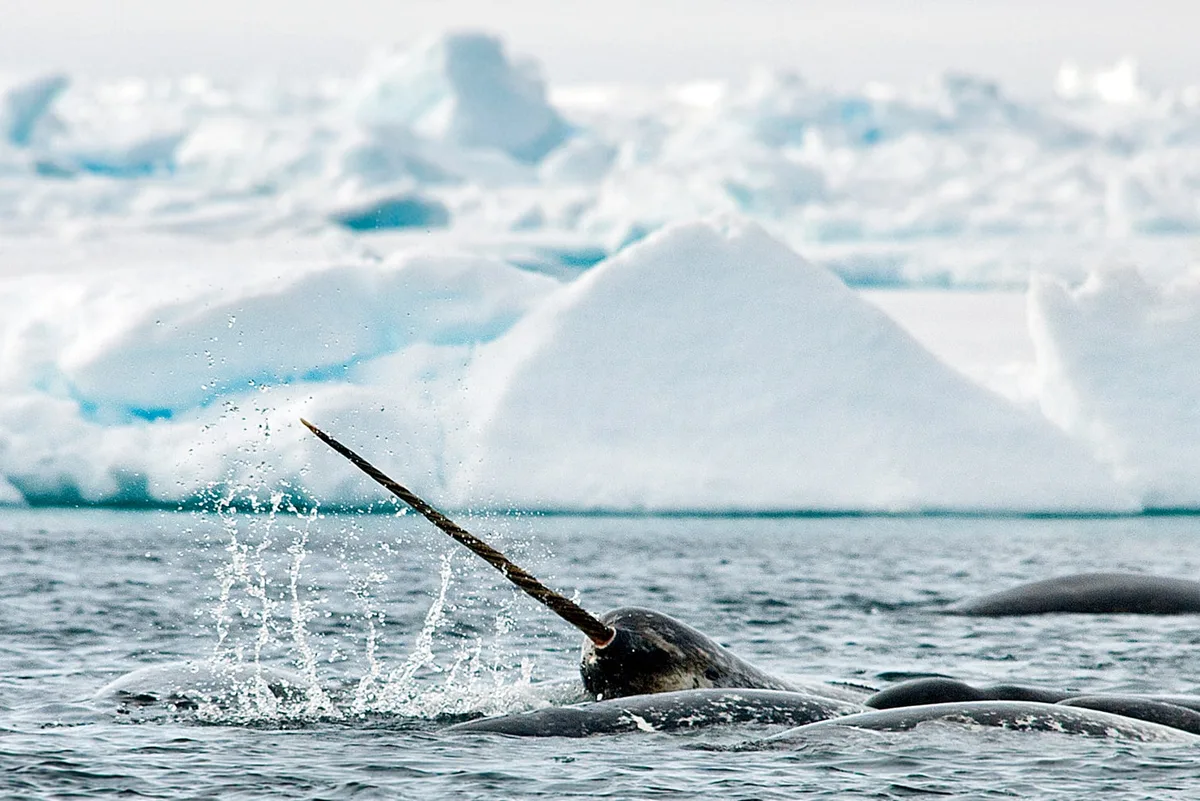
The narwhal (Monodon monoceros) is the animal people think of first when they hear "mammals that start with n." That spiral tusk is actually a tooth, not a horn. It can grow up to 2.6 meters long, which is longer than most adult humans are tall.
For years, researchers believed the tusk was used for fighting or breaking ice. Recent studies suggest it's actually a sensory organ packed with nerve endings. The tusk helps narwhals detect changes in water temperature, salinity, and pressure.
It's essentially a giant tooth-shaped antenna.
Narwhals live exclusively in Arctic waters around Greenland, Canada, and Russia. They travel in pods of 10 to 100 individuals and dive deeper than almost any other marine mammal, reaching depths of 1,500 meters. Scientists estimate the global population at roughly 170,000 mature individuals, which places them in the "least concern" category on the IUCN Red List.
Numbat: Australia's Striped Termite Hunter
The numbat (Myrmecobius fasciatus) is one of the most distinctive marsupials you've never heard of. It's small, about the size of a squirrel, with a narrow pointed snout and a bushy tail. Its reddish-brown coat features bold white stripes across the back, making it look like a tiny striped squirrel.
Here's the twist: unlike most marsupials, numbats don't have a proper pouch. The young just cling to their mother's fur and latch onto her teats. They also don't dig burrows.
Instead, they shelter in hollow logs and abandoned rabbit warrens.
Numbats are termite specialists. A single numbat can eat up to 20,000 termites in one day. They use their long sticky tongues to lap up termites from shallow underground tunnels, which they locate by scent.
They're diurnal, meaning they hunt during daylight hours, which is unusual for a termite-eating mammal.
The bad news? Numbats are endangered. Fewer than 1,000 individuals remain in the wild, all in southwestern Australia.
Habitat loss and introduced predators like foxes and feral cats have devastated their populations. Conservation breeding programs are actively working to reverse the decline.

Nyala: The Shy Antelope of Southern Africa
The nyala (Tragelaphus angasii) is a striking antelope found in southern Africa, particularly South Africa, Zimbabwe, and Mozambique. The males and females look completely different, a trait called sexual dimorphism. Males have dark gray-brown coats with white vertical stripes and impressive spiral horns.
Females and juveniles are reddish-brown with more delicate striping.
Males can reach 1.2 meters at the shoulder and weigh up to 125 kilograms. Females are noticeably smaller, topping out around 68 kilograms. The spiral horns on males can grow to 83 centimeters long, which makes them highly prized by safari photographers.
Nyala are shy and prefer dense thickets near water sources. They're most active in the early morning and late afternoon. Unlike many antelopes, they're not strictly territorial, and groups often overlap peacefully.
If you're on safari in South Africa's Kruger National Park or Hluhluwe-Imfolozi Game Reserve, you've got a good chance of spotting one.
The Lesser-Known "N" Mammals Worth Knowing
Nilgai: Asia's Blue Bull
The nilgai (Boselaphus tragocamelus) is the largest antelope in Asia. Males can weigh up to 240 kilograms and stand 1.5 meters at the shoulder. The name literally translates to "blue cow" because adult males develop a bluish-gray coat as they age.
Females stay tan or brown.
Nilgai are native to India, Nepal, and Pakistan, where they graze on grasslands and open woodlands. They're remarkably adaptable and have even established feral populations in Texas, where they were introduced for hunting in the 1930s. The Texas population now exceeds the native one.
These animals are runners, not jumpers. They have relatively straight backs and long legs built for speed, capable of reaching 48 kilometers per hour when threatened. Their conservation status is "least concern," and their population is stable across their range.
Naked Mole-Rat: The Underground Overachiever

The naked mole-rat (Heterocephalus glaber) looks like a wrinkled pink sausage with teeth. But don't let appearances fool you. This rodent has become a scientific superstar for a handful of reasons.
First, it's eusocial, like ants or bees. A colony lives in underground burrows with a single breeding queen, several breeding males, and hundreds of sterile workers. The queen suppresses reproduction in the workers through pheromones and aggressive behavior.
If the queen dies, a female worker will fight to take her place.
Second, naked mole-rats are nearly immune to cancer. They produce a specific type of hyaluronic acid that prevents cells from overcrowding and forming tumors. Researchers are actively studying this mechanism for human cancer treatments.
Third, they barely age. A naked mole-rat can live up to 30 years, which is extraordinary for a rodent of its size. Most mice live two to three years.
They also show no signs of age-related decline in fertility or physical condition. For an underground rodent, that's a remarkable lifespan.
They live in the Horn of Africa, specifically Kenya, Ethiopia, and Somalia, where they tunnel through dry, compacted soils in colonies of up to 300 individuals.
Northern Fur Seal: The Ocean's Comeback Story
The northern fur seal (Callorhinus ursinus) is a marine mammal with a complicated history. It breeds primarily on the Pribilof Islands in Alaska and the Commander Islands in Russia, with smaller colonies in California and Japan.
Male northern fur seals are massive. They can weigh up to 275 kilograms, roughly five times more than females. They're also fiercely territorial, establishing breeding sites on beaches and defending them against rival males.
These rookeries can pack in thousands of seals during breeding season.
The species was hunted nearly to extinction for its thick, luxurious fur in the 19th century. International protection efforts, including the North Pacific Fur Seal Convention of 1911, helped the population recover. Today, the species is considered "vulnerable" globally, though the Alaskan population has shown recent declines that worry researchers.
Nubian Ibex: The Cliff Climber
The Nubian ibex (Capra nubiana) is a wild goat native to the rocky mountains of Egypt, Sudan, Ethiopia, and parts of the Arabian Peninsula. Male ibexes have dramatically long, curved horns that can reach 1.2 meters. Females have smaller, more slender horns.
These goats are incredible climbers. They navigate near-vertical cliff faces with stunning ease, which helps them evade predators like leopards and eagles. Their specialized hooves have a hard outer rim and a rubbery inner pad that grips rock, plus a concave sole that acts like a suction cup.
Nubian ibex are listed as "endangered" due to habitat loss, hunting, and competition with domestic livestock. Their population is fragmented across their range, with estimates suggesting fewer than 4,500 mature individuals. It's a species that survives in some of the harshest, most inaccessible terrain on Earth.
What Each "N" Mammal Looks Like (Identifying Features)
Visual identification is the fastest way to memorize these animals. Each species has a signature feature you can spot from a distance.
Narwhals are medium-sized whales, around 4.5 to 6.5 meters long, with mottled gray bodies and no dorsal fin. That tusk is the giveaway. Numbats are small and squirrel-like, with bold white stripes running down their backs and a pointed snout.
Nyala males are dark gray with white stripes, while females are reddish with subtler striping. Nilgai males have the bluish coat and short, straight horns.
Naked mole-rats are hairless, wrinkled, and nearly blind, with oversized protruding teeth. Northern fur seals have thick, dense fur, visible ear flaps, and a bulky body built for swimming. Nubian ibex have the long, curved horns and a light brown coat with white patches on the belly and legs.
If you're trying to identify these in the wild or in photos, focus on body shape, coat pattern, and horn or tusk structure. Those three features alone will distinguish every mammal on this list.
Where in the World to Find Them
Geography is your best friend when sorting out "mammals that start with n." Each one has a specific homeland.
| Mammal | Primary Location | Habitat |
|---|---|---|
| Narwhal | Arctic Ocean (Canada, Greenland, Russia) | Pack ice and deep open water |
| Numbat | Southwestern Australia | Eucalypt woodlands |
| Nyala | Southern Africa | Dense thickets near water |
| Nilgai | India, Nepal, Pakistan | Grasslands and open forest |
| Naked Mole-Rat | Kenya, Ethiopia, Somalia | Arid underground burrows |
| Northern Fur Seal | Pribilof Islands, Russia, California | Coastal rookeries and open sea |
| Nubian Ibex | Egypt, Sudan, Ethiopia, Arabia | Rocky mountains and cliffs |
These environments couldn't be more different. You've got Arctic sea ice, Australian woodlands, African savanna, Himalayan foothills, and the parched Horn of Africa. That's part of what makes the N list so interesting.
It's not just a handful of similar animals. It's a global tour of mammalian diversity.
If you enjoy exploring these kinds of alphabetical animal lists, you might also like our guides to animals from C to crabs, animals starting with B, or the full list from A to axolotl. Each one follows the same format with fun facts and conservation notes.
Mammal or Not? Confusing "N" Words That Trip People Up
The letter N is a trap. Several common animals that start with N are not mammals at all, and they sneak into lists more often than you'd expect.
Nighthawk: This is a bird, not a mammal. The common nighthawk is a member of the nightjar family, famous for its aerial insect hunting at dusk. People include it on mammal lists because "hawk" sounds predatory and mammal-like.
It's not.
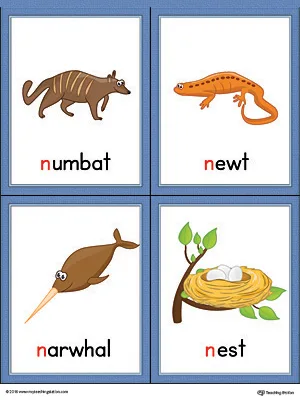
Newt: A newt is an amphibian, specifically a salamander in the family Salamandridae. It's cold-blooded, lays eggs in water, and has smooth, moist skin. Zero mammalian traits.
Nutria: This is actually a mammal, specifically a large semi-aquatic rodent native to South America. It's sometimes confused with beavers or muskrats, but it does belong on a mammal list. The confusion comes from its nickname, "river rat," which sounds like a different animal entirely.
Nectarine: Not an animal at all. It's a fruit, a smooth-skinned peach variety. People sometimes include it in alphabet animal games by accident, likely because the word sounds similar to "nectar-feeding" or "neotropical." Nope, it's produce.
Narwhal vs. Nighthawk: The biggest source of confusion is between these two. Both start with N, both are wild animals, but one lives in the sea and the other flies.
If someone says "N for nighthawk," ask yourself whether it has fur, produces milk, and gives live birth. If it lays eggs and has feathers, it's a bird.
To keep your list accurate, stick to the seven true mammals we've covered: narwhal, numbat, nyala, nilgai, naked mole-rat, northern fur seal, and Nubian ibex.
A Quick Look at Conservation Status
Conservation status tells you how much trouble each species is in. The IUCN Red List is the global standard for tracking this, and it's worth understanding where each of these animals stands.
| Mammal | IUCN Status | Estimated Population |
|---|---|---|
| Narwhal | Least Concern | ~170,000 |
| Numbat | Endangered | <1,000 |
| Nyala | Least Concern | Stable |
| Nilgai | Least Concern | Stable |
| Naked Mole-Rat | Least Concern | Stable |
| Northern Fur Seal | Vulnerable | ~650,000 |
| Nubian Ibex | Endangered | <4,500 |
The numbat and Nubian ibex are the most at-risk on this list. Both face habitat loss and pressure from introduced predators. The northern fur seal sits in a vulnerable position after a strong recovery, with recent population dips in some breeding colonies.
For accurate, up-to-date assessments, check the official IUCN Red List database directly. It's the gold standard for species conservation data and is updated regularly.
Why These Mammals Matter in the Wild
Every animal on this list plays a specific role in its ecosystem.
Narwhals are apex predators in Arctic waters, feeding on fish like halibut and cod while keeping prey populations in balance. Numbats control termite populations in Australian woodlands, which prevents termite damage to trees and soil. Nyala and nilgai are both bulk grazers and browsers, shaping vegetation patterns across savanna and grassland ecosystems.
Naked mole-rats aerate the soil in the Horn of Africa through their extensive tunnel networks, which improves water infiltration and plant growth. Northern fur seals are critical predators in the North Pacific, feeding on squid and fish while serving as prey for killer whales. Nubian ibex help maintain mountain vegetation through grazing and serve as prey for leopards and eagles.
Remove any of these species, and the ripple effects would be felt across their entire habitat. That's why conservation matters, even for animals that don't get as much attention as pandas or elephants.
Common Mistakes People Make About "N" Mammals
There are a few recurring errors people make when discussing these animals.
Mispronouncing nyala: The correct pronunciation is "ny-AH-lah," not "ny-AL-ah" or "NYE-lah." The accent falls on the second syllable. Listen to any African safari guide and you'll hear the difference.
Assuming all "N" mammals live in one region: People often assume that because narwhals are Arctic, all N mammals are cold-weather animals. That's wrong. The numbat lives in hot Australian woodlands, and the naked mole-rat thrives in the scorching Horn of Africa.
They couldn't be farther apart.
Believing narwhal tusks are weapons: The narwhal tusk is not a spear. It's a sensory organ that helps the animal detect environmental changes. Narwhals rarely fight with their tusks, and there's no evidence of them using tusks to break sea ice.
Underestimating the naked mole-rat: It's easy to dismiss a hairless, wrinkly rodent as primitive. In reality, it has one of the most complex social systems in the animal kingdom and a biological resistance to cancer that scientists are still working to understand.
Confusing the northern fur seal with sea lions: Northern fur seals have dense underfur and visible ear flaps. Sea lions don't have the same thick fur. They also behave differently, with fur seals being more agile and spending more time at sea.
"N" Mammal Trivia That Actually Makes This List Fun
These are the facts that stick with you long after you finish reading.
- Narwhal tusks grow in a spiral pattern, counterclockwise, and continue growing throughout the animal's life.
- Numbats can consume 20,000 termites in a single day, which means they're essentially living pest control.
- Nilgai have a white patch on their throat that looks like a faint horseshoe shape. It's one of their most distinctive markings.
- Naked mole-rats are cold-blooded, which is nearly unheard of in mammals. They regulate their body temperature by moving to warmer or cooler parts of their burrow.
- Northern fur seals spend up to 300 days per year at sea, only coming ashore to breed and molt.
- Nubian ibex can jump roughly 2 meters vertically from a standstill, letting them clear gaps between cliff ledges that look impossible.
If you're playing trivia or teaching a class, these are the facts worth saving.
Fast Facts Reference Table
For a quick side-by-side comparison, here's the full "mammals that start with n" reference.
| Mammal | Weight Range | Length | Lifespan | Diet | Status |
|---|---|---|---|---|---|
| Narwhal | 800–1,600 kg | 4.5–6.5 m | 50 yrs | Fish, squid, shrimp | Least Concern |
| Numbat | 300–700 g | 20–28 cm | 5–6 yrs | Termites | Endangered |
| Nyala | 55–125 kg | 1.4–1.9 m | 16 yrs | Leaves, fruits, grass | Least Concern |
| Nilgai | 120–240 kg | 1.8–2.1 m | 12–15 yrs | Grass, leaves, crops | Least Concern |
| Naked Mole-Rat | 30–40 g | 8–10 cm | 30 yrs | Roots, tubers | Least Concern |
| Northern Fur Seal | 50–275 kg | 1.5–2.1 m | 15–25 yrs | Fish, squid | Vulnerable |
| Nubian Ibex | 25–70 kg | 1–1.3 m | 12–15 yrs | Grasses, leaves | Endangered |
Lifespans for wild animals vary, and captive individuals often live longer. The naked mole-rat's 30-year lifespan is exceptional, even in captivity.
Frequently Asked Questions
Are narwhals real or mythical?
Narwhals are completely real. They're medium-sized toothed whales that live in Arctic waters. Their distinctive tusk is a long canine tooth that grows through the upper lip.
For centuries, people believed they were mythical creatures, partly because narwhal tusks were sold in Europe as "unicorn horns." The species is very much alive today, with roughly 170,000 individuals in the wild.
Is the numbat related to the anteater?
No, numbats and anteaters are not related. Numbats are marsupials, which means they give birth to underdeveloped young that continue growing attached to a teat. True anteaters are placental mammals found in Central and South America.
They're only distantly related. The numbat's similarity to anteaters is a result of convergent evolution, where unrelated species develop similar traits because they share a similar diet and lifestyle.
Can you see a nyala outside of Africa?
Yes, you can. Nyala are primarily found in southern Africa, but many zoos around the world keep them. The San Diego Zoo, the Bronx Zoo, and several European facilities have breeding populations.
You can also see them on safari in South Africa, Mozambique, and Zimbabwe. If you're planning to spot one in the wild, the best bet is Kruger National Park or Hluhluwe-Imfolozi Game Reserve.
Why are naked mole-rats a big deal in science?
Naked mole-rats are important because they resist cancer and age slowly. They produce a specific type of hyaluronic acid that prevents tumors from forming, and they maintain healthy biological function well into old age. Researchers study them to understand human aging and cancer prevention.
They also live in complex social colonies, which makes them interesting for behavioral studies. The National Institutes of Health has funded significant research on these animals.
How do you pronounce "nyala"?
The correct pronunciation is "ny-AH-lah," with emphasis on the second syllable. It comes from the Zulu language, where most words place stress on the penultimate syllable. If you visit southern Africa, this is the pronunciation you'll hear from local guides.
Avoid "ny-AL-ah" and "NYE-lah," which are common mistakes.
Which "N" mammal is the rarest?
The numbat and Nubian ibex are both endangered, but the numbat has a smaller remaining population. Fewer than 1,000 numbats exist in the wild, all in southwestern Australia. The Nubian ibex has roughly 4,500 mature individuals.
Both species face serious conservation challenges, but the numbat is currently closer to the edge.