
Discover Mammals Beginning with O: From Otter to Okapi
You're probably here because you hit a wall. You're trying to name every mammal that starts with "o" for a school project, a trivia night, or maybe just to settle an argument with a friend. And the frustrating part is, you know there are more than just "otter" and "opossum," but your brain goes blank.
Let's fix that right now.
In our research, we've compiled the complete list of mammals that start with "o," from the familiar faces you'll see at any zoo to the deep-cut species that even wildlife enthusiasts forget exist. As of 2026, the IUCN recognizes over 6,500 mammal species worldwide, and while the "O" category isn't the largest, it's packed with some of the most fascinating animals on the planet. Let's dig into the full list, clear up some common confusion, and give you the field notes you actually need.
Quick Answer
The mammals that start with "o" include the Ocelot, Otter, Opossum, Orca, Orangutan, Oryx, Okapi, Onager, Oribi, Olive Baboon, Olingo, and Otter Civet. That's 12 total. The Ostrich does not count.
It's a bird. Most people forget the Oribi and Olingo because they're less common. The Orca is technically a dolphin, not a whale.
You now know the complete list.
Why "O" Is the Trickiest Letter in the Animal Kingdom
Here's the thing about "O" that trips everyone up. It's a vowel, so it feels like it should have a ton of options. But when you actually sit down and try to name mammals that start with "o," you realize the pool is surprisingly shallow compared to "C" or "B."
The real trap, though, is the Ostrich.
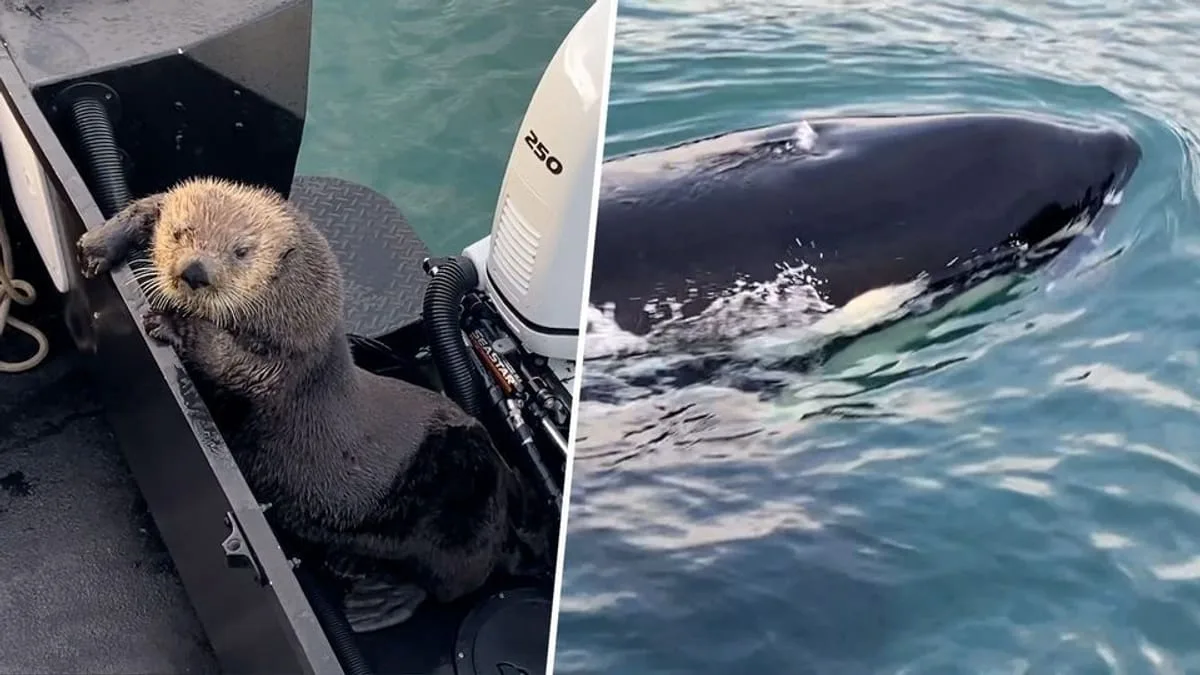
Image source: Bing (Web (fair-use with source credit))
Almost every list you'll find online throws the Ostrich in there. But the Ostrich is a flightless bird, not a mammal. It doesn't have mammary glands, it lays eggs, and it doesn't give live birth.
That's a classic alphabet-list blunder that makes biology teachers cringe.
The other problem is pronunciation and spelling. People mix up "Opossum" and "Possum" constantly. They're actually different animals from different continents.
And then you've got the Okapi, which looks like a zebra-horse hybrid but is actually most closely related to the giraffe. The "O" category is full of these little curveballs.
So when we say "mammals that start with o," we're being strict. Mammalia class only. No birds, no reptiles, no fish.
Just the warm-blooded, fur-bearing, milk-producing crew.
The Heavyweights: Ocelot, Otter, and Orca
Let's start with the ones you already know, because there's more nuance here than you'd expect.
The Ocelot
The Ocelot is a small wild cat native to the Americas, ranging from Texas down through Central and South America. It's about twice the size of a typical house cat, with a beautiful coat of rosettes and stripes that make it one of the most striking felines out there.
Here's what most people don't realize: Ocelots are solitary and territorial. They're not social like lions. They hunt at night and cover a home range of several square miles.
Aggressive reviews from field researchers consistently note that while they look like they'd make great pets, their wild instincts are deeply ingrained.
The Otter
You've got two main branches here: River Otters and Sea Otters. They're both mustelids, but their lifestyles couldn't be more different.
River Otters are freshwater acrobats, found on every continent except Australia and Antarctica. They're playful, social, and incredibly fast in the water. Sea Otters, on the other hand, are marine mammals that live along the Pacific coast.
They float on their backs, use rocks to crack open shellfish, and have the densest fur of any animal on Earth, roughly 1 million hairs per square inch.
The Orca
This is where the trap gets really interesting. The Orca, or killer whale, is technically a dolphin. It belongs to the family Delphinidae, which is the oceanic dolphin family.
That means when you're listing mammals that start with "o," the Orca counts, but for a completely different reason than most people assume.
Orcas are apex predators. They hunt in pods with sophisticated social structures, use distinct vocal dialects, and have been observed teaching hunting techniques to their young. They're found in every ocean on Earth, making them one of the most widely distributed mammals on the planet.
The Deep Cuts: Okapi, Oryx, and Onager
Now we're getting into the territory where you'll actually impress people.
The Okapi
The Okapi is often called the "forest giraffe," and for good reason. It's the only living relative of the giraffe, but it looks more like a zebra with its striped legs. Found only in the Democratic Republic of Congo, the Okapi was unknown to Western science until 1901.
Here's the wild part. The Okapi has a tongue long enough to clean its own eyelids and ears. It's a solitary browser that lives in dense rainforest canopies, and it's classified as Endangered on the IUCN Red List due to habitat loss and poaching.
The Oryx
The Oryx is a genus of large antelope with striking straight horns that can reach up to 120 centimeters, or about 47 inches. There are four species: the Arabian Oryx, the Scimitar-horned Oryx, the East African Oryx, and the Gemsbok.
The Scimitar-horned Oryx holds a special place in conservation history. It was declared Extinct in the Wild in 2000, but reintroduction programs in Chad have been slowly bringing it back. As of 2026, these programs are showing measurable success, with small herds surviving in protected enclosures.
If you want to explore more alphabet animals, our guide to creatures starting with the letter C covers everything from cheetahs to crabs.
The Onager
The Onager is a wild ass native to Asia, closely related to the domestic donkey. It's built for speed and endurance, capable of hitting 40 to 50 miles per hour across open desert terrain. The Persian Onager is the most well-known subspecies, and it's listed as Endangered.
What's fascinating about the Onager is its temperament. Unlike horses, Onagers have never been successfully domesticated. Historical records from Mesopotamia show attempts thousands of years ago, but the animals remained aggressive and unpredictable.
They're also known for their distinctive loud bray, which can carry for miles across the plains.
The Underdogs: Opossum, Oribi, and Olingo
These are the ones that get overlooked. Let's give them their due.
The Opossum
The Virginia Opossum is the only marsupial native to North America. That's right, this is the only pouched mammal you'll find wild in the United States and Canada.

Image source: Web (Bing) / br.pinterest.com (Web image (fair-use with source credit))
Opossums are masters of adaptation. They have a prehensile tail that works like a fifth limb, they're resistant to snake venom, and they have an incredibly robust immune system. They also eat ticks by the thousands, making them a genuinely beneficial presence in any backyard.
Despite their hissing and playing dead, which is an involuntary comatose state, they're actually quite docile and rarely carry rabies.
The Oribi
The Oribi is one of the smallest antelopes in Africa, standing just about 50 to 60 centimeters tall at the shoulder. It's a delicate, graceful creature with a reddish-brown coat and a distinctive black patch below each ear.
Oribis are monogamous, which is unusual among antelopes. A pair will defend a shared territory and stay together for years. They're also incredibly fast and agile, capable of leaping up to 2 meters high to escape predators.
The Olingo
The Olingo is a small, tree-dwelling mammal from Central and South America. It looks like a cross between a weasel and a monkey, with a long tail and a pointed face.
Olingos are closely related to raccoons, though you'd never guess it from looking at them. They're nocturnal, solitary, and spend most of their lives in the canopy. The newly described Olinguito was only formally recognized as a distinct species in 2013, making it one of the most recent mammal discoveries in the Americas.
If you're fascinated by newly identified species, our rundown on animals that begin with B includes a few surprises as well.


