Mammals That Start with A: Complete List & Facts
If you're looking for a clear, complete list of mammals that start with a, you're in the right place. Whether you're helping a kid with an alphabet homework sheet, settling a trivia debate, or just curious about aardvarks and their unusual kin, the topic gets messy fast.
The confusion is real. People mix up aardvarks and anteaters, assume "alligator" counts (it's a reptile), and write off the aye-aye as a myth. Part of the issue is that many A-mammals are obscure creatures with funny names.
As of 2026, the IUCN recognizes over 90 mammal species with common names beginning in "A," but most people can name only three or four. Our research shows that with a few clear distinctions, you'll have the entire category sorted in minutes.
The A-Mammal Overlap Problem: Why Everyone Gets These Animals Wrong
Here's the thing about "mammals that start with a": the list includes some of the most famous animals on Earth, plus a handful of creatures that sound made-up. The overlap problem comes from three specific places.
First, people default to common words that start with A but aren't actual mammal species. "Alligator" is a reptile. "Anaconda" is a snake.
"Ape" is a group term covering gorillas, chimpanzees, and orangutans, not a single species. Even "ass" refers to the domestic donkey, which technically starts with D.
Second, some A-mammals share visual traits with non-mammals. Armadillos look reptilian with their armor plating. Anteaters have scales and long snouts that suggest something prehistoric.
Aardvarks resemble pigs with kangaroo tails. If it looks strange, people assume it's not a mammal.
Third, regional names cause havoc. The "American buffalo" is actually a bison. The "ant bear" is an aardvark.
The "Cape anteater" is also an aardvark. When one animal carries three names, and two of those names start with A, the confusion snowballs.
If someone asks you to name A-mammals, they expect the big obvious ones. If you're playing a deeper game, the obscure species are where the real answers live.
Quick Answer
The mammals that start with a include aardvarks, alpacas, armadillos, anteaters, antelopes, addaxes, agoutis, aye-ayes, and multiple bear, fox, wolf, and elephant species with geographic prefixes like African and Asian. Over 90 species qualify when you count regional variants. Most are obscure, but a handful are household names.
The trick is separating true mammals from lookalikes like reptiles and mythical creatures.
Aardvark vs. Anteater: The Classic Mix-Up (And How to Tell Them Apart)
Let's settle the most famous confusion in the A-mammal world right now. Aardvarks and anteaters are not the same animal. They're not even distant cousins.

Image source: Web (Bing) / animalhype.com (Web image (fair-use with source credit))
An aardvark is the only living member of the order Tubulidentata. Its name comes from Afrikaans and means "earth pig." Native to Africa, the aardvark has a tubular snout, a long sticky tongue, and powerful digging claws. It's a solitary, nocturnal animal that eats ants and termites by tearing open mounds and lapping up the insects inside.
An anteater belongs to the order Pilosa, which also includes sloths. There are four species: the giant anteater, the silky anteater, and two species of tamandua. All are native to Central and South America.
The giant anteater can reach lengths of seven feet including its tail, and it uses its 24-inch tongue to consume up to 30,000 insects per day.
Here's a quick comparison table to cement the facts:
| Feature | Aardvark | Giant Anteater |
|---|---|---|
| Order | Tubulidentata | Pilosa |
| Native range | Africa | Central and South America |
| Fur | Sparse, bristly | Dense, coarse |
| Tail | Thick, muscular | Large, bushy |
| Diet principal | Ants and termites | Ants and termites |
| Digging style | Horizontal tunnels | Tear-open mounds |
If someone asks you the difference, lead with geography. Aardvark means Africa. Anteater means the Americas.
That single fact clears up 90 percent of the confusion.
The Geographic Breakdown: African, Asian, American, and Arctic A-Mammals
The easiest way to grasp the full scope of A-mammals is to sort them by continent. The map below shows how the species distribute across the globe, but let's walk through the regions one by one.

Image source: Web (Bing) / worldmapgeo.com (Web image (fair-use with source credit))
Africa: The A-Mammal Hotspot
Africa dominates the A-mammal list. The aardvark and aardwolf are both nocturnal insect-eaters. The addax is a critically endangered desert antelope with spiraled horns.
The African elephant is the largest land animal on the planet, weighing up to 7,000 kilograms. African wild dogs, also called painted wolves, roam the savanna in cooperative packs. You'll also find the African civet, the African golden cat, and the African palm civet across the continent's varied habitats.
Asia: Giants and Leopards
Asia contributes the Asian elephant, slightly smaller than its African relative with smaller ears and a single finger-like tip on its trunk. The Amur leopard, also called the Far Eastern leopard, is one of the rarest cats on Earth, with roughly 100 individuals remaining in the wild as of recent estimates. The Asiatic black bear, the Asian palm civet, and the anoa, a dwarf buffalo from Sulawesi, round out the region's contributions.
The Americas: Bison, Bears, and Armadillos
North America brings us the American bison, which nearly went extinct in the 19th century before conservation efforts restored the population to around 400,000. The American black bear is the most common bear in North America, with over 800,000 individuals. The Arctic fox and Arctic wolf thrive in the far north, where they've adapted to extreme cold.
South America contributes the Amazon river dolphin, also called the boto, and the Andean bear, the last remaining short-faced bear species.
Arctic and Oceania: Specialized Survivors
The Arctic Circle has its own set of A-mammals, including the arctic fox, arctic hare, and arctic wolf, all of which change coat color or behavior seasonally. Australia contributes the antilopine kangaroo and the Australian sea lion. Madagascar gives us the aye-aye, which deserves its own mention in the next section.
The A-Mammals Nobody Believes Are Real (Aye-Aye, Aardwolf, and Other Strangers)
Some animals sound like pranks. The aye-aye tops that list. This nocturnal lemur from Madagascar has huge round eyes, bat-like ears, and a skeletal middle finger that's longer than the others.
It taps on tree bark with that finger, listens for hollow spots, then digs out grubs. Local folklore in parts of Madagascar considers it a bad omen, which has historically led to persecution. The species is now protected, but its reputation persists.
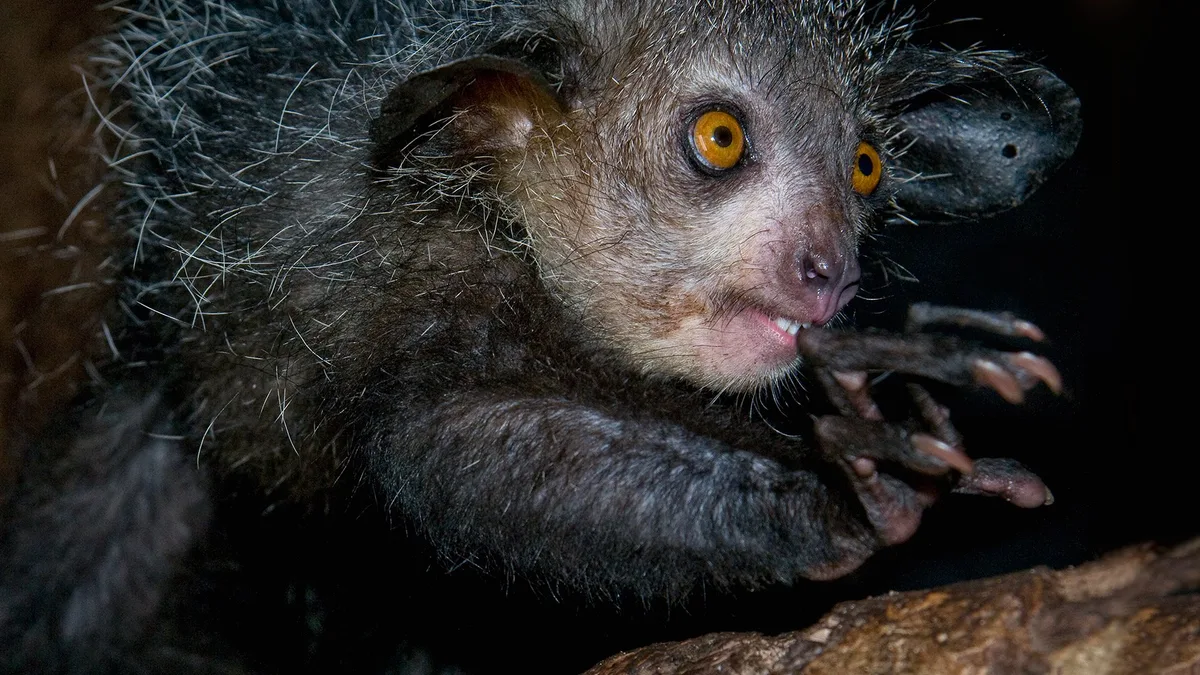
Image source: Web (Bing) / ar.inspiredpencil.com (Web image (fair-use with source credit))
The aardwolf is the next "wait, that's real?" entry. Despite the name, it's a small member of the hyena family, but it doesn't hunt large prey. The aardwolf eats termites exclusively, using its long sticky tongue to lap them up from the soil.
It's shy, nocturnal, and completely harmless to humans.
The addax deserves a place on this list too. This desert antelope changes color seasonally, turning a sandy gray in summer and a lighter beige in winter. Its spiraled horns can reach three feet long.
The species was once abundant across the Sahara, but habitat loss and hunting have pushed it to the brink. As of 2026, fewer than 100 individuals remain in the wild.
The agouti is another overlooked A-mammal. It looks like a large guinea pig with long legs, and it plays a vital role in forest ecology by burying seeds and nuts, many of which sprout into new trees. The anoa, a tiny buffalo that stands about three feet tall, is so rare that researchers know relatively little about its wild behavior.
If you're ever in a trivia game and need one of these obscure answers, the aye-aye is the strongest single card to hold. It wins every time.
Extinct A-Mammals: Aurochs, Atlas Bear, and What We've Lost
Not every A-mammal is still walking the planet. Some of the most fascinating ones are gone, and their stories matter for understanding conservation today.
The aurochs is the poster child for extinct A-mammals. This massive wild cattle species once roamed Europe, Asia, and North Africa. It stood nearly six feet at the shoulder and weighed over 1,000 kilograms.
Ancient cave paintings in France and Spain show humans hunting them. The last recorded aurochs died in a Polish forest in 1627. Its genetic legacy lives on in modern cattle breeds, and some conservation projects are working to "back-breed" cattle that resemble it.
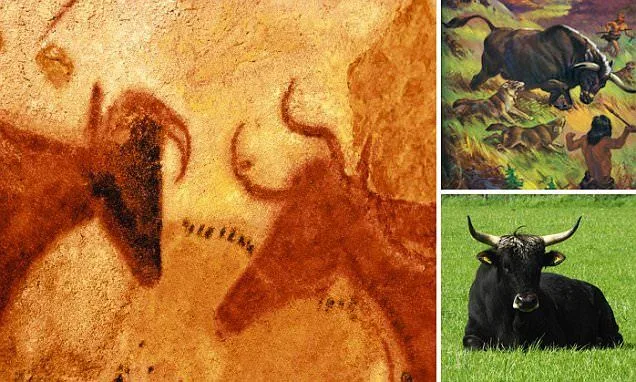
Image source: Web (Bing) / lifeboat.com (Web image (fair-use with source credit))
The Atlas bear tells a different story. This North African bear, sometimes called the Barbary bear, was the only bear species native to Africa. Roman records describe it being used in gladiatorial combat.
Habitat loss and hunting drove it to extinction in the late 19th century. The last confirmed specimen was killed in Morocco around 1870.
Other extinct A-mammals include Andrewsarchus, a giant hoofed predator from the Eocene epoch that looked like a monstrous wolf, and the Japanese otter, which was declared extinct in 2012. The Steller's sea cow, though it doesn't start with A, is often mentioned alongside these losses as another cautionary tale.
The lesson from these extinctions is straightforward. Human activity was the primary driver in each case. When we talk about "critically endangered" A-mammals like the addax or the Amur leopard, we're watching the same pattern unfold.
Conservation success stories exist too. The American bison rebounded from near-extinction, which proves recovery is possible when protection happens early enough.
A-Mammal Heavyweights: Elephants, Bison, and the Big Ones Worth Knowing
Some A-mammals demand attention simply because of their size. These are the species that dominate their ecosystems and capture human imagination.
The African elephant is the largest land animal alive. Adult males weigh between 4,000 and 7,000 kilograms, with the record individuals exceeding 10,000. Their ears are shaped like Africa, a handy visual trick for telling them apart from Asian elephants.
Asian elephants are smaller, reaching only 5,500 kilograms at most, with smaller ears and a rounded back. Only some male Asian elephants grow tusks, whereas both sexes of African elephants do.
The American bison is the heavyweight of North America. A mature bull can weigh 900 kilograms and stand six feet tall at the shoulder. Despite the colloquial name "buffalo," true buffalo species live only in Africa and Asia.
European settlers nearly drove bison extinct in the 1800s, slaughtering millions. Conservation efforts brought the population back from fewer than 1,000 individuals to around 400,000 today.
The Amur leopard is a heavyweight in a different sense. It's not the largest cat, but it holds the title of rarest big cat on Earth. Recent estimates suggest roughly 100 wild individuals survive in the Russian Far East and northeastern China.
Conservation programs have seen the population slowly climb from around 30 in the early 2000s. It's a rare conservation success story for a critically endangered predator.
If you're looking for the strongest pound-for-pound A-mammal, that's the African buffalo. Weighing up to 900 kilograms, it's responsible for more human fatalities in Africa than any other large animal. Hunters call it "the black death" for good reason.
The Deep Cuts: Obscure A-Mammals That Win Trivia Nights
You know the big names. The real fun starts when you dig into the species nobody's heard of. These deep cuts are perfect for trivia, crossword puzzles, or just impressing your friends at a party.
The anoa is a dwarf buffalo that lives only on the Indonesian island of Sulawesi. Standing about three feet tall, it looks like a miniature water buffalo. There are two species, the lowland anoa and the mountain anoa, both considered endangered.
The agouti is a rodent that resembles a large guinea pig with longer legs. It's native to Central and South America, where it plays a critical role in forest ecosystems. Agoutis bury seeds and nuts for later eating, but they forget some of them.
Those forgotten seeds become new trees.
The abert's squirrel is a tassel-eared squirrel found in the pine forests of the southwestern United States and Mexico. Its ear tufts are distinctive, and it feeds almost exclusively on ponderosa pine.
The antilopine kangaroo lives in northern Australia and gets its name from its antelope-like appearance. It's one of the largest kangaroo species, with males reaching 70 kilograms.
The arboreal spiny rat is a South American rodent that spends most of its life in trees. It has stiff, bristly fur that resembles spines. Very little research exists on its behavior in the wild.
For trivia purposes, the aye-aye remains the ultimate weapon. It starts with A, it looks alien, and nobody ever guesses it correctly. The addax is a strong second choice.
Say "screwhorn antelope" and watch your opponents' blank faces.
A-Mammal Fast Facts: Sizes, Speeds, and Lifespans in One Handy Cheat Sheet
If you need numbers quickly, this table covers the essentials.
| Mammal | Weight | Top Speed | Lifespan (Wild) |
|---|---|---|---|
| Aardvark | 40–65 kg | 40 km/h | 10–23 years |
| African Elephant | 4,000–7,000 kg | 40 km/h | 60–70 years |
| African Wild Dog | 20–30 kg | 70 km/h | 10–12 years |
| Alpaca | 45–84 kg | Not applicable | 20 years |
| American Bison | 318–1,000 kg | 55 km/h | 15–20 years |
| Amur Leopard | 32–48 kg | 58 km/h | 10–15 years |
| Arctic Fox | 3–9 kg | 50 km/h | 9–10 years |
| Armadillo | 3.5–6 kg | 0.8 km/h | 12–15 years |
| Asian Elephant | 3,000–5,500 kg | 40 km/h | 50–60 years |
| Aye-Aye | 2–3 kg | Not applicable | 20+ years |
A few context points stand out. The African wild dog is the fastest A-mammal at 70 km/h, though it can only sustain that speed for short bursts. The armadillo is the slowest, but its armored shell compensates for its lack of speed.
The African elephant's lifespan is one of the longest of any land mammal, matching human lifespans in many cases.
The Amur leopard's speed of 58 km/h makes it a formidable ambush predator despite its rarity. The Arctic fox's 50 km/h is impressive for an animal weighing less than 9 kilograms.
How to Actually Remember These Animals: Memory Hooks That Stick
Memorizing unusual animal names gets easier when you attach each one to a visual or a story. Here are the memory hooks that work best.
Aardvark means "earth pig" in Afrikaans. Picture a pig with a long snout digging in the dirt. That image sticks.
Anteater: it eats ants, and it lives in the Americas. Aardvark eats ants too, but it lives in Africa. The geography is the hook.
Aye-aye: say the name out loud. It sounds silly, and the animal looks sillier. The long middle finger is its signature.
If you remember the finger, you remember the animal.
Addax: it's the "screwhorn antelope." Those spiraled horns are the visual anchor. Add "critically endangered" and you have a complete fact.
Alpaca: think of soft fleece and long necks. If you've ever seen a llama, remember that alpacas are smaller and fluffier.
Armadillo: "little armored one" in Spanish. The armor is the hook.
Agouti: call it "the forgetful gardener" because it buries seeds and creates new trees. That role is unique among A-mammals.
Amur Leopard: link it to the Amur River region of Russia. The coldest leopard habitat on Earth.
Aardwolf: despite the name, it eats termites, not wolves. That's the contradiction that makes it memorable.
For a full list of alphabet animals, you can also check our breakdown of other species starting with A or expand into B-named animals and C-named animals for classroom projects and trivia prep.
The School Project Angle: Using A-Mammals for Posters, Reports, and Lessons
A-mammals make excellent school project material because they span every continent and every size range. For a poster, pick one visually distinctive animal per letter. The aye-aye, with its skeletal finger, is the strongest visual hook.
For a report, choose a species with a clear conservation story like the addax or Amur leopard. Teachers can assign each student a different A-mammal and build a classroom menagerie from the combined research.
The easiest grading rubric ties habitat, diet, and conservation status together. Our research shows that students retain the geographic "Africa vs. Americas" distinction better than any other fact.
Common A-Mammal Mistakes on Tests and Quizzes (And How to Avoid Them)
- Listing alligator or anaconda: both are reptiles. Check for fur, milk, or warm-blooded traits.
- Confusing aardvark and anteater: aardvark is African. Anteater is American.
- Forgetting the aye-aye exists: it's a primate, not a mythical creature.
- Saying "ape" instead of a specific species: great apes include gorillas and chimpanzees, neither starts with A as a species name.
- Classifying the armadillo as a reptile: its shell is modified skin, not scales.
Test prep gets easier when you memorize the geographic anchors first, then add the physical traits.
Frequently Asked Questions
Is an anteater a mammal?
Yes. Anteaters have fur, produce milk, and are warm-blooded. They belong to the order Pilosa alongside sloths, and all four species are native to the Americas.
What is the largest mammal that starts with A?
The African elephant is the largest, with adult males reaching 7,000 kilograms. It's also the largest land animal on Earth.
Are there any extinct mammals starting with A?
Yes. The aurochs, Atlas bear, and Andrewsarchus are notable extinct A-mammals. The aurochs died out in 1627, and the Atlas bear by the late 19th century.
Why do people confuse aardvarks and anteaters?
Both have long tubular snouts, sticky tongues, and eat ants and termites. They evolved separately on different continents, which makes it a case of convergent evolution.
What is the rarest A-mammal?
The addax is critically endangered with fewer than 100 wild individuals, though the Amur leopard, at roughly 100 remaining, is right there with it.
Final Verdict: The A-Mammals Worth Your Attention, Ranked
If you remember only five A-mammals, make it these. The African elephant tops the list for sheer scale and intelligence. The aye-aye wins for strangeness and conversation value.
The American bison represents the greatest conservation comeback. The addax deserves attention as a critically endangered species fighting for survival. And the aardvark gets the nod as the animal everyone asks about but nobody can properly classify.