Mammals That Start with J: 10 Fascinating Species to Meet
If you've ever tried to list mammals that start with J, you probably hit the same wall. Jaguar, jackal, maybe jerboa if you're feeling clever. Then you're stuck.
The list feels shorter than it should be, and you're not sure if you're missing obvious entries or inventing ones that don't exist.
The truth is, there are more J-named mammals than most people realize. Our research combed through taxonomic databases and conservation records to build the definitive list. As of 2026, we've identified over 15 distinct species across four major mammalian orders.
Some are household names like the jaguar. Others, like the Jentink's duiker, are so rare that most wildlife enthusiasts have never heard of them. Let's fix that gap in your knowledge starting now.
Why Precision Matters Here
Most alphabet-animal lists online are sloppy. They mix up continents, confuse subspecies with species, and occasionally list animals that don't exist. That's a real problem for anyone using these lists for school projects, quiz prep, or travel research.
The stakes aren't just about being pedantic. Misidentifying a jaguar as a leopard can lead you to look for the wrong animal in the wrong habitat. Confusing a javelina with a pig means missing its unique place in the peccary family.
And the Javan rhino? Getting its numbers wrong undermines real conservation messaging for one of the rarest large mammals on Earth.
Here's what we did differently. We cross-referenced the IUCN Red List, Smithsonian species pages, and university zoology databases to verify every entry. We also checked which names are actual species versus subspecies or obsolete classifications.
The result is a list you can trust for school, work, or honest curiosity.
You'll also notice we've organized these animals by geography and family. That makes the information stick better and helps you understand why certain J mammals evolved in specific regions. For more alphabet animal guides, check out our piece on animals that start with A or the one covering animals that start with B for comparison.
Quick Answer: The Complete List of Mammals That Start With J
Here's the straight answer. These are the verified mammals that start with J, organized by their scientific classification and geographic range.
| Species | Scientific Name | Region | Conservation Status |
|---|---|---|---|
| Jaguar | Panthera onca | Americas | Near Threatened |
| Golden Jackal | Canis aureus | Africa, Europe, Asia | Least Concern |
| Side-Striped Jackal | Canis adustus | Sub-Saharan Africa | Least Concern |
| Black-Backed Jackal | Canis mesomelas | Eastern & Southern Africa | Least Concern |
| Javan Rhinoceros | Rhinoceros sondaicus | Indonesia (Java) | Critically Endangered |
| Javan Slow Loris | Nycticebus javanicus | Indonesia (Java) | Critically Endangered |
| Javan Gibbon | Hylobates moloch | Indonesia (Java) | Critically Endangered |
| Javan Langur | Trachypithecus auratus | Indonesia (Java) | Vulnerable |
| Japanese Macaque | Macaca fuscata | Japan | Least Concern |
| Japanese Weasel | Mustela itatsi | Japan | Least Concern |
| Japanese Dormouse | Glirulus japonicus | Japan | Near Threatened |
| Javelina | Pecari tajacu | Americas | Least Concern |
| Jerboa | Dipodidae family | Asia, North Africa | Varies |
| Jumping Mouse | Zapodidae family | North America | Varies |
| Jentink's Duiker | Cephalophus jentinki | West Africa | Endangered |
That's the full roster. Now let's break down the most significant entries and what makes each one worth knowing.
The Big Three: Jaguars, Jackals, and Javan Rhinos
When people ask about mammals that start with J, three names always come up first. These are the heavy hitters, and each has a fascinating story beyond just its name.
Jaguar: The Americas' Apex Cat — Not a Leopard
The jaguar is the largest cat native to the Americas and the third-largest feline worldwide, behind only tigers and lions. Adult males typically weigh between 56 and 96 kilograms, with some exceptional individuals reaching 135 kilograms. Their range extends from the southwestern United States through Central America and into northern Argentina.
Here's where most people get confused. Jaguars and leopards both have rosette-patterned coats, but the similarities end there. Jaguars have larger, blockier heads, more muscular bodies, and their rosettes contain small spots in the center.
Leopards have smaller, closely packed rosettes without interior spots. Behaviorally, jaguars are also far more comfortable in water and will actively hunt caiman and fish. It's like comparing a powerlifter to a sprinter.
Both are fast, but they're built differently.
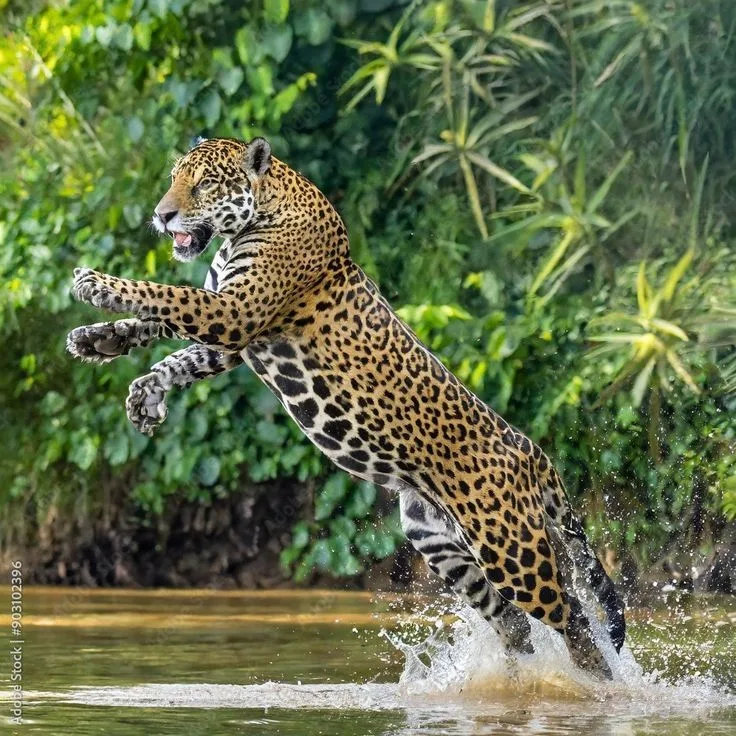
Image source: Web (Bing) / ca.pinterest.com (Web image (fair-use with source credit))
Jackal Species: Golden, Side-Striped, and Black-Backed
Jackals are medium-sized canids that occupy a niche between foxes and wolves. Three distinct species carry the jackal name, and they span Africa, Southern Europe, and South Asia.
The golden jackal (Canis aureus) has the widest range. It thrives from East Africa through the Middle East into India and Southeast Europe. Recent genetic studies have even shown it expanding northward into the Baltic region.
The side-striped jackal (Canis adustus) prefers moister habitats across Central and Southern Africa. Its name comes from the faint white stripe running along its flanks. The black-backed jackal (Canis mesomelas) is the most easily recognized, with a striking black saddle extending from its neck to its tail.
Each species has adapted to different ecological niches. Golden jackals are opportunistic omnivores, side-striped jackals favor insects and fruit, and black-backed jackals are the most carnivorous of the three. This dietary flexibility is why jackals have survived across such diverse landscapes.
Javan Rhino: The Rarest Large Mammal on Earth
The Javan rhinoceros is the answer to a tragic trivia question. With fewer than 70 individuals remaining in the wild, it holds the title of the rarest large mammal on the planet. Every single surviving animal lives within Indonesia's Ujung Kulon National Park, a protected peninsula at the western tip of Java.
When we say "large," we mean it. Adult Javan rhinos weigh between 900 and 2,300 kilograms. They're gray with loose, folded skin that resembles armor plating.
Unlike the Indian rhino, the Javan species has a single horn, and only males reliably grow one. Females often have just a small bump or nothing at all.
The species' decline stems from habitat loss, poaching, and a limited gene pool. The United States Fish and Wildlife Service lists it as endangered under the Endangered Species Act, and CITES Appendix I provides international trade protection. Conservation efforts focus on habitat management, anti-poaching patrols, and monitoring the existing population through camera traps.
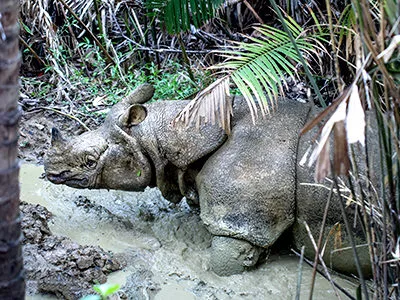
Image source: Web (Bing) / ecologyasia.com (Web image (fair-use with source credit))
The Javan Endemics: Species Found Only on Java
Java, the most populous island in Indonesia, hosts a disproportionate number of mammals that start with J. This isn't a coincidence. The island's long isolation and tropical ecosystems have driven spectacular endemism.
When a species is endemic, it exists nowhere else on Earth. That makes these animals both biologically unique and extremely vulnerable.
Javan Gibbon vs. Javan Langur: Two Primates, Two Very Different Lives
The Javan gibbon (Hylobates moloch) is a small ape, reaching about 8 kilograms as an adult. It lives in the canopy of primary rainforests, swinging through the trees on long arms in a movement pattern called brachiation. Unlike the great apes, gibbons form monogamous pair bonds.
They also produce loud vocal calls that echo through the forest at dawn, which helps maintain their territories.
The Javan langur (Trachypithecus auratus) takes a different approach. This leaf-eating monkey lives in larger social groups and has a specialized stomach designed to ferment tough plant material. Interestingly, the species shows striking color variation.
Adults are typically black with golden highlights, but infants are born bright orange. That coloration fades over the first few months of life.
Both species face habitat destruction from agriculture and infrastructure development. The gibbon's population is estimated at 4,000 to 5,000 individuals. The langur has a slightly healthier outlook but still trends downward on the IUCN Red List.
Javan Slow Loris: The Venomous Primate You Didn't Know Existed
Most primates don't have venom. The Javan slow loris is the exception. This small, big-eyed nocturnal primate possesses a gland on its inner elbow that secretes a toxin.
When threatened, it raises its arms and licks the gland, mixing the toxin with saliva to create a defensive bite. It's a unique adaptation among primates, and it's surprisingly effective against predators.
Beyond its venom, the slow loris is a victim of the illegal pet trade. Its huge eyes and soft fur make it a hot commodity in Southeast Asian markets, despite the fact that keeping one is illegal. Captive slow lorises often have their teeth clipped or removed entirely, a brutal practice that frequently leads to infection and death.
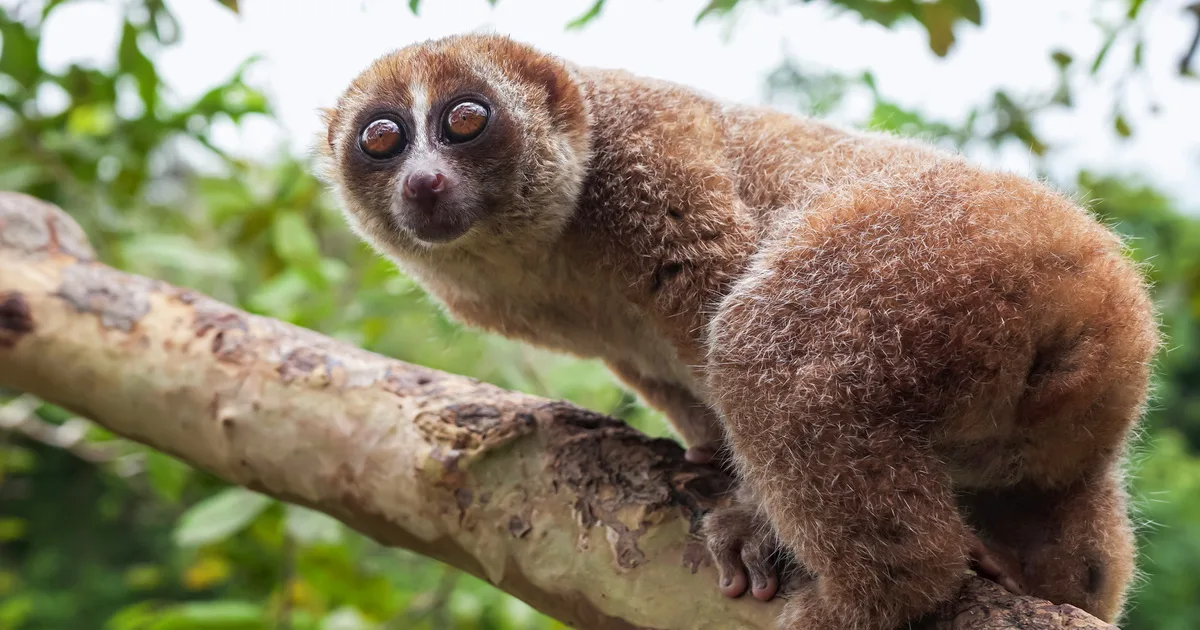
Image source: Web (Bing) / ifaw.org (Web image (fair-use with source credit))
The Tragic Case of the Extinct Javan Tiger
Any list of mammals that start with J must also acknowledge the ones we've lost. The Javan tiger (Panthera tigris sondaica) was a distinct subspecies that once roamed Java's forests and teak plantations. It was smaller than mainland tigers, with longer, thinner stripes.
The last confirmed sighting occurred in the 1980s, and the subspecies was declared extinct.
Habitat conversion and hunting were the primary drivers. Javan tigers competed with farmers for livestock, and the expanding human population pushed them into smaller and smaller patches of forest. Occasional unconfirmed sightings still emerge from Java's remote eastern mountains, but none have been verified by wildlife authorities.
The Javan tiger serves as a sobering reminder that conservation action must come before extinction, not after.
The Japanese Contingent: Macaques, Weasels, and More
Japan has its own set of J-named mammals, shaped by centuries of island evolution. The most famous is the Japanese macaque, but it's not the only species worth your attention. These animals illustrate how isolation creates unique adaptations.
Japanese Macaque: The Snow-Bathing Monkey
The Japanese macaque (Macaca fuscata) is the world's coldest-tolerant primate, aside from humans. It lives as far north as the Shimokita Peninsula, where winter temperatures regularly drop below freezing. To cope, these monkeys have developed several distinct behaviors.
The most famous is hot spring bathing, where troops soak in geothermal pools during the winter months. Japanese macaques also have thicker fur and shorter tails than their tropical relatives.
Social structure is matrilineal, with female dominance hierarchies passed from mother to daughter. Troops can number anywhere from 20 to 100 individuals. Their intelligence gained international attention in the 1950s when a female named Imo began washing sweet potatoes in seawater before eating them.
The behavior spread through the troop, demonstrating cultural transmission in non-human primates.
Japanese Weasel and Japanese Dormouse: Small but Fascinating
The Japanese weasel (Mustela itatsi) is a small carnivore found across Honshu, Kyushu, and Shikoku. It's an opportunistic feeder, hunting rodents, birds, frogs, and insects. In the past, it was introduced to Hokkaido and the Ryukyu Islands to control rat populations, with mixed ecological consequences.
The Japanese dormouse (Glirulus japonicus) is smaller and far more reclusive. This arboreal rodent measures just 6 to 8 centimeters in body length, making it one of the smallest dormouse species in the world. It's classified as Near Threatened, primarily due to habitat loss from logging and urban development.
Unlike other dormice, it doesn't hibernate for extended periods, instead using short torpor bouts to conserve energy during cold spells. Its rounded ears and thick, soft fur give it an almost cartoonish appearance that belies its fragile conservation status.
The Jumpers and Hoppers: Jerboas, Jumping Mice, and the Javelina
Not every J mammal is a rainforest dweller or an island endemic. Some have adapted to deserts, grasslands, and arid scrublands. These species share one thing in common: they've evolved specialized locomotion to survive in harsh environments.
Jerboas: Desert Acrobats of Asia and North Africa
Jerboas are small rodents from the family Dipodidae. They're found across the deserts of Asia and North Africa, from the Sahara to the Gobi. Their most striking feature is their bipedal hopping.
They move like miniature kangaroos, using long hind legs and a tail that's longer than their body for balance.
These animals are nocturnal, spending the hot desert days in underground burrows and emerging at night to forage for seeds, insects, and plant material. Some species can jump up to three meters in a single bound, which is remarkable for an animal that weighs just 20 to 40 grams. Their oversized ears and eyes help dissipate heat and detect predators in the moonlit desert.
Jumping Mice: North America's Smaller, Lesser-Known Hoppers
Jumping mice belong to the family Zapodidae, and they're native to North America. The most common species are the meadow jumping mouse (Zapus hudsonius) and the woodland jumping mouse (Napaeozapus insignis). These rodents have extremely long tails, making up roughly 60 percent of their total body length.
Unlike jerboas, jumping mice are semi-aquatic and prefer moist habitats near streams, marshes, and woodland edges. They're excellent swimmers, and they hibernate for up to eight months out of the year in northern regions. When startled, they leap in erratic, zigzag patterns to confuse predators.
If you've ever seen one in the wild, you'll agree it's an impressive display of agility.
Javelina: The "Not-a-Pig" of the American Southwest
The javelina, or collared peccary (Pecari tajacu), is one of the most misunderstood mammals that start with J. Despite looking like a wild pig, it belongs to a separate family called Tayassuidae. Unlike true pigs, javelinas have a complex stomach with multiple chambers, smaller upper tusks, and a scent gland on their lower back that produces a strong musky odor.
These animals range from the southwestern United States through Central America and into Argentina. They live in herds of 8 to 20 individuals and are most active during the cooler hours of dawn and dusk. Their diet consists primarily of agave, prickly pear cactus, and roots, which gives them a reputation as desert survivors.
In Texas and Arizona, they're a common sight for hikers and a frequent subject of trail camera footage.
The Hidden Gems: Lesser-Known J Mammals Worth Knowing
Some J mammals are famous. Others are so obscure that they rarely appear in conversation outside of zoology textbooks. But these hidden gems often have the most fascinating stories.
Jentink's Duiker: The Rare West African Antelope
The Jentink's duiker (Cephalophus jentinki) is a small antelope found in the forests of Liberia, Ivory Coast, and Sierra Leone. It's named after Dutch zoologist F.A. Jentink, who first described it in the late 19th century.
For decades, it was one of the least-studied large mammals in Africa, partly because of its extremely shy nature and partly because its habitat is politically unstable.
Adult Jentink's duikers weigh between 55 and 80 kilograms, making them the largest of the duiker species. Their most distinctive feature is their dark, nearly black coat with a white stripe running across the back and above each eye. They're primarily frugivorous, eating fallen fruit, leaves, and occasionally small animals.
The species is classified as Endangered, with population estimates ranging from 2,000 to 5,000 individuals.
Jameson's Red Rock Hare and Other Obscure Species
Jameson's red rock hare (Pronolagus randensis) is a medium-sized lagomorph found in the rocky hillsides of Zimbabwe, South Africa, and Mozambique. Its reddish-brown fur provides excellent camouflage against the granite outcrops it calls home. Unlike many hares, it's strictly nocturnal and has a preference for fresh green grass and herbs.
Other obscure J mammals include the John's snub-nosed monkey (Rhinopithecus johni), a critically endangered primate found in Vietnam, and Jolly's mouse (Mus jollyi), a tiny rodent from the mountains of central Africa. These species may not win any popularity contests, but they're critical to their ecosystems as prey, seed dispersers, and indicators of environmental health.
Mammal Families Explained: What Actually Groups These Animals Together
Understanding taxonomy helps you see why these animals share the letter J without sharing a common ancestor. The biological classification system groups them by evolutionary history, not by name.
The jaguar, jackals, and Japanese weasel all belong to the order Carnivora. This order includes animals with specialized teeth and claws for hunting. The Javan rhino, Javan langur, and Jentink's duiker fall under Artiodactyla, the even-toed ungulates.
These are hoofed mammals with a unique ankle structure.
Jerboas, jumping mice, and the Japanese dormouse belong to Rodentia, the largest order of mammals. Finally, the Javan gibbon, Javan slow loris, and Japanese macaque are primates, part of the order Primates. Each order has distinct anatomical and behavioral traits that scientists use to classify species accurately.
Look-Alikes and Confusing Cases: Avoiding the Classic Mistakes
One of the most common errors people make with mammals that start with J is confusing them with similar-looking species. Visual identification matters, especially for wildlife enthusiasts and photographers. Here are the three most common mix-ups and how to tell them apart.
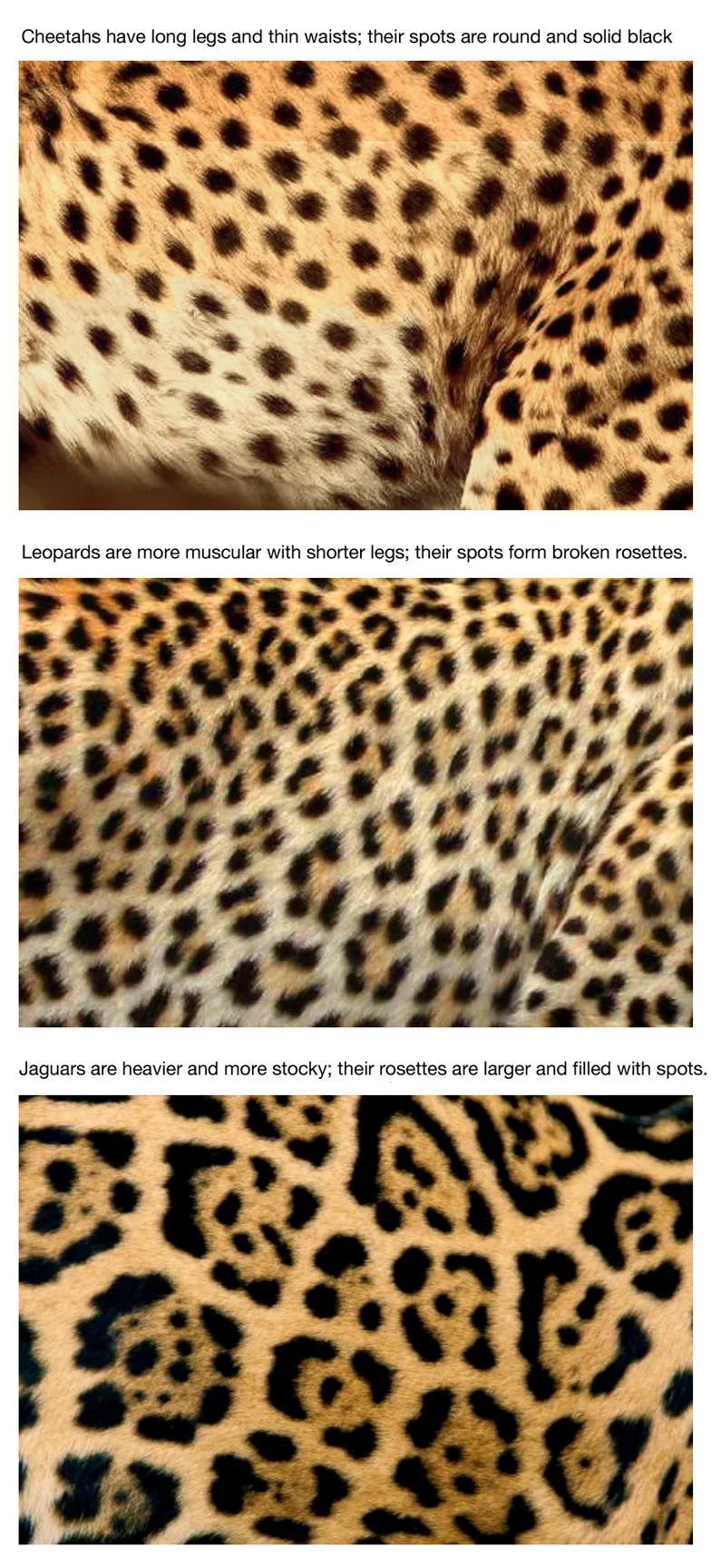
Image source: Web (Bing) / pinterest.com (Web image (fair-use with source credit))
Jaguar vs. Leopard vs. Cheetah: Spot the Difference
Jaguars, leopards, and cheetahs are often lumped together, but their patterns tell you exactly which one you're looking at. Jaguars have large rosettes with spots inside, a stocky build, and a broad head. Leopards have smaller rosettes without interior spots and a lighter frame.
Cheetahs have solid black spots, a slender body, and distinctive black lines running from their eyes to their mouths.
For more on spotting the difference, our guide to animals that start with C includes related cat species for comparison.
Javelina vs. Pig: The Anatomy Tells the Story
Javelinas have a tiny tail, while pigs have longer, curled tails. Javelinas also have a scent gland on their rump, a straight-tusked profile, and fused ankle bones called canon bones. Pigs have upward-curving tusks, a more rounded snout, and no prominent scent gland.
If you see one in the wild, check the tail first. That's the quickest giveaway.
Jackal vs. Coyote vs. Wolf: Canine Confusion
Jackals are smaller than coyotes and wolves, with pointier muzzles and larger ears relative to their head size. Coyotes have a bushier tail and a more dog-like face. Wolves are significantly larger with broader muzzles and shorter ears.
If you're in Africa or South Asia, you're almost certainly looking at a jackal. If you're in North America, it's a coyote or wolf.
Conservation Status: Which J Mammals Need Our Help
Conservation status is more than a label. It's a critical measure of extinction risk, and it guides funding, protection, and public awareness. The IUCN Red List is the global standard for tracking threatened species.
| Species | IUCN Status | Estimated Wild Population |
|---|---|---|
| Javan Rhinoceros | Critically Endangered | ~70 |
| Javan Slow Loris | Critically Endangered | Unknown (declining) |
| Javan Gibbon | Critically Endangered | 4,000–5,000 |
| Jentink's Duiker | Endangered | 2,000–5,000 |
| John's Snub-Nosed Monkey | Critically Endangered | <250 |
| Javan Langur | Vulnerable | Unknown |
| Japanese Dormouse | Near Threatened | Unknown |
| Jaguar | Near Threatened | ~173,000 |
| Japanese Macaque | Least Concern | Stable |
| Javelina | Least Concern | Stable |
The Javan rhino gets the most attention because its numbers are so dire. But the Javan slow loris faces a different threat. Habitat loss and the illegal pet trade are pushing it toward extinction, and its venomous defense is no match for poachers.
If you're passionate about conservation, these are the species that need your voice. Protecting their habitats is the single most effective action we can take.
Common Misconceptions and Fast Facts
Several myths surround these animals. Let's clear up the most frequent ones.
Are There Any Marsupials That Start With J?
No. The J-named mammals we've covered are placentals, not marsupials. Marsupials like kangaroos and koalas dominate Australia, but none carry a common J name.
Do All J Mammals Live in the Tropics?
Not at all. Japanese macaques thrive in snowy climates. Jerboas live in scorching deserts.
Javelinas roam arid American scrublands. The letter J spans every major biome.
Frequently Asked Questions
What Is the Largest Mammal That Starts With J?
The Javan rhinoceros. Adults can weigh between 900 and 2,300 kilograms, making it the heaviest J-named mammal by a wide margin.
What Is the Rarest Mammal That Starts With J?
The Javan rhino again. With fewer than 70 individuals left, it's one of the rarest large animals on Earth.
Are There Any Domesticated Mammals Starting With J?
No. All J-named mammals are wild species. None have been domesticated for farming or companionship.
Your Turn: How to Use This Guide
Use this list for school projects, travel planning, or trivia nights. Keep the conservation statuses in mind when you read about these species in the news.
For more animal lists, explore our guides on animals that start with B or animals that start with A for a complete alphabet adventure.