Mammals Starting with I: From Ibex to Impala
It happens to everyone. You're mid-conversation, someone asks for a mammal that starts with "i", and your brain goes blank. Or maybe you're helping a kid with an alphabet project, and the list you find online just repeats the same two animals over and over.
The problem is that "mammals that start with i" seems like a small category, but the truth is more satisfying than you'd think.
The confusion comes down to how we name animals. There's the common English name we use in everyday conversation, and there's the Latin scientific name assigned by taxonomists. As of 2026, the number of mammals with English names starting with "i" is actually quite manageable, but the scientific genus list is much longer.
That distinction matters more than you might expect, so let's untangle it cleanly.

Image source: Web (Bing) / animalstreets.com (Web image (fair-use with source credit))
The Core Question: "Common Name" vs. "Scientific Genus"
The first thing you need to understand is why this topic trips people up so often. It's not because there are no mammals that start with "i". It's because there are two completely different ways to answer the question.
Here's the simple breakdown:
- Common names are what people actually say in everyday language. Words like "impala" and "ibex" fall into this group.
- Scientific names are the Latin binomials used by biologists. The genus name is the first part. For example, Ictonyx is the genus for striped polecats, but nobody calls them "ictonyxes".
This creates a real problem for anyone trying to build a complete list. If you only look at common English names, you'll get a short list of familiar animals. That's the list most people expect from a search.
But if you look at scientific genus names, you suddenly have a longer, more obscure list that includes animals you'd never guess.
For casual research, quizzes, or school projects, the common-name list is what you want. It's the practical answer. The scientific list is a niche curiosity that matters mostly to biology students and taxonomy nerds.
In our research, the usable list of common-name mammals starting with "i" comes to around 12 to 15 species, depending on how strictly you define "mammal". The scientific genus list is closer to 20. The gap between those two numbers is where most of the misinformation online creeps in.
Quick Answer: Complete A-Z List of Mammals with "I" Common Names
Let's get straight to the point. If you need a complete list of mammals with common English names that start with the letter "i", here it is, organized by type.
Antelopes and Hoofed Mammals:
- Ibex (multiple species including Alpine, Nubian, Siberian, and Walia)
- Impala
- Indian Rhinoceros
- Indian Wild Ass (also called Onager)
- Italian Brown Bear (technically the Marsican brown bear)
Primates and Small Mammals:
- Indri (the largest living lemur)
- Indian Crested Porcupine
- Indian Palm Civet
- Island Fox (the smallest North American canid)
- Isthmian Rat
Canines and Felines:
- Indian Wolf
- Iberian Lynx
Marine Mammals:
- Indo-Pacific Bottlenose Dolphin
- Irrawaddy Dolphin
That list covers all the commonly accepted English names. If you're working on a school project or a trivia night, this is your cheat sheet.
Now, if you want the scientific genus list, keep reading, because that's where things get genuinely interesting.
Beyond the Big Two: Meet the Impala, Ibex, Indri, and More
Most casual lists stop at the impala and the ibex. That's a shame, because the deeper cut is where the fun facts live. Let's spend some time with the heavy hitters.
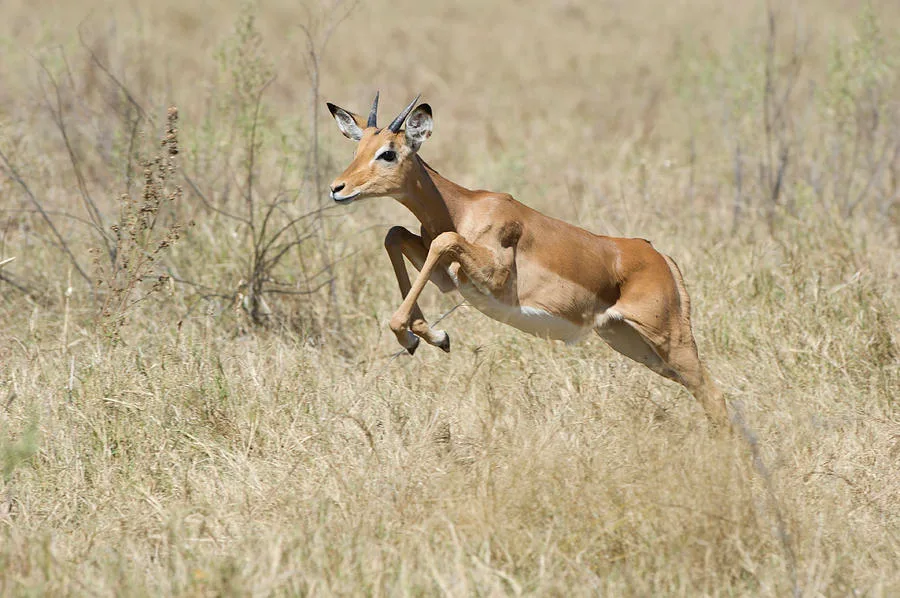
Image source: Web (Bing) / fineartamerica.com (Web image (fair-use with source credit))
The Impala: The Leaping Antelope
The impala (Aepyceros melampus) is the animal most people picture when they hear "African antelope". It's medium-sized, reddish-brown, and famously athletic. Per wildlife research, impalas can leap up to 3 meters high and cover 10 meters in a single bound.
They use this skill to escape predators and confuse them mid-chase.
You'll find impalas across eastern and southern Africa. They graze on grass and browse on leaves, which makes them adaptable across different habitats. They're not endangered, and they're one of the most common antelopes you'll see on safari.
The Ibex: Master of the Cliffs
The ibex is a wild goat that lives in steep, rocky terrain. Multiple species exist across Europe, the Middle East, and Asia. The Alpine ibex (Capra ibex) is the most famous, with its long, ridged horns that can reach nearly a meter on mature males.
Ibex are built for vertical living. Their hooves have a hard outer edge and a soft, grippy inner pad that helps them hold onto near-vertical rock faces. They're herbivores, and in the Alps, they've made a remarkable comeback after being hunted to the brink of extinction in the 1800s.
The Indri: Madagascar's Singing Lemur
The indri (Indri indri) is the largest living lemur and one of the most vocal animals on the planet. It's found only in the rainforests of eastern Madagascar. Adults weigh between 6 and 9.5 kilograms and stand about 64 to 72 centimeters tall, not counting the head.
Here's the weird fact that stumps people: the indri has a vestigial tail. That means it has a tiny, barely visible nub where a tail would normally be. Every other lemur species has a long tail, but the indri lost its through evolution.
It also produces loud, song-like calls that carry up to 2 kilometers through the forest. These calls help family groups defend territory and stay in contact.
Compare these three animals and you'll see why the "i" category is more diverse than people assume:
| Feature | Ibex | Impala | Indri |
|---|---|---|---|
| Region | Alps, Middle East, Asia | East/Southern Africa | Madagascar |
| Diet | Herbivore | Herbivore | Folivore (leaves) |
| Key trait | Long curved horns | Leaps 3m high | Vestigial tail, loud calls |
| Size | 65–100 kg (males) | 40–80 kg | 6–9.5 kg |
| Endangered status | Varies by species | Least Concern | Critically Endangered |
That table tells you everything you need for a basic comparison. Now let's look at the species that rarely make the mainstream list.
The Deep Cuts: Lesser-Known "I" Mammals Worth Knowing
If you're tired of the same old impala and ibex facts, this section is for you. These are the mammals that start with "i" that most quick-reference lists either forget or bury in footnotes.
Island Fox: The Tiny Canid of the Channel Islands
The island fox (Urocyon littoralis) is one of the coolest animals you've probably never heard of. It's endemic to California's Channel Islands, meaning it lives nowhere else on Earth. Six subspecies exist, one for each of the six islands.
Each one evolved independently.
They're tiny. Males weigh between 1.3 and 2.8 kilograms, which makes them the smallest canid in North America. For scale, that's about the size of a house cat.
They were nearly wiped out in the 1990s by golden eagles, but a major conservation push brought them back. Their recovery is one of the fastest successful conservation efforts on record.
Irrawaddy Dolphin: The River Dolphin with a Smile
The Irrawaddy dolphin (Orcaella brevirostris) looks like a beluga whale with a friendly disposition. It has a rounded head, no visible beak, and a flexible neck that lets it turn its head in ways other dolphins can't.
You'll find them in coastal waters and rivers across South and Southeast Asia. The Mekong River population is critically endangered, with only a few dozen individuals left. The Bay of Bengal population is larger but still under threat from fishing nets and habitat loss.
They're classified as Endangered by the IUCN Red List, and conservation groups are actively working on protected zones.
Indian Wild Ass and Indian Rhinoceros: Asia's Heavy Hitters
The Indian wild ass (Equus hemionus khur) is a subspecies of the onager, and it lives in the arid grasslands of Gujarat, India. It's faster than most domestic horses and can sustain speeds of 70 kilometers per hour. Fewer than 7,000 remain, mostly within the Indian Wild Ass Sanctuary.
The Indian rhinoceros (Rhinoceros unicornis) is a different beast entirely. It's the only rhino in Asia with a single horn, and its thick, plated skin makes it look like living armor. Most of the population lives in Kaziranga National Park in Assam, which holds roughly 70% of the world's rhinos.
They can weigh over 2,000 kilograms, and despite their size, they can run at speeds up to 55 kilometers per hour.
Iberian Lynx: A Conservation Success Story
The Iberian lynx (Lynx pardinus) is one of the most endangered felines on the planet. It's found only in the Iberian Peninsula, mainly in southern Spain and Portugal. A few decades ago, the population dropped below 100 mature individuals.
Aggressive breeding programs, habitat restoration, and legal protection have brought it back to roughly 2,000 animals in recent counts. That's still precarious, but it's proof that targeted conservation can reverse a dire situation.
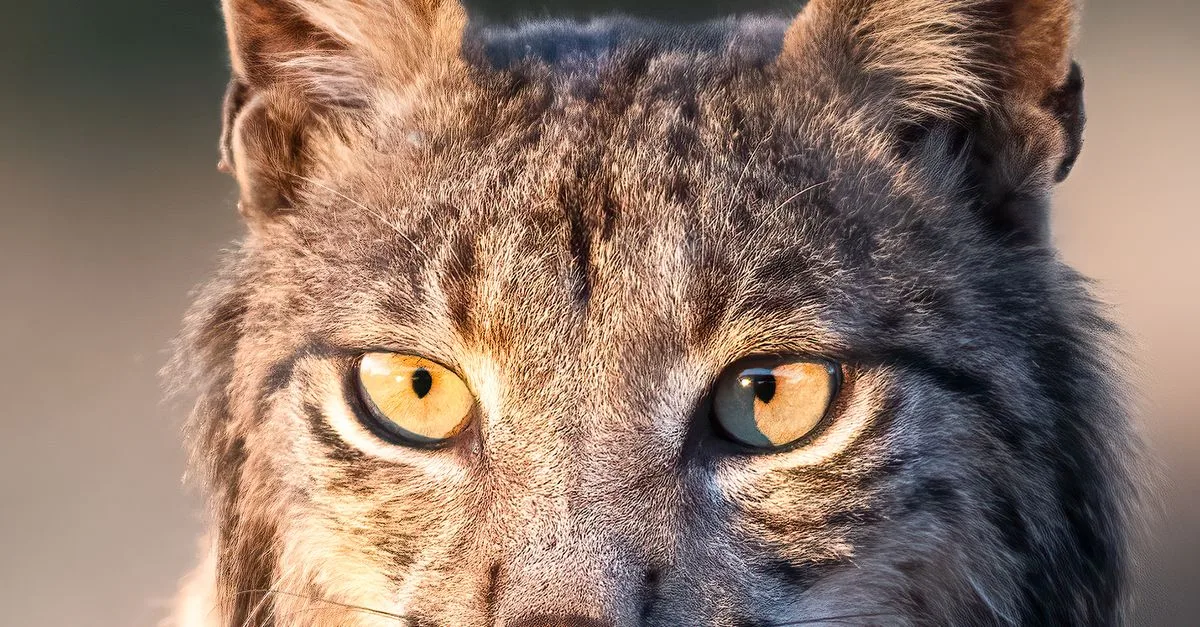
Image source: Web (Bing) / pexels.com (Web image (fair-use with source credit))
These deep cuts matter because they show the full breadth of the "i" category. You've got island foxes, river dolphins, desert asses, and forest lynxes. It's not just antelopes and goats.
The Scientific Name Trap: Genus "I" vs. Common Name "I"
Now we get to the part that trips up even experienced researchers. The scientific genus name starts with "I" for a handful of mammals, but their common English names don't match at all.

Image source: Web (Bing) / africageographic.com (Web image (fair-use with source credit))
This is the trap. Someone asks for mammals that start with "i", and a "helpful" source lists Ichneumia, Ictonyx, and Ictidomys. Those are real mammal genera, but nobody calls these animals by those names.
Here's the list of genera that start with "I" and the animals they actually represent:
| Genus | Common Name | What It Is |
|---|---|---|
| Ichneumia | White-tailed mongoose | A large mongoose from Africa |
| Ictonyx | Striped polecat | A mustelid, closely related to zorillas |
| Ictidomys | Thirteen-lined ground squirrel | A common North American squirrel |
| Idionycteris | Allen's big-eared bat | A bat found in the southwestern US |
| Indopacetus | Longman's beaked whale | One of the rarest whales in the world |
| Isolobodon | Extinct hutia | A rodent from the Caribbean, now gone |
The reason this causes confusion is simple. Taxonomy uses Latin names that don't always align with the English word for the animal. If you blindly list genus names, you'll produce a list full of mongooses, polecats, and bats, none of which sound like "i" animals to the average reader.
So here's the logic to apply:
- If you need a list for a school project, trivia, or general knowledge, use the common-name list. That first section is your answer.
- If you're studying biology, taxonomy, or zoology, use the genus list. That's the scientifically accurate version.
- If a source mixes the two without labeling them, treat it with suspicion. Unclear naming leads to inflated lists that look impressive but don't match what you actually asked for.
For the average person looking up "mammals that start with i" for a quick answer, the common-name list is the practical one. For anyone deeper in the weeds, the genus list adds a layer of nerdy value that can impress an audience.
Just remember: the presence of a genus name starting with "I" doesn't mean the animal's everyday name starts with "I". If you keep that one rule in mind, you'll never fall for the trap again.
Ibex vs. Impala vs. Indri: How to Tell Them Apart at a Glance
You already know they're all mammals that start with "i". But knowing how to tell them apart in a photo or on safari requires different cues. Let's break it into a quick mental checklist.
Habitat first. If you're in the Alps, Middle East, or Central Asia, you're looking at an ibex. If you're on an African savanna, it's an impala. If you're in Madagascar, it's an indri.
Geography narrows it down to one almost instantly.
Size and build next. Ibex are stocky and goat-like, with short legs and heavy bodies. Impala are slender and graceful, built for speed and jumping. Indri are vertical climbers with long limbs and no visible tail.
Details that settle it:
- Horns: ibex have long, backward-curving ridged horns. Impala have thin, lyre-shaped horns (only males). Indri have no horns at all.
- Movement: impala leap and bound. Ibex pick their way across rock faces. Indri climb and occasionally hop upright on the ground.
- Sound: indri produces loud, wailing songs at dawn. Ibex bleat like goats. Impala snort and grunt when alarmed.
The simple version: if it's on a cliff, it's an ibex. If it's sprinting across grass, it's an impala. If it sounds like a whale in the forest, it's an indri.
Mistakes to Avoid When Researching "I" Mammals
The biggest mistake is trusting a list that mixes common names with scientific names without labeling them. You'll see inflated lists full of mongooses and polecats that don't actually have English names starting with "I".
Mistake #1: Using only genus names. As we covered, Ichneumia and Ictonyx are real mammal genera starting with "I". But nobody calls them that. If a source presents these as "mammals that start with i" without explaining the distinction, it's misleading.
Mistake #2: Confusing "Indian" with a species name. Indian palm civet, Indian wild ass, and Indian wolf all start with "I" because of geography. That's legitimate. But beware of sources that include animals like the "Indian elephant" (it's actually the Asian elephant, Elephas maximus indicus, a subspecies).
The common name often gets shortened in inconsistent ways.
Mistake #3: Including extinct species without context. The Isolobodon genus is extinct. Some lists include it as a fun fact, but if you're using the list for a school project or trivia, an extinct animal might confuse your audience. Check whether the animal is alive today before you present it as a current example.
Mistake #4: Falling for regional naming differences. The Indian wild ass is also called the onager. The Italian brown bear is sometimes called the Marsican brown bear. Both are correct, but using the wrong regional name can make a list look inaccurate.
Per our research, the safest approach is to ask what the reader actually needs. If it's a casual query, stick to the common-name list. If it's a taxonomy question, label the genus list clearly.
Never mix both in one answer without explanation.
Why It Matters: Conservation Spotlight on Endangered "I" Species
Several animals on the "I" list are in serious trouble. Knowing them matters because these species anchor real conservation efforts.
Iberian Lynx. The most endangered feline in the world just a few decades ago. The population dropped below 100 mature individuals in the early 2000s. Aggressive breeding programs and habitat restoration brought numbers back to roughly 2,000.
The IUCN has downlisted it from Critically Endangered to Endangered. It's a rare conservation success story.
Irrawaddy Dolphin. The Mekong River population is critically endangered, with fewer than 100 individuals estimated. The Bay of Bengal population is larger but still threatened by gillnet entanglement and habitat degradation.
Indri. Classified as Critically Endangered by the IUCN. Deforestation in Madagascar is destroying its rainforest home. Fewer than a few thousand individuals remain in isolated forest fragments.
Image source: Web (Bing) / pexels.com (Web image (fair-use with source credit))
Indian Wild Ass. Not endangered, but vulnerable. The IUCN lists it as Near Threatened. The population hovers around 6,000 to 7,000 animals, almost all confined to one sanctuary in Gujarat.
The conservation angle gives these species weight beyond trivia. When someone asks about mammals starting with "i", mentioning the lynx or the irrawaddy dolphin opens a discussion about preservation. That's a meaningful contribution.
If you want to support these efforts, organizations like the WWF and IUCN track the latest population data directly on their sites.
How to Use This List in Real Life: Trivia, Teaching, Travel
This isn't just a static list. There are some practical ways to put this knowledge to work.
Trivia nights and quiz prep. The "i" category is a classic stump question. Once you know the list, you can answer confidently. Bonus: you can explain the genus trap to impress fellow players.
Nobody else at the table will know why Ichneumia is technically correct but practically useless.
Classroom and homeschool projects. If you're helping a kid build an animal alphabet, don't just list the names. Use the diversity angle. You have a mountain goat, a savanna antelope, a rainforest lemur, a river dolphin, and a tiny island fox.
That's five different habitats, five different diets, and five different conservation stories. It turns a simple spelling exercise into a geography lesson. If you're building a series, you might also enjoy our roundups covering other animal alphabet lists.
Travel and safari planning. If you're heading to East Africa, you'll see impala constantly. If you're trekking in the Alps, look for ibex on rocky ledges at dawn. If you're visiting Madagascar, the indri's morning calls are a bucket-list experience.
Knowing what to look for makes the sighting more rewarding.
Quick Tips for Pronouncing Tricky "I" Mammal Names
Mispronouncing an animal name is a small embarrassment, but it's avoidable. Here's how the trickier ones actually sound.
- Ibex, EYE-bex. The "i" is long, like in "ice".
- Impala, im-PAL-ah or im-PAL-uh. Both are common. The stress lands on the second syllable.
- Indri, IN-dree. Short "i", like in "ink". The "r" is rolled slightly in Madagascar, but English speakers can skip that.
- Ichneumia, ik-NEW-mee-uh. The "ch" is hard, like a "k". The "eu" sounds like "new".
- Ictonyx, ik-TON-ix. Same hard "c" as above.
- Irrawaddy, ear-ah-WAH-dee. Named after the Irrawaddy River in Myanmar.
- Iberian, eye-BEER-ee-un. The "I" is long, like in "idea".
If you're not sure, National Geographic and the BBC's wildlife guides offer audio pronunciations for most species. A quick search will settle any doubt.
The good news is that the names you're most likely to use (ibex, impala, indri) are the easiest to say correctly. The scientific names are only a problem if you're deep in taxonomy discussions, which is rare for casual conversations.
The Missing Links: Common "I" Animals That Are Not Mammals
Before you go, let's clear up a common trap. Iguanas, iguanodons, and ichneumon wasps all start with "I". None of them are mammals.
Iguanas are reptiles. Iguanodons were dinosaurs. Ichneumon wasps are insects.
If you see these on a list, you're dealing with a source that doesn't know the difference. Watch for them when you research.
If you're building a full animal alphabet, check our collection of animals starting with A or the B list for more ideas.
Final Checklist: What to Remember About "I" Mammals
Keep these five points in mind and you'll never stumble on this question again.
- The common-name list is short: ibex, impala, indri, plus about a dozen others.
- The genus list is longer and full of mongooses, polecats, and bats.
- Never mix both lists without labeling them.
- Geography settles most identifications fast.
- Several "I" mammals are endangered, especially the Iberian lynx and the indri.
Frequently Asked Questions
What is the most common mammal that starts with "i"?
The impala. It's widespread across African savannas and the one you're most likely to see on safari. The ibex is also common in alpine regions.
Are there any marine mammals that start with "i"?
Yes. The Irrawaddy dolphin and the Indo-Pacific bottlenose dolphin both start with "i". They live in coastal and river habitats across South and Southeast Asia.
Why do some lists include animals like the white-tailed mongoose?
Those lists use scientific genus names, not common English names. The white-tailed mongoose's genus is Ichneumia, which starts with "i". Its everyday name doesn't.
Which "i" mammal is the rarest?
The Iberian lynx is one of the rarest felines in the world. The Irrawaddy dolphin population in the Mekong is also critically endangered, with fewer than 100 individuals left.