Sea Animals That Start with G: Giant Squid, Goblin Shark
You've probably tried looking up "sea animals that start with g" before, and got a list that feels like a dictionary threw up. Garfish. Grouper.
Goby. That's it, maybe with a grainy photo and a two-sentence description. This guide is different.
We're going to dig into the real creatures behind the names, the ones you actually need to know about, whether you're a scuba diver, a beachcomber, or just someone who loves the ocean.
For context, the Goliath grouper can weigh over 800 pounds and live for nearly 40 years, making it one of the largest bony fish in the Atlantic. Meanwhile, a green sea turtle's lifespan can stretch to 80 years, which means a turtle hatched when the internet was new could still be swimming today. So let's start with the ones you can actually see on a weekend trip to the shore.
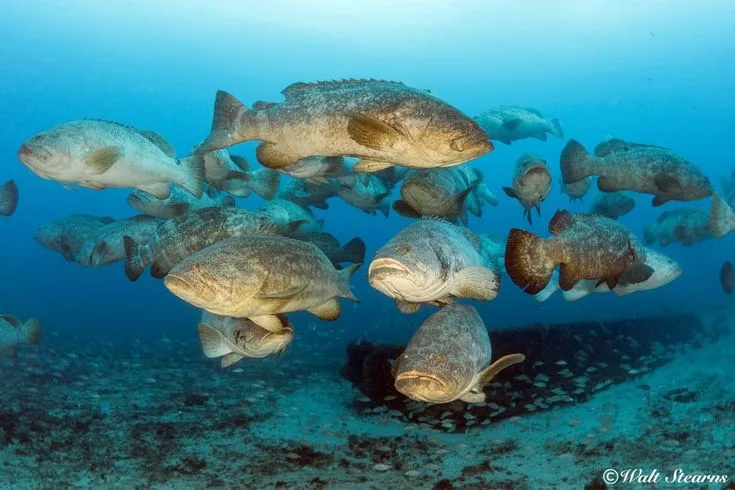
Image source: Web (Bing) / pinterest.com (Web image (fair-use with source credit))
Why This List Is Different (and Why You're Here)
Most alphabet animal lists are written for toddlers. They give you a name, a picture, and maybe a fun fact, then move on. That's not useful when you're trying to identify something you saw while snorkeling.
We've built this guide around the creatures you might realistically encounter, plus a few deep-sea oddities that are far too interesting to skip.
The species you'll find here cover three main zones: coastal shallows, coral reefs, and the open ocean. Within each zone, we've picked animals that represent something unique about how marine life adapts. The grunion, for example, spawns on beaches in the middle of the night.
The ghost shark has been around for 300 million years. These aren't just random names; they're evolutionary success stories.
If you're working through the whole alphabet, you might also enjoy our deep dives on other letter-based guides for a broader view of animal names. But for the letter G, you're in the right place. Let's get into the specific species.
The Coastal Crew: G-Animals You Can Spot From Shore
The Grunion: The Beach-Spawning Fish
Grunion are small silver fish that do something almost no other marine species does: they come completely out of the water to lay eggs. From March through August, thousands of them wash up on Southern California beaches during high tides. They ride a wave, flip onto the sand, and dig their tails in to deposit eggs.
The whole spectacle lasts about 30 minutes, right after the full moon and new moon.
The peak spawning windows coincide with the highest tides of the year. The California Department of Fish and Wildlife tracks these runs, and you can check their grunion run schedule to plan a viewing. Remember, a fishing license is required to catch them by hand, and there are strict seasonal closures.
If you just want to watch, you don't need a permit, but you do need a flashlight and patience. The eggs incubate in the sand for about ten days, then hatch when the next high tide washes over them.
The Green Sea Turtle: The Seagrass Grazer
The green sea turtle gets its name from the greenish fat beneath its shell, not the shell itself, which is usually brown or olive. These turtles are the only herbivorous sea turtles, spending their days cropping seagrass beds in shallow tropical waters. You'll find them in Hawaii, Florida, and the Gulf of Mexico, where they can live for up to 80 years.
A full-grown adult can weigh over 400 pounds and reach four feet in length. When snorkeling, you'll often see them surfacing for air every five minutes or so. It's tempting to get close, but NOAA regulations recommend keeping at least 10 feet of distance.
They're an endangered species, so disturbing them is both unethical and illegal.
The Garfish: The Needle-Snouted Hunter
Garfish are long, pencil-thin fish with needle-like snouts packed with sharp teeth. They're fast, they're surface-feeders, and they're often mistaken for needlefish or the freshwater alligator gar. The difference?
Garfish are a distinct family that lives primarily in saltwater, while needlefish are a separate family altogether.
You'll spot them cruising just below the surface, hunting small baitfish in harbors and calm bays. They're fun to watch because they occasionally leap out of the water, sometimes landing on boat decks by accident. They're not dangerous to humans, but their teeth are sharp enough to cause a nasty cut if you're careless handling one.
Reef Residents: The Colorful and the Camouflaged
The Goliath Grouper: The Apex Reef Predator
The Goliath grouper is a massive, slow-moving fish that looks like a boulder with fins. They were nearly fished to extinction in the 1980s, but a complete fishing ban has helped populations rebound in Florida and the Caribbean. These fish can grow up to 800 pounds and eight feet long, making them the largest grouper species in the Atlantic.
Divers love them because they're curious and often approach humans, hanging in the water like giant puppies. They stay in one spot for years, sometimes decades, using the same wreck or reef as their territory. As of 2026, you can still see an aggregation of them at places like Palm Beach County's artificial reefs, which is one of the easiest spots in the world to observe them.
The Goatfish: The Whiskered Bottom-Feeder
Goatfish look like the ocean's version of an old man with a beard, thanks to the two "barbels" (sensory whiskers) hanging from their chins. They use these barbels to probe the sandy seabed for small crustaceans and worms. When they're not feeding, they tuck the barbels flat against their body, which makes them harder to identify.
These fish are masters of color change. A yellow goatfish can shift to red, orange, or even black depending on its mood and surroundings. Reef divers frequently see them in small schools, working the sand in synchronized rows.
They're also a popular food fish in tropical markets, though the smaller ones are best left alone.
The Gobies: The Tiny Reef Architects
Gobies are the smallest members of this list, with many species barely reaching an inch long. They're also one of the most diverse, with over 2,000 species worldwide. They're the janitors of the reef, constantly feeding on algae and detritus that would otherwise smother coral.
Here's the fascinating part: some gobies live symbiotically with pistol shrimp. The shrimp digs a burrow, and the goby stands guard at the entrance. When danger approaches, the goby flicks its tail to signal the shrimp, which is blind, to retreat.
The goby gets a home, and the shrimp gets a lookout. It's one of the ocean's weirdest partnerships.
The Giant Clam: The Animal That Grows Its Own Food
Giant clams are the heavyweights of the invertebrate world, and the largest species can reach four feet across and weigh over 500 pounds. Despite their size, they're not filter-feeders like most clams. Instead, they grow symbiotic algae in their tissues, which produce sugars through photosynthesis.
The clam provides the algae with shelter and nutrients; the algae feeds the clam.
Look into the mantle of a giant clam, and you'll see vivid blues, greens, and golds. Those colors come from the clam's own pigment cells, which protect the algae from strong sunlight. Giant clams are a common sight on Indo-Pacific reefs, and they can live for over a century.
Open Water Giants: The Ones That Make Headlines
The Great White Shark: Beyond the Fear
You already know the great white shark, so let's skip the "Jaws" angle. Here's what research actually shows: they're not mindless killers, they're intelligent hunters that communicate with each other and learn hunting techniques from observation. A fully grown female can reach 20 feet and weigh over 5,000 pounds, but their diet consists mainly of seals, sea lions, and fish.
The real risk is when we enter their territory, not when they enter ours. Shark attacks are incredibly rare, with an average of about 70 unprovoked bites per year worldwide, according to the International Shark Attack File. For comparison, you're more likely to be struck by lightning.
If you're diving with great whites, the key is to keep a respectful distance and avoid chumming.
The Gray Whale: The 12,000-Mile Commuter
Gray whales are the ocean's long-distance champions. Every year, they migrate from their feeding grounds in the Bering Sea to the warm lagoons of Baja California, a round trip of roughly 10,000 to 12,000 miles. That's the longest migration of any mammal on Earth.
These whales are unique because they're bottom-feeders, straining mud from the seabed for amphipods and tube worms. They're also famously friendly. In the lagoons of San Ignacio and Magdalena Bay, mother whales will approach small boats with their calves, allowing curious tourists to touch them.
The whale-watching season peaks from January through March, and the experience is genuinely unforgettable.
The Giant Pacific Octopus: The Smartest Escape Artist
The mantle is the baggy part of an octopus, and in the giant Pacific octopus, that mantle can reach 16 inches long. Total arm span? Up to 14 feet, with a body weight pushing 110 pounds.
That makes them the largest octopus species in the world.
What really sets them apart is intelligence. They can solve puzzles, open jars, and squeeze through any opening larger than their beak. Aquariums tell stories of animals that learned to unscrew tank lids or slip through a drain pipe to raid the tank next door.
In the wild, they're solitary hunters that change color and skin texture to blend with rocks, coral, or sandy bottoms.
Deep Sea Oddities: The Weird and the Rare
The Goblin Shark: The Pink, Protrusible-Jawed Alien
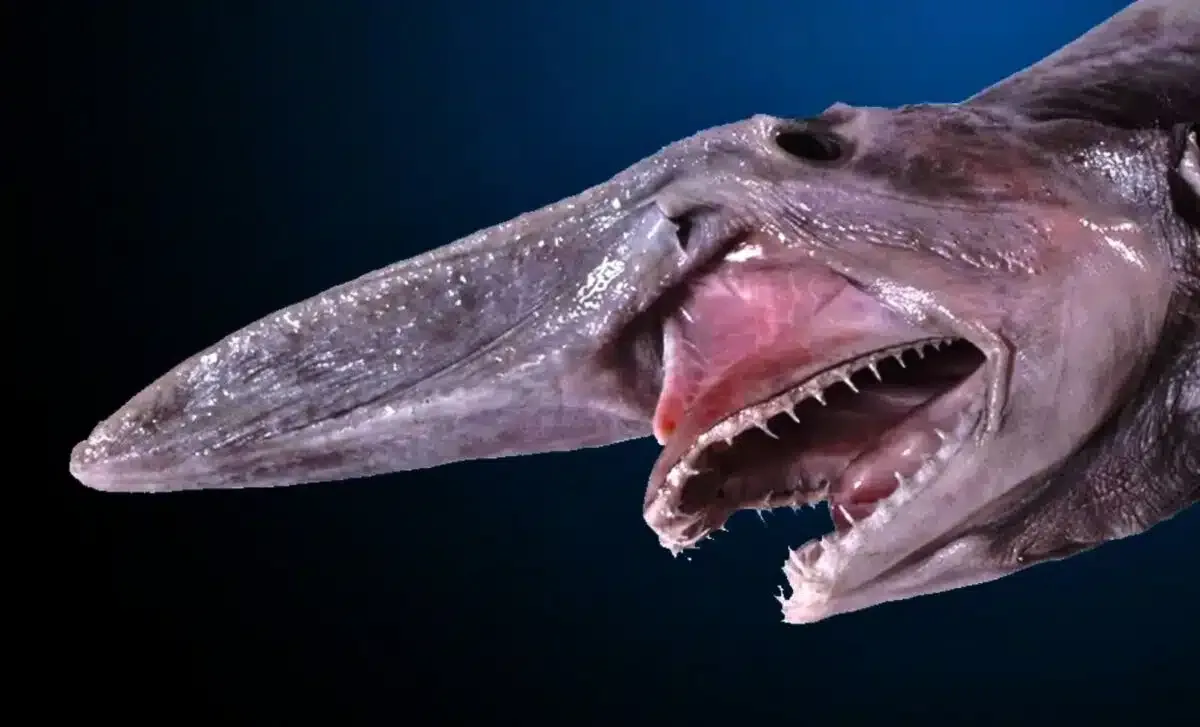
Image source: Web (Bing) / dailygalaxy.com (Web image (fair-use with source credit))
The goblin shark looks like something that escaped a horror movie, and honestly, it kind of did. It's a deep-sea species that lives at depths of 270 to 960 meters, so almost nobody sees it in the wild. It gets its name from its long, flattened snout, which is loaded with sensory organs called ampullae of Lorenzini.
Those organs detect the electrical fields of prey hiding in the dark.
The truly wild part is the jaw. The goblin shark's jaw is not fused to its skull, so it can launch forward like a slingshot to snatch prey. When the jaw extends, the shark's mouth protrudes nearly to the tip of its snout.
The whole strike takes a fraction of a second. It's pinkish-grey because its skin is transparent enough to show blood vessels underneath.
The Ghost Shark: Not Actually a Shark
Ghost sharks, also called chimaeras, are the most misleadingly named animals on this list. They're not sharks at all. They belong to a separate branch of the cartilaginous fish family, one that split from sharks around 400 million years ago.
They're the oldest lineage of jawed vertebrates still alive today.
Unlike sharks, they have smooth skin, no visible scales, and only one gill opening on each side instead of the typical five to seven. They also have a retractable sexual organ on their forehead, which scientists believe helps them mate in the dark depths they call home. They're found on deep continental slopes worldwide, usually between 200 and 2,600 meters down.
You're unlikely to see one, but museum specimens and fishing bycatch occasionally bring them to the surface.
The Glass Squid: The Nearly Invisible Cephalopod
Glass squid are named for their transparent bodies, which make them nearly invisible in the dim waters of the mid-ocean. Their internal organs, including the digestive gland and eyes, are visible through their skin. Some species use bioluminescent organs to match the light coming from above, erasing their silhouette entirely.
It's a trick called counter-illumination, and it makes them extremely difficult for predators to spot.
They're small, typically measuring between 10 and 30 centimeters long, and they live in the open ocean rather than near the seafloor. They're also much more common than you'd think, forming a significant part of the diet for sperm whales and deep-diving dolphins. They're rarely photographed because they're fragile and hard to find, but when ROVs do capture them, it's always a treat.