Ultimate Guide to Reptiles That Start With U
There's something satisfying about a creature pulling off the rarest trick in the alphabet: showing up under the letter U. If you've searched for reptiles that start with U, you probably expected a short list and a quick exit. Instead, you found a surprisingly rich group that includes desert lizards, camouflaged geckos, and a few species you have likely never heard of.
The good news is that most of them are easier to tell apart than you might think. Once you know which physical features actually matter, the whole group clicks into place. As of 2026, herpetologists recognize about 10 distinct genera of reptiles that start with U.
We've narrowed them down to the eight you're most likely to encounter in the wild, in the pet trade, or in someone's photo collection. Let's walk through them.
Quick Answer
Eight reptile genera start with U. Uromastyx and Uroplatus are the most well-known. Uta and Urosaurus are common North American lizards.
Uromacer, Ungaliophis, Urocotyledon, and Uracentron round out the list. Most people asking about this topic are trying to identify a species they've spotted. Visual cues like tail shape and scale patterns separate them quickly.
Why Visual Identification Matters for "U" Reptiles
Try describing a reptile by name alone and watch the conversation fall flat. "I saw a Uromastyx today" means nothing to most people. "I saw a chunky lizard with a thick, spiky tail basking in the Moroccan sun" paints the picture instantly.
That's the whole game with this particular group. Nearly every U-name shares its starting letter with at least one look-alike, and telling them apart comes down to what you see, not what you call them.
This is also where most online guides fail you. They list species names, throw in a distribution map, and call it a day. But names don't help you at the moment of truth: when a lizard darts across a rock and you have two seconds to register what it was.
The physical features do.
So we're building this guide the way a field biologist would approach it. You'll learn the four visual checkpoints that separate every U-reptile from its cousins. Then we'll apply them to each species one by one.
By the end, you'll be able to look at a photo, or a live lizard, and make a confident call.
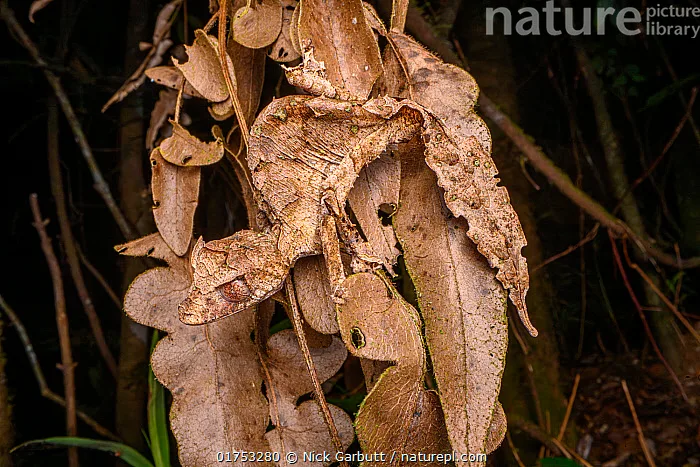
Image source: Bing (Web (fair-use with source credit))
The Complete List: 8 Reptiles That Start with "U"
Here they are, the full roster. We've included the scientific name and a one-line summary so you know what each one is before we dig into the details.
| Genus | Common Name | Quick Profile |
|---|---|---|
| Uromastyx | Spiny-tailed lizard | Chunky, herbivorous desert lizard from North Africa and the Middle East |
| Uroplatus | Leaf-tailed gecko | Madagascar's camouflage master with a flattened, leaf-like tail |
| Uta | Side-blotched lizard | Small North American desert lizard with a telltale dark patch |
| Urosaurus | Tree lizard | Slim, climbing lizard often confused with Uta |
| Uromacer | Vine snake | Slender, arboreal snake from Hispaniola |
| Ungaliophis | Dwarf boa | Small, secretive boa from Central America |
| Urocotyledon | Seychelles gecko | Tiny, rare gecko found on African islands and mainland |
| Uracentron | Rough-tailed lizard | Amazonian species with a spiky, armored appearance |
Three of these eight are genuinely common. Uromastyx shows up in pet stores across the United States and Europe. Uta and Urosaurus are everywhere in the American Southwest.
The other five are the kind of species you'd need a plane ticket and a good guide to see in person.
Visual ID 101: The Four Features That Separate Them
Every U-reptile can be identified using the same four checkpoints. Once you internalize them, you'll stop relying on fuzzy memory and start reading the animal in front of you.
Shape and build. Is the body flat and wide, or slim and elongated? Uromastyx looks like a pancake with legs. Uroplatus looks like a dead leaf with eyes.
Uta and Urosaurus are slender and quick. Body shape alone eliminates half the group immediately.
Tail structure. The tail is the single most reliable feature for U-reptiles. Uromastyx has a thick, blunt tail covered in spiny rings. Uroplatus has a flattened, leaf-shaped tail that mimics foliage.
Most other species have round, tapering tails. If you only remember one thing from this guide, make it the tail.
Scale texture. Run your eyes over the scales, even if you can't touch the animal. Urosaurus has an enlarged row of keeled scales running down its back. Uta has smaller, smoother scales all over.
The difference is visible in clear photos and even through binoculars at close range.

Image source: Web (Bing) / californiaherps.com (Web image (fair-use with source credit))
Color and markings. Look for specific patterns, not general color. A dark blotch behind the front leg means Uta. Bold bands across the back point toward many Uromastyx species.
Cryptic, mottled coloring that blends into tree bark screams Uroplatus.
Now here's a small catch worth knowing. Umuperija, a rare skink from New Guinea, technically belongs on this list but is nearly impossible to encounter in the wild or in collections. We've left it off the main table because you'll never need to identify it in practice.
Still, if you're playing trivia, it's a fun name to drop.
The Uta vs. Urosaurus Mix-Up: A Classic ID Trap
You're hiking in Arizona. A small lizard scrambles up a boulder and freezes. Your brain says "side-blotched lizard," but you hesitate.
Was the blotch actually there? Did the tail look banded? This exact confusion happens constantly, and it's understandable.
Uta and Urosaurus share overlapping ranges, similar body sizes, and almost identical behavior. They're both small, diurnal, insect-eating lizards that dart across rocks and tree trunks.
But the differences are clear once you know where to look.
The side blotch. Uta stansburiana, the common side-blotched lizard, has a small dark patch just behind its front leg. It's usually visible even in quick glances. Urosaurus lacks this marking almost entirely.
That single feature settles the argument in most cases.
The dorsal scales. Flip your attention to the back. Urosaurus, particularly the tree lizard Urosaurus ornatus, has a raised ridge of enlarged scales running down the center of its back. Uta's back scales are more uniform and flat.
In good lighting, the ridge on a Urosaurus is obvious. It looks almost like a soft spine.
Habitat preference. Uta prefers open ground and low shrubs. Urosaurus climbs higher, favoring tree trunks and rock faces. So a lizard spotted three feet up a pine tree is more likely a Urosaurus.
One darting across gravel is more likely a Uta.

Image source: Bing (Web (fair-use with source credit))
There's also a third lizard that crashes this party. Sceloporus, the spiny lizard genus, shares the same territory and similar coloring. You'll rarely confuse it with a Uta because of the heavily keeled scales, but beginners often lump all three together.
If the scales look rough or spiny, go with Sceloporus. If the scales look smooth and a blotch sits behind the front leg, go with Uta.
Uromastyx: Spotting the Spiny Desert Lizard
This is the heavyweight of the U-reptiles, both in popularity and in build. Uromastyx, commonly called the spiny-tailed lizard, is a stocky, ground-dwelling herbivore that thrives across the deserts of North Africa and the Middle East. It looks like something out of a dinosaur drama.
A thick body, a blunt tail wrapped in rings of spikes, and a head that seems too small for the rest of its frame.
In the pet trade, you'll most often encounter Uromastyx geyri, the Saharan spiny-tailed lizard, and Uromastyx ornata, the ornate spiny-tailed lizard. Both are smaller than the massive Egyptian Uromastyx, which can push 18 inches and requires truly serious housing.
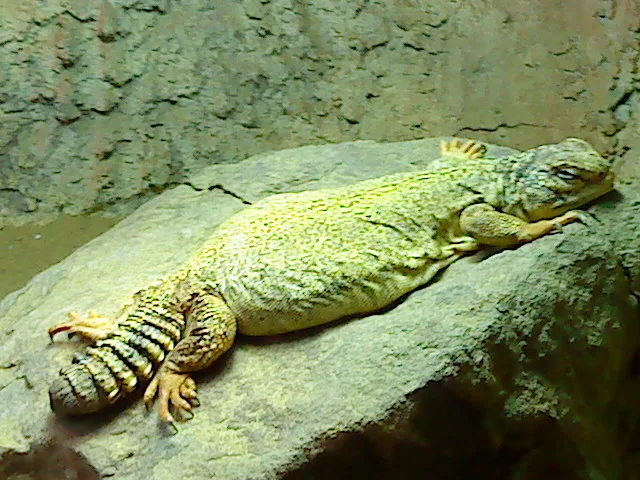
Image source: Wikimedia Commons / Luke Fitch (CC BY-SA)
Let's give you the identification checklist for any wild or captive Uromastyx.
The tail. It's the defining hallmark. The tail is short, thick, and covered in whorls of spiny scales. It looks almost like a medieval mace.
No other U-reptile has anything like it.
The posture. Diurnal and cold-blooded, Uromastyx spends its mornings flattened against sun-warmed rock. The body appears wide and pressed down. When disturbed, it retreats into a burrow or wedges itself into a crevice, using its spiny tail as a plug to block the entrance.
Coloration. This varies wildly by species. U. geyri ranges from bright orange to red to yellow. U. ornata shows bold dark bands across a lighter background.
Uromastyx aegyptia is a drab brownish-gray. Color helps you identify species, but the body shape and tail confirm the genus every time.
Keep in mind that a Uromastyx is not a beginner lizard. Their enclosure needs a basking spot between 110 and 120 degrees Fahrenheit and very low humidity. They are also strict herbivores as adults.
A steady diet of insects actually harms them over time. So if you're considering one as a pet, budget for the right heat setup first.
Uroplatus: The Camouflage Champions of Madagascar
If Uromastyx is the heavyweight, Uroplatus is the magician. These leaf-tailed geckos live only in Madagascar, and they've evolved to disappear in plain sight. Their flattened bodies, fringed edges, and mottled coloring make them look exactly like dead leaves hanging from branches.
The most famous species is Uroplatus phantasticus, the satanic leaf-tailed gecko. It's tiny, topping out around 3 inches, with a tail that looks like a chewed-up leaf. Then there's Uroplatus sikorae, the mossy leaf-tailed gecko, which carries lichen-like patterns across its back.
Both are nocturnal, clinging to branches by day and hunting insects by night.
Spotting one in the wild takes patience. Your eyes sweep past them because your brain filters out "dead leaf." The trick is to look for the shape, not the color. A leaf hangs at an angle.
A gecko's body follows the branch line. If something looks slightly off, look closer.
In the pet trade, Uroplatus command a serious price. They also come with serious CITES restrictions, since Madagascar tightly manages export permits for protected species. Check the official CITES listing before considering one.
Most hobbyists who succeed keep them in heavily planted, cool, humid enclosures that mimic their cloud forest home.
Under-the-Radar "U" Reptiles: Uromacer, Ungaliophis, and More
The eight-genus list includes a few species you won't see at a pet store. Uromacer is a slender vine snake from Hispaniola, the island shared by Haiti and the Dominican Republic. It's arboreal, incredibly fast, and nearly invisible among branches.
Field biologists spot it by its elongated snout and bright green or brown coloring.
Ungaliophis, the dwarf boa, is the opposite. It's a small, secretive snake from Central America that spends most of its life under leaf litter and rotting logs. It's sometimes called the bromeliad boa because it hides inside the water-filled bases of bromeliad plants.
Rediscovery of some species happened only in recent decades.
Urocotyledon geckos are tiny, rare, and mostly found in the Seychelles and parts of mainland Africa. Uracentron, the rough-tailed lizard, lives in the Amazon canopy. It has spiny, armored scales that make it look like a miniature dinosaur.
If you're building a full alphabet checklist, these obscure species matter. They're the difference between a list that ends at five and one that's genuinely complete. And if you enjoyed working through the alphabet this way, you'll find the same fun in our U mammals list.
At-a-Glance Visual Comparison Table
Here's the whole group in one table. Use it as a quick reference when you're trying to settle an argument or identify a photo.
| Genus | Best Visual Cue | Primary Habitat | Active Time |
|---|---|---|---|
| Uromastyx | Thick, spiky tail | North Africa, Middle East | Day |
| Uroplatus | Leaf-shaped tail | Madagascar | Night |
| Uta | Dark side blotch | North American deserts | Day |
| Urosaurus | Keeled back ridge | North American scrub | Day |
| Uromacer | Slender, pointed snout | Hispaniola | Day |
| Ungaliophis | Small, plain scales | Central America | Night |
| Urocotyledon | Tiny size, soft skin | Seychelles, Africa | Night |
| Uracentron | Spiny armored scales | Amazon canopy | Day |
The quickest shortcut: check the tail first. Spiky tail means Uromastyx. Leaf tail means Uroplatus.
Everything else has a standard rounded tail, so you move to scale texture and markings next.
Common Mistake: Confusing Uromastyx with Bearded Dragons
This mix-up happens more than any other in the U-reptile world. Both are chunky, desert-dwelling lizards that bask on rocks. Both have loose, textured skin.
Both are popular in the pet trade. But they're not close relatives, and the differences matter for care and identification.
The tail settles it instantly. A bearded dragon (genus Pogona) has a long, tapering tail that's smooth and round. A Uromastyx has a short, blunt tail ringed with spiny scales.
There's no overlap between the two. If the tail has spikes, it's a Uromastyx.
The head shape differs too. Bearded dragons have a wide, triangular head with a prominent beard flap under the chin. Uromastyx have a smaller, rounder head that tucks into a thick neck.
And the diet is completely different. Bearded dragons need insects as juveniles and adults. Uromastyx are essentially herbivores once they pass the hatchling stage.
If you're deciding between the two as pets, know what you're signing up for. Uromastyx need a basking spot between 110 and 120 degrees Fahrenheit, which means a serious heat lamp setup. Bearded dragons run slightly cooler but still need strong UVB.
Our reptile guides starting with D cover dragons and dwarf geckos in more depth.
Field Guide Tips: What to Look For Before You Photograph
Taking a photo is the best way to identify a reptile later, but only if you capture the right details. A blurry shot of a lizard's back won't help you. Neither will a close-up of its face.
The identifying features are often on the tail and the sides.
First, get the full body in frame. Back up if you have to. The tail needs to be visible because that's your primary clue.
Second, wait for the animal to sit still. Most U-reptiles freeze when they notice you, which gives you a few seconds. Third, shoot from the side, not from above.
The side profile shows the side blotch, the scale ridge, and the body shape all at once.
If you're photographing a Uroplatus, resist the urge to touch it. These geckos drop their tails under stress, and a regrown tail never looks the same. Keep your distance and use a zoom lens.
For a broader field reference, the California Herps site has excellent species photos and range maps for Uta and Urosaurus. It's a trustworthy resource maintained by experienced field herpetologists.
Quick Facts at a Glance: Size, Range, and Lifespan
| Species | Adult Size | Native Range | Captive Lifespan |
|---|---|---|---|
| Uromastyx geyri | 10-14 inches | North Africa | 15-25 years |
| Uroplatus phantasticus | 3-4 inches | Madagascar | 5-10 years |
| Uta stansburiana | 1.5-2.5 inches (SVL) | Western US, Mexico | 3-6 years |
| Urosaurus ornatus | 2-3 inches (SVL) | Southwest US | 4-7 years |
The size range tells you a lot about husbandry. A 3-inch gecko needs a fraction of the space a 14-inch Uromastyx demands. Research species-specific care before you commit to any enclosure setup.
Which "U" Reptiles Actually Make Good Pets?
Uromastyx and Uroplatus are the only two U-genera with a real presence in the pet trade. Uromastyx geyri is the more practical choice for most keepers. It's diurnal, handles well, and lives decades with proper heat and UVB.
Uroplatus appeal to advanced hobbyists who love microhabitats. They're delicate, stress easily, and need precise humidity control. They're also display animals, not handleable pets.
If you're new to reptiles, start with a Uromastyx or look at other beginner-friendly reptiles.
Uta and Urosaurus are best left in the wild. Most states restrict collecting native species, and they rarely thrive in captivity. The obscure genera like Ungaliophis and Urocotyledon are almost never bred commercially.
Frequently Asked Questions
How many reptiles that start with U exist?
Eight recognized genera exist, plus the rare Umperija skink from New Guinea. Most people will ever encounter only three of them: Uromastyx, Uta, and Urosaurus.
Is Uromastyx the same as a bearded dragon?
No. They look similar at a glance but differ completely. Uromastyx have spiky, blunt tails and are mostly herbivorous.
Bearded dragons have long, smooth tails and need insects in their diet.
Are Uroplatus geckos good for beginners?
No. They need cool, humid enclosures and are extremely sensitive to stress. Their CITES-protected status also complicates legal ownership.
Experienced keepers only.
Can I keep a wild Uta lizard as a pet?
Generally no. Many states prohibit collecting native reptiles. Even where legal, wild Uta rarely adapt to captivity.
Observing them outdoors is far more rewarding.
What is the rarest reptile starting with U?
Uroplatus phantasticus gets the attention, but Ungaliophis and Urocotyledon are far rarer in collections. Umperija is the trivia answer. It's a skink so obscure that few herpetologists have seen one live.
Your Final Visual ID Checklist
This recap is your takeaway tool. Use it when you're flipping through photos or watching a lizard warm up on a sunlit rock.
Look at the tail first. Spiny and blunt means Uromastyx. Leaf-shaped and flat means Uroplatus. Anything else moves you to the next step.
Check the scales. A raised ridge down the back points to Urosaurus. Flat, smooth scales with a dark armpit blotch points to Uta.
Consider the habitat. Deserts of North Africa favor Uromastyx. Madagascar's forests favor Uroplatus. North American scrubland means Uta or Urosaurus.
Rule out the decoys. Sceloporus looks similar but has rough, keeled scales. Bearded dragons have smooth, tapering tails. Keep those comparisons in a mental drawer for quick reference.
With these four checks, you'll confidently name any U-reptile you encounter. And you'll have the field skills to back it up when someone questions your call.