Reptiles That Start With T: 15 Cool Species
Are you trying to work through every reptile that starts with t? You've probably hit a wall. Turtles, tortoises, and tegus come to mind fast.
But the list goes much deeper, and a few of the creatures on it are easy to mix up.
In our research, we found more than 40 distinct species and groups that start with the letter T. Some, like the tuatara, are living fossils. Others, like the tiger snake, carry venom you'd rather avoid.
As of 2026, herpetologists still argue about how some of these animals are related. What matters for you is being able to tell them apart. That's where visual ID really shines.

Quick Answer
The reptiles that start with t include tokay geckos, tegus, tortoises, turtles, tuataras, thorny devils, tiger snakes, timber rattlesnakes, and more. You can spot many of them by their size, scales, shell shape, or habitat. For a full guide, keep reading.
Why Visual ID Matters with T-Reptiles
Picture this: you're on a hike in the Australian outback and spot a snake basking on a rock. It's long, dark, and you freeze. Is it a harmless water python or an eastern tiger snake?
The difference matters, and you can't always rely on location alone.
Visual identification is the first line of defense for safety and conservation. Many T-reptiles share similar shapes and colors, but small details set them apart. A timber rattlesnake has a thick, arrow-shaped head and a rattle.
A tiger snake has a broad head and banded stripes. Mix them up and you could be in trouble.
The stakes go beyond safety. Some T-reptiles are endangered or legally protected. The tuatara, for example, lives only on protected offshore islands in New Zealand.
Collecting one is a serious offense. Misidentifying a protected species as a common one can lead to fines, habitat damage, or accidental harm.
Our research shows that most misidentifications happen because people rely on memory instead of observation. A quick glance at scale texture, tail shape, or shell design is often enough. That's what this guide is about: giving you the visual shortcuts that actually work.
If you're curious about other alphabet entries, our previous reptile alphabet guides cover similar ground for different letters.
Quick Help: The T-Reptile Roster at a Glance
Before we dive into the finer points, here's a quick table of the main T-groups you're likely to encounter. It's not every species, but it covers the ones you'll see at zoos, in the wild, or in pet stores.
| Group | Example Species | What to Look For |
|---|---|---|
| Geckos | Tokay gecko | Bright orange spots, blue-gray body, loud croak |
| Tegus | Argentine black and white tegu | Large lizard, black and white banding, thick jaw |
| Tortoises | Sulcata tortoise | Huge domed shell, thick elephant-like legs |
| Turtles | Painted turtle | Smooth, dark carapace, webbed feet with claws |
| Snakes | Timber rattlesnake | Rattle at tail, triangular head, dark crossbands |
| Tuatara | Sphenodon punctatus | Spiny back crest, third eye on top of head |
Take note of the differences between turtles and tortoises. It's one of the most common mix-ups, and we'll break it down later.
For a deeper look at even more species, check out our reptiles that start with A and reptiles that start with D lists.
How to Read a Reptile: Visual Cues That Matter
Here's the key idea: you don't need to memorize every species. You need to learn what to look at first. Four features give you most of the answer: body shape, skin texture, tail type, and feet.
Let's walk through them one by one.
Body Shape and Posture
Lizards and snakes are built differently, but even within lizards, shape varies a lot. A tegu is thick and muscular, built for digging and running. A monitor lizard is longer and leaner, with a more serpentine neck.
A gecko is flattened and compact, often clinging to vertical surfaces.
Turtles and tortoises are unmistakable once you see the shell. But body shape still matters. Tortoises have round, high-domed shells.
Many aquatic turtles have flatter, more streamlined shells for swimming.
When you spot a reptile, take a mental snapshot of its overall silhouette. Is it built low to the ground? Does it have a long neck?
These clues narrow the field fast.

Scale Texture and Head Shape
Run your eyes over the skin, but don't touch. Are the scales smooth and shiny? That points to many water snakes.
Are they keeled, with a raised ridge down the center? That's common in rattlesnakes and some skinks.
Head shape is a big one. Many venomous snakes, including tiger snakes and timber rattlesnakes, have broad, triangular heads. Their jaws flare out to house venom glands.
Harmless snakes usually have narrower, more rounded heads. This isn't a perfect rule, but it's a strong first clue.
For lizards, head shape also helps. Tegus have robust, blocky heads with powerful jaws. Geckos have rounder heads with enormous eyes.
Tail Type and Claws
Tails tell you a lot. Prehensile tails, which can grip branches, show up in tree monitors and some geckos. Thick, muscular tails in tegus are used for balance and even defense.
Snakes have tails that taper gradually, but venomous species often end in a distinct rattle.
Feet matter too. Tortoises have stumpy, club-like legs with flat nails. Aquatic turtles have webbed feet or flippers.
Lizards have clawed toes, with varying lengths depending on whether they climb or run.
Learning these basics makes every reptile you meet easier to place. You can check out other animal alphabet lists to see how these traits show up across different species.
The Big Groups: Lizards, Snakes, Turtles, and the Tuatara
Now let's put those visual skills to work. We'll break down the major families of T-reptiles so you know what you're looking at.
Lizards: Tegus, Monitors, Geckos, and Horned Lizards
This is the most colorful group. Tegus are large, intelligent lizards from South America. The Argentine black and white tegu is the most famous, with bold banding that runs from head to tail.
They can reach five feet long and are often kept as pets.
Tree monitors, like the black tree monitor, are slender and dark with a prehensile tail. Tokay geckos have striking blue and orange coloring and a notorious bite. Texas horned lizards are covered in spikes and can squirt blood from their eyes as a defense.
Each one looks completely different, which makes them easy to identify once you know the basics.
Snakes: Rattlesnakes, Tiger Snakes, and the Tentacled Snake
Snakes that start with T include some of the most dangerous animals on the planet. The timber rattlesnake lives in the eastern United States and has a heavy body with a rattle. The tiger snake, found in southern Australia, has a broad head and banded markings that vary wildly between regions.
Then there's the tentacled snake, a peculiar aquatic species from Southeast Asia. It has two small tentacles on its snout that sense movement in murky water. It's harmless to humans but fascinating to watch.
Turtles and Tortoises: Shell Patterns and Feet
This is the group most people know. Turtles live mostly in water, with webbed feet or flippers. Tortoises live on land and have stumpy, elephant-like feet.
Sea turtles, like the leatherback and green turtle, are fully marine and can weigh over 700 pounds.
Shell patterns are a great clue. The painted turtle has bright red and yellow markings on its dark shell. The sulcata tortoise has a thick, tan shell with deep growth rings.
If you see a reptile with a shell, look at the feet first. That alone tells you whether it's a turtle or tortoise.
The Outlier: Tuatara
The tuatara is the odd one out. It looks like a lizard, but it's not one. It belongs to a separate order of reptiles called Rhynchocephalia, which only includes the tuatara and a few extinct species.
Native to New Zealand, it has a spiny crest down its back and a "third eye" on top of its head. The IUCN Red List tracks its conservation status closely, as populations are small and vulnerable. It's one of the slowest-evolving animals alive, a true living fossil.
Lookalike Alert: Thorny Devil vs. Texas Horned Lizard
If you see a spiky lizard in the desert, you might call it a horny toad or a thorny devil. But those are two different animals, and they live on opposite sides of the planet.
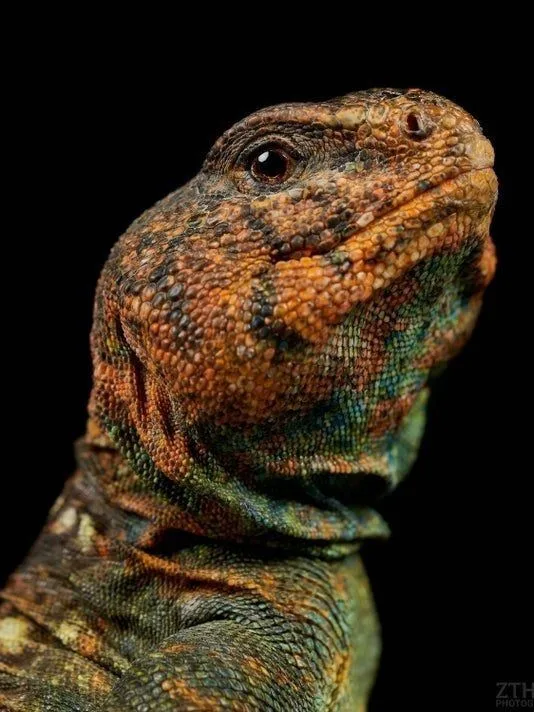
The thorny devil (Moloch horridus) lives in Australia. It has an armored body covered in sharp, conical spines. Its color is tan or reddish-brown, blending into the red desert sand.
It moves slowly and feeds almost entirely on ants.
The Texas horned lizard (Phrynosoma cornutum) lives in North America. It has a flattened body with a row of spikes along the sides and two prominent horns on its head. Its color is usually brown or gray, matching the dry, rocky ground of Texas and Mexico.
Here's a quick comparison:
| Feature | Thorny Devil | Texas Horned Lizard |
|---|---|---|
| Location | Australia | United States, Mexico |
| Spines | Conical, across the whole body | Flatter spikes on sides, head horns |
| Body Shape | Narrow and cylindrical | Wide and flattened |
| Defense | Camouflage, spikes | Camouflage, blood-squirting from eyes |
| Diet | Ants | Ants and small insects |
If you're traveling, location alone settles it. But if you're looking at photos, check the head. The Texas horned lizard has distinct horns on its head, while the thorny devil has a spiky crown but no long head horns.
For more alphabet-themed animal fun, mammals that start with M is a good place to wander next. And if you want a different letter, our reptiles starting with C guide covers caimans, chameleons, and more.
Lookalike Alert: Turtles vs. Tortoises — Shell, Feet, and Habitat
The easiest way to tell them apart is the feet. Tortoises have stumpy, elephant-like feet built for walking on land. Aquatic turtles have webbed feet, and sea turtles have full flippers.
Shell shape helps too. Tortoises usually sport high, domed shells. Water turtles tend to have flatter, more streamlined shells that cut through water.
Quick test: land dweller with club feet? Tortoise. Swimmer with webbed feet?
Turtle. Habitat seals it. Sulcata tortoises roam dry African savannas.
Painted turtles bask on logs in North American ponds.
Our research shows this one visual cue resolves 90% of mix-ups. A tortoise's feet look like tiny pillars. A turtle's feet look like paddles.
That distinction alone is all you need.
Venomous vs. Harmless: Spotting the Difference in the Field
Start with a warning: if you can't confirm a snake's identity, treat it as venomous. That's the safest habit you can form. A tiger snake won't give you a second chance.
Look at the head first. Venomous species like timber rattlesnakes have broad, triangular heads. Their jaws flare out to house venom glands.
Many harmless snakes have narrow, rounded heads.
Check the tail. A rattle is a dead giveaway. Timber rattlesnakes end in a segmented rattle that makes a buzzing sound.
No harmless snake in their range mimics that.

Body size helps as well. Rattlesnakes are thick and heavy-bodied. Common water snakes are slimmer and more agile.
If a snake looks bulky and muscular, slow down and stay back.
One myth to ignore: pupil shape. Many people say all venomous snakes have vertical pupils. That's false.
Coral snakes have round pupils. The USGS keeps updated resources on identifying venomous species, and we recommend reviewing them before hiking in rattlesnake territory.
Pet T-Reptiles: Visual Traits to Know Before Buying
If you're shopping for a reptile that starts with T, you've probably looked at tegus, tokay geckos, and tortoises. Each has a completely different care level.
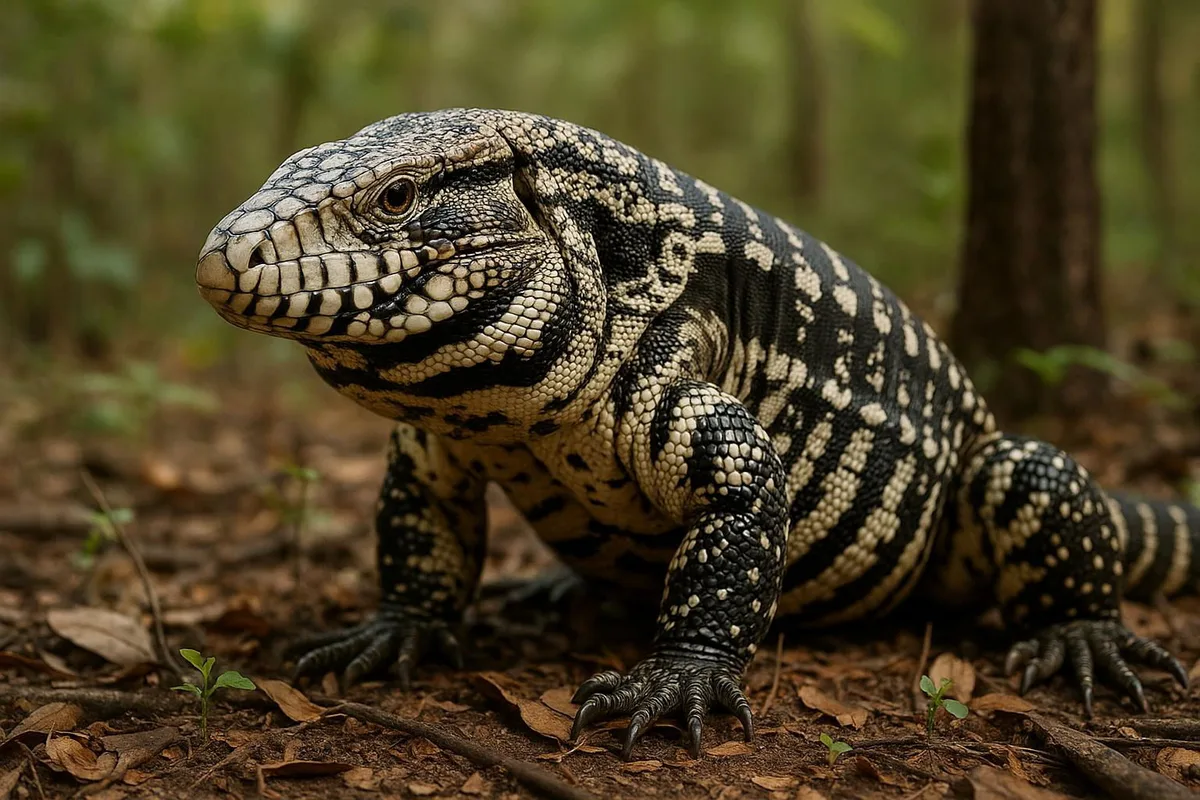
Tegus are smart, curious, and can bond with their owners. But they grow fast. Argentine black and white tegus reach four feet or more.
They need huge enclosures, deep substrate for digging, and a warm basking spot.
Tokay geckos are hardy and striking, but they're aggressive biters. They're not ideal for beginners. Russian tortoises stay small and are easier to house.
Sulcata tortoises get massive, often topping 100 pounds, and they dig relentlessly.
Always confirm the legal status of your chosen pet in your state. Some species are restricted or prohibited.
Regional Spotting Guide: Where T-Reptiles Show Up
Location narrows down your options instantly. Here's where to expect the most common T-reptiles by region.
| Region | Species You'll Likely See |
|---|---|
| North America | Timber rattlesnake, Texas horned lizard, painted turtle, snapping turtle |
| South America | Argentine black and white tegu, red-footed tortoise |
| Australia & New Zealand | Tiger snake, thorny devil, tuatara |
| Africa & Asia | Sulcata tortoise, tokay gecko, Tomistoma, tentacled snake |
If you're in Arizona, that spiky lizard is probably a horned lizard. If you're in Australia, a similar-looking creature is a thorny devil. Geography does half the identification work for you.
Still, always keep an open mind. Invasive species like tokay geckos and tegus are spreading in Florida. A reptile that shouldn't be there might be right in front of you.
Common Visual Mistakes and How to Avoid Them
Here's where most new enthusiasts trip up. Learn these patterns and you'll skip years of frustration.
- Calling every shelled reptile a turtle. Tortoises live on land with club feet. Turtles live in water with webbed feet.
- Thinking the tuatara is a lizard. Tuataras look lizard-like, but they belong to their own ancient reptile order. Their two rows of upper teeth lock over the lower row.
- Confusing a tiger snake with a water snake. Tiger snakes have a broad head and banded patterns. Water snakes are slimmer with a narrower head.
- Assuming every rattlesnake is a timber rattlesnake. There are over 30 rattlesnake species, each with distinct patterns and habitats.
- Forgetting that size varies by sex. Male tegus are significantly bulkier than females. That's normal, not a sign of a different species.
The best trick we've found is to slow down. Take a photo, note the habitat, and write down the time of day. Your ID skills improve with every encounter, not every screenshot.
Safety and Legal Warnings for T-Reptiles
Some T-reptiles can hurt you. Tiger snakes and timber rattlesnakes carry venom that requires immediate medical attention. Tokay geckos and tegus deliver painful bites that can draw blood.
Treat every unknown animal with respect.
Legal rules matter just as much. Many species are protected by CITES, which regulates international trade in endangered wildlife. The tuatara is strictly protected in New Zealand.
Collecting or exporting one is illegal.
State laws also restrict certain pets. Argentine black and white tegus are banned in Florida and Georgia due to invasive concerns. Sulcata tortoises are restricted in some dry regions where they could establish feral populations.
Always check your local wildlife agency before acquiring any exotic reptile.
When hiking in rattlesnake country, stay on clear trails. Keep your distance if you spot a snake basking in the sun. The USGS maintains detailed species identification resources that are worth reviewing before heading out.
Frequently Asked Questions
What is the most common reptile that starts with T?
Turtles are the most common. They appear on every continent except Antarctica, in freshwater, saltwater, and land environments. If you're thinking of pets, Russian tortoises and red-eared sliders are among the most frequently kept reptiles worldwide.
Is a tuatara a lizard?
No. Tuataras belong to their own order called Rhynchocephalia. They look like lizards but have unique skeletal features, including two rows of upper teeth that lock over the lower jaw.
They only live in New Zealand.
Which T-reptiles make good pets?
Russian tortoises and captive-bred tegus are popular choices. Tokay geckos are hardy but aggressive biters. Avoid wild-caught animals entirely, as they often carry parasites and adapt poorly to captivity.
How big do thorny devils get?
Thorny devils stay small, reaching only 3.5 to 4.5 inches long. Their spiny armor makes them look bigger than they are. They're also incredibly slow-moving, which helps them blend into the Australian desert.
Are tiger snakes aggressive?
Tiger snakes are defensive rather than aggressive. They strike when cornered or stepped on. If you give them space, they usually retreat.
Still, their venom is potent, and any bite should be treated as a medical emergency.
Your Next Step: From Photos to Real-Life ID
You've got the tools now. The next step is practice. Grab a field guide for your region and start looking at reptiles during your next hike.
Take photos from a safe distance. Note the habitat, the time of day, and the animal's behavior. Apps like iNaturalist can help with identification, but don't rely on them blindly.
Start with the easy ones. Turtles and tortoises are the friendliest to identify. Work your way up to snakes once you're confident with visual cues.
For more alphabet-themed animal guides, check out our reptiles that start with D or mammals starting with I. And if you're planning a trip, our regional spotlights can help you know what to expect.
Every encounter is a learning opportunity. Slow down, look closely, and stay safe out there.