Fish That Start with Q: Complete List & Interesting Facts
If you've ever tried to name fish that start with Q, you know the struggle. It's not like listing dogs or cats. The alphabet gets thin real fast, and most people can only think of one or two species before drawing a blank.
That's exactly why we put this guide together.
In our research, we found roughly 15 recognized species with common names starting in Q, ranging from colorful reef dwellers to ancient river giants. As of 2026, the list remains short but surprisingly diverse. You'll find saltwater beauties, freshwater oddities, and a few species so rare that even seasoned marine biologists rarely see them.
Let's dig into the full list.
Quick Answer
The complete list of fish that start with Q includes the Queen Angelfish, Queen Triggerfish, Queen Snapper, Queenfish, Queensland Grouper, Queensland Lungfish, Quinnat Salmon, Quillback Rockfish, Quillfish, Quagga Catshark, Quillback Carp, Quoy's Parrotfish, and a few rarer species. Saltwater fish dominate the list. Only a handful live in freshwater.
The Queen Angelfish is the most recognizable name on this list.
Why Visual ID Matters for Q-Named Fish
Here's the thing about fish identification. Photos matter more than words. Many Q-named fish share similar body shapes or color patterns with unrelated species.
A Queen Angelfish looks nothing like a Quillfish, but a Queen Snapper could easily be mistaken for a Red Snapper if you're not paying attention.
When you're identifying fish that start with Q, you're really looking at four key visual cues:
- Body shape: Is it compressed and tall, or long and eel-like?
- Coloration patterns: Stripes, spots, solid colors, or dramatic shifts between juvenile and adult phases.
- Fin structure: Spiny dorsal fins, elongated rays, or distinctive tail shapes.
- Habitat context: Coral reef, open ocean, river bottom, or deep rocky shelf.
The photos in this article show real specimens in their natural environments. That context matters. A fish photographed in an aquarium looks different from one photographed on a reef.
Lighting changes colors, and stress changes patterns.
| Visual Cue | What to Look For | Example Species |
|---|---|---|
| Body Shape | Tall and compressed vs. elongated | Queen Angelfish vs. Quillfish |
| Coloration | Bright blue/yellow vs. muted brown | Queen Triggerfish vs. Quillback Rockfish |
| Fin Structure | Spiny dorsal vs. soft-rayed | Quillback Rockfish vs. Queenfish |
| Habitat | Shallow reef vs. deep water | Queen Angelfish vs. Queen Snapper |
Saltwater Fish That Start With Q
Saltwater species make up the majority of this alphabetical niche. These are the fish you'll find on coral reefs, in the open ocean, and occasionally at your local fish market.
Queen Angelfish
The Queen Angelfish (Holacanthus ciliaris) is the undisputed star of this list. It's one of the most photographed reef fish in the Caribbean and western Atlantic. Adults display brilliant blue and yellow bands with a dark spot on the forehead that looks like a crown.
That's where the name comes from.
These fish grow up to 18 inches long. They need large tanks with plenty of rockwork if kept in captivity. Wild specimens feed primarily on sponges, which makes them challenging to keep in home aquariums.
Most experts recommend them only for advanced hobbyists with established systems.

Image source: Web (Bing) / etsy.com (Web image (fair-use with source credit))
Juvenile Queen Angelfish look completely different from adults. They sport electric blue bodies with vertical yellow bars. For years, scientists thought juveniles were a separate species.
If you're trying to identify one in the wild, look for the crown-like spot on the forehead. No other angelfish in their range has that marking.
Queen Triggerfish
The Queen Triggerfish (Balistes vetula) lives up to its royal name. Found throughout the Caribbean and tropical Atlantic, this species shows off a striking mix of blue, purple, orange, and yellow. The face carries vivid blue and orange stripes that make it instantly recognizable.
These fish reach about 24 inches in length. They're powerful swimmers with strong jaws built for crushing crustaceans. In the aquarium trade, they're considered semi-aggressive.
They'll often rearrange tank decor and may nip at slower tankmates.
Fishing regulations vary by region. In US waters, the Queen Triggerfish has a minimum size limit in some areas. Check local rules before keeping one.
They're also known to carry ciguatera toxin in certain regions, so eating them comes with some risk.

Image source: Bing (Web (fair-use with source credit))
Queen Snapper
The Queen Snapper (Etelis oculatus) is a deep-water species that rarely appears in home aquariums. Instead, it's a commercial and recreational target in the Caribbean and along the southeastern US coast. These fish live at depths between 100 and 450 feet.
They have a distinctive bright red to pinkish body with a deeply forked tail. The eyes are large, an adaptation to dim deep-water conditions. Queen Snapper can reach 39 inches and weigh over 30 pounds.
Their firm, white flesh makes them excellent table fare.
Commercial fisheries target them with vertical lines and electric reels. Recreational anglers often catch them while deep-dropping for groupers. They're managed under federal regulations in US waters, with size limits and seasonal closures in some areas.
Queenfish
Don't confuse the Queenfish (Scomberoides lysan) with the Queen Snapper. This species belongs to the jack family and lives throughout the Indo-Pacific. It has an elongated, silver body with a series of dark spots along the lateral line.
Queenfish are fast, acrobatic predators. They hunt in open water and often chase baitfish near the surface. Anglers love them for their explosive strikes and strong runs on light tackle.
They're also decent eating, though their flesh can be somewhat dry.
These fish typically reach 3 to 4 feet in length. They're common around reefs, drop-offs, and even in shallow lagoons. If you're spearfishing or cast-netting in the tropics, you'll likely encounter one eventually.
Freshwater and Anadromous Fish That Start With Q
Freshwater Q-fish are rarer than their saltwater cousins, but the ones that exist are fascinating. Some are ancient relics. Others are famous game fish.
Queensland Lungfish
The Queensland Lungfish (Neoceratodus forsteri) is a living fossil. This species has existed for over 100 million years, making it one of the oldest vertebrate lineages on Earth. It's native to a handful of river systems in southeast Queensland, Australia.
Unlike other lungfish species, this one can't survive out of water for long periods. It uses its single lung to supplement gill breathing, especially in oxygen-poor conditions. Adults grow up to 5 feet long and weigh as much as 90 pounds.
The Queensland Lungfish is protected under Australian law. It's listed as Vulnerable on the IUCN Red List. Habitat destruction and flow regulation from dams threaten its remaining populations.
You won't find this fish in the aquarium trade, but you can see them in major public aquariums worldwide.
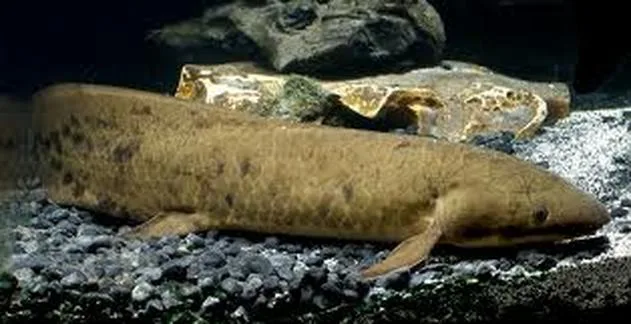
Image source: Bing (Web (fair-use with source credit))
Quinnat Salmon
Quinnat Salmon is another name for the Chinook Salmon (Oncorhynchus tshawytscha). It's the largest Pacific salmon species. Native to the Pacific Northwest, it's been successfully introduced to New Zealand, where the name "Quinnat" is commonly used.
These fish are anadromous. They hatch in freshwater, migrate to the ocean, and return to their natal streams to spawn. Adults can reach 58 inches and weigh over 120 pounds in exceptional cases.
Commercial and recreational fisheries target them heavily.
Quinnat Salmon populations face significant pressure from habitat loss, dams, and climate change. NOAA Fisheries manages several distinct population segments under the Endangered Species Act. If you see one in the wild, you're looking at a species caught between survival and decline.
Quillback Carp
The Quillback Carp (Carpiodes cyprinus) is a freshwater species native to North America. Despite the name, it's not actually a carp. It belongs to the sucker family and lives in slow-moving rivers and lakes across the central and eastern US.
These fish get their name from the long, thin dorsal fin ray that extends beyond the rest of the fin. It looks like a feather sticking out of the water when they swim near the surface. Adults typically reach 12 to 20 inches.
Quillback Carp are not commonly targeted by anglers. Their flesh is bony and considered poor table fare. However, they play an important ecological role by consuming detritus and small invertebrates from river bottoms.
Cold-Water and Deep-Sea Q Fish
The cold-water group includes some of the most interesting and least-known species on this list. If you're diving in the Pacific Northwest or studying deep-sea ecosystems, these are the fish you'll encounter.
Quillback Rockfish
The Quillback Rockfish (Sebastes maliger) lives along the Pacific coast of North America, from Alaska to California. It's a slow-growing, long-lived species. Some individuals live past 90 years.
The name comes from the tall, spiny dorsal fin that runs most of the body length. These fish have a dark brown or black body with lighter mottling. They prefer rocky reefs and kelp forests at depths between 30 and 300 feet.
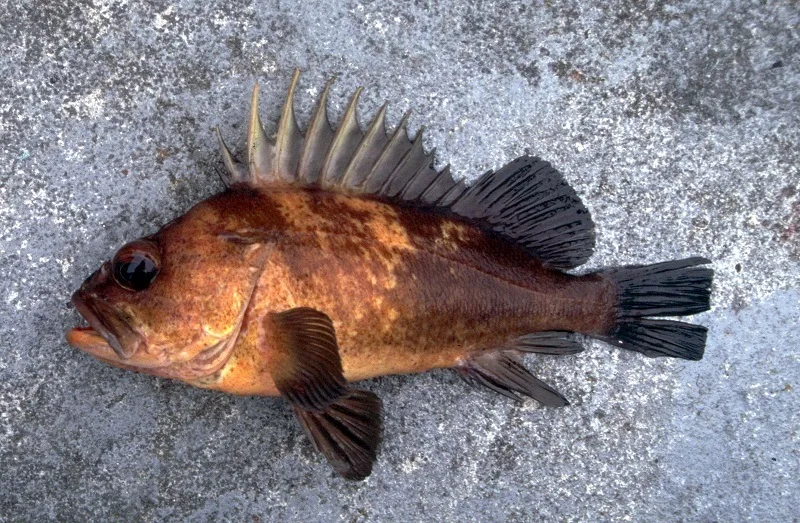
Image source: Bing (Web (fair-use with source credit))
Quillback Rockfish are popular with recreational anglers. Their white, flaky meat is excellent. However, conservation concerns have led to strict regulations.
In some areas, retention is prohibited entirely. Check current rules before planning a fishing trip.
Quillfish
The Quillfish (Ptilichthys goodei) is one of the most obscure species on this list. It's a rare, elongated fish found in the North Pacific Ocean, from the Bering Sea to Oregon. Few people have ever seen one in the wild.
These fish have long, slender bodies that can reach 13 inches. They're almost translucent, with a thin, quill-like appearance. That's where the name comes from.
They live in soft-bottom habitats, often buried in mud or sand.
Scientific knowledge about Quillfish is limited. They're rarely caught in trawl surveys, and their biology remains poorly understood. If you ever identify one, you've found something genuinely special.
Quagga Catshark
The Quagga Catshark (Halaelurus quagga) is a small shark species found in the western Indian Ocean. It gets its name from the distinctive zebra-like stripes that cover its body. These patterns resemble the now-extinct quagga, a zebra subspecies.
These sharks are small, reaching about 18 inches in length. They live on the continental shelf at depths between 100 and 300 feet. Like other catsharks, they're bottom-dwellers that feed on small fish and invertebrates.
The IUCN lists the Quagga Catshark as Near Threatened. Its limited distribution and susceptibility to bottom trawling put it at risk. Very little is known about its population trends or reproductive habits.