Sea Animals That Start with Y: From Yellowfin to Yeti Crab
You're staring at the tank, trying to recall that bright yellow fish's name. Or maybe you're quizzing your kid on sea animals that start with y, and you've got tuna, tang, and… that's it. The ocean is packed with creatures whose names kick off with this letter, and most people only know a few.
Here's the thing: as of 2026, marine biologists have cataloged over 240,000 known marine species, and a surprising number of them proudly wear the letter Y on their names. From reef dwellers you can spot while snorkeling to commercial giants that feed millions, this list goes way deeper than you'd expect. Let's swim through the real roster.
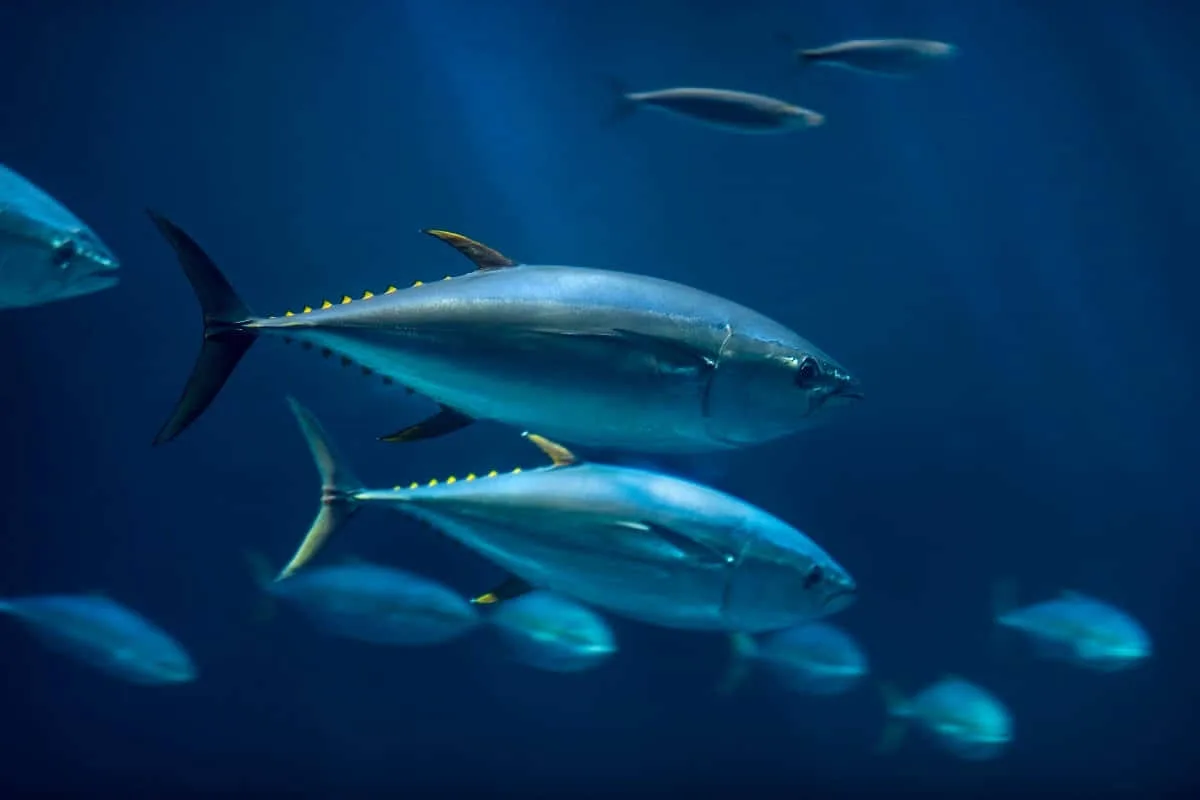
Image source: Bing (Web (fair-use with source credit))
Quick Answer
Sea animals that start with y include the Yellow Tang, Yellowfin Tuna, Yellowtail Snapper, Yellow Boxfish, Yellow Stingray, Yellowhead Jawfish, Yellowedge Grouper, Yelloweye Rockfish, and Yellow Seahorse. The Yellowfin Tuna can reach 400 pounds. The Yellow Tang grows to about 8 inches.
The Yellowhead Jawfish lives in sandy burrows. Most of these species thrive in warm tropical waters.
Visual Identifiers: How to Tell Them Apart
Let's be real: lots of saltwater fish are yellow. That's the first trap. If you're snorkeling in the Caribbean versus the Indo-Pacific, "yellow fish" means completely different species.
You need to look at body shape, fin structure, and exact color patterns, not just the general hue.
Body Shape: The Fastest Clue
The Yellow Tang is shaped like a flat, oval dinner plate with a long pointed snout. It swims with a steady, flapping motion. The Yellow Boxfish, on the other hand, is literally a box.
Its rigid, triangular body moves with a slow, almost comedic wiggle. You can't confuse them if you watch for ten seconds.
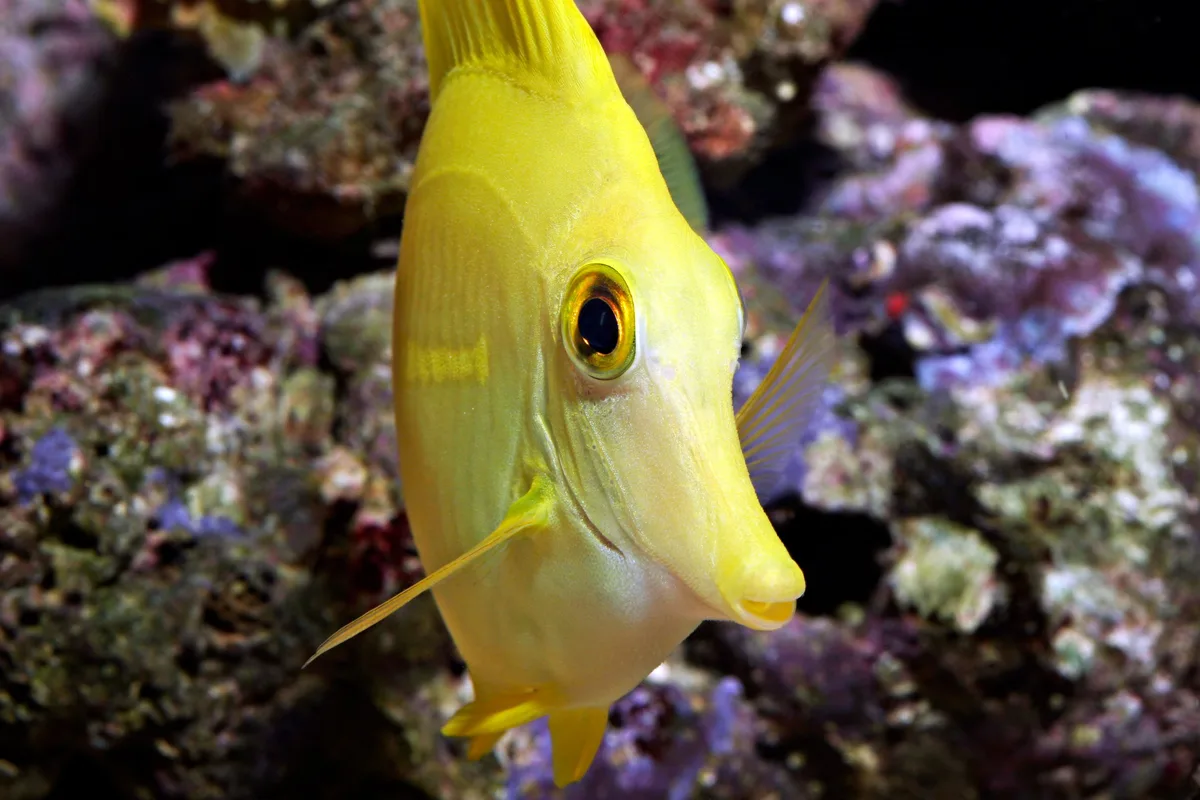
Image source: Web (Bing) / reeflings.com (Web image (fair-use with source credit))
Fin and Tail Markers
Look at the tail fin first. The Yellowfin Tuna has long, sickle-shaped pectoral fins that reach past the second dorsal fin. Its finlets are bright yellow.
The Yellowtail Snapper has a distinctive yellow stripe that runs from its nose to its tail, and its entire tail fin is yellow. The Yellowtail Croaker, often confused with the snapper, has a yellow tail but no lateral stripe.
Color Saturation Matters
A Yellow Tang's color varies depending on the light and time of day. At night, they fade to a dull brownish-yellow with a white lateral stripe. Since they sleep in crevices, you'll rarely see this during daytime dives.
The Yellowhead Jawfish has a completely white body with just a yellow head and upper back, like someone dipped it in paint.
Size as a Identifier
- Yellow Tang: 6-8 inches
- Yellow Boxfish: up to 18 inches
- Yellowtail Snapper: 12-18 inches
- Yellow Stingray: 10-12 inches disc width
- Yellowfin Tuna: 4-7 feet
Big pelagic fish don't hang around reefs, so size is a decent filter once you know the habitat.
The Clever Names That Confuse Everyone
The Yeti Crab is the ultimate trick question. Everyone thinks it belongs on this list. The thing is, "Yeti" starts with Y, sure, but its common name is based on the mythical snowman, not on a "y" descriptor.
The actual genus is Kiwa, which starts with K. So when someone proudly lists the Yeti Crab as a letter Y animal, they're technically wrong. It's a fun trivia trap, and now you know the catch.
Scientific Names vs. Common Names
Here's where it gets murky. The Yellowfin Tuna's scientific name is Thunnus albacares. "Albacares" means "white meat," which makes no sense for a yellow fish.
The Yellow Tang's scientific name is Zebrasoma flavescens, and "flavescens" literally means "becoming yellow." Scientists use these Latin names to avoid the exact confusion we're dealing with right now. Common names change by region. Scientific names don't.
Lookalikes That Aren't Y-Animals
The Yellow Tang is often confused with the Powder Brown Tang, which has a yellow tail but a brown body. The Yellowtail Snapper gets mistaken for the Rainbow Runner, which has yellow stripes but a bullet-shaped body. If you're going by common names alone, you'll misidentify half the fish you see.
Regional Nicknames
Hawaiians call the Yellow Tang lau'ipala, which means "yellow leaf." In the Philippines, it's bakwak. These local names create even more confusion when you're researching online. Stick with the scientific name if you need to be precise about a sighting.
Where They Live: Habitats and Hotspots
Location is the single best filter for identifying sea animals that start with y. You won't find a Yellow Tang in the Caribbean, no matter how hard you look. It's an Indo-Pacific exclusive.
The Yellowtail Snapper, however, is strictly Atlantic, found from North Carolina down to Brazil.
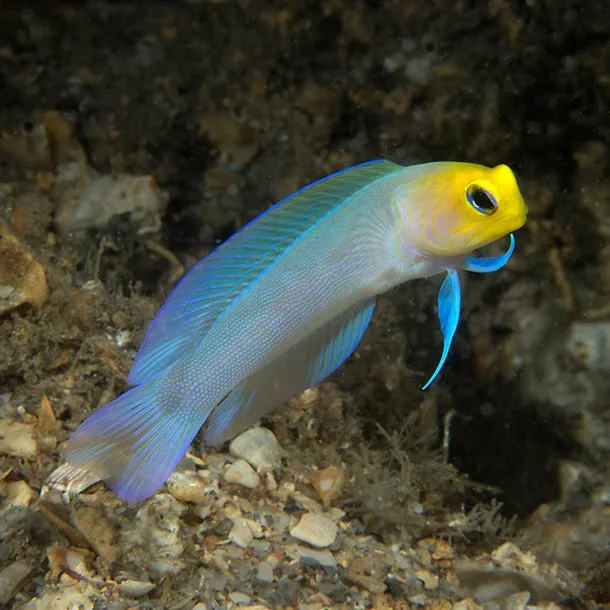
Image source: Web (Bing) / thereefexperience.com (Web image (fair-use with source credit))
Coral Reef Specialists
- Yellow Tang: Hawaii, Japan, the Great Barrier Reef, and the Red Sea
- Yellow Boxfish: Shallow lagoons and coral rubble across the Indo-Pacific
- Yellowhead Jawfish: Sandy patches between coral heads in the Caribbean and Florida
- Yellowbanded Sweetlips: Sheltered reefs in the western Pacific
Pelagic Wanderers
The Yellowfin Tuna is an ocean traveler. It crosses entire oceans, preferring water temperatures between 64°F and 88°F. You'll find them offshore, often in mixed schools with skipjack and bigeye tuna.
The Yellowtail Snapper hangs closer to structure, near drop-offs and ledges in 60 to 120 feet of water.
Sandy Bottom Dwellers
The Yellow Stingray prefers shallow, sandy flats in the tropical Atlantic. It buries itself in the sediment with only its eyes and spiracles visible. The Yellowhead Jawfish does something similar, but it digs a burrow lined with coral rubble and rocks to create a stable cave.
Deep-Water Species
The Yaldwyn's Lanternfish lives down at 650 to 3,300 feet. It's a bioluminescent species that uses light-producing organs to camouflage itself in the mesopelagic zone. You'll never see this one while snorkeling.
It requires deep-sea submersibles or research trawls to observe.
Cold-Water Exception
The Yelloweye Rockfish is a Pacific Northwest species, found from Alaska down to Baja California. It prefers rocky reefs and kelp forests anywhere from 30 to 1,800 feet. It's one of the longest-lived fish on Earth, with some individuals reaching 118 years old.
Staying Power: Lifespan and Growth Patterns
These species have wildly different life strategies. The Yellowfin Tuna grows fast, lives short, and reproduces in massive numbers. The Yelloweye Rockfish grows slowly, lives over a century, and takes decades to reach sexual maturity.
That contrast shapes everything about how we manage their populations.
Fast-Growing Predators
The Yellowfin Tuna reaches maturity at about 3 years old, when it's around 3 feet long. It can live up to 9 years in the wild, though most are caught long before that. They're warm-blooded, which lets them grow faster and swim faster than most fish.
Slow and Steady Rockfish
The Yelloweye Rockfish doesn't reach maturity until it's 15 to 20 years old. That's an incredibly long wait to start reproducing. This makes them extremely vulnerable to overfishing.
As of 2026, the population is still classified as Threatened under the Endangered Species Act, and NOAA Fisheries manages strict catch limits.
The Aquarium Trade Favorites
The Yellow Tang lives 10 to 15 years in a well-maintained aquarium. In the wild, their lifespan is similar, though predation and disease often cut it short. The Yellowhead Jawfish has a shorter lifespan, around 5 to 7 years, which is typical for small burrowing fish.
Growth Rate Comparison
| Species | Time to Maturity | Maximum Lifespan | Maximum Size |
|---|---|---|---|
| Yellowfin Tuna | 3 years | 9 years | 7 feet |
| Yellow Tang | 1-2 years | 15 years | 8 inches |
| Yelloweye Rockfish | 15-20 years | 118 years | 3 feet |
| Yellowtail Snapper | 1-2 years | 10 years | 18 inches |
| Yellow Boxfish | 1 year | 8 years | 18 inches |
Reproduction Strategies
The Yellowfin Tuna spawns year-round in warm tropical waters, releasing millions of eggs at a time. The Yellowhead Jawfish is a mouthbrooder. The male holds fertilized eggs in his mouth for up to two weeks until they hatch.
The Yellow Stingray gives birth to live young, with litters of 3 to 6 pups. When humans talk about fish, they look at lifespan and reproduction to set fishing quotas. That's why the Yelloweye Rockfish has such strict protections compared to the Yellowfin Tuna.
For more on how different species navigate survival challenges, you might enjoy exploring how other animals adapt to their environments in our wildlife guides.