Insects That Start with B: Bees, Beetles, and More
If you've ever paused mid-step because something buzzed, crawled, or fluttered past you and you had zero idea what it was, you're not alone. The world of insects that start with b is surprisingly big, and it includes everything from the butterflies you chase in the garden to the bed bugs you pray you never meet. Knowing what you're looking at isn't just about curiosity, it genuinely matters for your safety, your plants, and your peace of mind.
As of 2026, entomologists have described over one million insect species, and a massive share of the ones you'll actually encounter in daily life start with the letter B. Our research pulls together the most common and important species, the ones you're likely to see in your backyard, your home, or on a hiking trail. We'll give you clear ways to tell them apart, what to do when you find them, and which ones deserve respect rather than fear.

Image source: Web (Bing) / animalfact.com (Web image (fair-use with source credit))
Quick Answer
The most common insects that start with b include butterflies, bees, beetles, bed bugs, blackflies, and boxelder bugs. Butterflies and bees are beneficial pollinators. Beetles are the largest group of insects on Earth.
Bed bugs are indoor pests that bite at night. Blackflies bite near rivers and streams. Boxelder bugs invade homes in autumn.
Bumblebees, blister beetles, and booklice also round out the list.
What Counts as a "B" Insect? (And Common Misconceptions)
Before we dive into the species, let's clear up one thing that trips everyone up. Not everything that crawls or flies and starts with B is technically an insect. Spiders, for example, are arachnids.
They have eight legs, not six, so they don't make the insect cut. Brown recluse spiders get lumped into insect conversations all the time, but they're not true insects.
True insects share a few non-negotiable features. They have six legs, a body split into three parts (head, thorax, abdomen), and usually two antennae. Most have wings as adults.
That's the checklist.
Here's a quick reference table to help you sort common B-creatures:
| Creature | True Insect? | Legs | Key Feature |
|---|---|---|---|
| Butterfly | Yes | 6 | Scaled wings, clubbed antennae |
| Bee | Yes | 6 | Hairy body, pollen baskets |
| Beetle | Yes | 6 | Hard wing covers (elytra) |
| Bed bug | Yes | 6 | Flattened body, reddish brown |
| Brown recluse spider | No | 8 | Violin-shaped mark on back |
| Banana slug | No | 0 | Soft, shell-less mollusk |
The confusion matters because treatment and response differ wildly. You handle a booklouse problem with a dehumidifier, but you handle a bed bug problem with a full-scale extermination. Getting the identification right changes everything.
One more misconception worth busting: "bug" versus "insect." True bugs are a specific order called Hemiptera, which includes boxelder bugs and backswimmers. But in casual conversation, "bug" applies to all insects. For this guide, we're using the loose definition, because that's how people search and talk about them.
Butterflies & Bees: The Backyard Favorites

Let's start with the good guys. Butterflies and bees are the pollinators that keep your garden thriving, and they're also the most recognizable B-insects on the planet. Butterflies belong to the order Lepidoptera, which includes moths.
Bees are part of Hymenoptera, sharing that order with wasps and ants.
Butterflies are easy to spot because of their colorful, symmetrical wings. They're diurnal, meaning they're active during the day, and they rest with their wings held vertically above their bodies. Moths, by contrast, usually rest with wings flat and are mostly nocturnal.
If a butterfly lands near you, don't stress. They don't bite. They're too busy looking for nectar.
Bees are a different story. They can sting, but they're not aggressive unless provoked. Bumblebees, the fuzzy round ones you see bouncing from flower to flower, are some of the most effective pollinators in existence.
Their flight speed clocks in around 54 kilometers per hour, which is genuinely fast for an insect.
Here's what separates bumblebees from their look-alike carpenter bees:
| Trait | Bumblebee | Carpenter Bee |
|---|---|---|
| Abdomen | Hairy, fuzzy | Shiny, hairless |
| Nesting | Ground nests | Burrows in wood |
| Aggression | Mild | Low (males can't sting) |
| Appearance | Round, thick | Longer, slender |
If you see a large bee hovering near wooden eaves or deck railings, it's likely a carpenter bee. They drill perfect circular holes into wood to lay eggs. Not great for your home, but they're also solitary and rarely sting.
The takeaway? Both butterflies and bees deserve a place in your yard. Plant native flowers, skip the broad-spectrum pesticides, and you'll keep them around.
They're doing more work than you realize.
Beetles: The Biggest Group of B-Insects
Beetles are the heavyweights of the insect world. There are more than 350,000 described species globally, which makes them the largest order of animals on Earth. They belong to Coleoptera, and they all share one defining trait: a pair of hardened wing covers called elytra that protect their delicate flying wings underneath.
You'll find beetles just about everywhere. In your garden, on your porch light at night, under logs, and sometimes inside your pantry. The ones that start with B include some famous names, and they split into two camps: helpers and troublemakers.
The beneficial side includes burying beetles. These underrated recyclers find dead animals and bury them underground, which speeds up decomposition and returns nutrients to the soil. The American burying beetle is actually on the federal endangered species list, so if you spot one, you're seeing something rare.
The destructive side features the boll weevil. This small snout beetle historically devastated cotton crops across the southern United States. At its peak, it caused hundreds of millions of dollars in annual losses.
The USDA ran a massive eradication program with pheromone traps and targeted pesticides, and by the 1990s the pest had been eliminated from most U.S. cotton fields.
Bark beetles also fall into the troublemaker category. They bore into conifers and other trees, and they carry fungi that can kill a tree within a season. Forest services track their outbreaks carefully, because a bad year can wipe out thousands of acres.
Here's a quick look at the B-beetles you're most likely to encounter:
- Blister beetles: Sizable, soft-bodied beetles that secrete a chemical called cantharidin when handled, which causes painful blisters.
- Boll weevils: Small, brown, snouted beetles that attack cotton bolls.
- Bark beetles: Tiny, cylindrical beetles that live under tree bark and can kill trees.
- Burying beetles: Black with orange markings, known for burying animal carcasses.
- Booklice: Technically not beetles, but often confused with them. More on these later.
The good news is, most beetles are harmless to humans. They don't bite, they don't sting, and they're mostly just living their lives. Leave them alone and they'll do the same.
The Biters & Stingers: Blackflies, Bed Bugs, Blister Beetles, and Bald-Faced Hornets
Now for the group you actually need to know about, because these are the insects that can ruin your day. They bite, they sting, and in rare cases they cause serious medical issues.
Blackflies are small, humpbacked flies that breed in fast-flowing water. If you've ever gone hiking near a river in the northern U.S. or Canada, you know their bite. They're aggressive, they swarm, and they slice into skin to feed on blood.
The bites itch intensely for days. Unlike mosquitoes, blackflies don't transmit major diseases in North America, but they're a pain that can drive you indoors.
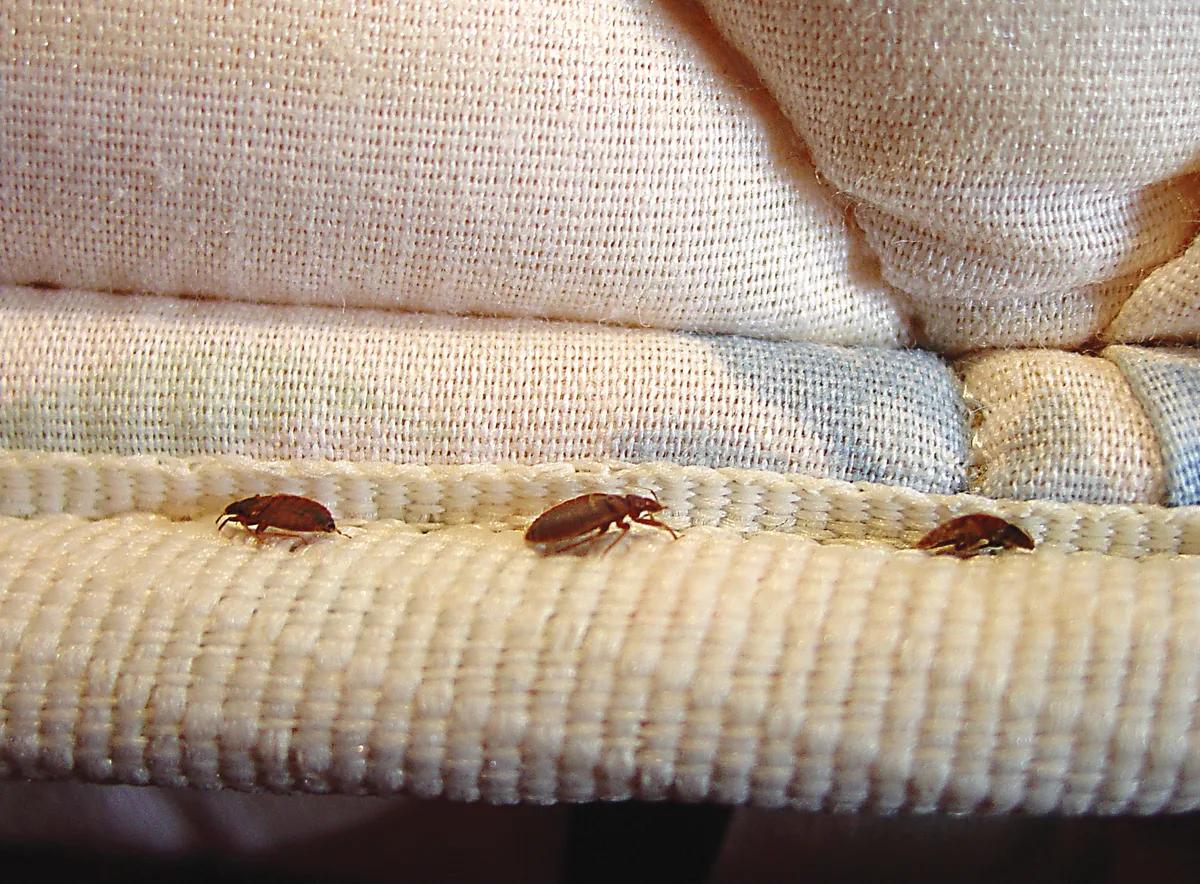
Bed bugs are a different kind of nightmare. These tiny, flattened insects hide in mattress seams, box springs, and furniture cracks during the day, then emerge at night to feed. Their bites show up as small, itchy red welts, often in a line or cluster.
Adult bed bugs measure about 4 to 5 millimeters long, roughly the size of an apple seed. They're reddish-brown and oval-shaped. If you suspect bed bugs, check the seams of your mattress for rust-colored stains or tiny black droppings.
Blister beetles are more of an outdoor hazard. They don't bite, but when crushed or disturbed against your skin, they release cantharidin. That chemical causes painful, fluid-filled blisters on contact.
Gardeners weeding bare-handed are the most common victims. The best defense is gloves, plus learning to identify them before touching.
Bald-faced hornets round out this group. They're actually a type of yellow jacket, not a true hornet, but they're bigger and they pack a serious punch. They build large, gray, papery nests that hang from trees or shrubs.
These hornets are fiercely territorial, and they'll sting repeatedly if you get too close. Their nests can hold 100 to 400 workers by late summer. If you find one, give it a wide berth and call a professional for removal.
Here's a stacked comparison for quick reference:
| Insect | Bite or Sting? | Severity | Where Found |
|---|---|---|---|
| Blackfly | Bite | Itchy, painful | Near rivers and streams |
| Bed bug | Bite | Itchy welts | Homes, hotels, furniture |
| Blister beetle | Chemical contact | Blisters | Gardens, fields |
| Bald-faced hornet | Sting | Painful, allergic risk | Nests in trees and shrubs |
If you get stung by a bald-faced hornet and experience swelling beyond the immediate area, difficulty breathing, or dizziness, that's a medical emergency. Anaphylaxis can come on fast, and it's worth calling 911 immediately. For blackfly and bed bug bites, over-the-counter antihistamines and hydrocortisone cream usually handle the itching.
The key takeaway? Respect these insects. Learn their habits, know their habitats, and you'll avoid the worst of what they can do.
Now let's move on to the ones that cause more confusion than harm.