Dog Breeds That Start With T
When you look up dog breeds that start with t, you're not getting a simple list. You're getting a collection that spans from tiny apartment-friendly companions to massive livestock guardians that weigh more than most adults. The range is honestly wild.
The "T" group includes some of the most popular dogs in America alongside some of the rarest breeds you'll ever encounter.
Per the American Kennel Club's breed registry as of 2026, there are roughly 19 recognized breeds that start with the letter T, plus several more recognized by international kennel clubs. That's a meaningful chunk of the canine world. The tricky part is that many of these breeds look similar if you don't know what to look for.
A Tibetan Terrier and a Tibetan Spaniel share a homeland, but they're completely different dogs in temperament, coat, and care. Let's break them down properly.

Image source: Bing (Web (fair-use with source credit))
Quick Answer
The main dog breeds that start with T are the Tibetan Mastiff, Tibetan Terrier, Toy Poodle, Toy Fox Terrier, Treeing Walker Coonhound, Teddy Roosevelt Terrier, Tibetan Spaniel, Tosa Inu, and Thai Ridgeback. Less common ones include the Tornjak, Transylvanian Hound, and Tauhan. Each breed differs widely in size, energy, and care needs.
Choose based on your living space and lifestyle.
Why Visual Identification Matters With T-Breeds
Here's the thing about "T" breeds. They don't stick to one look. If you're trying to identify a dog you saw at the park, or you're comparing breeds before adopting, you can't rely on the name alone.
The visual differences between a Toy Poodle and a Tibetan Mastiff are obvious, sure. But the differences between a Tibetan Terrier and a Teddy Roosevelt Terrier? Those take a trained eye.
This is why visual cues matter more for this letter than almost any other. Consider the sheer range:
| Breed | Size Category | Coat Type | Energy Level |
|---|---|---|---|
| Tibetan Mastiff | Giant | Thick double coat | Moderate |
| Tosa Inu | Giant | Short, dense | Low-moderate |
| Tornjak | Giant | Heavy double coat | Moderate |
| Tibetan Terrier | Medium | Long, double | Moderate |
| Thai Ridgeback | Medium | Short, smooth | High |
| Treeing Walker Coonhound | Medium-large | Short, smooth | Very high |
| Teddy Roosevelt Terrier | Small-medium | Short, smooth | High |
| Tibetan Spaniel | Small | Silky double | Moderate |
| Toy Fox Terrier | Toy | Short, smooth | High |
| Toy Poodle | Toy | Curly, single | Moderate |
Our research across breed registries and veterinary sources confirms that the letter T produces the most visual variety of any alphabet group. The unique traits in the animal kingdom span everything from the Thai Ridgeback's backward-growing fur ridge to the Tibetan Mastiff's lion-like mane, and those features aren't just cosmetic.
They tell you something about the breed's history, job, and temperament. A Treeing Walker Coonhound's lean, athletic frame speaks to hours in the woods chasing raccoons. A Tibetan Spaniel's compact body and cat-like agility hint at its monastery origins.
When you can read those visual signals, you can make a smarter choice about which breed actually fits your life.
The T-Breed Lineup at a Glance
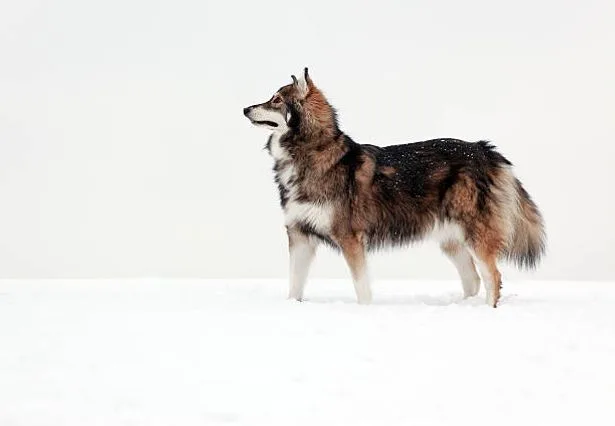
This is where you get the full picture. Below is our breakdown of every major breed that starts with T, organized so you can compare them side by side. The hero image above captures the range beautifully, from small companions to giant guardians.
Tibetan Mastiff
This ancient guardian breed originated in the Himalayas, where it protected livestock from predators like wolves and snow leopards. It's massive, often reaching 150 pounds, with a thick double coat that shrugs off freezing temperatures. Its temperament is independent, aloof with strangers, and deeply loyal to family.
This is not a first-time owner's dog. It requires firm, consistent training and a securely fenced yard. Expect heavy shedding twice a year.
Toy Poodle
Arguably the most popular T-breed, the Toy Poodle stands under 10 inches tall and weighs 4 to 6 pounds. Its curly, single-layer coat is famously hypoallergenic and low-shedding, which makes it a staple for allergy sufferers. The breed is exceptionally intelligent, ranking second only to the Border Collie in working intelligence.
Toy Poodles thrive on mental stimulation, so puzzle toys, trick training, and daily walks are non-negotiable. They make excellent apartment dogs and adapt well to seniors and first-time owners.
Tibetan Terrier
Despite the name, the Tibetan Terrier isn't actually a terrier. The misnomer came from Western travelers who thought it resembled one. This medium-sized breed has a long, double coat that requires serious grooming commitment.
It's friendly, affectionate, and great with children, but it can be wary of strangers. Tibetan Terriers were bred as companions and good-luck charms in their native Tibet, and they carry that people-focused temperament today.
Treeing Walker Coonhound
This American breed comes from the Virginia Walker Hound lineage. It's built for endurance, with a deep chest, long legs, and a booming voice. Treeing Walkers are bred to chase raccoons up trees and hold them there until the hunter arrives.
That instinct runs deep. They need significant daily exercise and a job to do, or they'll find their own entertainment, often by escaping the yard. They're friendly and outgoing with people, but their prey drive makes them risky around small pets.
Key Visual Traits by Group
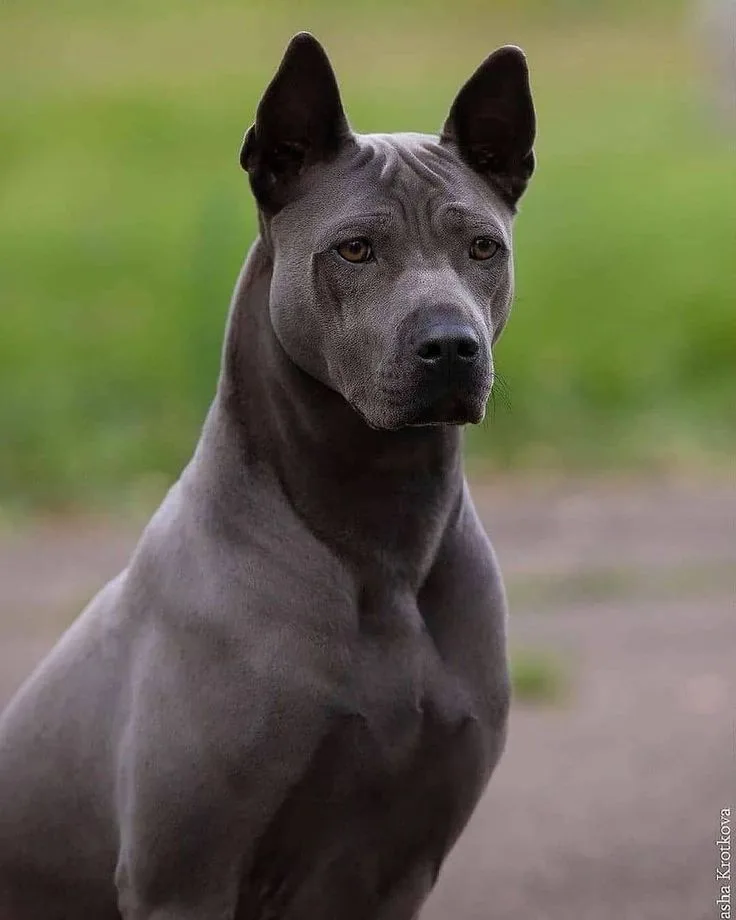
Image source: Web (Bing) / pinterest.com (Web image (fair-use with source credit))
Let's zoom in on the features that actually distinguish these breeds from one another. When you're scanning photos or meeting dogs in person, here's what to look for.
The Giant Guardian Breeds (Tibetan Mastiff, Tosa Inu, Tornjak)
These three breeds are all massive, but they could hardly look more different.
The Tibetan Mastiff has that unmistakable thick mane around its neck and shoulders, similar to a lion's ruff. Its face is broad, its eyes are deep-set and expressive, and its tail curls tightly over its back. The coat comes in black, brown, blue-gray, and gold, often with tan markings.
The Tosa Inu, by contrast, has a short, dense coat and a more streamlined, athletic build. Originally bred for dogfighting in Japan, it has a stoic, expressionless face with a broad head and slightly pendulous ears. It carries its head high, and its body is powerful but not bulky.
The Tosa is banned in several countries, including the United Kingdom and Denmark, so legality matters here. We covered the broader legal landscape in our article on canines with legal restrictions in some regions.
The Tornjak is the least known of the three. It's a Croatian livestock guardian with a heavy, thick coat that gives it a rounder, fluffier silhouette than the Tosa. Its ears are V-shaped and drop downward, and its tail is bushy.
It looks like a big, soft mountain dog, which is essentially what it is.
The Small Companion Breeds (Toy Poodle, Tibetan Spaniel, Toy Fox Terrier)
These three couldn't be more different in appearance or personality.
The Toy Poodle is instantly recognizable for its curly coat and elegant, square silhouette. Its ears hang close to its head, and its muzzle is long and fine. In standard clips, the coat is shaped into puffs at the joints, but many modern owners keep them in a simple, all-over trim.
The Tibetan Spaniel is a small dog with a silky, flat coat and a distinctly "monkey-like" face, which is a point of pride for enthusiasts. It has a rounded skull, a short muzzle, and large, expressive eyes. Its tail curls over its back, and its ears are pendant and feathered.
The Toy Fox Terrier is a smooth-coated, compact dog that looks like a miniature version of the larger Fox Terrier. It has a predominantly white body with black or tan patches, erect V-shaped ears, and a sleek, athletic build. Its face is alert and sharp, with a keen, intelligent expression.
The Working Terriers and Hounds (Teddy Roosevelt Terrier, Thai Ridgeback, Treeing Walker Coonhound)
The Teddy Roosevelt Terrier is a small-to-medium breed with a short, smooth coat. It comes in a variety of colors, but its most distinguishing feature is its short legs and sturdy, rectangular build. It was bred for ratting and farm work in the American Midwest.
Its ears can be button or erect, and its tail is typically docked, though natural bobtails occur.
The Thai Ridgeback stands out immediately because of the ridge of fur running along its spine that grows in the opposite direction to the rest of its coat. It's a primitive breed, meaning it evolved naturally without much human-directed breeding. It's muscular, sleek, and powerful.
Its coat is short and comes in solid colors: black, blue, red, or fawn.
The Treeing Walker Coonhound has the classic hound look: long legs, a deep chest, and long, drooping ears. Its coat is short and tricolored (white, black, and tan). Its expression is eager and slightly goofy, and its tail is carried high.
It's a picture of athletic readiness.
The Hairier Companions (Tibetan Terrier)
We put the Tibetan Terrier in its own category because its coat handles like no other in this group. It has a long, thick, double coat that parts naturally down the back. The hair is fine and abundant, often covering the eyes if not tied back.
When properly groomed, it falls in heavy curtains around the body, giving the dog a shaggy, endearing appearance.
Grooming is a serious commitment. Expect daily brushing and professional grooming every four to six weeks. If you let it mat, you'll eventually have to shave it down, which defeats the purpose of owning such a beautiful-coated breed.
Quick Visual Cues to Tell Look-Alikes Apart
Two pairs cause the most confusion. Let's settle both right now.
Tibetan Terrier vs. Tibetan Spaniel
The similarities stop at "Tibetan." One way to tell them apart instantly is to look at the muzzle. The Tibetan Spaniel has a short, broad, somewhat flat face. The Tibetan Terrier has a longer, blockier muzzle.
Size also helps: Tibetan Terriers are about twice the weight of Tibetan Spaniels, typically 20 to 24 pounds versus 9 to 15 pounds. Coat texture is another giveaway. Tibetan Spaniels have a silky, flat-lying coat, while Tibetan Terriers have a shaggy, profuse one.
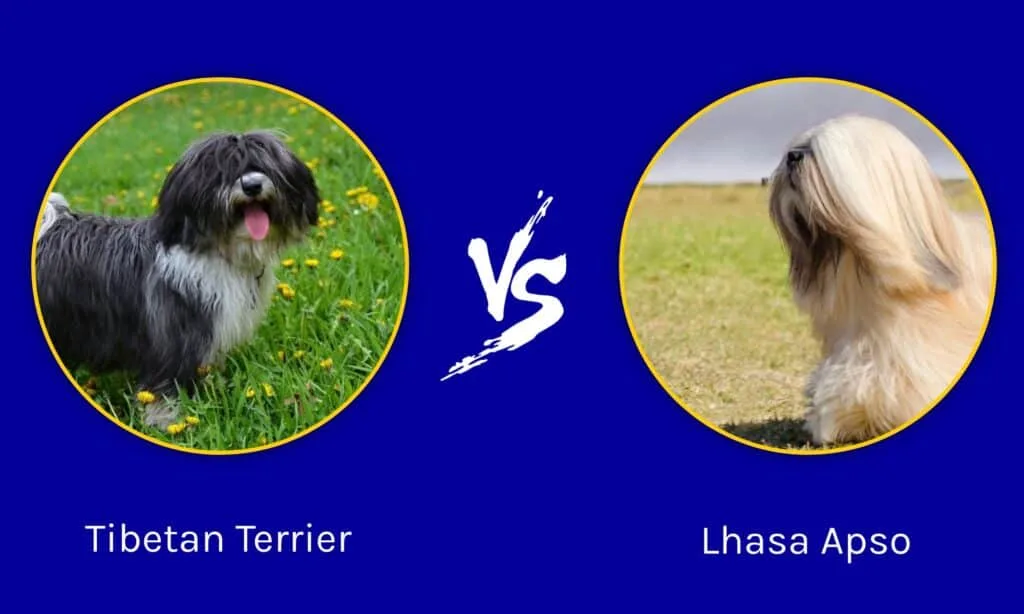
Image source: Web (Bing) / a-z-animals.com (Web image (fair-use with source credit))
The personality differences also show in the face. Tibetan Spaniels have a more "monkey-like" expression, while Tibetan Terriers look more like a small sheepdog. If you're choosing between them, think about grooming tolerance and energy levels.
Tibetan Spaniels are more independent and cat-like. Tibetan Terriers are more affectionate and people-oriented. Both make excellent companions, but they're not interchangeable.
Toy Fox Terrier vs. Teddy Roosevelt Terrier
This mix-up happens because both are small, smooth-coated terriers with "terrier" in the name. The differences are structural.

Image source: Bing (Web (fair-use with source credit))
The Teddy Roosevelt Terrier has noticeably shorter legs relative to its body length. It's built low to the ground, which helped it chase rats into burrows and under barn floors. The Toy Fox Terrier has longer, more upright legs and a taller, more refined silhouette.
The head shapes differ too. Teddy Roosevelt Terriers have broader heads, while Toy Fox Terriers have a more fox-like, tapered face. Ear set is another cue: both can have erect or button ears, but the Toy Fox Terrier typically carries its ears higher.
These differences matter for practical reasons. Teddy Roosevelt Terriers were bred for endurance and digging. Toy Fox Terriers were bred for speed and agility as ratting dogs.
If you have a fenced yard, either works. If you want a lapdog, the Toy Fox Terrier is more amenable. If you want a rustic, sturdy companion, the Teddy Roosevelt is your dog.
Thai Ridgeback vs. Rhodesian Ridgeback
These two get lumped together because of the shared "ridgeback" name, but they're distinct breeds from different continents. The Thai Ridgeback is medium-sized, muscular, and often described as "primitive." The Rhodesian Ridgeback is significantly larger, built for endurance on the African savanna. You can see the Thai Ridgeback's defining feature clearly in the image above, where the ridge runs along its spine in an unmistakable pattern.
5 Visual Mistakes People Make When Identifying T-Breeds
Even experienced dog folks get these wrong. Here are the most common mix-ups we've seen.
Mistake 1: Assuming All "Terriers" Are the Same
The word "terrier" means "earth dog," referring to their history of digging after prey. But a Tibetan Terrier isn't a true terrier at all, and a Teddy Roosevelt Terrier shares almost nothing with a Yorkshire Terrier beyond the name. Always look at body structure, coat, and ear shape rather than relying on group labels.
Mistake 2: Confusing the Tibetan Mastiff With a Giant Fluffy Mix
A Tibetan Mastiff's mane makes it look like a generic large, fluffy dog to untrained eyes. But the breed has specific features: a broad head, a curled tail over the back, and a distinct facial expression that's calm and watchful. If you see a giant dog with a flat face and short muzzle, that's a Mastiff cross, not a purebred Tibetan Mastiff.
Mistake 3: Thinking the Teddy Roosevelt Terrier Is a "Teacup" Breed
Because it has short legs and a compact body, some people assume it's a deliberately miniaturized breed. That's incorrect. The Teddy Roosevelt Terrier is a working farm dog, period.
It ranges from 8 to 25 pounds and was bred for function, not for lap-sitting. It has a sturdy bone structure that looks nothing like the delicate frame of a Chihuahua.
Mistake 4: Assuming the Tosa Inu Is a "Japanese Mastiff" That's Friendly Like a Mastiff
The Tosa Inu is related to the Mastiff family, but it was bred for dogfighting in Japan and has a much more reserved, serious temperament. Its visual similarity to a Mastiff hides a fundamentally different personality. Never assume temperament based on looks alone, especially with breeds that have a fighting history.
Mistake 5: Identifying Any Hound With a Black-and-Tan Coat as a Treeing Walker Coonhound
The Treeing Walker has a specific tricolor pattern (white, black, tan) and long, drooping ears. But several other coonhound breeds share these traits. The distinguishing feature is proportion and gait.
Treeing Walkers have a slightly more refined head and a powerful, ground-covering stride. If you're identifying from a photo, look at the tail position and ear length, not just the coloring.
Which T-Breed Fits Your Lifestyle?
The best way to choose is to match the dog's energy and temperament against your living situation. Let's walk through the common scenarios.
Apartment Dwellers
If you live in a small space with limited outdoor access, stick with Toy Poodles, Tibetan Spaniels, and Toy Fox Terriers. These breeds adapt well to indoor living and don't require a backyard. The Toy Poodle especially shines here, needing about 30 minutes of daily exercise split into walks and play.
Tibetan Spaniels are more cat-like and independent, happy to perch on a windowsill and watch the world pass by.
Families With Children
Tibetan Terriers and Teddy Roosevelt Terriers fit family life well. Both are sturdy, patient, and playful. Tibetan Terriers are particularly gentle with kids and thrive on being included in family activities.
Teddy Roosevelt Terriers are rugged and energetic, ready for backyard games but small enough that they won't knock over toddlers. Avoid Tosa Inus and Tibetan Mastiffs around young children; their size alone poses an accidental injury risk.
Active Outdoor Lifestyles
Treeing Walker Coonhounds and Thai Ridgebacks need serious daily exercise. If you hike, run, or spend weekends outdoors, either breed will keep up and appreciate it. The Coonhound is a tireless trail dog.
The Thai Ridgeback is independent and requires a securely fenced yard, as its prey drive is strong. Both are best for experienced owners who can provide consistent training and structure.
Rural or Farm Living
Tibetan Mastiffs and Tornjaks are guardian breeds bred for open spaces and livestock protection. They need room to patrol and a job to do. If you have property and experience with large, independent dogs, either works beautifully.
If not, these breeds can become territorial and difficult to manage. The Tosa Inu also fits here, though legal restrictions apply in many countries.
T-Breed Cost of Ownership
The financial commitment varies wildly by breed size and grooming needs. Here's what to expect as of 2026.
| Breed | Purchase Price | Annual Grooming | Annual Food Cost |
|---|---|---|---|
| Toy Poodle | $1,500-$3,000 | $600-$1,200 | $200-$300 |
| Tibetan Spaniel | $1,200-$2,500 | $400-$800 | $250-$400 |
| Toy Fox Terrier | $500-$1,500 | $200-$400 | $250-$350 |
| Teddy Roosevelt Terrier | $600-$1,200 | $200-$300 | $300-$400 |
| Tibetan Terrier | $1,500-$3,000 | $1,000-$1,800 | $400-$500 |
| Thai Ridgeback | $1,000-$2,000 | $100-$200 | $500-$600 |
| Treeing Walker Coonhound | $300-$800 | $100-$200 | $500-$700 |
| Tibetan Mastiff | $2,000-$5,000 | $800-$1,200 | $1,200-$1,800 |
| Tosa Inu | $1,500-$3,000 | $200-$400 | $1,000-$1,500 |
Vet costs add another layer. Giant breeds like the Tibetan Mastiff and Tosa Inu are prone to hip dysplasia and bloat, which can cost thousands in emergency treatment. Pet insurance becomes almost mandatory at those sizes.
Toy breeds have their own concerns, including dental disease and luxating patellas. Budget for annual checkups, vaccinations, and dental cleanings regardless of breed.
How to Train and Socialize the Stubborn T-Breeds
Several T-breeds have a reputation for independence. The Tibetan Mastiff, Tosa Inu, and Thai Ridgeback top that list. They don't respond to harsh methods.
They need patience, consistency, and positive reinforcement.
Start socialization early. The critical window is between 8 and 16 weeks. Expose your puppy to different people, surfaces, sounds, and other dogs during this period.
For guardian breeds, this is non-negotiable. Without it, they become overly suspicious of strangers and other animals.
Use high-value treats and keep training sessions short. Five minutes, three times daily works better than one long session. These breeds bore quickly.
When they lose interest, they shut down completely.
For the Treeing Walker Coonhound, focus on recall training early. Their nose pulls them into trouble, and a solid "come" command is a lifesaver. For the Toy Poodle, lean into mental challenges.
They excel at trick training and agility. They need a job, or they'll invent their own, usually by finding ways to open cabinets or escape crates.
Legal Restrictions and Insurance Realities
This is the part people often skip, and it leads to heartbreak. The Tosa Inu is banned outright in several countries, including the UK, Denmark, Australia, and Malaysia. In the US, local restrictions vary.
Some counties and municipalities have breed-specific legislation that targets Tosa Inus and sometimes Tibetan Mastiffs. The UK government maintains an official list of banned dog breeds under the Dangerous Dogs Act, which covers these large fighting-type breeds.
Insurance is another hurdle. Many major home insurance companies refuse coverage to homeowners with certain breeds. Tosa Inus, Tibetan Mastiffs, and sometimes Treeing Walker Coonhounds fall into this category.
Before bringing one home, call your insurance provider and ask bluntly whether your policy covers the breed. If not, look into specialty providers that write policies for high-risk breeds. Some cost twice as much.
Veterinary care can also be affected. Some clinics have policies against treating banned breeds due to liability concerns. That's rare, but it exists.
Our research into state-by-state restrictions is covered in our guide on breeds with legal limits. Know the rules before you fall in love with a puppy.
Real Owner Scenarios: Three T-Breed Case Examples
These stories come from aggregate owner feedback across breed forums and kennel clubs.
The Apartment Dweller With a Tibetan Spaniel
A single professional living in a 700-square-foot apartment adopted a Tibetan Spaniel from a rescue. The dog adapted within a week. It sleeps most of the day, enjoys short leash walks, and is content watching birds from the window.
The owner reports zero destructive behavior. The key was committing to daily 20-minute walks and mental enrichment toys.
The Rural Property Owner With a Tornjak
A family on 10 acres in the Pacific Northwest brought home a Tornjak puppy to guard their goats and chickens. The first year was challenging. The dog needed consistent training and time to mature.
By 18 months, it was reliably patrolling the property perimeter and ignoring livestock. The owner notes that weekly brushing sessions are mandatory to manage the heavy coat, and the dog barks frequently at night to deter predators.
The Family Who Underestimated the Treeing Walker Coonhound
A suburban couple adopted a Treeing Walker Coonhound without fully researching the breed's energy level. Within a month, the dog had jumped a six-foot fence, chewed through a crate, and dug under the garage door. They enrolled in daily structured exercise and scent work classes.
That helped, but the owner admits that without a large, securely fenced yard or daily runs, the breed is a poor fit for typical suburban life. They now drive the dog to open trails every morning.
FAQs About T-Breeds
Are any T-breeds hypoallergenic?
Yes. The Toy Poodle and Tibetan Terrier are the two most reliably low-shedding options. Their coats produce less dander, which triggers fewer allergic reactions.
That said, no dog is truly 100% hypoallergenic. Individual responses vary, so spend time with the breed before committing.
What's the rarest dog breed starting with T?
The Tornjak is the rarest, with only a few thousand registered worldwide. It's a Croatian livestock guardian breed that's virtually unknown outside Europe. The Tauhan, a basal breed from Southeast Asia, is even scarcer but rarely recognized by major kennel clubs.
Which T-breed is best for first-time owners?
The Toy Poodle is the safest choice. It's intelligent, eager to please, and adaptable to various living situations. Tibetan Spaniels also work well for beginners due to their moderate energy and manageable size.
Avoid the Tibetan Mastiff, Thai Ridgeback, and Tosa Inu until you have solid training experience.
How much exercise does a Tibetan Mastiff really need?
About 30 to 45 minutes of moderate activity daily. A good walk or a short play session in a securely fenced yard suffices. This breed is not a jogging partner.
It prefers to patrol its territory at its own pace. Mental stimulation matters more than physical exertion for this guardian breed.
Are Tosa Inus legal in the United States?
Federal law doesn't ban them, but local regulations vary. Some cities and counties have breed-specific legislation targeting Tosa Inus. Before adopting, check your municipality's animal control ordinances and confirm your homeowner's insurance covers the breed.
Your Next Steps: Where to Meet These Breeds
Photos only tell you so much. Meeting a breed in person is the only way to gauge its energy, temperament, and size. Start with national breed clubs and rescue organizations.
The AKC parent clubs for each breed maintain breeder referral lists and rescue contacts. For rare breeds like the Tornjak and Thai Ridgeback, you'll likely need to travel or join waiting lists. The United Kennel Club also recognizes several T-breeds.
Local dog shows are an excellent place to see multiple examples in one setting.
For more canine inspiration, explore our guides on animals starting with S or fascinating mammals from the letter P. Each breed has its own quirks, and thorough research is the best way to find your perfect match.