Dog Breeds That Start with P: Complete Guide
If you've ever tried to list dog breeds that start with p, you probably landed on Poodle and Pug and then drew a blank. That's normal. The list is actually longer than most people expect, and it includes some seriously different dogs, from 150-pound livestock guardians to 5-pound lap warmers.
The tricky part isn't finding the names. It's figuring out which P-breed actually fits your life. A Pembroke Welsh Corgi and a Pyrenean Mountain Dog share a first letter, but they share almost nothing else.
As of 2026, the American Kennel Club recognizes over 20 distinct breeds starting with P, each with its own exercise needs, grooming demands, and temperament quirks. So let's walk through this like a decision tree.

Image source: Bing (Web (fair-use with source credit))
Quick Answer
The most common dog breeds that start with p are the Poodle, Pug, Pomeranian, Pekingese, and Pit Bull. Popular herding and sporting breeds include the Pembroke Welsh Corgi, Papillon, and German Shorthaired Pointer. Less common options include the Puli, Pumi, Pharaoh Hound, and Portuguese Water Dog.
Each varies widely in size, energy, and grooming needs.
Why "Finding a P-Breed" Is a Lifestyle Choice, Not a Letter Game
Here's the thing about alphabet-based breed searches. They assume all breeds are equal. They're not.
Choosing a dog because its name starts with P is fine as a starting point, but it can't be the deciding factor.
Think about what actually separates these dogs.
You've got the Pug, a brachycephalic breed that wants nothing more than to nap on your lap. Then you've got the Plott Hound, a driven scent hound that needs miles of trail time daily. The Portuguese Water Dog was bred to work on fishing boats.
The Pekingese was bred to sit in imperial palaces. These are fundamentally different animals.
So before you fall in love with a photo of a fluffy Puli, ask yourself three questions.
- How much space do I have?
- How much time can I dedicate to exercise and grooming?
- What temperament fits my household?
The rest of this article walks through those questions one by one. By the end, you'll have a shortlist of P-breeds that genuinely match your situation. And if you're curious about other animal alphabet lists, you might enjoy browsing some related naming guides.
The First Branch: Size and Living Space
Size is the easiest filter. It eliminates half the list immediately. You cannot responsibly keep a 100-pound guardian breed in a 500-square-foot apartment, no matter how much you love the idea.
And you shouldn't choose a toy breed if you've got three rowdy kids underfoot.
The Apartment-Friendly P-Breeds (Under 25 lbs)
These small breeds adapt well to compact living spaces, provided they get daily walks and mental stimulation.
| Breed | Weight | Best For |
|---|---|---|
| Pomeranian | 3–7 lbs | Singles, seniors, quiet homes |
| Papillon | 5–10 lbs | Active owners who want a portable dog |
| Pug | 14–18 lbs | Families, apartment dwellers |
| Pekingese | 7–14 lbs | Calm households, experienced owners |
| Toy Poodle | 4–6 lbs | Allergy sufferers, first-time owners |
The Papillon and Toy Poodle are the most energetic of this group. They'll want playtime and training sessions. The Pug and Pekingese are content with shorter walks and lots of couch time.
If you work long hours, the Pekingese tolerates solitude better than the Pug, which can develop separation anxiety.
The Mid-Size All-Rounders (25–50 lbs)
These dogs fit the sweet spot. Big enough for outdoor adventures, small enough to manage in most homes.
| Breed | Weight | Best For |
|---|---|---|
| Miniature Poodle | 15–17 lbs | Allergy sufferers, families |
| Pembroke Welsh Corgi | 22–30 lbs | Active families, herding instinct fans |
| Portuguese Podengo | 35–45 lbs | Outdoor enthusiasts, rodent control |
| American Pit Bull Terrier | 30–60 lbs | Experienced owners, active homes |
| Staffordshire Bull Terrier | 24–38 lbs | Families with children |
The Corgi is the surprise package here. Despite short legs, it's a herding dog with serious energy and intelligence. It needs mental challenges or it'll invent its own, often destructive, ones.
The Podengo is rare in the US but gaining popularity for its hunting drive and low-maintenance coat.
The Large and Giant P-Breeds (50+ lbs)
These breeds need space, sturdy fencing, and owners who can handle a powerful animal.
| Breed | Weight | Best For |
|---|---|---|
| Standard Poodle | 40–70 lbs | Active owners, allergy sufferers |
| German Shorthaired Pointer | 45–70 lbs | Hunters, runners, outdoor lifestyles |
| Plott Hound | 40–75 lbs | Experienced owners, rural homes |
| Great Pyrenees | 85–160 lbs | Farms, properties, guardian roles |
| Puli | 25–35 lbs | Active owners who enjoy grooming |
The Great Pyrenees is a livestock guardian. It barks, it roams, and it guards. That's the job.
If you live in a suburban neighborhood with close neighbors, this breed will be a constant source of noise complaints. The German Shorthaired Pointer, meanwhile, needs several hours of hard exercise daily. This is not a weekend-jog kind of dog.
The Second Branch: Hypoallergenic vs. High-Shedding Coats
Once you've narrowed by size, the next question is practical. Can you handle fur? Or does someone in your home have allergies?
The "Hypoallergenic" Illusion: Poodle, Portuguese Water Dog & Puli
No dog is truly hypoallergenic. That's a myth. But some breeds produce less dander and shed less, which makes them easier on allergy sufferers.
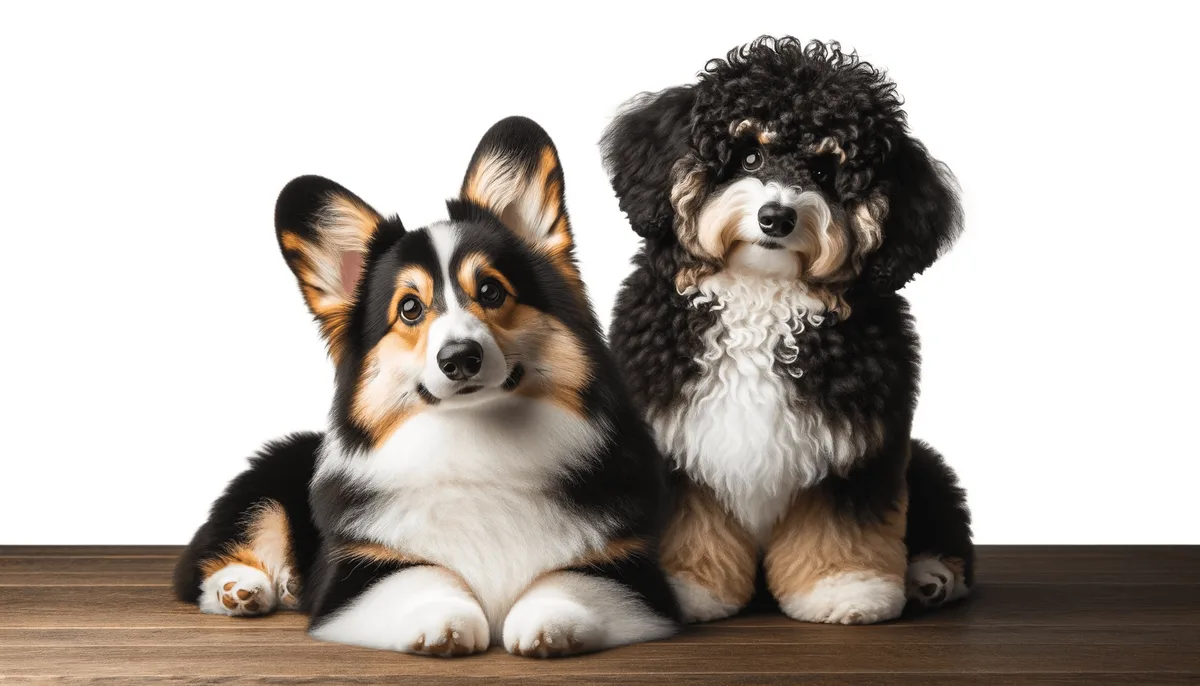
Image source: Bing (Web (fair-use with source credit))
The Poodle, Portuguese Water Dog, and Puli all have hair that grows continuously rather than shedding seasonally. That means less dander floating around your home. But it also means regular professional grooming.
- Poodle: Needs clipping every 4, 6 weeks, brushing 2, 3 times weekly.
- Portuguese Water Dog: Same grooming schedule, plus more exercise.
- Puli: Its corded coat takes years to form and requires intensive maintenance.
If you're not prepared for grooming costs, these breeds will surprise you. Professional grooming for a Standard Poodle runs $80, $120 per session. That's $1,000+ annually before food, vet care, and everything else.
The Double-Coated Shedders: Pomeranian, Pekingese & Pyrenean Mountain Dog
On the other side of the coin, these breeds shed heavily.
The Pomeranian has a thick double coat that blows out twice a year. The Pekingese is similar, with a mane that requires daily brushing to prevent matting. And the Great Pyrenees?
You'll vacuum every day. Trust me on this one.
If shedding doesn't bother you, these breeds offer other rewards. The Pomeranian is bright and trainable. The Pekingese is loyal and independent.
The Great Pyrenees is calm and protective. You just need to accept fur as part of your wardrobe.
For more on the broader animal kingdom, you might enjoy exploring species that share that P initial.
The Third Branch: Energy Levels and Exercise Commitment
Now we get to the part that determines whether you'll enjoy your dog or resent it. Energy compatibility matters more than anything else on this list.
High-Energy Working Breeds: Pointers, Plott Hound & Pembroke Welsh Corgi
These dogs were bred to work. They have stamina, drive, and a need for purpose.
| Breed | Daily Exercise | Mental Work Needed |
|---|---|---|
| German Shorthaired Pointer | 90–120 minutes | Hunting, agility, fetch |
| Plott Hound | 60–90 minutes | Scent work, tracking |
| Pembroke Welsh Corgi | 45–60 minutes | Herding games, puzzle toys |
If you're a runner or hiker, one of these could be perfect. If you work from home and can do mid-day training sessions, even better. But if you leave for 9 hours daily, these are not the right choices.
The Plott Hound deserves special mention here. It's a brave, determined scent hound that can become destructive when bored. It needs a job.
By contrast, the Corgi needs less raw mileage but far more mental stimulation. A bored Corgi will herd your kids, nip at heels, and bark at everything.
Moderate and Low-Energy Companion Breeds: Pug, Pekingese & Papillon
These breeds adapt better to relaxed lifestyles.
The Pug is the classic low-energy companion. It's happy with a 30-minute walk and a nap marathon afterward. The Pekingese is even more sedentary.
The Papillon, despite its delicate appearance, is actually more energetic than both, but still manageable with two short daily walks.
Here's the catch with brachycephalic breeds like the Pug and Pekingese. Their flat faces make breathing difficult, especially in heat. They can't exercise vigorously.
And they're prone to overheating, which means summer walks need to happen early morning or late evening.
If you want a moderate-energy breed that's also smart and trainable, consider the Miniature Poodle. It's the perfect middle ground. Walks are easy.
Training is fun. And it doesn't overheat like the flat-faced breeds.
For animal lovers curious about other alphabet categories, there are also guides dedicated to creatures from other starting letters.