J Dog Breeds: From Jack Russell to Japanese Chin
So you're looking into dog breeds that start with j. Maybe you're a little stuck on the letter, or you've heard of a few and want to compare them properly. Either way, you're in the right spot.
We've broken down every recognized breed starting with "J" and, more importantly, matched them to real lifestyles. As of 2026, the American Kennel Club and international registries recognize seven distinct breeds in this group, ranging from tiny lap dogs to rugged hunting companions. By the time you finish reading, you'll know exactly which one fits your home, your energy level, and your experience.
Quick Answer
The seven dog breeds that start with J are the Jack Russell Terrier, Japanese Chin, Japanese Spitz, Japanese Terrier, Jindo, Jagdterrier, and Jämthund. They vary wildly in size, energy, and temperament, from the apartment-friendly Japanese Chin to the high-drive Jagdterrier. Your match depends entirely on your living space, activity level, and training experience.
Use the decision tree below to filter your options.
Which J-Dog Actually Fits Your Life?
Here's the thing about breed lists: they tell you what exists, but not what you should actually own. That's where most articles fail you. They hand you a roster of names and expect you to figure out the rest.
We're not going to do that. Instead, we're treating this like a matching problem, not a memorization exercise. The right J-breed for a single runner in Denver is completely different from the right one for a retired couple in a Phoenix condo.
Both are valid searches. Both need different answers.
The good news? All seven breeds break down neatly into three categories: companion dogs, working terriers, and spitz-type hunters. Figure out which category matches your life, and you've already eliminated half the list.
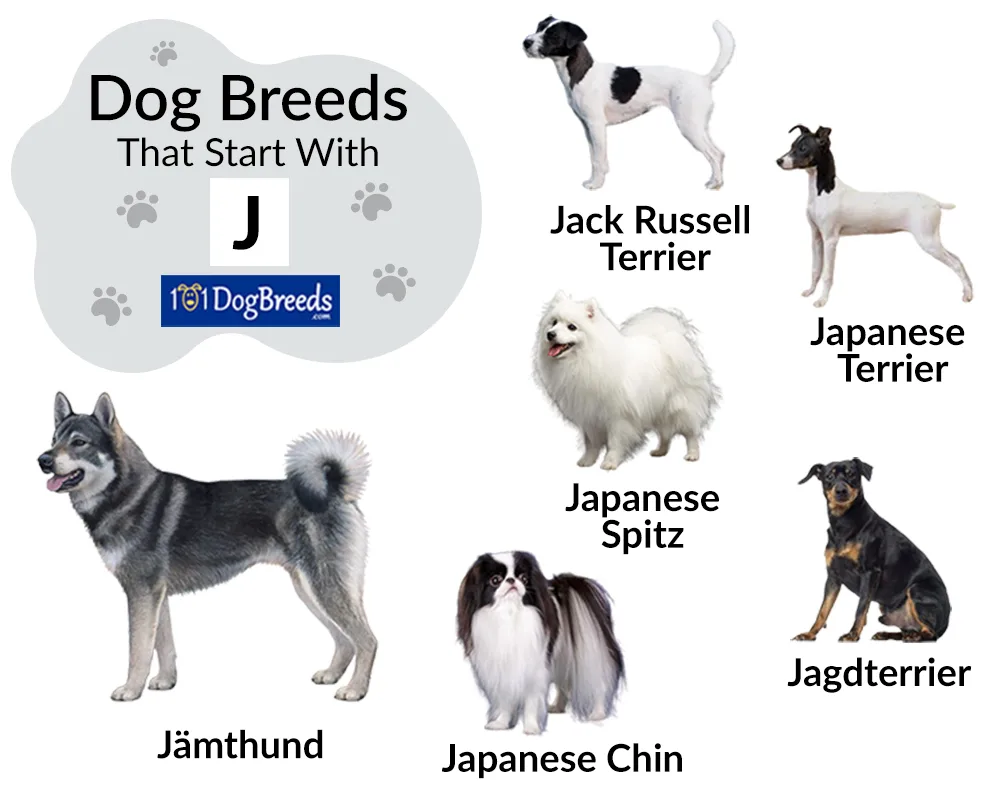
Image source: Web (Bing) / 101dogbreeds.com (Web image (fair-use with source credit))
The Complete List: Every Dog Breed That Starts with J
Before we dive into the decision tree, let's establish the full roster. These are the recognized breeds you'll encounter in registries, rescues, and breeder networks:
| Breed | Size Class | Energy Level | Best For |
|---|---|---|---|
| Jack Russell Terrier | Small (14–18 lbs) | Very High | Active adults, experienced owners |
| Japanese Chin | Toy (7–11 lbs) | Low | Seniors, apartment dwellers, first-timers |
| Japanese Spitz | Small–Medium (11–20 lbs) | Medium | Families, first-timers, allergy sufferers |
| Japanese Terrier | Small (9–13 lbs) | Medium | Rare breed enthusiasts, quiet homes |
| Jindo | Medium–Large (35–60 lbs) | High | Rural homes, experienced owners |
| Jagdterrier | Medium (17–22 lbs) | Very High | Hunters, working dog enthusiasts |
| Jämthund | Large (55–65 lbs) | High | Cold climates, hunters, large properties |
The Jämthund, also known as the Swedish Elkhound, is the rarest of the group. It's recognized by the Fédération Cynologique Internationale but remains virtually unknown in North America. If you're drawn to that one, be prepared for international logistics.
The Decision Tree: 5 Questions to Filter Your Match
Answer these five questions honestly. Don't answer them for the dog you wish you were. Answer them for the life you actually live.
Question 1: How much space do you have?
If you live in an apartment under 800 square feet, eliminate the Jindo, Jagdterrier, and Jämthund immediately. These are large, high-energy breeds that need room to move. The Japanese Chin, Japanese Spitz, and Japanese Terrier all adapt well to smaller spaces.
If you have a fenced yard, you open up more options. But a yard alone isn't enough for the working breeds. They need a secure perimeter of at least 5 to 6 feet, and they need active time in it, not just access.
Question 2: How much exercise can you commit to daily?
This is the question that separates buyers from regretful owners. The Jack Russell Terrier and Jagdterrier both need 90 minutes of vigorous exercise per day, minimum. That's not a leisurely walk.
That's running, fetching, and mental stimulation.
The Jindo and Jämthund need about 60 to 90 minutes, but they also need a job or a purpose. The Japanese Spitz and Japanese Terrier are happier with 45 minutes. The Japanese Chin is content with 30 minutes of gentle activity.
Question 3: What's your experience level?
First-time owner? Skip the Jindo, Jagdterrier, and Jack Russell. These breeds are independent, stubborn, and will absolutely test your boundaries.
The Jindo, in particular, is known for its primitive temperament and strong prey drive. It's not a beginner's dog.
The Japanese Spitz and Japanese Chin are much more forgiving. They're eager to please, moderately trainable, and less likely to challenge your authority. The Japanese Terrier is also manageable, though its rarity makes it harder to find resources.
Question 4: Do you have kids or other pets?
The Japanese Chin and Japanese Spitz do well in family homes. They're gentle, patient, and unlikely to snap. The Jack Russell can work with older kids but may not tolerate rough handling.
The Jindo, Jagdterrier, and Jämthund all have high prey drives that make them risky around small animals.
Always supervise interactions between any dog and a child, but be especially vigilant with the terrier breeds.
Question 5: How much grooming can you tolerate?
The Japanese Spitz has a thick double coat that needs brushing three to four times per week, plus more during shedding season. The Japanese Chin and Jindo also shed noticeably. The Jack Russell and Japanese Terrier have shorter coats that need only weekly brushing.
If allergies are a concern, the Japanese Spitz is the closest you'll get to hypoallergenic in this group, though no dog is truly allergy-free.

Image source: Web (Bing) / storage.googleapis.com (Web image (fair-use with source credit))
Apartment Living: Best J-Breeds for Small Spaces
Living in an apartment doesn't mean you can't own a J-breed. It means you need to choose wisely.
The Japanese Chin
This is the perfect apartment dog. It was literally bred to be a lap companion for Japanese nobility. It's quiet, gentle, and content with short walks and indoor play.
At 7 to 11 pounds, it fits easily into any living space.
The Japanese Chin does have a few quirks. It can be stubborn about house training, and it's prone to separation anxiety if left alone for long stretches. But for seniors, remote workers, or anyone who spends most of their time at home, it's an ideal match.
The Japanese Spitz
The Japanese Spitz is the fluffy white dog you've probably seen on social media. It's slightly larger than the Chin, at 11 to 20 pounds, but just as adaptable to apartment life. It's playful without being hyperactive, and it's generally quiet indoors.
One thing to flag: the Japanese Spitz barks. It's a watchdog breed, so it will alert you to every delivery person, neighbor, or passing squirrel. In a paper-thin apartment building, that could become a problem.
Early training can help tone it down.
The Japanese Terrier
This is the rarest breed on this list, and possibly the rarest Japanese dog breed overall. It's a small, smooth-coated terrier that's nearly extinct, even in its home country. If you find one, consider yourself lucky.
In terms of apartment suitability, it's similar to a Jack Russell but calmer. It needs daily exercise but doesn't demand constant stimulation. The biggest challenge is simply finding one through rescue networks, which are virtually nonexistent outside Japan.
What about the Jack Russell in an apartment?
It's possible, but it takes serious commitment. We're not going to sugarcoat this: the Jack Russell is a working terrier bred to chase foxes. It has energy that can feel endless, and it will absolutely redecorate your apartment if bored.
If you're not prepared for daily runs, puzzle toys, and consistent training, choose a different breed.
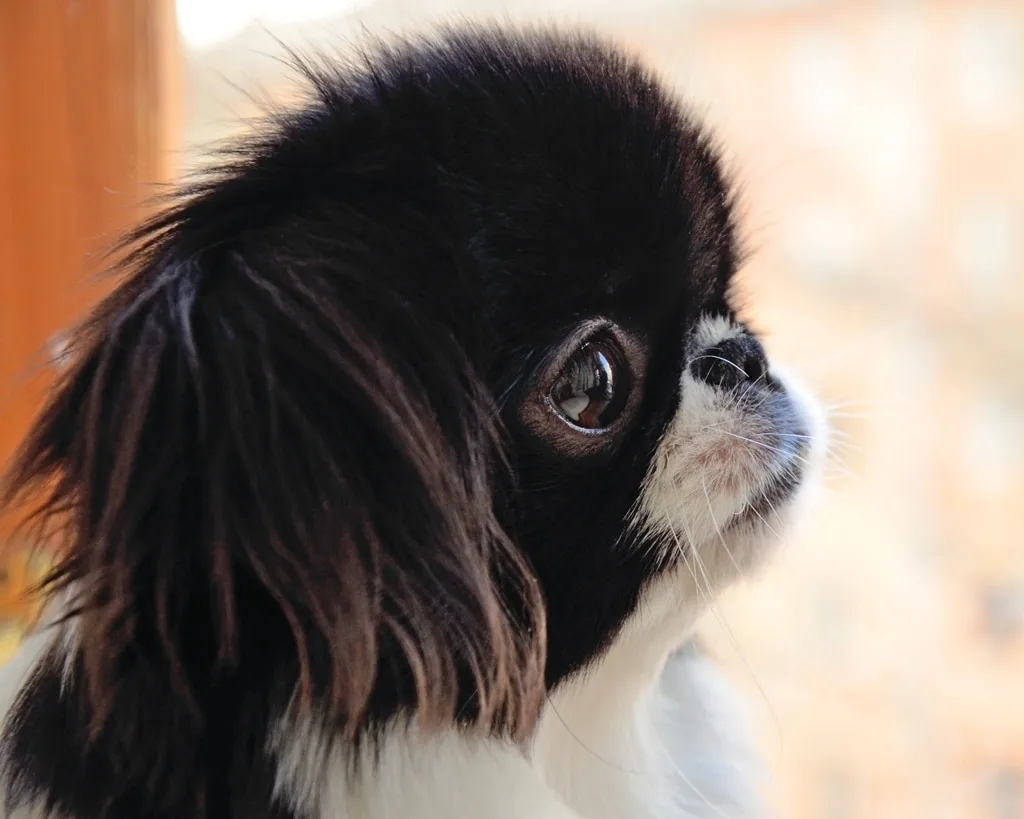
Image source: Web (Bing) / moderndogmagazine.com (Web image (fair-use with source credit))