Animals Starting with Z: From Zebra to Zorilla
Let's be honest. If someone asks you to name animals that start with z, your brain immediately goes to the zebra. That's it.
That's the whole list.
But the animal kingdom is way more creative than that. As of 2026, zoologists recognize over 80 distinct species, subspecies, and hybrids with names beginning with the letter Z. There's a whole world of zokors, zonkeys, and zorillas out there, and they're genuinely fascinating.
We spent a good chunk of time digging into the less famous members of the "Z" club so you don't have to. Here's the rundown, the familiar faces, the oddballs, and the one that sounds like a magical creature from a fantasy novel.
Quick Answer
The animals that start with z include zebras, zebus, zorillas, zokors, zander fish, zorros, and zonkeys. There are also lesser-known species like the Zanzibar red colobus, zigzag salamander, and zitting cisticola. Most Z-animals live in Africa and Asia.
Only a handful exist in the Americas. The complete list spans about 15 notable species across mammals, birds, fish, and insects.
The Heavyweights: Zebras, Zebus, and the Familiar Faces
Zebra: The Striped Icon
Zebras are the undisputed stars of the Z-animal club. There are three distinct species: the Plains zebra, the Grevy's zebra, and the Mountain zebra. Each has its own stripe pattern, which works like a fingerprint.
No two zebras have identical markings.
The Plains zebra is the most common and widespread. You'll find it across eastern and southern Africa in massive herds. The Grevy's zebra is the largest species, with narrow stripes and big, round ears.
It's also endangered. The Mountain zebra is the smallest, with a distinctive dewlap and a striped pattern that extends all the way down to its hooves.

Image source: Web (Bing) / pngtree.com (Web image (fair-use with source credit))
Those stripes aren't just for looks though. Research suggests they're a built-in pest control system. Biting flies like tsetse flies struggle to land on striped surfaces, so zebras essentially wear a natural bug-repellent coat.
Zebu: The Humped Workhorse
The zebu is a species of domesticated cattle from South Asia that looks like a regular cow that decided to hit the gym. They have a prominent hump over their shoulders and a large dewlap, which is the skin flap hanging under their neck.
Zebus are the unsung heroes of agriculture in the hot and humid tropics. According to FAO data, there are over 75 recognized zebu breeds worldwide. They're incredibly resistant to heat and insects, making them essential to farming communities across India, Africa, and Brazil.
They're not just a breed of cow either. They're a distinct species that has been central to human civilization for thousands of years.
Why These Animals Dominate the Conversation
These are the Z-animals people actually know. They show up in zoos, documentaries, and textbooks. They're also the ones with the most research behind them.
When you're talking about animals that start with z, these heavyweights are the natural entry point. They're the ones that make people say, "Oh right, I forgot about those."
The Deep Cuts: Zorillas, Zokors, and Other Hidden Gems
Zorilla: The African Skunk That's Actually a Weasel
The zorilla is a sleeper hit. This small African mammal looks like a skunk, acts like a skunk, and even smells like a skunk. But it's actually a weasel, more closely related to ferrets and otters than to the North American skunk it mimics.
It's also called the striped polecat, and honestly, the name fits. When it's scared, it does a handstand to push its hindquarters toward the threat. That's where it emits a foul-smelling spray from its anal glands.
The spray can reach up to 2 meters, and it's potent enough to cause temporary blindness if it hits an attacker's eyes.
If you're ever in sub-Saharan Africa and you see a tiny black-and-white animal doing yoga poses at you, just back away slowly. That little guy means business.
Zokor: The Underground Architect
The zokor is a rodent that looks like a mole on a low-carb diet. It's native to Central Asia, and it spends almost its entire life underground. It has no tail, tiny eyes covered by skin, and massive front claws built for digging.
Here's the wild part. The zokor can actually close its lips behind its front teeth. That means it can gnaw through roots and dirt without swallowing a mouthful of soil.
Its burrow system is genuinely impressive, with separate chambers for sleeping, storing food, and other business.
These tunnels also aerate the soil, which benefits grassland ecosystems across their range. The zokor does too good a job, though. Farmers in parts of China and Mongolia consider them pests because their digging can damage crop roots.
Zander: Europe's Night-Vision Predator
If you're into fishing, you already know about this one. The zander is a large freshwater fish found throughout Europe and Asia. It looks like a walleye on steroids, with sharp teeth and eyes that reflect light like a cat's.
That reflective layer behind its retina gives the zander excellent night vision. It hunts in murky, low-light conditions where other predators struggle. Anglers love them because they put up a serious fight.
They can grow up to 15 kilograms, which is over 30 pounds, and they're considered a prized catch across their range.
If you ever see pike-perch on a restaurant menu in Europe, that's this fish. It's delicious.
Why These Deep Cuts Matter
These are the Z-animals that win trivia night. They're obscure, fascinating, and almost nobody knows they exist. When you're listing animals that start with z, these are the ones that separate the casual observer from the true enthusiast.
The Oddballs: Zonkeys, Zorros, and Nature's Experiments
Zonkey: A Happy Accident
You might think I'm joking, but the zonkey is a real hybrid. It's the offspring of a zebra stallion and a donkey mare. They're almost always born sterile, like mules, so you won't see them forming wild herds anywhere.
Zonkeys mostly exist in captivity, but they happen in the wild too. It usually occurs when a zebra is introduced to a rural area where donkeys are common, and the two species just decide to get along a little too well. They look like a donkey wearing a pair of zebra leggings, with stripes on their legs and body but a donkey's face and build.
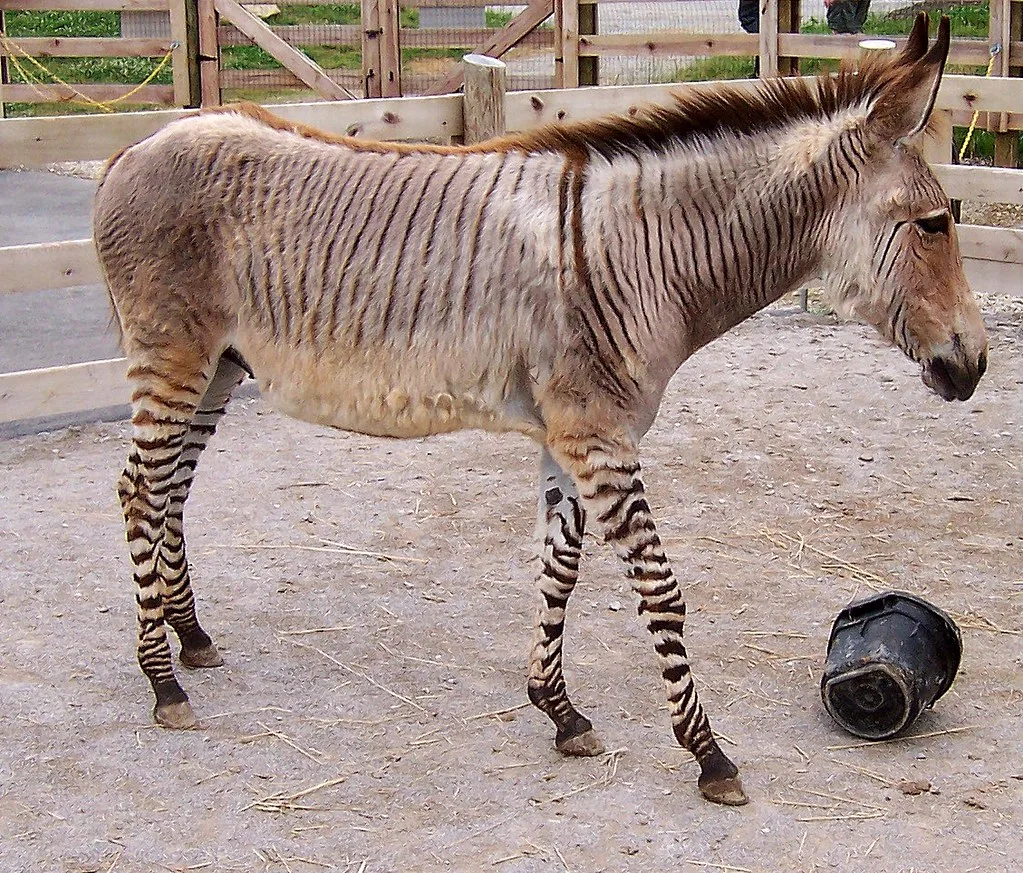
Image source: Web (Bing) / flickr.com (Web image (fair-use with source credit))
Zorro: South America's Underrated Fox
The zorro is a fox species that lives in South America. The name comes from Spanish, where it simply means fox, and it covers several species in the Lycalopex genus. The most famous is the culpeo, which is the second-largest canid in South America after the maned wolf.
Zorros are incredibly adaptable. They range from the high Andes mountains down to the Patagonian steppe. They eat everything from rodents and birds to fruits and carrion.
Some species are thriving despite habitat loss, while others, like the Darwin's fox, are critically endangered.
Zoraptera: The Tiny Insect That Sounds Like a Spell
Technically, zorapterans are a tiny order of insects, not a single species. But they deserve a spot on any list of animals that start with z. These minuscule, pale insects live under bark in the tropics.
They're so primitive-looking that they're often called ground lice. They're also completely harmless and almost never seen by humans. If you ever spot one, you're a better bug-spotter than we are.
They're no zebra, but they round out the list nicely.
What Hybrids and Oddballs Teach Us
These unusual animals show how flexible and weird nature can be. Hybrids like the zonkey happen when species boundaries blur. Adaptable species like the zorro thrive across vast geographic ranges.
And obscure insects like zorapterans remind us that biodiversity goes way beyond the charismatic megafauna we see in zoos.
Visual Identification Guide: Spotting Z-Animals in the Wild
Stripes: How to Tell Zebra Species Apart
If you're on safari and trying to identify which zebra species you're looking at, focus on the stripes and the ears. Plains zebras have broad stripes that wrap around their bellies. Grevy's zebras have narrow, close-set stripes and large, rounded ears.
Mountain zebras have a distinctive dewlap and stripes that run down their legs to their hooves.
The Zorilla's Warning Pose
The zorilla has one of the most distinctive defensive postures in the animal kingdom. When threatened, it arches its back, raises its tail, and performs a handstand. This positions its anal glands directly toward the threat.
If you ever see this, you're about 2 meters away from getting sprayed.
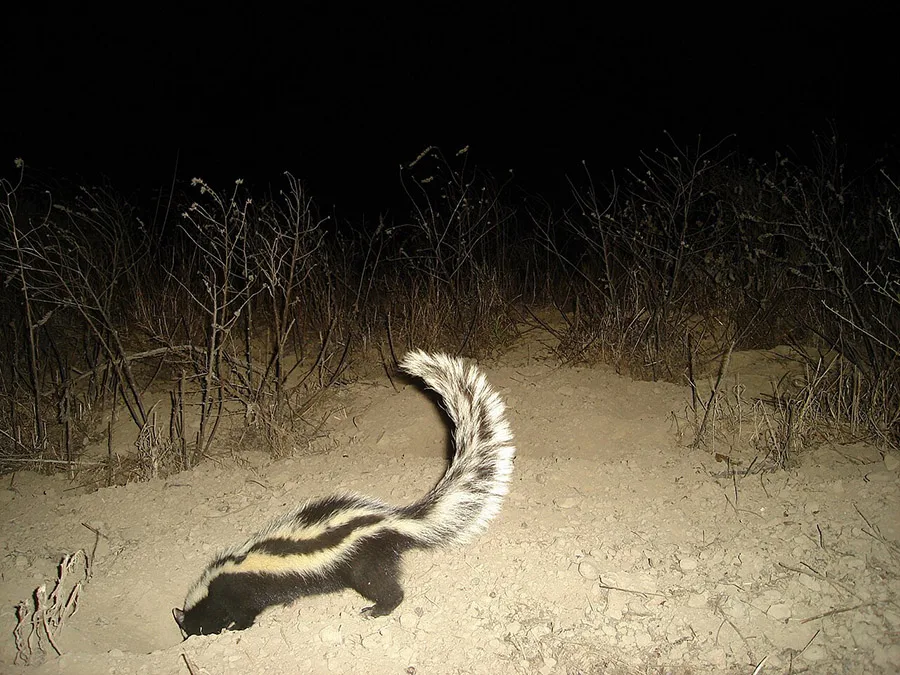
Image source: Web (Bing) / explorationjunkie.com (Web image (fair-use with source credit))
Zokor vs. Mole vs. Gopher: Digging Adaptations Compared
These three burrowing mammals look similar, but they're built differently. Moles have massive paddle-like front paws for swimming through soil. Gophers have large incisors that grow continuously and external cheek pouches for carrying food.
Zokors have smaller claws but the unique ability to seal their lips behind their teeth.
Zander vs. Walleye: The Fish Lookalike Problem
This is a common mix-up even among experienced anglers. The zander and the walleye look almost identical, with the same elongated body and spiny dorsal fin. The main differences are geographic and subtle.
Zanders are native to Europe and Asia, while walleyes are native to North America. Zanders also have a slightly more pointed snout and different fin ray counts.
Common Misidentification Mistakes
The most common error is confusing zorillas with skunks. Both are black and white, both spray, and both do defensive displays. But they're not closely related.
Skunks are in their own family, while zorillas are true mustelids, related to weasels and badgers.
Another frequent mistake is calling any humped cattle a zebu. But only the zebu has that specific combination of a thoracic hump and a large dewlap. Other cattle breeds, like the Brahman, were crossbred with zebus but aren't pure zebus themselves.
Reference Guide for Quick Field ID
| Animal | Key Identifier | Common Confusion |
|---|---|---|
| Plains zebra | Broad stripes wrapping to belly | Grevy's zebra |
| Grevy's zebra | Narrow stripes, round ears | Plains zebra |
| Zorilla | Handstand defense, black and white | Skunk |
| Zokor | No tail, sealed lips | Mole or gopher |
| Zander | Pointed snout, forked tail | Walleye |
| Zebu | Thoracic hump, large dewlap | Brahman cattle |