Jaw-Dropping Animals That Start with J
You're probably here because you hit a wall naming animals that start with j. It's easy to rattle off a few, then suddenly you're staring at the ceiling trying to think of more. The truth is, the letter J hides some of the most fascinating creatures on Earth, from apex predators to tiny desert hoppers.
In our research, we found over a dozen notable species that start with J, spanning every continent except Antarctica. As of 2026, some of these animals face critical conservation challenges, with populations measured in the dozens. Let's dig into the full list, what makes each one unique, and how to tell them apart at a glance.
Quick Answer
The most well-known animals that start with j are the jaguar, jackrabbit, jellyfish, jackal, Japanese macaque, and Javan rhinoceros. Other notable entries include the jaguarundi, jabiru, jerboa, junco, junglefowl, and jay. Less common but valid entries include the jay, jackdaw, and several domestic cat breeds.
The list spans big cats, birds, marine life, rodents, and reptiles. Each occupies a unique ecological niche worth exploring.
Why This List Isn't Just a List
Here's the thing about J-animals. They're not just random species sharing a letter. They represent some of the most visually striking and ecologically important creatures on the planet.
The jaguar is the third-largest cat in the world. The jellyfish has been drifting through oceans for over 500 million years. The Javan rhino is one of the rarest large mammals on Earth.
What makes this list genuinely useful is knowing how to tell similar animals apart. Most people confuse jaguars with leopards. Many assume jackrabbits are just big rabbits.
And plenty of folks don't realize that jays belong to the same clever bird family as crows and ravens.
That's why we've organized this guide around recognition. Each section focuses on the visual cues, habitat, and behaviors that make these animals distinct. By the end, you'll not only know which animals start with J, you'll be able to identify them in the wild or at the zoo with confidence.
We've also included practical details like conservation status and where to see them. Whether you're a student working on an alphabet project, a birder adding to your life list, or someone planning a wildlife trip, this guide has what you need.
What Exactly Counts as a "J" Animal?
Before we dive in, we need to clarify one thing. When we say animals that start with j, we mean common English names, not scientific genus names. This distinction matters more than you'd think.
Some animals have scientific names starting with J but common names that start with other letters. The reverse happens too. For example, the jackdaw is a bird in the crow family.
Its scientific name is Coloeus monedula, but everyone calls it a jackdaw, so it counts.
There's also the question of included species. The jay category covers multiple species across the world. The blue jay is the most famous in North America.
The Eurasian jay is its European cousin. The Steller's jay dominates the western United States. For our purposes, they all count as animals that start with J.
Then you have animals where the common name is debatable. The Javanese cat, for instance, is a domestic breed developed in North America. Some registries classify it as a variation of the Balinese or Siamese.
But its official breed name starts with J, so it earns a spot.
Here's our full inclusion criteria. An animal qualifies if its most widely recognized English common name starts with J. We've excluded obscure regional names and purely scientific classifications.
This keeps the list practical and useful for research, trivia, and education.
The Big Cats Starting with J
Jaguar
The jaguar (Panthera onca) is the heavyweight champion of the Americas. It's the third-largest big cat in the world, behind only tigers and lions. Male jaguars typically weigh between 126 and 250 pounds, with some Pantanal specimens pushing past 300 pounds.
Here's what makes the jaguar truly remarkable. It has the strongest bite force of any big cat, relative to its size. Studies estimate it can bite with roughly 1,500 pounds of force per square inch.
That's strong enough to crack a turtle's shell or pierce a caiman's skull. They're the only big cat that regularly hunts reptiles and armored prey.
Visually, jaguars are often confused with leopards. The easiest way to tell them apart is the rosettes. Jaguars have larger, more complex rosettes with spots in the center.
Leopards have simpler, smaller rosettes without central spots. Jaguars also have bulkier heads and more muscular builds, while leopards appear slimmer and more agile.
Jaguars live primarily in the Amazon Basin, the Pantanal wetlands, and parts of Central America. They're solitary hunters that prefer dense rainforest and riverine habitats. Unlike most cats, they're strong swimmers and will happily hunt in the water.
The species is listed as Near Threatened by the IUCN. Habitat destruction and poaching remain significant threats, though conservation efforts across South America are showing progress.
Jaguarundi
The jaguarundi (Herpailurus yagouaroundi) is the overlooked relative in the small cat family. It looks nothing like a typical cat. Instead, it has a long, slender body, short legs, a flattened head, and a long tail.
Many people mistake them for otters or weasels at first glance.
There are two main color phases. The gray phase appears dark charcoal or brownish-gray. The red phase appears rusty brown or chestnut.
Both phases have the same body shape, which makes the jaguarundi easy to identify once you know what to look for.
Jaguarundis range from southern Texas down through Central America to central Argentina. They prefer lowland brush, savannas, and forest edges rather than dense rainforest. Unlike most cats, they're active during the day, which makes them easier to spot in the wild.
Their conservation status is Least Concern, though populations are declining in some regions due to habitat loss. They're rarely seen in the wild, not because they're rare, but because they're secretive and fast-moving.
Quick Comparison
| Feature | Jaguar | Jaguarundi |
|---|---|---|
| Size | 100-250 lbs | 8-16 lbs |
| Coat Pattern | Rosettes with central spots | Solid gray or reddish-brown |
| Body Shape | Muscular, heavy build | Slender, otter-like frame |
| Activity | Mostly nocturnal | Diurnal |
| Range | Amazon, Pantanal, Central America | Texas to Argentina |
Wild Dogs and Canines: Jackals and Beyond
Jackals are medium-sized canines in the genus Canus, the same genus as wolves, coyotes, and domestic dogs. There are three recognized species, each adapted to different environments across Africa, Asia, and parts of southern Europe.
Golden Jackal
The golden jackal (Canis aureus) is the most widespread species. It ranges from East Africa through the Middle East and into South Asia. Despite the name "golden," its coat varies from pale yellow to dark gold depending on the region.
Golden jackals are opportunistic feeders. They hunt small mammals, birds, and reptiles, but they also scavenge when the opportunity arises. This adaptability makes them one of the most successful canids in their range.
In India, they often live near human settlements, feeding on scraps and rodents attracted to agriculture.
Behaviorally, golden jackals are monogamous. Pairs typically mate for life and work together to raise pups. They're also vocal animals, using a mix of howls, yelps, and barks to communicate.
The distinctive "whooping" call is often heard at dusk.
Black-Backed Jackal
The black-backed jackal (Canis mesomelas) is the oldest living canid species, with fossils dating back over 2.5 million years. It's found primarily in eastern and southern Africa.
Its name comes from the distinctive black saddle that runs from its neck to its tail, contrasting with reddish-brown flanks and legs. This coloration makes it the easiest jackal species to identify in the field.
Black-backed jackals are slightly smaller than golden jackals, typically weighing 15 to 30 pounds. They're more aggressive in their hunting behavior and will take down prey larger than themselves, especially when hunting in pairs or small family groups.
Side-Striped Jackal
The side-striped jackal (Canis adustus) is the more secretive species. It prefers woodlands and moist savannas rather than open plains. It's found across central Africa, from Senegal to Ethiopia and down to South Africa.
Its name refers to the white stripe running along each flank, above a dark stripe. The overall coat is grayish-brown, making it less conspicuous than its relatives. Unlike the other two species, the side-striped jackal is more frugivorous, meaning it regularly eats fruits and berries alongside meat.
How They Compare
| Feature | Golden Jackal | Black-Backed | Side-Striped |
|---|---|---|---|
| Weight | 15-33 lbs | 15-30 lbs | 14-31 lbs |
| Coat Color | Pale yellow to gold | Black saddle, red flanks | Gray-brown with white stripes |
| Habitat | Grasslands, scrub, urban edges | Open plains, savannas | Woodlands, moist savannas |
| Range | Africa, Asia, Europe | Eastern and southern Africa | Central and southern Africa |
For a closer look at how the golden jackal and other canines compare to more familiar North American species, our wild canine guide covers the evolutionary connections across the dog family.
All three jackal species are classified as Least Concern by the IUCN. That said, black-backed jackals face localized persecution from farmers who view them as livestock threats. Golden jackals, meanwhile, are expanding their range into Europe, a trend researchers attribute to climate change and reduced wolf competition.
Hares, Rodents, and Desert Survivors
Jackrabbit
The jackrabbit is a classic case of misleading naming. Despite the name, jackrabbits aren't rabbits at all. They're hares, which means they belong to the genus Lepus.
The distinction matters because hares and rabbits have different biology.
Hares are born with fur and open eyes. Rabbits are born naked and blind. Hares also live above ground in shallow nests, while rabbits dig burrows.
Jackrabbits specifically are native to North and Central America, with the black-tailed jackrabbit being the most widespread species.
The name "jackrabbit" comes from their long ears, which early settlers thought resembled a jackass's ears. Those ears aren't just for hearing. They're also critical for thermoregulation.
Blood vessels in the ears dilate to release heat in hot weather, helping jackrabbits survive desert temperatures that can exceed 100 degrees Fahrenheit.
Speed is another survival tool. Jackrabbits can hit 40 miles per hour in short bursts and leap up to 10 feet in a single bound. They use this speed to evade predators like coyotes, bobcats, and golden eagles.
Their strategy relies on zigzag running patterns that make them hard to track.
Female jackrabbits can produce multiple litters per year, with each litter containing one to six leverets. This high reproductive rate helps populations rebound quickly after harsh winters or droughts.
Jerboa
The jerboa is one of the most unusual rodents you'll ever see. It looks like a miniature kangaroo with a mouse's head and a long, tufted tail. The comparison to kangaroos isn't just visual.
Jerboas use bipedal hopping as their primary form of locomotion, just like their marsupial counterparts in Australia.
Jerboas belong to the family Dipodidae, which includes around 30 species across North Africa, the Middle East, and Central Asia. They're adapted to extreme desert environments where water is scarce and temperatures swing wildly between day and night.
Their hind legs are remarkably long, often four times the length of their front legs. This allows them to make leaps of up to 10 feet, which is roughly equivalent to a human jumping the length of two city buses. Their oversized ears and large eyes help them navigate and detect predators in the dark.
What's truly remarkable about jerboas is their water efficiency. They get nearly all the moisture they need from their diet of seeds, insects, and plant material. They produce highly concentrated urine and can survive on less than a tablespoon of water per day.
Jerboas are nocturnal, spending the scorching daytime hours in burrows that can be several feet deep. Some species enter a state of torpor during particularly harsh conditions, slowing their metabolism to conserve energy.
Unlike many desert rodents, jerboas aren't commonly kept as pets. Their specialized care requirements and high jumping ability make them challenging to house. In most countries, capturing or keeping wild jerboas is also restricted.
Birds That Start with J: Jays, Juncos, and Jabirus
Blue Jay
The blue jay (Cyanocitta cristata) is one of the most recognizable birds in North America. Its bright blue plumage, white chest, and distinctive crest make it easy to identify even for casual birdwatchers. They're year-round residents across most of the eastern United States and parts of Canada.
Blue jays belong to the corvid family, which also includes crows, ravens, and magpies. This family is famous for its intelligence. Blue jays can mimic the calls of hawks, solve complex puzzles, and remember where they've cached thousands of acorns for winter food storage.
Their role in forest health is significant. Blue jays are major dispersers of acorns, burying them in scattered locations and forgetting up to 25% of their caches. This behavior helps oak trees spread across the landscape.
At backyard feeders, blue jays can be bold and assertive. They'll chase smaller birds away from suet cakes and platform feeders. But they're also among the most entertaining visitors, bringing personality and noise to any backyard.
Our research shows that blue jays adapt well to suburban environments. Unlike many songbirds, their populations have remained stable or increased in areas with moderate human development.
Jabiru
The jabiru (Jabiru mycteria) is a massive stork that lives in wetlands throughout Central and South America. It stands up to five feet tall with a wingspan reaching nine feet, making it one of the largest flying birds in the Americas.
Its most distinctive features are the bare black head and neck with a red patch at the base, and the massive, slightly upturned bill. The body is mostly white, with black flight feathers visible when the bird is in flight.
Jabirus are silent hunters. They wade slowly through shallow water, using their sensitive bills to detect fish, amphibians, and small reptiles by touch. They nest in tall trees or on purpose-built platforms, building enormous stick nests that can measure eight feet across.
Unlike many stork species, jabirus are solitary or found in small family groups rather than large colonies. They're also highly sensitive to wetland degradation, making them important indicators of ecosystem health. The Pantanal region of Brazil is one of the best places to see them.
For more bird species that share similar wetland habitats, check our alphabetical animal list covering everything from cranes to kingfishers.
Junco
The dark-eyed junco (Junco hyemalis) is a small, sparrow-like bird that many people know as the "snowbird." That nickname sticks because juncos appear at backyard feeders in winter and seem to arrive just before snowfall.
Juncos have a distinctive appearance. They're slate-gray on their upperparts and chest, with white bellies and white outer tail feathers that flash in flight. The pink bill stands out against the gray plumage.
There are several regional variations. The "Oregon" junco has a black hood and rusty brown back. The "slate-colored" junco is uniformly gray.
The "gray-headed" junco shows a rust-colored patch on its back. All of these are now considered subspecies of the dark-eyed junco.
Juncos are ground feeders that prefer to forage beneath seed feeders and among leaf litter. They nest on the ground in shallow depressions, hidden under grasses or shrubs. This nesting habit makes them vulnerable to ground predators and inadvertently disturbed by humans.
Attracting juncos is easy. Sprinkle millet or cracked corn on the ground near your feeder. They'll happily clean up fallen seed below hanging feeders.
Junglefowl
The red junglefowl (Gallus gallus) is the wild ancestor of every domestic chicken on Earth. This connection makes it one of the most scientifically important birds on this list.
Junglefowl still live wild across South and Southeast Asia, including India, Sri Lanka, Bangladesh, and Indonesia. They prefer forest edges, bamboo thickets, and scrublands where they can scratch for seeds, insects, and fallen fruit.
Male junglefowl look similar to domestic roosters but are more striking. They have golden and red plumage, a iridescent green-black tail, and a prominent red comb. Females are smaller and more camouflaged, with brown and buff feathers that help them blend into their surroundings.
Genetic research has shown that domestic chickens diverged from red junglefowl around 8,000 years ago. Surprisingly, recent studies indicate that chickens may have been domesticated multiple times in different regions, from different junglefowl populations.
For birdwatchers, seeing a wild junglefowl requires a trip to Asia. However, feral populations exist in Hawaii, parts of Florida, and several Pacific islands where escaped domestic birds have reverted to semi-wild behavior.
Jellyfish Worth Knowing
Jellyfish are among the oldest animals on Earth, with fossil evidence dating back over 500 million years. They're not fish at all despite the name. They're invertebrates belonging to the phylum Cnidaria, making them distant relatives of corals and sea anemones.
Anatomy at a Glance
A jellyfish body consists of a translucent bell-shaped structure called the medusa, trailing tentacles, and a central mouth. The bell pulses rhythmically to propel the animal through water. The tentacles contain specialized stinging cells called nematocysts.
These nematocysts are the jellyfish's primary defense and hunting tool. Each cell contains a coiled, harpoon-like structure that fires on contact. When triggered, it injects venom into prey or potential predators.
Some species have venom potent enough to kill humans.
Jellyfish are 95% water by composition. They have no brain, no heart, no bones, and no blood. They operate with a simple nerve net that coordinates swimming and feeding responses.
Common Species
| Species | Size | Location | Sting Severity |
|---|---|---|---|
| Moon jellyfish | Up to 16 inches | Global coastal waters | Mild |
| Box jellyfish | Up to 12 inches | Indo-Pacific, northern Australia | Severe, potentially fatal |
| Lion's mane jellyfish | Up to 8 feet | Cold northern waters | Painful |
| Sea nettle | Up to 12 inches | Atlantic and Pacific coasts | Moderate |
The box jellyfish deserves special attention. It's considered the most venomous marine animal in the world. Its tentacles can deliver venom that attacks the heart, nervous system, and skin cells simultaneously.
Contact with a box jellyfish is a medical emergency. The standard first aid response is to pour vinegar over the affected area to neutralize unfired nematocysts, then seek immediate medical care. Do not rinse with freshwater, which can trigger more stinging cells to fire.
The No-Sting Wonder
Not all jellyfish sting. The golden jellyfish (Mastigias papua ephyra) in Palau's Jellyfish Lake has evolved to lose most of its stinging capacity. Over thousands of years in a predator-free environment, these jellyfish lost their ability to deliver a painful sting.
This creates an extraordinary snorkeling experience. Thousands of golden jellyfish migrate across the lake daily, following the sun's arc. Visitors can swim among them safely, though tour operators still require stinger suits for safety.
Jellyfish blooms are increasingly common worldwide. Researchers at NOAA link these increases to warming ocean temperatures, overfishing of jellyfish predators, and nutrient pollution. These blooms can cause trouble for fisheries and coastal tourism.
For more marine species and their unique adaptations, explore our ocean wildlife coverage with everything from barnacles to blue whales.
Endangered and Rare: Javan Rhino and Japanese Macaque
Javan Rhinoceros
The Javan rhino (Rhinoceros sondaicus) is the rarest large mammal on the planet. As of 2026, only around 76 individuals remain, all confined to Ujung Kulon National Park in Indonesia.
This species once roamed across Southeast Asia, from India to Vietnam. Poaching and habitat loss drove it to the brink. The Vietnamese subspecies was declared extinct in 2011.
Javan rhinos are solitary and secretive. They're rarely seen even by researchers who track them daily. They favor dense, lowland rainforest near water sources where they can wallow and feed on leaves, shoots, and fallen fruit.
Males have a single horn that grows up to 10 inches long. Females often have no horn at all, which makes them harder to identify at a distance.
Japanese Macaque
The Japanese macaque (Macaca fuscata), or snow monkey, is the world's most northern-living non-human primate. Only humans live in colder climates.
These monkeys are famous for their hot spring bathing behavior. In Jigokudani Monkey Park in Nagano, troops soak in natural geothermal pools during winter. This behavior is learned, not instinctive.
Younger monkeys copy older troop members.
Japanese macaques live in matriarchal troops of 20 to 100 individuals. They're highly intelligent, use tools, and pass down cultural behaviors through generations. Each troop has its own grooming habits, food preferences, and social rituals.
House Cats Starting with J

Image source: Bing (Web (fair-use with source credit))
Javanese Cat
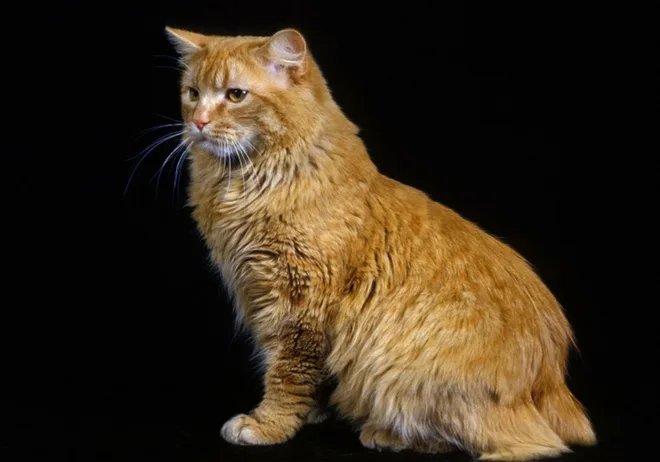
The Javanese cat is a sleek, long-haired breed developed in North America. Its name references its Southeast Asian heritage, but it's actually a colorpoint variant of the Balinese, which is a long-haired Siamese.
Javanese cats are vocal, intelligent, and deeply attached to their owners. They're known for following people from room to room and demanding attention. Their coat is fine and silky, with no undercoat, which means minimal shedding.
Aggregate owner reviews report that Javanese cats excel at learning tricks. Many learn to fetch, open doors, and respond to clicker training. They need regular interaction and don't do well when left alone for long periods.
Japanese Bobtail
The Japanese bobtail is one of the oldest domesticated cat breeds, with roots in Japanese folklore. It's the inspiration for the maneki-neko, the waving lucky cat figurine seen in shops worldwide.
Its defining trait is the short, kinked tail that resembles a pom-pom. Each cat's tail is unique, much like a fingerprint. The breed is social, playful, and adapts well to homes with children or other pets.
Japanese bobtails are prone to certain health conditions, including a form of hereditary deafness. Reputable breeders screen for this. They're also known for being excellent mousers, a trait inherited from their working ancestors in Japan.
Animals Most People Forget Start with J
Jackdaw
The jackdaw (Coloeus monedula) is a clever member of the crow family found across Europe, North Africa, and western Asia. It's smaller than the carrion crow, with a distinctive silver-gray nape and piercing pale eyes.
Jackdaws are social birds that nest in colonies, often in chimneys, church towers, and cliffs. They're known to recognize individual human faces and remember who treated them well or poorly.
Jamaican Fruit Bat
Jackdaw, For Real This Time
Other entries frequently overlooked include the jacana, a tropical wading bird with long toes that walk across lily pads. The Japanese squirrel, found in forests across Japan, also qualifies.
For trivia night, mention the jararaca, a venomous pit viper found in Brazil. Or the javelina, also known as the collared peccary, though its name starts with a J in Spanish-derived contexts.
Mistakes People Make with "J" Animals
The most common error is calling jackrabbits "rabbits." They're hares, with different birth patterns and nesting habits.
Another frequent mix-up is jaguar vs. leopard. Check the rosettes. Jaguars have spots inside their rosettes.
Leopards don't.
People also assume all jellyfish sting. They don't. The golden jellyfish in Palau have lost their sting capability entirely.
Finally, don't assume the Jackal is a single species. There are three distinct species with different ranges and behaviors.
How to See (or Spot) These Animals in the Wild
The Pantanal in Brazil is the best place for jaguars. Boat tours along the Cuiabá River see these cats regularly.
Palau's Jellyfish Lake is a safe, unforgettable snorkeling experience. Permits are required, and tour operators manage daily visitor quotas.
For snow monkeys, visit Jigokudani Monkey Park between December and March, when the snow and hot springs are most active.
Backyard birds are easiest. Put up a platform feeder, stock it with peanuts, and the jays will find you. Juncos will show up at ground feeders in winter.
Frequently Asked Questions
What is the rarest animal starting with J?
The Javan rhino is the rarest. Fewer than 80 individuals remain, all in one Indonesian national park.
Are there any "J" animals in Australia?
No native Australian mammals start with J. The closest is the javelina, which lives in the Americas. Australian birds like the jabiru exist in other regions, not Australia.
Are jellyfish really 95% water?
Yes. Jellyfish are among the most water-rich organisms on Earth, with no brain, heart, or bones.
Which J animal has the strongest bite?
The jaguar has the strongest bite force of any big cat, around 1,500 PSI.
Can you keep a jerboa as a pet?
Generally no. They're wild desert rodents with specialized needs and are often protected.
Quick Species Reference Table
| Animal | Size | Habitat | Conservation Status | Key Visual Feature |
|---|---|---|---|---|
| Jaguar | 100-250 lbs | Amazon, Pantanal | Near Threatened | Rosettes with central spots |
| Jackrabbit | 4-8 lbs | North American deserts | Least Concern | Long ears, powerful legs |
| Jellyfish | 1-8 ft wide | Global oceans | Varies by species | Translucent bell, tentacles |
| Jackal | 15-33 lbs | Africa, Asia | Least Concern | Pointed ears, bushy tail |
| Javan Rhino | 2,000-5,000 lbs | Ujung Kulon, Indonesia | Critically Endangered | Single horn |
| Japanese Macaque | 20-30 lbs | Japan's alpine forests | Least Concern | Pink face, thick fur |
| Jaguarundi | 8-16 lbs | Texas to Argentina | Least Concern | Otter-like body |
| Jerboa | 0.1-1 lb | Deserts of Africa, Asia | Varies by species | Kangaroo-like hopping |
Safety and Etiquette Around J Animals
Never approach wild jaguars or jackals, no matter how calm they appear. Keep at least 100 yards from large predators.
For jellyfish, always check local marine warnings before swimming. If stung, apply vinegar and seek medical care for severe reactions.
When visiting monkey parks or rhino reserves, follow posted rules and keep food secured. Feeding wildlife teaches them to approach humans, which often ends badly for the animal.
Frequently Asked Questions
What is the most dangerous animal starting with J?
The box jellyfish takes that title. Its venom attacks the heart and nervous system, and contact can cause cardiac arrest within minutes.
Do any J-animals live in Australia?
No native Australian mammals start with J. Several J-birds like the jabiru live elsewhere, though Australia has similar-looking stork species.
How long do jellyfish live?
Most live just a few months. Some species, like the immortal jellyfish (Turritopsis dohrnii), can revert to their juvenile stage and live indefinitely.
Which J-animal makes the best pet?
Javanese and Japanese Bobtail cats are the only domesticated J-animals. Both make affectionate companions, though Javanese cats demand more attention.
The Final Takeaway
That's the complete picture on animals that start with J. From the powerful jaguar to the tiny jerboa, it's a surprisingly diverse group.
The key is recognizing that these species span multiple continents, ecosystems, and conservation statuses. Some you'll see in your backyard. Others require a trip to an Indonesian national park or a Brazilian wetland.
Start with the visual cues. Once you can tell a jaguar from a leopard and a jackrabbit from a rabbit, you're well ahead of most people. Keep this list handy for your next trivia night or wildlife trip, and you'll be ready.
Mistakes People Make with "J" Animals
The most common mistake is calling jackrabbits "rabbits." They're hares, with different birth patterns and nesting habits.
Another frequent mix-up is jaguar vs. leopard. Check the rosettes. Jaguars have spots inside their rosettes.
Leopards don't.
People also assume all jellyfish sting. They don't. The golden jellyfish in Palau have lost their sting capability entirely.
Finally, don't assume the jackal is a single species. There are three distinct species with different ranges and behaviors.
How to See (or Spot) These Animals in the Wild
The Pantanal in Brazil is the best place for jaguars. Boat tours along the Cuiabá River see these cats regularly.
Palau's Jellyfish Lake is a safe, unforgettable snorkeling experience. Permits are required, and tour operators manage daily visitor quotas.
For snow monkeys, visit Jigokudani Monkey Park between December and March, when the snow and hot springs are most active.
Backyard birds are easiest. Put up a platform feeder, stock it with peanuts, and the jays will find you. Juncos will show up at ground feeders in winter.